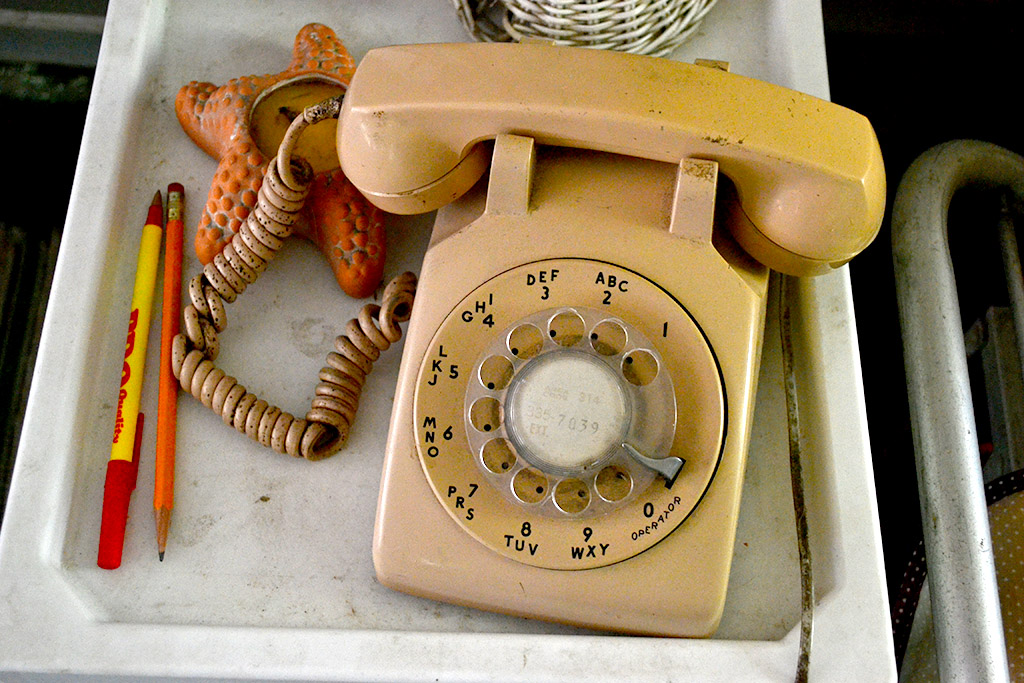
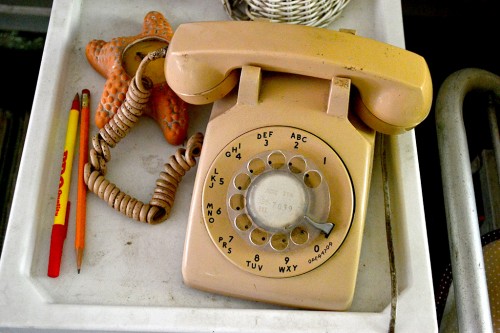
 If you grew up in Cape, you were in the land of EDgewater. If you lived over in Jackson, you were a CIrcle person. If you don’t know what I’m talking about, you are probably also going to be surprised to see that the telephone has a round thing instead of buttons.
Here’s where you can find out a little bit about EDgewater, CIrcle, RAmond, LOcust, TUlip and GRanite.
See, back in those days, the phone company, Ma Bell, was the only game in town. You leased the phone from them (and because of that, they made it so bulletproof that telephones and cockroaches were going to be the only thing left after The Big One was dropped). You didn’t have modular jacks: the phone was wired directly to the jack and the phone company was responsible if anything went wrong with it.
Like with the other rerun posts, click on the links to see more photos and get the full stories.
Extensions cost extra
You were charged by extension, and the phone company could tell by the voltage drop how many ringing phones you had connected, and they would periodically run tests to check for bootleg equipment.
One of my buddies had an illegal extension in his house. The phone rang and a Bell tech asked how many phones he had in his house. Fibbing, he said, “Just one,” and he ran to unplug the extra one.
The phone rang again. Same tech. “You just unplugged it, didn’t you?” he said.
I acquired a couple of spare phones over the years, but I hooked up toggle switches on the ringer so they (a) wouldn’t wake up the kids and (b) wouldn’t show up to that sneaky tech.
It’s all AM and FM
 Most of you think I was always a photographer. I spent the last 13 or so years of my newspaper career as a telecommunications manger, a job I really liked, but was totally unqualified for to start out. I got it because I was a good project manager, understood construction, got along with other departments, knew how to live within a budget and, most importantly, had a staff who really knew what they were doing to keep the phones humming.
When I was invited to speak at a telecommunications manager conference, I said that most kids want to grow up to be firemen or rocket ship drivers or other dramatic things; very few proclaim, “Mom and Dad, I want to hang a butt set off my belt.” Most of us fell into the job like I had.
My first crisis
I had Mike, my No. 2 Guy, to ease me into the job and to kick me under the table when I’d start to say something dumb in a meeting. My first big crisis occurred when we had a planned building power outage that caused the whole place to go dark. We had one critical phone switch that suddenly decided that it LIKED taking a nap and didn’t want to wake up.
About four in the morning, two hours before the call centers were supposed to open, I asked Mike the question that all techs hate to hear: “Any idea what the problem is?” The obvious, unstated answer is, “No. If I knew how to fix it, we’d have all been in bed two hours ago.”
Mike, one of the best troubleshooters I’ve ever worked with, turned to me and calmly spelled out the facts of telephonic life. In fact they apply to every aspect of real life, too.
You’re going to have to follow this link to read his words of wisdom.
Before cell phones
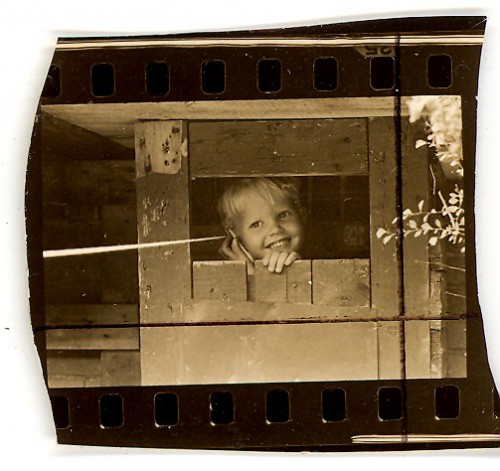 I was more comfortable with this level of technology. I mean, how can you beat unlimited voice and data plans and no need for batteries?
Dropping a dime
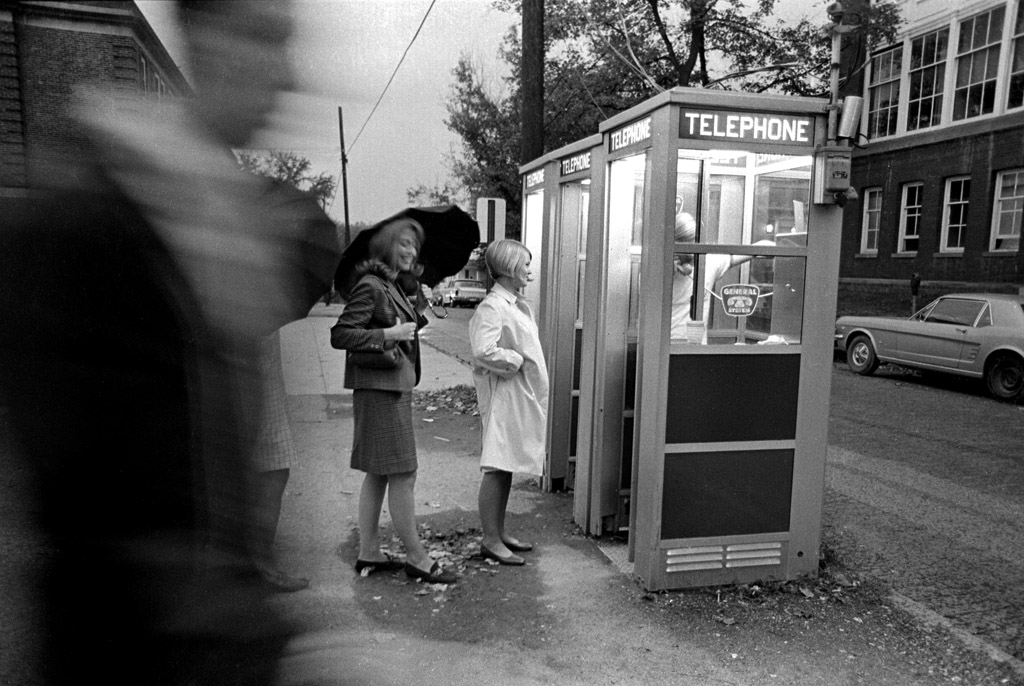
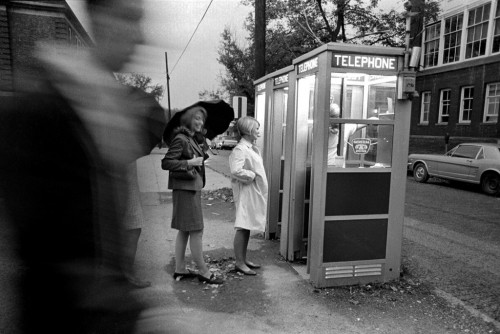 We didn’t have phones in our dorm rooms when I first moved into Scott Quad my junior year. If we wanted to call home, we had to find a phone booth that worked, a real challenge because the phone company wasn’t diligent about emptying the money out of them. When they were full, they were full.
Like Buddy Jim Stone points out, we didn’t have helicopter parents back in those days because we weren’t connected 24/7. By the time you were able to call home, you had probably already worked out the problem yourself (or had forgotten it).
If you look at a closeup photo at this link, you can see that the price of a call had just gone up from a nickel to a dime.
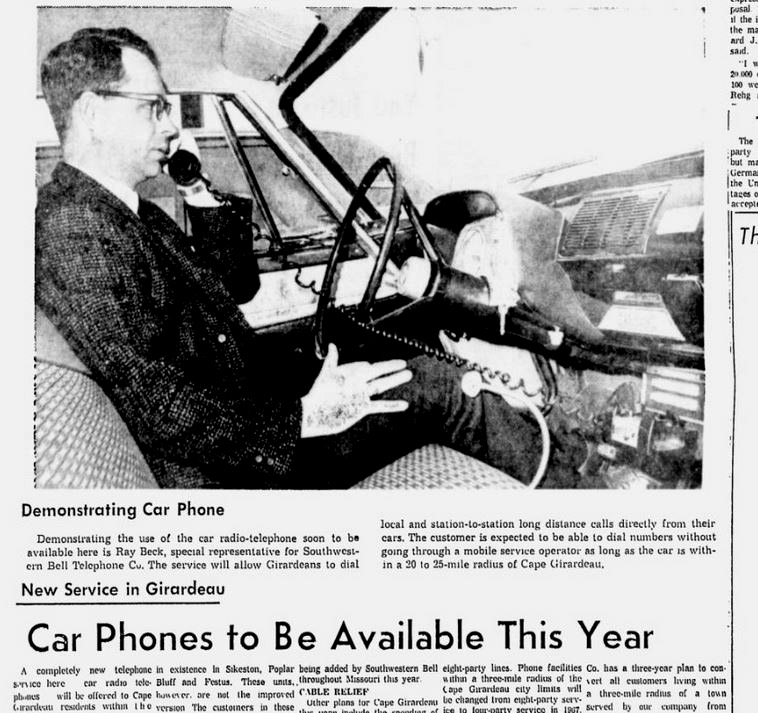
Car phones coming to Cape
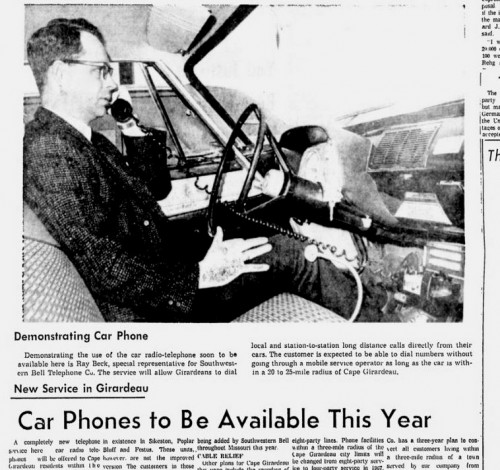 The big news in 1966 was that car phones were coming to Cape.
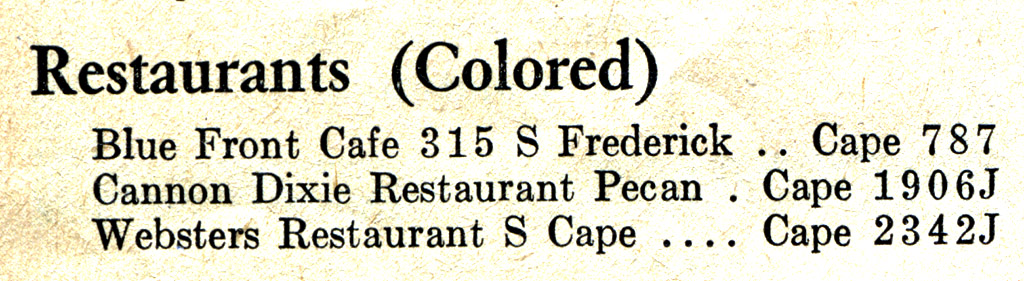
How times have changed (I hope)
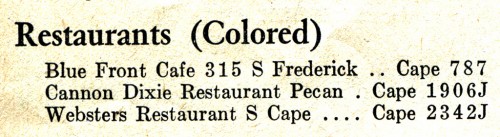 The 1944 Cape County Telephone Directory contains a jarring classification. Follow the link to see the not-colored restaurants in Cape.
Cheating Death to make phone ring
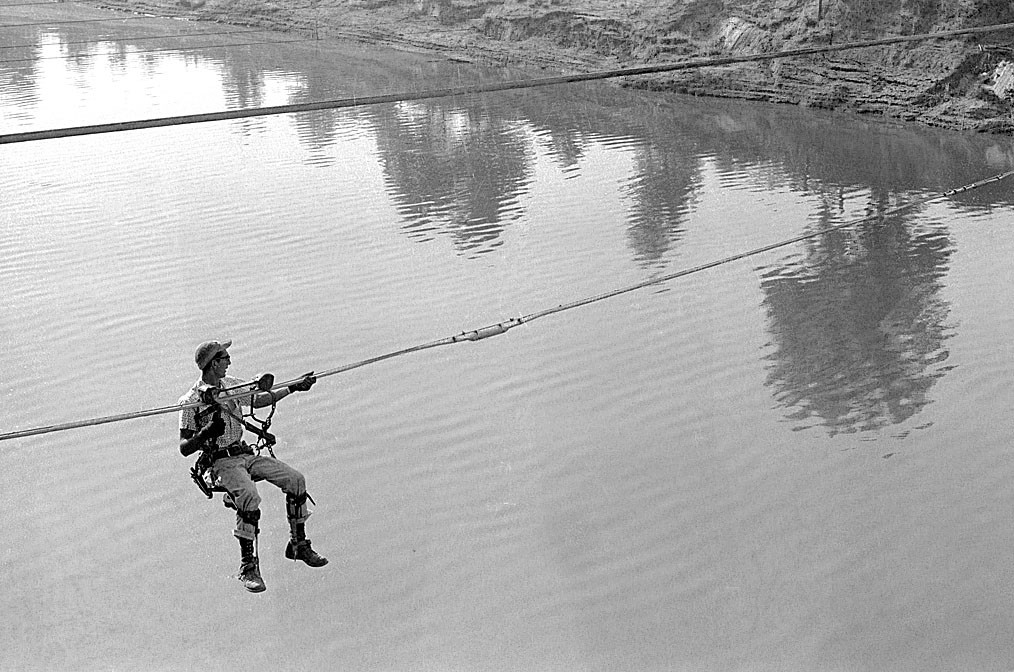
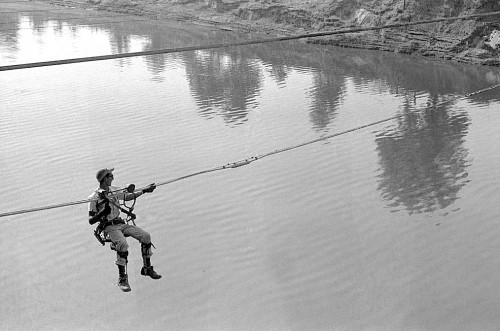 I’ve mentioned Lester Harris quite a few times in this blog. He was one of those dedicated Bell techs we all took for granted.
There was a telephone cable that spanned the Diversion Channel just east of I-55. From time to time, some nimrod couldn’t resist the temptation to take a shot at it. If he was halfway accurate, phones in Scott City and the airport would go dead.
Lester would walk the roadway until he found fresh shell casings that would give him a rough idea where he was going to find the break. Then, he’d strap on his tool belt, and climbing spikes to shinny up a pole to where he could hook his cable buggy over a wire cable that supported the phone wires.
Let’s put this in perspective. Phone wire is softer and more delicate than steel cable, but what is to say that some stray bullets haven’t nicked some of the wire strands that are holding Lester 60 feet above the Diversion Channel? In a perfect world, they would catch the shooter and send him out of the cable buggy to make sure it was safe before Lester got on it.
Lester was featured in the stock car racing post the other day.
Microwave towers
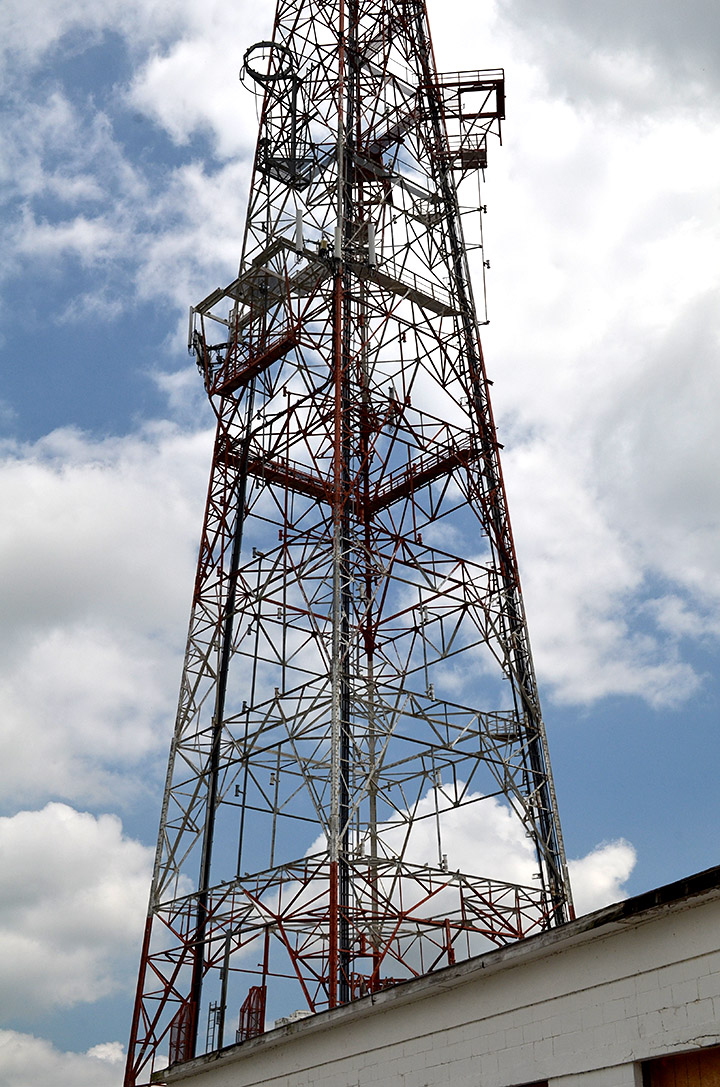
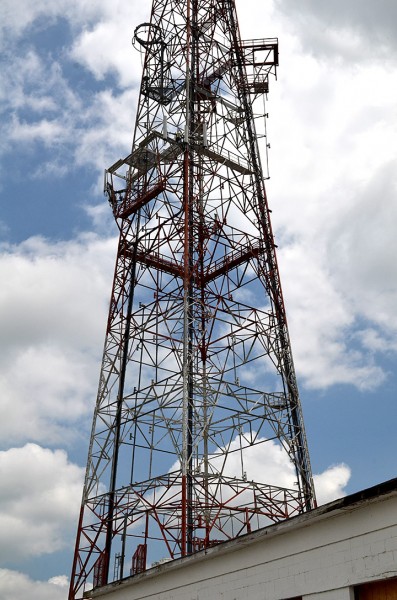 The horizon used to be dotted with long-haul microwave towers like this one on Ridge Road in Jackson. Fiber optic cable has made them obsolete, and many have been torn down or repurposed as cell towers.

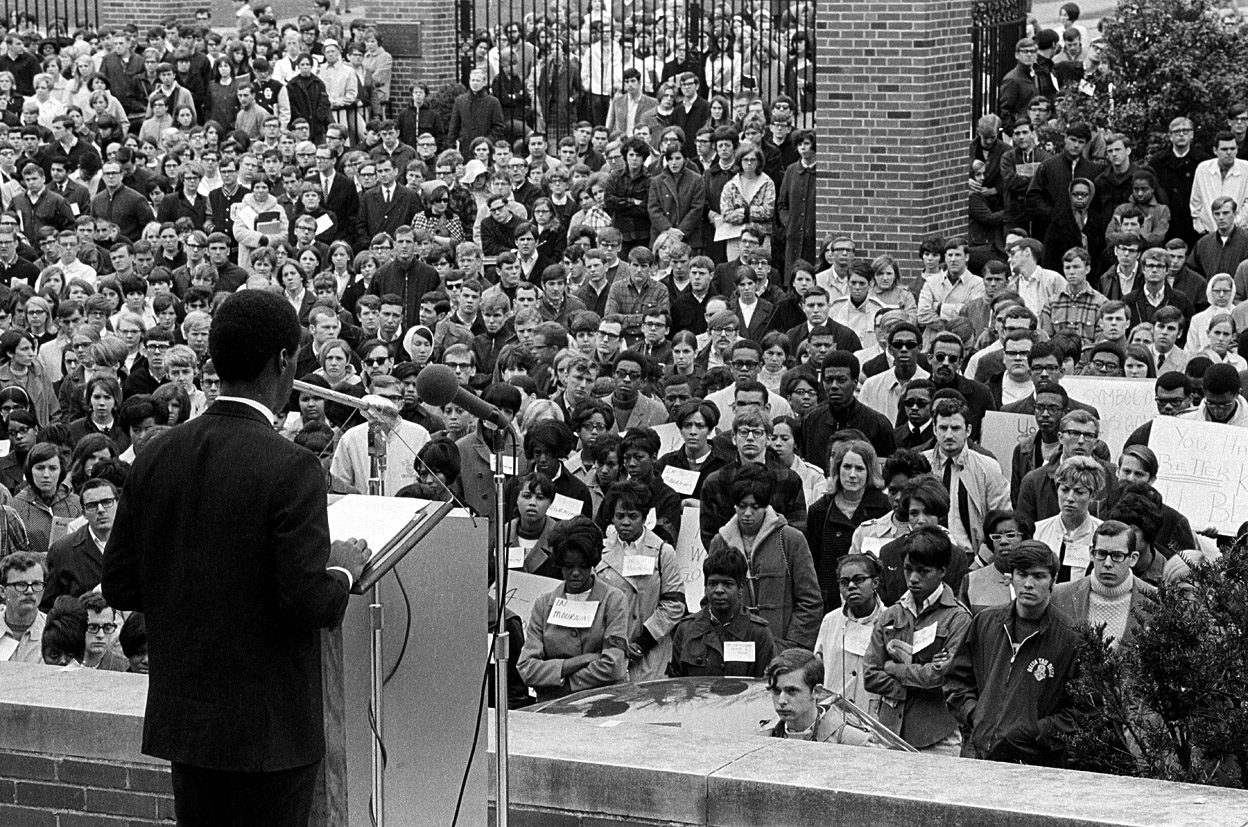
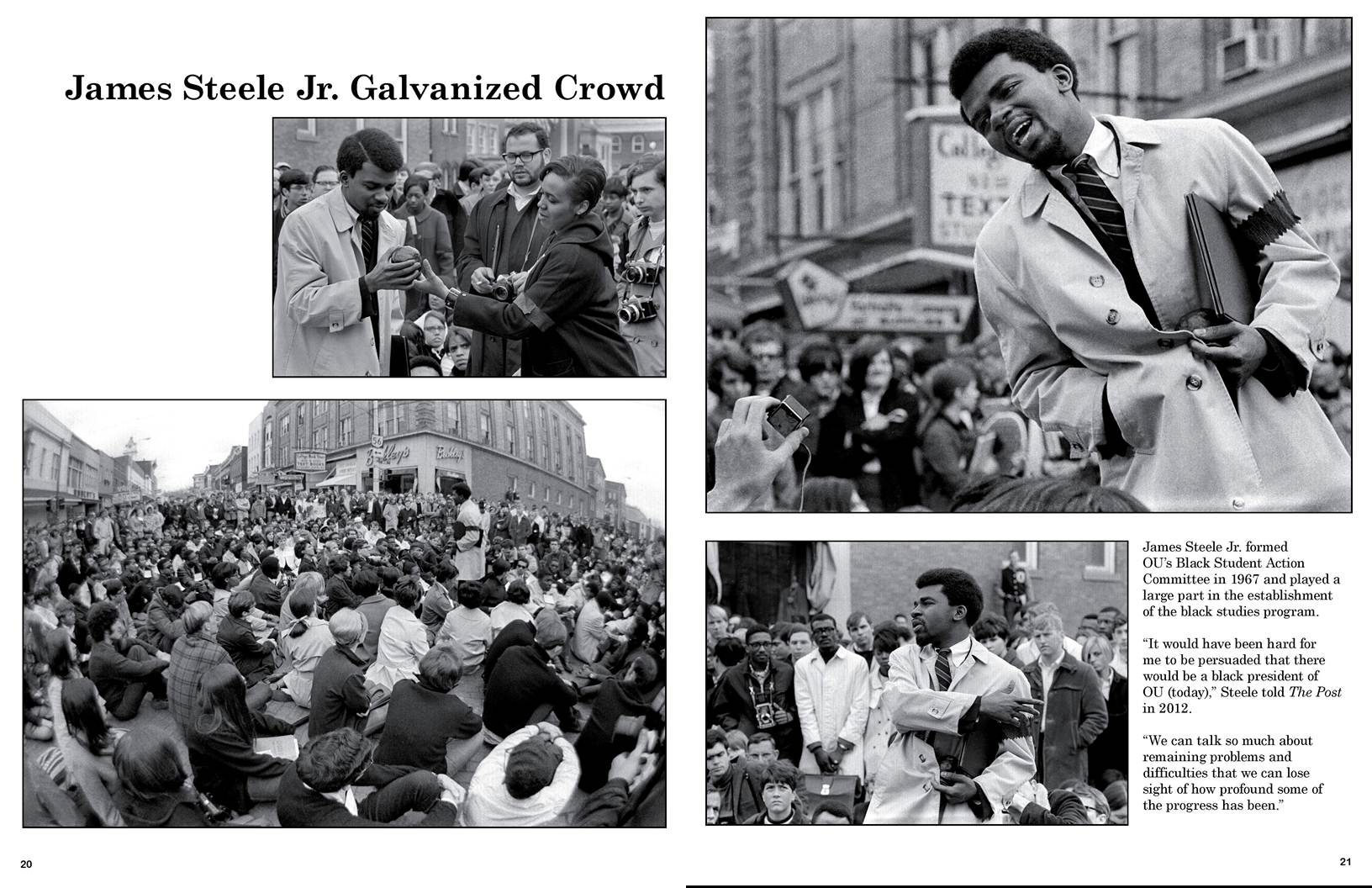
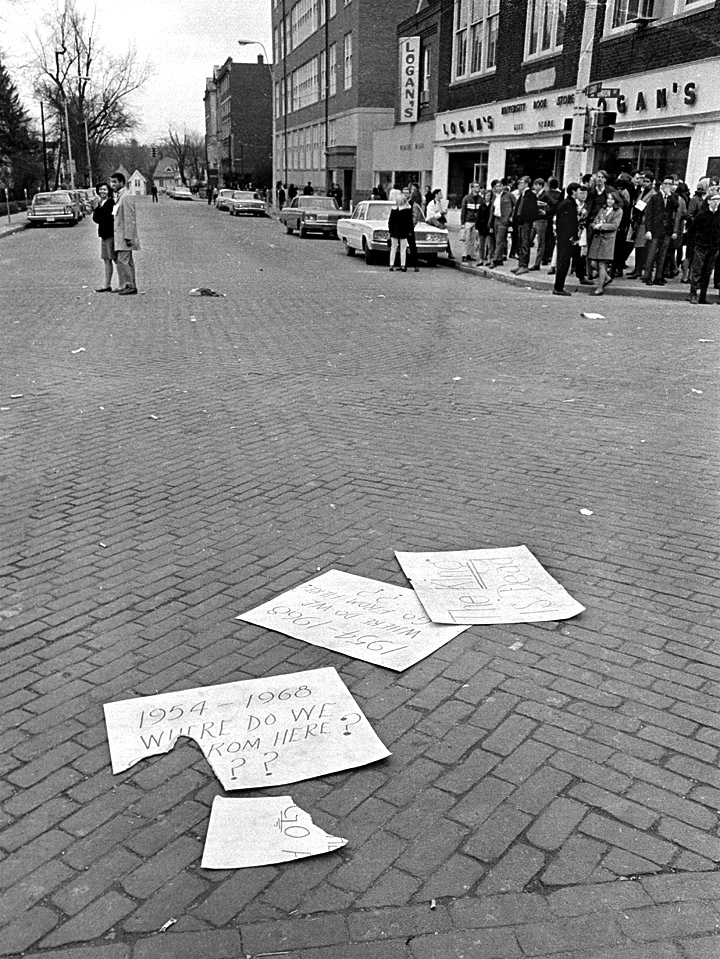
 I’m working on an exhibit of photos dealing with the turbulent 60s and 70s at Ohio University. Given the choice between posting random photos as I’m editing them or letting the site go dark from time to time, I’ll opt for posting pictures with minimal copy.
 It’s Ohio. It’s February, and people are wearing coats, scarves and gloves. That’s a pretty good indication it was being held outside where it was cold.
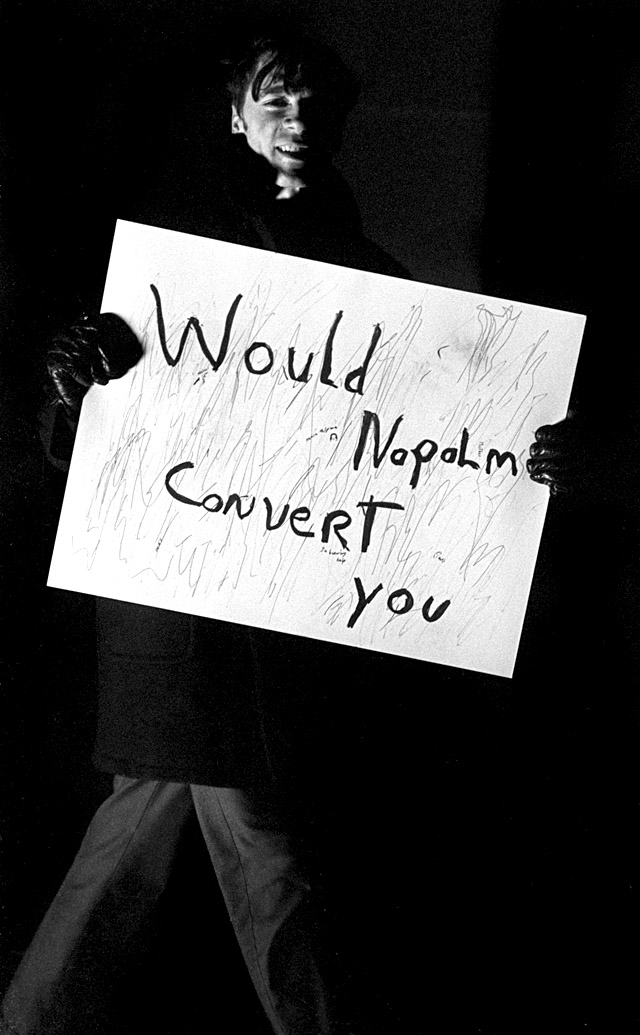 I transferred from SEMO to Ohio University as a junior in the fall of 1967, so this must have been one of the first of many protests and demonstrations I would cover over the next two years.