Dean Kahler, Shot at Kent State


Kent State 08-25-2015I suspect one or two of my readers will grouse again this year, “Why are you bringing up Kent State? It’s ancient history.”

Dean Kahler has a good answer for that: “History will hurt you if you don’t learn about it. It’s important that you learn about it, and it’s important that you don’t forget about it so you don’t repeat it.”

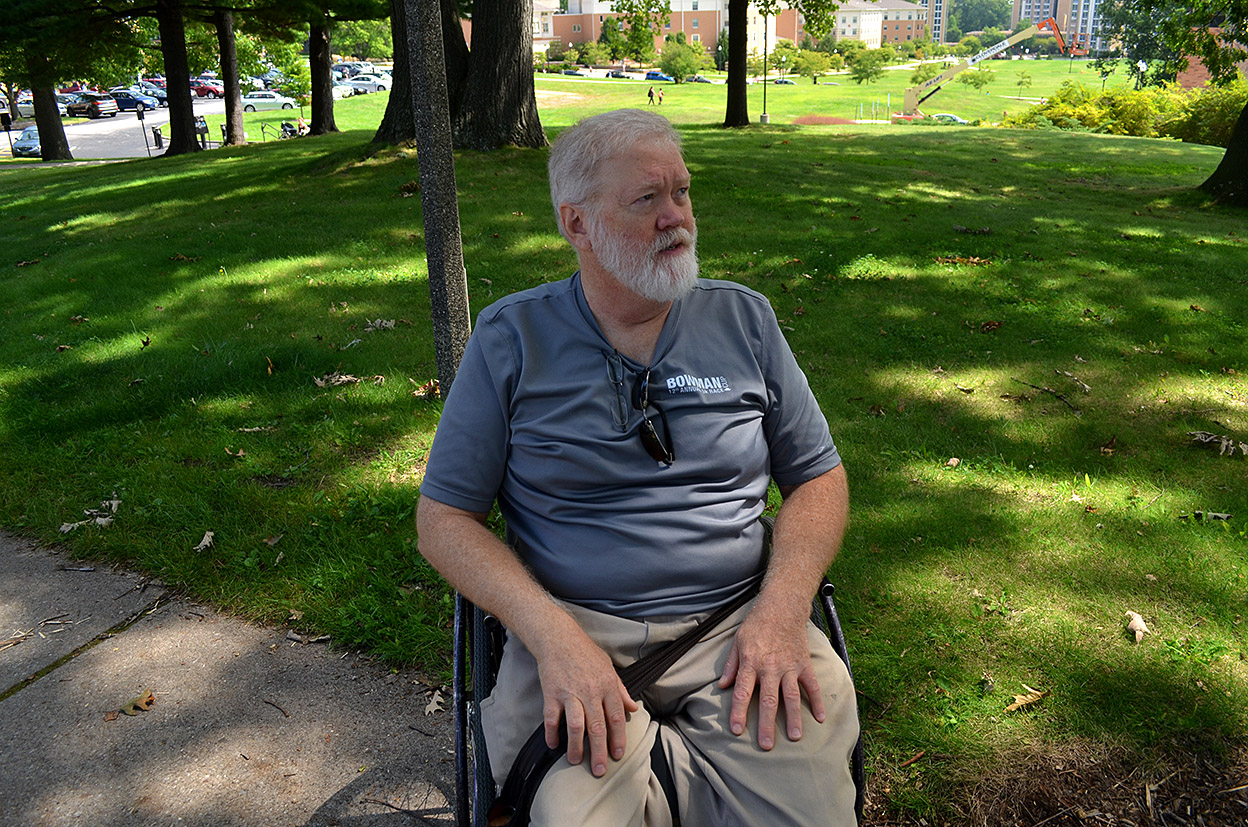
Dean was one of nine students injured by National Guard gunfire on May 4, 1970, at Kent State University in Ohio. He was a first-quarter freshman, a farm boy from near Canton who was a conscientious objector because of his religion. He had read about demonstrations in the newspapers and national news magazines. “As a farm boy, you don’t get a chance to go to protests,” he said, ” because the cows have to be milked.”

Classes were supposed to be held as normal on May 4, so Dean decided to drive onto his campus to see what was going on. He was in the parking lot behind him in this photo, 300 feet away from the closest National Guardsman, when he saw them turn “with their deliberate motion.”

When he saw them turn, “I knew they were shooting.” He dropped to the ground because there was nowhere to run to and no cover for him.

Like when you pith a frog

[Watch the video to hear Dean tell about the shooting in his own words.]
“I knew I had been shot because it felt like a bee sting. I knew immediately because my legs got real tight, then they relaxed just like in zoology class when you pith a frog,” he said. He never walked again, but he has turned into a highly competitive wheelchair athlete.

After the shooting stopped, he called out to see if there were any Boy Scouts around who could turn him over. “The only thought that came into my head was if I was turned over, would I bleed more internally than externally? I thought (shrugs shoulders) there’s a 50 / 50 chance that you’re going to die one way or the other. I knew I might die. I had a really good chance of dying, so I wanted to see the sky, the sun, leaves, peoples faces. I didn’t want to be eating grass when I died.”

Dean and my old publisher
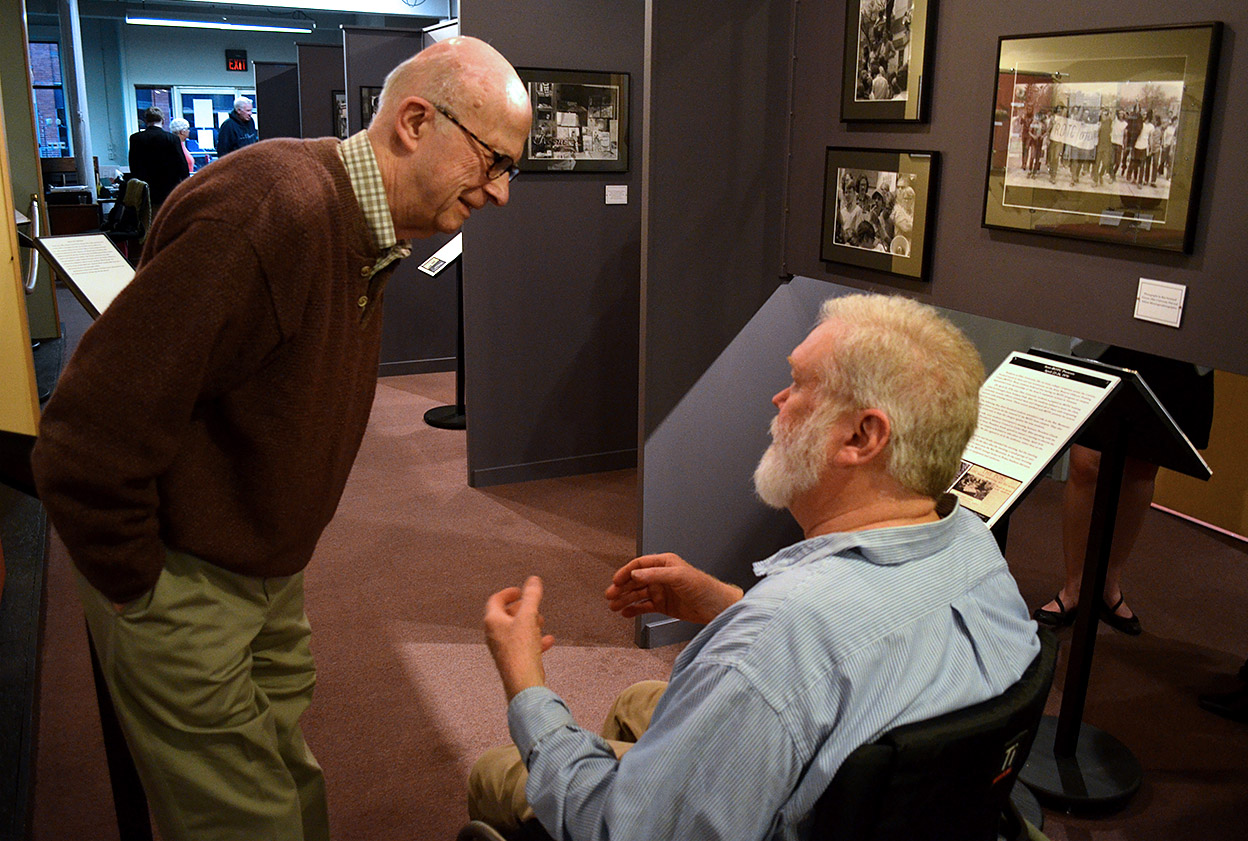
Kenner Bush - Dean Kahler at Sky Has Fallen exhibit opening 04-17-2015I was honored that Dean drove down from the Canton area for the opening of the Athens County Historical Society’s exhibit The Sky Has Fallen that contained scores of my photos. Dean, who was a well-regarded Athens county commissioner for eight years, is talking with Kenner Bush, my old publisher at The Athens Messenger.

Curator Jessica and I met Dean when we went up to the Kent State May 4 Visitors Center to talk about how the historical society’s museum could work with the visitor center on future exhibits about the protest era. I thought he was just a helpful volunteer until it became obvious that he had more than book knowledge about what happened that day.

The man who prevented a massacre

The Center had one of the most powerful videos I’ve ever seen anywhere. When they played the sound of the gunfire, I lost it. That was followed by a clip of professor who probably prevented a massacre. He stood between the guard and the students and begged the students to sit down. When the situation somewhat stabilized, the students took off in different directions “so that someone would be alive to tell the story.”

So, how long am I going to ride this story. Probably every May 4, just like my old chief photographer, John J. Lopinot will send me a message that just says, “Never Forget.”
Rendville Public School

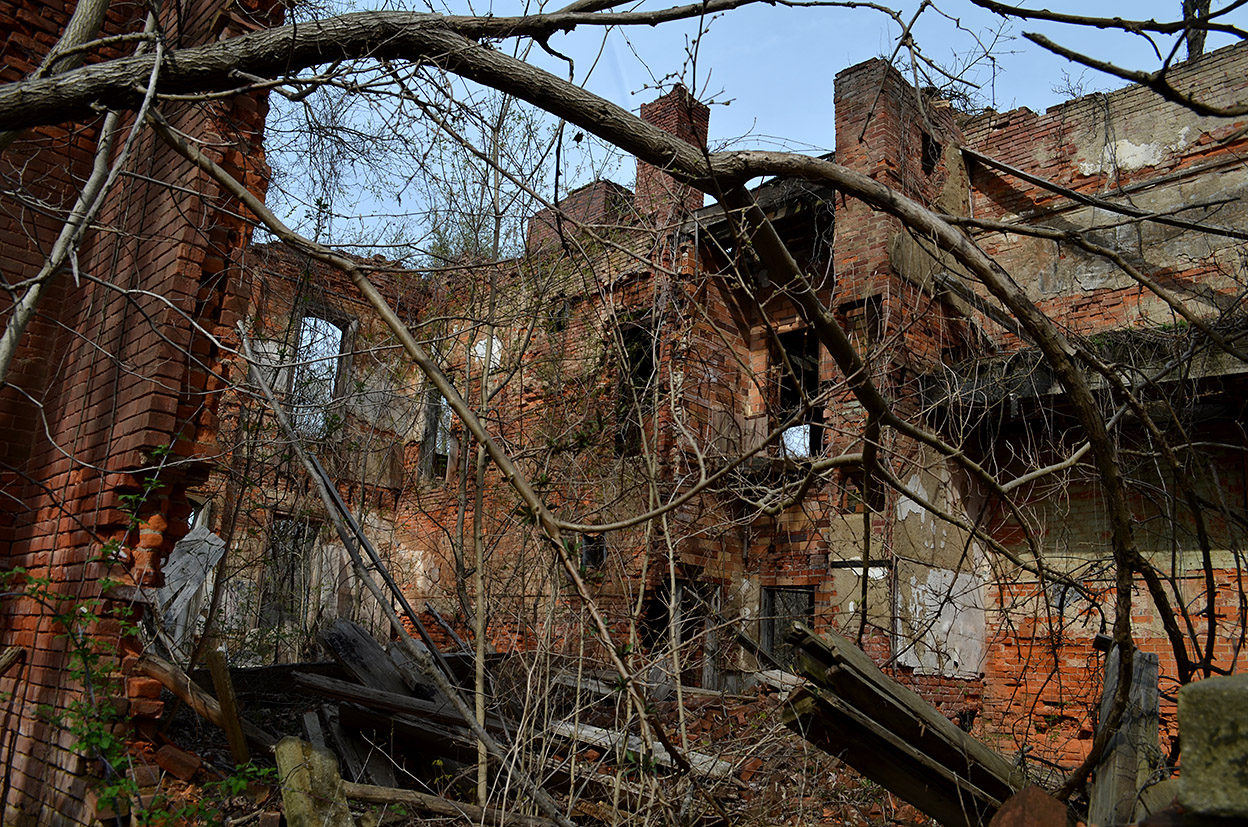
Rendville School 04-18-2015You’re probably wondering how a town with only 36 people left in it can generate so many posts. Well, this is the last one until I visit the place again, but I think it’s one of the most interesting. Curator Jessica told me to turn right one road too early to get to Rendville proper, but we didn’t much care. Jessica is a lot like Mother: always looking for the road not taken.

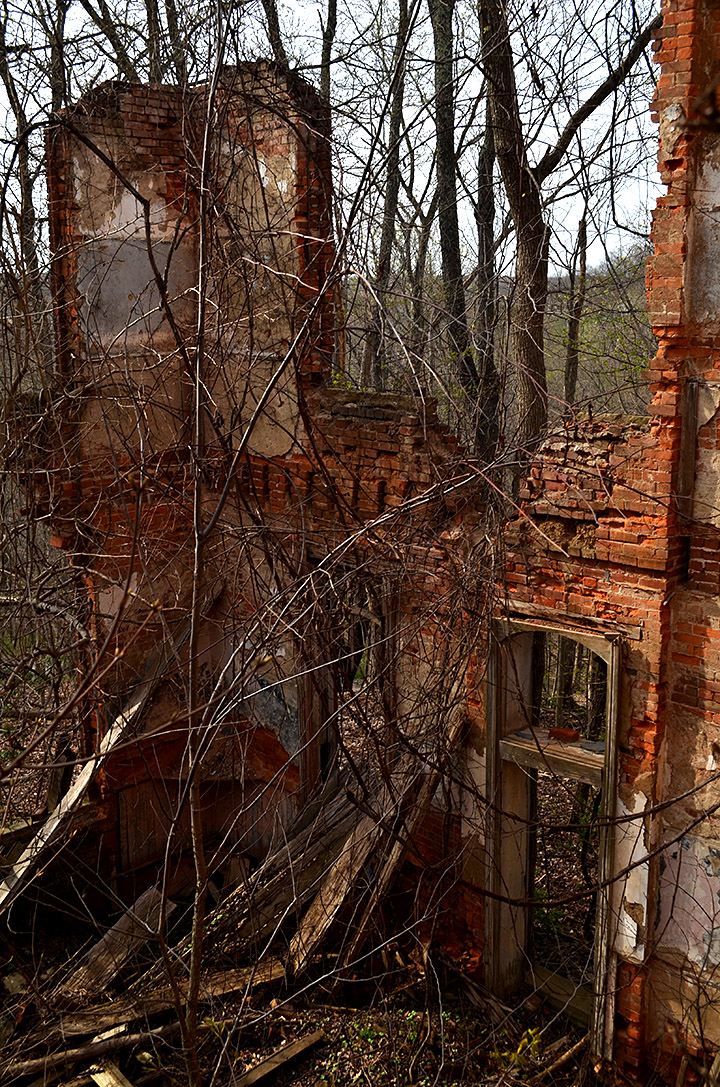
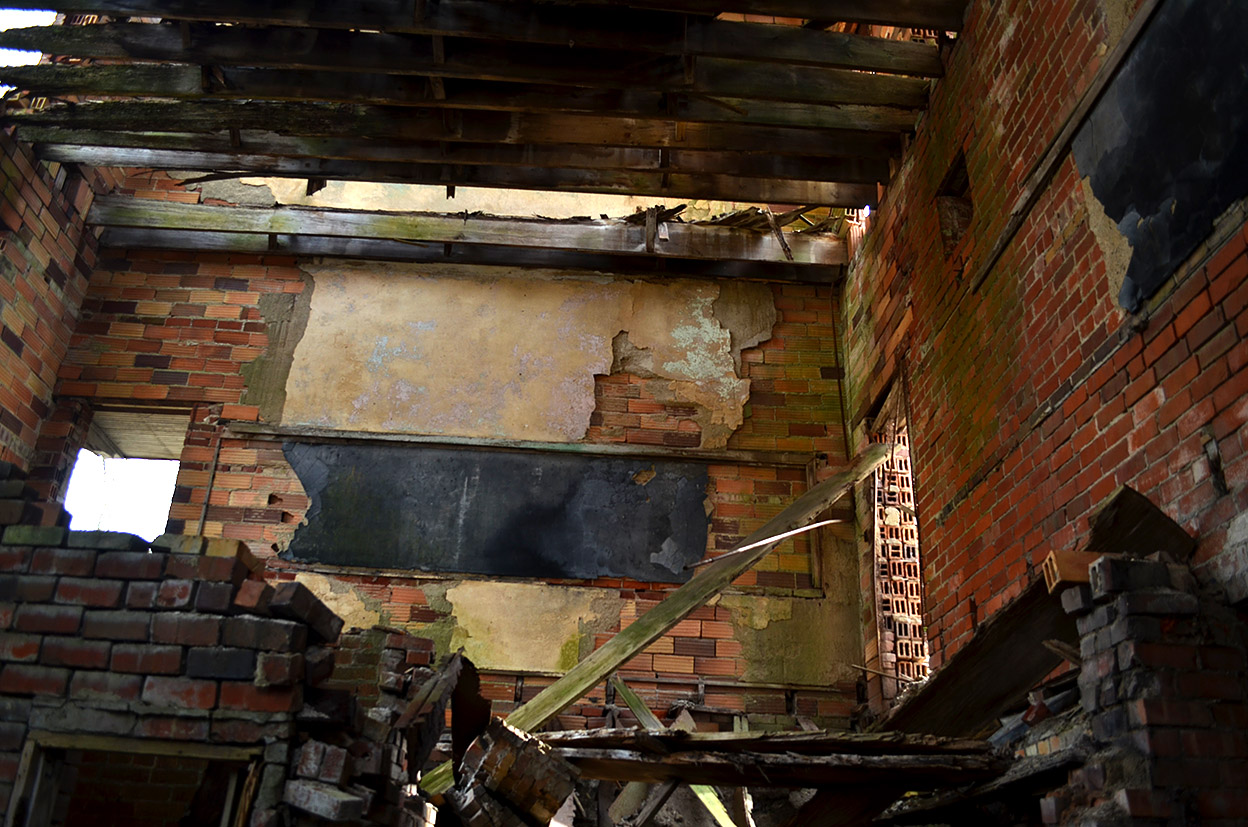
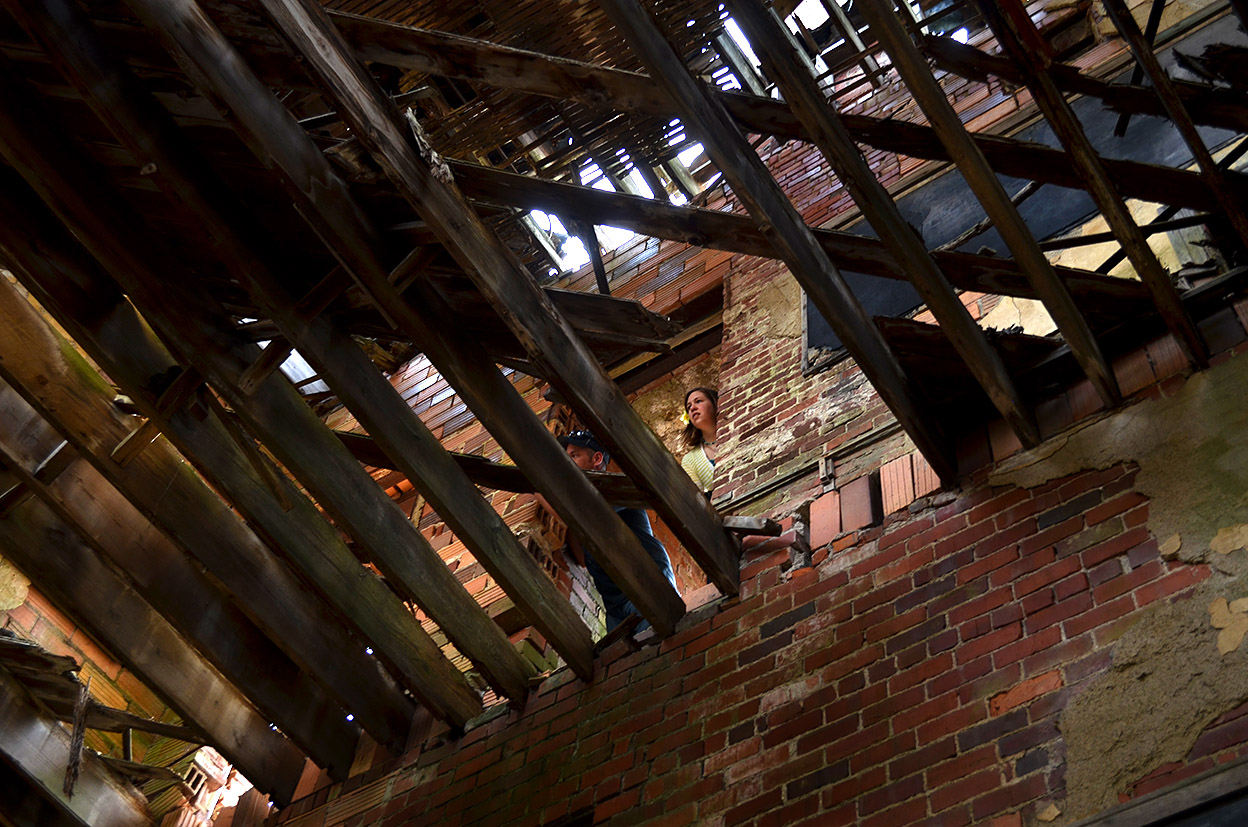
Part-way up a tall hill, a huge, falling-down building came into view. We’d never have seen it in a few more weeks when the leaves are all out. There was a pickup truck with its window rolled down parked in a little turnoff leading to the building. I figured that must mean somebody was around. There were no no-trespassing signs around, so we hoofed up the path, noting fresh footprints in the soft ground.

Click on the photos to make them larger.

Marvin filled us in

Rendville School 04-18-2015Nobody answered my hail, so I went to the front of the building while Jessica prowled around back. Before long, I saw Jessica and Marvin, who said he grew up near the building, which turned out to be a school. “When it closed, it was left just like they were going to have classes the next day. There was even a bell, but someone made off with it.”

As I mentioned in an earlier post, Rendville had a sizable black population:  “That’s how Rendville came about,” Marvin recalled the local lore. “They ran all the colored out of Corning.”

Interestingly enough, though, both races attended the school, which dated back to the 1880s.

Convict bricks

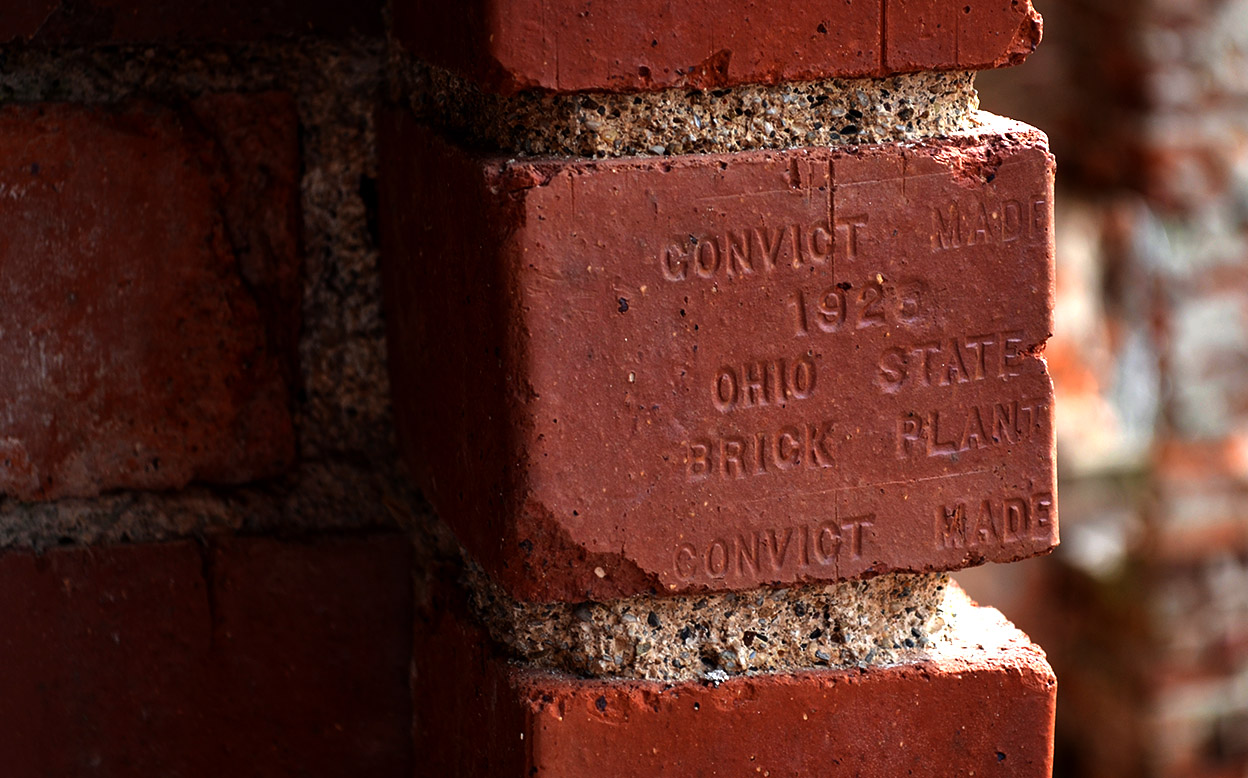
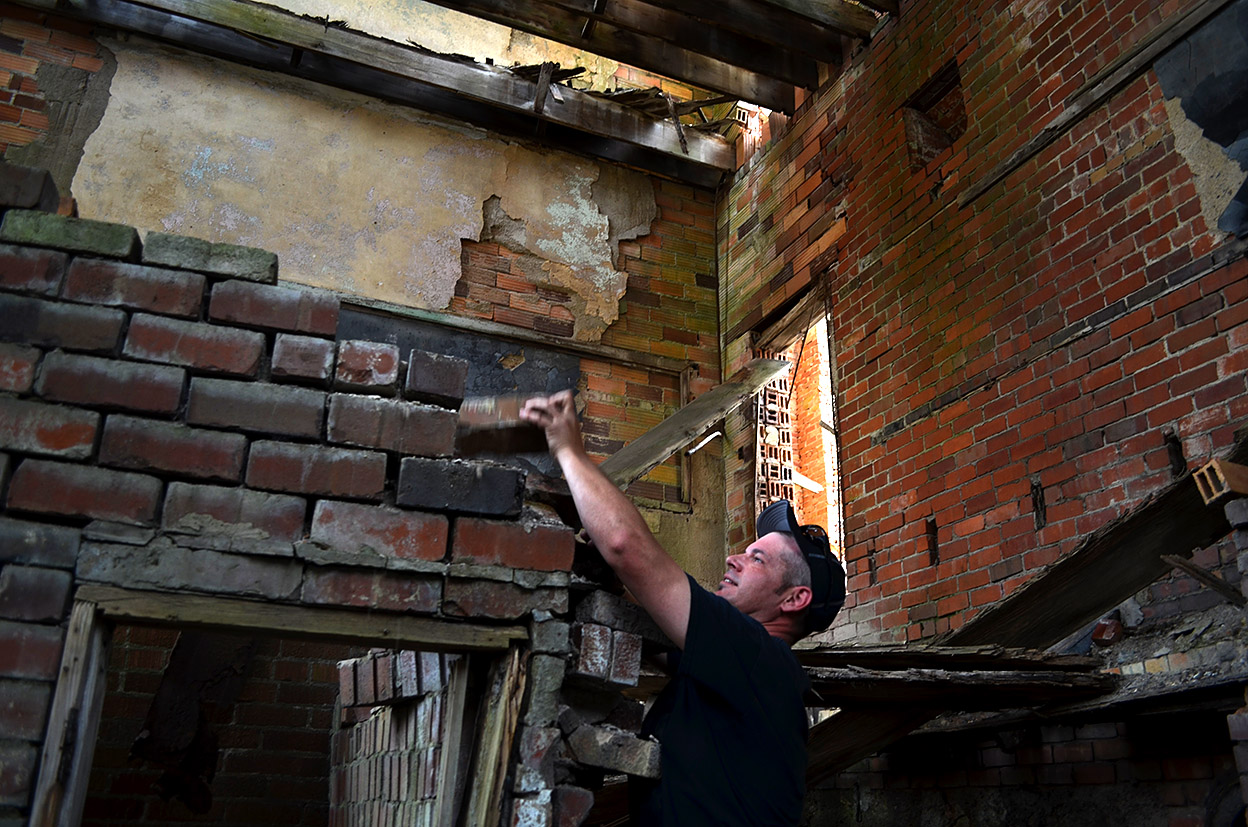
Rendville School 04-18-2015Marvin pointed out that some of the walls were made of “Convict Bricks.” They were stamped “Convict Made; 1926; Ohio State Brick Plant; Convict Made.” They were a “hard brick,” unlike most of the older parts of the building that were “soft brick.”

Jessica, who is a bit of a brick expert, said she had never seen any like this before.

Like something from Gone With the Wind

Rendville School 04-18-2015I had the feeling I was in a movie set for General Sherman’s Atlanta urban renewal project (minus the fires).

Long hoof up the hill

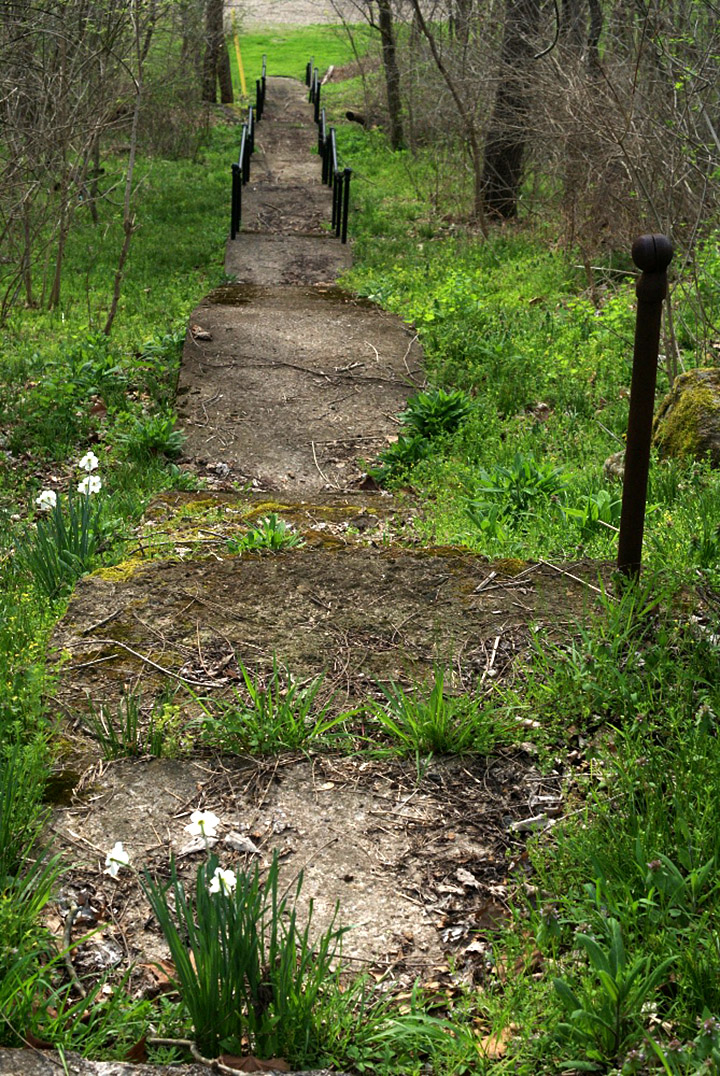
Rendville School stairs 04-18-2015 Miz Jessica, a triathlete, is one of those people who runs even when nobody chases her. She volunteered to walk down this sidewalk that connected the school to the town, shooting photos along the way. I volunteered to pick her up at the bottom of the hill in my van.

Note the arched window

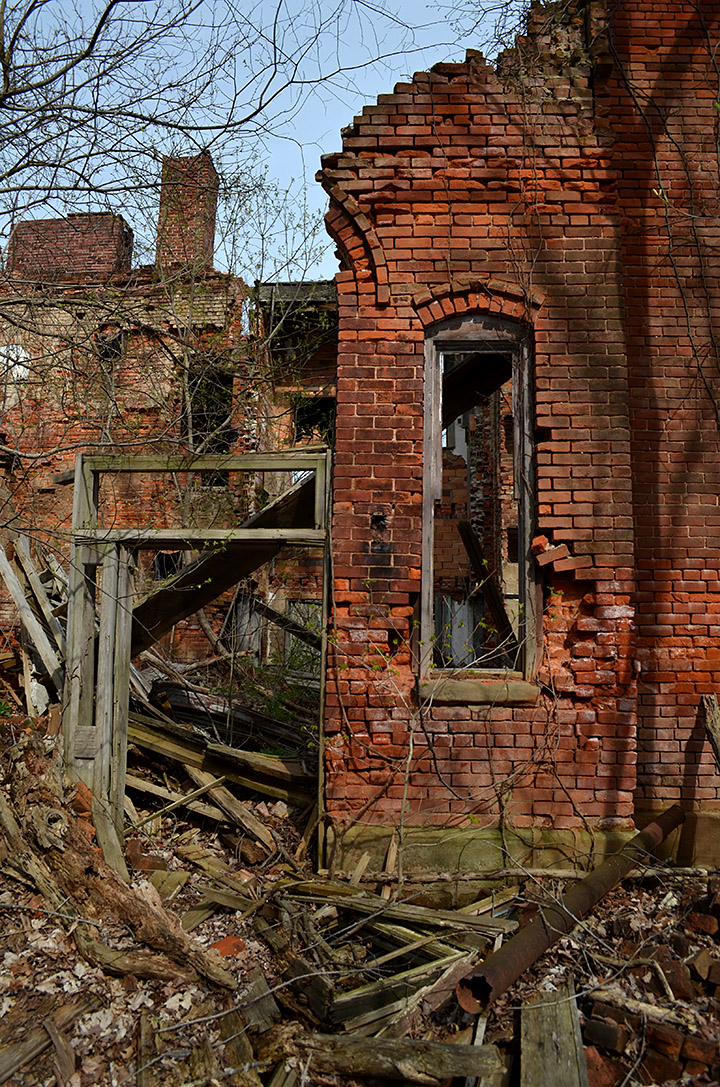
Rendville School 04-18-2015I asked Jessica to dig up some information about the school. The Little Cities of Black Diamonds archive has a photo of what the Rendville Public School looked like. The Corning High School had a building that looked so much like this one, I thought maybe someone had mislabeled the photos.

She squinted closer than I did and determined the window shapes and the bell tower were different.

Look for the blackboards

Rendville School 04-18-2015The easiest way to determine if an old building was a school or not is to look for the blackboards.

Disembodied voice

Rendville School 04-18-2015I was down in the boiler room when a disembodied voice said, “Hey, Ken.”

I peered around to see where the sound was coming from and said, “Holy Bleep!” when I saw Jessica and Marvin peering down from above. When I followed them, I found it was less scary than I thought. There was a good poured cement set of stairs between two convict brick walls that was perfectly solid.

Earlier Rendville stories

If you are interested in old coal towns (many which have disappeared), stories about labor and railroads, swing over to the Little Cities of Black Diamonds website for some interesting reading and pictures.


Ever Use a Two-Holer?

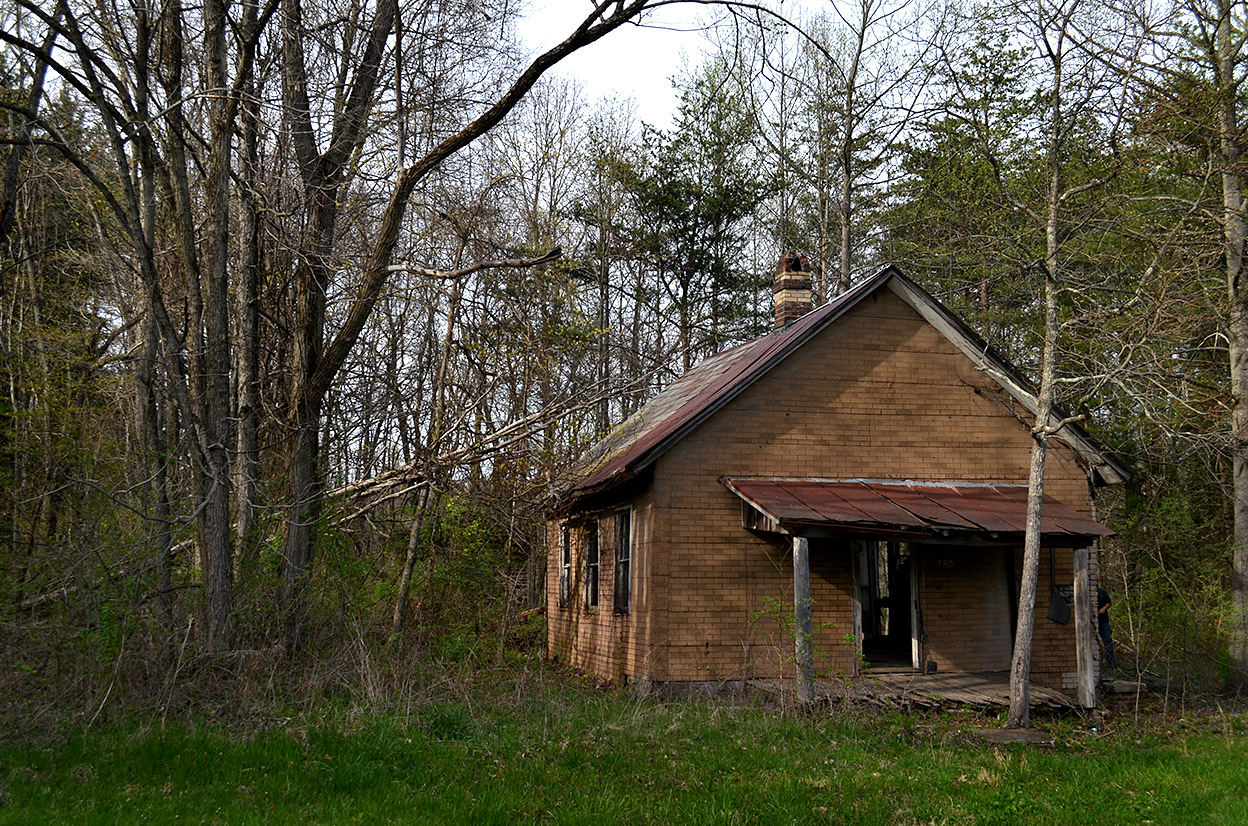
Curator Jessica and I were exploring a huge abandoned brick school house on a hill overlooking Rendville, Ohio, when a couple said they knew of a building they thought was an old one-room schoolhouse. They’d show it to us if we didn’t mind them tagging along. (Click on the photos to make them larger.)

Definitely a school

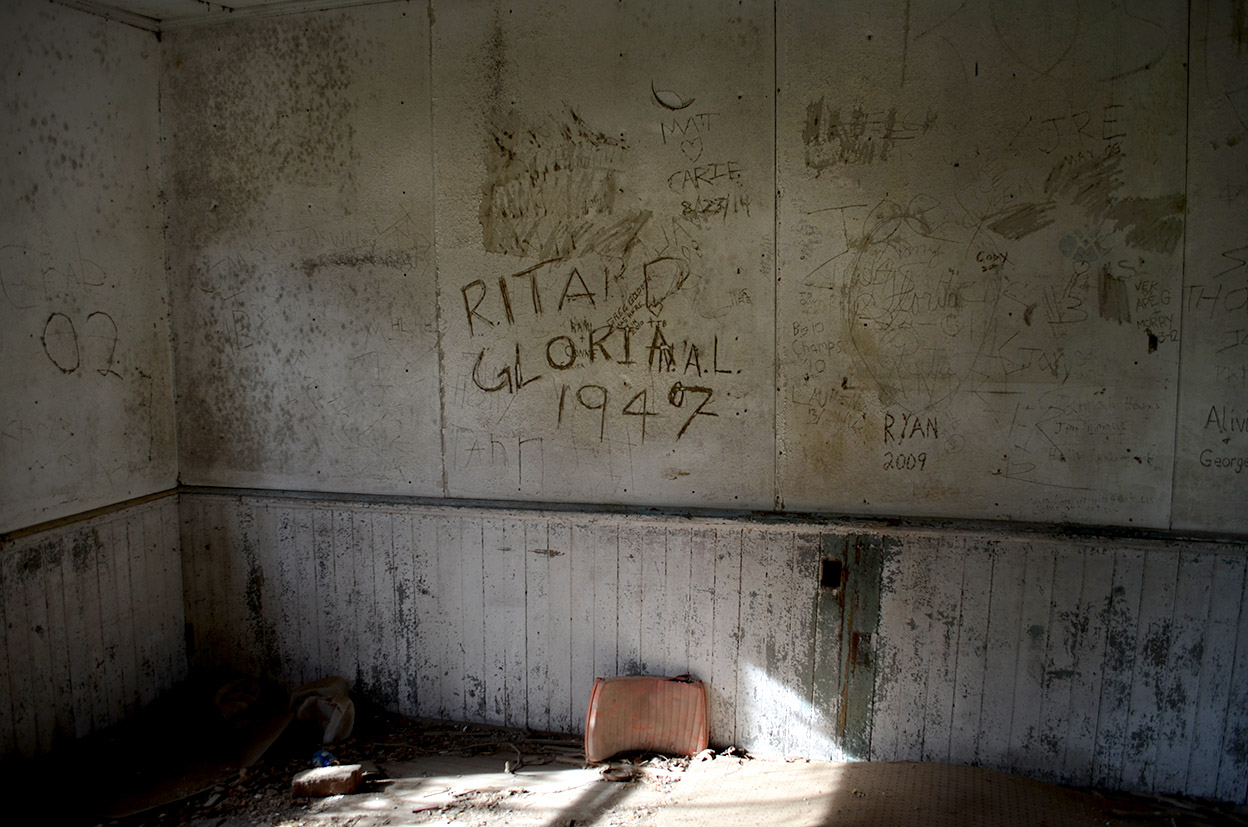
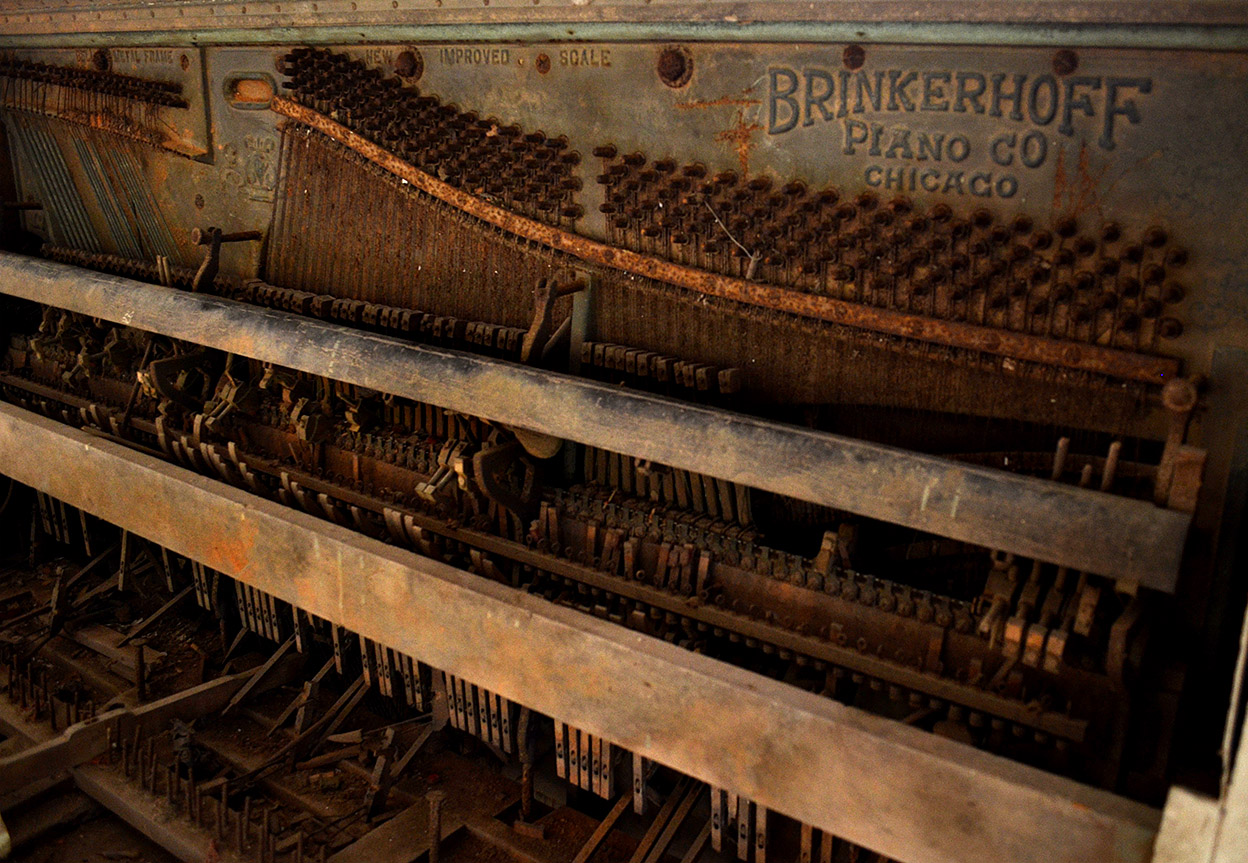
Indeed, the nondescript building could have been just about anything from the outside, but once we looked inside, it was definitely a school. It had the chair rail around the walls that went below the blackboards. A long-gone central stove supplied heat, and there was the remains of an old piano against one wall.

Piano left behind

Time hasn’t been kind to the old piano.

Back before good roads and consolidation, the hills were full of small churches and schools because it was hard to get out of the hills and hollows of Southeast Ohio. On top of that, a lot of the towns were company towns where miners were paid in scrip which could only be redeemed at the company store. That discouraged workers from traveling.

Water came from cistern

Water came from a cistern that was located on the side of the school.

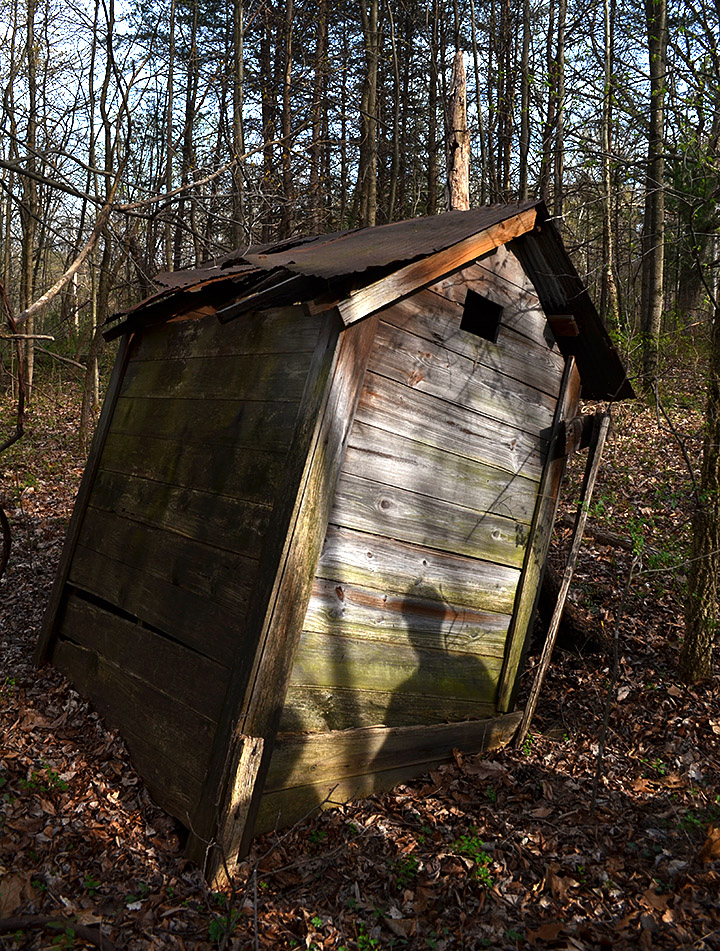
About 50 feet behind the school was a small building that was leaning at about a 45-degree angle.

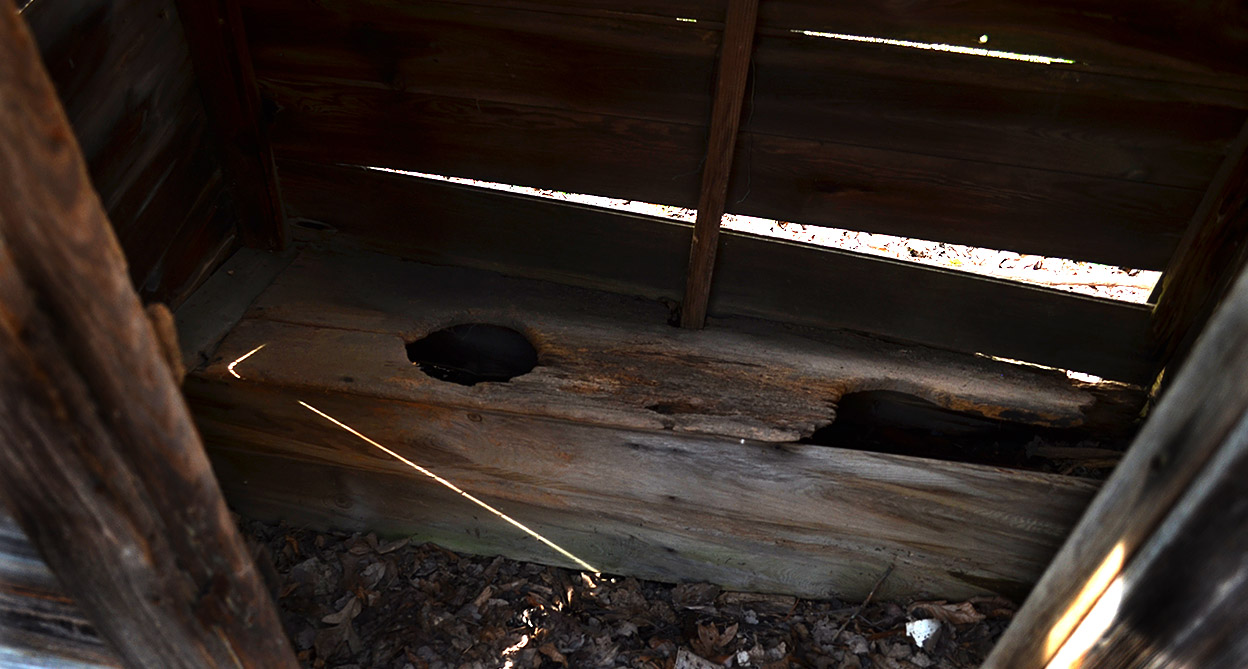
Two two-holers behind school

Through the open door, we could see that it was a two-holer designed for urgent needs, no waiting. The hole on the right may have rotted away, or it may have been destroyed by wild animals who like the salt that soaks into the wood.

Figuring that unisex facilities probably weren’t common in the era when this school was operating, we looked around. Sure enough, about 50 or 75 feet away was another set of seats. The building was gone, but the seat remained.

Vinton County Padiddle

Vinton County stop sign 04-17-2015Curator Jessica and I had been roaming around in SE Ohio’s Vinton county looking at iron furnaces, cemeteries, the haunted Moonville Railroad tunnel (I’m getting around to that) and sunsets.

Just as I was pulling up to the main road, my headlights lit up a stop sign, much like one I photographed on Water Street. (Click on the photo to make it larger.)

Padiddle

Just then, I noticed a padiddle – a car with one headlight out – coming around the bend. I know all about padiddles because my Road Warriorette asked me if I had ever played the game after she spotted a one-eyed 18-wheeler on our road trip last fall.

Not being up on what games youngsters are playing, I hit Google for an explanation. I was enlightened by the Urban Dictionary: A game in which you look for cars with headlight or foglight out (padiddle) [also spelled pididdle] or tail light (pedunk) and call it out. When someone correctly calls a padidle or pedunk, all members of the opposite sex present must remove an article of clothing.
Example: Padiddle! You have to take off your shirts.

“Are you getting too sleepy to drive?”

Right after I declared “PADIDDLE” and waited expectantly for something exciting to happen, Miz Jessica said, “Ken, if you are getting sleepy, I can drive us back to Athens.”

“What do you mean ‘if I’m getting sleepy?’ I’m fine.”

“I figured you must be sleeping, because if you expect me to play by Urban Dictionary rules, then you have to be dreaming.”

Well, you can’t blame somebody for trying. I mean, what’s the use of doing research if you can’t put your knowledge to good use?