Shedding Light on Carbide Lanterns

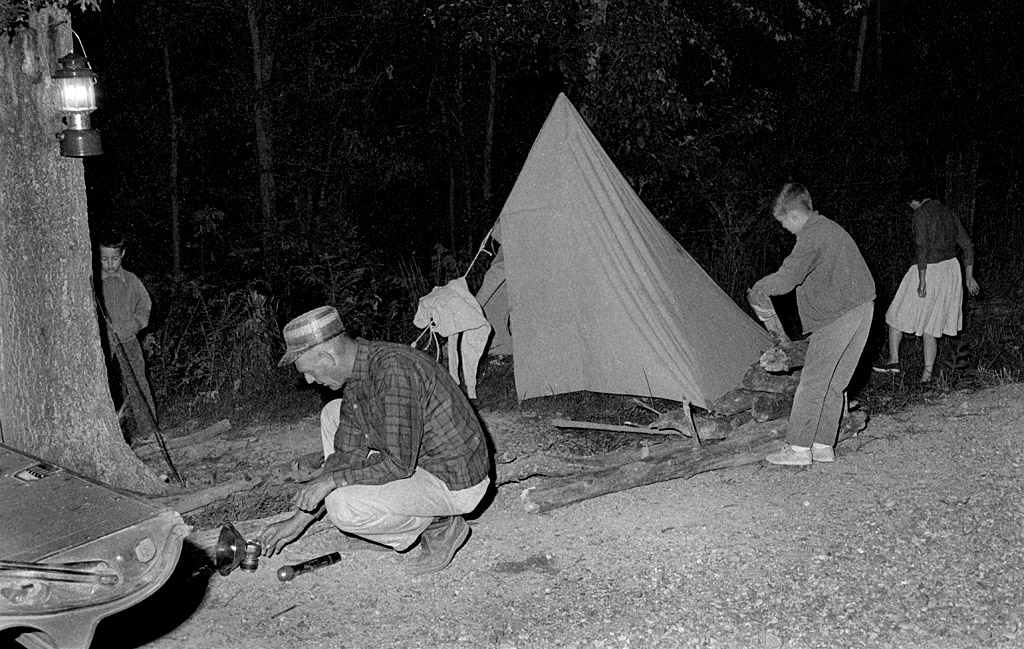
Here’s a shot of Dad helping set up a campsite. That’s Brother Mark hiding behind the tree. I’m pretty sure that’s Mother in the background looking for some poison ivy to step in. The setting is kind of odd: it’s right on a road and butts up to a fence. I don’t know who the boy on the right is. Brother David is in another shot, and that’s not him.

What caught my eye, though, was the lantern Dad is reaching for. It’s one of at least two carbide lanterns we owned. (Click on the photos to make them larger.)

What’s a carbide lantern?
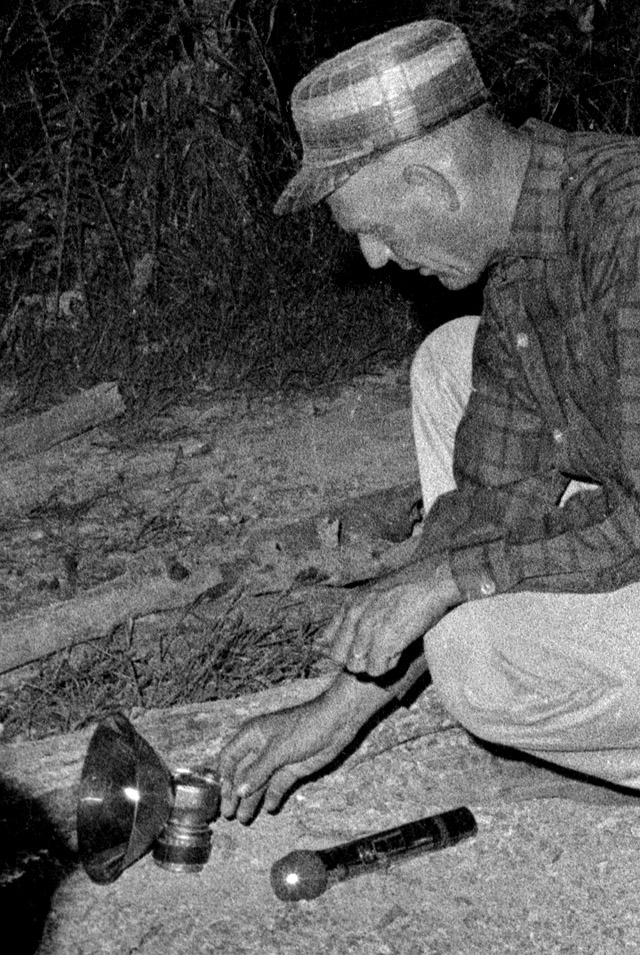
They were one of the most common sources of light for miners and coonhunters. There’s a good explanation of carbide lanterns on Mother Earth News.

I’m pretty sure we bought the lanterns at Beard’s Sport Shop. They were simple devices. They consisted of a super-bright reflector attached to a device that contained two chambers. You put water in the top chamber and calcium carbide in the lower chamber. When you dripped water onto the carbide, it would emit acetylene gas – the same stuff you use mixed with oxygen for welding. A wheel flint, like on a cigarette lighter, would provide a spark to ignite the gas. No matches required.

Calcium carbide was available in just about any hardware store when I was a kid. We kept ours in a big glass jug with a wide mouth. It looked like gravel. In fact, we’d freak out new campers by putting some on the ground and pouring a little water on it. Casually pitching a match in the general direction of the brew, we’d warn them that you had to be careful where you built your fire because the gravel around there would burn. POOF! They’d spend an inordinate amount of time trying to light rocks until you clued them in.

The highly efficient reflectors would throw a beam a long way. If you cut back on the water drip, they’d burn for hours. The only catch was that they emitted a lot of soot that would clog the gas passage. They were great when they worked, but I always found them a pain to keep burning.

Carbide lanterns are hard to find these days. There was only one listing for carbide lanterns on Amazon. This caver site has some good information on how to buy a used lantern.
Send in the Clowns

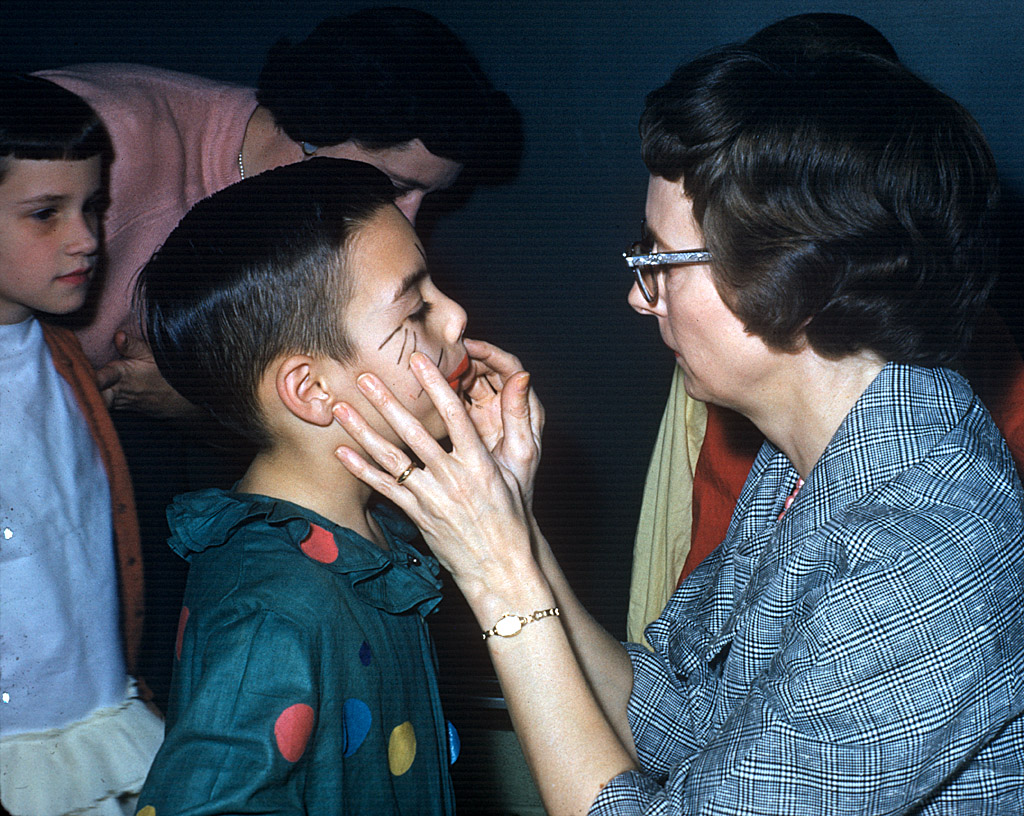
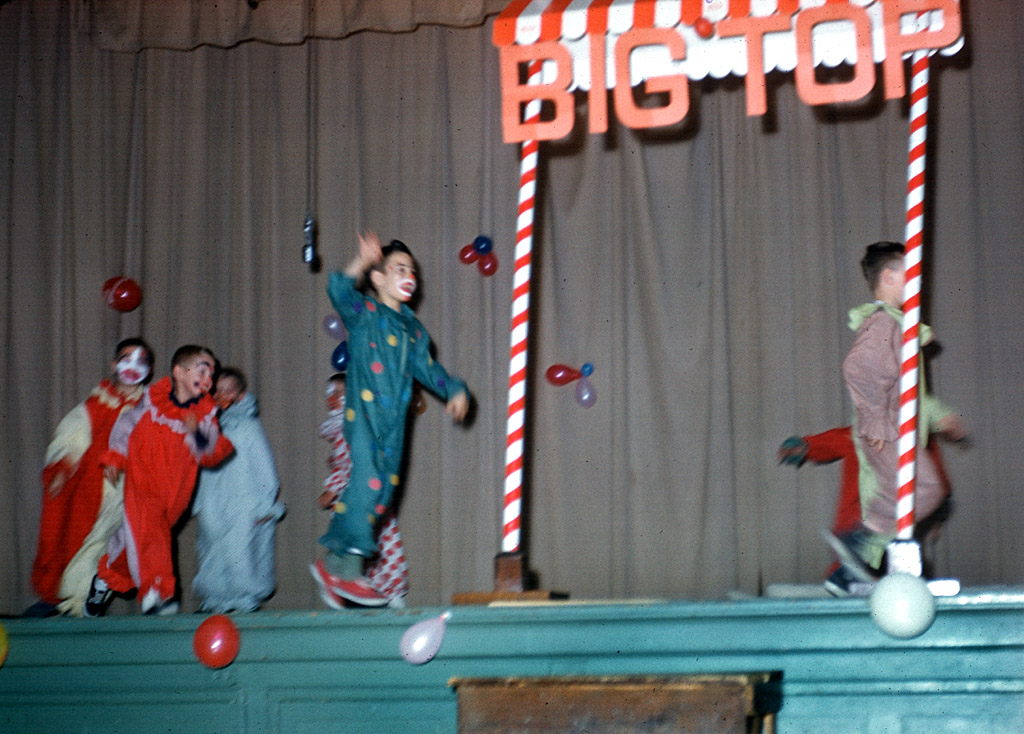
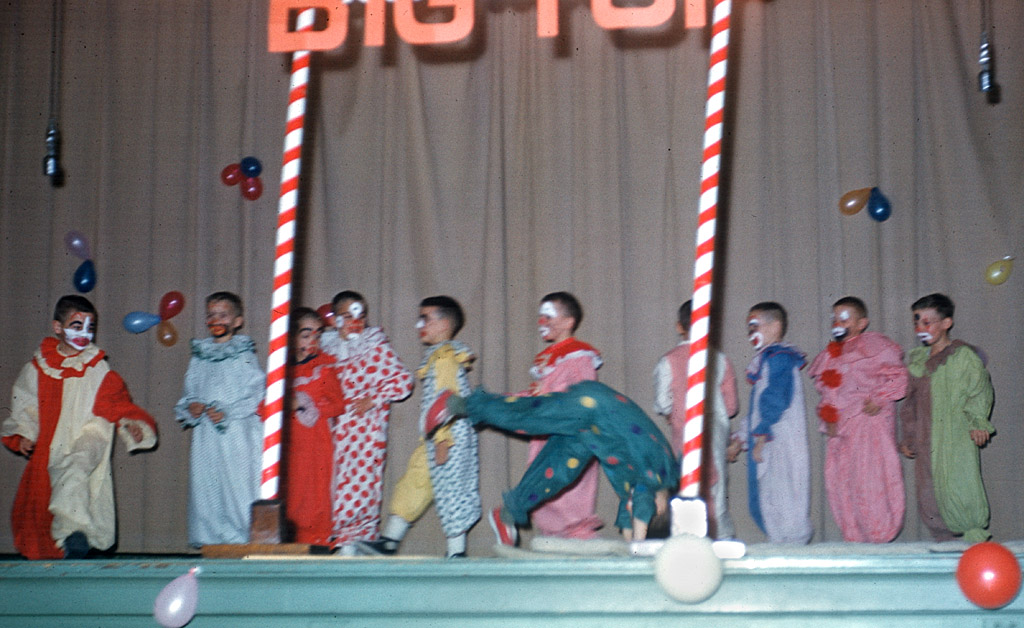
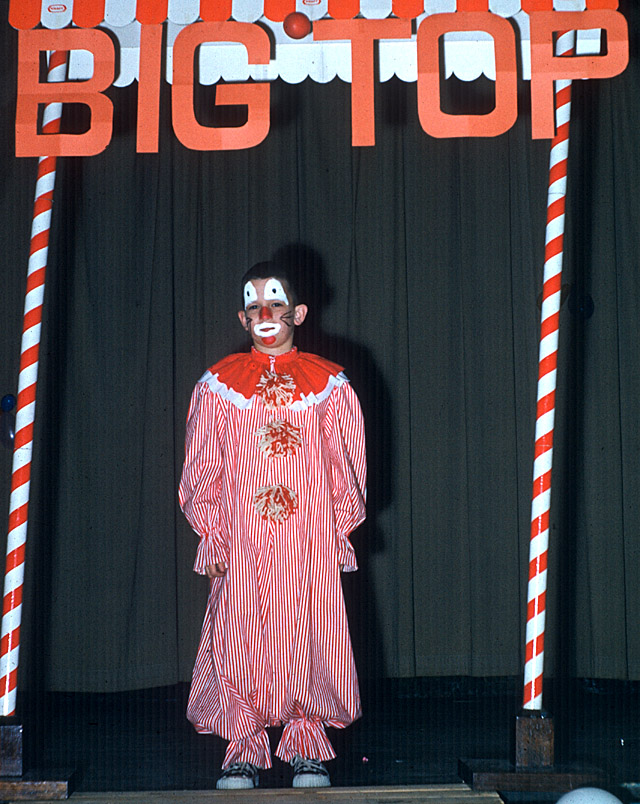
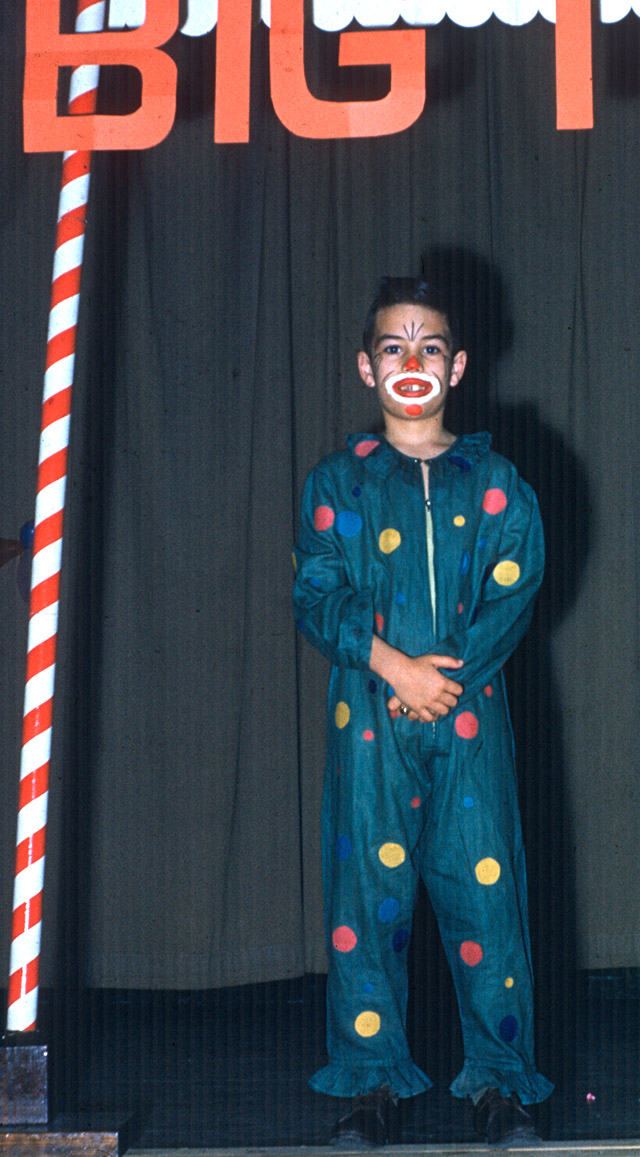
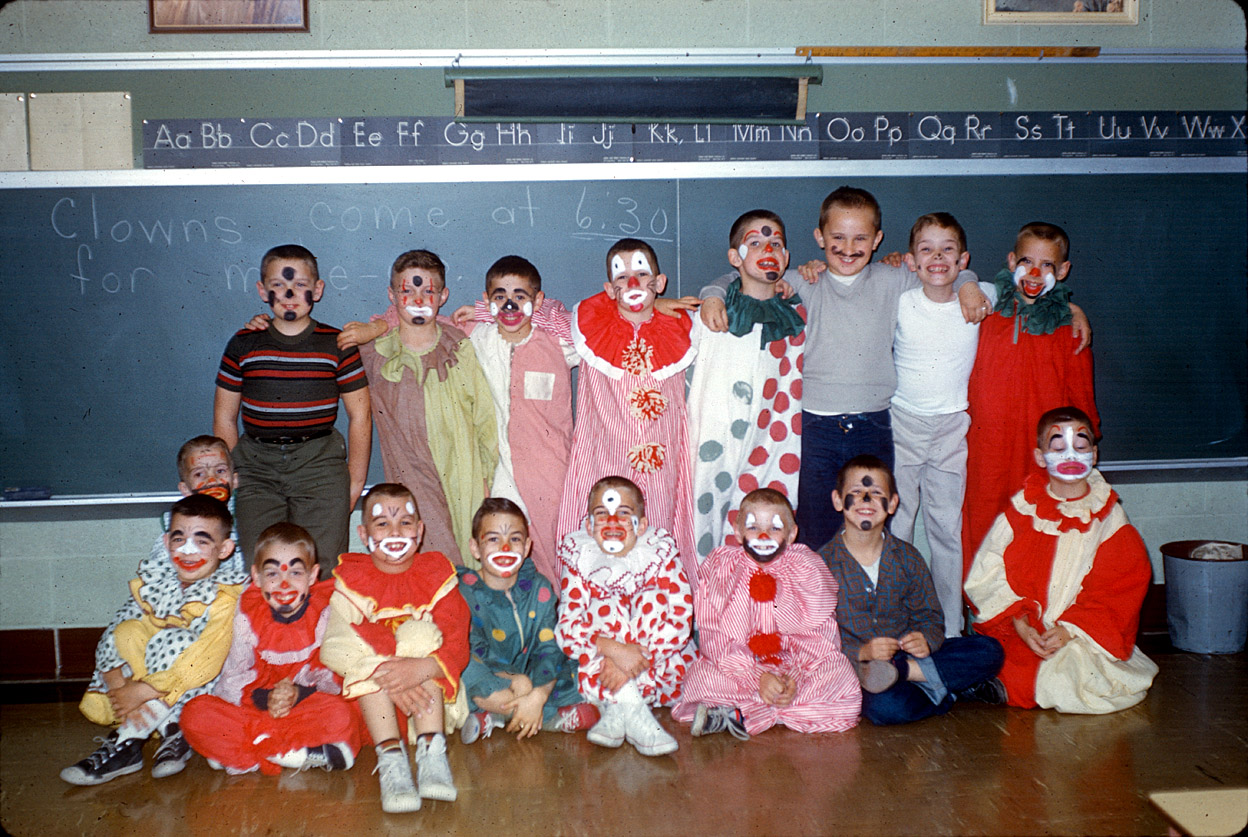
Brother David was a clown as far back as March 1962. This looks like kindergarten or first grade at Trinity Lutheran School. He’s in green, fourth from the left in the front row. Click on the photos to make them larger.

I know what part I’d get

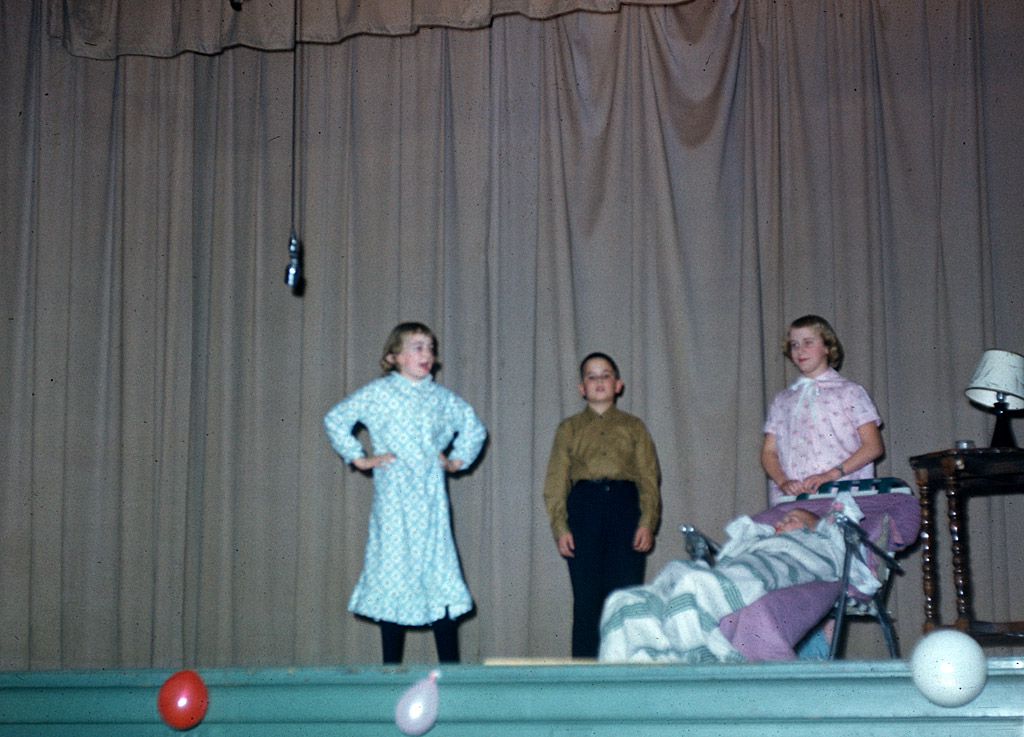
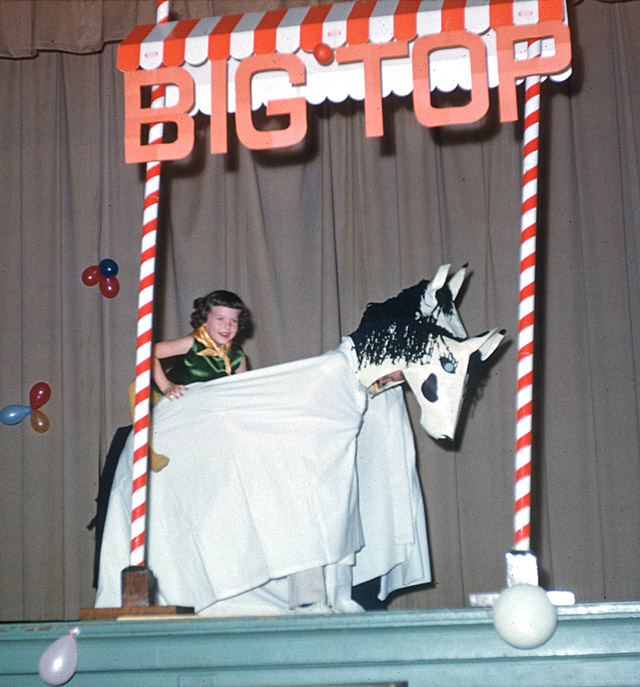
I don’t have access to a playbill, so I don’t know anyone except David. I’m pretty sure I’d have been cast as the south end of the horse the little girl is climbing on.

Fred Lynch’s blog has a shot of me as an angel in the third grade. Then, there was the time John Mueller, Rick Meinz and I were forced to don priestly collars. I think we would have done better as horse hind-ends.

Trauma of school plays

I don’t have many pleasant memories of school plays.

I TOLD my kindergarten teacher that I REALLY had to go to the bathroom before I went on stage, but she said I’d have to wait. Well, there are some things that won’t wait, even if you are going on stage. It was lucky I was wearing dark blue pants.

Friend CT, who who was an editorial writer for an east coast paper messaged me not long ago, “It was you, wasn’t it, who told me 40 years ago that writing editorials is like wetting yourself in a blue serge suit: it gives you a nice warm feeling and nobody seems to notice?”

I swiped that line from someone else, but I’m sure my traumatic moment on stage seared that old saying in my mind.

High school plays

By the time you got to high school, being accepted by acting clubs like Red Dagger or Silver Spear raised the odds that the actors would have a modicum of talent as opposed to elementary school performances where everybody had to play a part. Here are some high school and college plays.


Photo gallery of school play

I don’t have any more information about the play, so it is up to you to ID the players. Click on any photo to make it larger, then click on the left or right side of the image to move through the gallery.


Easter Egg Hunts in 1962

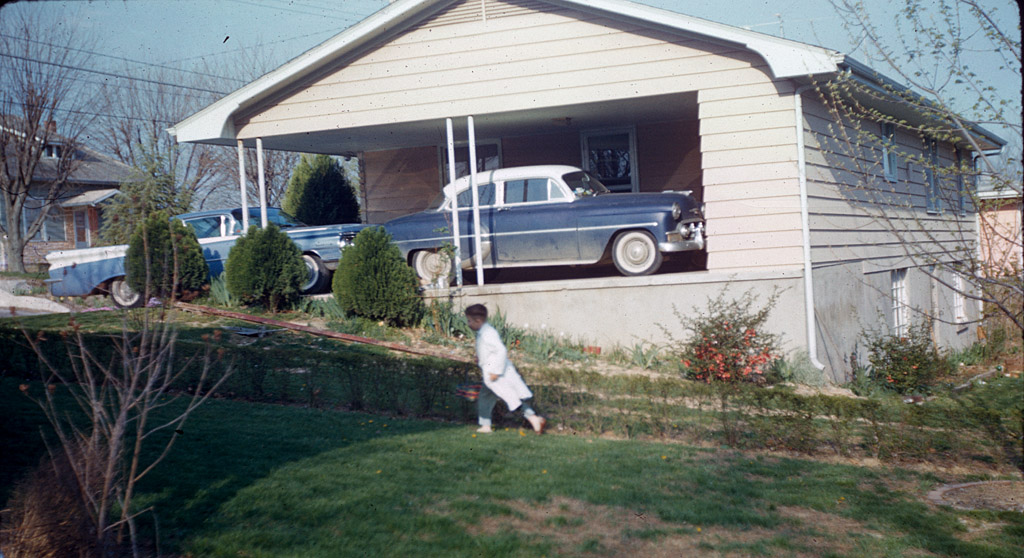
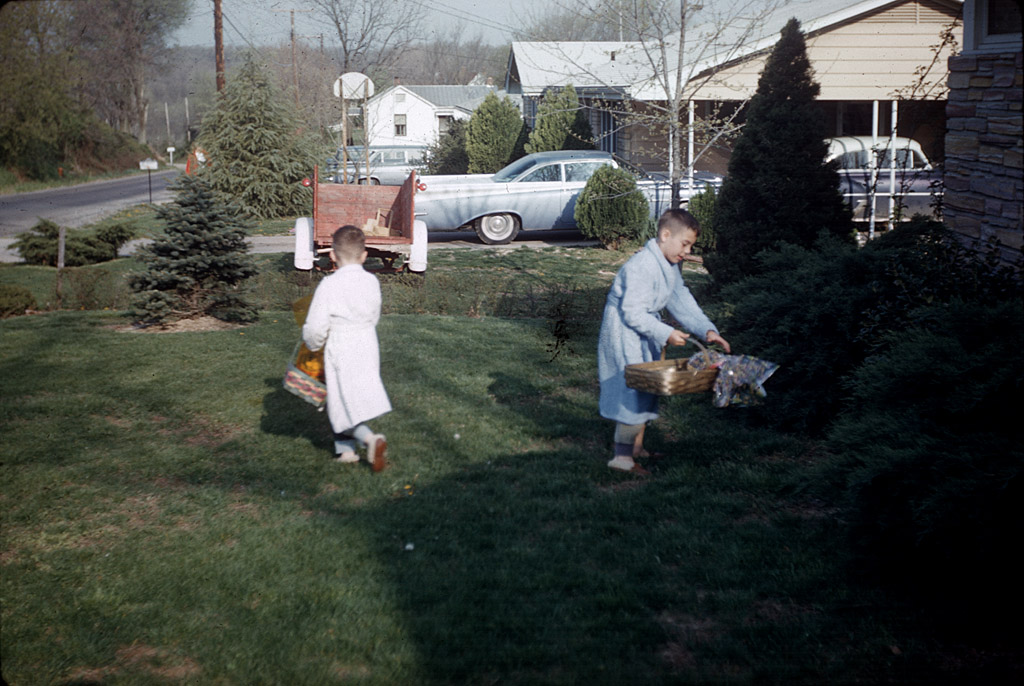
I was emptying and filing mostly family pictures that were still in slide trades from an Ansco slide projector that was long ago retired. These photos of Easter 1962 were in the mix. I find them interesting for things that are in the background of some of them.

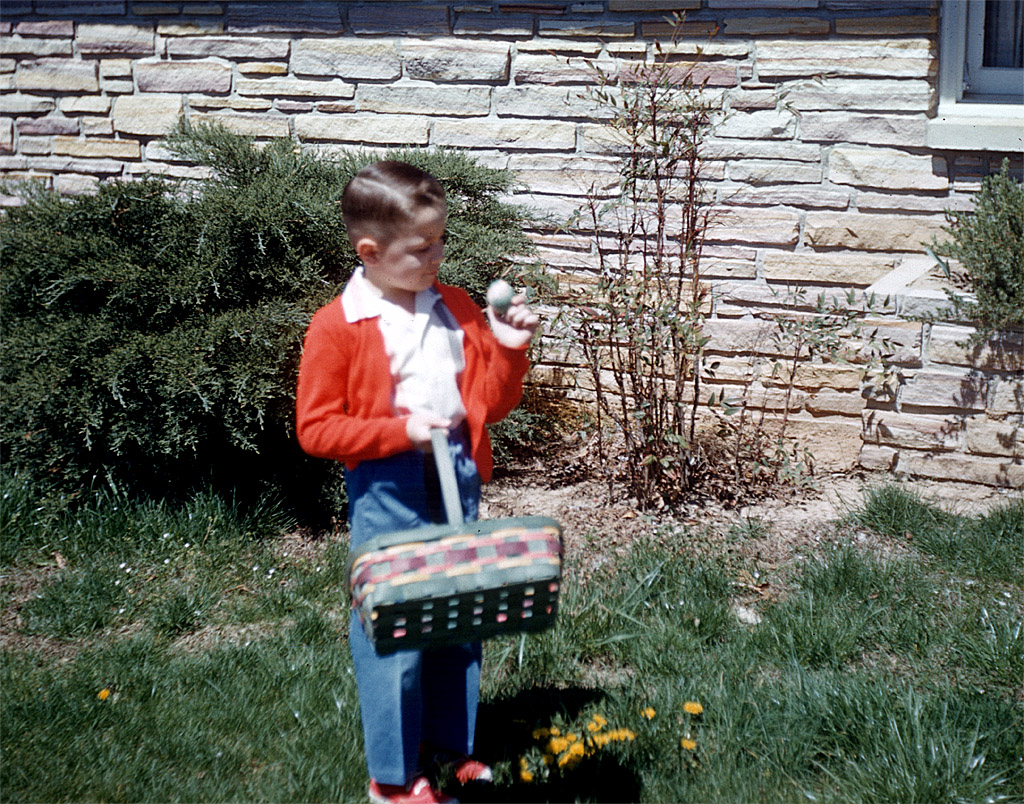
Brother Mark inspects an Easter egg he’s found in the front lawn. You can click on the photos to make them larger, but I’ll warn you that some of them aren’t all that sharp.

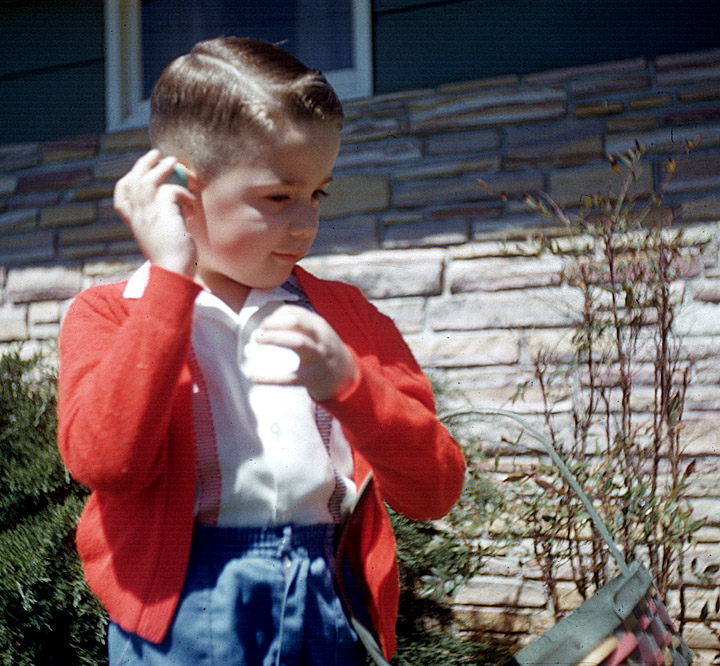
He’s listening for the sound of the ocean

Sometimes he gets things a little confused. He remembers hearing someone saying that you can hear the sound of the ocean if you hold a shell up to your ear. He didn’t get the part that it had to be a SEA shell, not an EGG shell.

Scampering past the Ailor house

Mark is running up the hill on the west side of the house. The Ailors lived there then. The hedge between the two houses has grown up over the years and some maple trees that we planted as saplings are huge and just about the end of their life.

A view down Kingsway Drive

That’s Brother David on the right The white house down the hill, occupied by the McCunes in 1962, has been torn down. The basketball goal would have belonged to Bobby and Gary Garner. I see the Ailor car still has snow tires on it. They must be afraid that winter is going to make one more pass.

Here’s what the neighborhood looked like from the air.

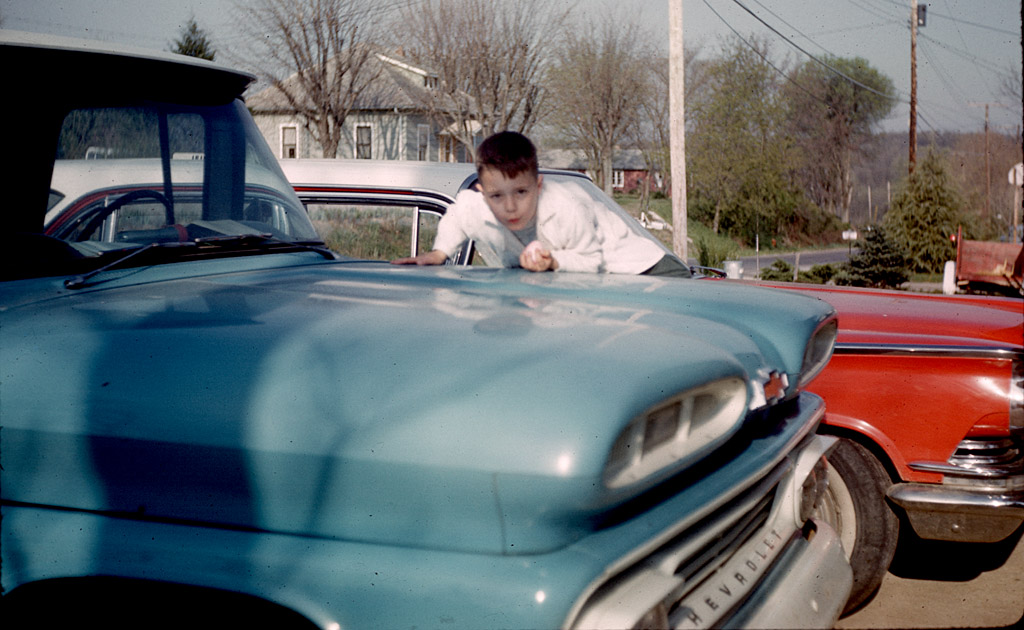
Hunting eggs was a challenge

The Easter Bunny liked making things a challenge. This egg was located under the windshield wiper. That’s Dad’s Chevy truck in the foreground and our 59 Buick LaSabre station wagon in the background. Ernie Chiles hadn’t taught me to drive yet, so the right front fender is uncreased.

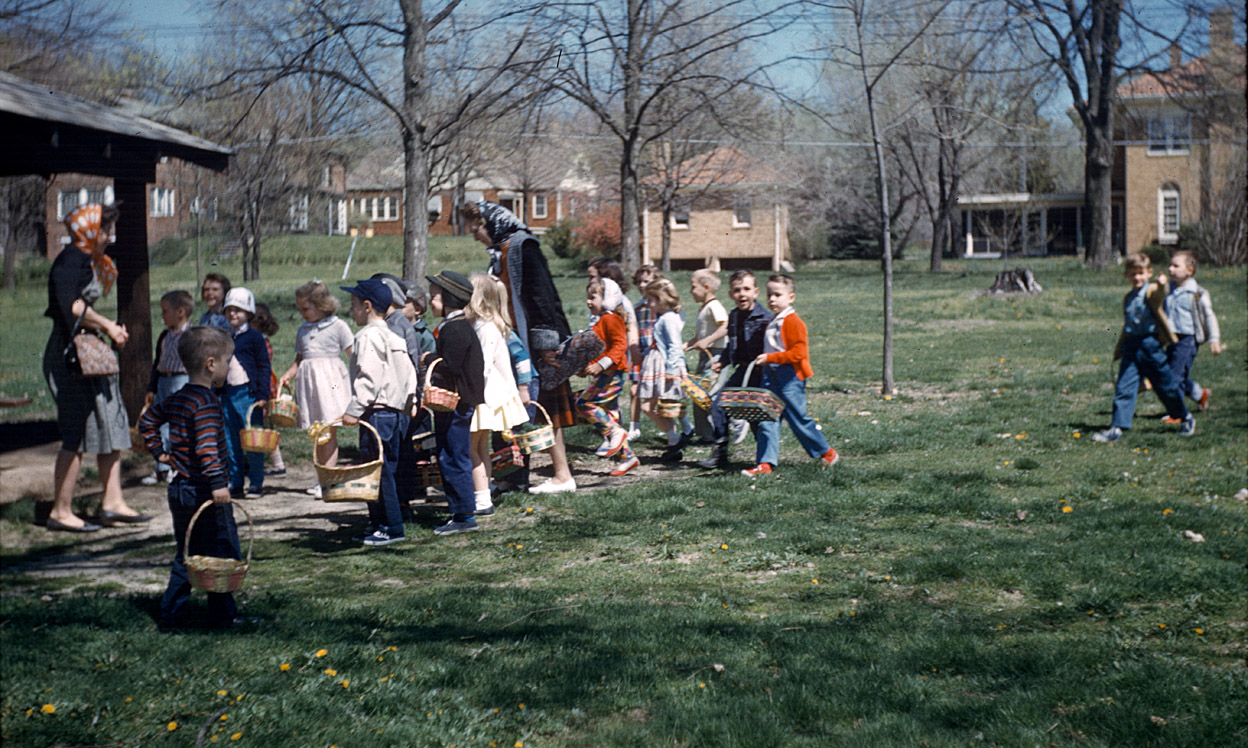
Easter egg hunt at Capaha Park

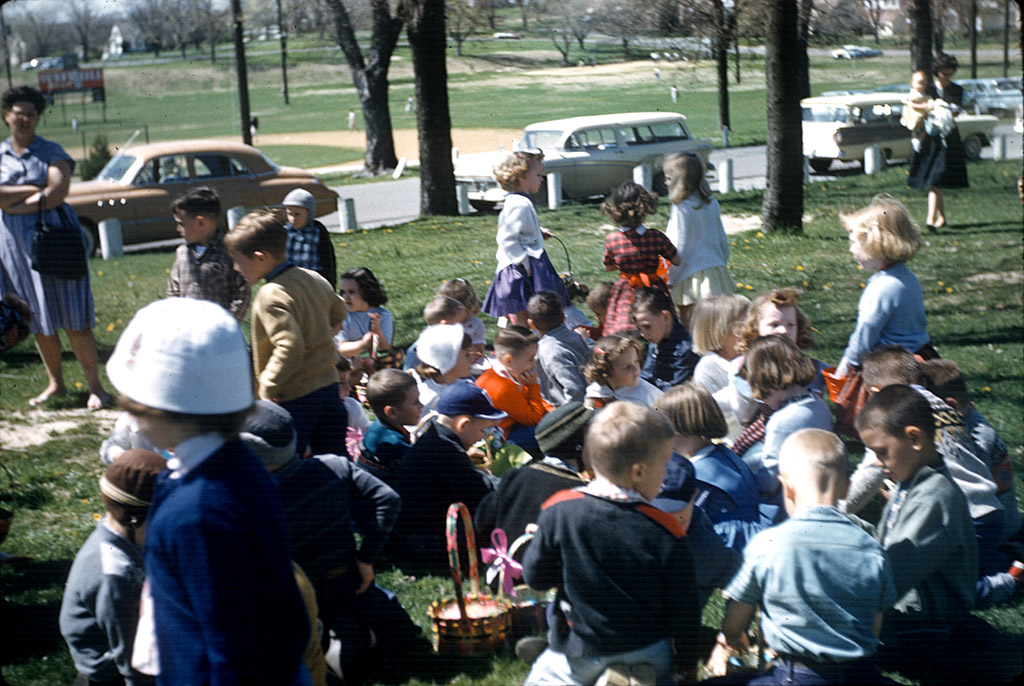
I’m not sure what group this was. Mark’s in the red shoes and sweater, so it has to be some of his friends or his class. This pavilion is east of the ballfield and north of the pool.

The Boat House in background

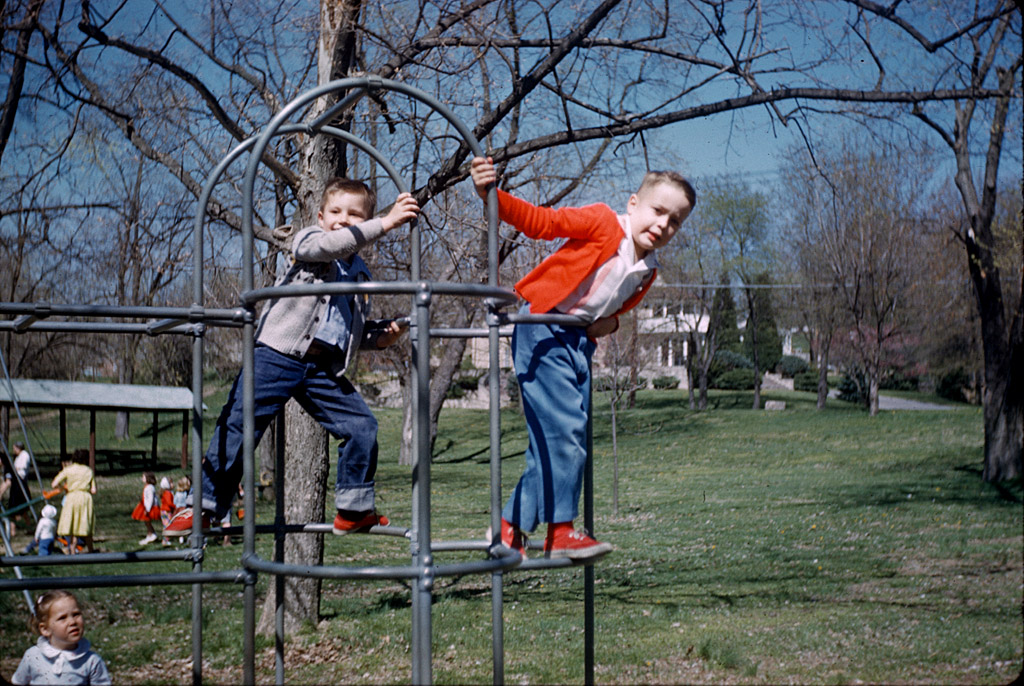
When the kids weren’t stomping errant Easter eggs, they were climbing on the playground equipment. Cape’s landmark Erlbacher Boat House is in the background.

Mark stands out

Notice how Mark is placed right in the middle of the group and how his bright red sweater takes your eye right to him? Mother recognized that he had just a few cute years in him, so she tried to make him as visible as possible during that small window of time.

Capaha Field is a lot fancier today.

Capaha Pool is history

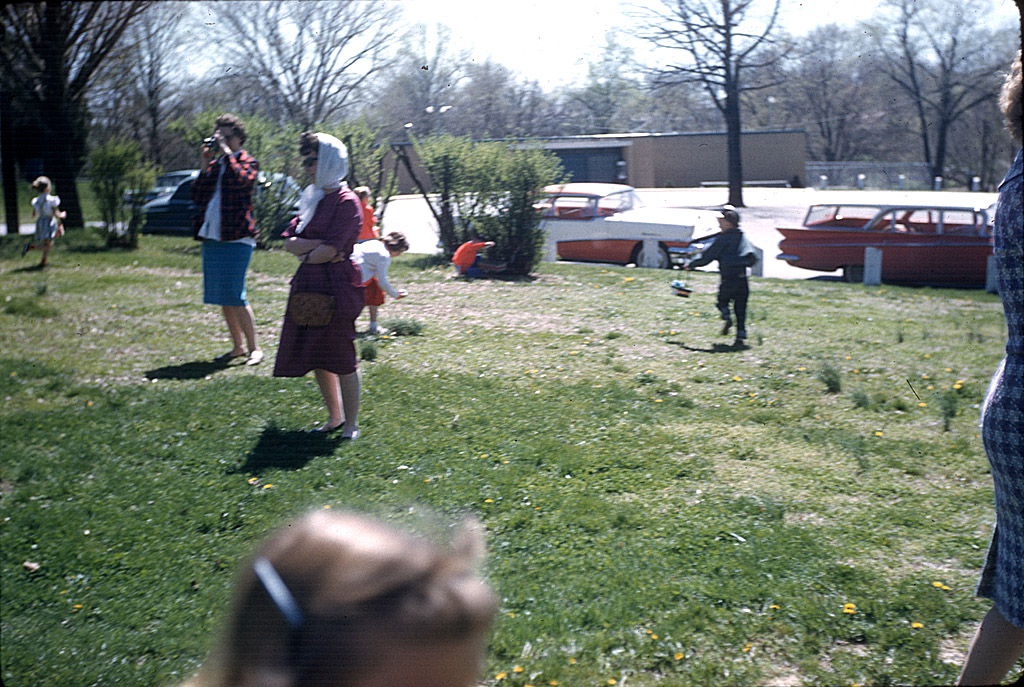
I was all set to delete this shot. At first glance, I thought that it wasn’t overly sharp and there was no clear center of interest. Then I got to looking at it like a photographer in the Ohio University Fine Arts program and convinced myself that it was art because of all of the interesting elements. Notice how the running boy and girl and the one bending over have been frozen in time, never to reach their goals. The two women on the left are oblivious to the action that’s going on behind them. The woman on the right keeps you from sliding out of the frame and the little girl at the bottom adds mystery.

Or, it could just be a fuzzy picture. Anyway, you won’t see this view today: the Capaha Pool was torn down last year.

Other Easter stories


Some Days You Make Pictures; Some Days You Make Memories

Wife Lila was trying to make some space in the guest room closet when she asked, “Did you know there’s a big plastic box of slides and film in here?”

The answer was, “No, but I hope it’s got some stuff in it that I’ve been looking for.”

Unfortunately, it doesn’t appear to contain photos of the old St. Francis Hospital before it was torn down or two slide trays from my trip to Philmont Scout Ranch.

Smiles and moisture

It DID have a treasure trove of color slides and black and white photos from 1961, when I got my first 35mm camera, an Argus Autronic 35. I used it to shoot photos of my Trinity Lutheran School classmates, scenics and some family photos that bring a smile to my face and, in a few cases, some moisture to my eyes. (Click on any photo to make it larger.)

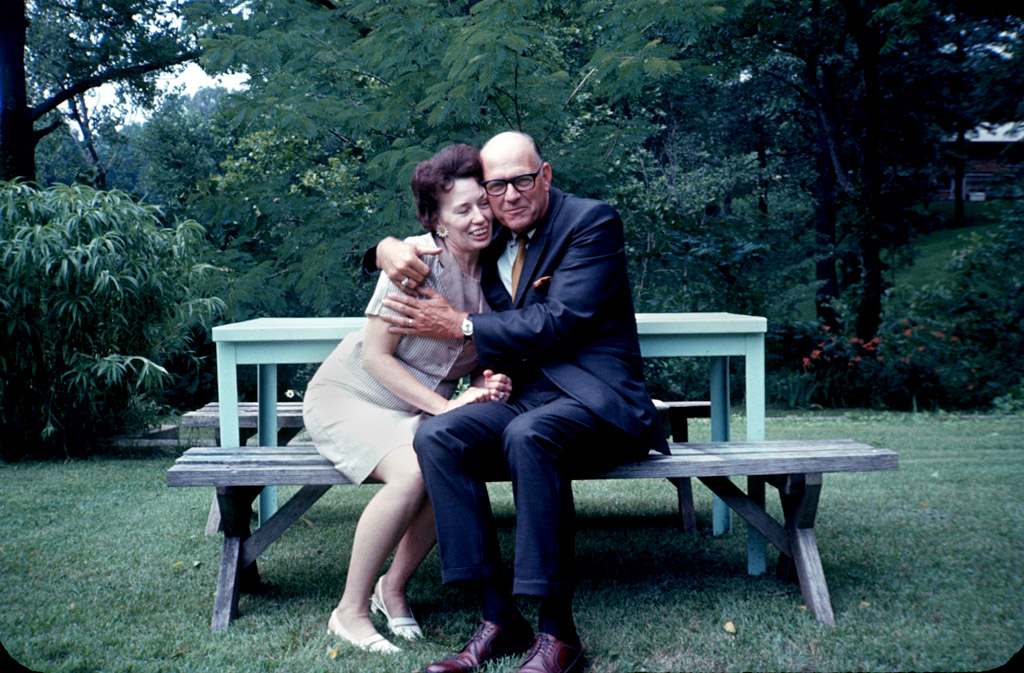
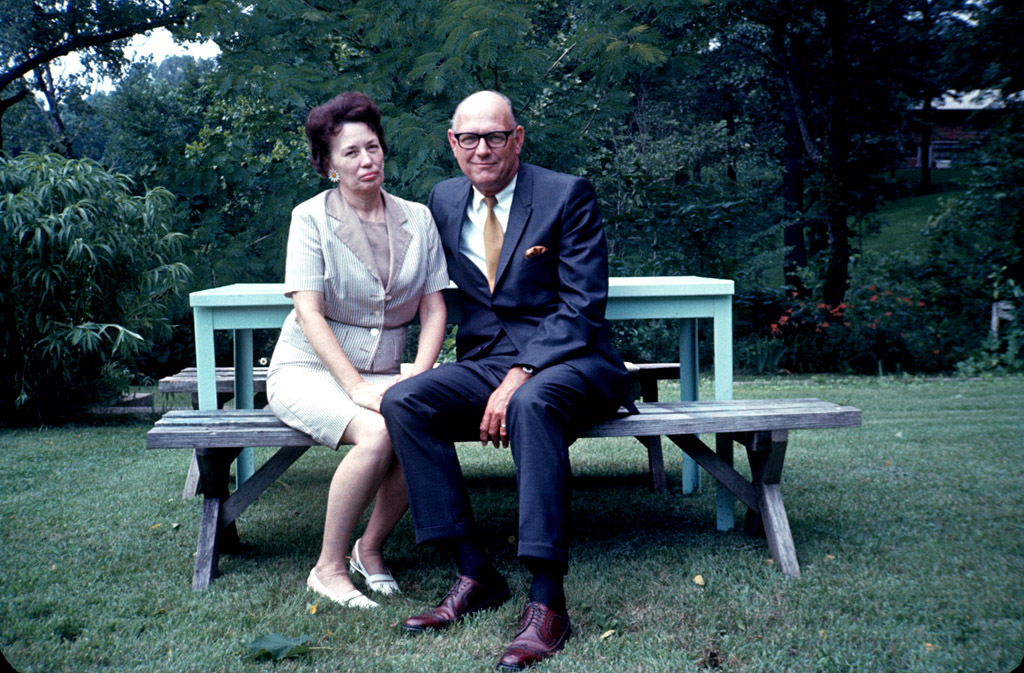
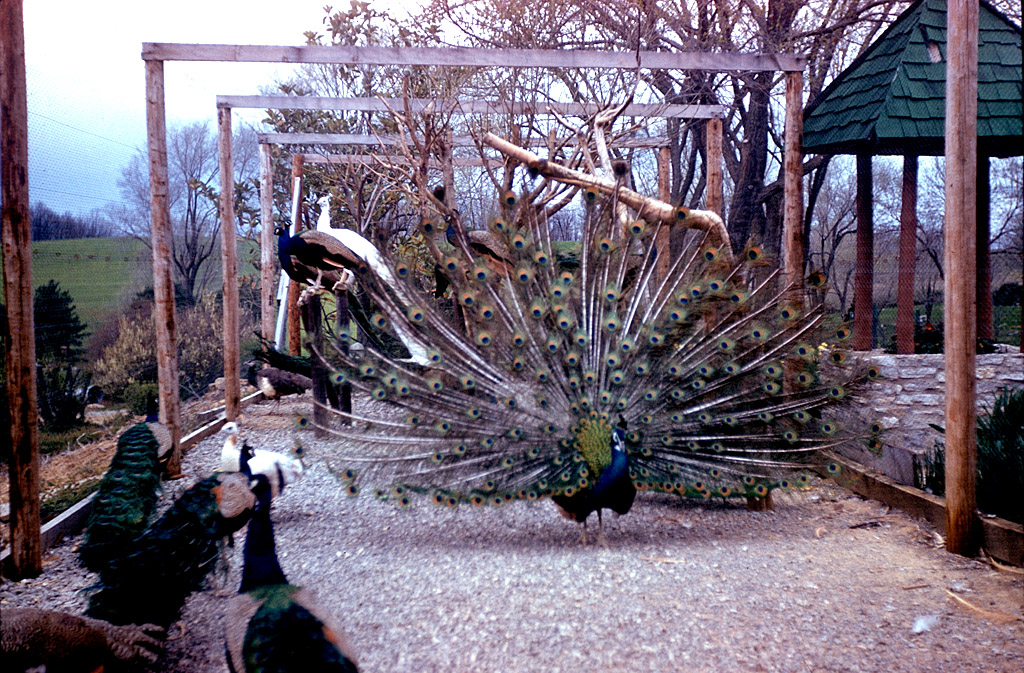
I started to make this a piece about the peacocks at Memorial Park Cemetery – even had the photos uploaded and the headline written, but I kinda painted myself into a literary corner and decided to put that photo of Mother and Dad in to get me out of it.

I don’t remember taking it, probably because the moment didn’t mean as much to me then as it does now. I often say that some days you make pictures; other days you make memories. This was one of those cases when I’m glad I made a photograph that lets me fill in a memory that I DIDN’T make at the time.

One day you’ll understand

I think Dad knew what had happened. I can read in his expression, “Kid, one of these days, you’ll understand.”

Composition needed work

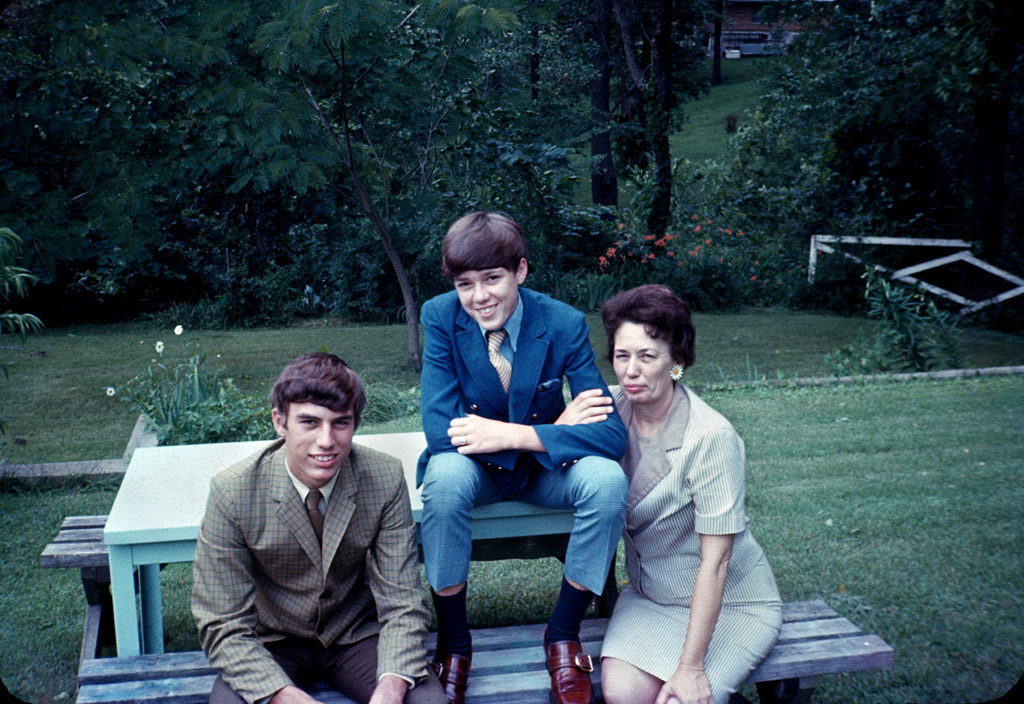
We had a pretty back yard, but I don’t think it was nice enough to explain why I cropped the picture the way I did to show more yard than family. That’s Brother David on the left and Mark in the middle.

Chekov’s Gun and the peacocks

“Checkov’s Gun” is a literary rule that says “If in the first act you have hung a pistol on the wall, then in the following one it should be fired.” Since I brought up peacocks, I guess I better produce them. This was one of several peacock pictures from 1961. You may see others later.

I wrote about the history of Memorial Park and the Tower of Memories in the fall of 2010.