Benjamin F. Hunter Cabin

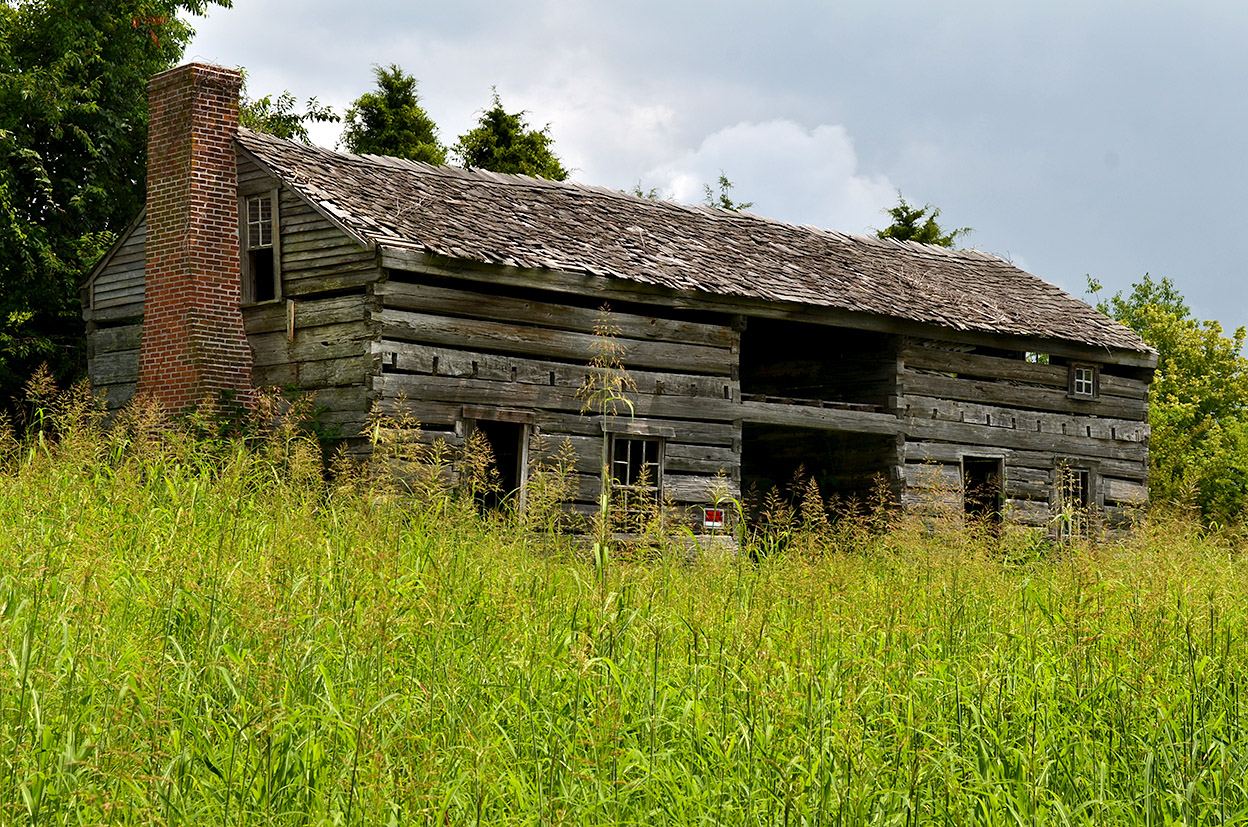
Benjamin Hunter Cabin 08-09-2014If you look off to your right on the way down the lane to the Old McKendree Chapel, you’ll see an old log cabin if the weeds aren’t too high.

Sarah Stephens, wrote her thesis on Benjamin F. Hunter Log Cabin: A Social History Plan in fulfillment of the requirements for the B.S. degree in Historic Preservation in 2008. She did a great job of telling the history of the cabin, which was built outside Sikeston in the mid-1800s, taken apart in the early 1980s, then reconstructed on this site.

Rather than rehash the excellent job she did telling the history of the structure, the family who donated it, the conflicts that tore Southeast Missouri apart during the Civil War and the cabin’s eventual move, I encourage you to follow the link above. There’s something for just about anyone who is interested in the history of this region.

Think the Civil War was tough?
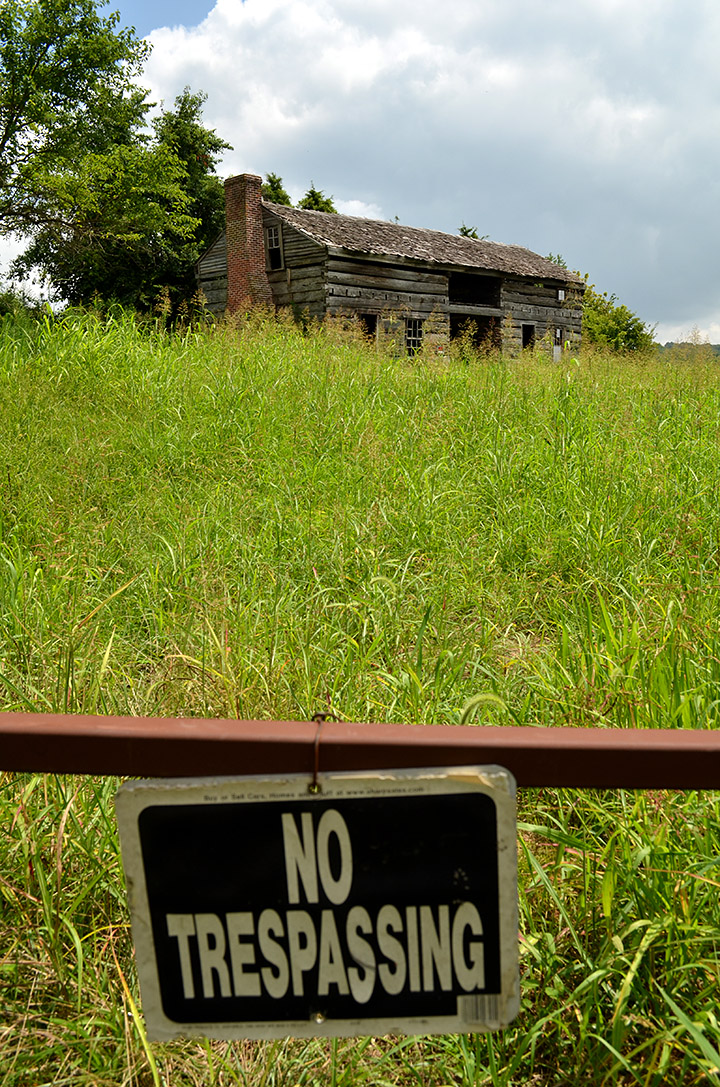
Benjamin Hunter Cabin 08-09-2014What I found as interesting as the historical notes surrounding the physical structure was the academic in-fighting that went on in determining where it was going to go. The first site was ruled out because it was going to become the Show-Me Center. The next site was ruled out when “the biology department threw a fit because that land was to be a bird sanctuary.”

” Next, they went to the college farm, marked off a site just East of Old McKendree Chapel and set the stakes and flags. Someone else got upset, so they couldn’t have it there. It ended up that they could have the corner of the present site of the house.”

What’s happening now?

I usually make it out to Old McKendree Chapel at least once every visit, and I’ve noted that there hasn’t been a lot of activity at the log cabin in recent years. It looked like the place was being treated with benign neglect.

Ms. Stephens confirms that: “Interest in developing a living history farm and interest in the cabin dwindled as time went on and the work required to maintain the vision became over whelming.

In 1992 the driving force behind the effort, Dr. Arthur Mattingly, retired. Little work was done with the cabin after Mattingly left. Dr. Bonnie Stepenoff continued work on the cabin in the mid 1990s, including repairs on the roof, chinking and daubing the walls, placing a gate around the property, reglazing the windows, and conducting additional student research.

With the closing of the University Farm and the creation of a technology park in conjunction with the extension of East Main Street and a new entrance to Interstate 55 concern over the future of the cabin surfaced again. The Historic Preservation program along with the University Foundation have begun working to give  the log cabin another chance. Finances remain the main issue with working with the house.

The future of the B.F. Hunter log cabin is uncertain, but with renewed interest and funding available the log cabin may be able to serve as a learning tool for preservation students and maybe one day for the community. The one lesson the B.F. Hunter log cabin has taught the University is the need to have long term goals which can be a reality.

Editor’s note: I don’t think Southeast Missouri State College has learned that lesson yet. The institution seems to be better at destroying historic landmarks than preserving them.
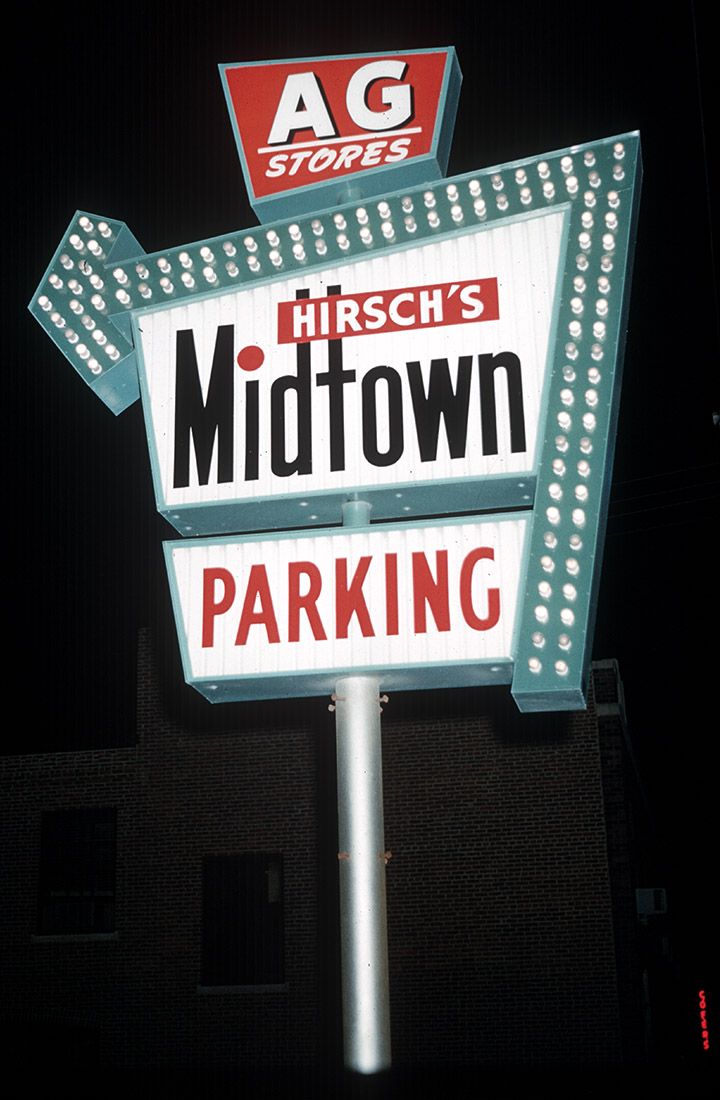


Bill’s and Hirsch’s Midtown

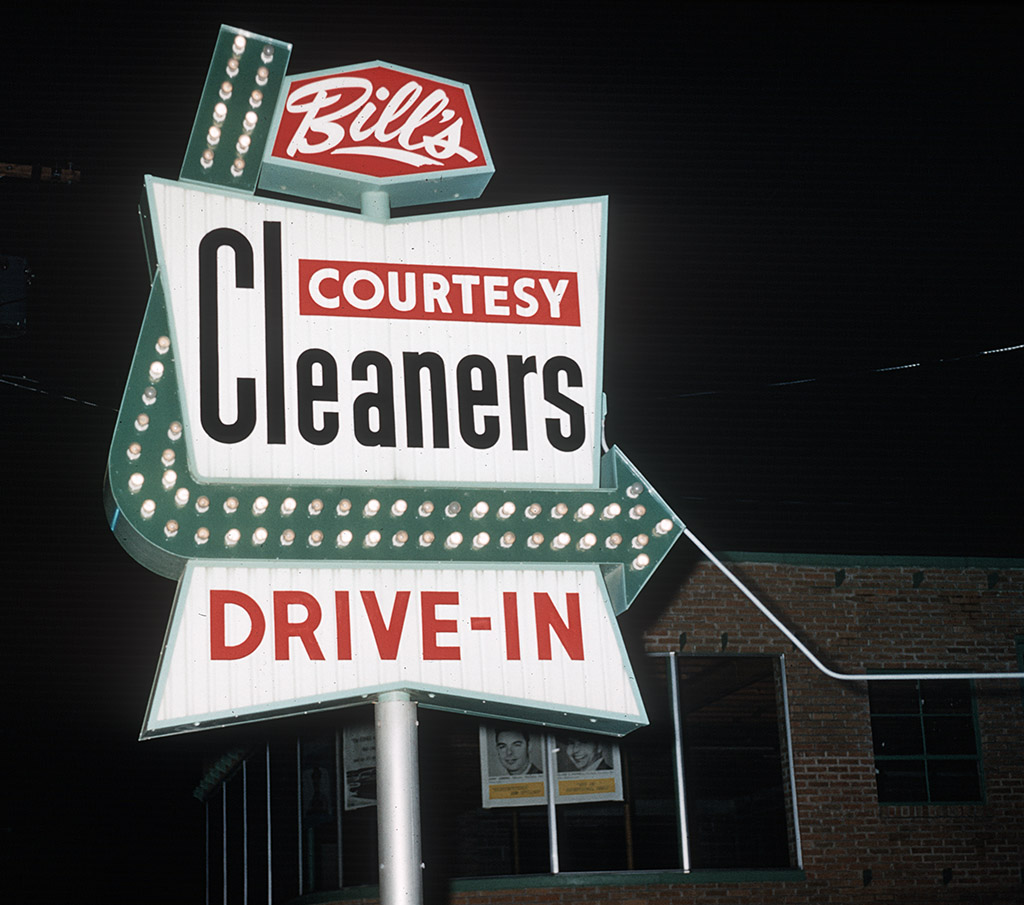
Bill's Courtesy Cleaners signWe’re dipping into Terry Hopkins‘ dad’s General Sign box again. This time I ran across two signs that shared a bunch of elements.

Bill’s Courtesy Cleaners was located at 1107 Broadway, more or less across from Houck Stadium. The cleaners were housed in one of two buildings built by Eddie Erlbacher shortly after World War II. I photographed the school board moving a big safe out of the second floor of the twin building to the east.

The property had an interesting past, detailed in a Fred Lynch blog in April 6, 2010.

Hirsch’s Midtown

Hirsch's Midtown signThe Hirsch’s sign’s has the same arrow and basic shape. I wonder how many other businesses in the area shared those pieces / parts?

I did a post on Hirsch’s Midtown in 2012, and it generated quite a few comments. So many, in fact, I followed up with another story about the Hirsch Bros. No. 2, otherwise known as Hirsch’s Northtown.

It was better known to later generations as the Mule Lip or Margarita Mama’s. It’s a casualty of the Casino, but the Midtown store is still standing.

Mystery sign

Hirsch's Midtown signIf you look closely at the bottom right of the Hirsch’s sign, there are some tiny red letters faintly visible. Blowing them up just makes them blurrier. The appear to spell COFERS. I looked at the 1968 City Directory and didn’t see any business in the 200 block of South Sprigg that came close to that.

Ideas?

 UPDATE UPDATE UPDATE

I usually post the blog at about 2 a.m., and after I’m done I check to see if Fred Lynch has updated his f/8 and Be There blog. I didn’t check it before going to bed, so I was stunned this morning to see his topic was “Cofer’s Men’s Store.”

I emailed him to ask if he had seen my topic and decided to piggyback it (we exchange links, which builds traffic for both of us, and it helps readers fill in the gaps).

His response: “Are you kidding? I’m in bed by 10 pm. You retired folks amaze me with your sleeping habits. Anyway, I am two weeks or more ahead with finished blogs so yes, quite a coincidence.”

Working people can be SO organized. I usually don’t start thinking about the next days’ post until around 9 p.m. the night before.

Fire Station No. 4 Missing

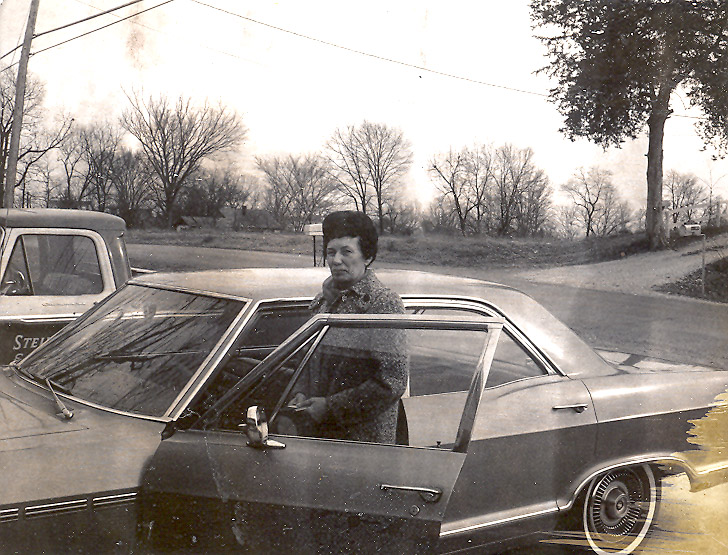
Mary Steinhoff Kingsway DrWhen I looked at this old Polaroid photo of Mother, I thought there was something odd about it. Then it dawned on me: it was taken before Fire Station No. 4 was built at the corner of Kingsway Drive and Kurre Lane.

(If you wonder how I knew it was a Polaroid, look at the brown, irregular stain at the bottom right of the photo. This was one of the early generation cameras where you had to peel the photo off the roll, then coat it with a sticky, sharp-smelling chemical which would, invariably, get all over your fingers. The fix or whatever it was never applied evenly, so the picture had streaks, and if you missed a place, you’d get this brown stain.

Neighborhood from the air

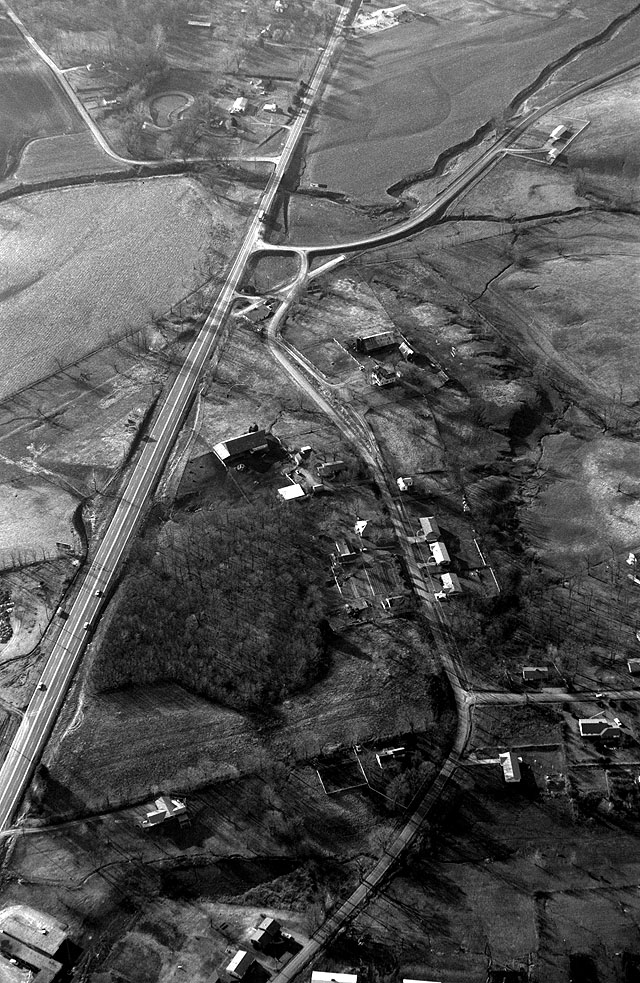
Kingsway Drive with Cape LaCroix Creek at top 1966Here’s an aerial photo taken at about this same time. I published it and some other pictures back in 2010, and it got lots of comments that are worth reading. There’s a more recent aerial here.

Click on the photos to make them larger.

Shakspere on Kent Library

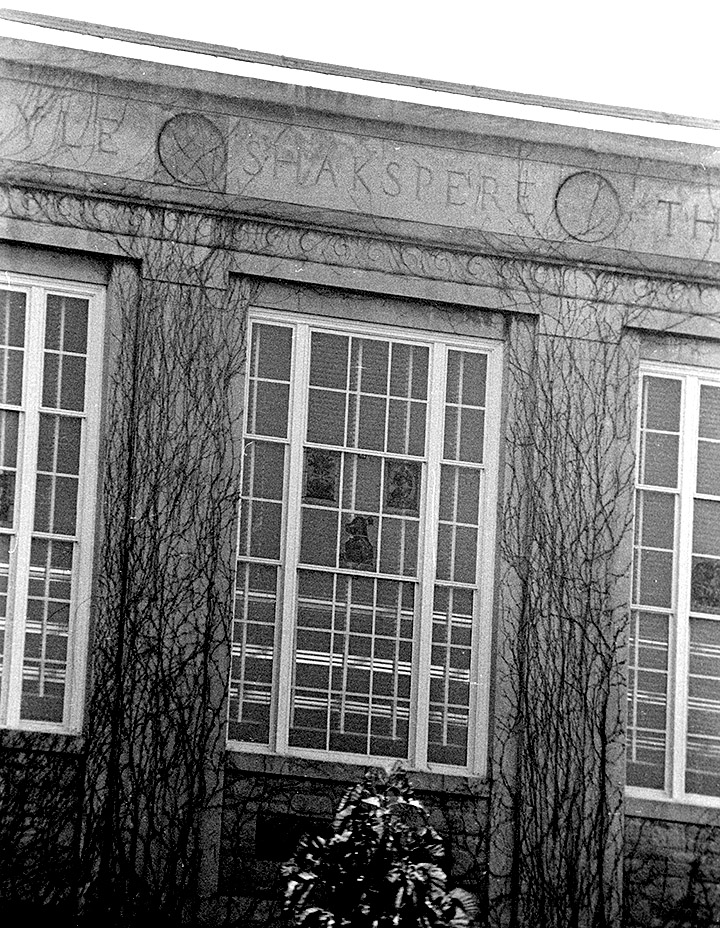
Kent Library pre-1967Son Adam brought Grandkidlets Graham and Elliot over this evening to give their mother a few hours of piece and quiet.

That left me scrambling for something to post this morning. I came up with a long-forgotten (and poorly composed) shot of the front of Kent Library before a wraparound covered the names of seventeen writers chosen by English professor Dr. Harold Grauel and Dr. W.W. Parker, then president of the university.

Fred Lynch’s February 22, 2010, blog lists the names as “Walt Whitman, Mark Twain, William Shakespeare, John Milton, Ralph Waldo Emerson, Cardinal John Henry Newman, Virgil, Geoffrey Chaucer, Thomas Carlyle, John Ruskin, Leo Nikolayevich Tolstoi, Henry David Thoreau, Edgar Allen Poe, Eugene Field, Victor Hugo, Homer, Johann Wolfgang von Goethe.

Kent Library in 2010

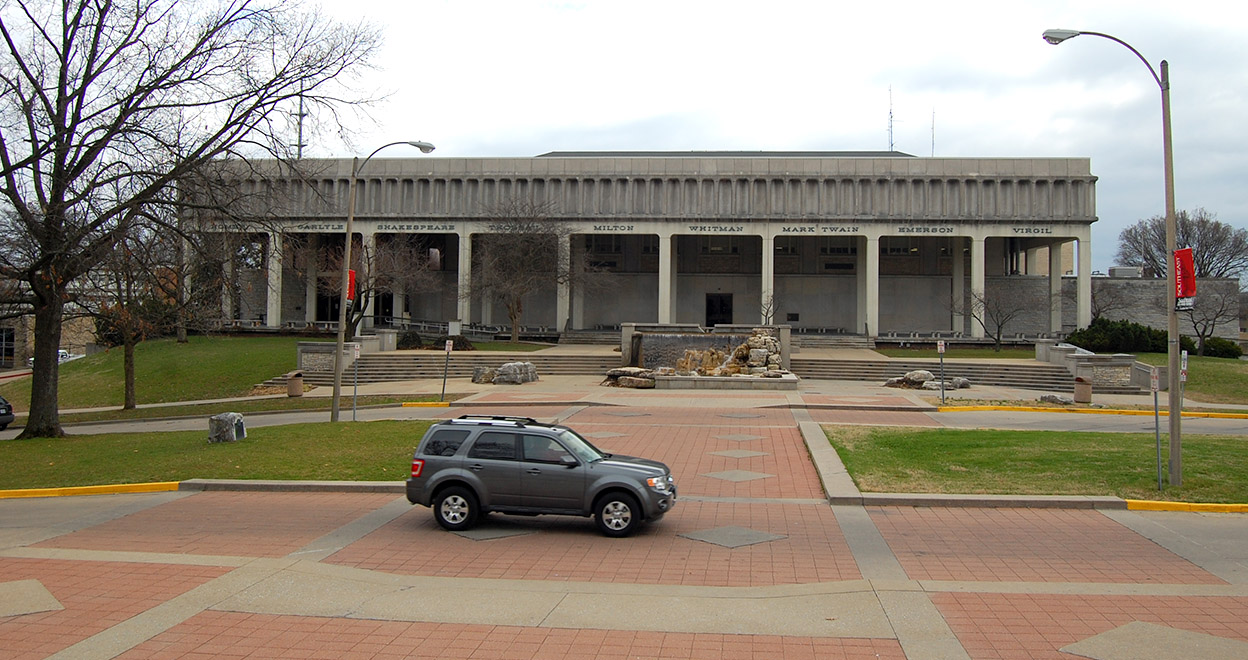
SEMO's Kent Library 03-16-2010Here’s what the library looked like in 2010. One-Shot Frony took a picture from almost this same angle in the late 1940s if you’d like to make a comparison.

By the way, Wife Lila questioned the spelling in my headline. Fred’s blog talks about that:

Grauel recalled that the stone mason wanted to alter the spelling of Shakespeare. Grauel suggested “Shakespere,” one of several ways that the famous playwright spelled his name.

That spelling was used on the frieze. Soon after, letters arrived at the school from people critical of what they felt was the “misspelling” of the name.

“When the enlargement of Kent Library was undertaken in the ’60s, I saw to it that the name of Shakespeare appeared on the new facade as SHAKESPEARE,” Grauel wrote.

Earlier stories about Kent Library