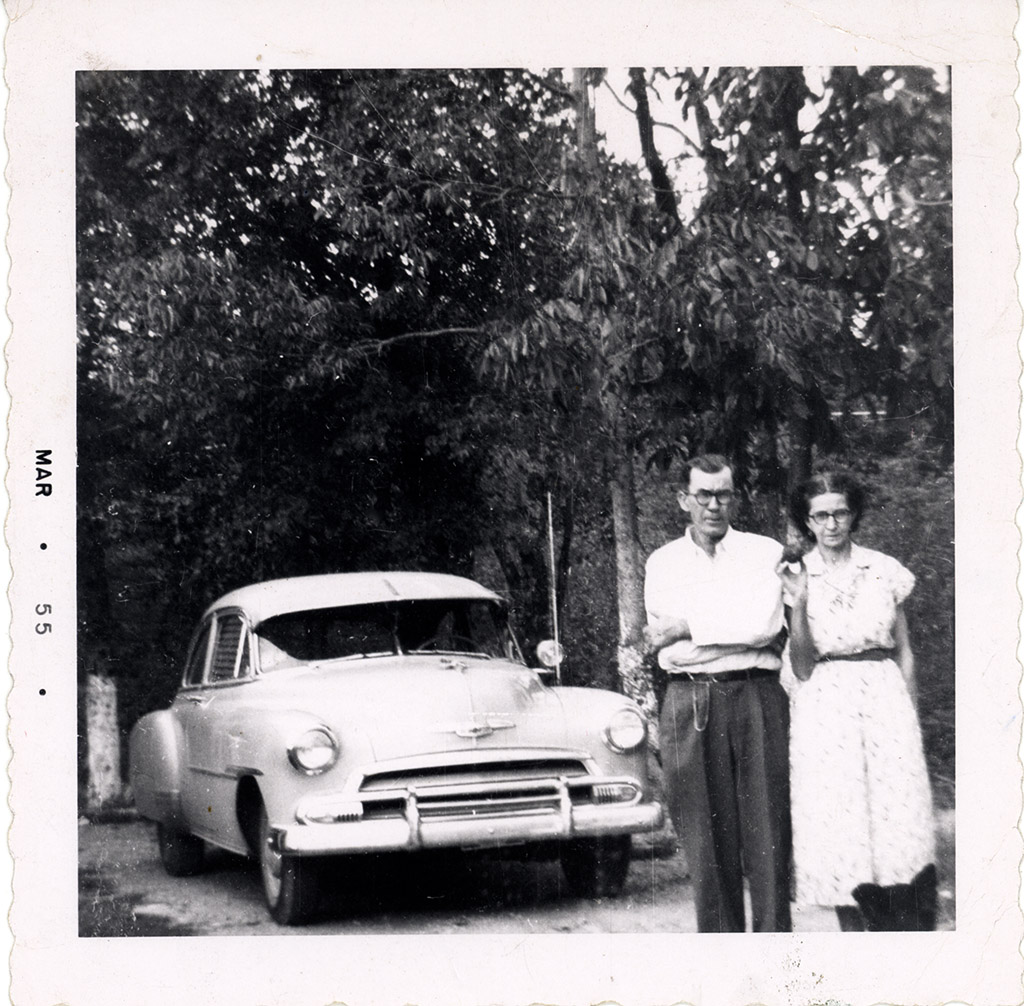
Bob and Mary Tinker

Bob - Mary Tinker 03-1955I ran across a photo of neighbors Bob and Mary Tinker in an American Gothic pose. The date on the side of the print – March 1955 – means it was taken just about the same time we moved into our house at 1618 Kingsway Drive.

Mary is holding something in her hand, probably something she grew in her garden. (Click on the photos to make them larger.)

Check out the spotlight

Lots of cars of that era had spotlights. Even our 1959 Buick LaSabre station wagon had one integrated into the driver-side mirror. I thought it would be great for reading street signs and addresses, but it never worked.

If you went the drive-in movie, as soon as it got dark, impatient patrons would fire up their spotlights and start playing fox and hounds on the movie screen. Shortly after that, horns would start honking to wake up the projectionist.

How I remember Mr. Tinker
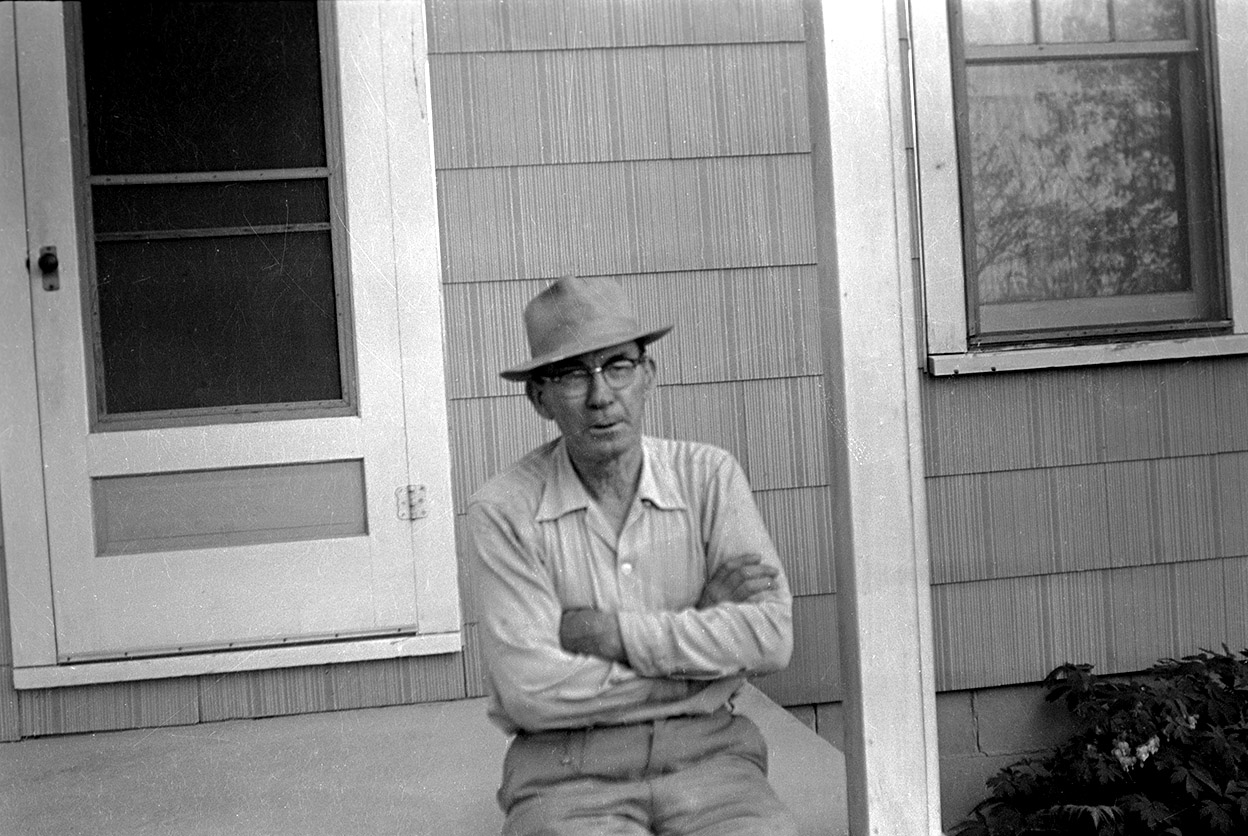
Bob Tinker c 1965I almost didn’t recognize Mr. Tinker in the top photo because he almost always had a hat jammed on his head like here.

Mrs. Tinker in 1976

Mary Tinker c 1976The Tinkers and the Grays, who lived just down the street from them, were great neighbors. This was taken in back of the house.

One of the oldest houses

Mrs. Bob Tinker 1617 Kingsway DriveThe house at 1617 Kingsway Drive, is the oldest on the block, and the only one still standing of the original ones from the days when we were outside the city limits.

The Boltons live there now

Rhonda Bolton's 50th Birthday Party 08-02-2014Bill and Rhonda Bolton live there now. The house still looks from the outside a lot like it did in 1955, but Bill and Rhonda have made a lot of improvements to it. No matter how long they live there, though, we’ll always refer to it as “The Tinker House.”

When Rhonda turned 50
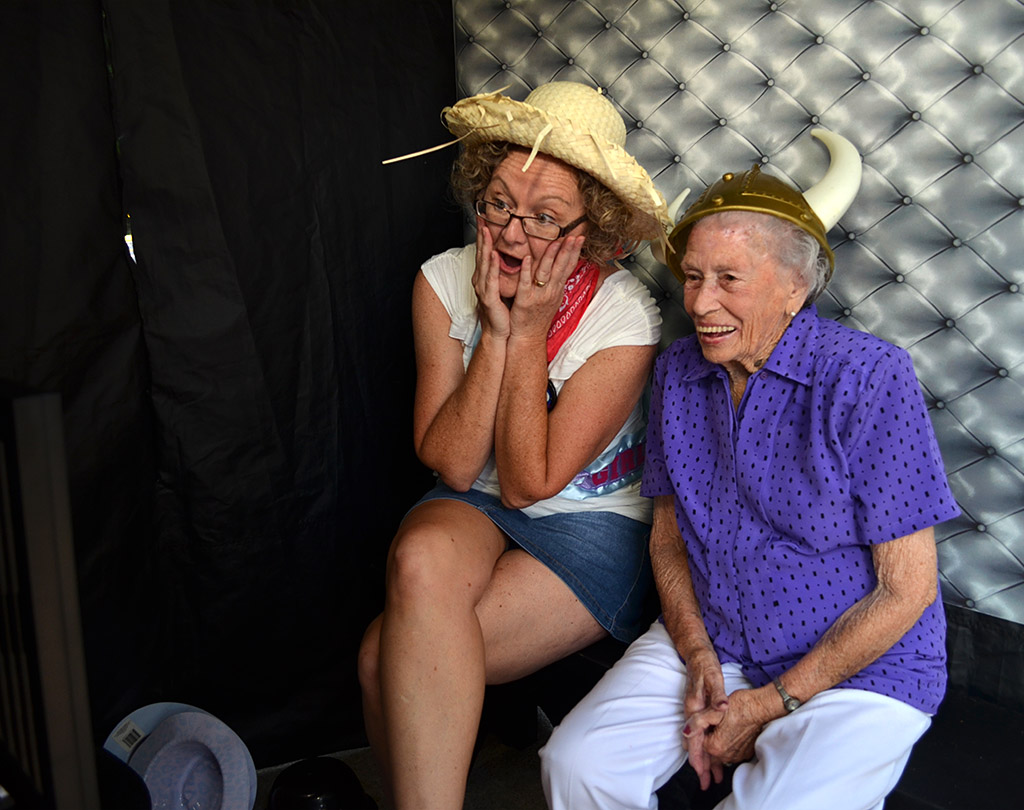
Rhonda Bolton's 50th Birthday Party 08-02-2014Mother had a blast at Rhonda’s birthday party in 2014. We all took a lot of comfort in knowing they were up on the hill keeping an eye on her.
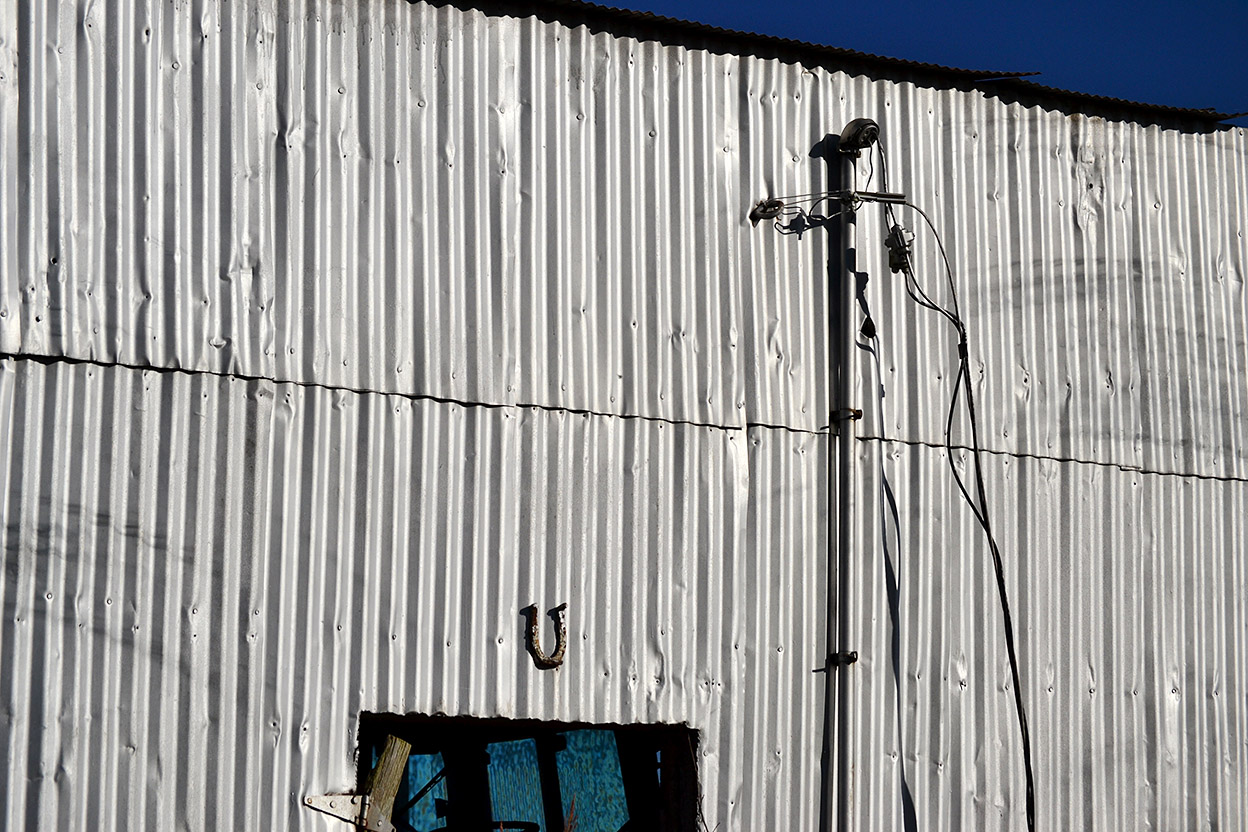


Horseshoe Up or Horseshoe Down?

Dutchtown building with horseshoe 10-18-2015I was in Dutchtown the other day and decided to drive down the lane that separates our property from the neighbor to the south. It contains about half a dozen pecan trees that Mother and I used to like to visit at this time of year. Most of the nuts she was cracking here in 2012 came from those trees.

In the dozens of times I’ve gotten to this old building and turned around, I had never noticed the horseshoe above the door. (Click on the picture to make it larger.)

Why is a horseshoe lucky?

Wikipedia theorizes: Horseshoes have long been considered lucky. They were originally made of iron, a material which was believed to ward off evil spirits, and traditionally were held in place with seven nails, seven being the luckiest number.

The superstition acquired a further Christian twist due to a legend surrounding the 10th century saint Dunstan, who worked as a blacksmith before becoming Archbishop of Canterbury. The legend recounts that, one day, the Devil walked into Dunstan’s shop and asked him to shoe his horse. Dunstan pretended not to recognize him, and agreed to the request; but rather than nailing the shoe to the horse’s hoof, he nailed it to the Devil’s own foot, causing him great pain. Dunstan eventually agreed to remove the shoe, but only after extracting a promise that the Devil would never enter a household with a horseshoe nailed to the door.

Which way should it point?

The LuckyMojo website says it depends on where you’re from: In most of Europe, the Middle-East, and Spanish-colonial Latin America protective horseshoes are placed in a downward facing or vulval position, but in some parts of Ireland and Britain people believe that the shoes must be turned upward or “the luck will run out.” Americans of English and Irish descent prefer to display horseshoes upward; those of German, Austrian, Italian, Spanish, and Balkan descent generally hang them downward.

In regions where the horseshoe is placed facing upward, folks believe the horseshoe must point up “or the luck runs out.” In places where it is hung facing downward they say exactly the opposite — “it must point down so the luck can pour onto you.” However, in its function as an amulet for magical protection, especially over the doorways of barns and stables, the horseshoe usually points downward and it is said that “no witch will pass under it.”

What does the difference in directionality mean? I think that in most of the world it is the horseshoe ITSELF that is lucky and protective — whereas in England and Ireland the horseshoe is seen as a mere “collector” of luck from above. There are other regional and cultural differences in horseshoe beliefs, too:

In Italy, for instance, when a horseshoe is nailed by the side of the door (not above it), directionality is not considered important, but what IS important is that the horseshoe was actually used — worn and discarded by a horse — that it was found in the road or in a field, not purchased, and that the person who enters the door can touch it.

There’s One in Every Class

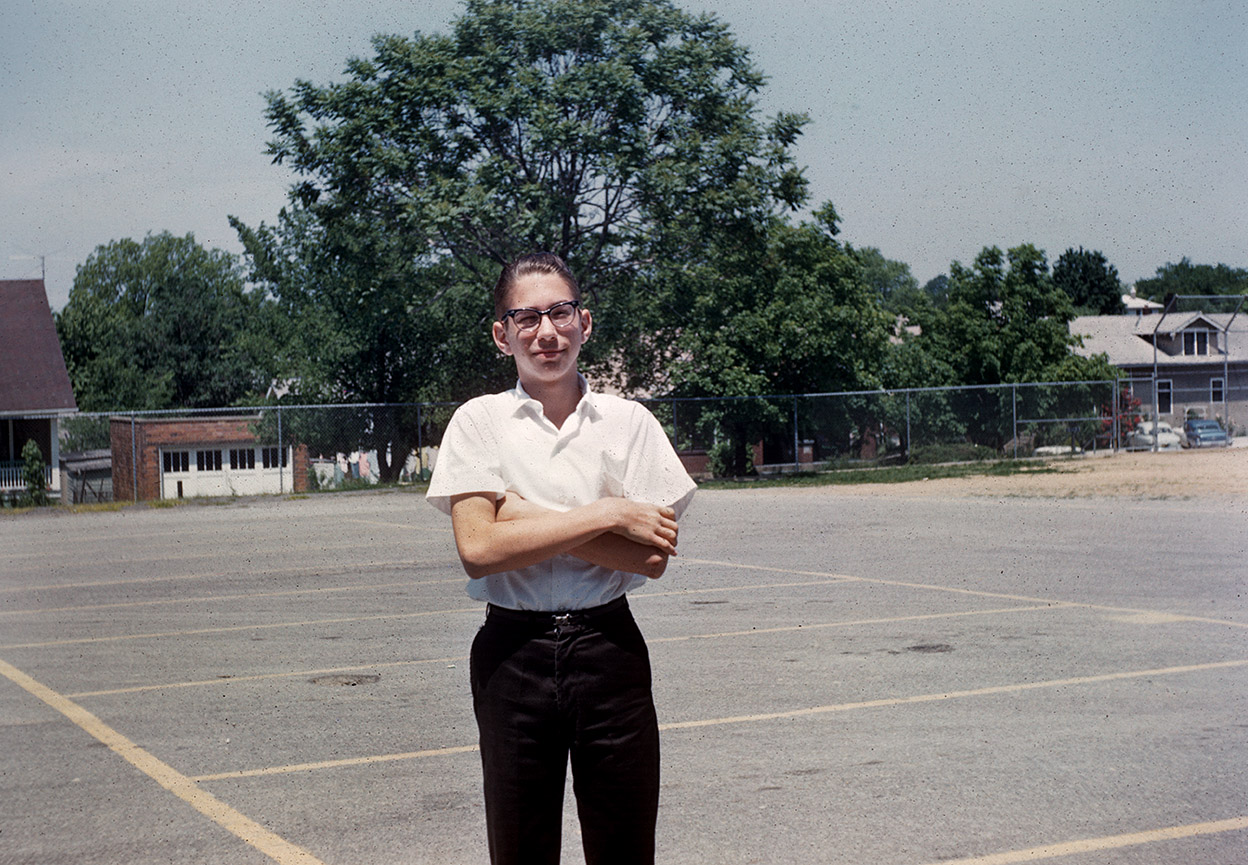
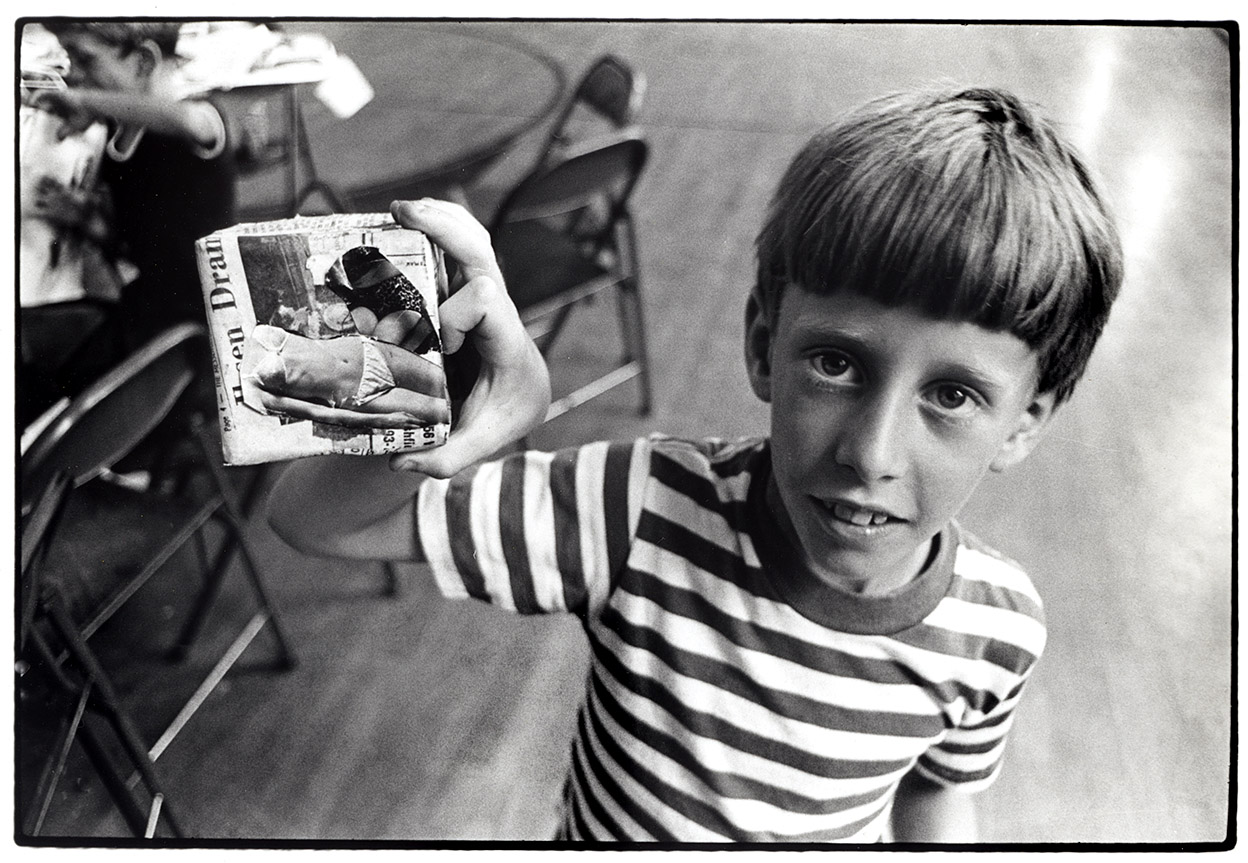
Kid with swimsuit photo c 1969When I ran across this photo I shot of a kid who was supposed to be using newspaper photos in an art project, I immediately thought of Mike Bruce Miller. There’s a Mike in every class in the world.

Mike and I went to Trinity Lutheran School K through 8, then made it through Central High School in one piece. We were in the same Cub Scout pack; I might have even been his patrol leader at Troop 8.

Round up the usual suspects

Mike Miller c 06-1961 Trinity Lutheran SchoolMike’s claim to fame was that he was always getting into some minor scrape or another.

If there was trouble, he either instigated it, was in the middle of it or was caught in the dragnet when the teacher rounded up the usual suspects. The picture above was taken on the Trinity Lutheran School playground in June 1961.

Not a bad kid

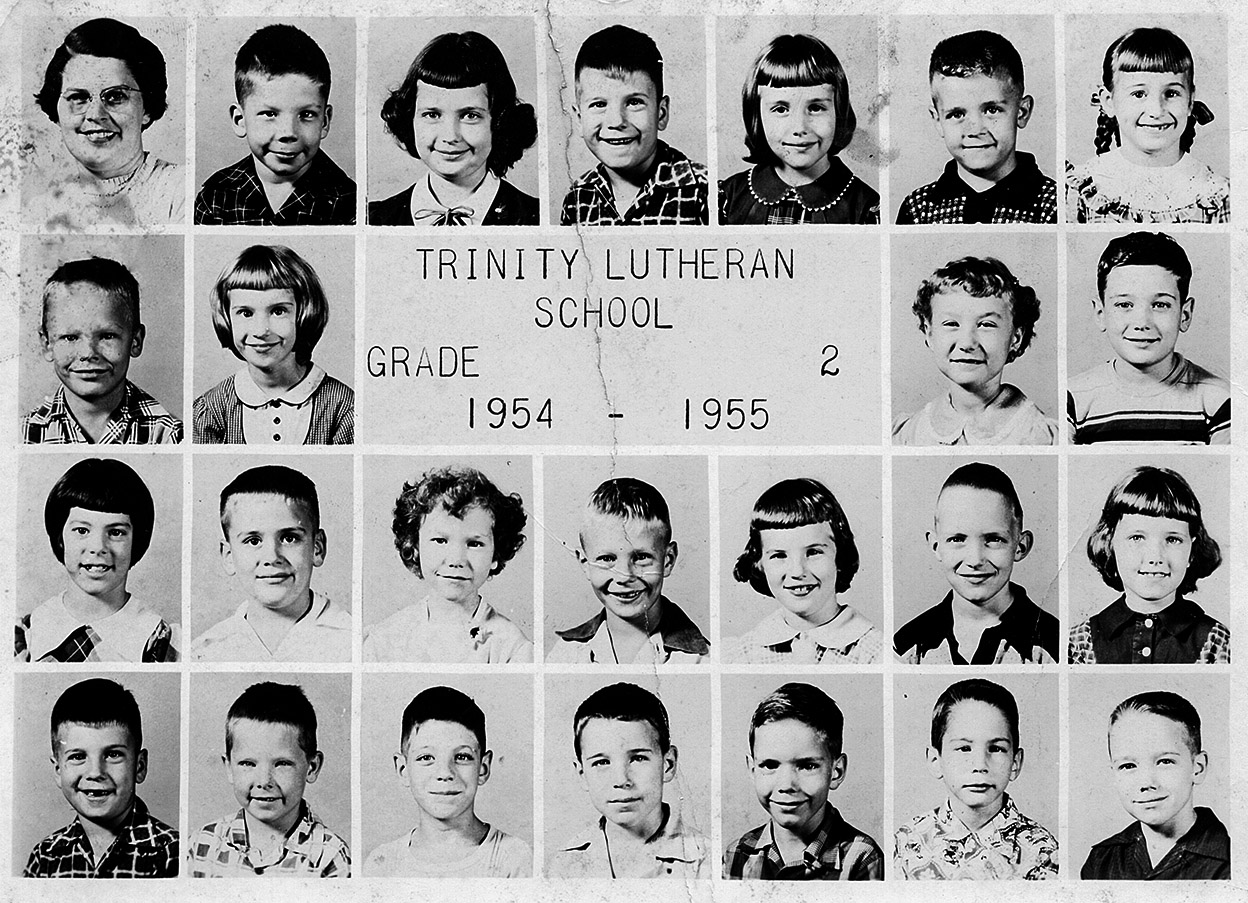
Trinity Lutheran School Grade 2 1954-55Mike really wasn’t a bad kid. We didn’t run around all that much, but when he came over to the house, he was always respectful to Mother. She agreed with me that he was just a harmless trouble magnet, but warned me that I should make sure I wasn’t around him if and when lightning struck.

He’s the second from the right in the bottom row. I’m not going to tell you which one I am.

Taken too soon

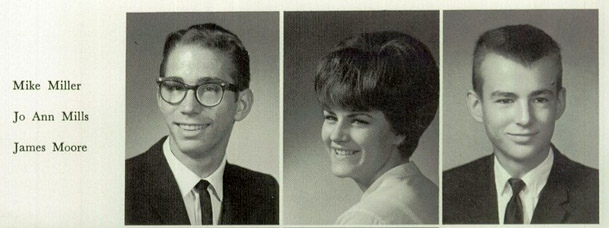
Mike Miller - Jo Ann Mills - James Moore 1965 Girardot Sr photosI was sorry to run across his obituary:

Mike Bruce Miller, 54, of Scott City died Thursday, Oct. 31, 2002, at his home. He was born Nov. 8, 1947, in Cape Girardeau, son of Lowery B. and and Flora Pensel Miller.

Miller attended Trinity Lutheran School, Central High School, and Southeast Missouri State University. Survivors include his mother; a sister and brother-in-law, Diana and Stuart Rosenstein; and nephew, Mark Andrew Rosenstein, all of Boulder, Colo. He was preceded in death by his father.

He is buried in Cape County Memorial Park.

I’m sure that if the angels find itching powder in their robes or “Go Devil!” is printed on a cloud, St. Peter will go looking for Mike, but he’ll do it with a shake of his head and trying not to grin ’cause you just couldn’t stay mad at that guy.


The Confluence

Aerials Cairo area Confluence of Mississippi and Ohio Rivers 08-13-2014There was some discussion on a Facebook group about the confluence of the Mississippi and Ohio Rivers at the south end of Illinois at Ft. Defiance. That’s been one of my usual stops every time I’ve passed through, going to or from Cape.

Pilot Ernie Chiles and I picked a bad day back in August 2014 for this particular project: we couldn’t shake the clouds that kept covering the mingling of the waters. In this photo, the Mississippi is the brown mass snaking from the left side of the frame and crossing across the bottom. What’s left of Cairo is in the top middle. The bridge carries traffic from Illinois to Kentucky.

The Muddy Mississippi is higher than the Ohio and it’s “holding back” the greenish waters of the river on the right. Click on the photos to make them larger.

Pushing the Ohio

Aerials Cairo area Confluence of Mississippi and Ohio Rivers 08-13-2014The view looking down the Mississippi shows the muddy water pushing the Ohio way over onto the east side of the river. This bridge links Illinois to Missouri.

Southernmost point of Illinois

Aerials Cairo area Confluence of Mississippi and Ohio Rivers 08-13-2014That tiny point of land is as far south as you can go in Illinois. The Mississippi is at the bottom, and the green Ohio, looking almost like a field of grass, is meeting it at the top.

War of the waters

Aerials Cairo area Confluence of Mississippi and Ohio Rivers 08-13-2014The intersection of the two rivers is a bit roiled because a tug steaming northbound up the Mississippi stirred things up.

That’s why it’s called The Big Muddy

Aerials Cairo area Confluence of Mississippi and Ohio Rivers 08-13-2014The Mississippi is divided into three regions. This marks the beginning of the Lower Mississippi. Surprisingly, at the confluence, the Ohio is the bigger river at this point, based on flow, with it’s long-term mean discharge at Cairo being 281,500 cubic feet per second. The Mississippi, measured just upriver at Thebes, is 208,200 cubic feet per second.

On this day, though, the Mississippi was higher and dominant.

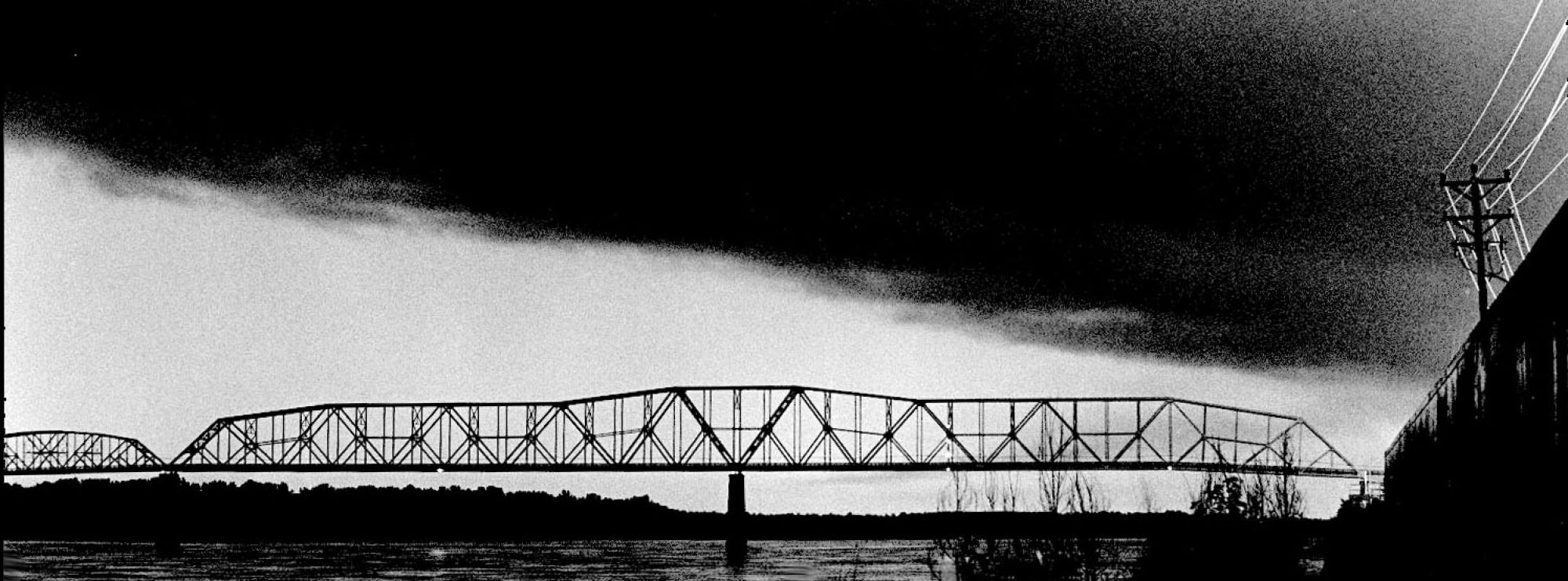
You can see two of my favorite Ft. Defiance photos here. One was taken in 1968, the other in 2010.