Shedding Light on Carbide Lanterns

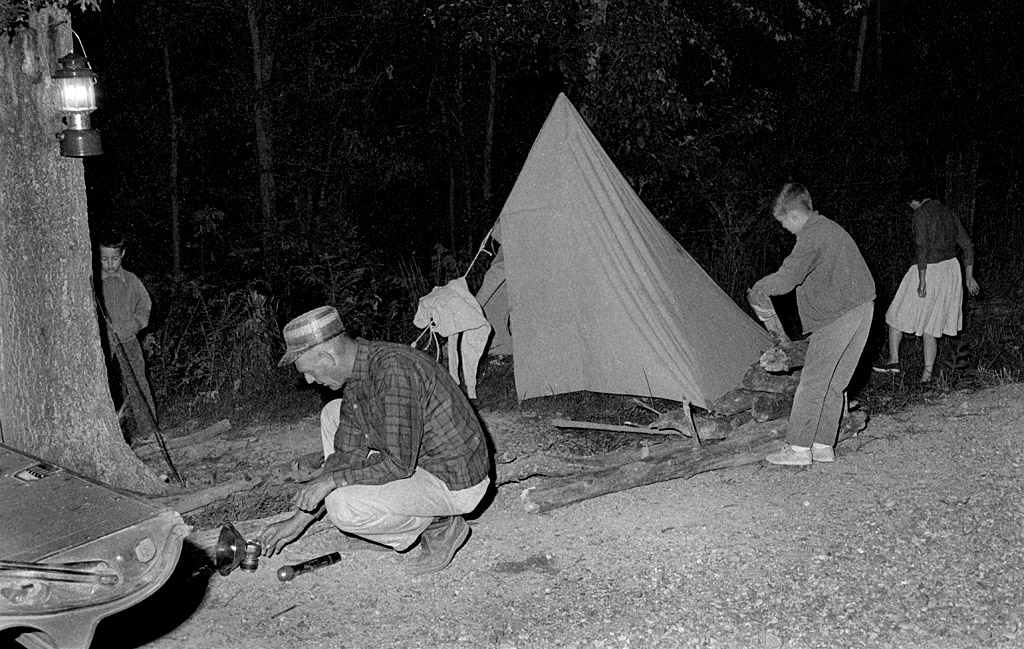
Here’s a shot of Dad helping set up a campsite. That’s Brother Mark hiding behind the tree. I’m pretty sure that’s Mother in the background looking for some poison ivy to step in. The setting is kind of odd: it’s right on a road and butts up to a fence. I don’t know who the boy on the right is. Brother David is in another shot, and that’s not him.

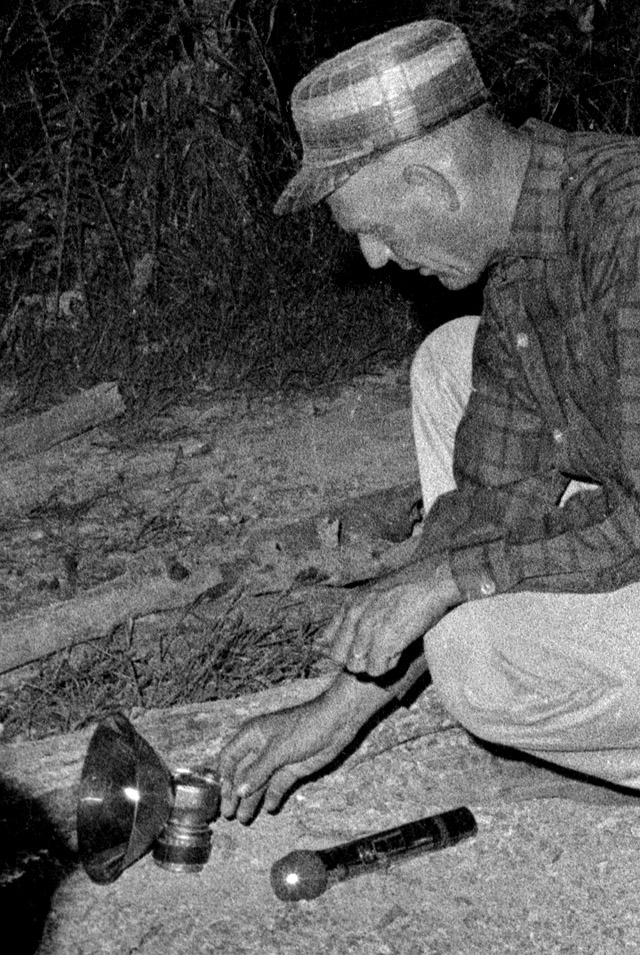
What caught my eye, though, was the lantern Dad is reaching for. It’s one of at least two carbide lanterns we owned. (Click on the photos to make them larger.)

What’s a carbide lantern?
They were one of the most common sources of light for miners and coonhunters. There’s a good explanation of carbide lanterns on Mother Earth News.

I’m pretty sure we bought the lanterns at Beard’s Sport Shop. They were simple devices. They consisted of a super-bright reflector attached to a device that contained two chambers. You put water in the top chamber and calcium carbide in the lower chamber. When you dripped water onto the carbide, it would emit acetylene gas – the same stuff you use mixed with oxygen for welding. A wheel flint, like on a cigarette lighter, would provide a spark to ignite the gas. No matches required.

Calcium carbide was available in just about any hardware store when I was a kid. We kept ours in a big glass jug with a wide mouth. It looked like gravel. In fact, we’d freak out new campers by putting some on the ground and pouring a little water on it. Casually pitching a match in the general direction of the brew, we’d warn them that you had to be careful where you built your fire because the gravel around there would burn. POOF! They’d spend an inordinate amount of time trying to light rocks until you clued them in.

The highly efficient reflectors would throw a beam a long way. If you cut back on the water drip, they’d burn for hours. The only catch was that they emitted a lot of soot that would clog the gas passage. They were great when they worked, but I always found them a pain to keep burning.

Carbide lanterns are hard to find these days. There was only one listing for carbide lanterns on Amazon. This caver site has some good information on how to buy a used lantern.
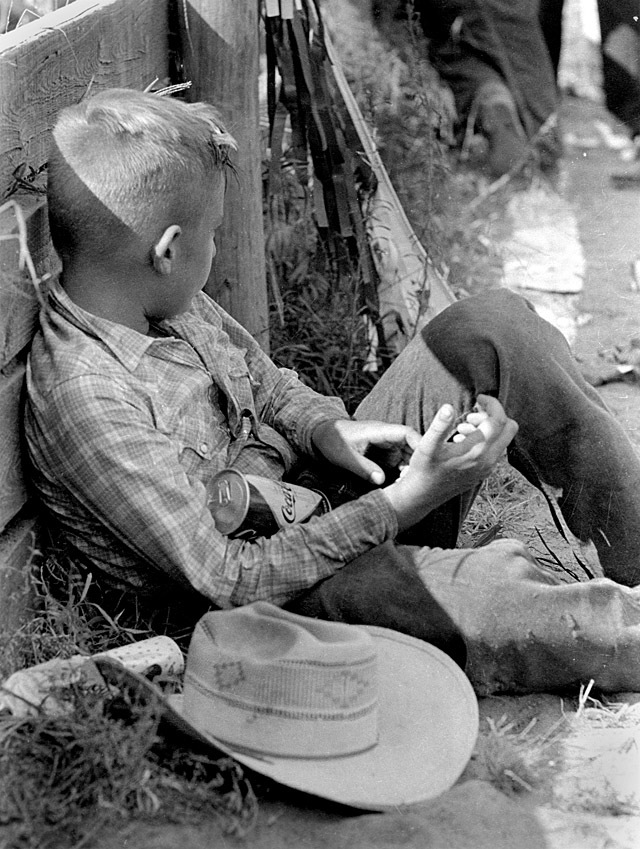
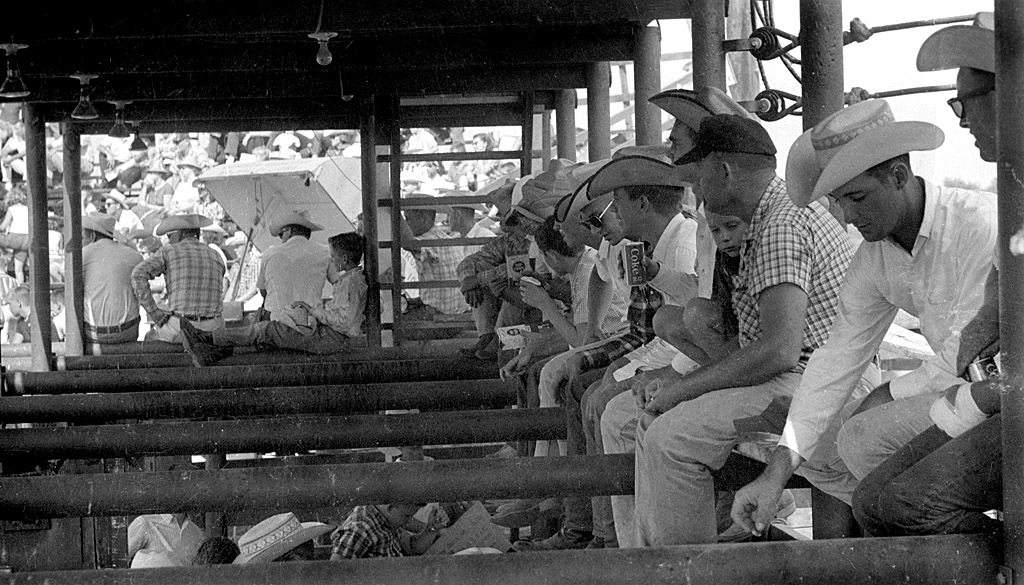
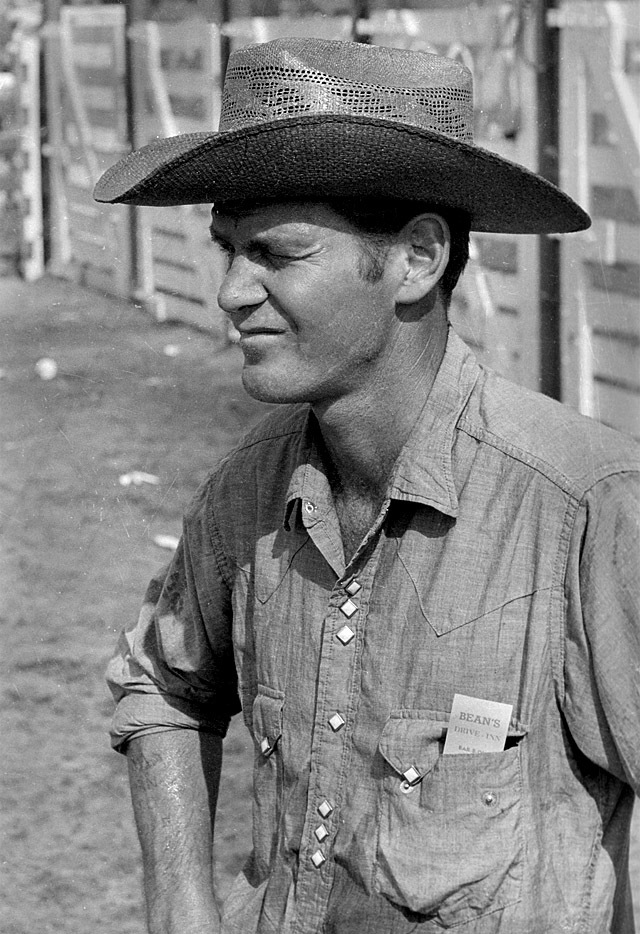
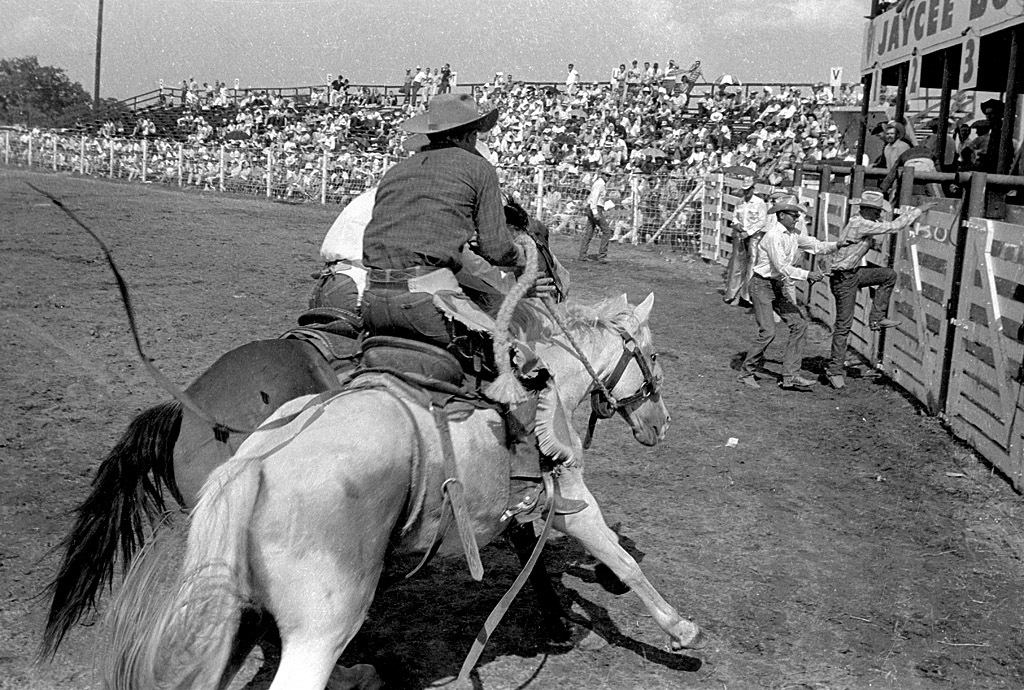
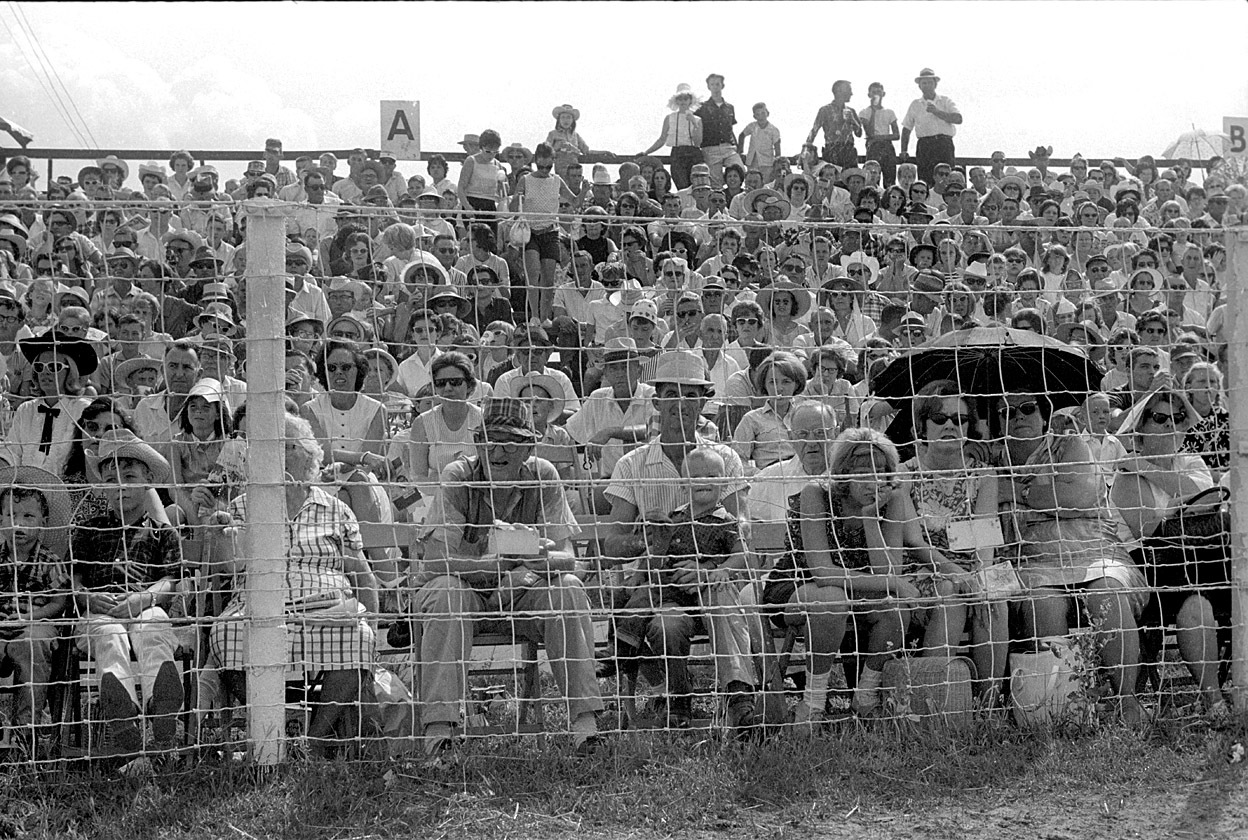
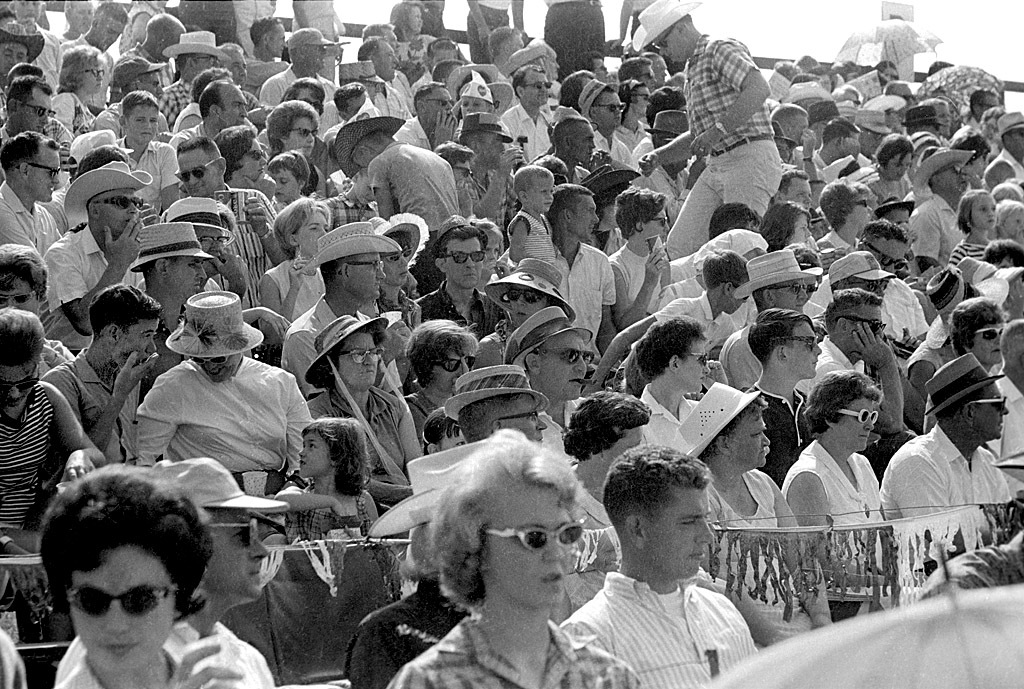
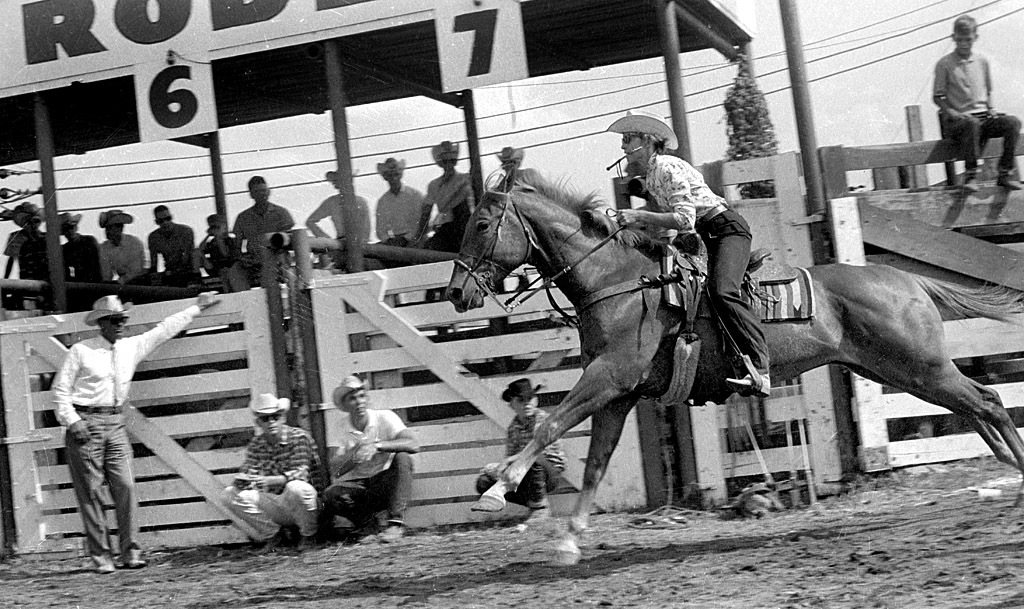
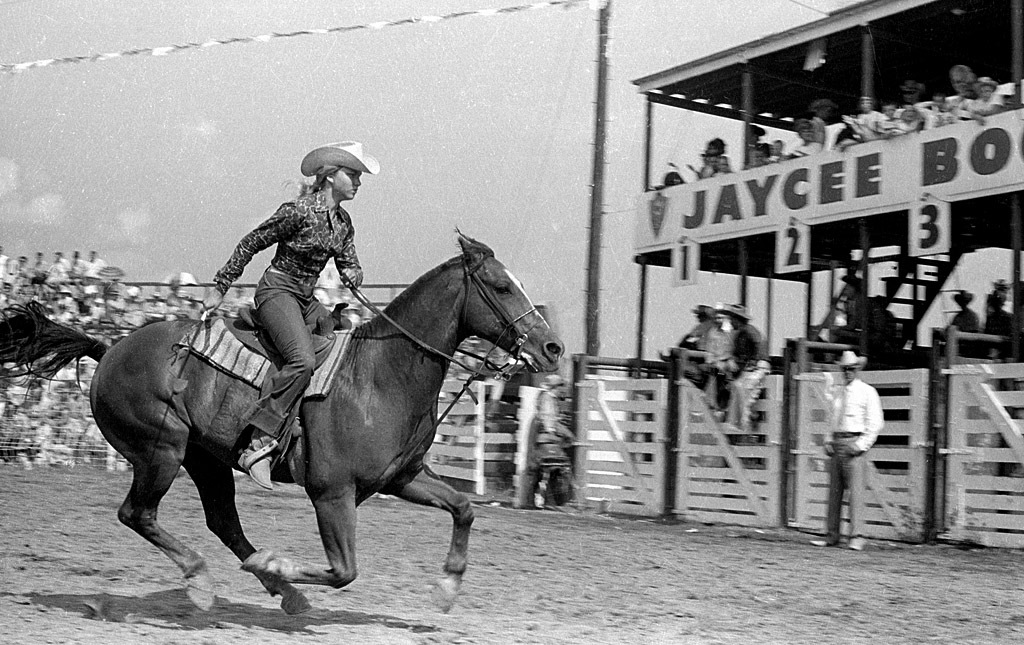
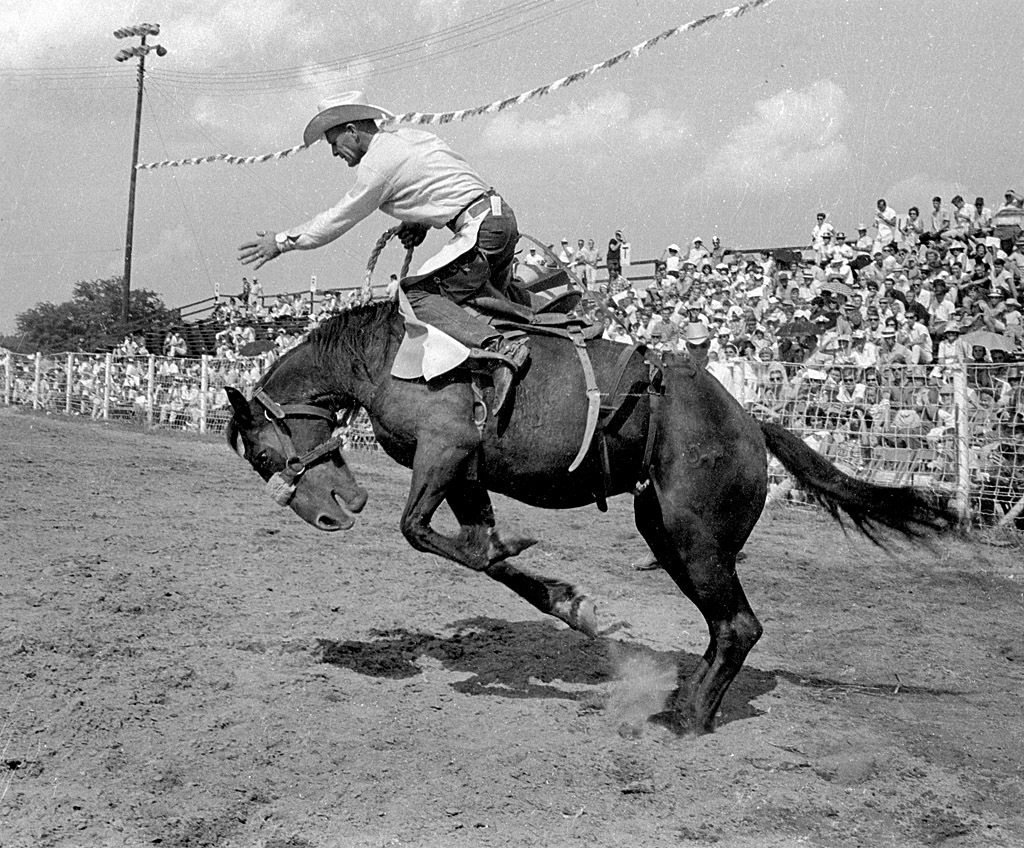
1965 Sikeston Jaycee Bootheel Rodeo

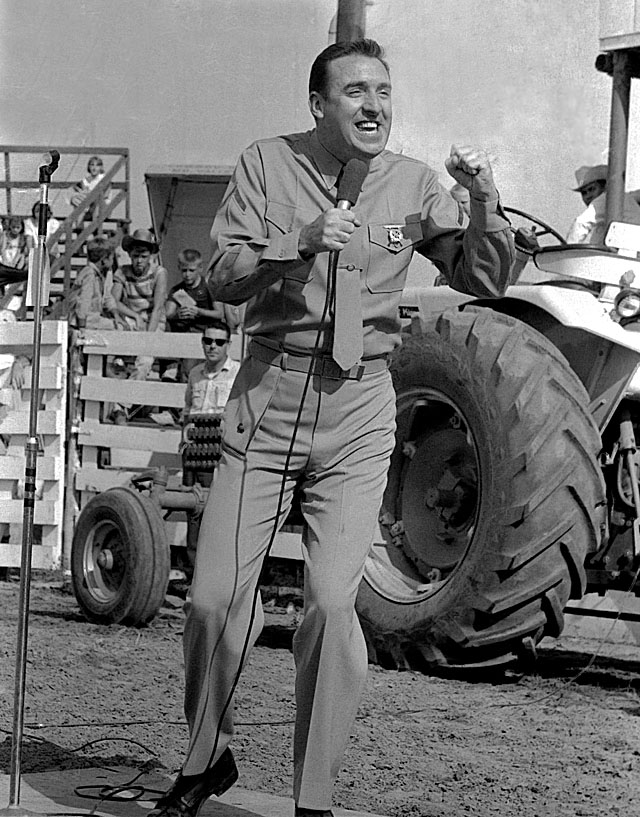
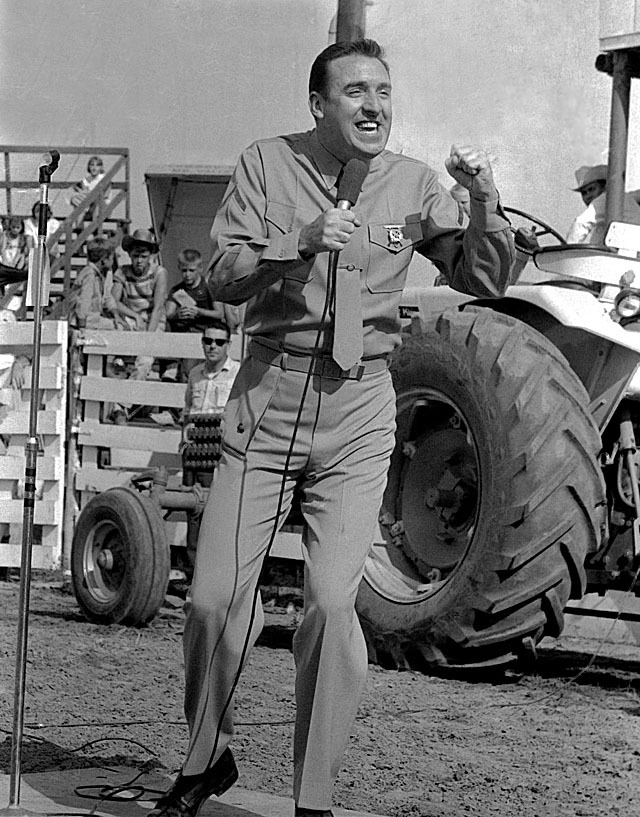
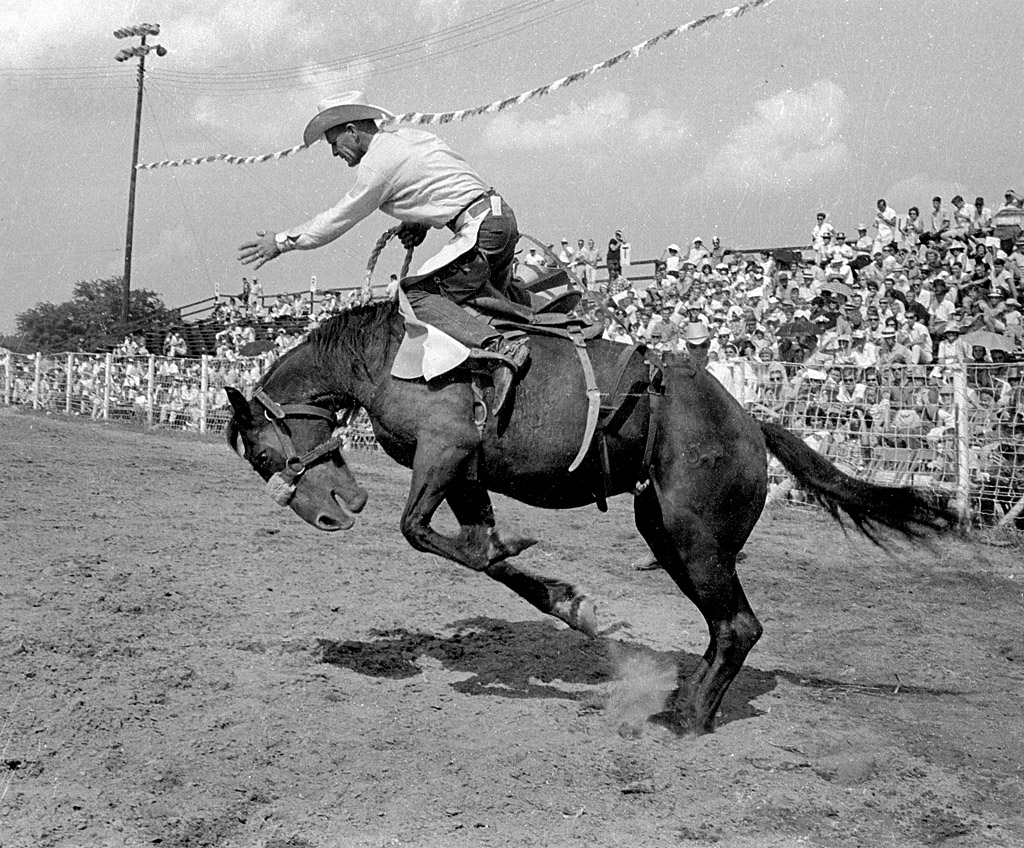
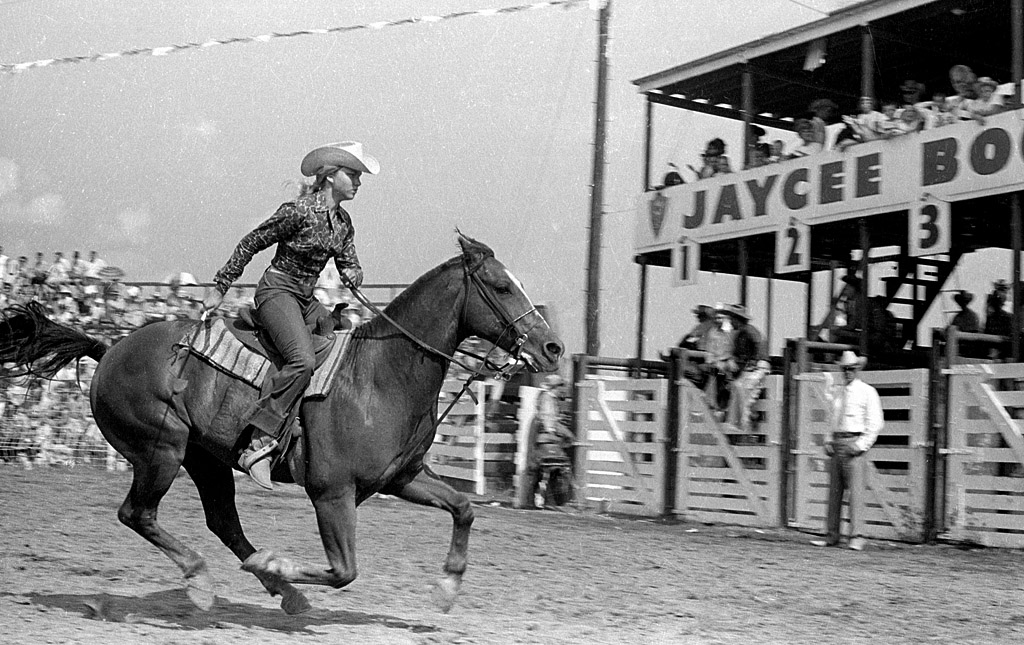
I’m not much of a Jim Nabors fan and I don’t follow the Indy 500, but I did notice a brief story that said that Nabors, who has sung “Back Home Again” at the race since 1972, will be undergoing heart surgery and won’t be able to perform on May 27. Nabors, better known as Gomer Pyle, is 81. I covered him when he appeared at the 1965 Sikeston Jaycee Bootheel Rodeo. He must have a lot of fans. because someone goes to read the story almost every day.

Rodeo action missing in action

The Nabors film was filed separately from this action so it wasn’t available earlier. Some of this film had some pretty ugly scratches, so I just cleaned up the worst part and let it fly.

Jim Nabors as Gomer Pyle

You can see more photos of Nabors here.

Rodeo photo gallery

Click on any photo to make it larger, then click on the left or right side of the image to move through the gallery.

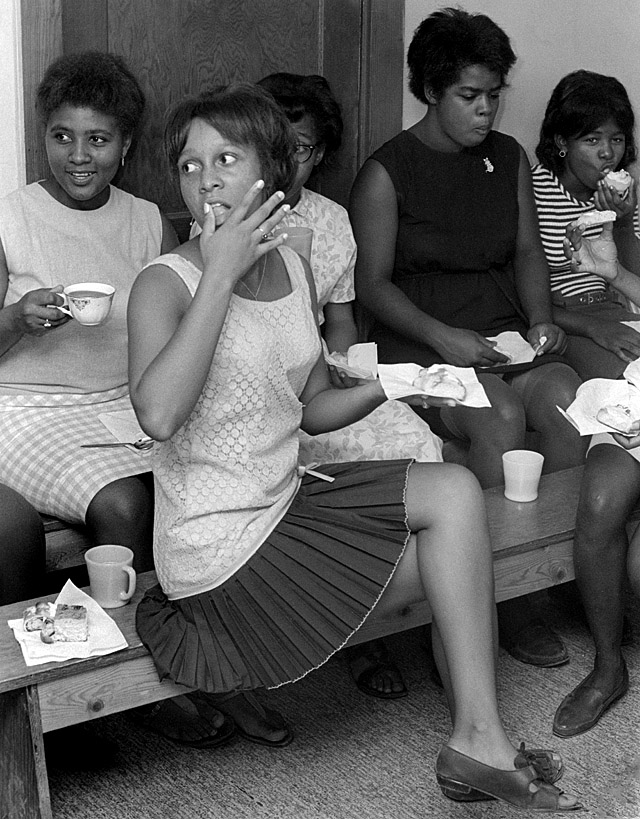
Civic Center Baking Contest

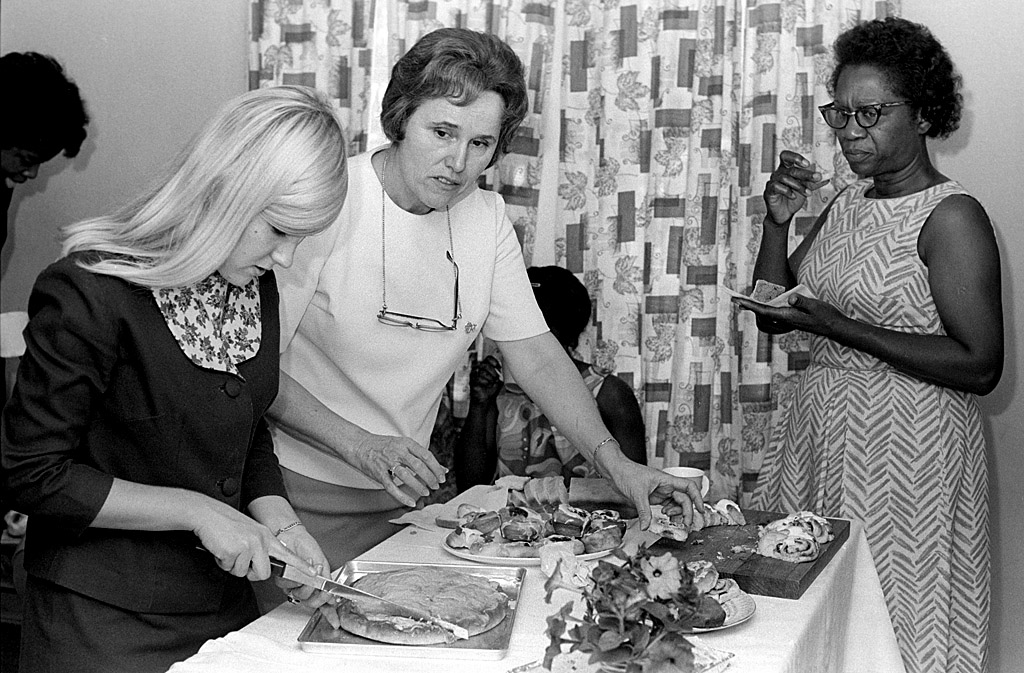
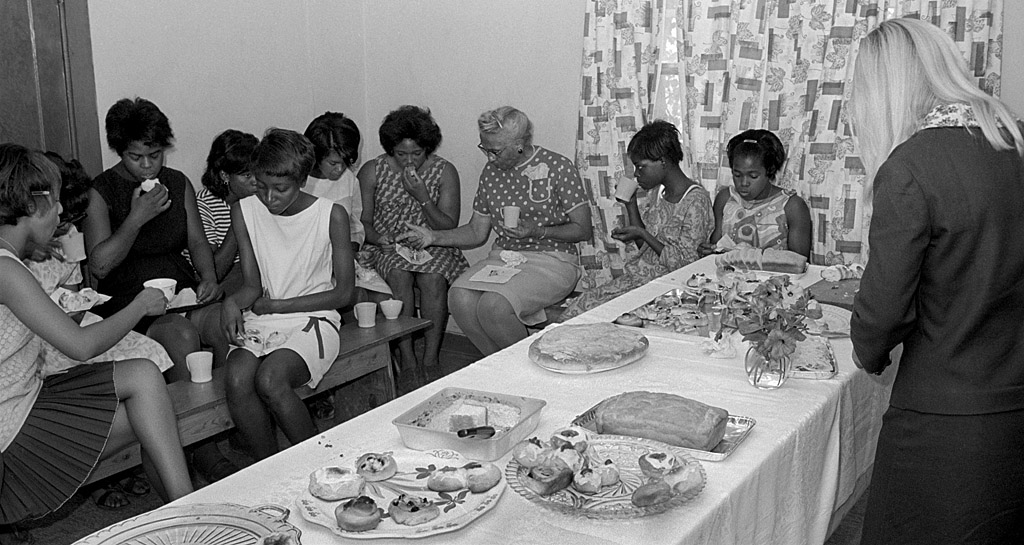
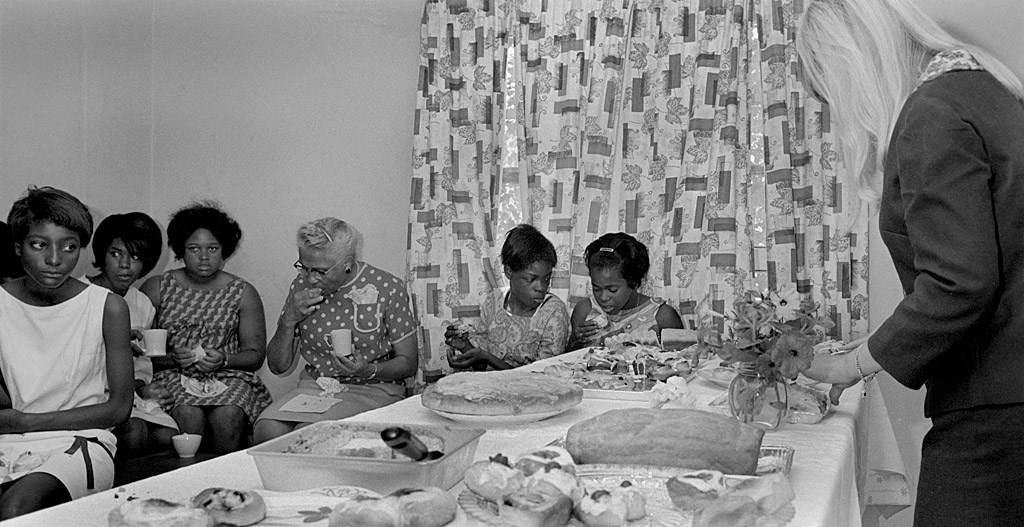
All I know is that the negatives were labeled “Civic Center Baking Contest 8/30/1967.” I looked in The Missourian for several weeks figuring that it was probably a Youth Page feature, but I couldn’t find a story. Some of the faces look familiar, but I’m afraid to put names to them. It’s up to you.

Other Civic Center stories

Photo gallery of Baking Contest

Click on any photo to make it larger, then click on the left or right side of the image to move through the gallery. Chime in with names if you recognize anyone.

Broadway and Sprigg

Missourian Librarian Sharon Sanders runs an interesting blog on Thursdays called “From the Morgue.” Back in the less PC Good Old Days, that what we called the repository of yellowing clips carefully snipped out by the custodian of the newspaper’s history. Folks like Sharon and her predecessor, Judy Crow, really DO know where the bodies are buried and can find the skeletons in closets going back generations. You do NOT want to get on the wrong side of the newspaper librarian. They used to possess both sharp tongues and sharp scissors.

I’m not sure what Digital Sharon could do to a reporter who didn’t bring back a much-handled envelope of old clips, but I bet it wouldn’t be pretty. On one of our first meetings, I started to raise my camera to take her picture. I don’t normally take no for an answer – I’ve shot Popes and Presidents, rioters and guys with guns – but I put my camera down when she shook her head. I knew right away that she wasn’t somebody to mess with.

I felt fortunate to escape with my life and a photo of a stack of aging clips.

Broadway and Sprigg

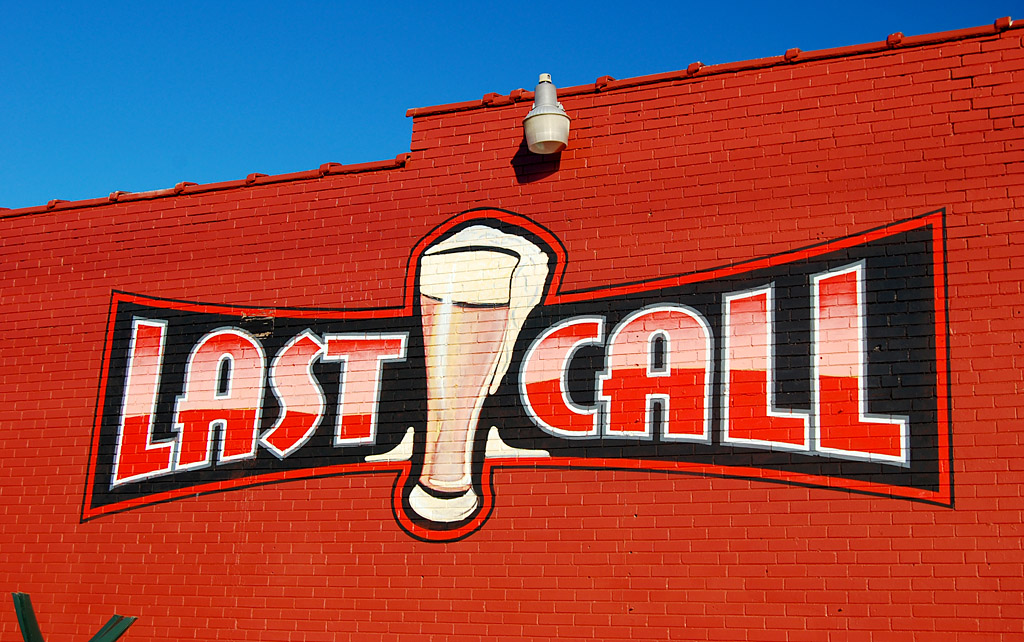
Her blog Thursday said one of her most-requested photos is of the building that used to be at the northeast corner of Broadway and Sprigg Street. It’s a vacant lot next to the Last Call Bar today. She’s done all the historical heavy lifting about that block, so it’s worth heading over there.

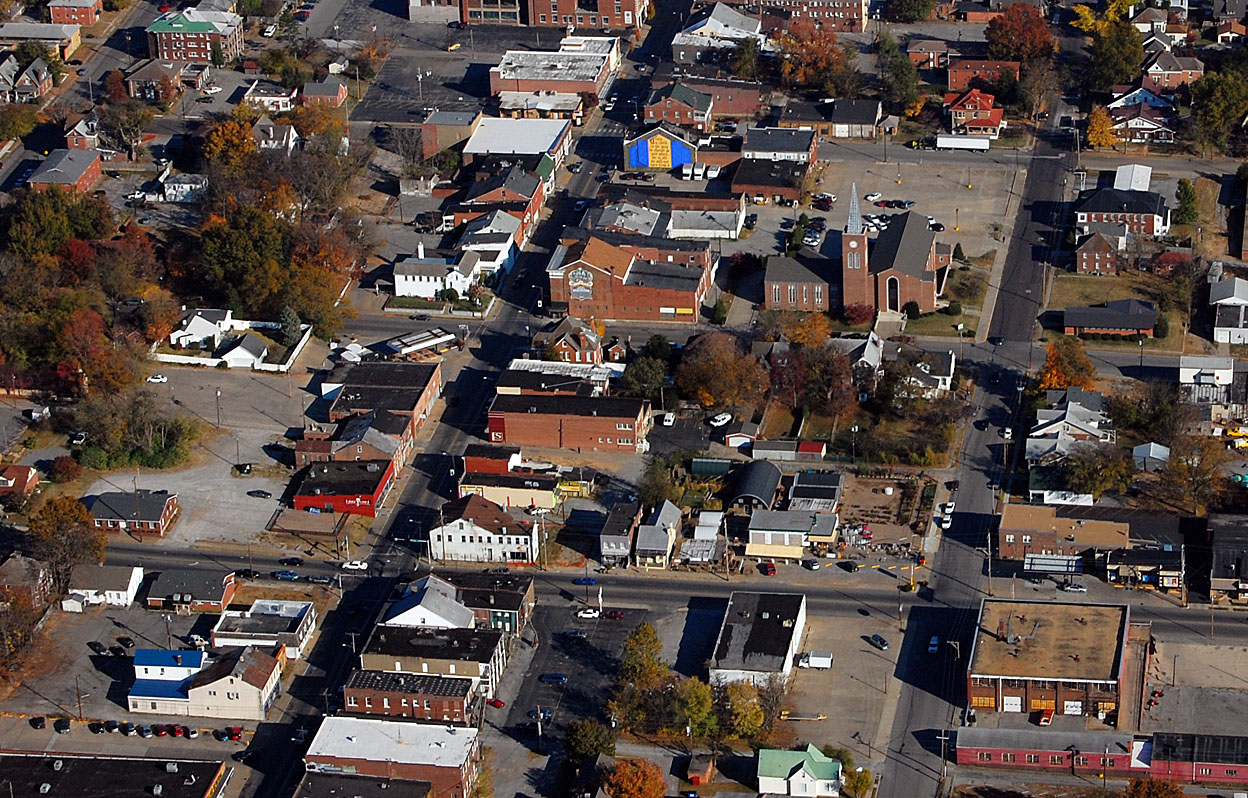
I don’t have any photos going back that far, but I do have the area today.

This aerial from November 2010 shows a number of landmarks. The red building is the Last Call she mentions. The white building diagonally across the street is the infamous 633 – 635 – 637 Broadway trio of buildings that have been a source of controversy for a long time. One building was razed and the other two are being renovated. In the center of the picture is Trinity Lutheran Church. The brick building to its left is Shivelbines Music and the white building across the street is Annie Laurie’s Antiques.

Last Call

It’s hard to miss the Last Call if you’re eastbound on Broadway. Its red colors are set off by a blue sky.

Blue-sided building is gone

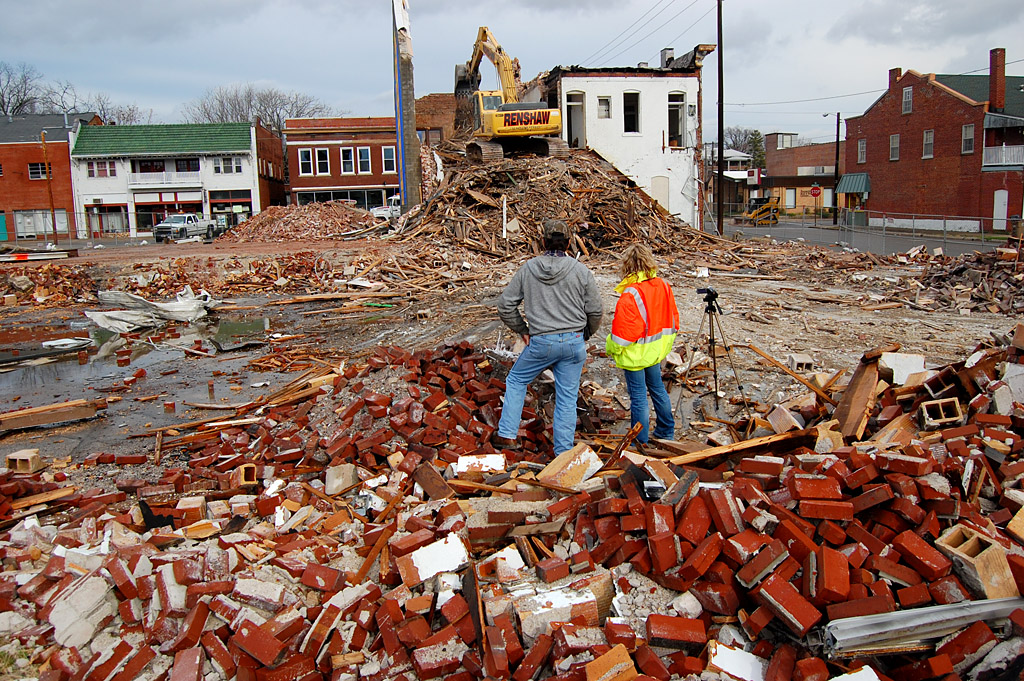
The blue-sided building with the iconic mural at the top center of the aerial and the ones next to it were torn down at the end of 2011. Walther’s Furniture, across the street, has turned into Discovery Playhouse.

Like a gap in a first-grader’s grin

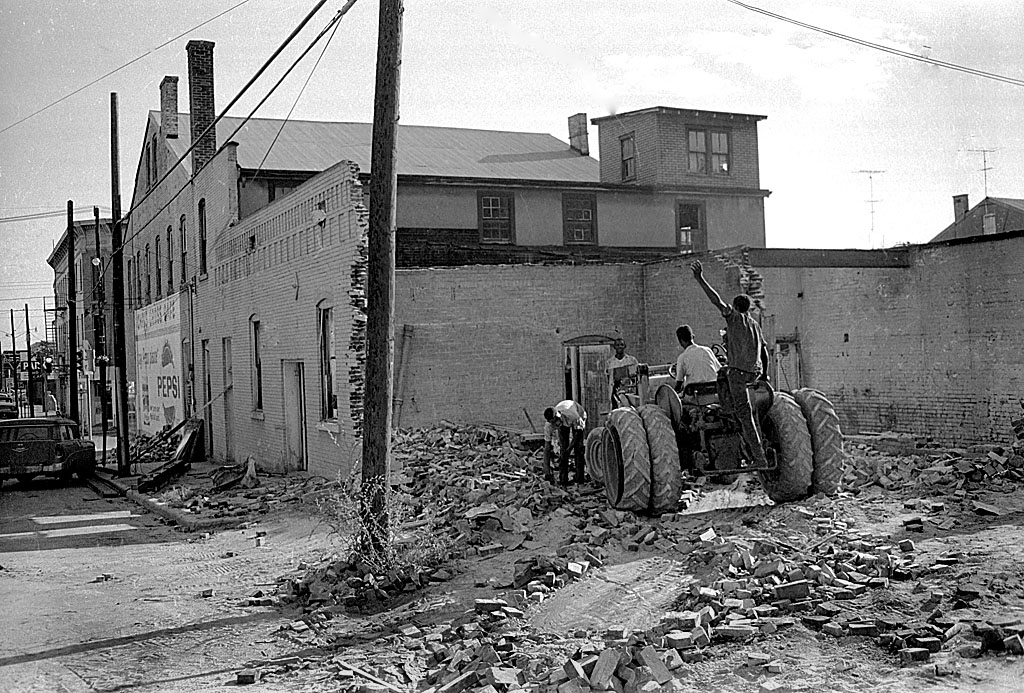
The northwest corner of Broadway and Sprigg has another empty spot. That’s where the old Chris Cross Cafe used to be. This view is south on Sprigg toward Broadway somewhere around 1966 or 1967. The three-story building on the south side of Broadway was the Cape Hotel. It burned and the spot is occupied by a Subway today.