Jerry Ford’s Gordonville Grove

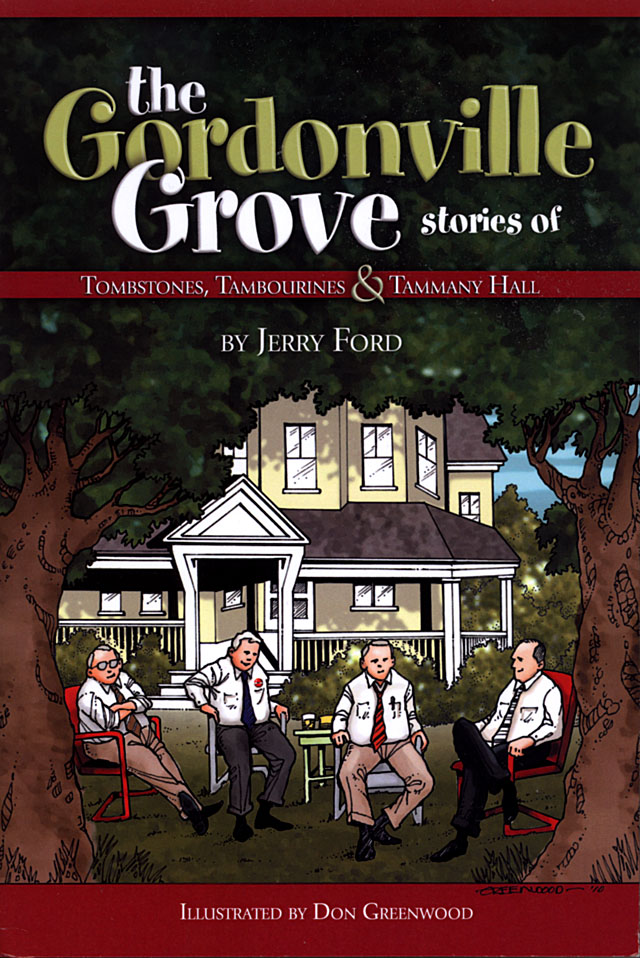
My old high school campaign manager, Bill Hopkins, said I needed to read Jerry Ford’s new book, The Gordonville Grove: Tombstones, Tambourines, & Tammany Hall. I didn’t know if Bill really liked the book or if Jerry was giving him a cut of the sales, but I headed over to Amazon anyway. The book arrived in the mail this morning and I knocked it off in a couple of hours.

Jerry was a few years older than my crowd, so I knew him by name, but not really in person. His family ran Ford & Sons Funeral Home, so I mostly knew him from chasing his ambulances.

Funeral homes provided ambulances

See, back before cities got fancy, it was customary for funeral homes to run to wrecks and other unfortunate happenings because they were about the only folks who had a vehicle large enough to carry a patient.
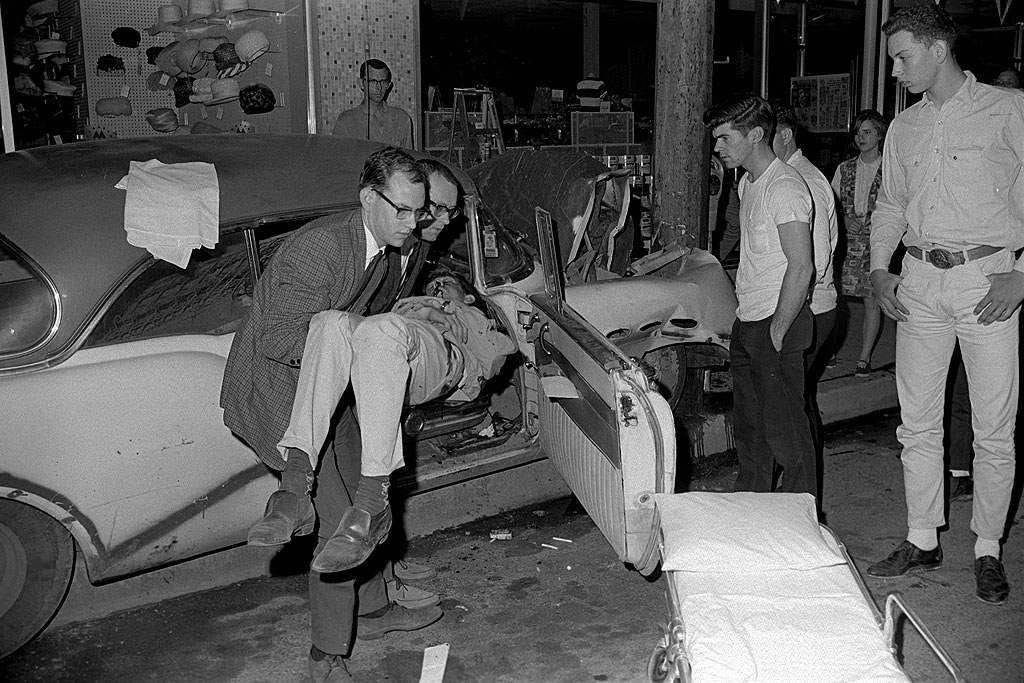
John Carpenter, left, and Walter Joe Ford remove Dale Smith from a car in which he was a passenger when it struck a pole in front of the Montgomery Ward store on Main St. in 1966. Smith had a broken jaw. John “Doc” Carpenter eventually became Cape County Coroner. Even though he was from Sikeston, he and I were good buddies from Scouts and debate. As early as his teens, Doc said he wanted to work in the funeral industry. He died of colon cancer in 2000. Walter Joe Ford, was author Jerry Ford’s older brother.

“Swoop and scoop”

I was on a rescue squad in North Carolina with some guys who used to work for funeral homes doing ambulance work. “Tell me, Red,” I asked one of them. “Isn’t in the best interest of the funeral home for the guest of honor to arrive not alive at the hospital? Were you ever told to take it slow on the way to the E.R.?”

Red, a linthead from one of the town’s dying textile mills thought for a while (they always had to pause to figure out what to say, me bein’ a Yankee and all), then replied, “There was always two schools of thought about that.”

“Most folks would let the funeral home that picked up the body keep it, but there was always the danger that your competitor might pick up one of the survivors and sell him a funeral on the way to the hospital. I was always of the ‘swoop and scoop’ school, myself.”

Jerry Ford’s book illustrated by Don Greenwood
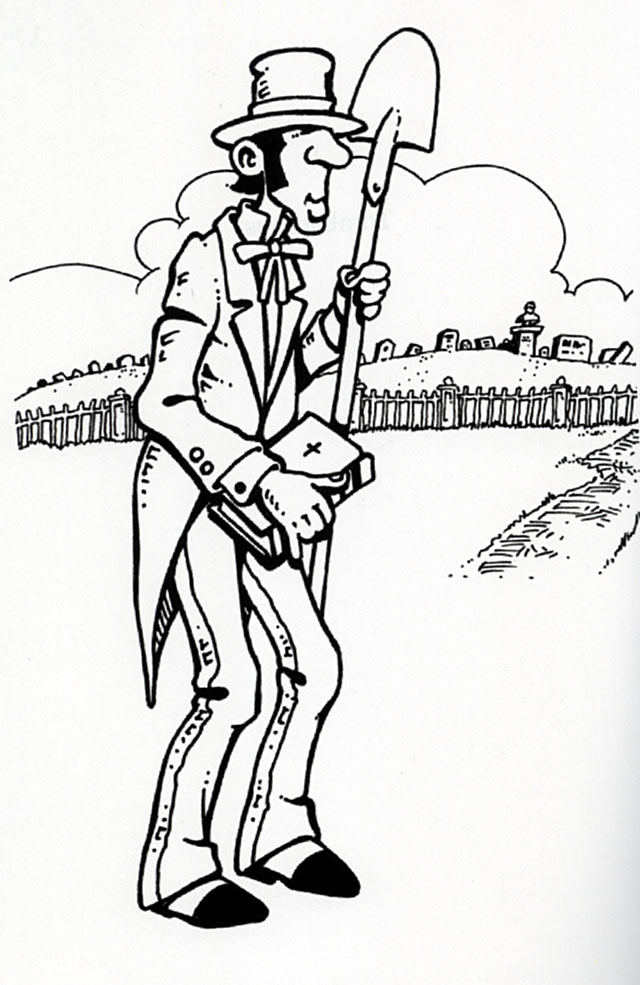
Cape artist Don Greenwood illustrated the book. I’ve been a fan of his for years, particularly after he was kind enough to let me use one of his illustrations for my bike blog logo.

Gordonville Grove may not be for everyone. You almost have to be from the area to appreciate many of his stories. On the other hand, I found myself putting names to some the characters he left nameless to protect the not-so-innocent.

I may have to steal the disclaimer in the front of the book: “The opinions herein are solely those of the author. …cannot warrant any of the information in this book and can make no guarantees as to the accuracy of the situations and dialogue expressed. Certain physical characteristics and other descriptive details in this book may have been embellished for the sake of storytelling.”

Integration comes to the funeral business

The chapter titled The Deal made the whole purchase of the book worthwhile. I learned something I had never known about Cape.
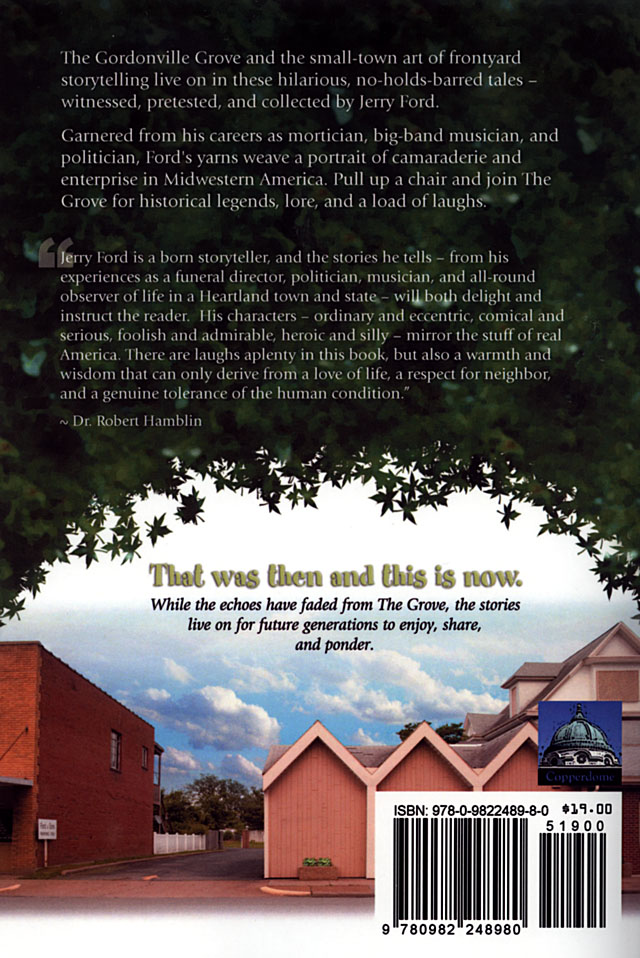
Up until the mid-60s, no white funeral home had ever buried a black person in a traditional funeral setting, Ford writes. The only exceptions were one or two private burials of domestic workers employed by some of Cape’s wealthiest families. Sparks Funeral Home was the only option for most blacks.

At the request of a respected member of the black community, Jerry’s father agreed to see if the color barrier could be broken.

The funeral industry is fiercely competitive, but all of the local funeral directors brokered a deal: the first black family that wanted a funeral in one of their establishments could pick the one they wanted. After that, all of the homes would go into a rotation so that  no one establishment would suffer the “stigma” of dealing with blacks.

As it turned out, it was a non-issue. Cape Girardeans had no apparent problems with formerly white funeral homes holding black funerals.

Jerry Ford’s swing band

Jerry’s Ford’s 13-piece swing band has played throughout the Midwest for over 50 years. He writes about playing in all of the local clubs like The Purple Crackle and The Colony Club.

He’s performed with or watched most of the big names of the era: Henry James, Harry Ranch, Woody Herman and his Thundering Herd, The Blue Rhythm Boys, Bob Sisco and Jack Stalcup.

The Fords, the Limbaughs and the Rusts

The Fords, Limbaugh and the Rust families were the big political movers and shakers in the Cape community. The Fords were Democrats, and the latter two were Republicans. Jerry writes about how politicians from the different parties could work together for the common good without the partisan gridlock we see today.

Ordering the book(s)

Cedar Hills Pet Cemetery

I’ve spent a lot of time wandering through old cemeteries and graveyards. You can tell a lot about a community by the way it takes care of its dead. You can get a feel for who the prominent families were and be amused by some of the tombstone inscriptions.

I get a lump in my throat when I get to the sections set aside for kids, particularly in the older cemeteries where some of the homemade markers incorporate the child’s marbles or jacks.

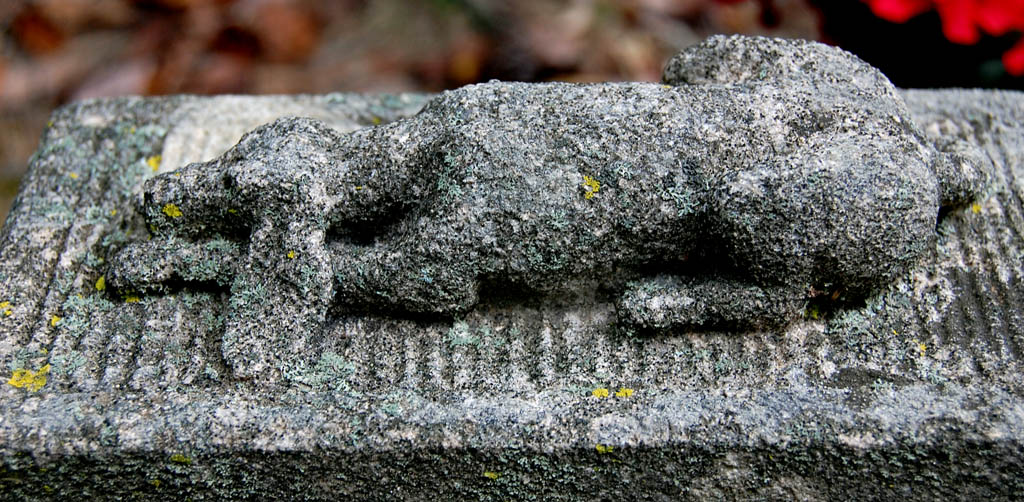
When the kids were little, we took off cross-country and made a detour to see the Key Underwood Coon Dog Memorial Graveyard just outside Tuscambia, Al. Follow the link to see more markers like High Pockets, above, and read an account of a misunderstanding that could only happen out in the country.

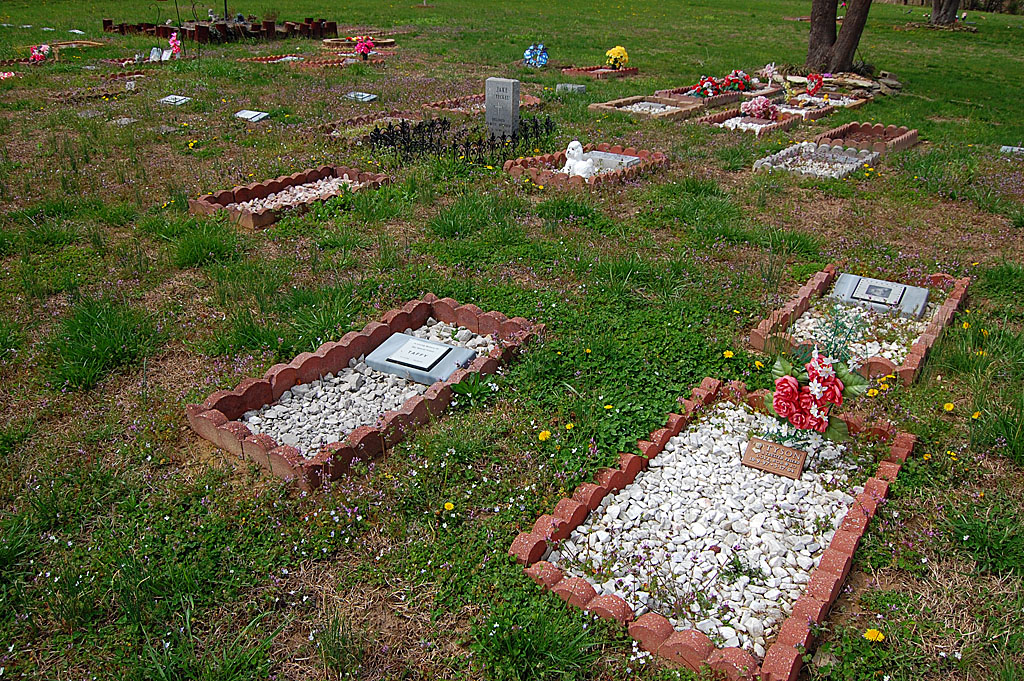
Cape Girardeau’s Cedar Hills Pet Cemetery

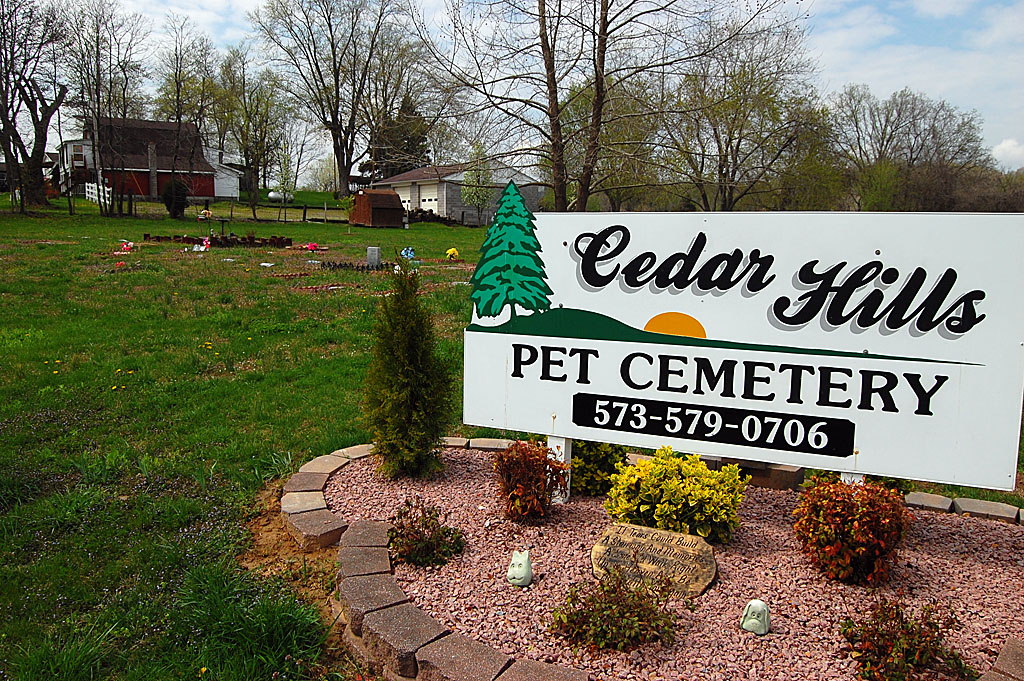
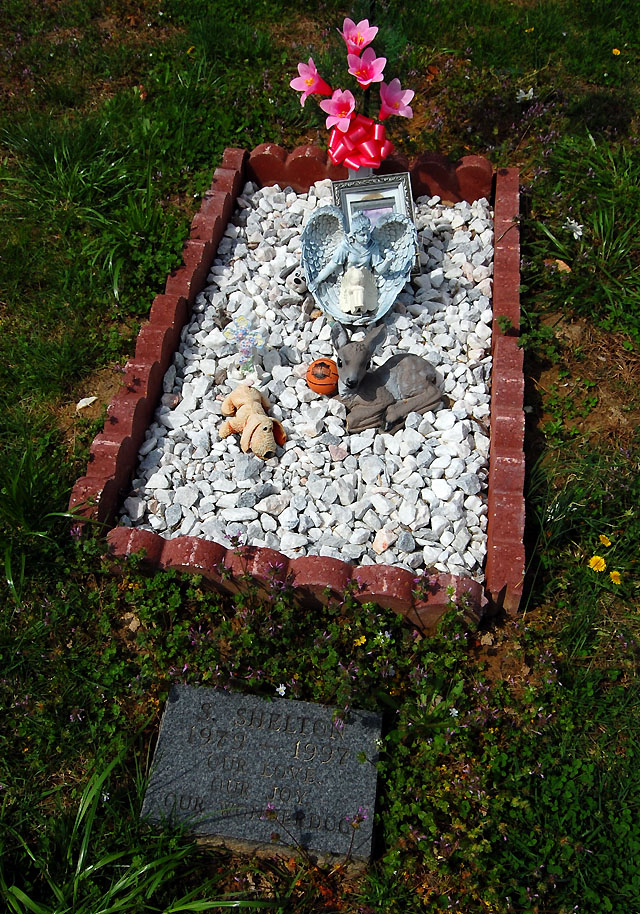
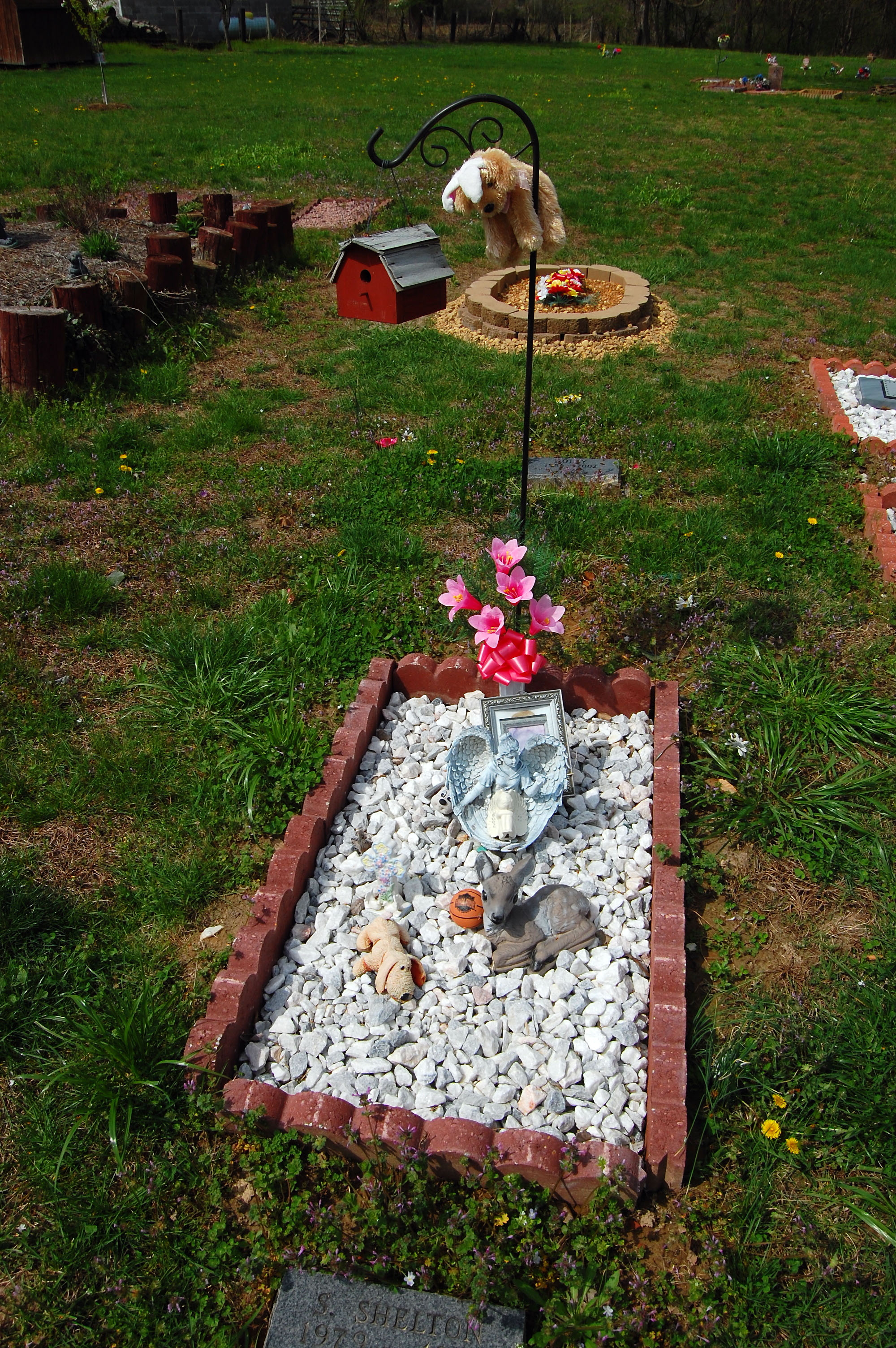
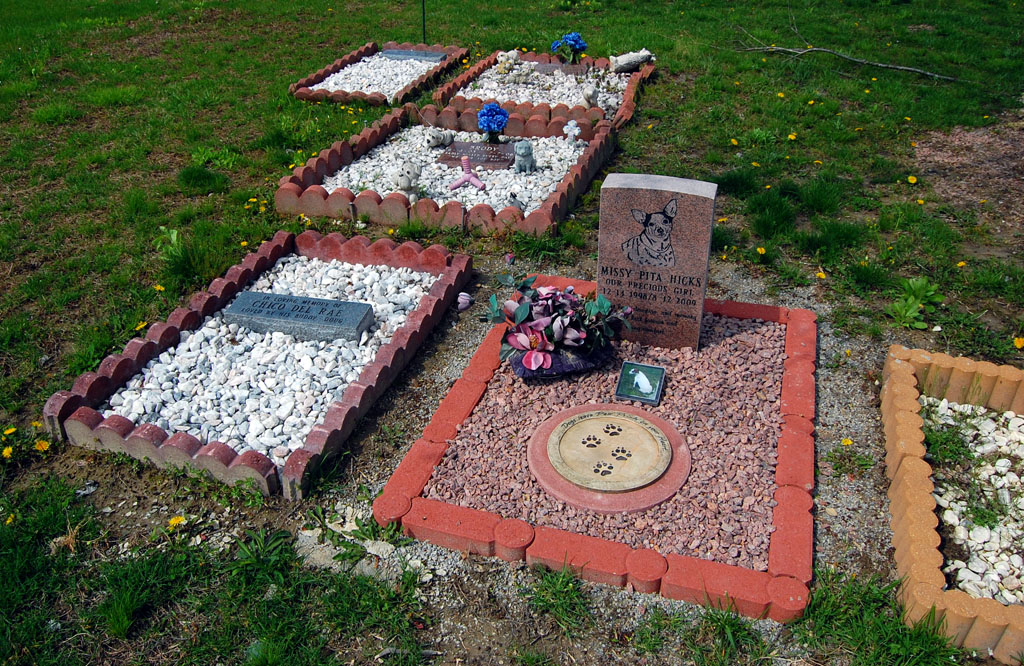
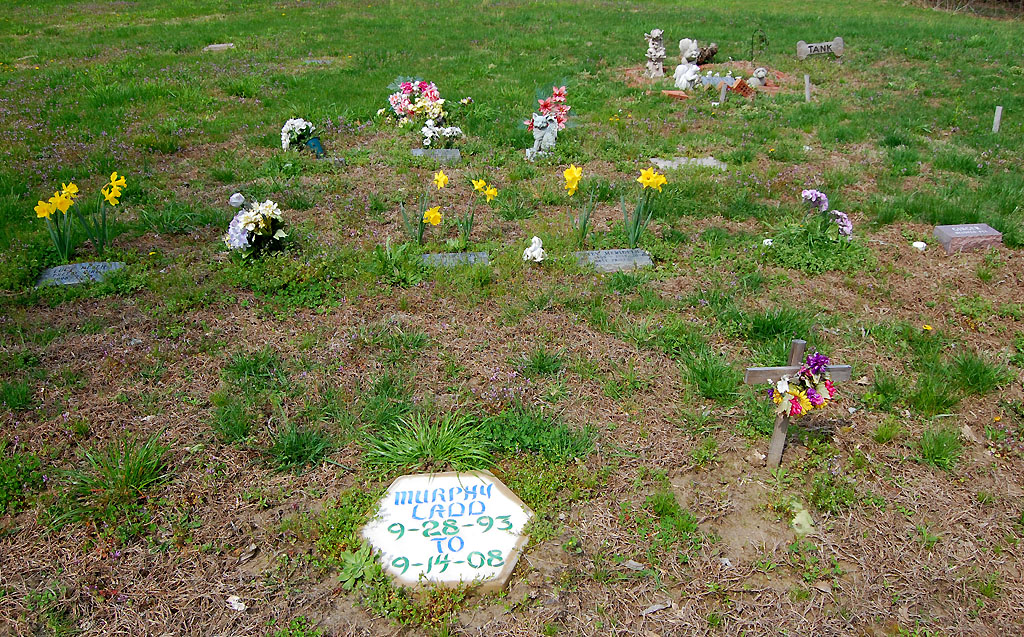
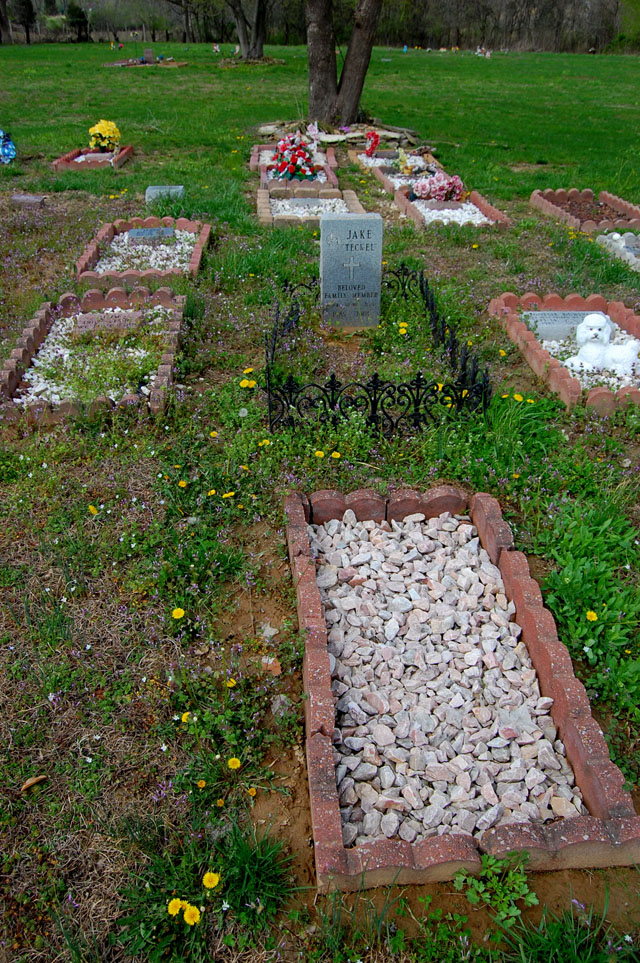
If I’d traipse all over Alabama, surely I’d pull off Big Bend Rd. to take a look at the Cedar Hills Pet Cemetery in Cape. It’s a bit plain looking, but it’s neatly kept.

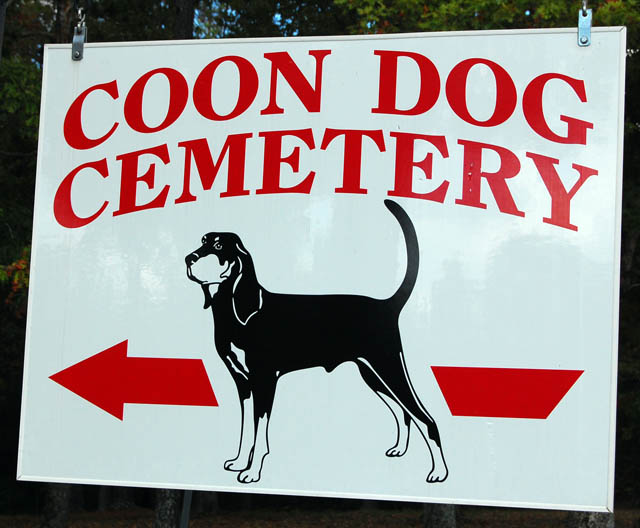
The Coon dog Cemetery (originally called Graveyard), was founded in 1937, when Key Underwood buried Troop, so it’s had a lot more time to get that old-time feeling. The Cape cemetery is only about a couple decades old.

Only coon dogs allowed in Coon Dog Cemetery

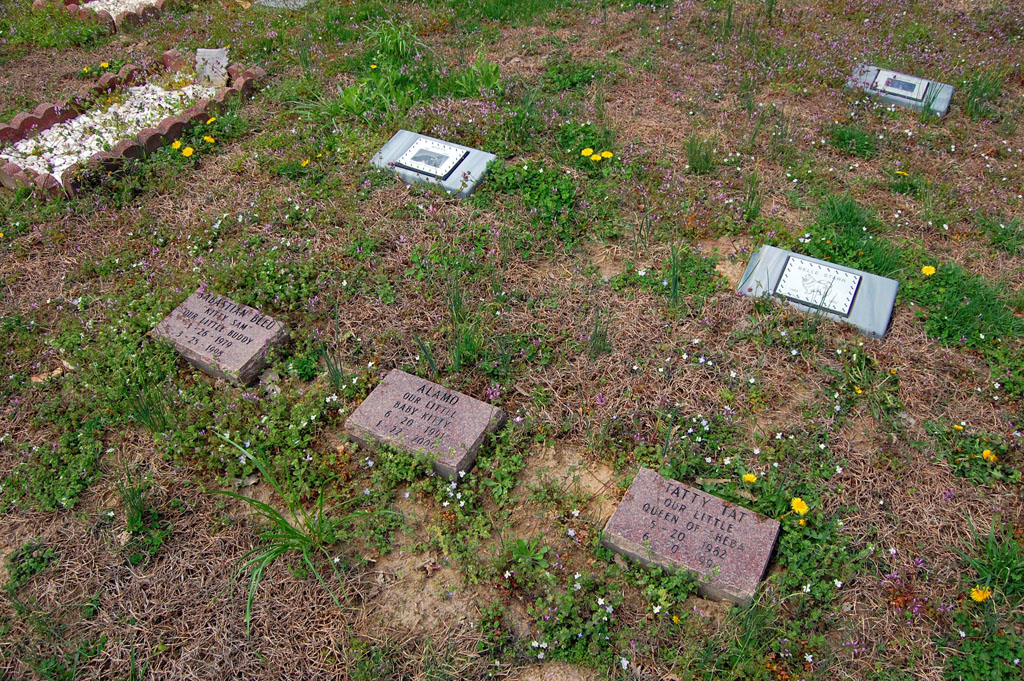
Another big difference is that the Cedar Hills Pet Cemetery appears not to discriminate. They’ll even take, god forbid, cats. [Editor’s note: that was meant tongue-in-cheek. Our back yard is so full of cats that I don’t know where we’ll plant the next one when the time comes.]

The Alabama site has strict rules:  “A dog can’t run no deer, possum — nothing like that. He’s got to be a straight coon dog, and he’s got to be full hound. Couldn’t be a mixed up breed dog, a house dog.”

Cremations, urns and caskets

Cedar Hill’s website says they offer a full range of products and services. A crematory was supposed to open in Spring of 2010, to handle the 75% of services that involve cremations these days. They’ll also sell you urns or caskets for your pet.

The Missourian’s Bridget DiCosmo did a story about Cedar Hills in 2009.

Gallery of Cedar Hill Pet Cemetery Photos

Click on any photo to enlarge it, then click on the left or right side of the image to move through the gallery.

Broadway Landmarks & Cracked Sidewalks

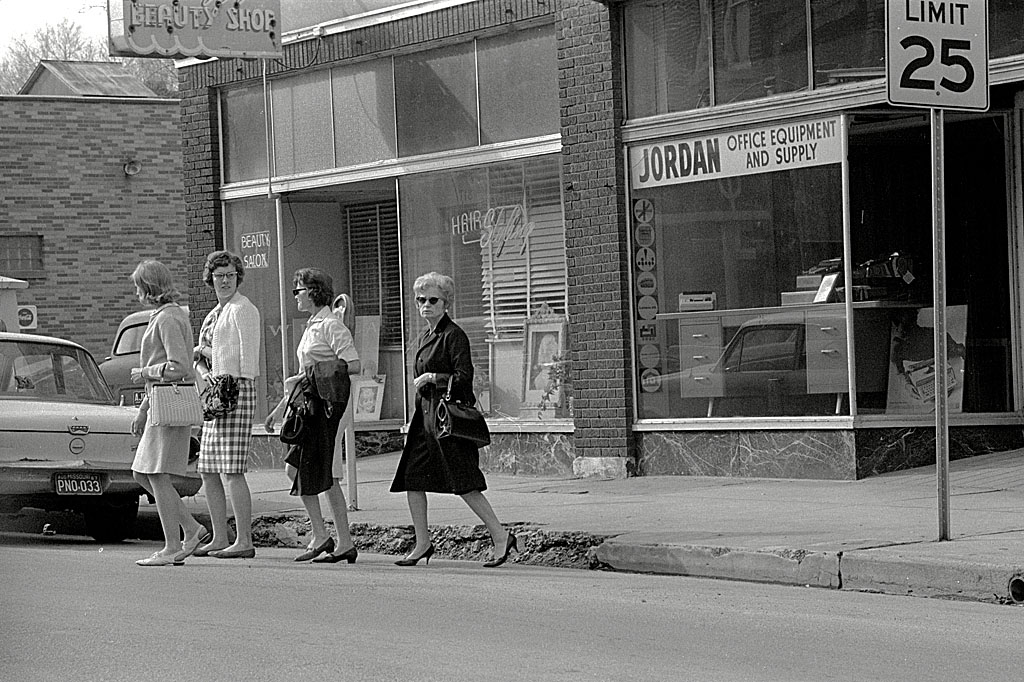
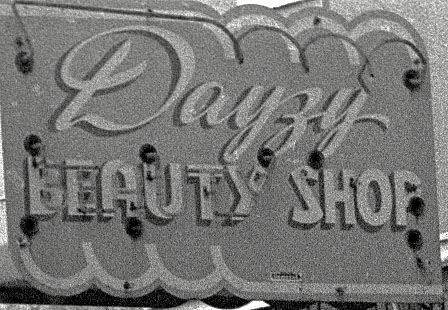
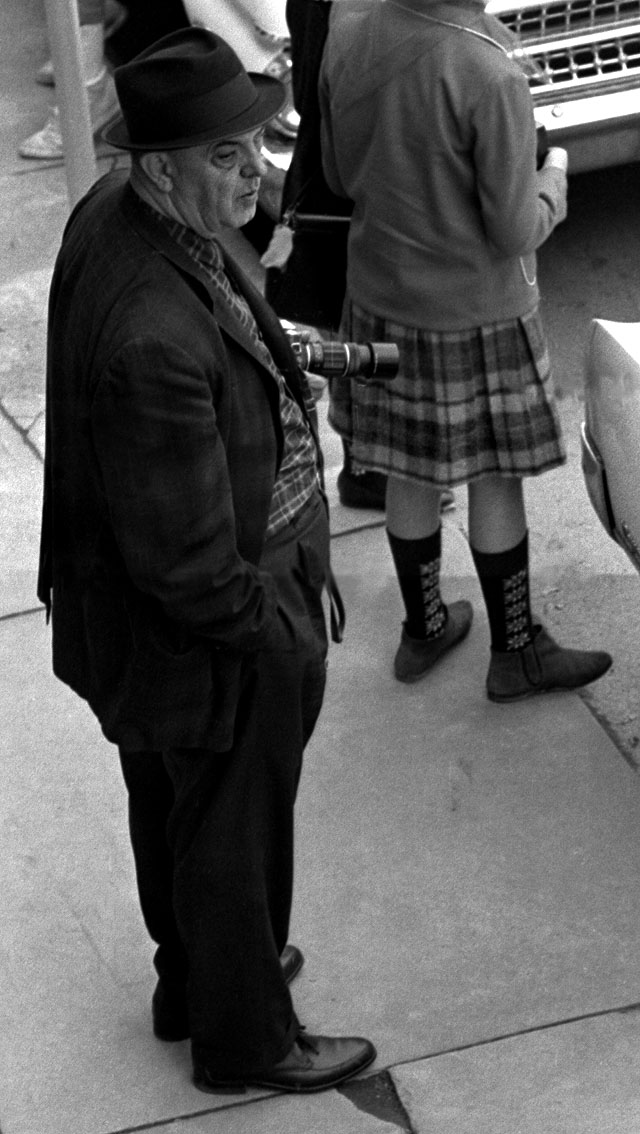
I don’t know if these women were leaving the DayZy Beauty Salon or Jordan Office Equipment and Supply. I suspect the former. The 1979 City Directory said the beauty salon was at 718 Broadway and owned by Mrs. Dorothy Willman.

“Women,” not “ladies”

I called them “women” because Missourian style was that females of a certain age were “women,” because that was a verifiable fact. “We don’t KNOW if they are ladies,” it was drilled into me.

Cracked sidewalks

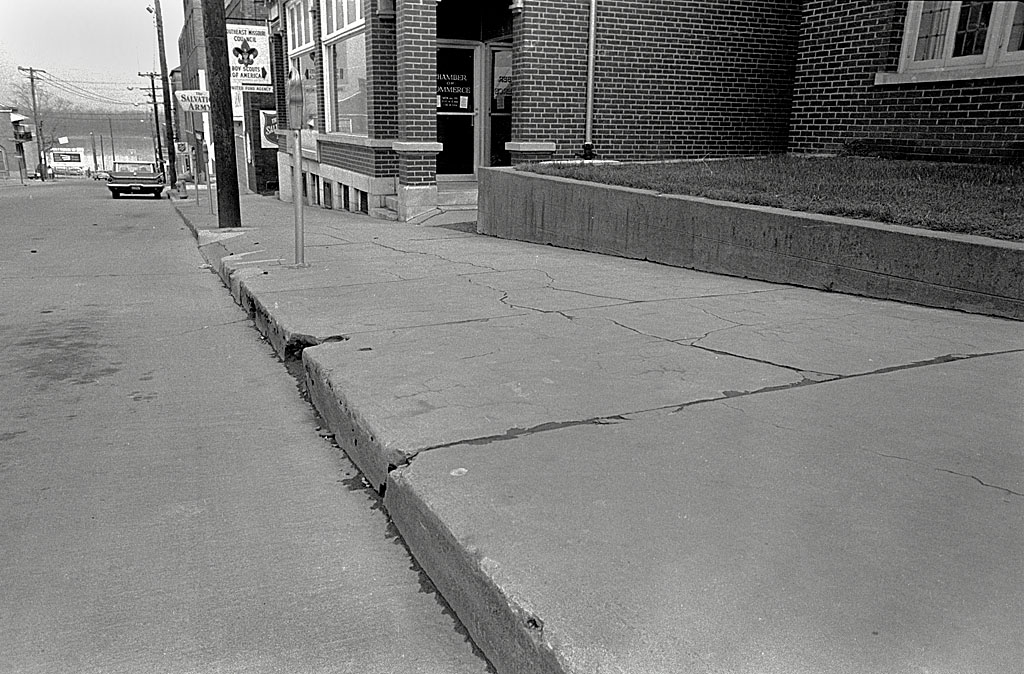
These photos were in a sleeve slugged “Cracked Sidewalks 3/27/67.” There were some other photos in it, too. Wife Lila was in The Missourian’s print shop, where The Capaha Arrow was on the press, and I had a couple of shots of Jim Stone from a trip to the Ohio University campus. The variety of the photos makes me think the date was when the film was processed, not when it was taken.

I don’t know if I shot the sidewalks on assignment or on the off-chance that I could turn the photos into a story. There was a difference. At some point Editor John Blue or someone in the business office must have discovered that they weren’t paying me much salary ($50 a week to start and probably around $70 a week by the time I left), but I was making about half that much again in freelance photos. That probably put me in the salary range of real, experienced reporters.

Sliding pay scale

The solution: they changed my pay schedule. I got $5 for every ASSIGNED photo, but only $3 if the photo was self-generated.

That’s where I learned to think in terms of picture stories and multiple photos. A photo that contained all of the elements of the story in one picture was only worth $3 to $5. If I could find a way to tell the story in pieces, then it was more money in my pocket.

I understand how Frony became One-Shot

Oh, yeah, there was another catch. I had to pay for my own film, paper, chemicals and darkroom equipment.

I can understand why Frony became One-Shot Frony.

Still, I was living at home and didn’t have many expenses outside gas, photo supplies and dates. Lila will testify that I certainly didn’t spend a lot of money on THOSE.

I used to drive the accounting department nuts because I’d go weeks without depositing my pay checks. Eventually, someone would come up and ask me to cash them so they could balance their books.

Trust me, that was the ONLY time in my life that happened.

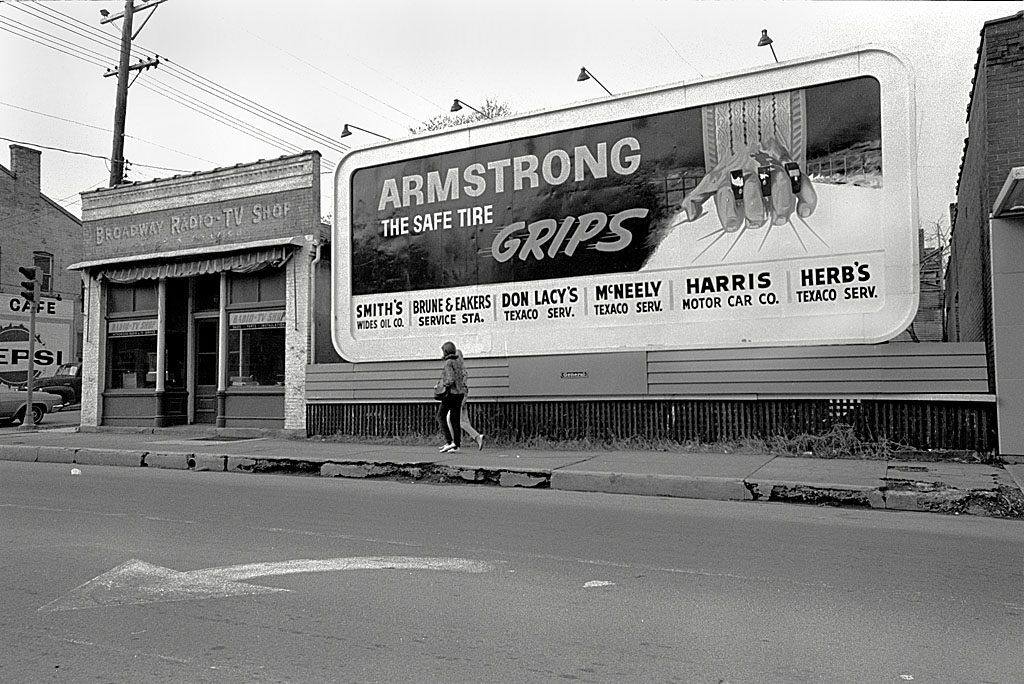
Armstrong Tires and Chris Cross Cafe

I could have used this photo with two stories. The Armstrong Tire ad would have fit nicely with the one dealing with the early days of the automobile in Cape.

It also shows a corner of the mystery building that was being demolished at the corner of Broadway and Sprigg in my Sept. 9 piece. Readers identified it as the Chris Cross Cafe. I don’t know that I was ever in the Broadway Radio-TV Shop.

Chamber, Boy Scouts & Salvation Army

This cracked sidewalk photo in the 200 Block of Broadway picks up several landmark establishments: The Chamber of Commerce, the Boy Scouts of America and the Salvation Army. That’s my ’59 Buick LaSabre station wagon facing the river.

Cape’s First Car: 1904; First Crash: 1910

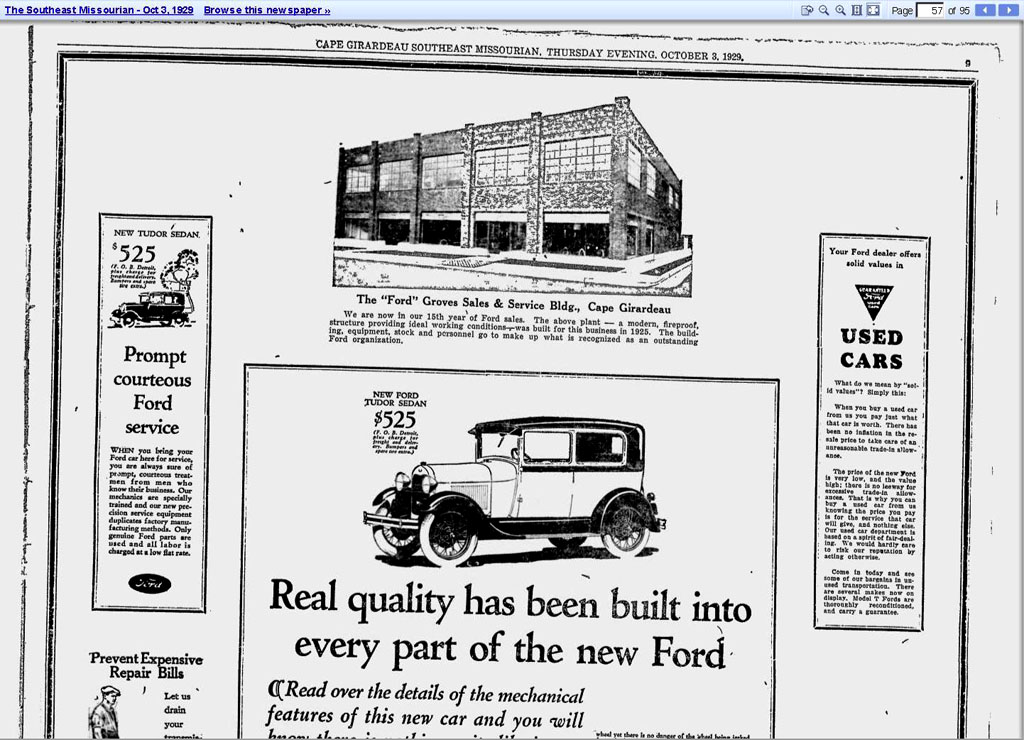
The first gas-powered automobile of record in Cape Girardeau was a Great Northern owned by George McBride, a stave manufacturer. The year was 1904. The Missourian’s 25th Anniversary edition has a fascinating history of the automobile from a 1929 perspective.

Other motorists in 1904

Dr. A.D. Blomeyer drove a Locomobile, a slow-moving, steam-powered vehicle.

The first gasoline bus was the “Red Devil,” bought by William Gockel. The paper said that “the Red Devil remained true to its name during the period Mr. Gockel was its owner and he finally gave it away for fear it may take a notion to return to the place from which, as its name indicated, it originally came.”

Buggy manufacturer considers Cape

Not everyone was so sure automobiles were going to be a permanent transportation fixture. Russell Gardner, a prominent St. Louis buggy manufacturer, came to Cape in October, 1904, to select a location for a buggy factory that was to be in operation by March of the next year. The factory was never built.

Cape automotive pioneers


Fred A. Groves and O.G. Edwards came to Cape in 1914 to start an automobile business. They had been in business together in Farmington, a Missourian story explained, when they decided to give Cape a go.

It took them three days to drive from Farmington to Cape Girardeau. One day from Farmington to Ste. Genevieve; one from Ste. Gen to Perryville, and one to cover the 35 miles from Perryville to Cape.

The two young men established an agency for Hudson and Hupmobile. Edwards went back to Farmington, but Groves stayed in Cape. He took over the Ford agency in 1914.  Groves sold 5,526 Ford Model Ts and 500 Model As in his first 15 years.

Other early Cape car dealers

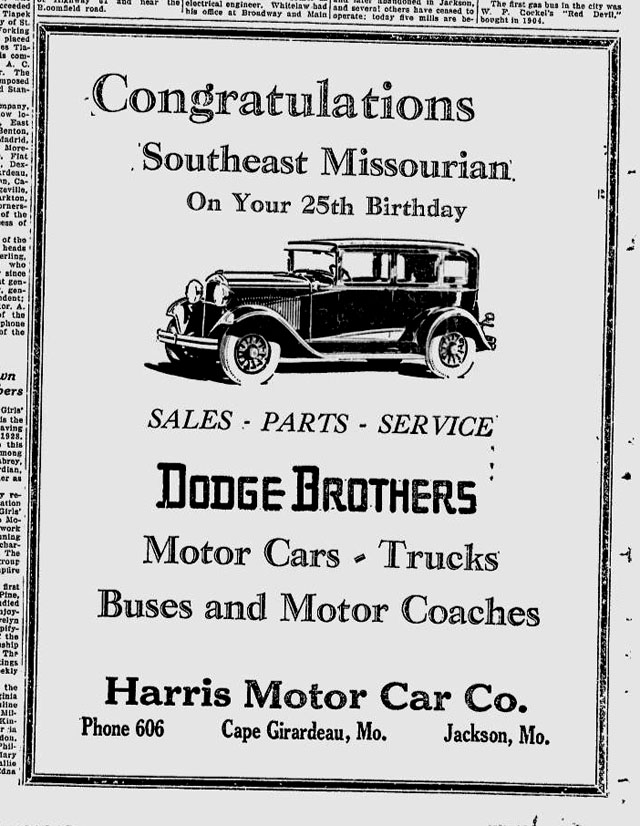
  • A Dodge franchise went to Thomas L. Harris.
  • Rudert and Sons started in the garage and automobile agency business in 1917.
  • Albert P. Rueseler and Walter Bohnsack organized the Rueseler-Bohnsack Auto Co. in 1923. The Rueseler Motor Co. was formed in 1925, and Bohnsack became a Studebaker dealer.

Significant dates in Cape automotive history

  • First car theft: Oct. 21, 1905. Salesman Vince Chapman left his car in front of the Broadway Mercantile Co. “Manufacturers apparently thought there was about as much temptation for the predatory criminal to steal an automobile as to steal a box car or a steamboat and had not provided locks,” The Missourian speculated. There is no indication that the car was recovered. It is estimated that there were perhaps 20 cars in Cape at that time.
  • Fastest time Cape to Jackson: July 9, 1906, Joe Wilson drove from Cape to Jackson in a record time of 25 minutes, “probably the shortest time in which the 10 miles had ever been traversed up to that time.”
  • First Tin Lizzie: George McBride (remember him) brought the first “Henry” into Cape in May of 1909.
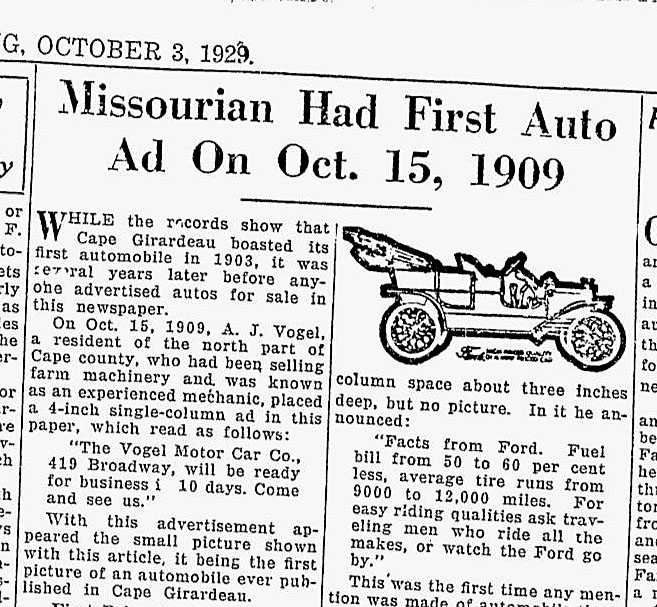
  • First garage: A.J. Vogel opened the first garage on Jan. 10, 1910. It had a showroom big enough to hold six cars, a washing and cleaning shop and a repair shop. Vogel, a farm machinery salesman and experienced mechanic, placed the first display auto ad to run in The Missourian. The 4-inch, single column ad read: “The Vogel Motor Car Co., 419 Broadway, will be ready for business in 10 days. Come and see us.”
  • First auto license tax: Dec. 6, 1909. $5.
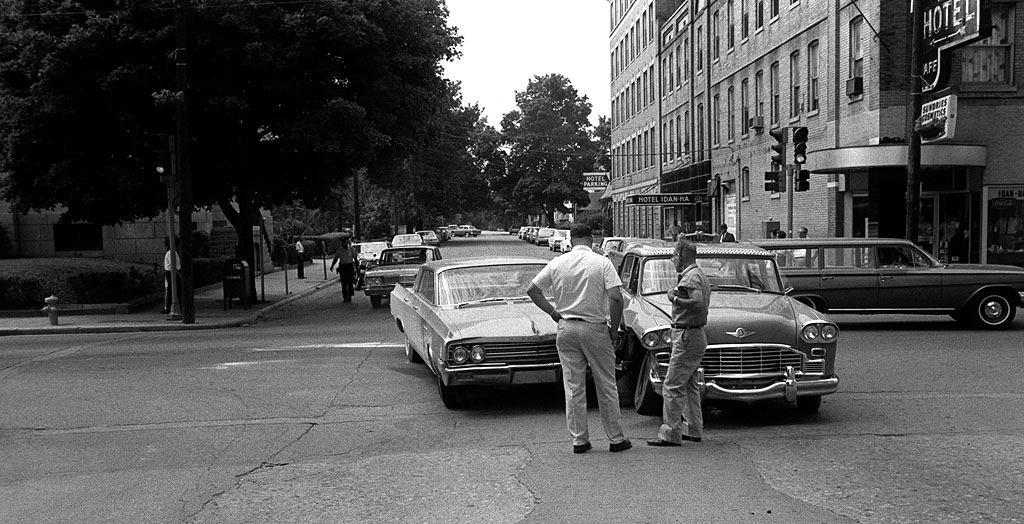
  • First car vs ped: July 21, 1910. Esaw Hendrickson, a Delta farmer, got off a street car between the H&H Building and the Idan-Ha Hotel and stepped in front of a car driven by City Councilman Joe T. Wilson. He was knocked down and run over, but his injuries were not serious.

(Cars were still bumping into each other at Broadway and Fountain in 1966. See more photos of this crash, plus read about Fred Kaempher, Cape’s song-writing policeman.)

  • First auto vs bicycle: the day after Mr. Hendrickson’s accident, a car driven by R.B. Oliver, Jr., and a bicycle ridden by Fred Frenzel, a Western Union messenger boy, collided at the corner of Broadway and Spanish. “The boy was not hurt much, but his brand-new wheel was demolished.”
  • First funeral procession: Oct. 30, 1916, when the body of Charles E. Booth, a Frisco fireman, was laid to rest. The Brotherhood of Locomotive Firemen and the Odd Fellows asked Booth’s friends to bring automobiles for the funeral procession.

Cars were big business in Cape in ’29

  • Ten garages were exclusively devoted to repair work; 14 others were dealerships in addition to their garage functions.
  • Two automobile accessory concerns.
  • Three automobile battery stations.
  • Seven exclusive tire and service stations, not counting garages and stores handling tires.
  • One vulcanizing shop.
  • At least 30 filling stations.
  • Cape automotive landmarks
  • First car theft: Oct. 21, 1905. Vince Chapman left the car in front of the Broadway Mercantile Co. “Manufacturers apparently thought there was about as much temptation for the predatory criminal to steal an automobile as to steal a box car or a steamboat and had not provided locks.” There is no indication that the car was recovered. It is estimated that there were perhaps 20 cars in Cape at this time.
  • Fastest time Cape to Jackson: July 9, 1906, Joe Wilson drove the 10 miles from Cape to Jackson in a record time of 25 minutes, “probably the shortest time in which had ever been transversed up to that time.”
  • First Tin Lizzie: George McBride (remember him) brought the first “Henry” into Cape in May of 1909.
  • First garage: A.J. Vogel opened the first garage on Jan. 10, 1910. It had a show room big enough to hold six cars, a washing and cleaning shop and a repair shop.
  • First auto license tax: Dec. 6, 1909. $5.
  • First Missourian auto ad: Oct. 15, 1909. A.J. Vogel, a farm machinery salesman and experienced mechanic placed a 4-inch single column ad: “The Vogel Motor Car Co., 419 Broadway, will be ready for business in 10 days. Come and see us.”
  • First auto crash: July 21, 1910. Esaw Hendrickson, a Delta farmer, got off a street car betwen the H&H Building and the Idan-Ha Hotel and stepped in front of a car driven by City Councilman Joe T. Wilson. He was knocked down and run over, but his injuries were not serious.
  • First auto vs bicycle: the day after Mr. Hendrickson’s accident, a car driven by R.B. Oliver, Jr., and a bicycle ridden by Fred Frenzel, a Western Union messenger boy, collided at the corner of Broadway and Spanish. “The boy was not hurt much, but his brand-new wheel was demolished.”
  • First funeral procession: Oct. 30, 1916, when the body of Charles E. Booth, a Frisco fireman, was laid to rest. The Brotherhood of Locomotive Firemen and the Odd Fellows asked Booth’s friends to bring automobiles for the funeral procession.