Houck Railroad Bridges

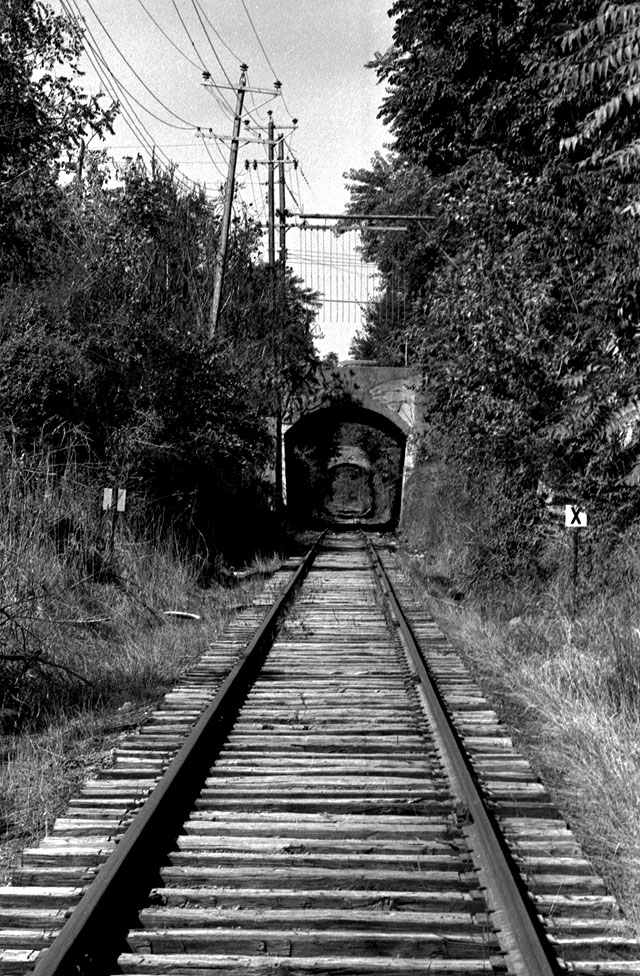
I was planning to write about Happy Hollow, but I ran across so many good stories I decided to hold off until I can do it justice. Here’s a piece of the Happy Hollow neighborhood that has what Missourian blogger James Baughn says may have been the oldest bridge in Cape Girardeau.You should read his blog entry about two bridges here that spanned Good Hope and William Streets. Reading his account will boost his traffic stats and save me some typing. (Click on any photo to make it larger.)

Louis Houck decided to use area between Independence and William Streets for his railroad depot, rail yard and other facilities. You might remember the large three-story stone building near where the federal courthouse is today. I wish I had some photos of it, but it was torn down before I started documenting things like that. This trench and overpasses provided a south approach to the rail yard.

Aerial of South Fountain area
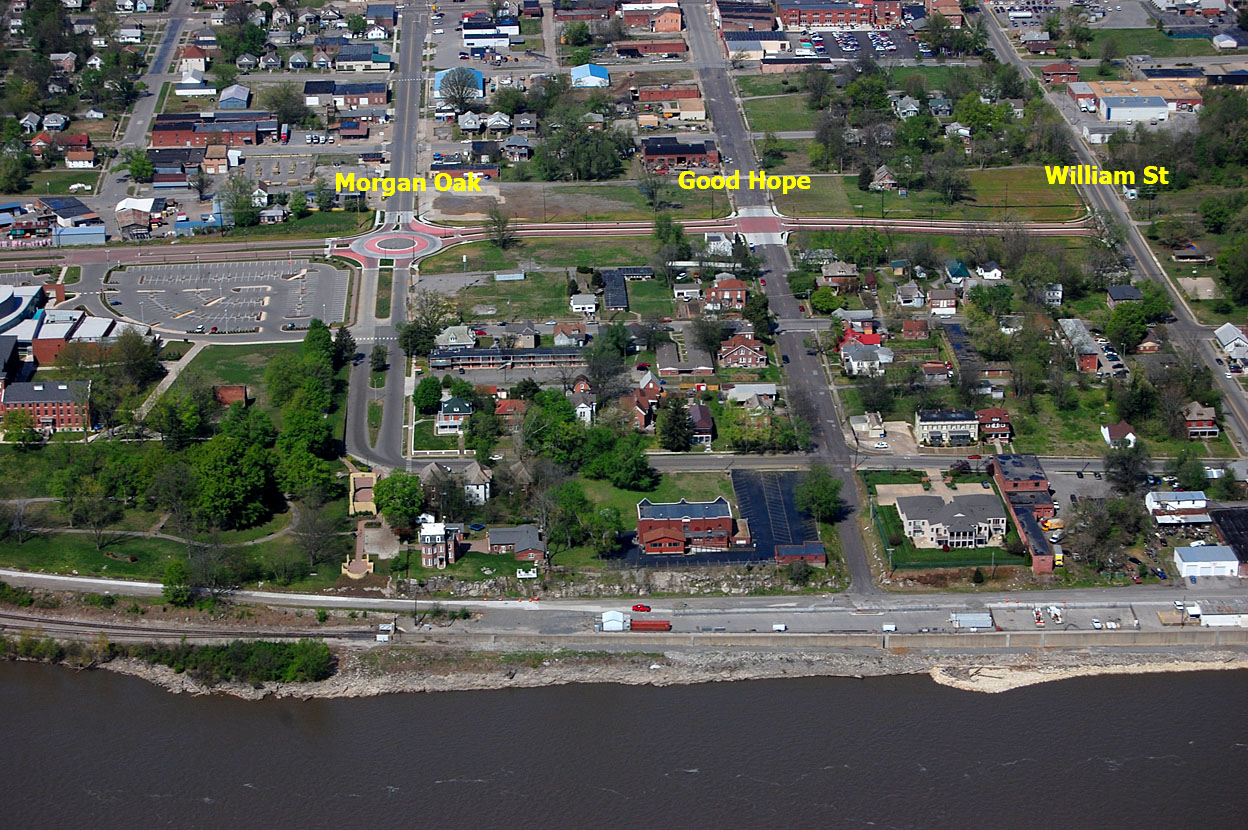
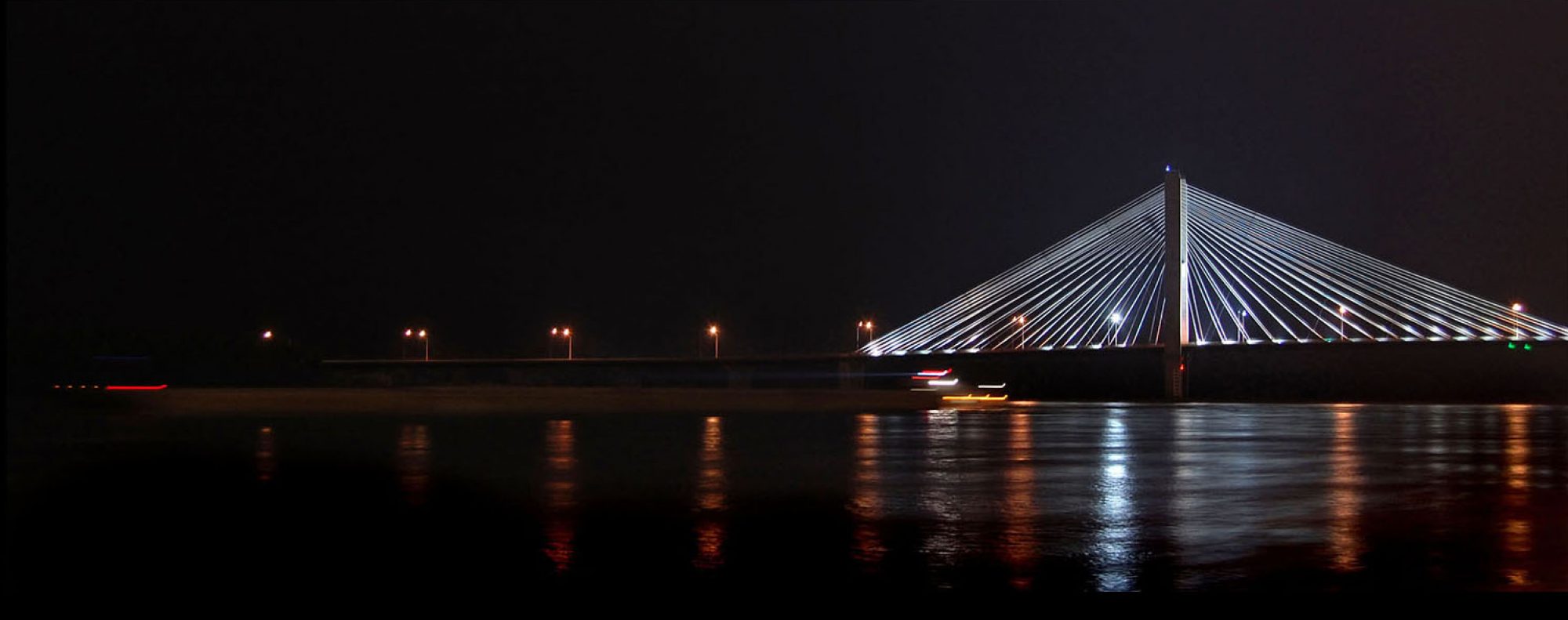
The bridges were taken out and the area filled in when South Fountain Street was extended to River Campus. River Campus is on the left side of the photo. The approach to the old Mississippi River Traffic Bridge is at the east end of Morgan Oak.

View south from William Street
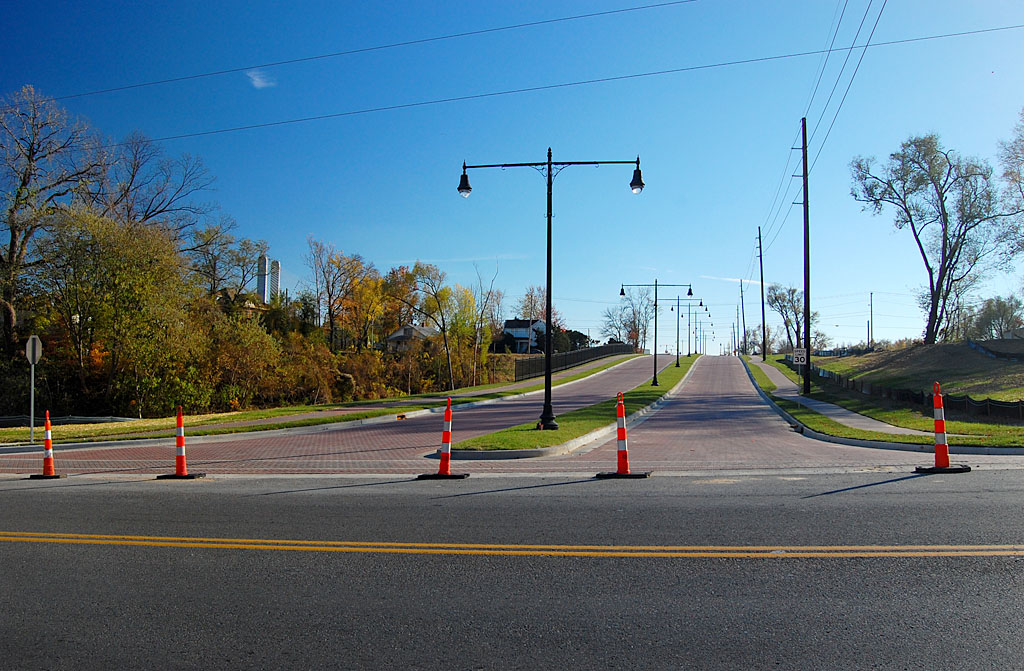
The street was still under construction when this was shot November 9, 2010, but it is open now.

I wonder if ghost whistles of Louis Houck’s engines can still be heard in the neighborhood at night. I’m sure reader Keith Robinson will tell us much more about the railroad.
 

“Avoid Cliche Shot”

I worked with a sports editor once that would type up an assignment to shoot the most hackneyed, dull, uninteresting, contrived situation in the world, then, invariably, he would add the line that drove my photographers nuts: “Avoid Cliche Shot.”

The guy must have played football before they invented helmets because no matter how much I talked to him, he couldn’t grasp the concept that a cliched situation is going to produce, at best, a technically proficient cliche shot. GRRRRRRRR!!!!

Grip ‘n’ grins taboo

At The Palm Beach Post, we managed to all but kill the “three-men-and-a-piece-of paper-grip-and-grin” shots, check-passings and ribbon cuttings by convincing organizations that photos of stuff REALLY happening would be more interesting. If the check was going to be used to feed kids at a day care center, we would go cover that instead of lining up some suits holding a fake big check and mugging the camera..

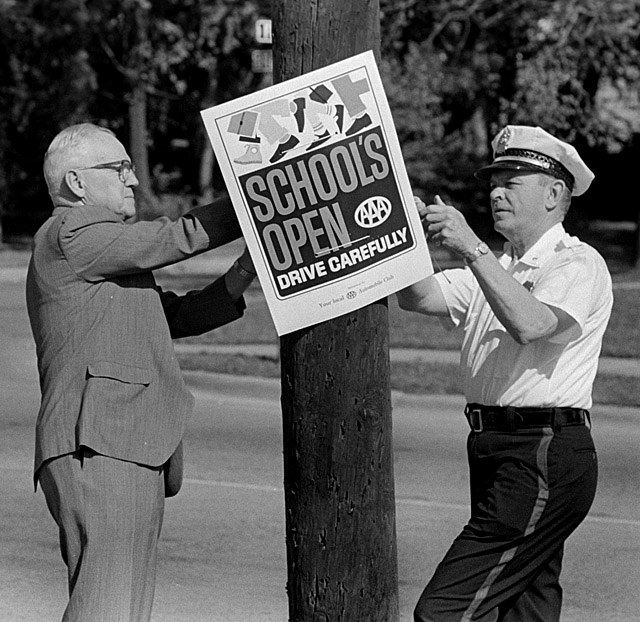
Since I was paid by the picture at The Missourian, my standards were a lot lower, but I still tried to get something not too embarrassing out of the obligatory school opening promo. At least I managed to drag Mayor J. Hugh Logan and Police Chief Irvin E. Beard outside to actually put up one of the 14,000 posters that were going to be plastered all over town as part of the 35th annual school safety drive.

As I read that, I have a hard time believing that there were 14,000 utility poles in Cape. I mean, the population of Cape was only about 25,000 on April 30, 1967, when this photo ran. Not only did they have 14,000 posters, but the photo caption said you could go by the police department to pick up a bumper sticker if you were so inclined.

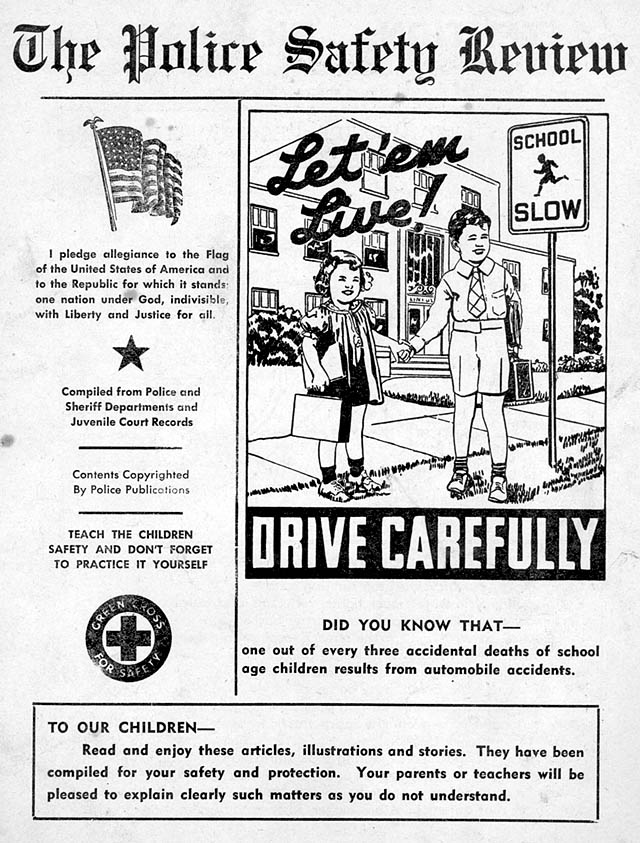
Police Safety Review

I thought this publication was really cool. Follow the link to see a summary, then click on the links on THAT page to see some cool, gory drawings. We kids of the 60s were taught there were serious consequences to not following the rules,  not just including having it written down in your permanent record.

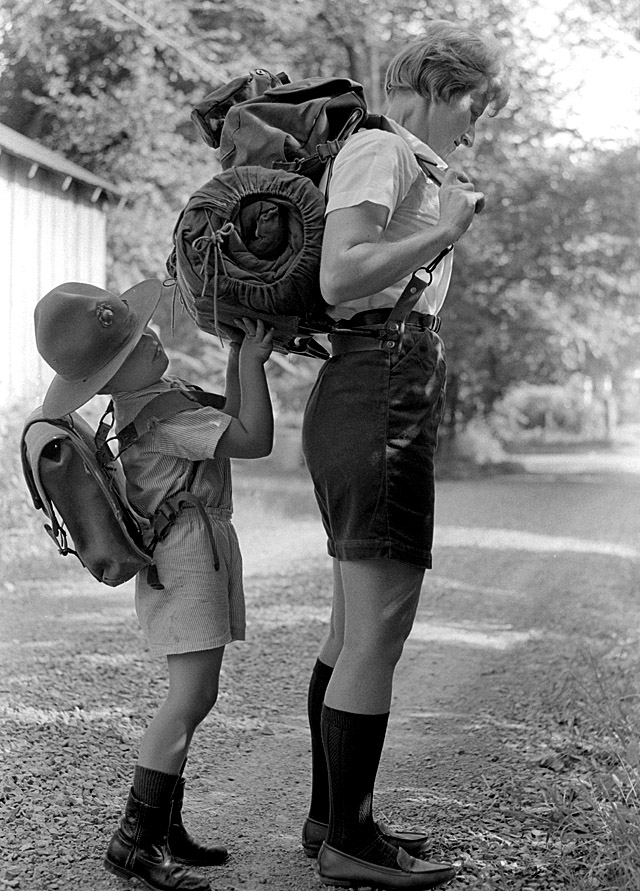
Mrs. George Ketcham, Backpacker

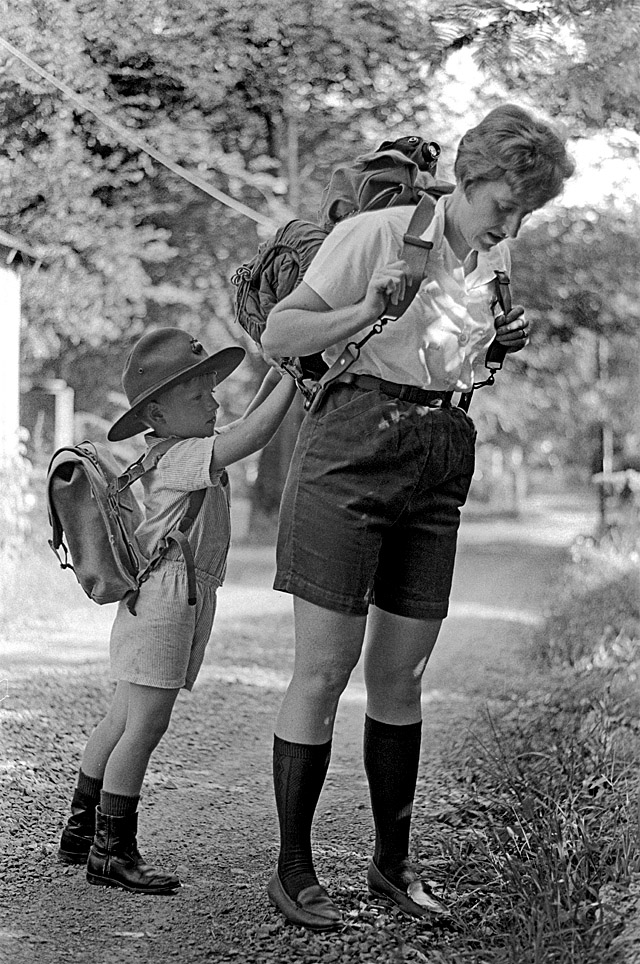
The August 8, 1967, Missourian caption said “Even Charles, son of Mr. and Mrs. George A. Ketcham, wants to assist his mother with her back pack, a 20-pound weight that she has been wearing for months in preparation for a hiking vacation next week when she will travel about 10 miles a day, walking over the Appalachian Trail with her husband, and her father.” Click on any photo to make it larger. You can read the full Emily Hughes’ story here.

Hike will start at Nantahala, N.C.

I guess someone thought the shot that ran in the paper was cuter than this one that shows Charles’ face. Mrs. Ketcham’s mother was going to keep the six-year-old while the hikers start out north of the Georgia border at Nantahala, N.C.

“Mother will drive us to where we get on the trail, 30 miles away,” Mrs. Ketcham said, “and then we’ll take three days to get back, rest and repack. Then she’ll drive us to the other end and we’ll hike the 20 miles back in two days. After that, well see how we feel. If we’ve had enough, we’ll turn around and head home.”

She had been working up to carrying a 20-pound pack since May. She wore it when she was working as a counselor during the Junior Cadet Day Camp so she wouldn’t lose conditioning.

Grandma Gatewood

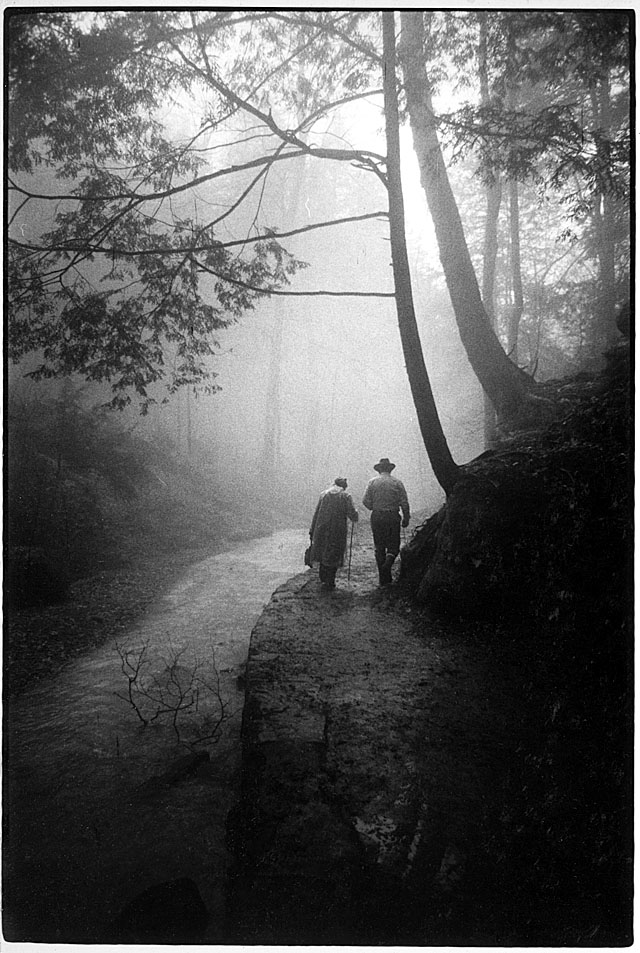
I’ve been scanning photos of  another hiker, Grandma Gatewood, for a future story. This is a shot you’ve seen before.

This remarkable woman was one of the first extreme hikers and an ultra-light hiking pioneer who was the first woman to hike the whole 2,168-mile Appalachian Trail in one season. She did it in 1955 at age 67, wearing Keds sneakers and carrying an army blanket, a raincoat, a cup, a first aid kit, one change of clothes and a plastic shower curtain, all stuffed in a homemade bag slung over her shoulder.

She hiked it again in 1960 and then again at age 75 in 1963, making her the first person to hike the trail three times (though the final hike was completed in sections). She also walked 2,000 miles from Independence, Mo., to Portland, Ore., averaging 22 miles a day.

This was shot in 1969 when she was walking in Hocking Hills State Park

SEMO in 1966 and 2010

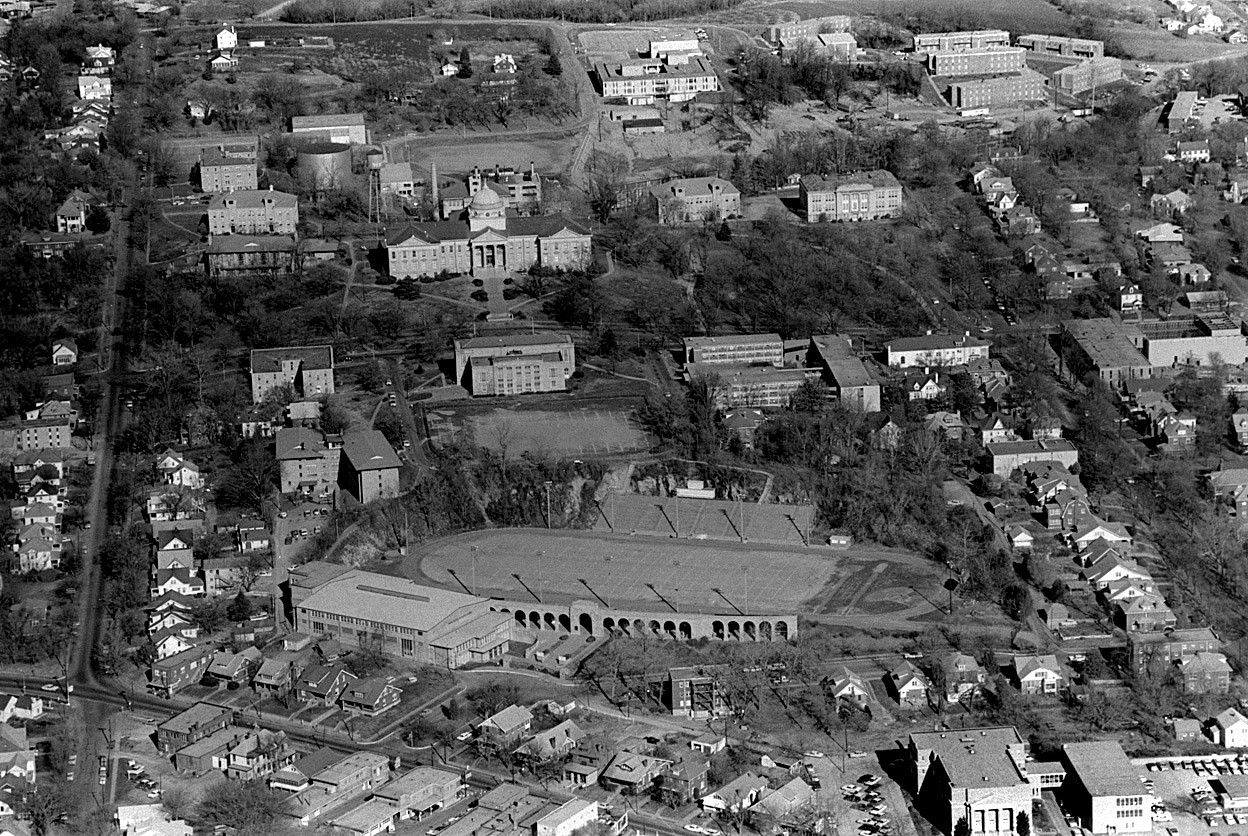
This 1966 aerial of the Southeast Missouri State College campus was misfiled, so I just ran across it.

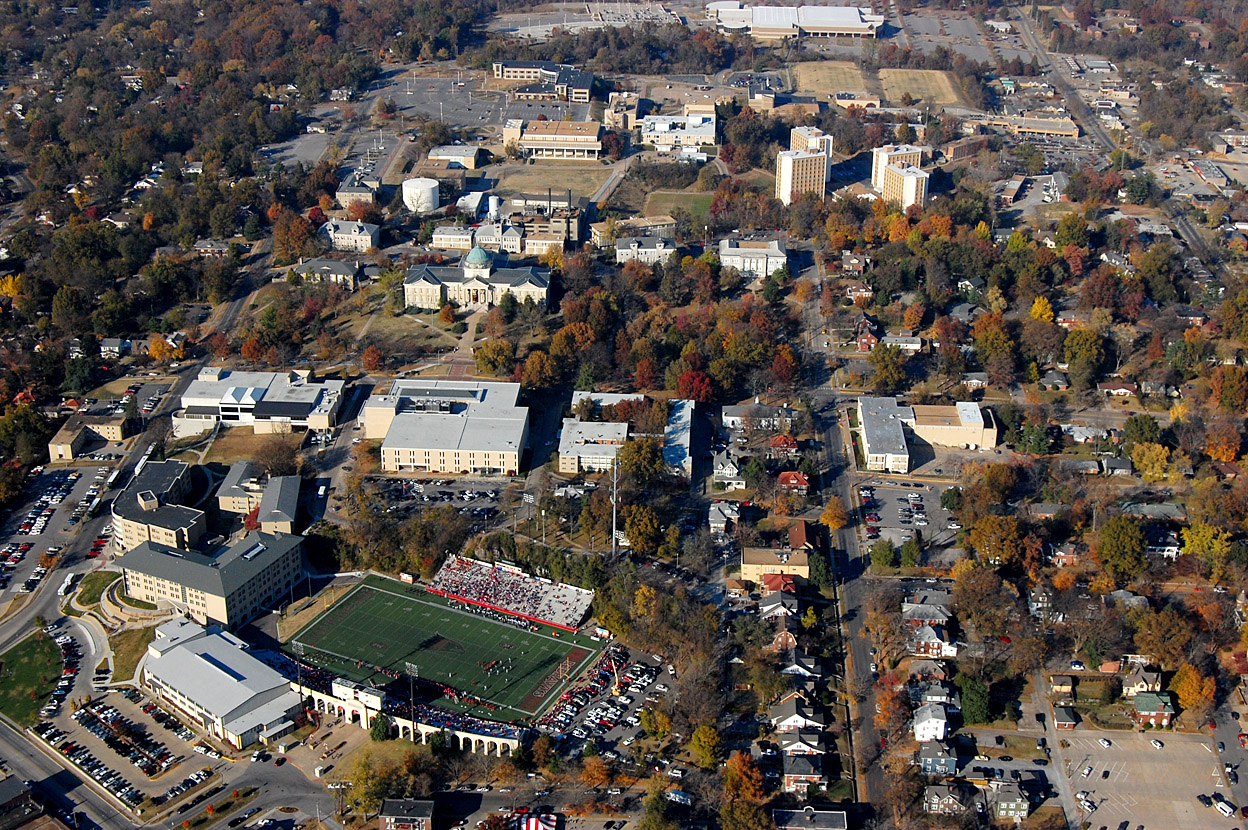
One big change when you compare the 1966 photo with the November 6, 2010, version is the missing dozen-plus homes and Werner’s Super Market that used to be in the lower left corner around Houck Field House.

When this photo was taken, Kent Library hadn’t been expanded and land clearing was just starting on the housing towers at the top center. The open area at the top left has been turned into buildings and parking lots.

Southeast Missouri State University 2010

It’s good to see the terraced hillside on the east side of Academic Hall hasn’t been turned into a parking lot yet.

Here are some past stories about SEMO’s campus: