High in the Common Pleas Courthouse

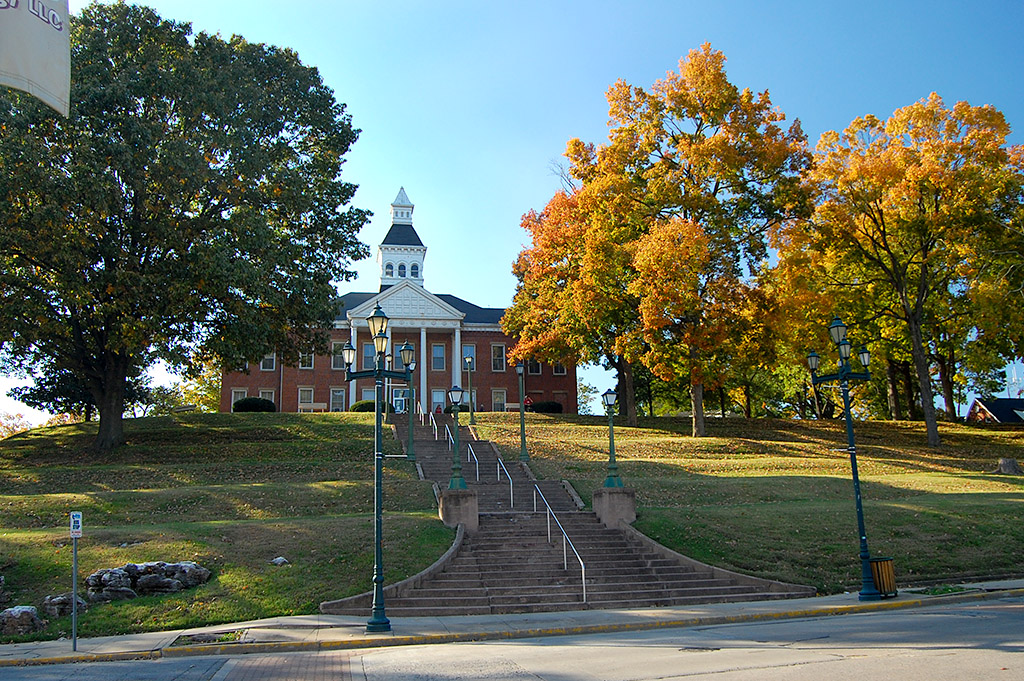
When you look at the Common Pleas Courthouse from Spanish Street, you hardly notice the windows in the dome. (You can click the photos to make them larger.)

Looking east from the courthouse
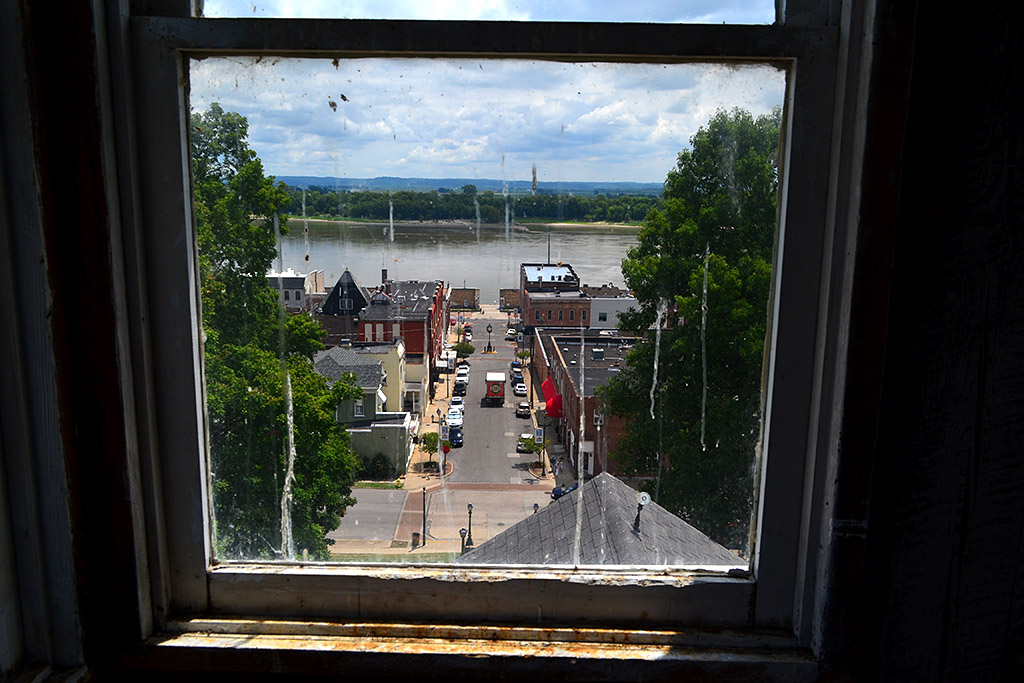
If you’re lucky enough to hook up with guys like IT director Eric McGowen and public works director Don McQuay, folks who have the right keys and know where the hidden passageways are, you can see some impressive sights. I’m glad Friend Shari and I picked a day when it wasn’t 107 outside for our tour. Even on a relatively cool (sub-100) day, it was hot and dusty. The tiny and winding staircases were made for smaller people than me.

Here’s a view down Themis Street. The greenish building on the left side of Spanish and Themis was Doyle’s Hat Shop. One of the Teen Age Clubs was in the building across the street from it. The tall, red brick building that was the Sturdivant Bank may not be with us for long. It’s on the Endangered Building List. A steel cable is keeping bricks from the top floor from raining down on Main Street.

View to the west
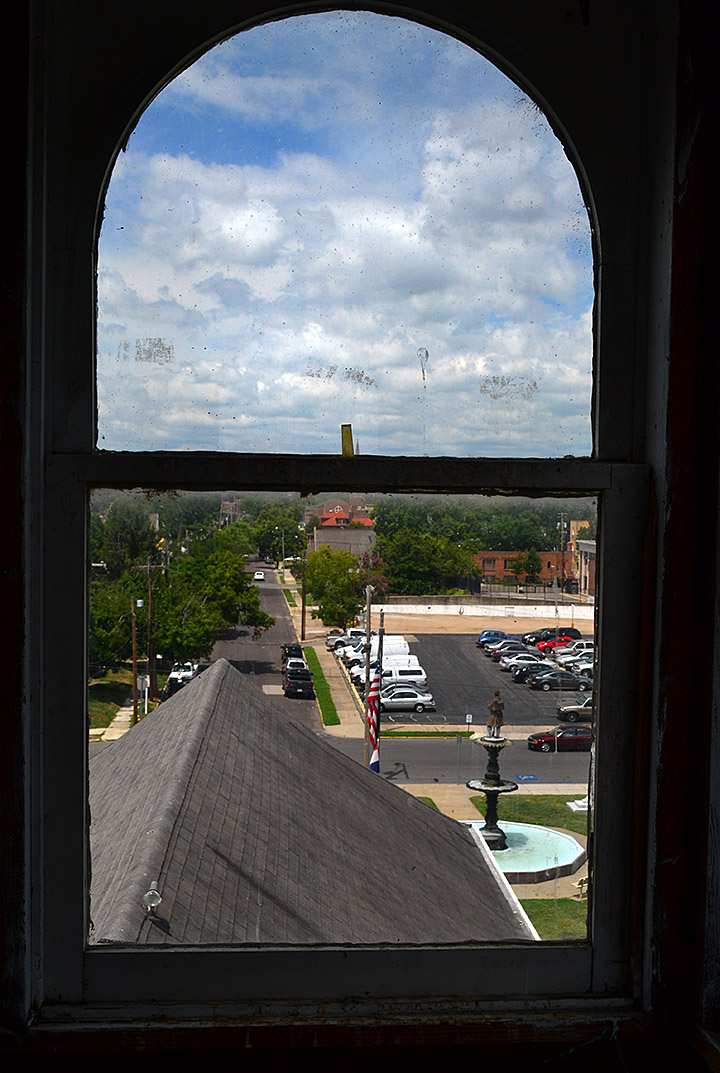
This is the view in the opposite direction. The Civil War fountain and statue is to the right of the roof. Don shared an interesting story about it when we were at the Jackson Courthouse. We’ll save it for another day.

DR. C.E. Schuchert’s bandstand
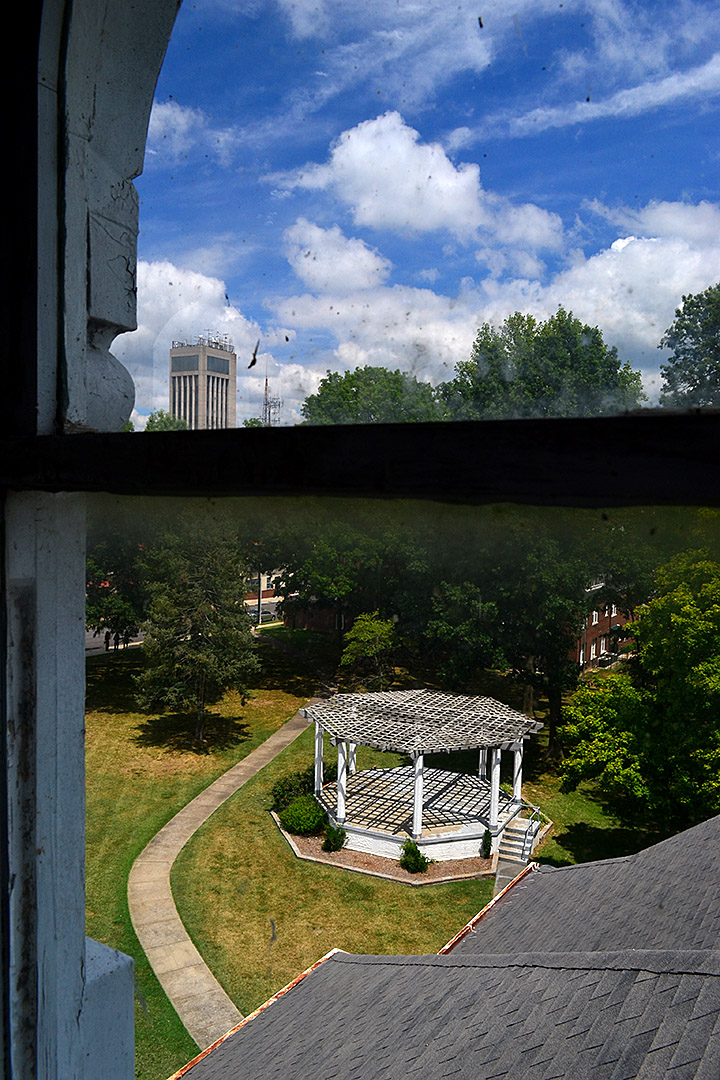
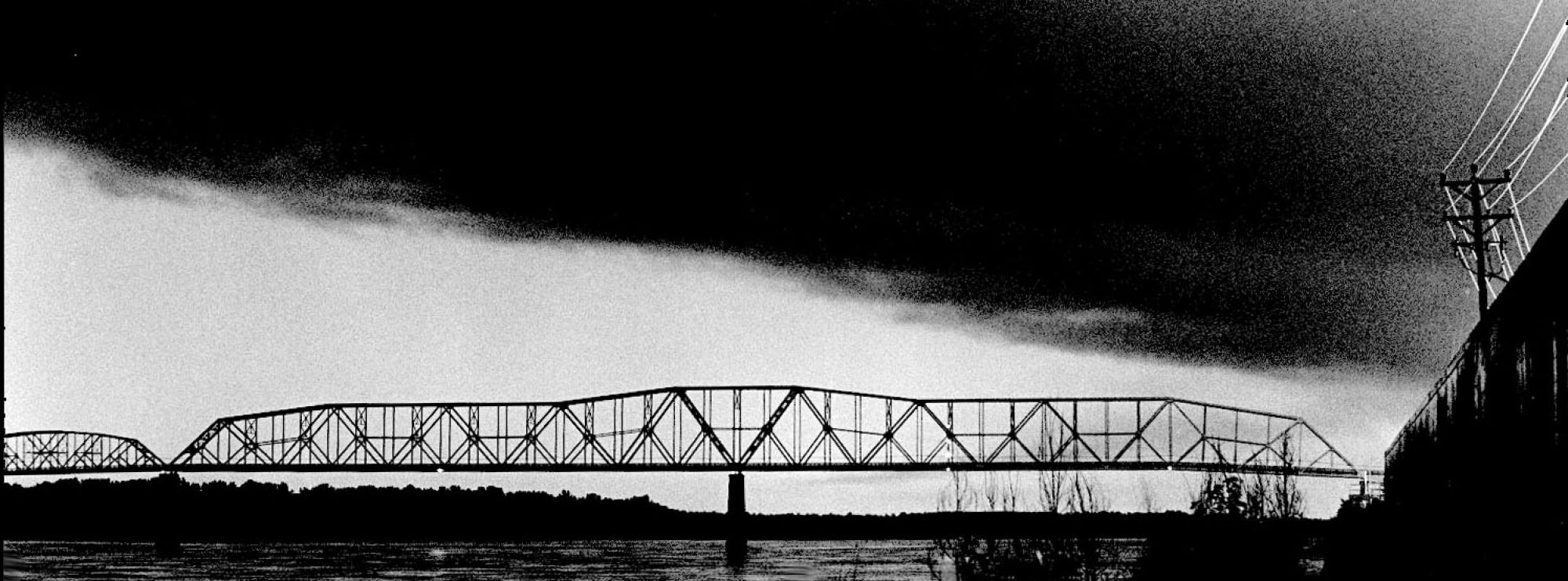
The bandstand dedicated to Dr. C.E. Schuchert and the KFVS tower can be seen to the northwest. The view from the 11th floor of the KFVS building is pretty spectacular, too. There’s a photo looking back toward the courthouse that provides an interesting counterpoint to this one.
 

Pfisters from the Air

Cape IT director Eric McGowen, a reader, asked if I’d like to see the Jackson Courthouse and the Common Pleas Courthouse from top to bottom – bell towers to dungeon. Do bears squat in the woods? You bet.

Bright and early (for me), Friend Shari came down from St. Louis to carry lights and tripods, and we met up with Eric and Don McQuay, public works director. I’ll post the courthouse pictures later.

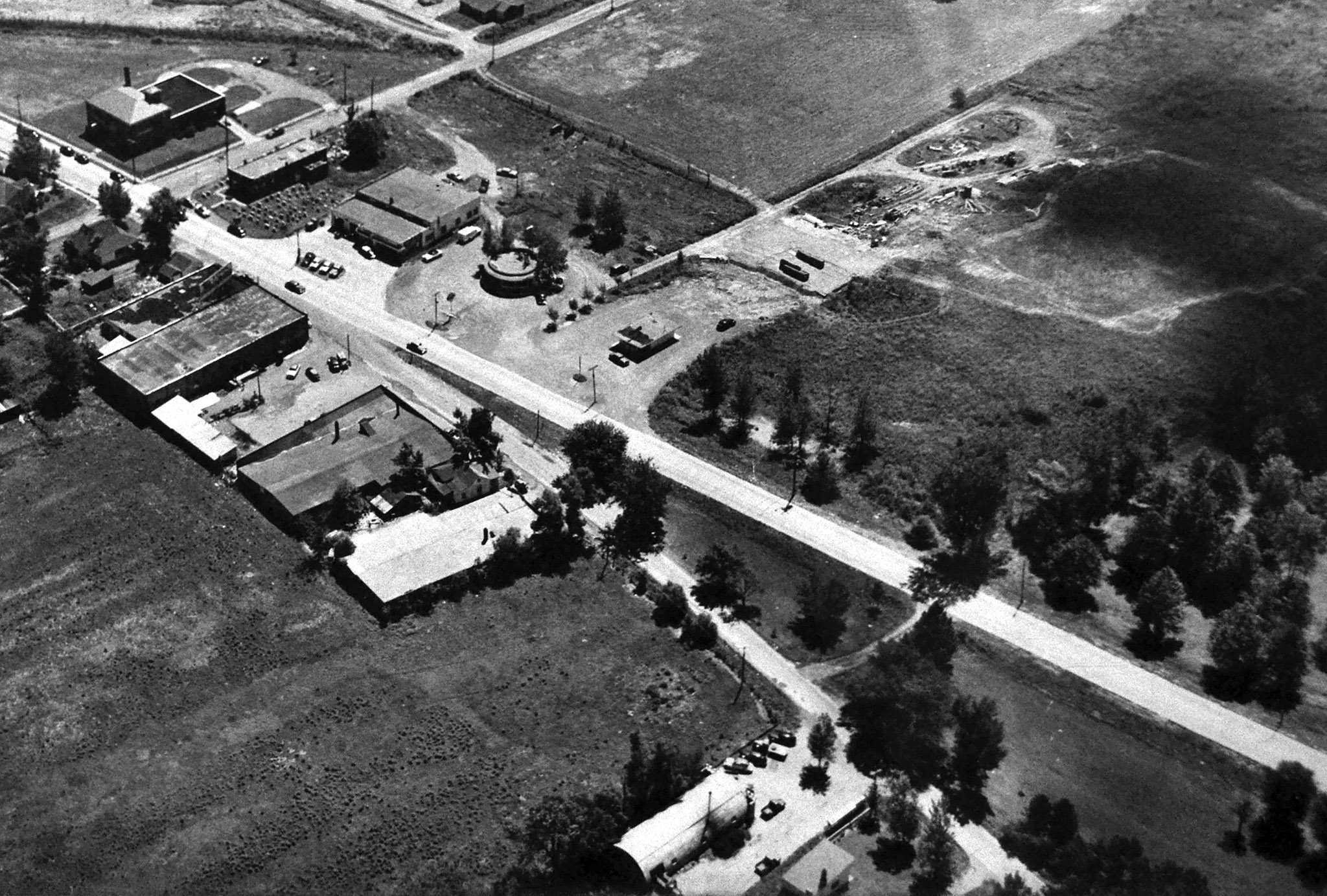
What we ran across was almost neater than the landmark buildings. In the basement of the Common Pleas Courthouse hung three framed prints. As soon as I saw the round shape, I knew immediately that it was on the few photos of Pfisters I’ve seen.

This is a section of the photo showing the Broadway – Kingway split just west of Kingshighway. Click on the photos to make them larger. I made them a little bigger than usual, so they may take a few extra seconds to load.

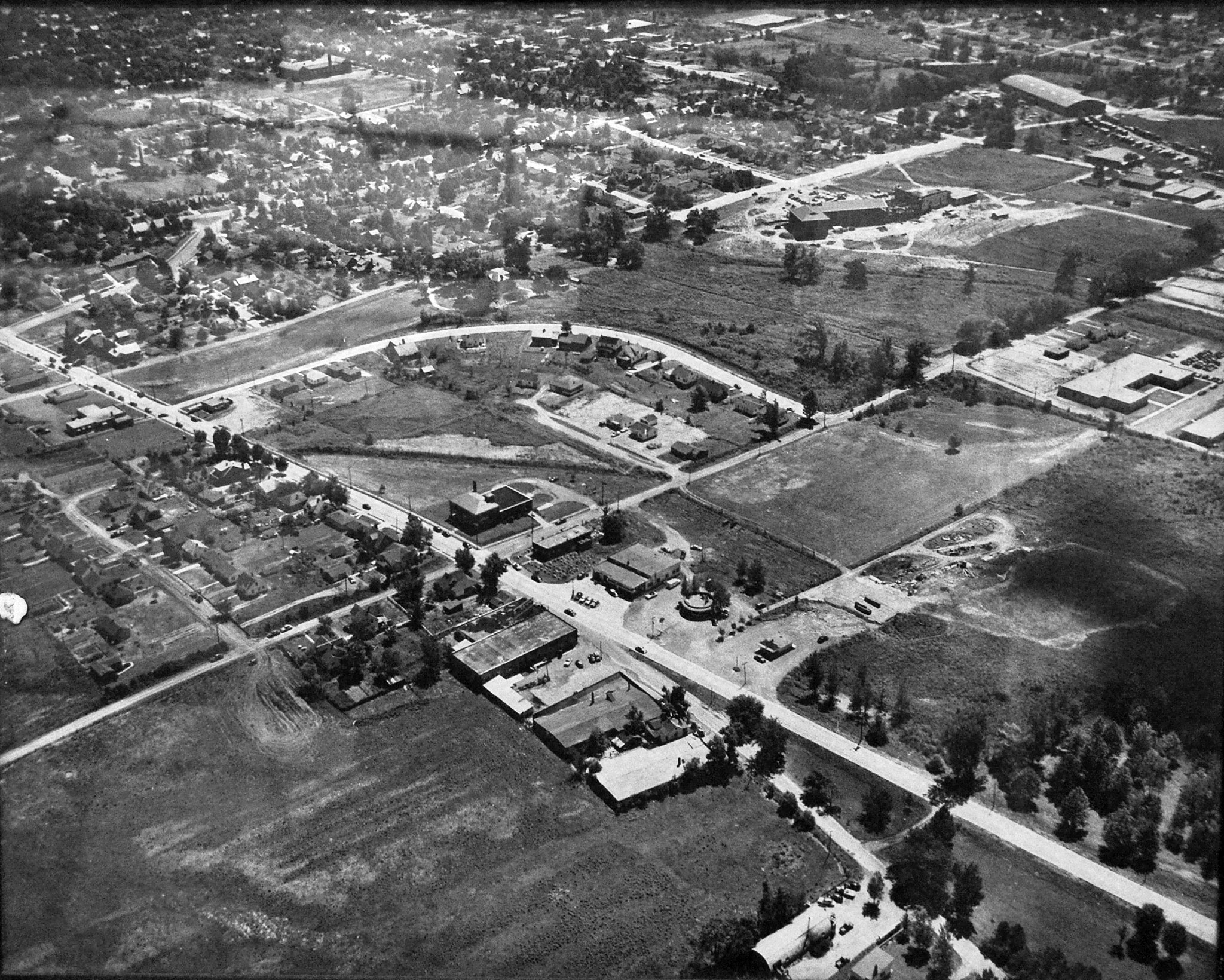
A wider shot

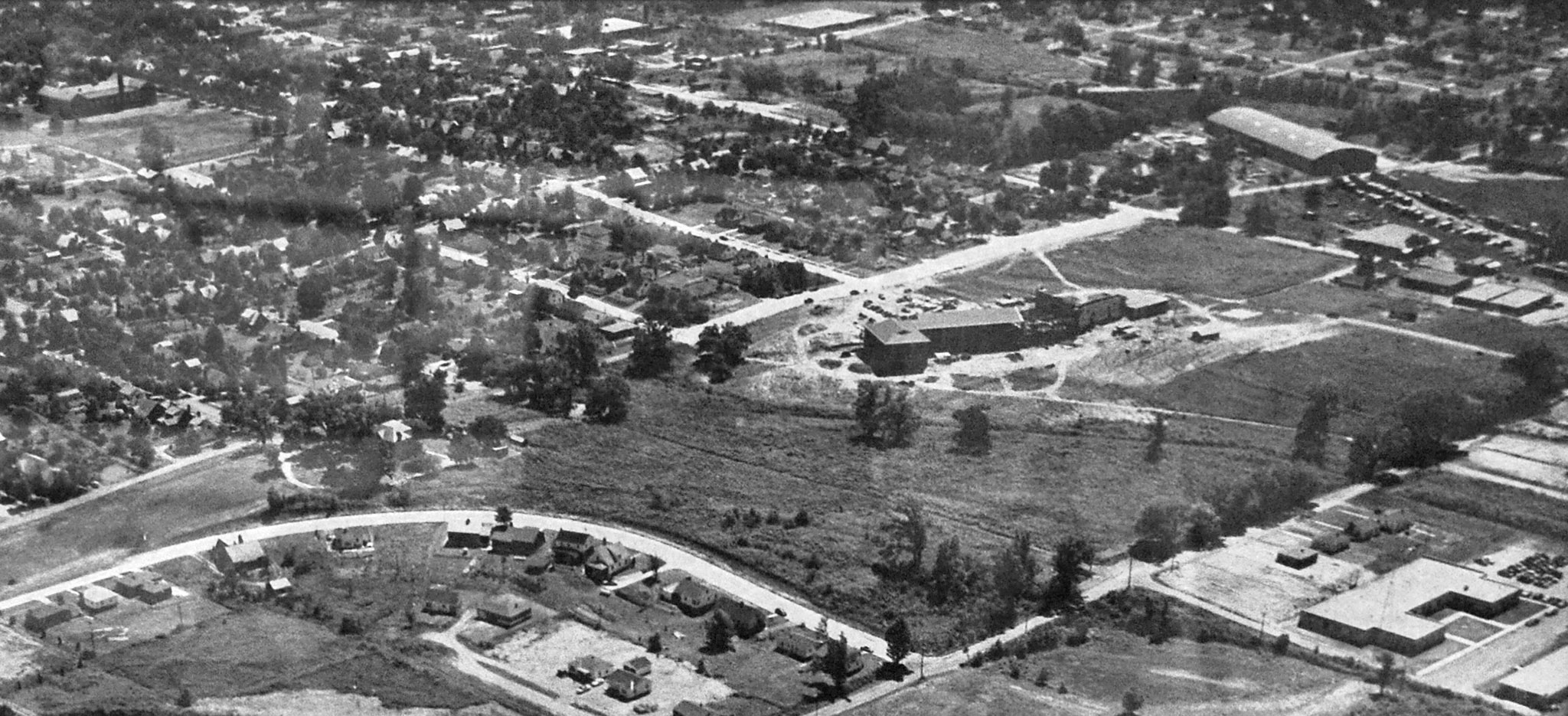
This is the uncropped version. The Broadway – Kingsway split is at the bottom right. The next street to the left is Clark. The curved one is Thilenius. Central High School is at the top right. Franklin School is at the top left.

I used a polarizing filter to cut as much glare as I could, but there’s still some left. There was nothing on the photos to indicate who might have taken them.

Central High School

This is an enlargement of the Central High School area. It looks like the school might still be under construction, which would mean the picture was taken sometime around 1952 or 1953. The first classes were held there in 1953.

Franklin School is at the top left. The Grace United Methodist Church hasn’t been built yet. I’m not even sure that the streets are paved. Caruthers Avenue, especially in front of the school, doesn’t look like it. Themis Street has some gaps between houses.

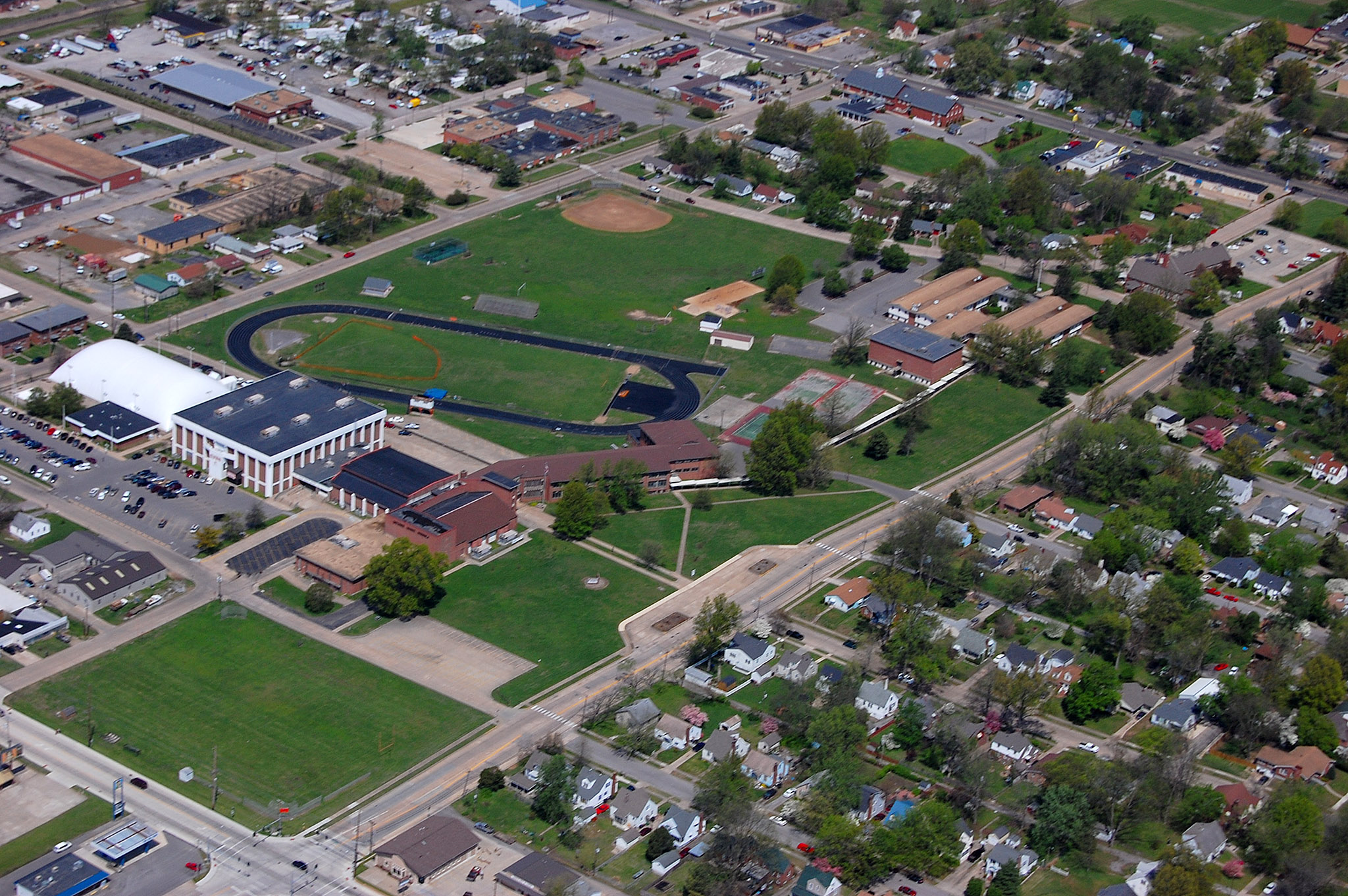
2011 aerial photo of Central High

It’s a junior high school now, but to me it’ll always be Central High School. I didn’t have one taken from the same direction as the 50’s photo. This is looking southeast to northwest, diagonally opposite of the older picture.

Caruthers and Independence is on the lower left. The long, red building in the middle of the top of the picture is where Pfisters would have been. Grace United Methodist Church is on the right, near the intersection of Caruthers and Broadway.

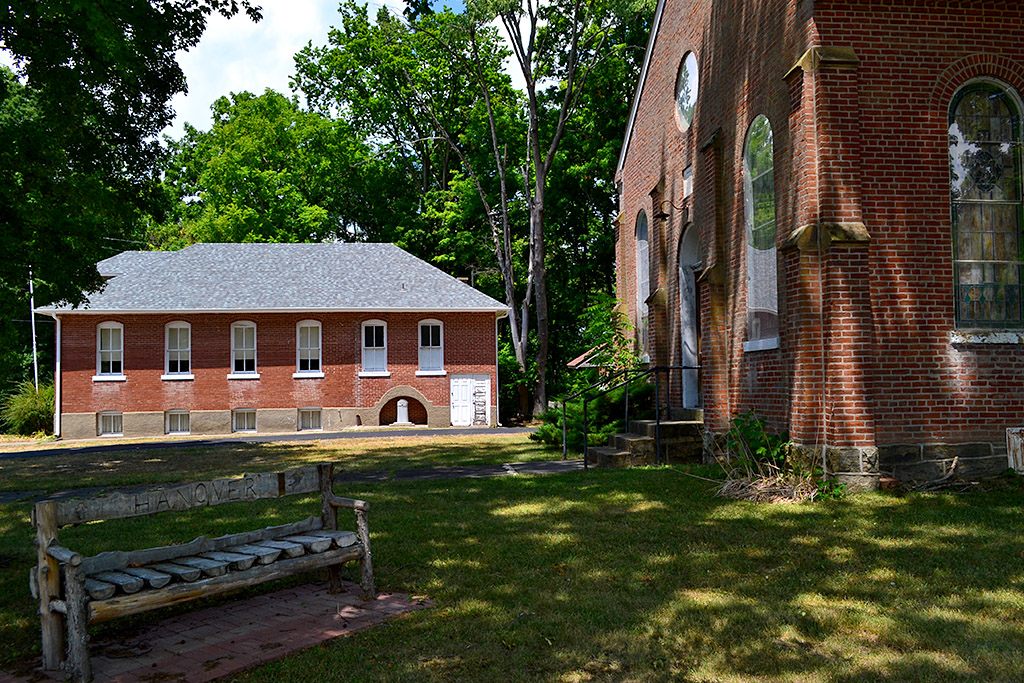
Hanover Lutheran School

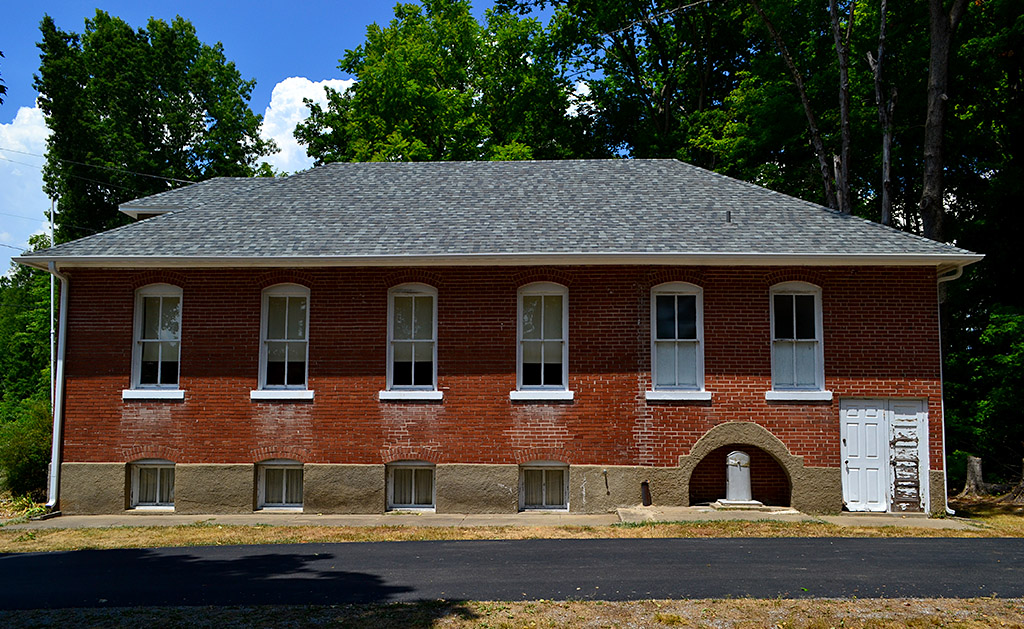
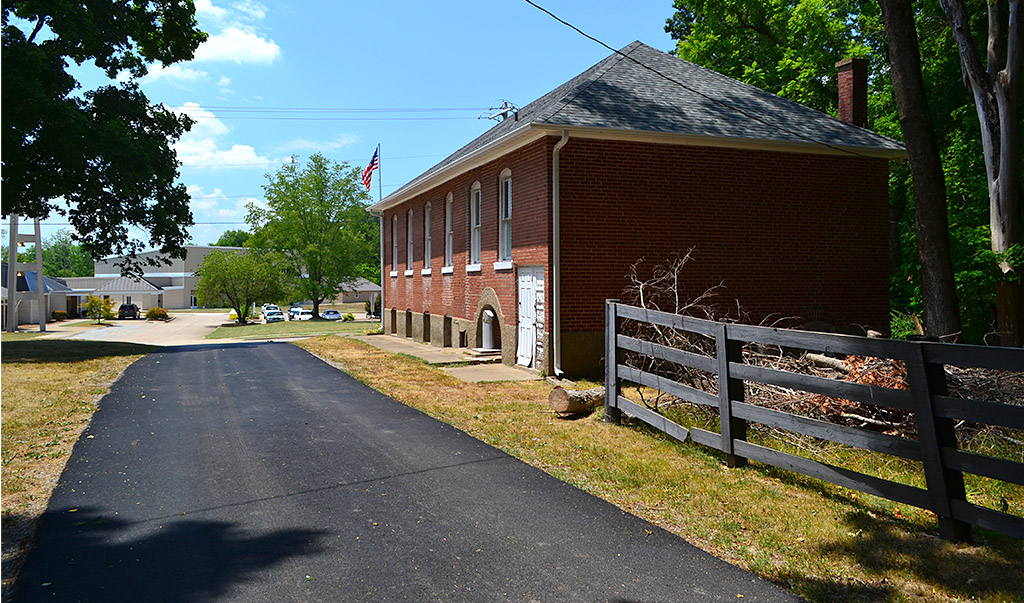
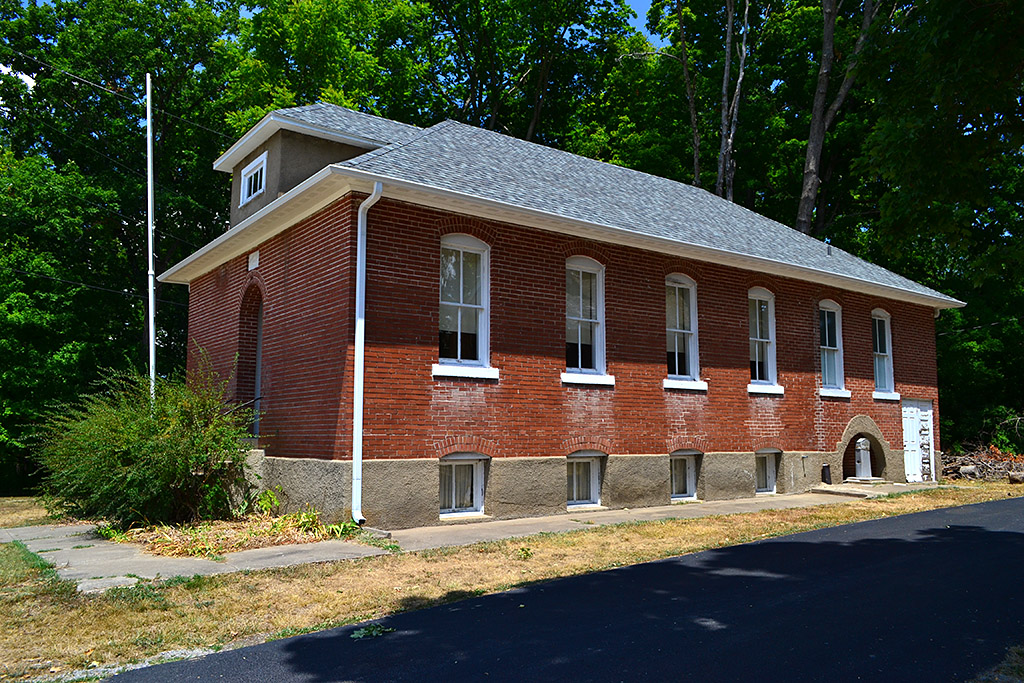
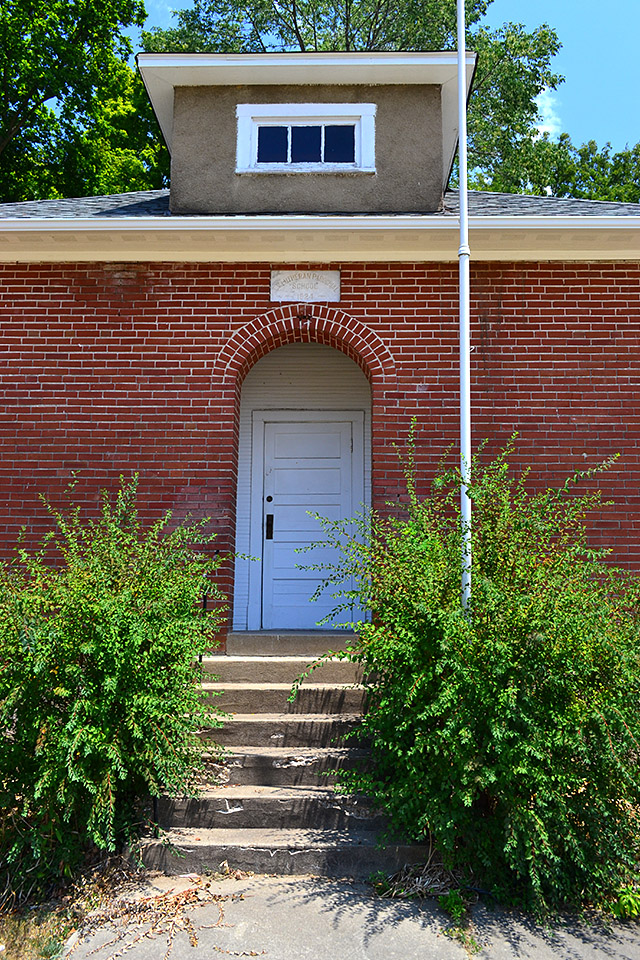
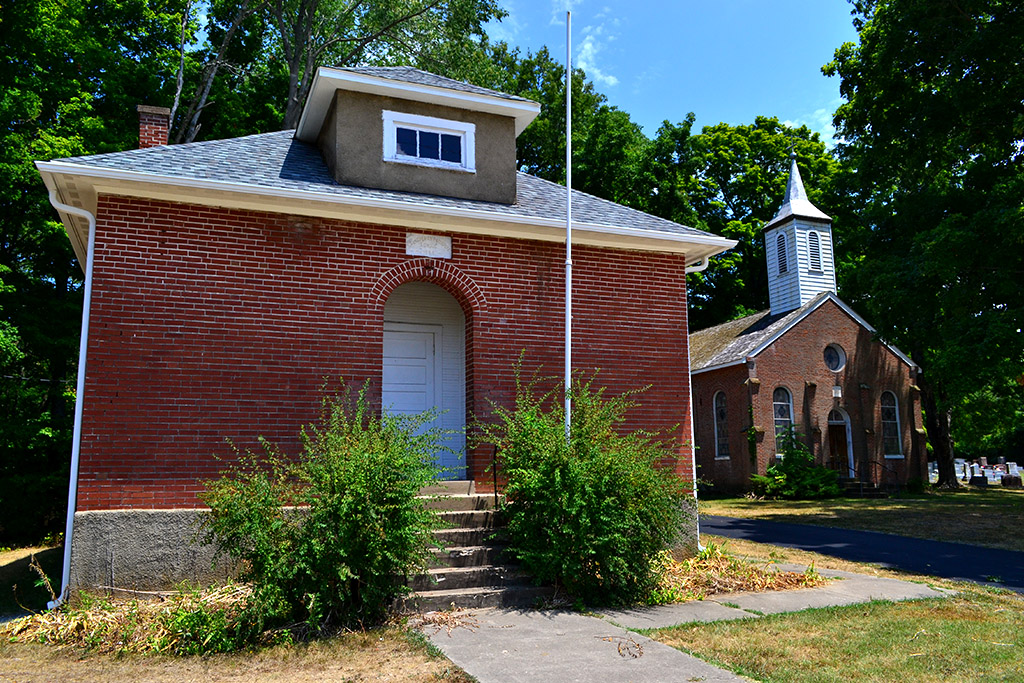
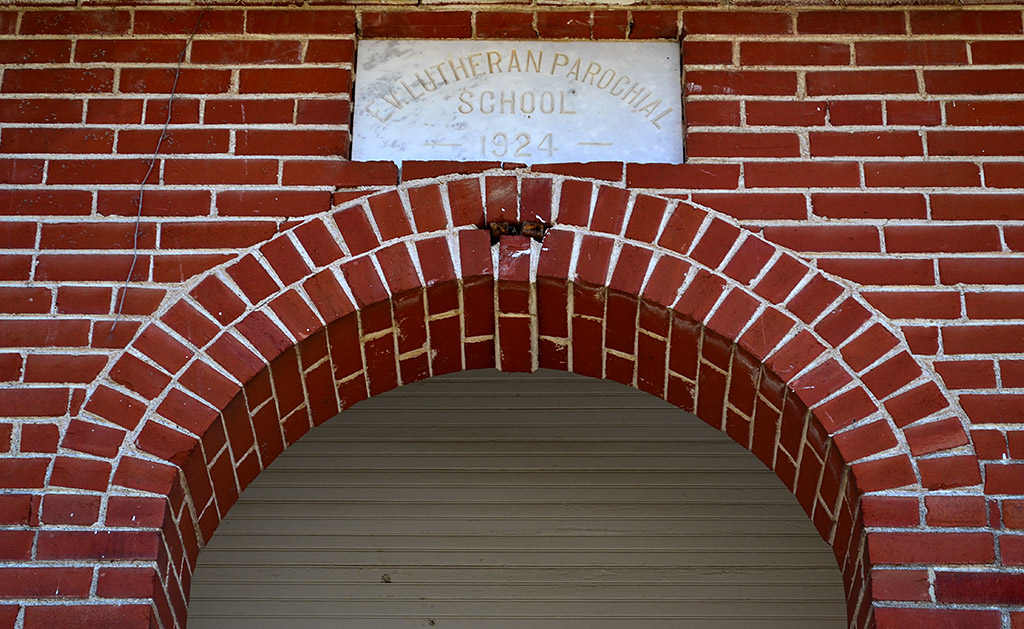
Here’s a piece of good news: the old Hanover Lutheran School, built in 1924 and close to being demolished, has been given new life. Less than two months ago, the congregation considered razing the one-room schoolhouse rather than spending money to bring it up to city codes.

The church voted 31-12 to use $10,000 in donations to make repairs and keep it open as a heritage museum, meeting place and workshop for students who want to see what school was like in the old days.

Here’s a link to a July 10, 2012, Missourian story about the renovation.

I wish someone would step up to save the old Kage School. It was looking in pretty sad shape when I shot it in the spring of 2010.

Photo gallery of Hanover Lutheran School

I’ll run photos of Hanover Church later. Click on any photo to make it larger, then click on the left or right side to move through the gallery.

SEMO’s Gum Tree

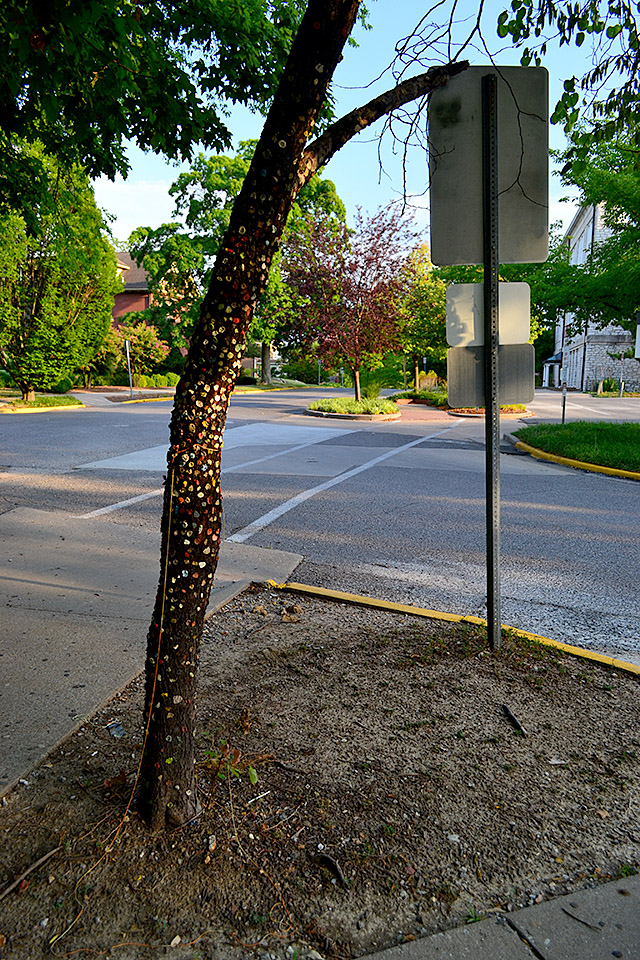
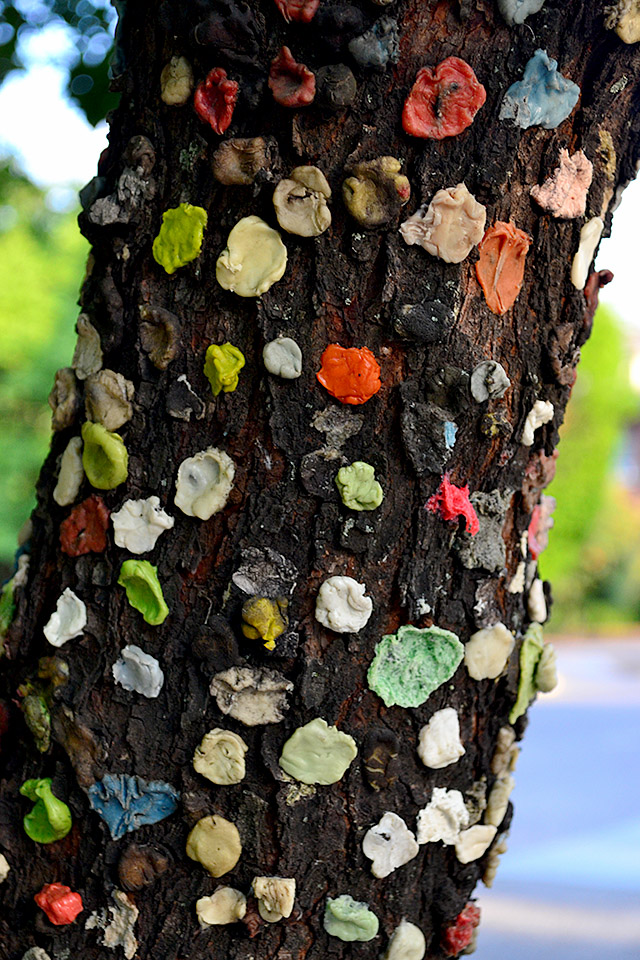
At the top of SEMO’s Cardiac Hill is another campus landmark: Gum Tree Version II (at least). I call it Version II (at least) because a March 14,2002, Missourian story says that the original Gum Tree was chopped down by vandals in 1989. The tree can be found at Pacific Street and Alta Vista Drive. (Click on the photos to make them larger.)

Where was the original tree?

This isn’t the location of the Gum Tree I remember. I’m pretty sure it was in the median of front of Academic Hall, just on the west downhill side of Normal. Or, someplace close to that. I vaguely remember shooting a picture of it, but I haven’t stumbled across it yet.

I can’t claim that I ever stuck a wad on the tree. I wasn’t much of a gum chewer. I don’t know if that was the tree that was murdered in 1989. If it wasn’t, then this tree would be Version III.

Is the tree a biohazard?

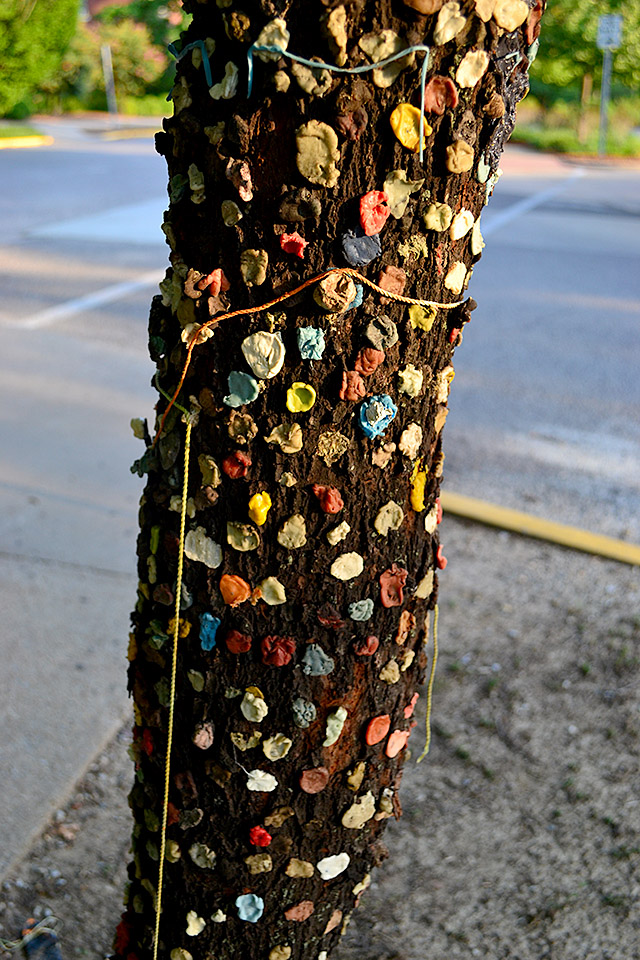
I’m surprised that some loss control zealot hasn’t removed the tree as a biohazard. There’s no telling what lurks on those expelled globs.

Yes, THAT Santa Anna

Here’s an interesting factoid: “Development of Chicle Gum came with a big breakthrough in 1869… Exiled Mexican former president and general, Antonio Lopez de Santa Anna (infamous for his victory over the Alamo defenders) was living in New Jersey. He brought a ton of Mexican chicle with him, in hopes of selling it. He persuaded Thomas Adams of Staten Island, New York to buy it… Adams intended to vulcanize the chicle for use as a rubber substitute. But his efforts at vulcanization did not work. However, Adams noticed that Santa Anna liked to chew the chicle. Disappointed with the rubber experiments, Adams boiled a small batch of chicle in his kitchen to create a chewing gum. He gave some to a local store to see if people would buy it. People liked his gum, and before long his business was quite successful.

Gum’s more fluorescent today

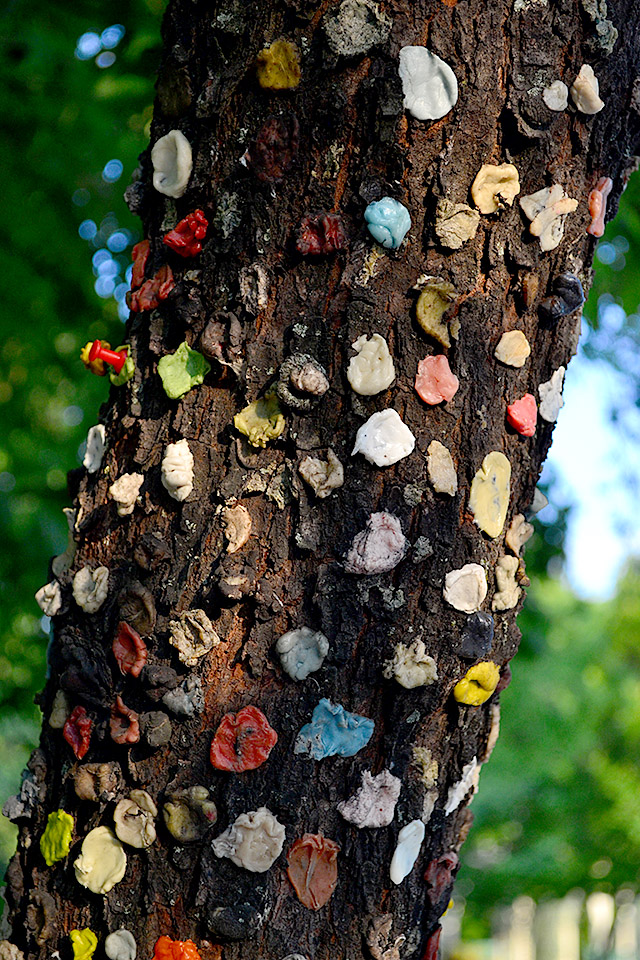
Our gum was pretty bland. Bubble gum might have ended up a weak pink, but your basic Spearmint and Juicy Fruit chewed down to a boring gray. This tree has some bright colors.

I was looking at a site that will sell you Old Time Candy. Here’s a sample of brands I remember:

  • Bazooka Bubble Gum
  • Beemans Gum
  • Big Red Gum
  • Black Jack Gum
  • Not remembered: Bubbaloo Liquid-filled Bubble Gum
  • Bubble Gum Cigars (in blue and pink) for birth announcements
  • Bubble Gum Cigarettes (I don’t remember gum ones, but do recall the hard candy ones)
  • Bubble Yum
  • Chiclets
  • Clove Gum
  • Dentyne
  • Doublemint
  • Double Bubble
  • Fruit Stripe Gum
  • Juicy Fruit
  • Spearmint
  • Teaberry
  • Trident