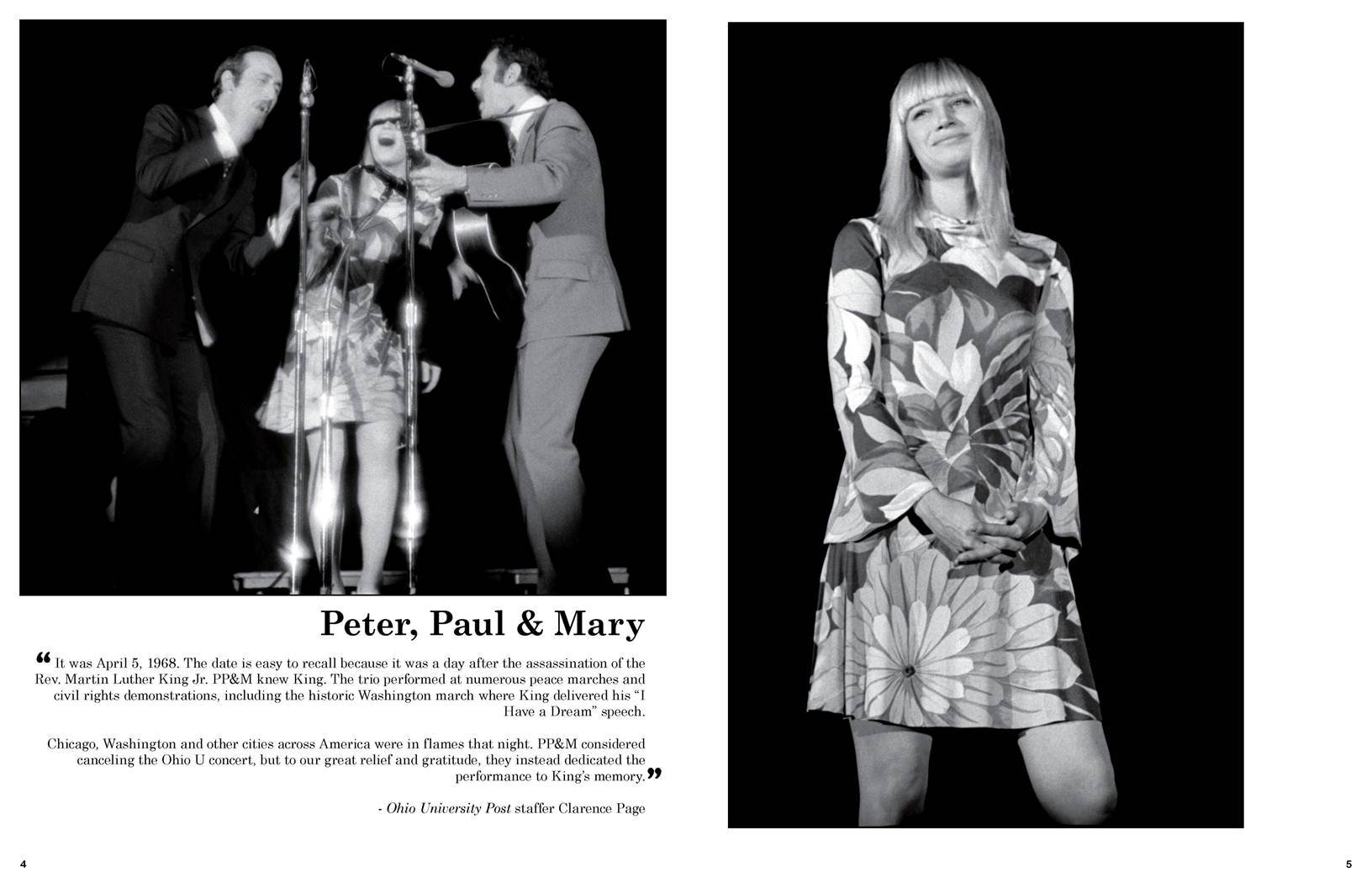
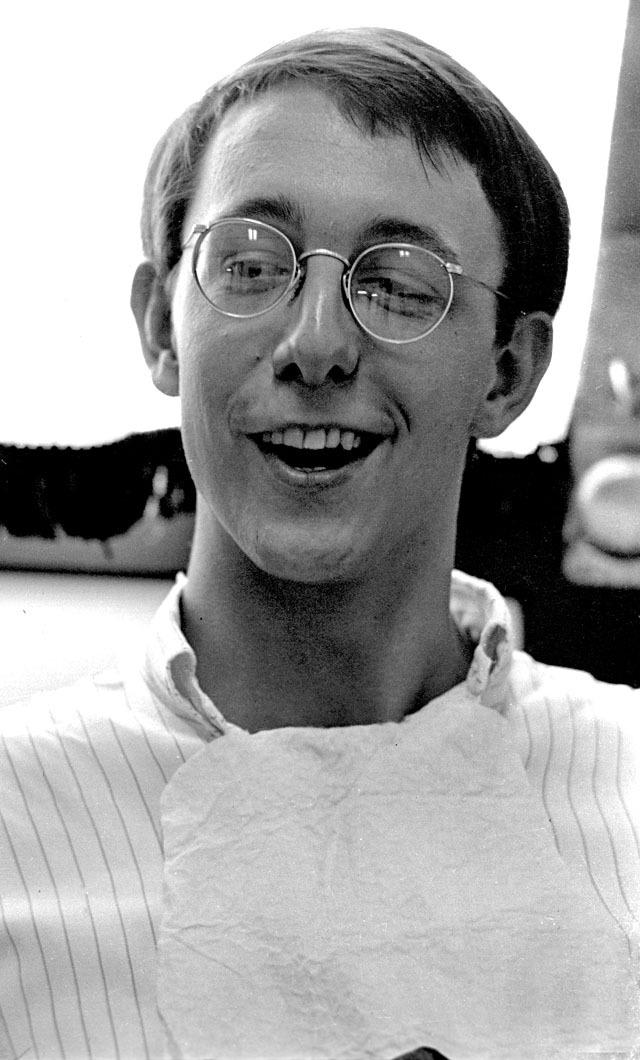
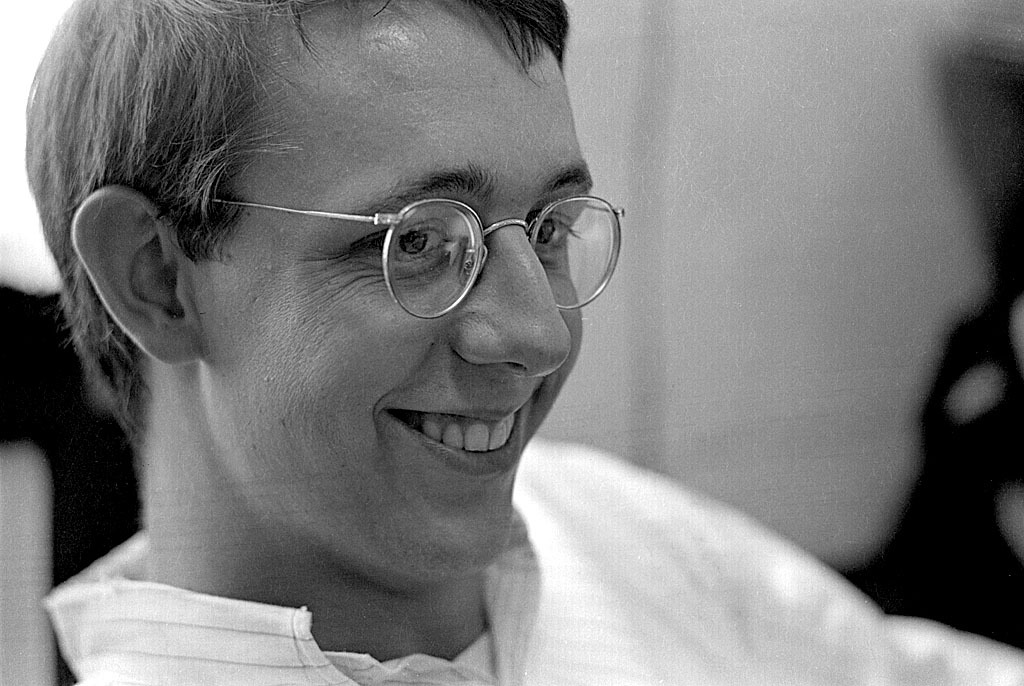
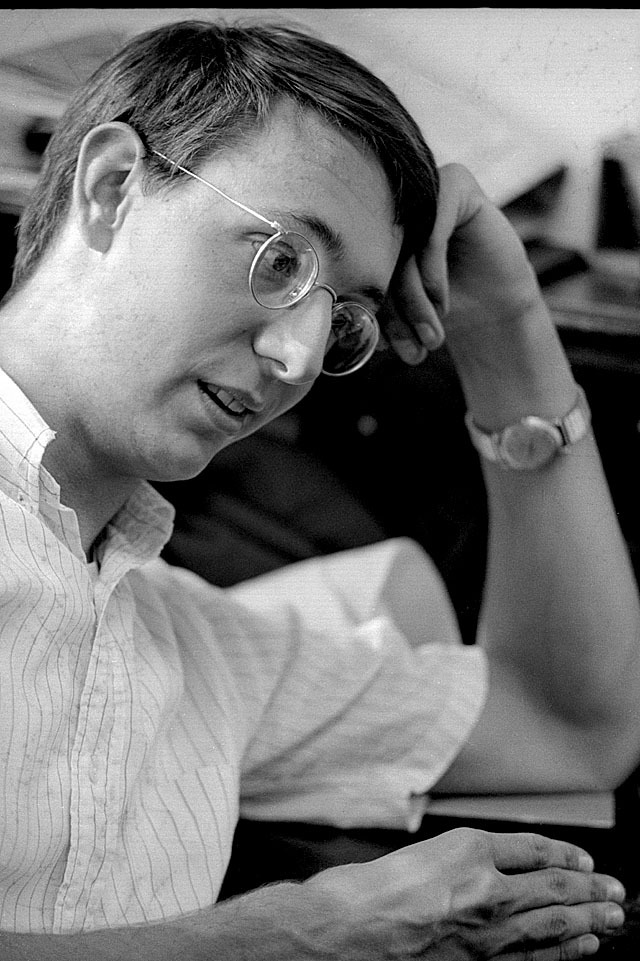
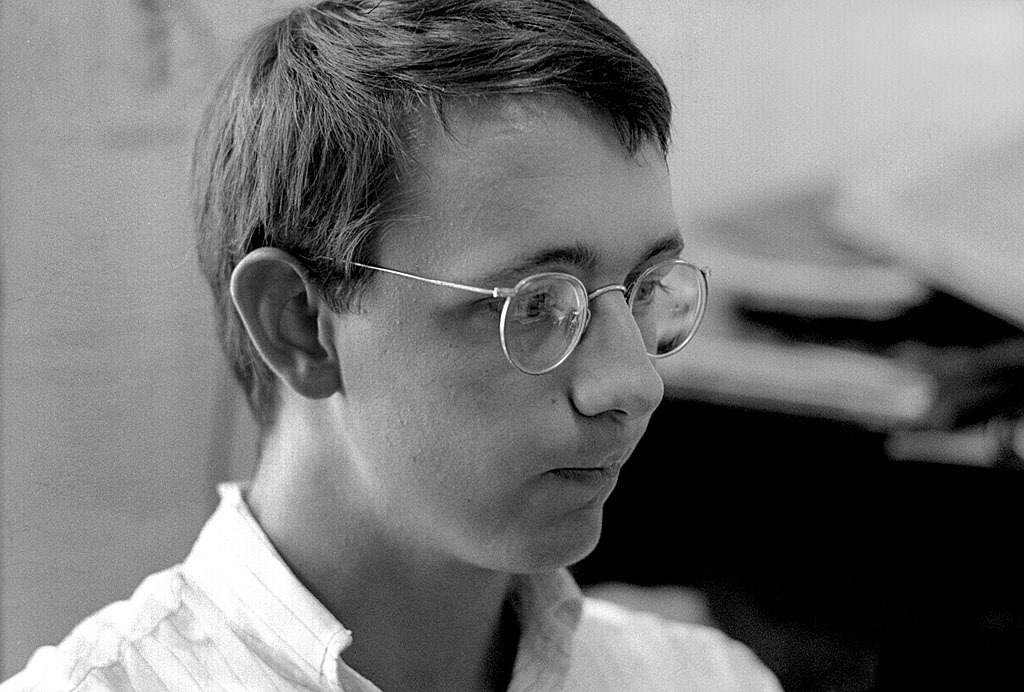
I covered a lot of concerts and music groups without really knowing (or caring) who they were. I didn’t even bother to label the negative envelope in many cases, so I don’t know if the group went on to become famous or they were were just a garage band that somebody wanted to review.
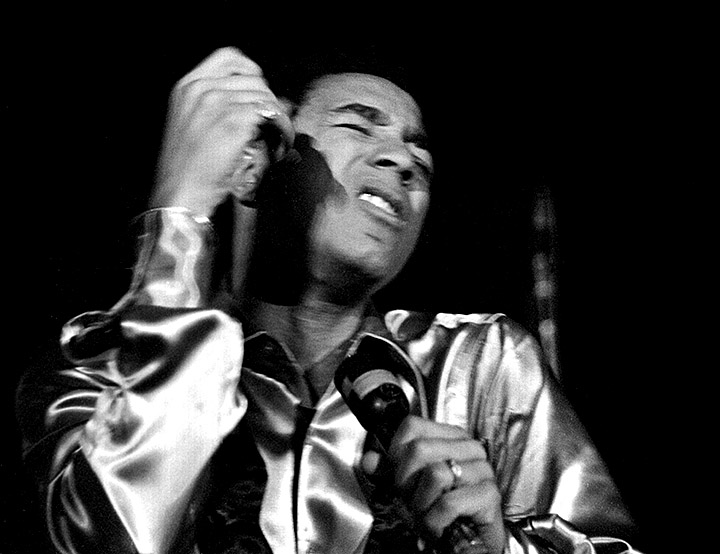
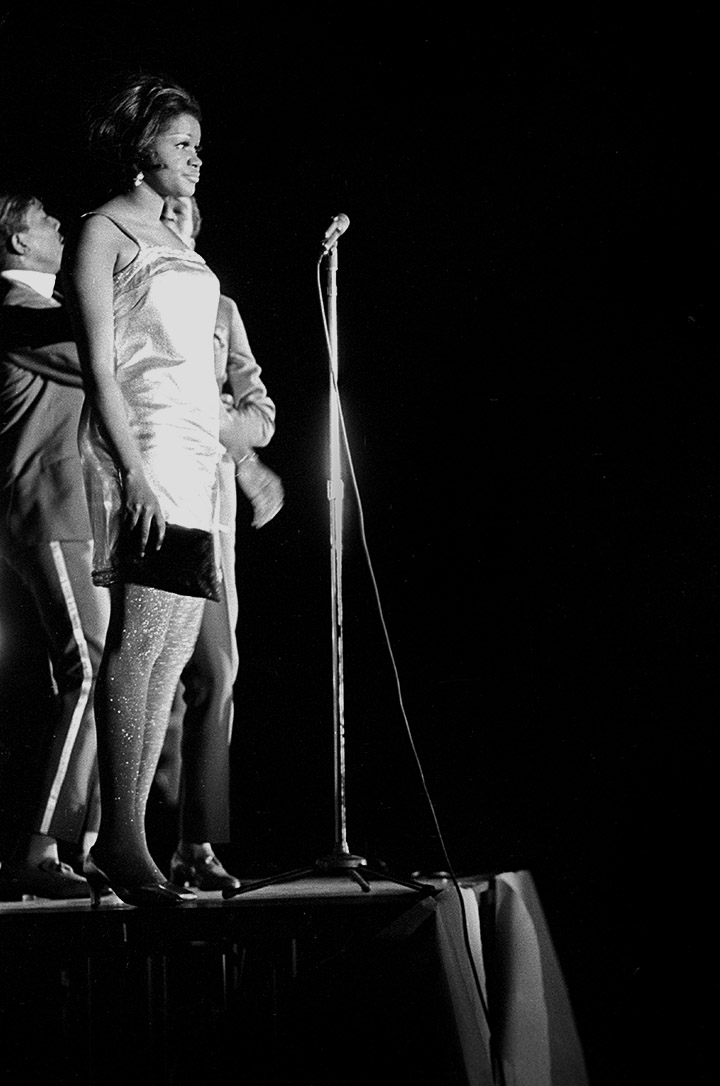
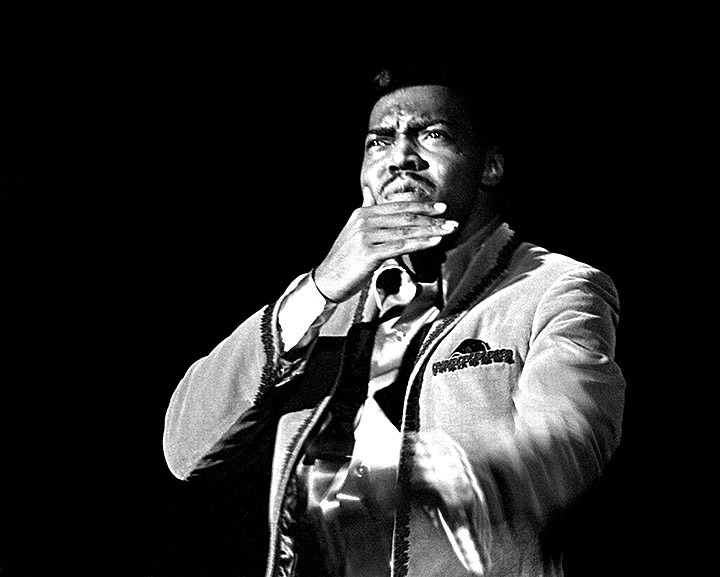
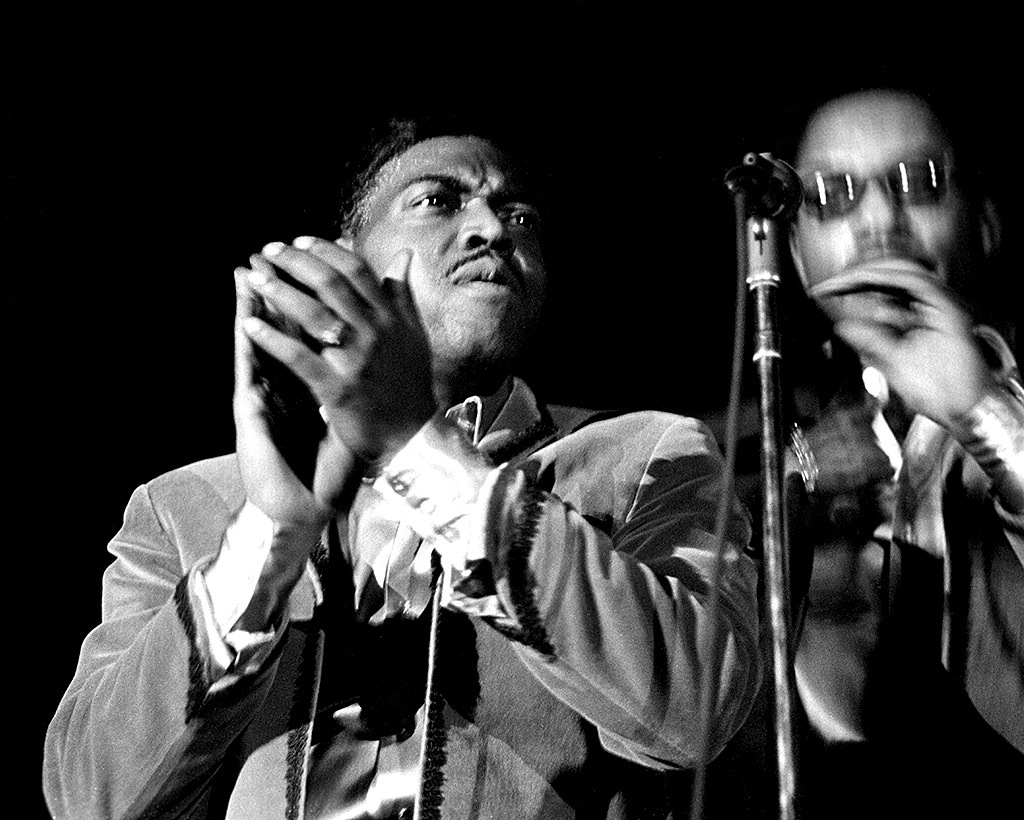
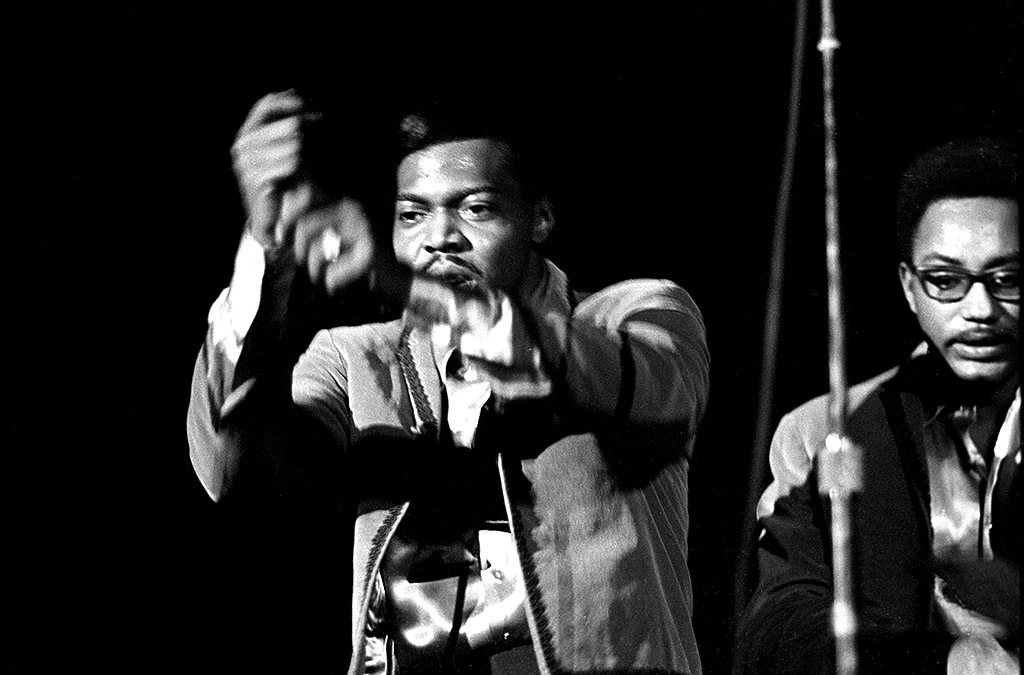
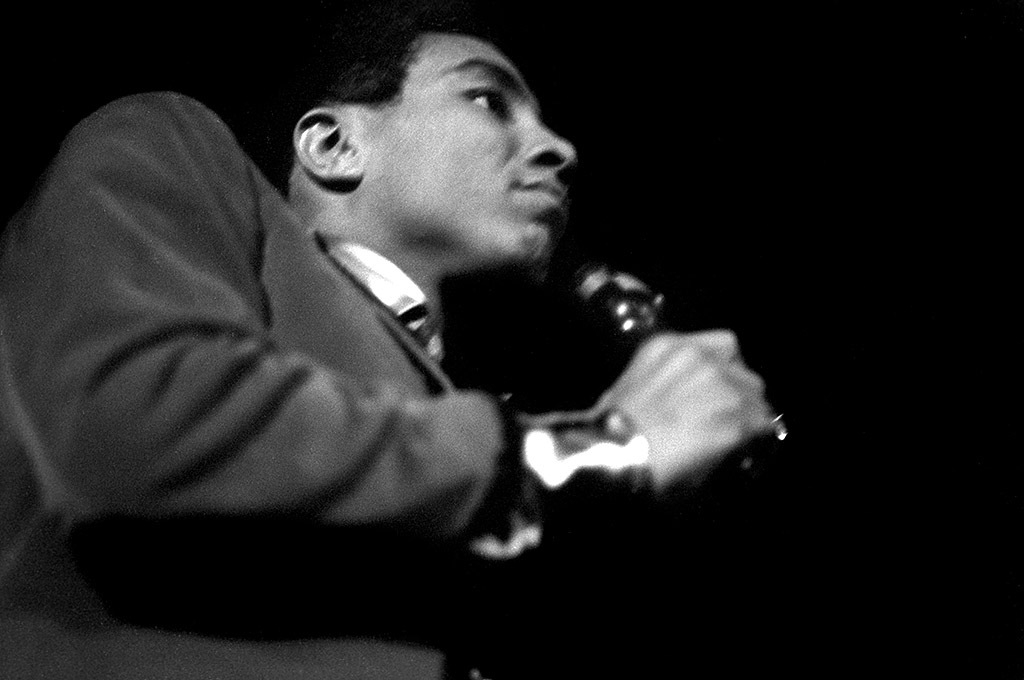
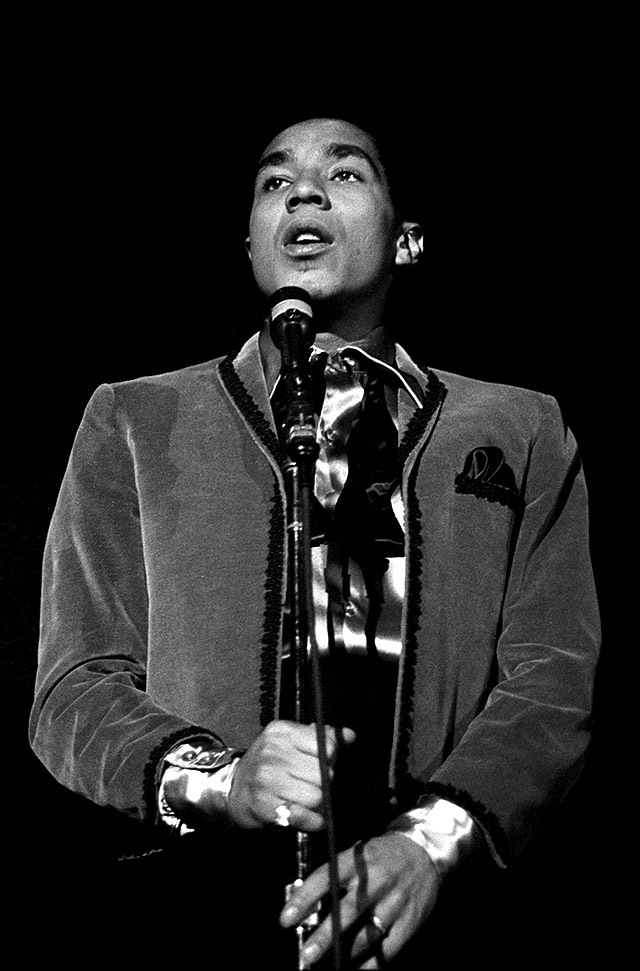
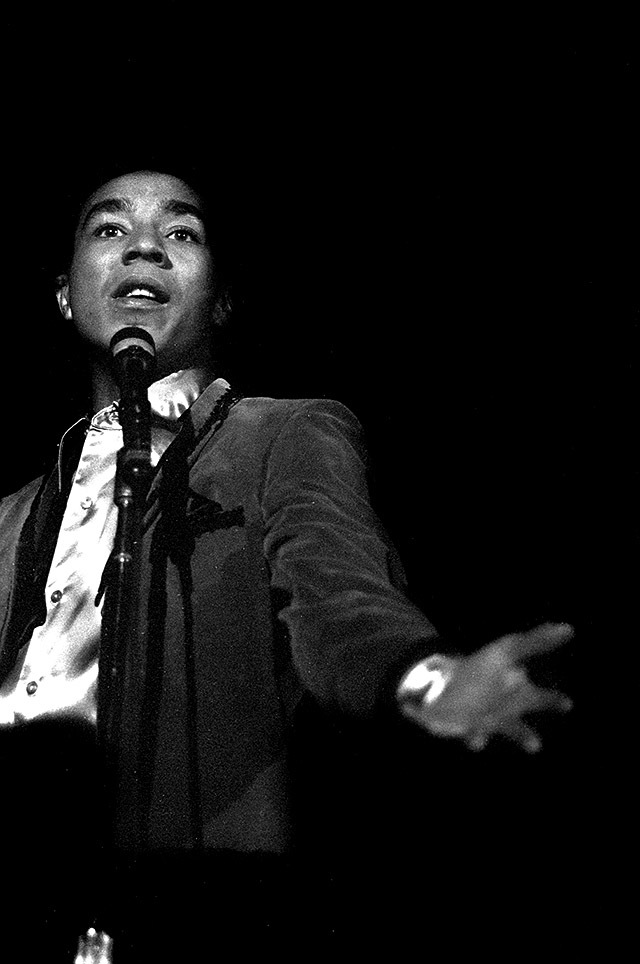
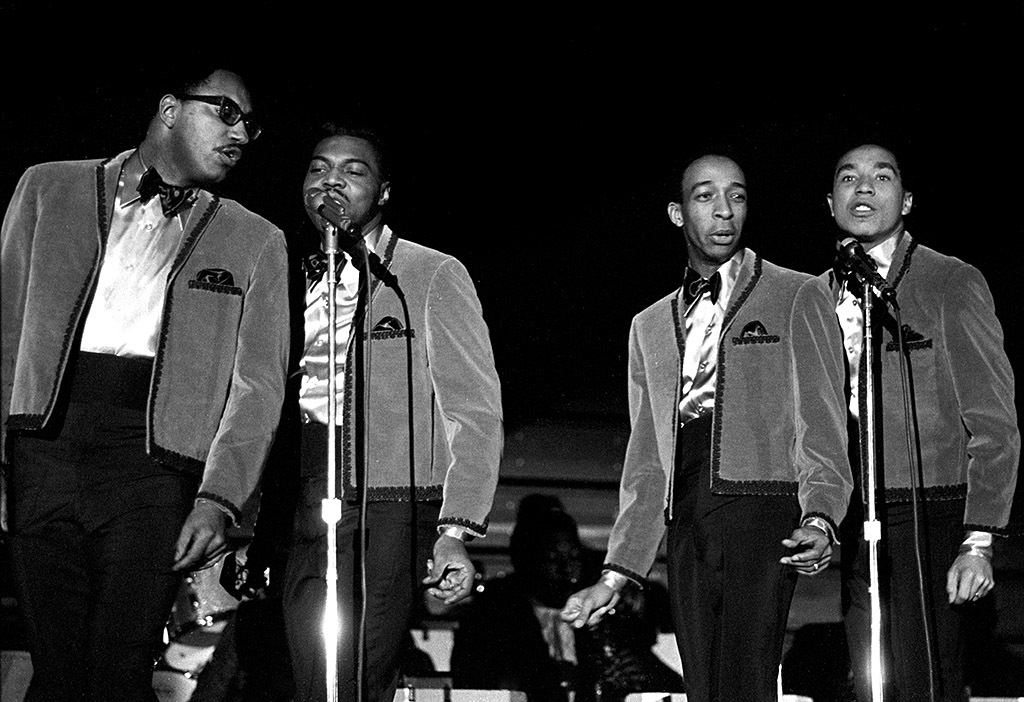
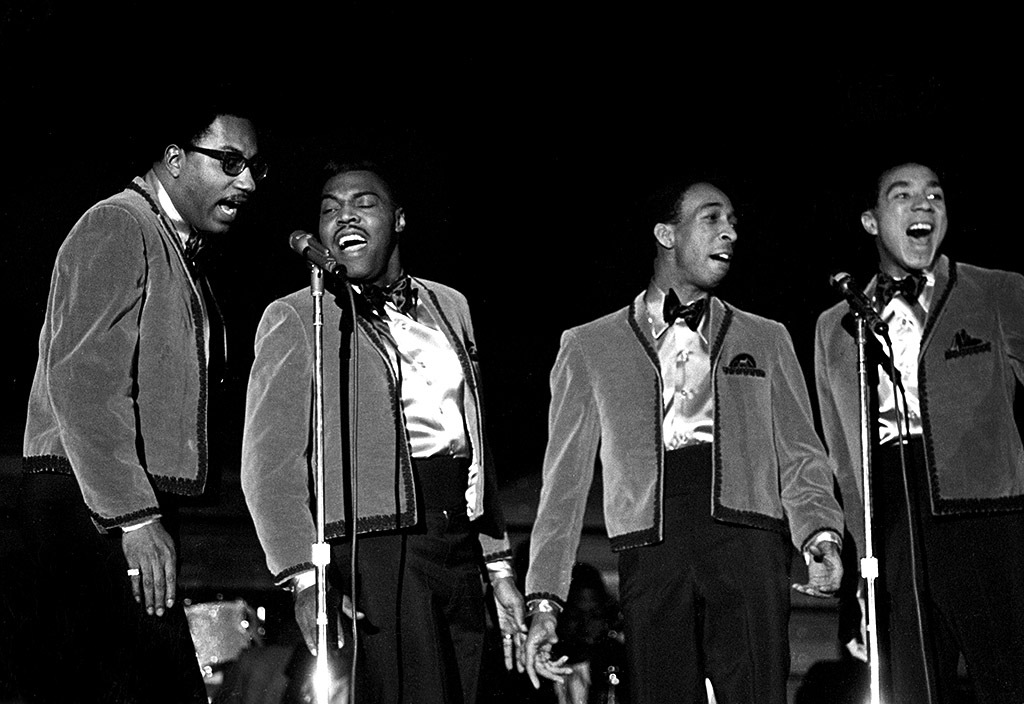
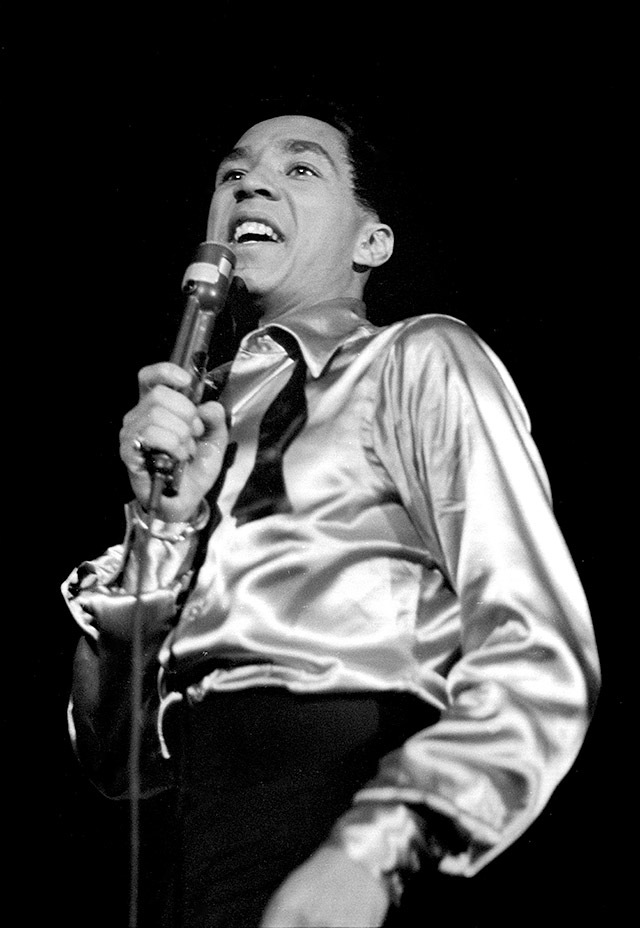
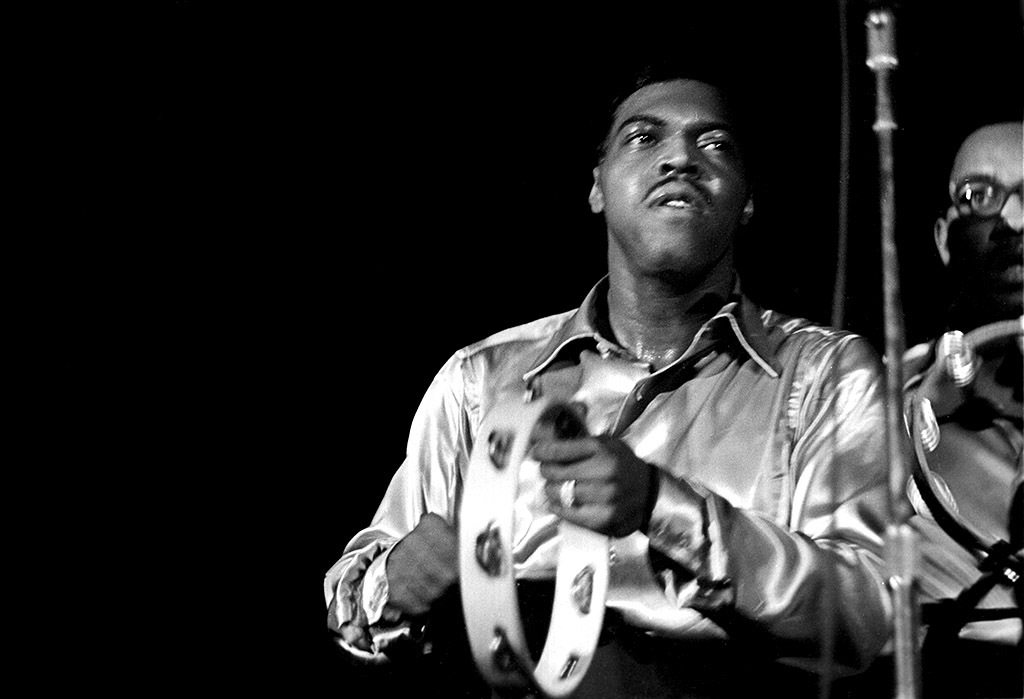
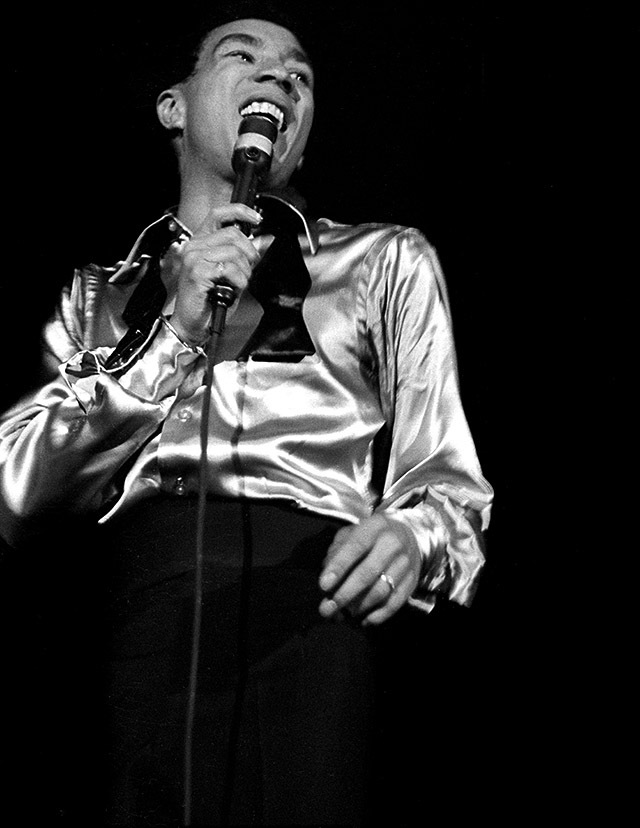
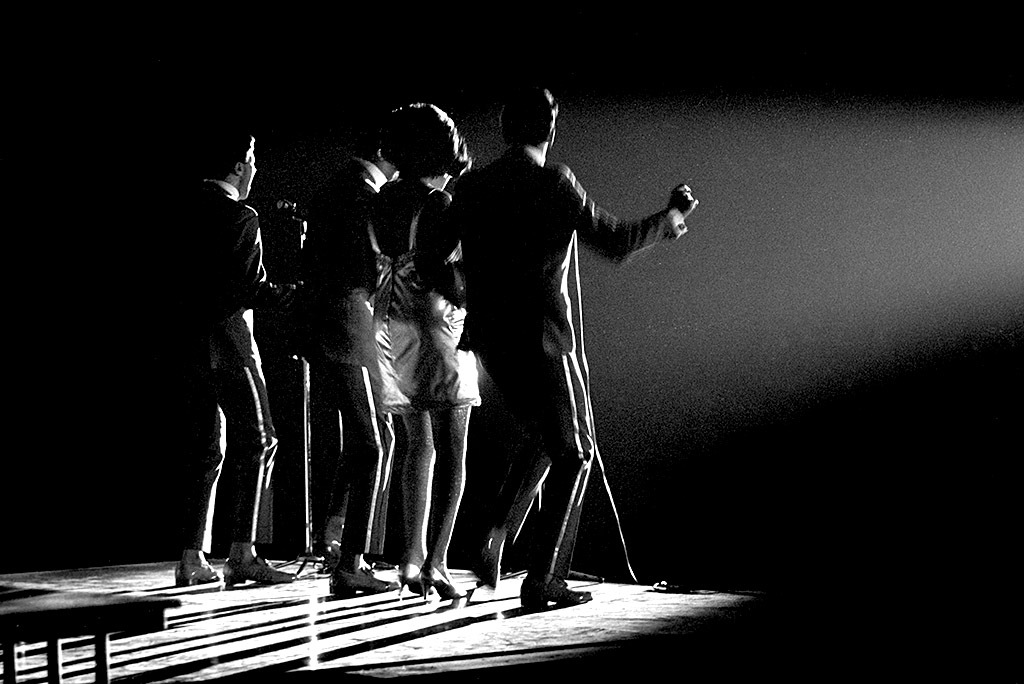
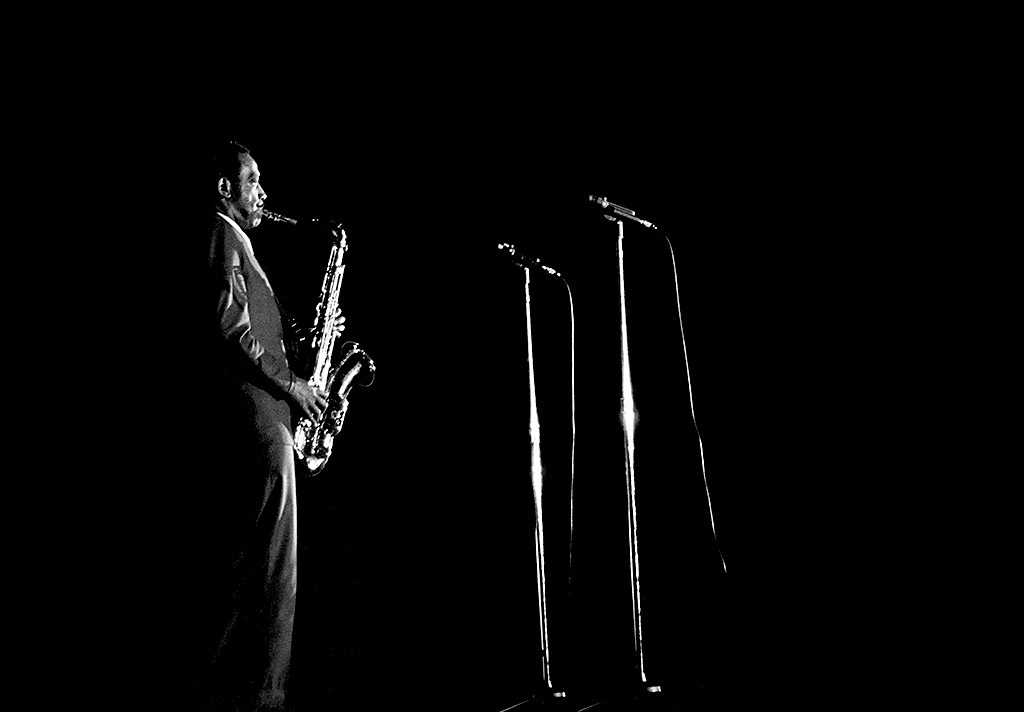
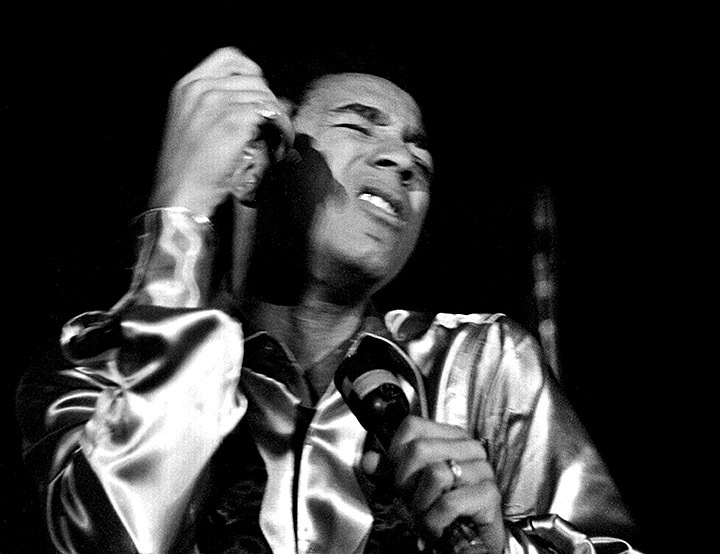
These photos WERE labeled and dated, but I can’t, for the life of me, remember the concert. It said “Smokey Robinson 2/17/68.” I did some research and found that Smokey Robinson & The Miracles DID perform at Ohio University on that date. I must have covered this for The Ohio University Post.
Is he still alive?
Compounding my embarrassment, I asked Wife Lila, “Is he still alive?” she said that he was not only alive, but she had gone with a friend to see him perform in West Palm Beach not long ago. “He still puts on a fantastic show.”
When I went to the official Smokey Robinson website, I saw that a “legendary Rolling Stones photographer” was selling prints of Smokey on stage in 1968. Too bad I’m not legendary. These pix might be worth something.
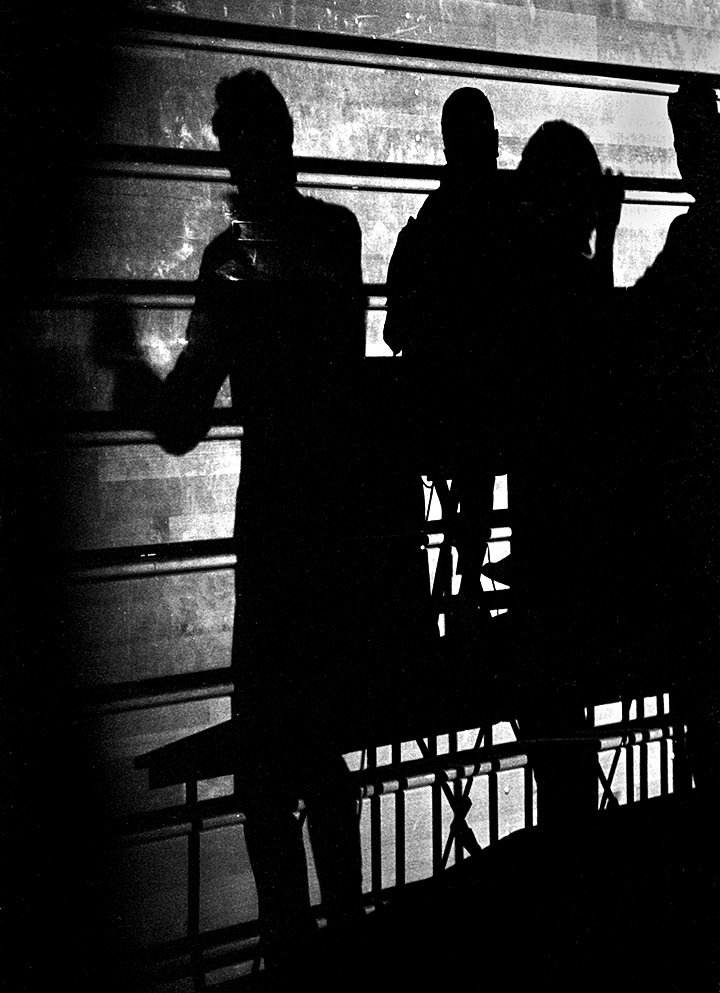
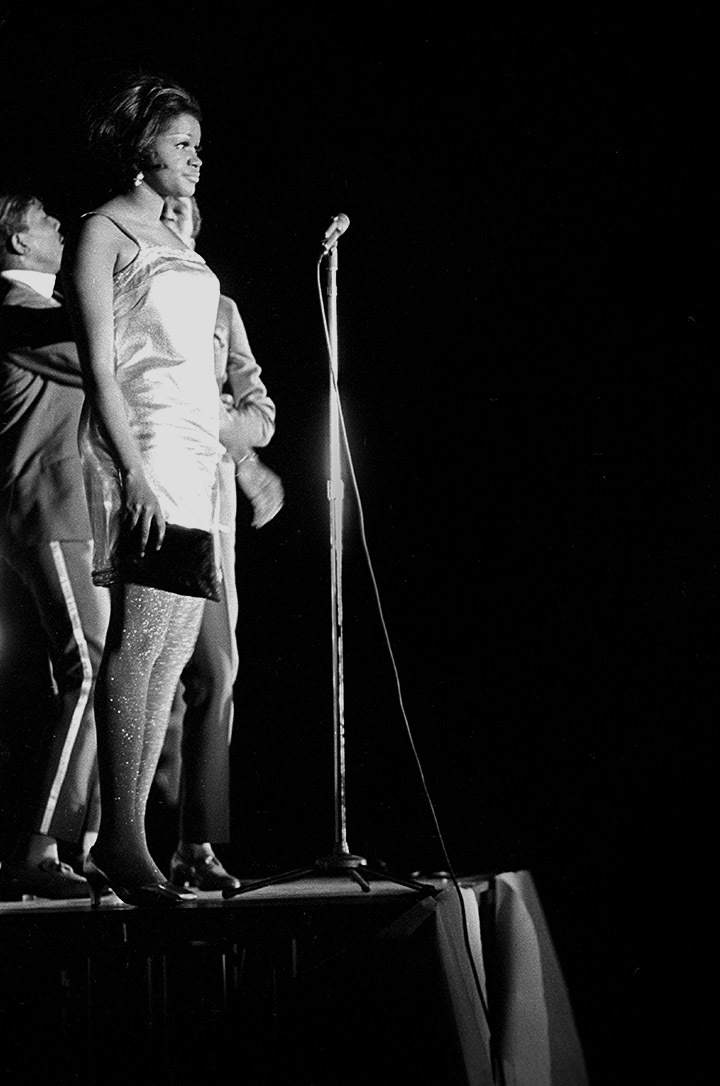
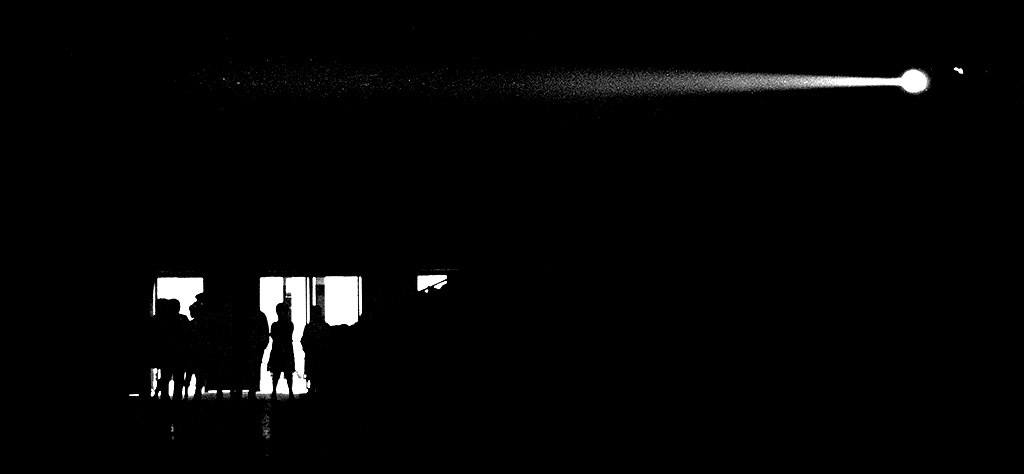
Photo gallery of Smokey Robinson concert
Since I don’t have anything to add, I’ll just post the photos and let them speak for themselves. Click on any photo to make it larger, then click on the left or ride side of the image to move through the gallery.
I’m sure I’ll get an email from former coworker and friend. John J. Lopinot today. It’s going to be short and simple. “Never Forget.” He sends me one every year.
May 4 is the day when the Ohio National Guard killed four students at Kent State University. I promised more in 2012 after doing a big piece in 2010. To be honest, May 4 snuck up on me and you’re just going to get a smattering of photos this year.
Looks like a nice spring night
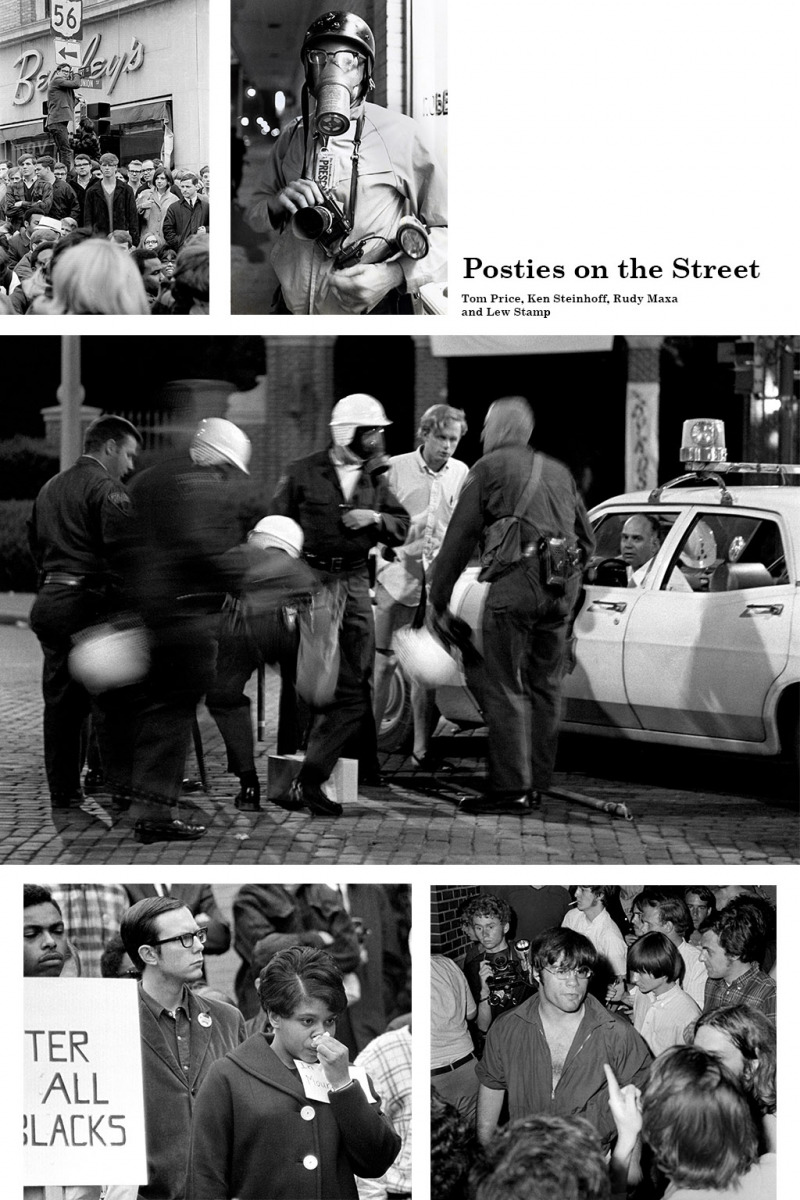
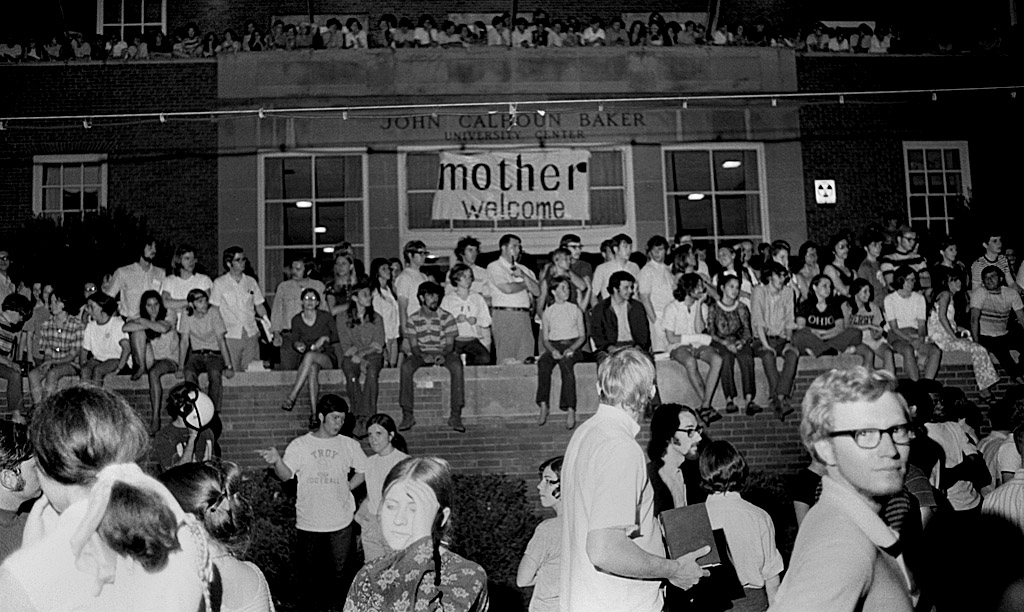
I’m not sure what caused the big turnout in front of Ohio University’s Baker Center Student Union on May 1, 1970. It might have been Mother’s Weekend. Or it could have just been a nice warm spring night after a nasty winter. There are lots of shorts and short sleeves in the picture. The crowd seems to be just hanging out. (You can click any photo to make it larger.)
Here comes trouble
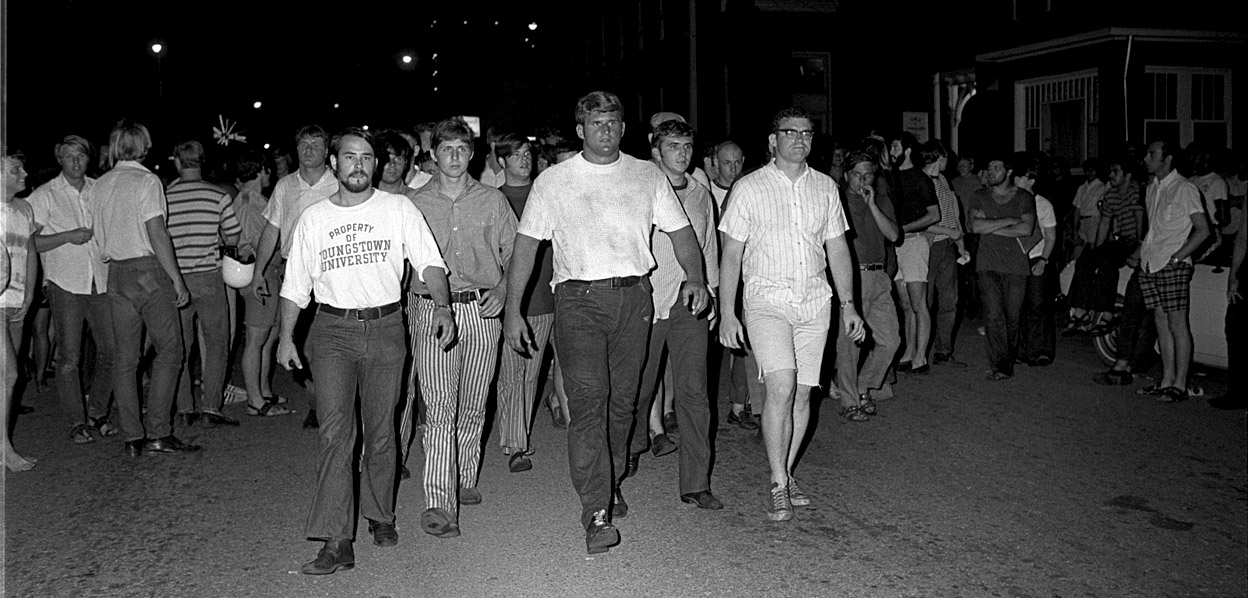
Despite what you might think, not every student in the ’60s was a long-haired peacenik freak. OU was a fairly conservative campus with an active Greek community that was even more conservative than the average student.
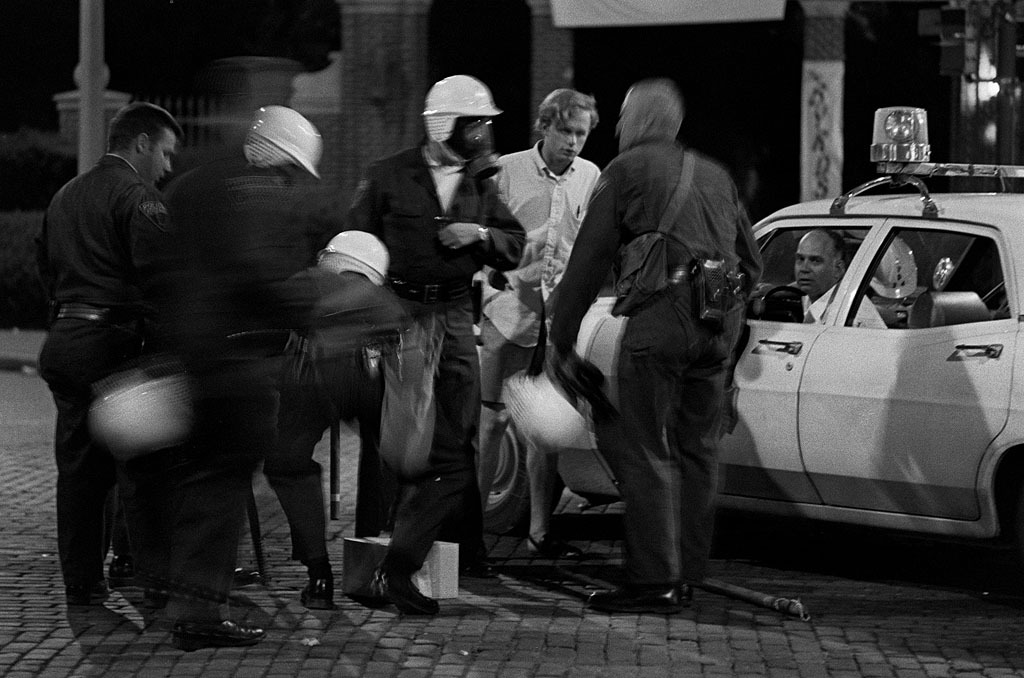
I’m not exactly sure who these guys are or what caused them to go marching down the street looking like something out of Gunfight at the OK Corral. It’s pretty obvious that they’re looking to kick some serious hippie ass.
There had been a batch of nuisance dumpster fires for several days and there was one here that night, so that might have been what prompted the confrontation.
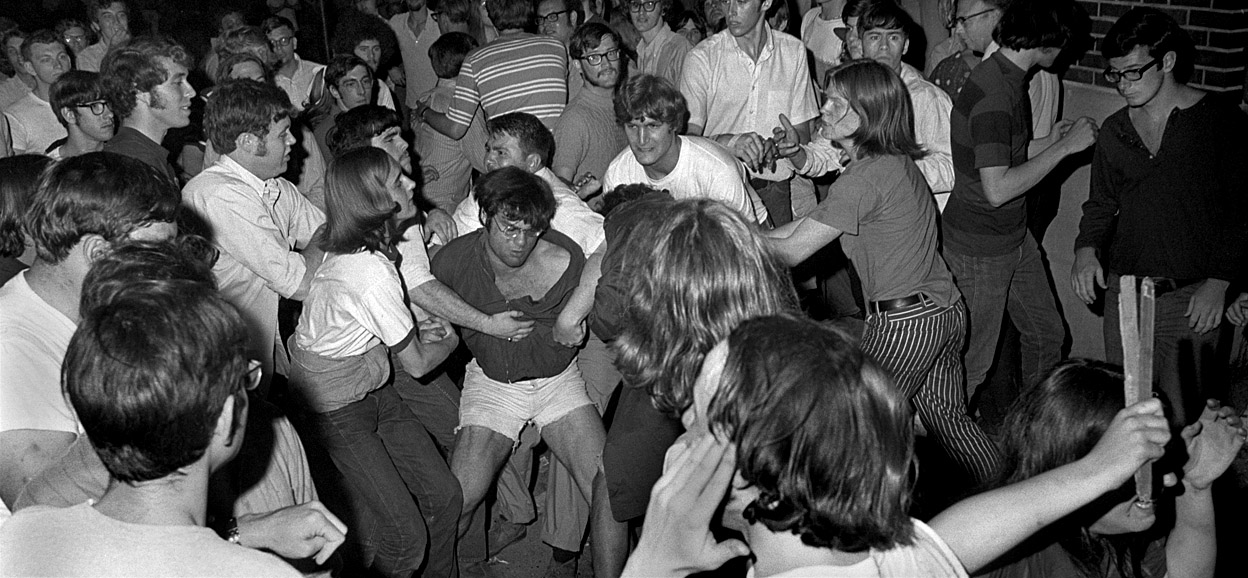
Fight broke out
Without much warning, one of the most violent student-on-student confrontations I covered at OU broke out. It didn’t last long and the combatants were separated fairly quickly, but it was heated while it lasted
Students have short attention spans
Just as quickly as it started, it was over. Long-haired and short-haired students joined in to pitch the trash back into the dumpster and everybody went back to enjoying the evening.
Kent State erased the boundaries
What does a minor student brawl have to do with May 4?
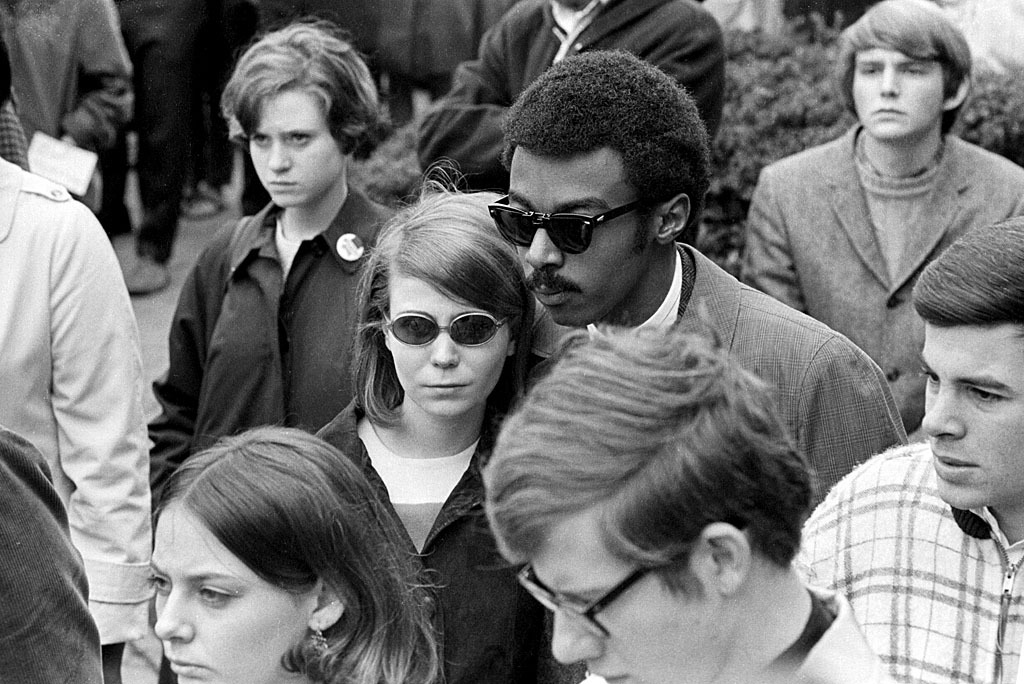
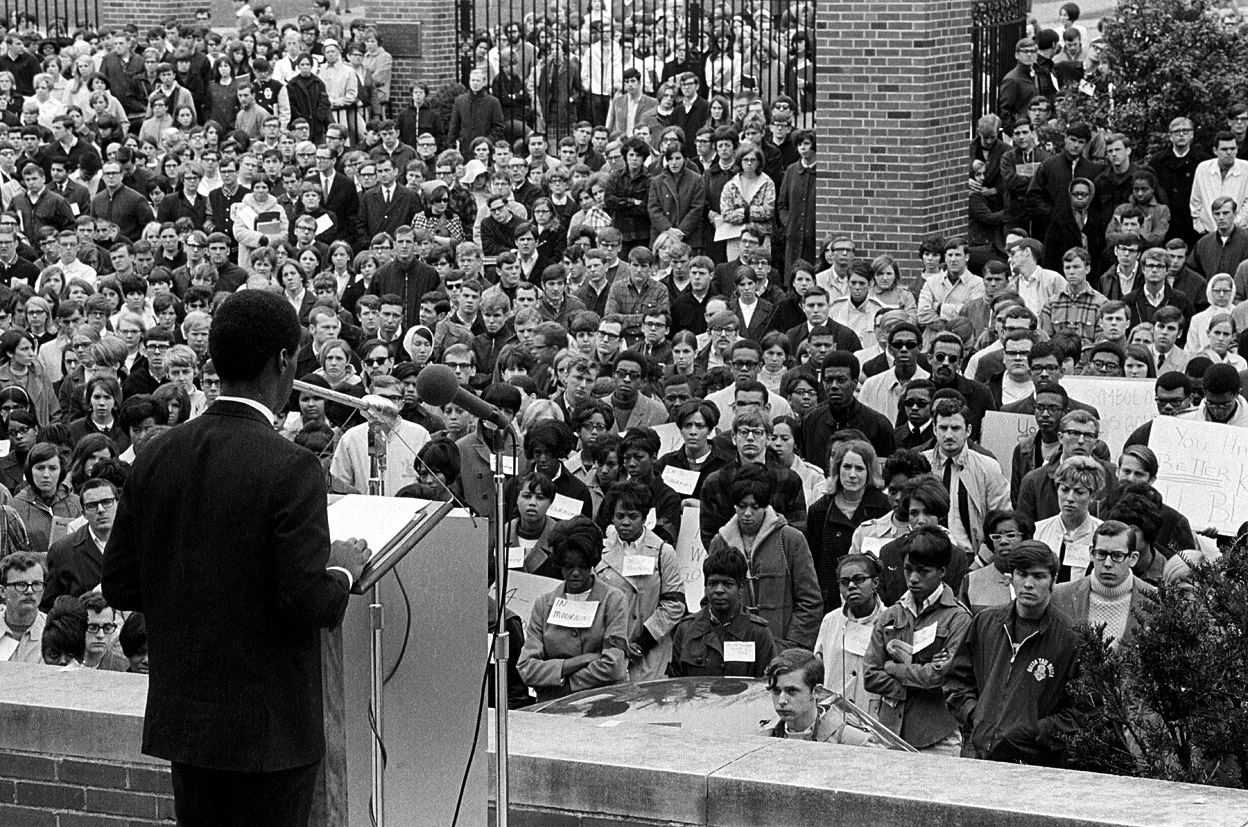
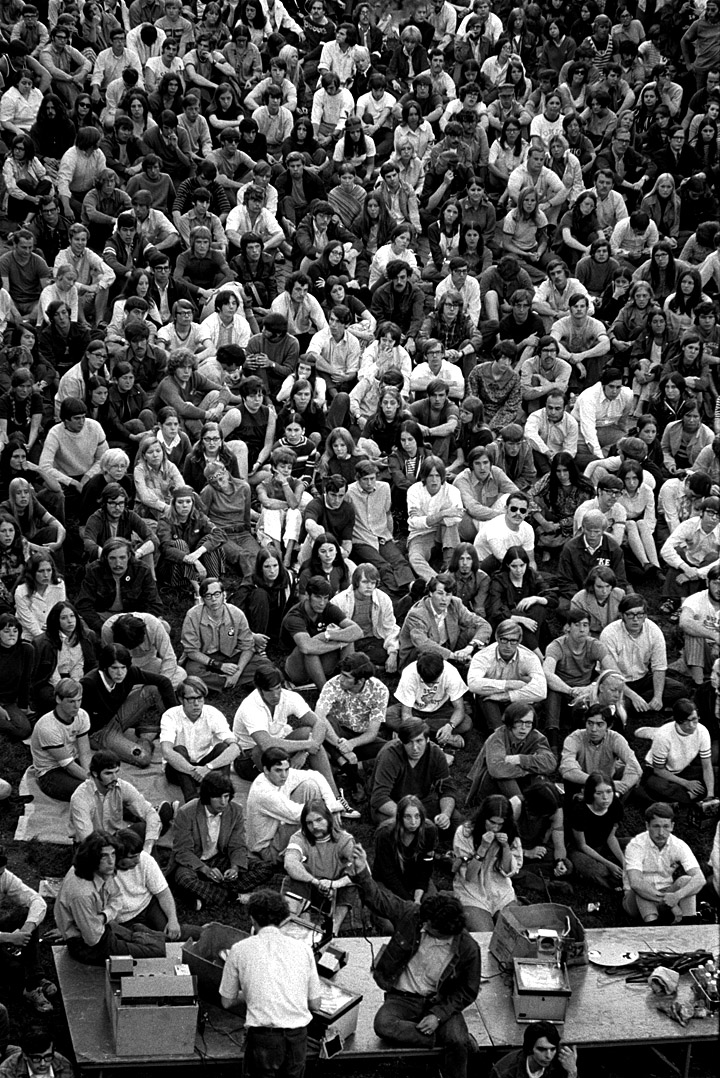
The killings at Kent State unified the campus. Petty differences between cliques and classes were set aside when students realized that this wasn’t a game anymore.Straights and radicals; faculty members and students, young and old all pulled together in this memorial gathering on the Main Green the morning after the killings.
Neil Young captured the mood perfectly in his song, Ohio:
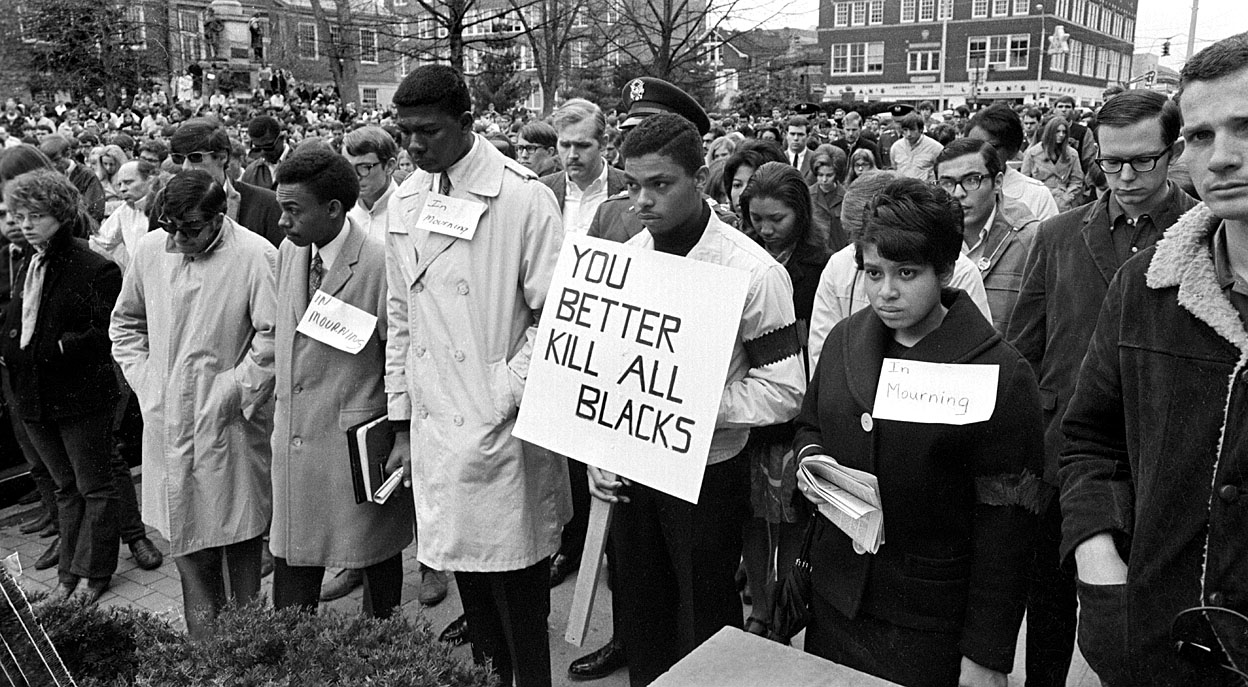
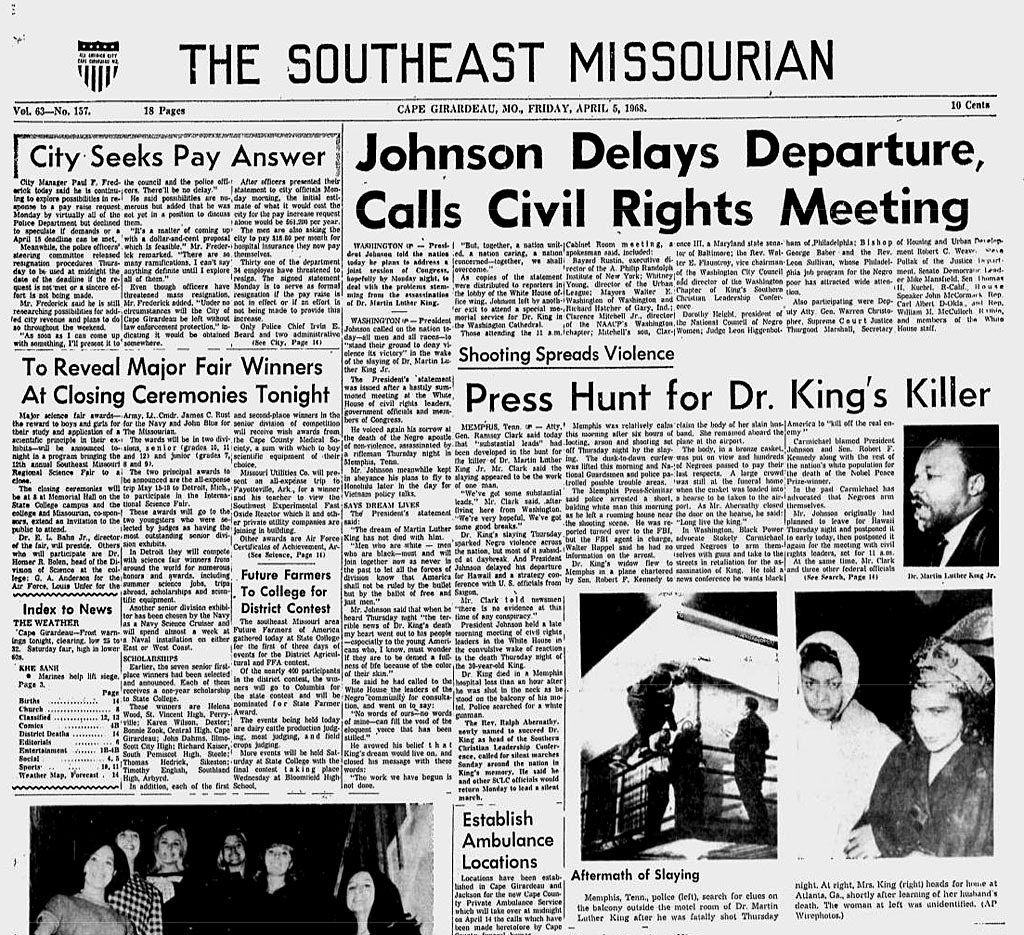
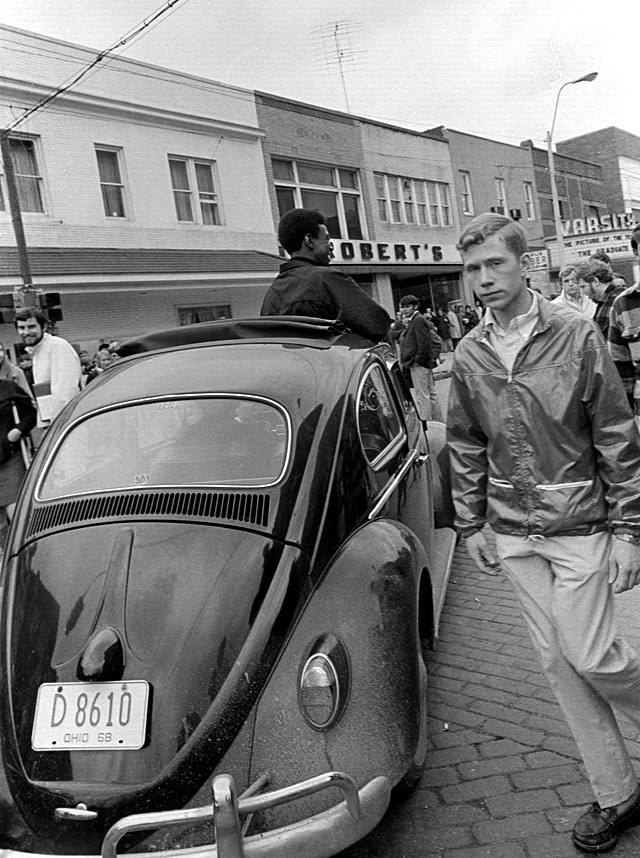
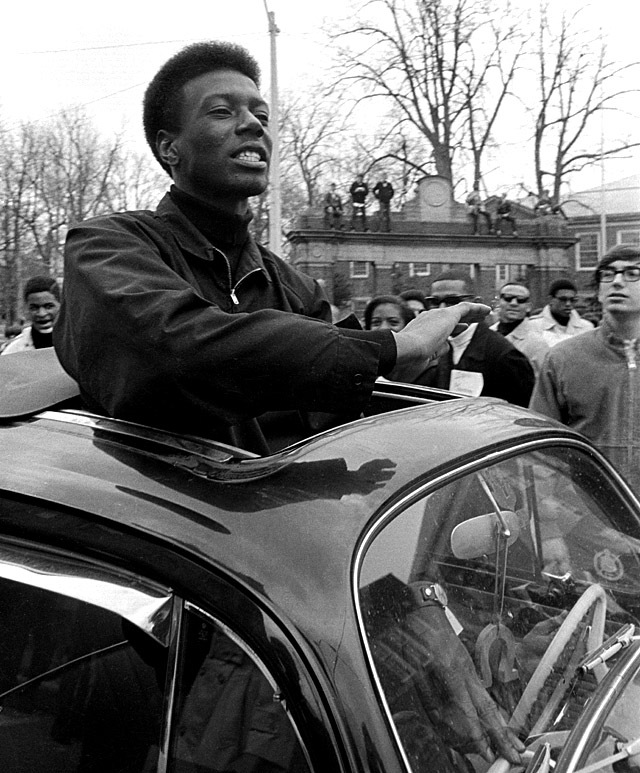
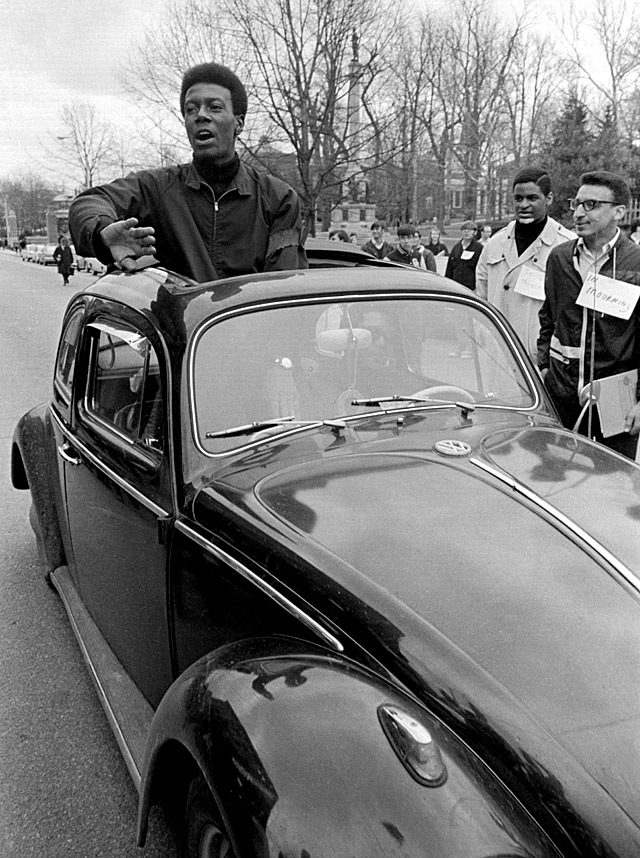
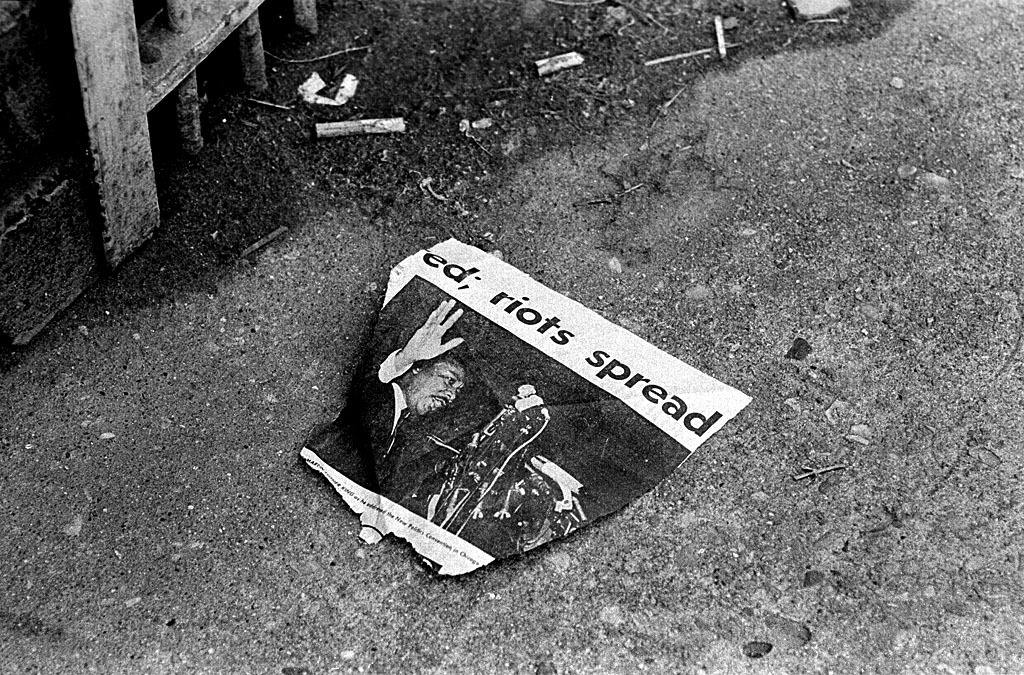
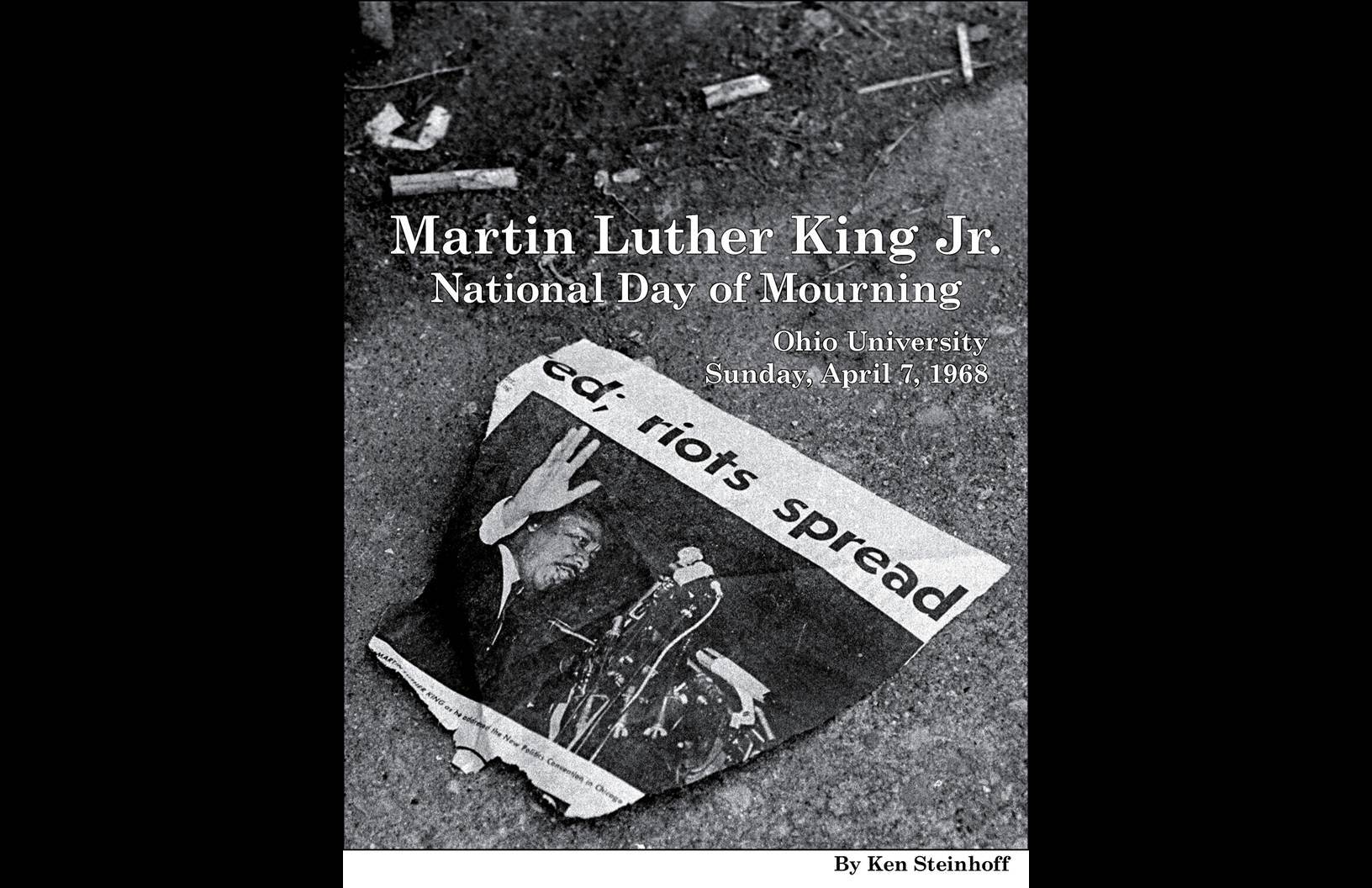
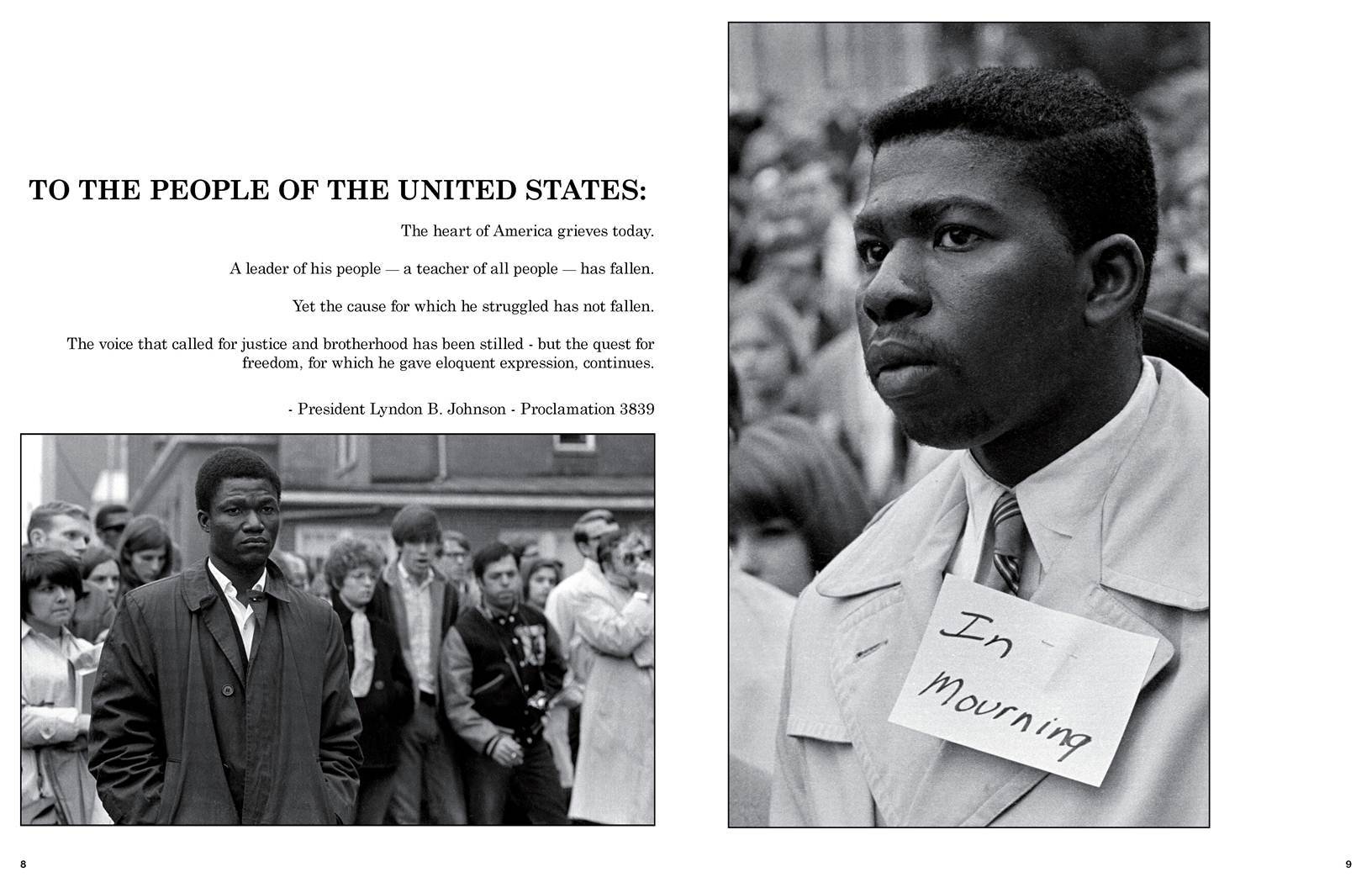
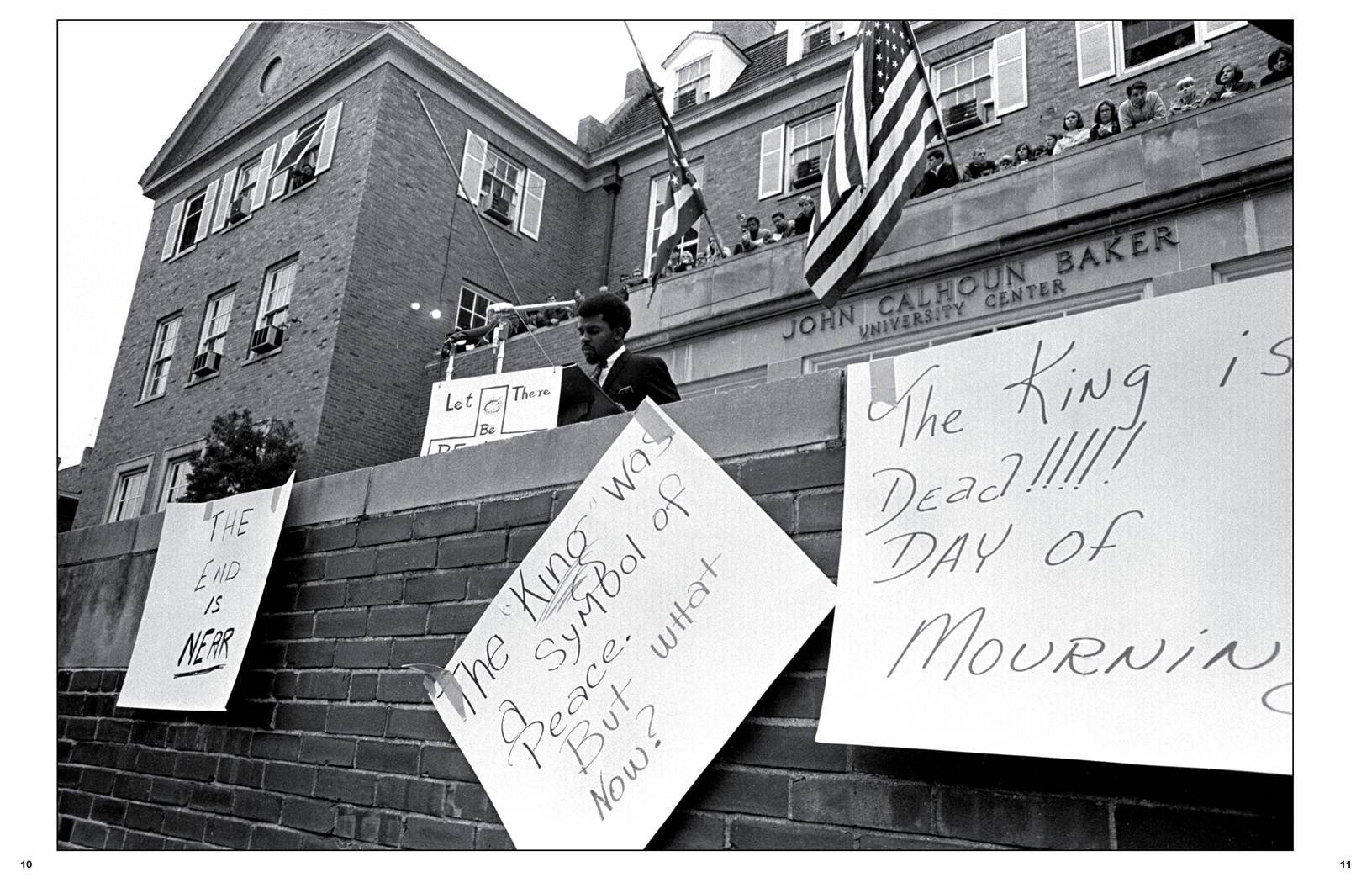
President Lyndon B. Johnson proclaimed Sunday, April 7, 1968, as a national day of mourning for Dr. Martin Luther King, Jr.
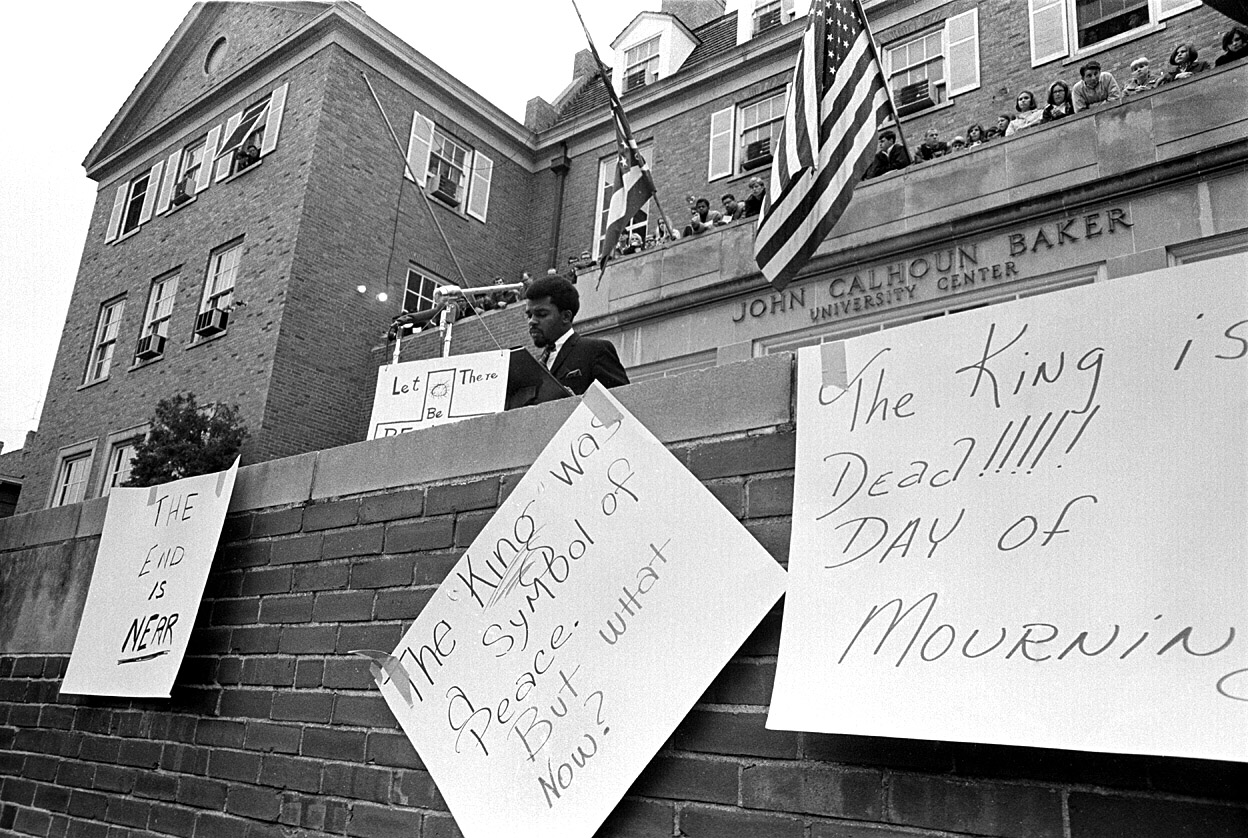
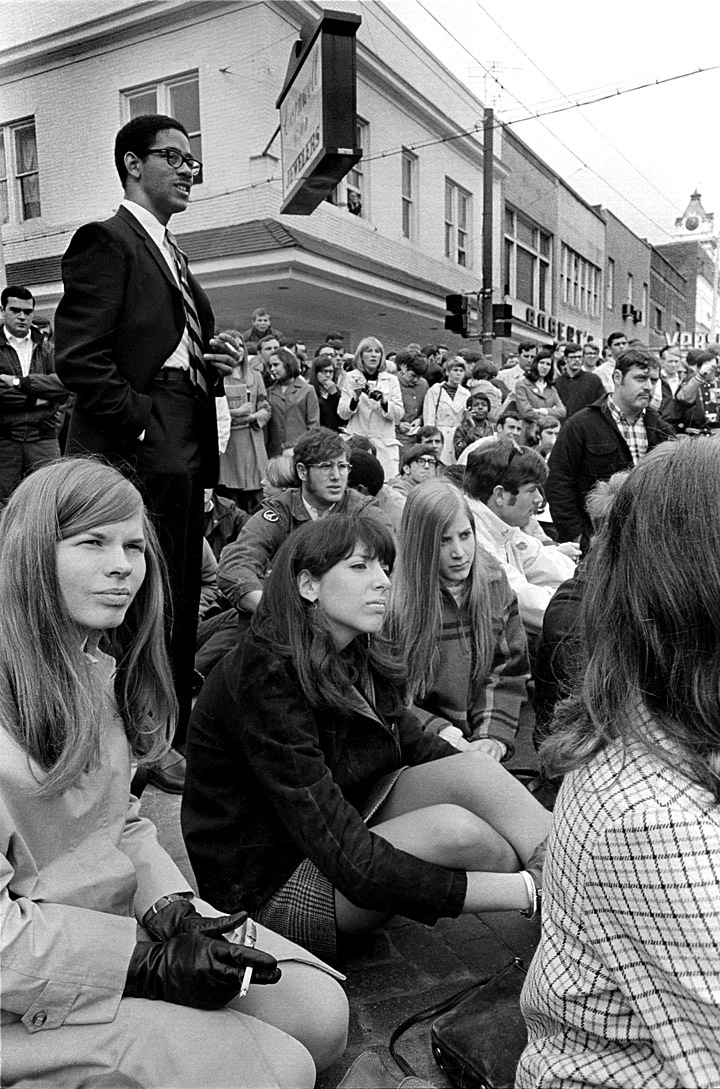
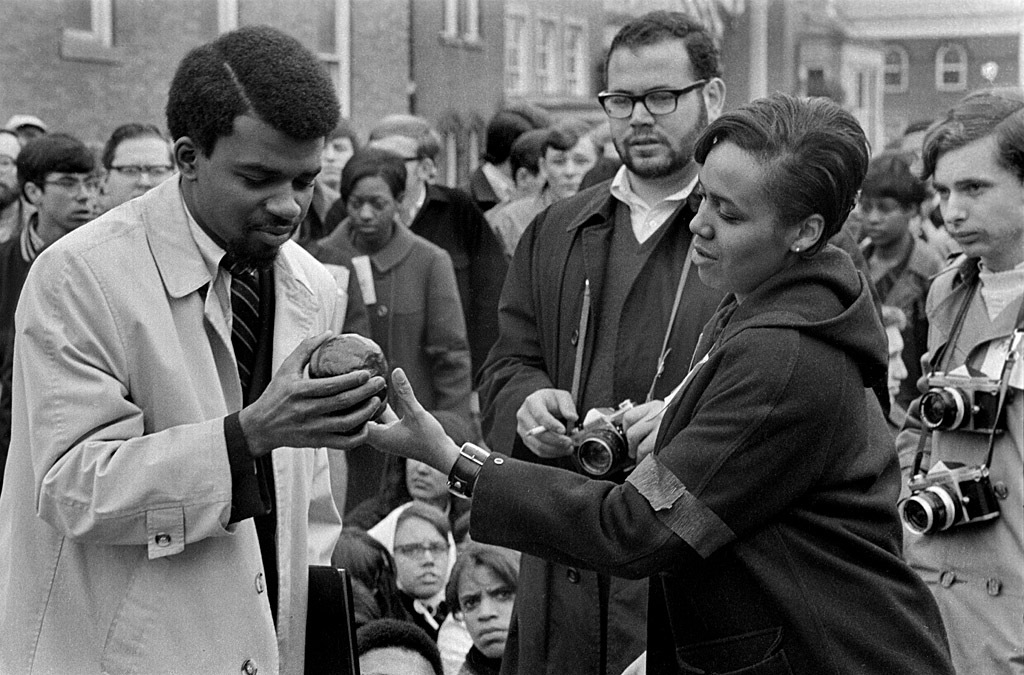
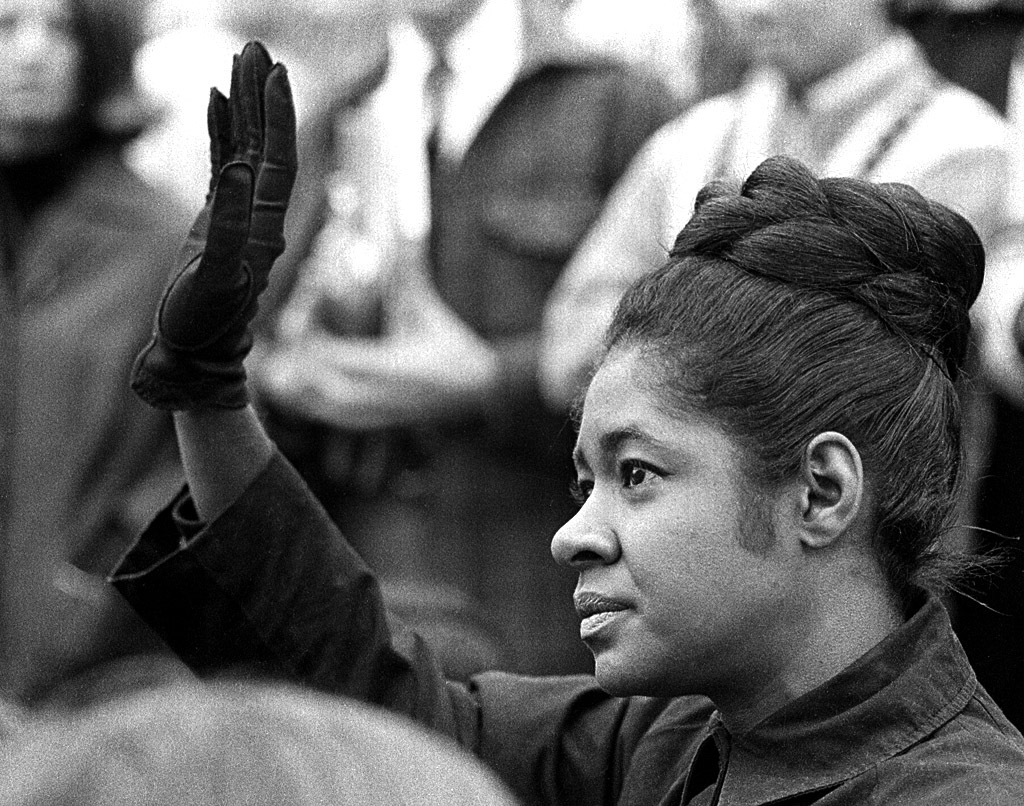
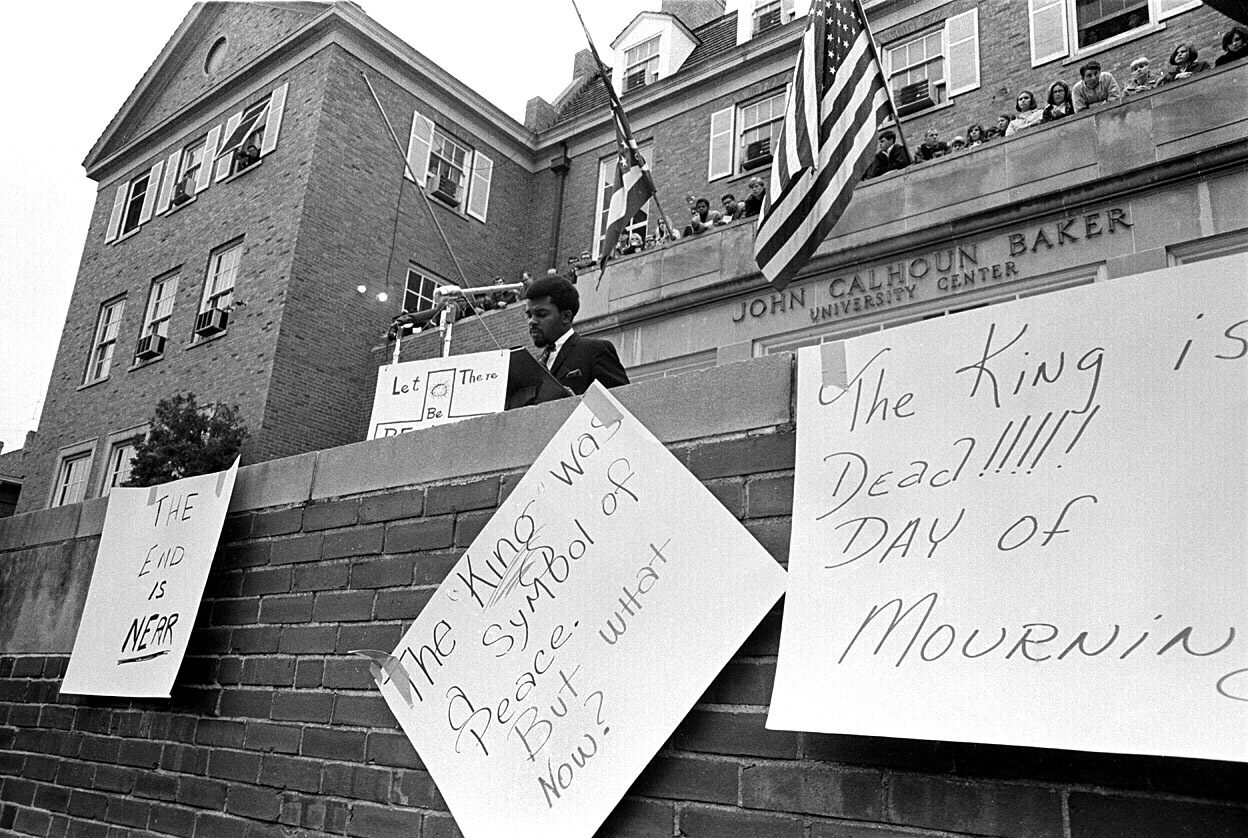
I wrote back in January about a class project at Ohio University that put me in an ideal position to cover the event in front of the John Calhoun Baker University Center as both a student and photo editor of The Ohio University Post.
Last month, I got an email from Bob Stewart who was looking for photographs of the Day of Mourning for a video to mark the date. He reached out for a mutual friend, Tom Hodson, who worked on the OU Post when I was photo editor in 1967-68. Tom said I had probably the best overall collection of photos of the formal ceremony and the sit-in that followed.
We traded emails for a few day, then I sent him way more pictures than I thought he could ever use. Much to my surprise, in a day or so he produced this video that was better than I could have ever made myself.
Here’s some background on the images Bob used in the video.
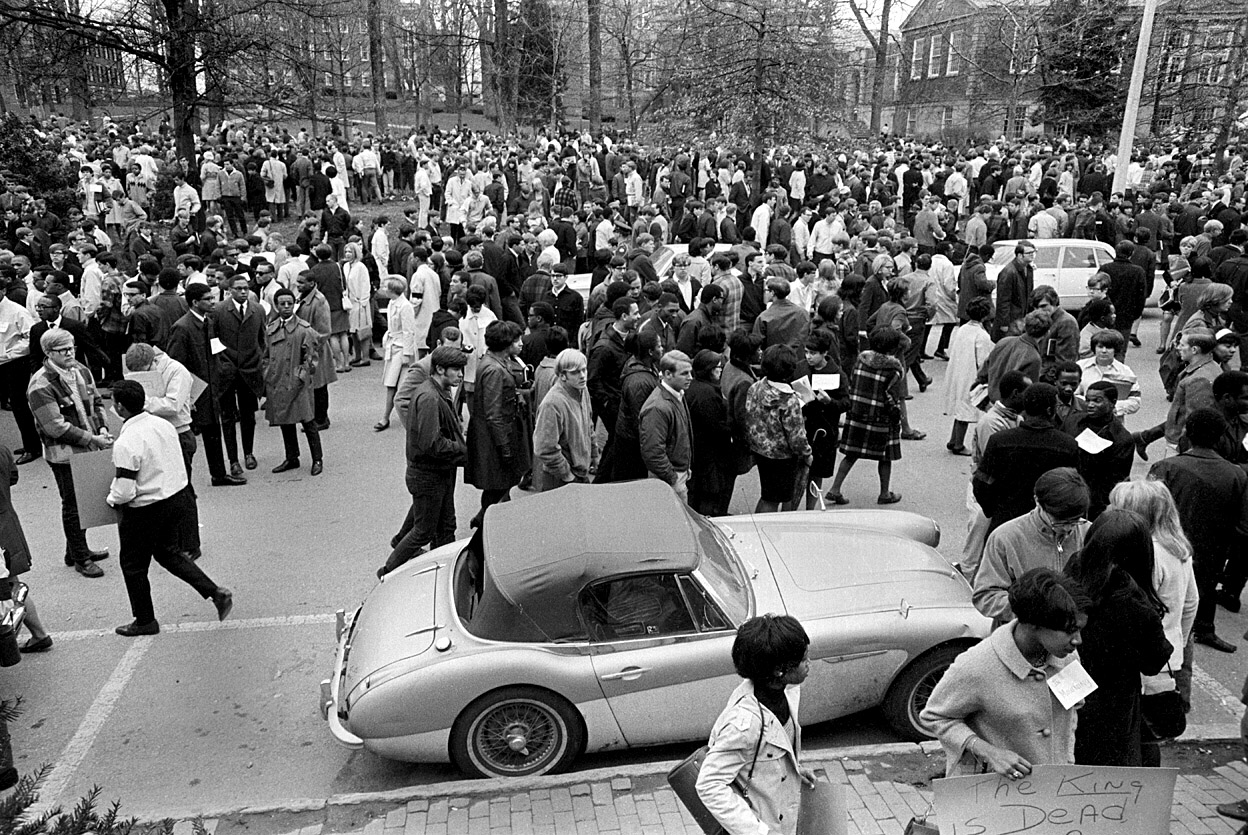
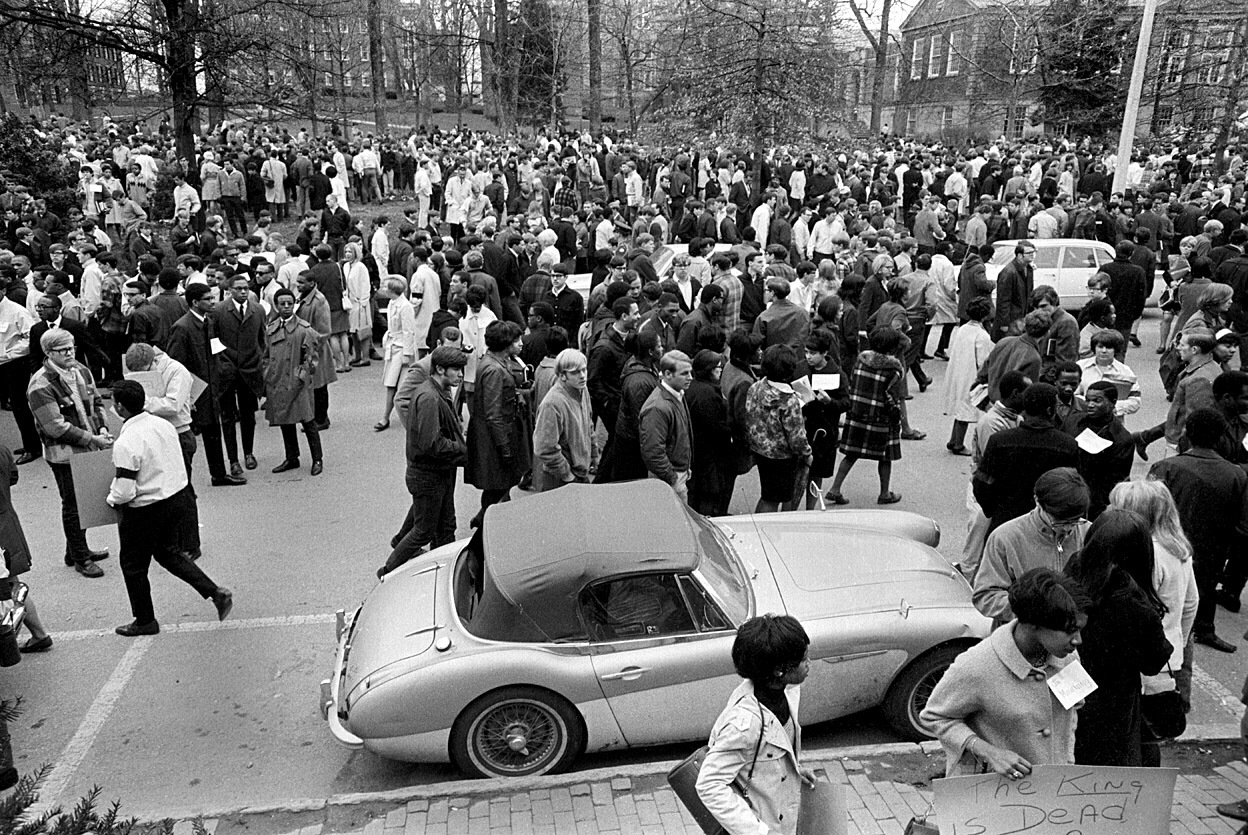
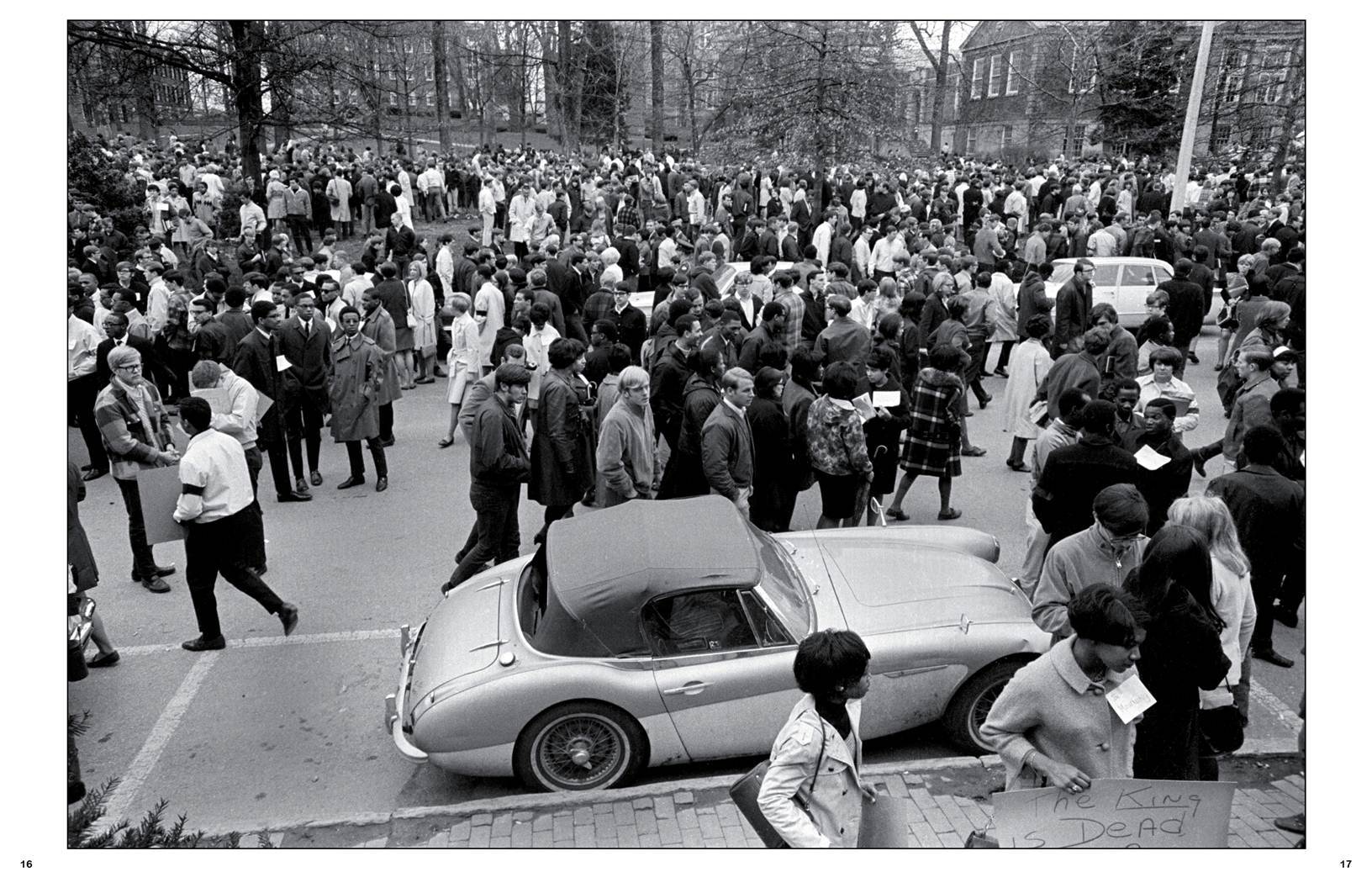
Students filled the street
Hundreds, if not thousands, of students filled the street in front of the student union and spilled out onto the Main Green.
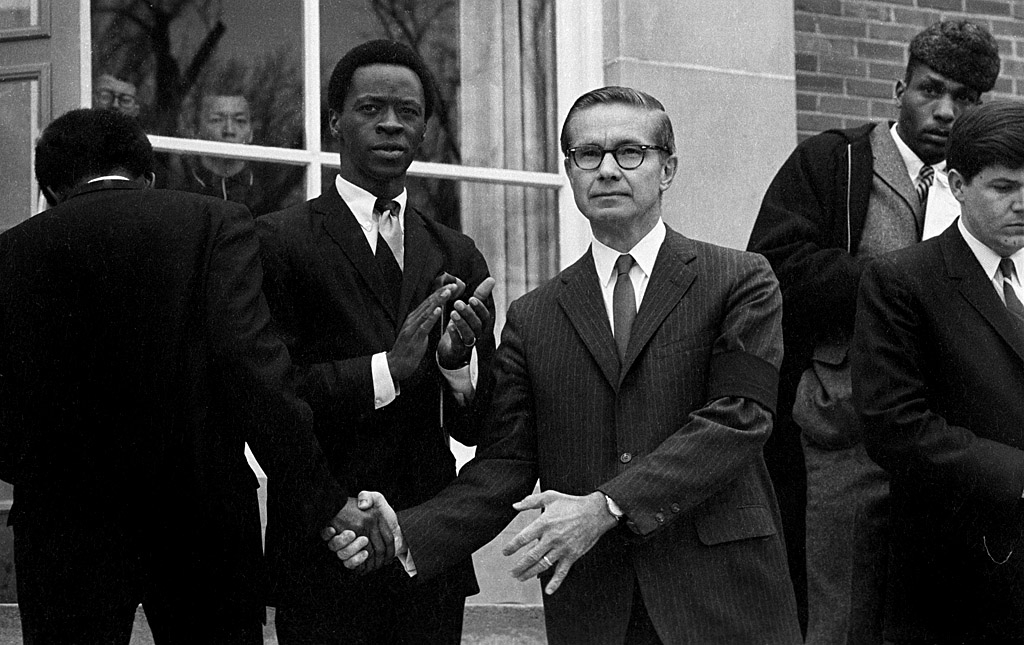
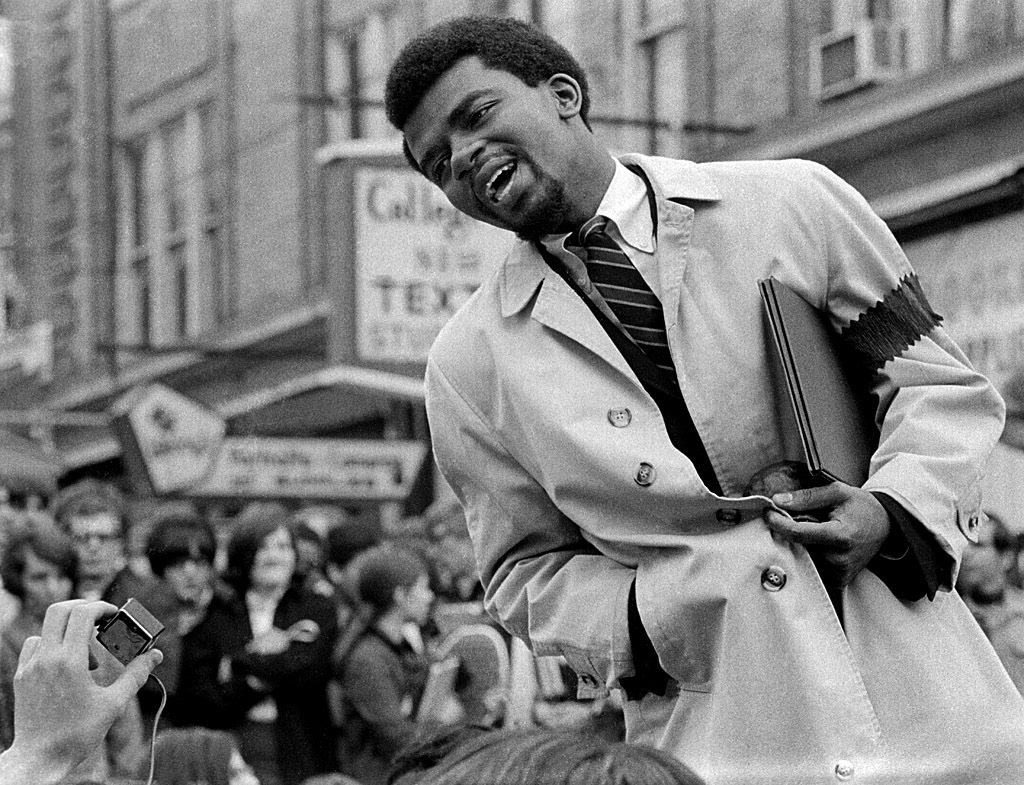
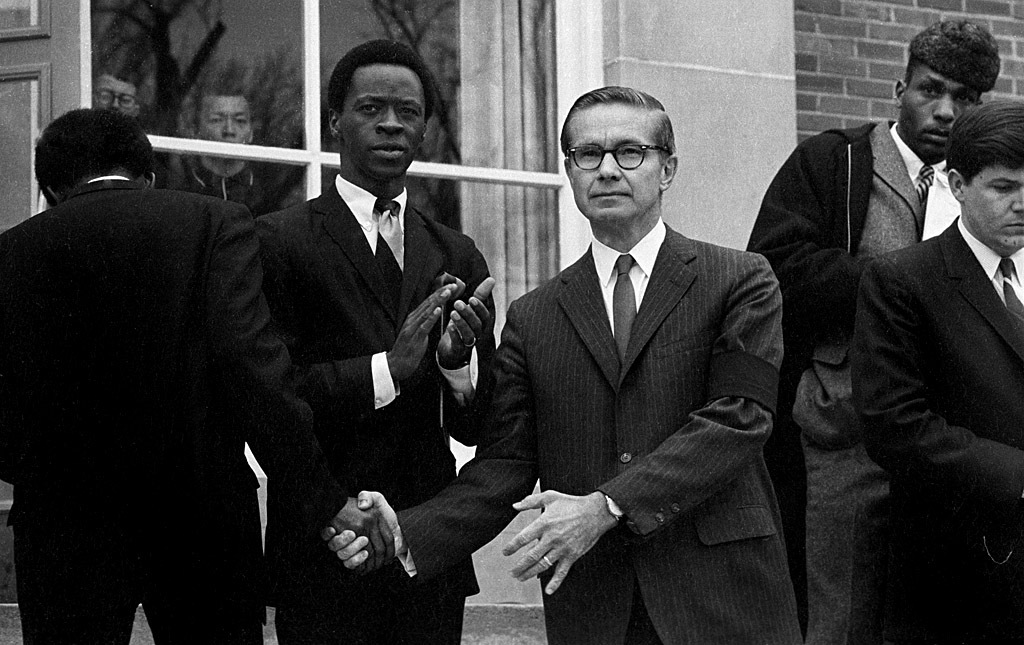
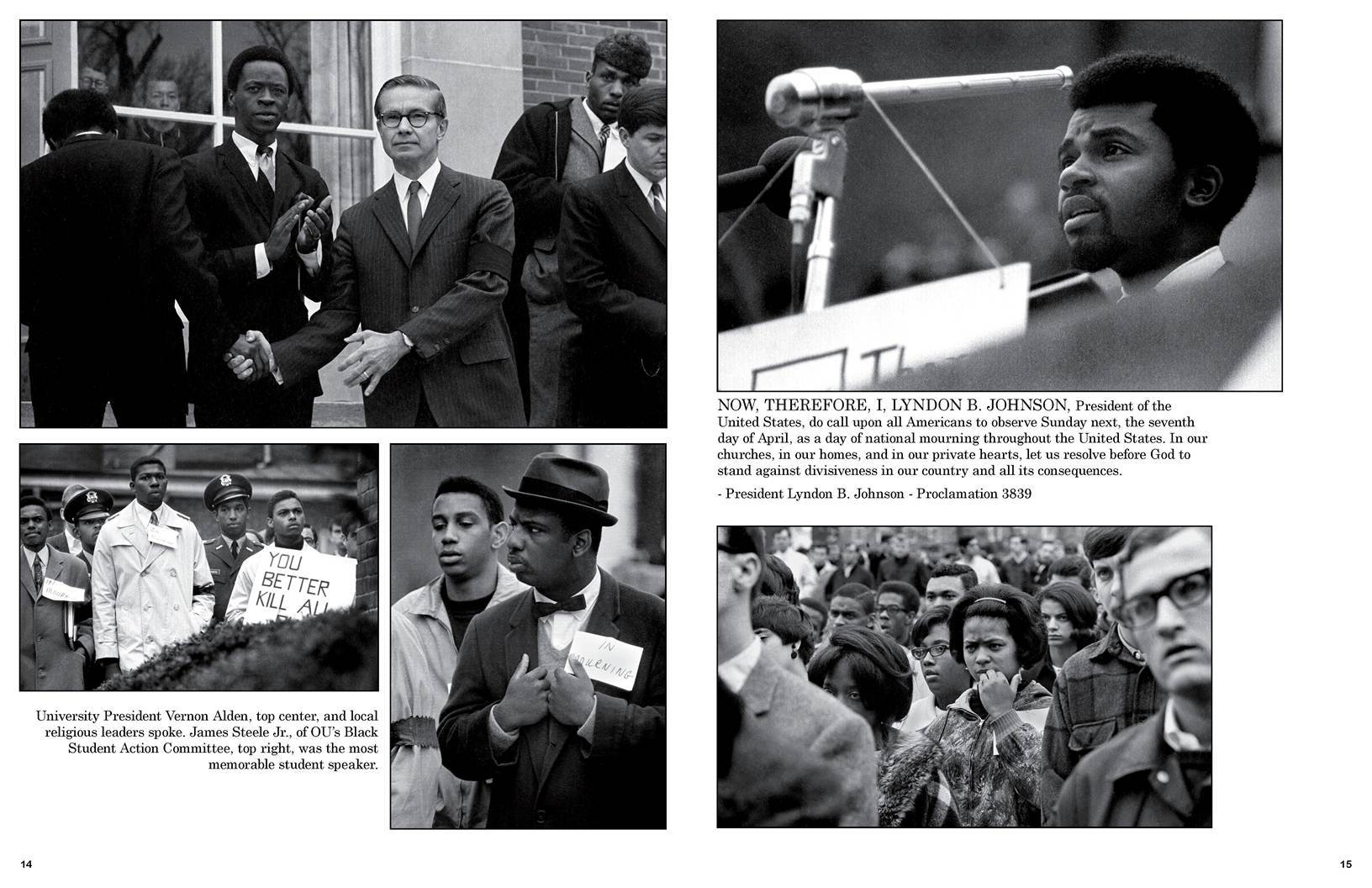
OU President Vernon Alden spoke
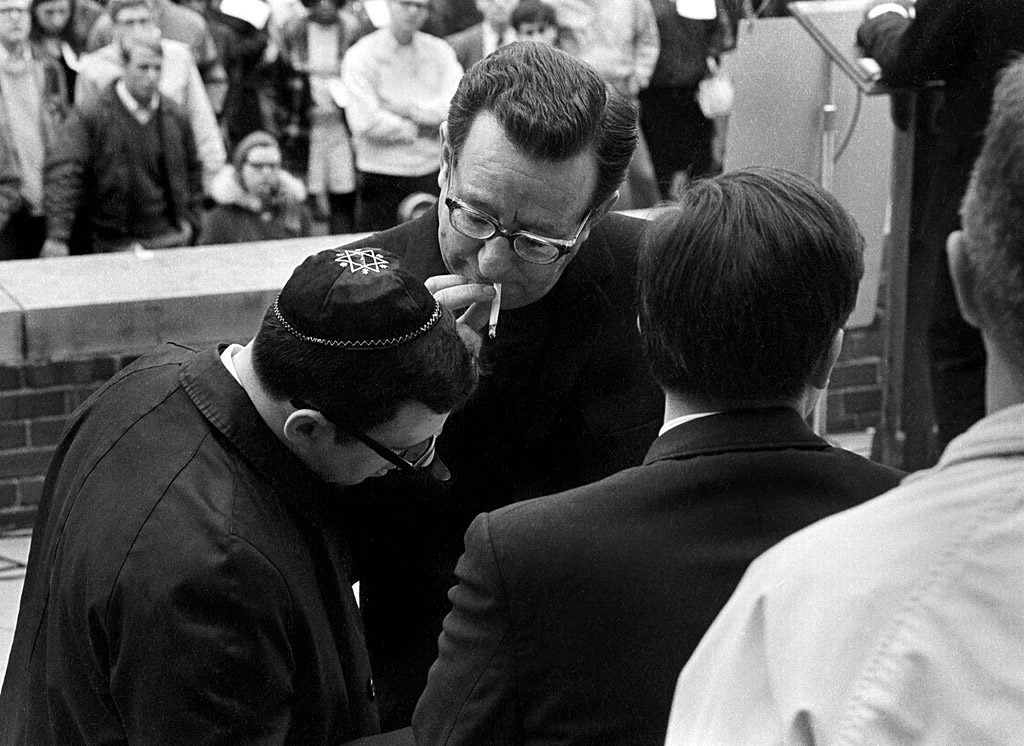
The Kennedyesque OU President Vernon Alden, center, wearing a black armband, spoke.
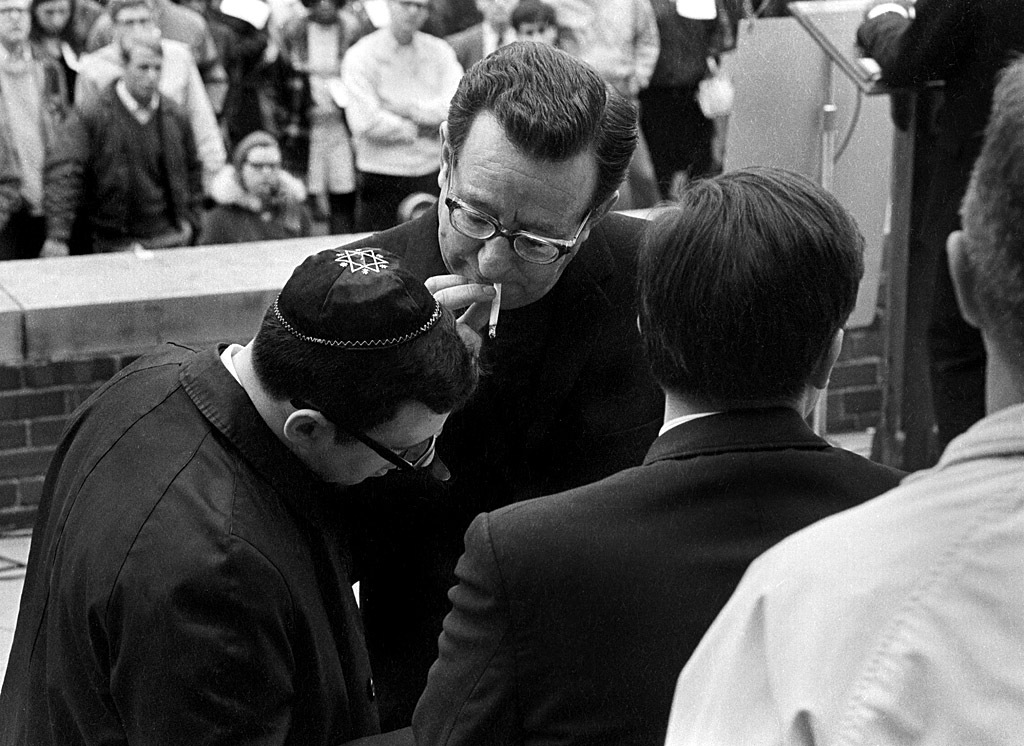
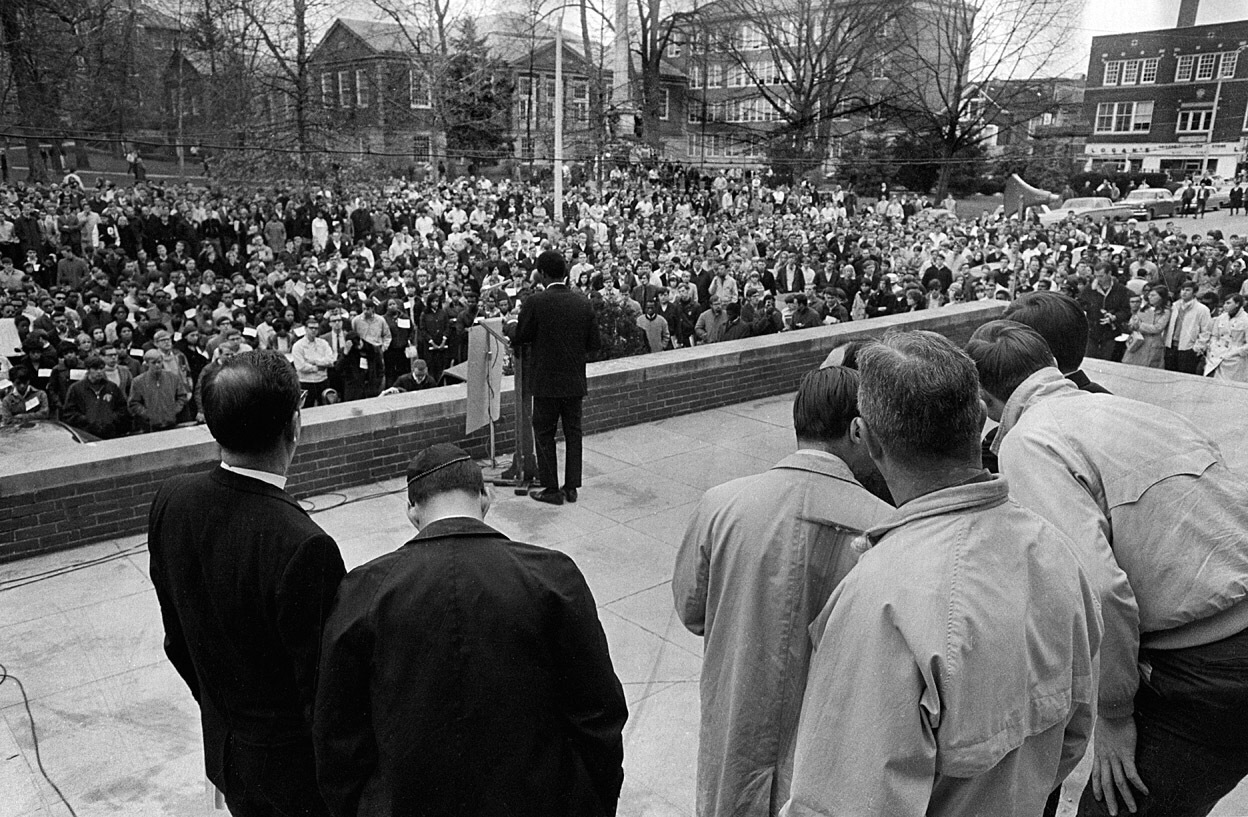
Religious leaders were present
All of the local faiths were represented.
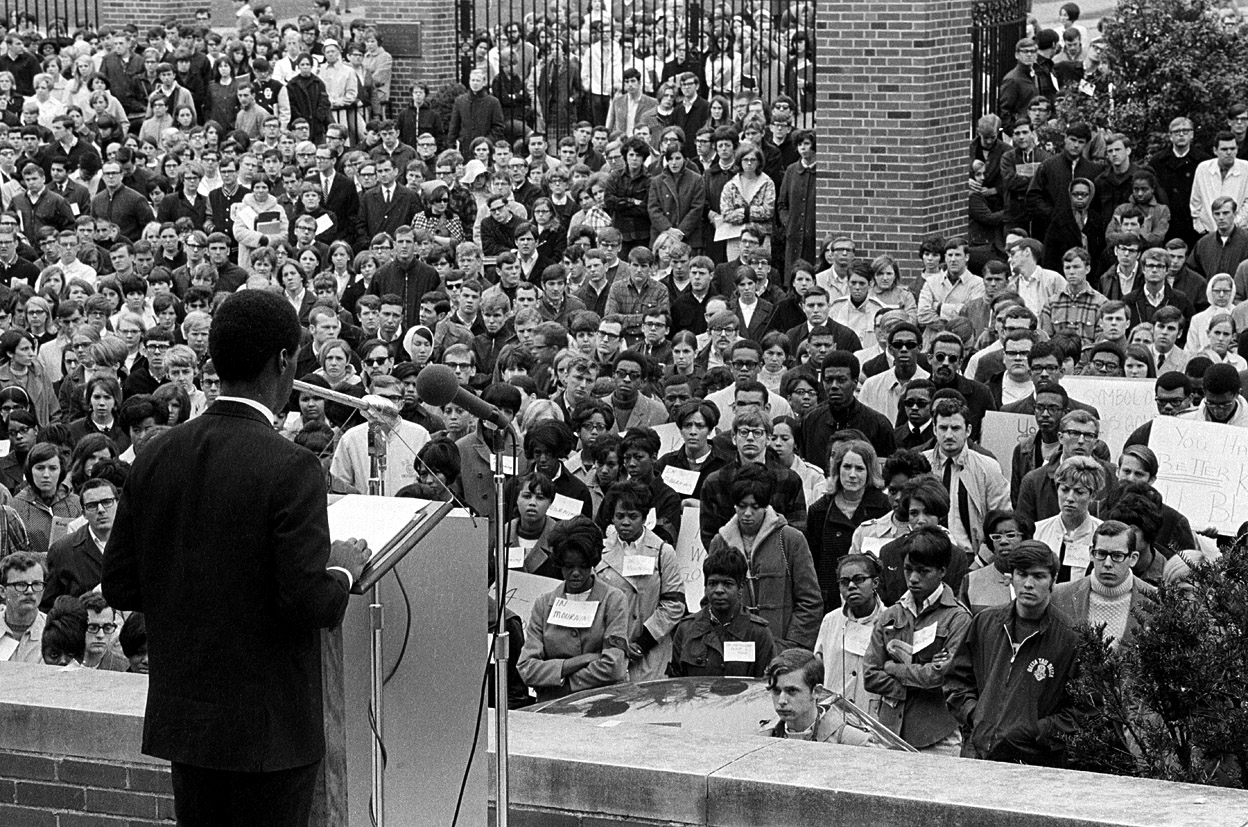
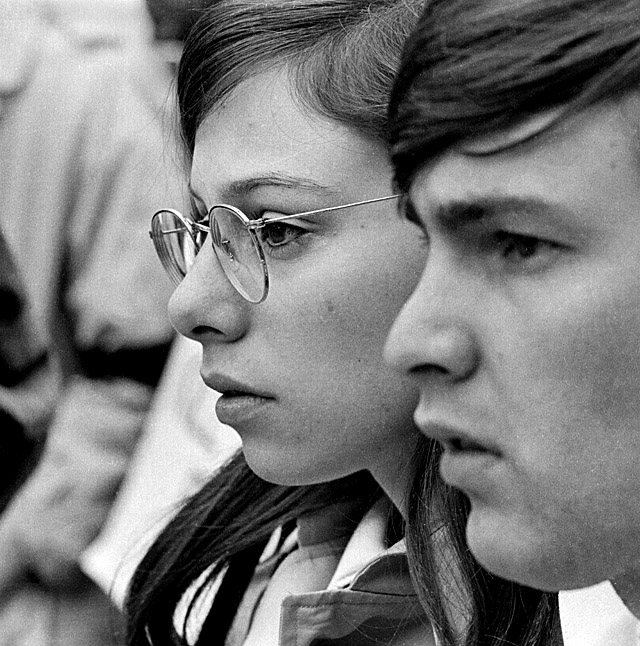
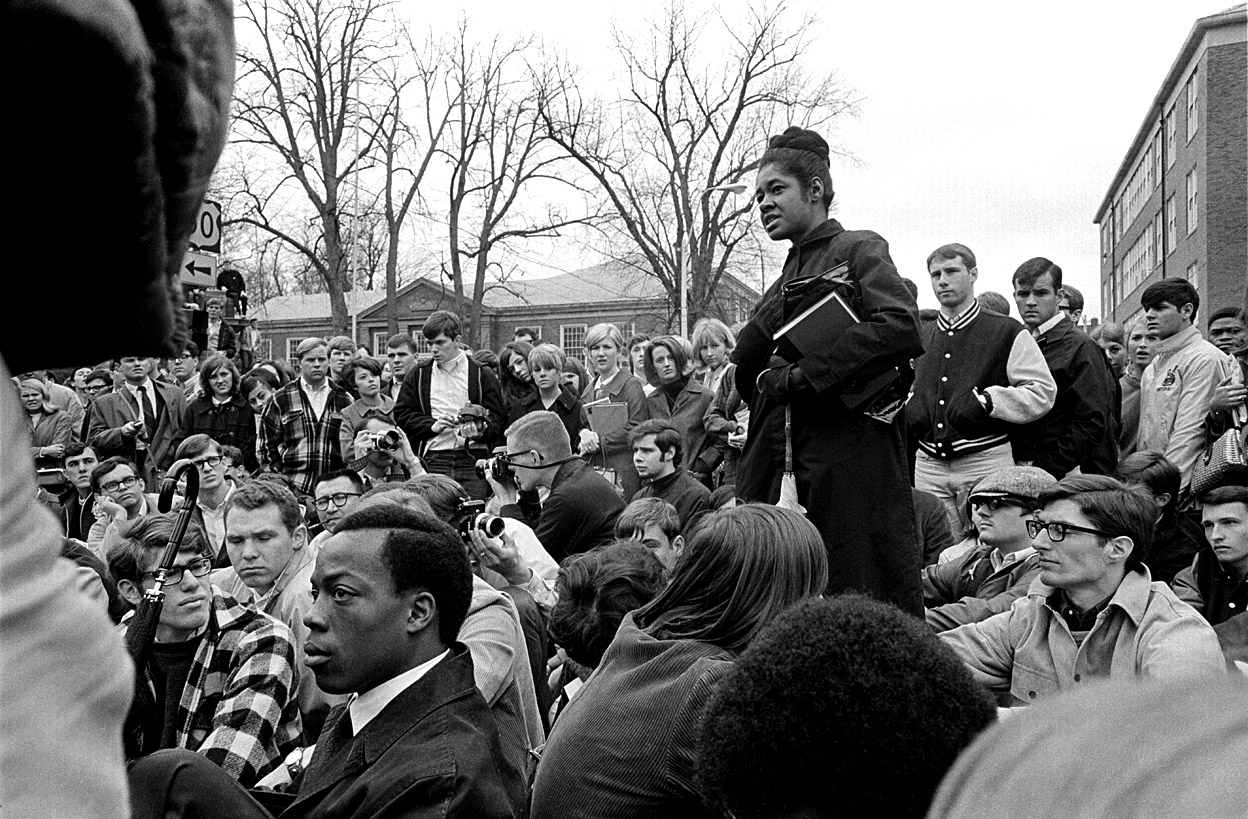
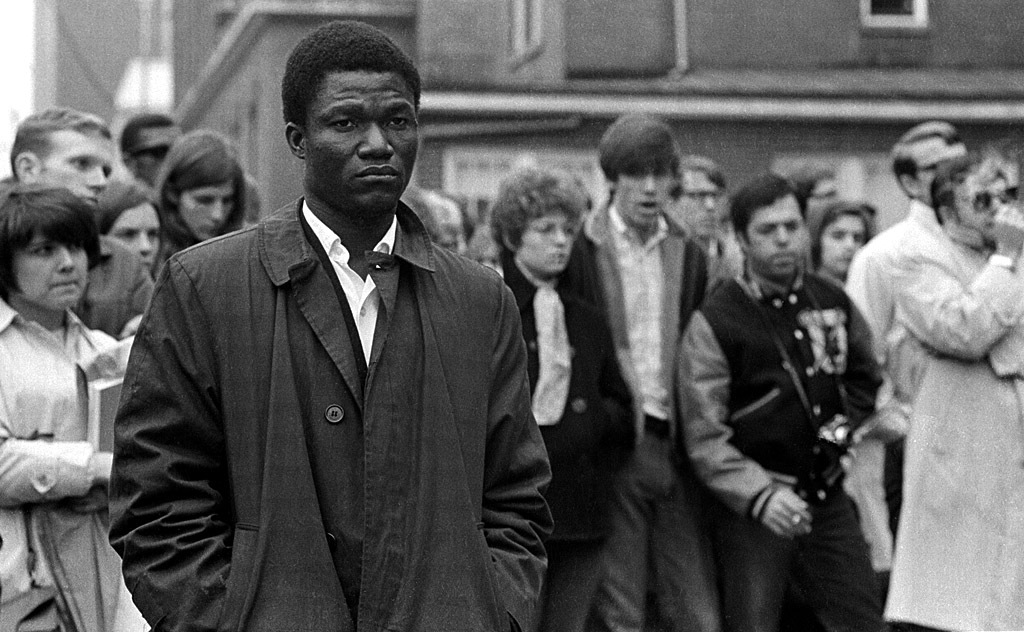
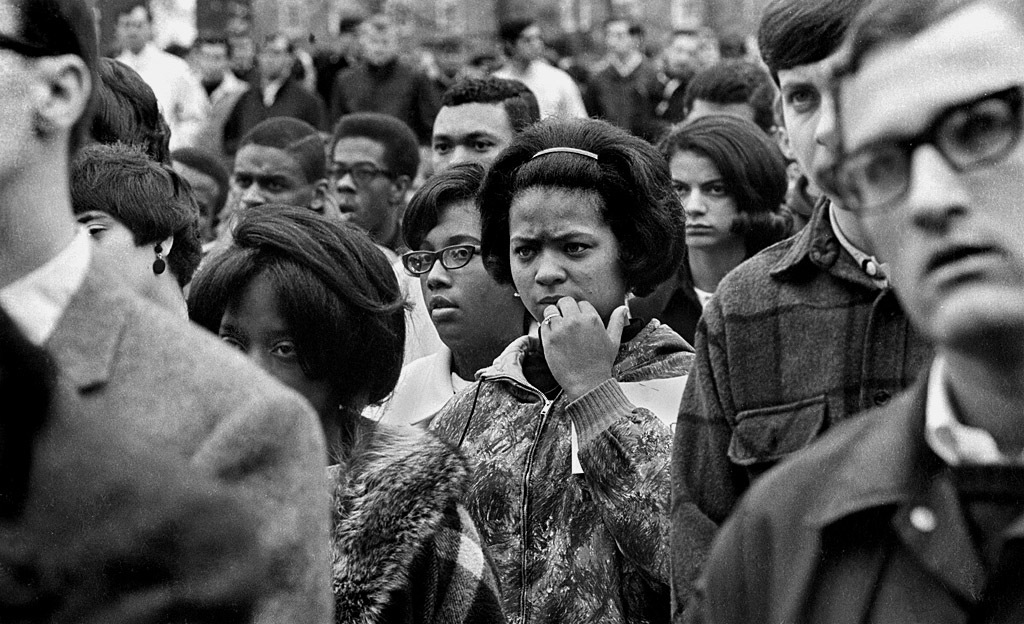
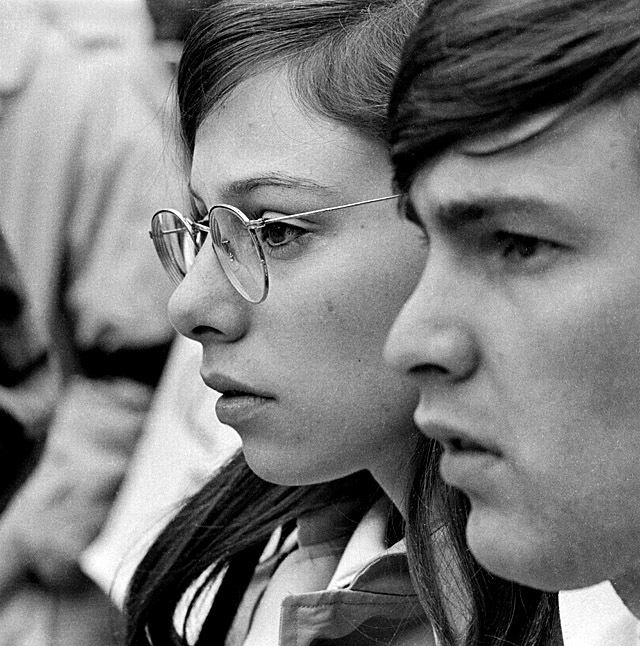
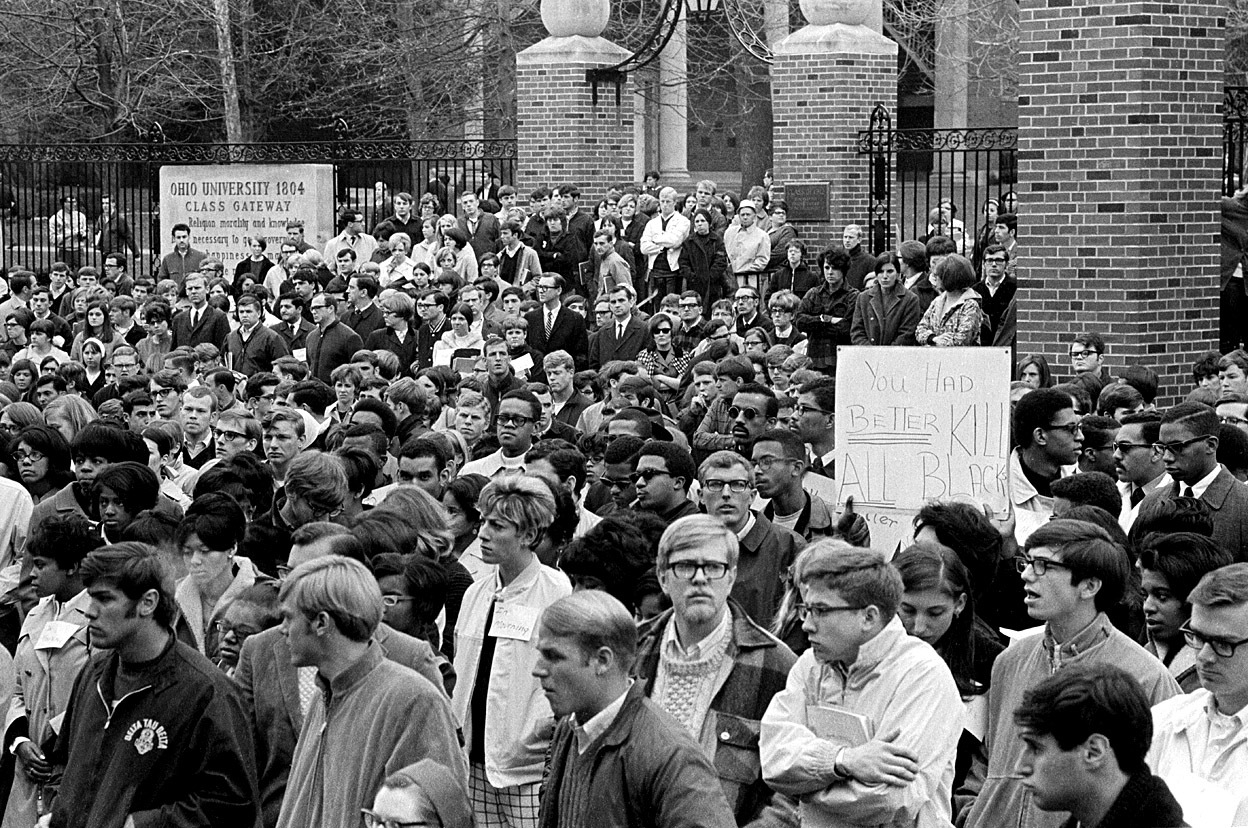
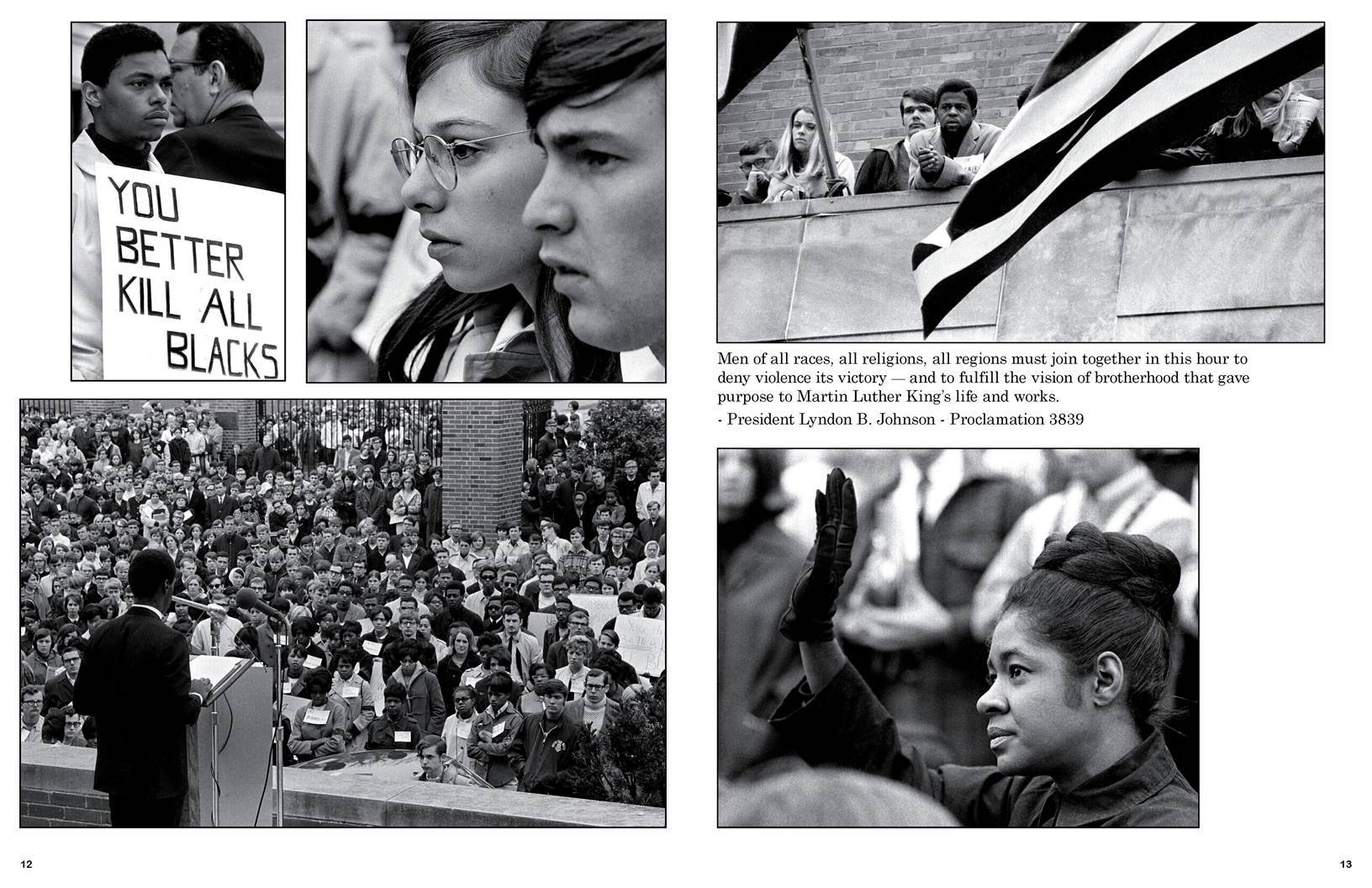
Crowd was solemn
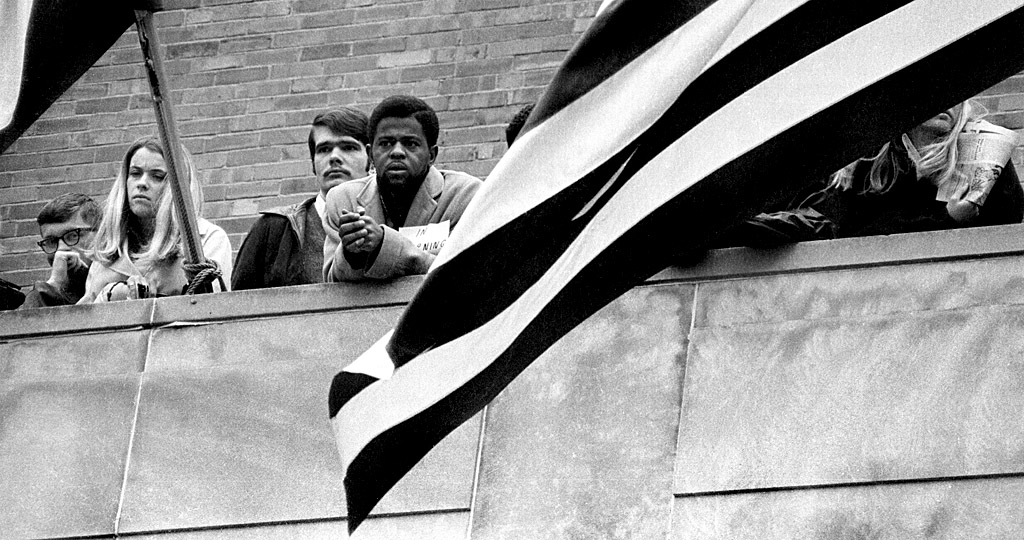
I was struck by how seriously everyone took the ceremony.
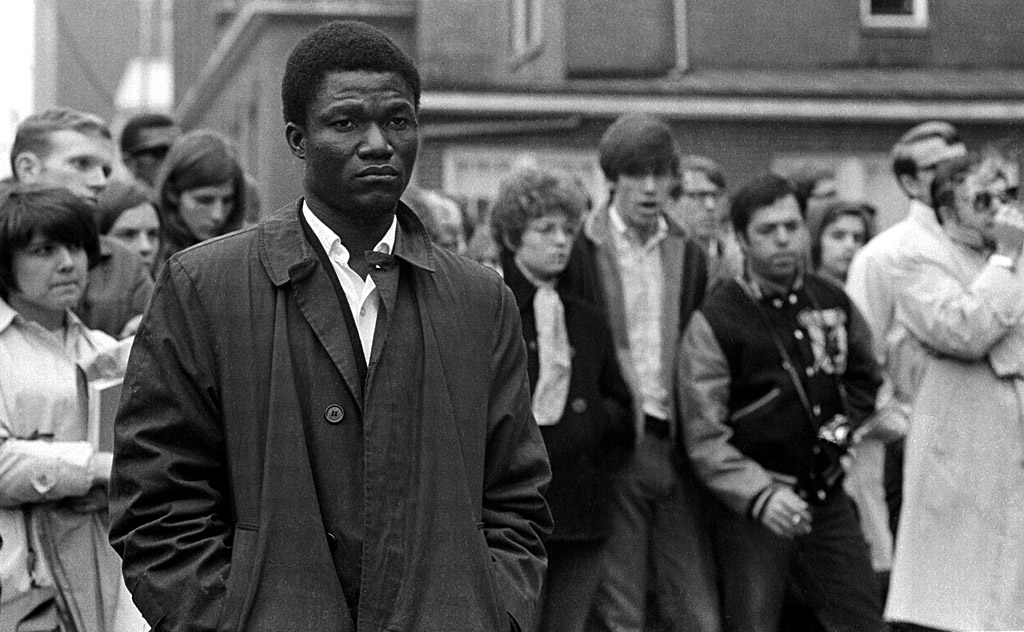
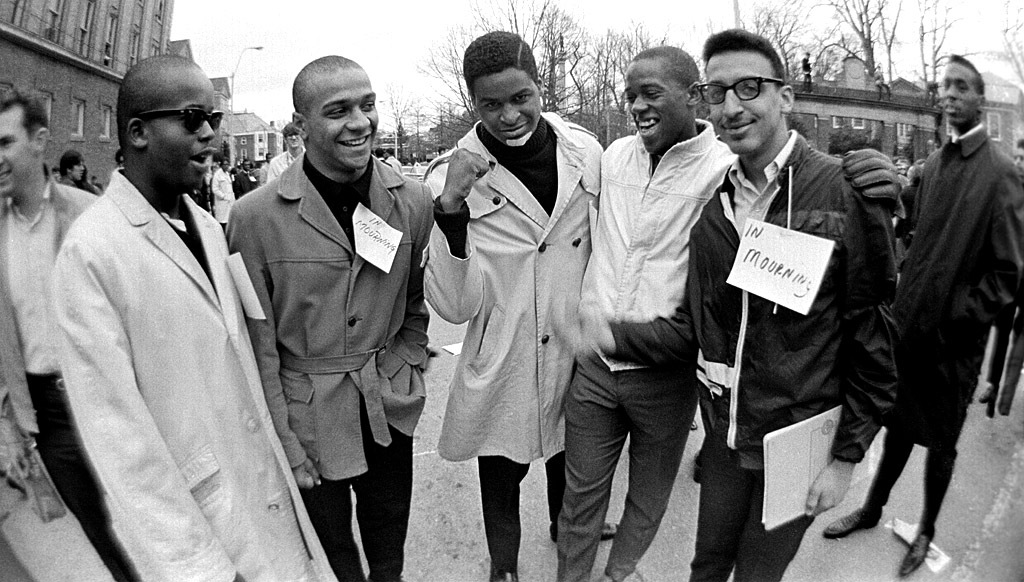
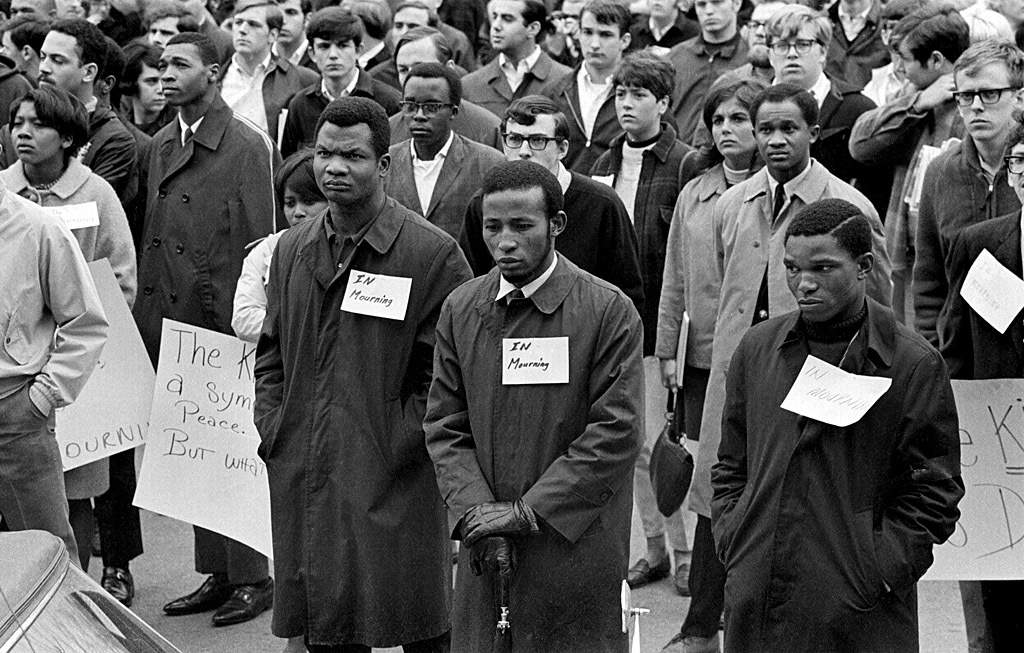
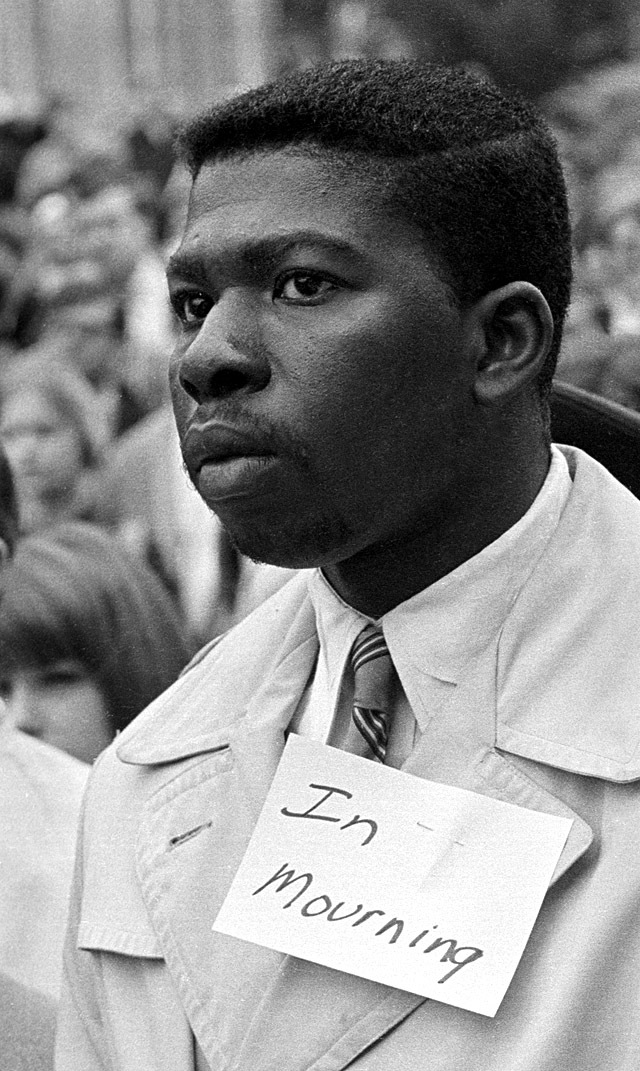
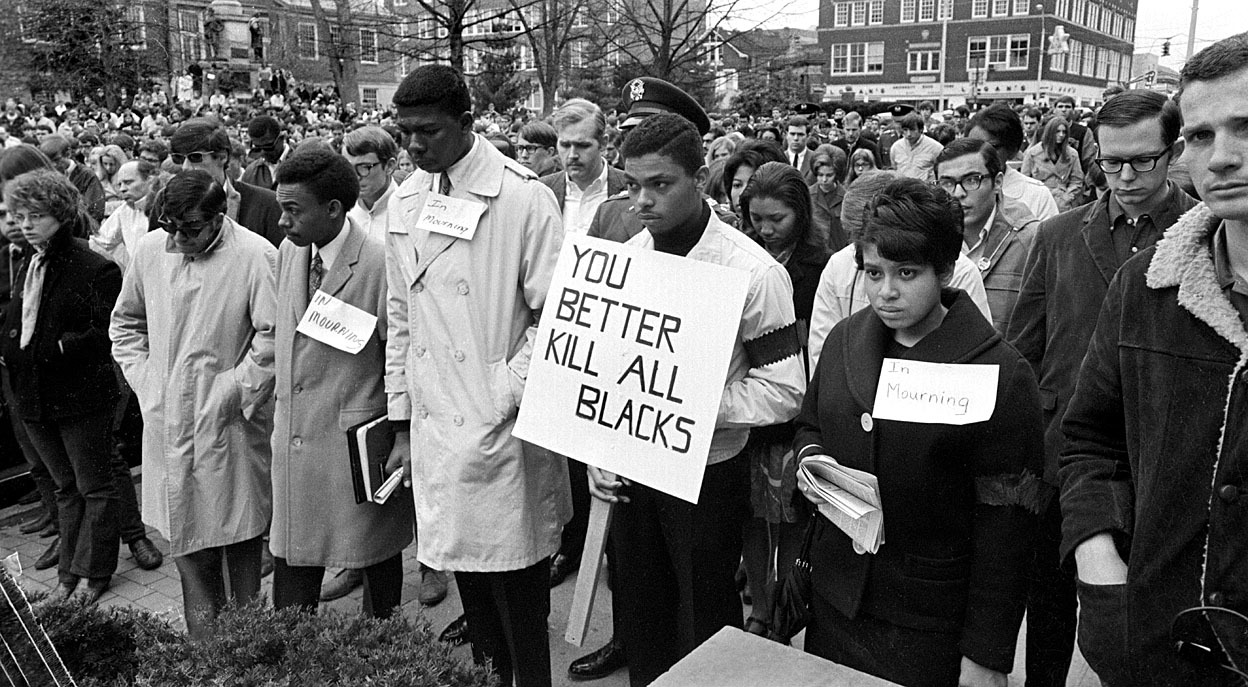
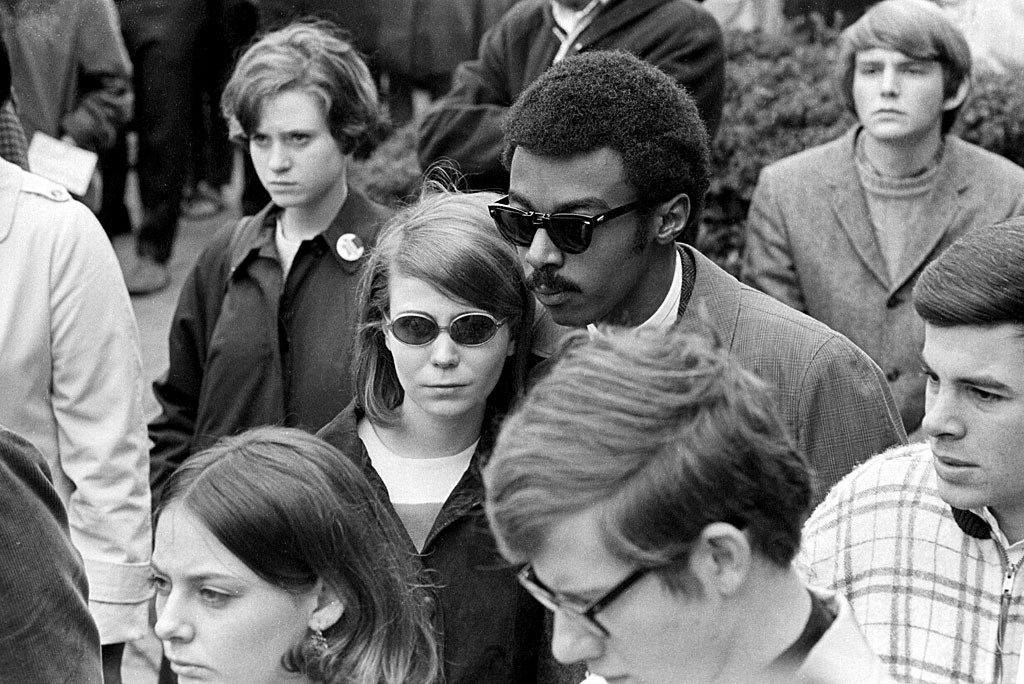
A salt and pepper group
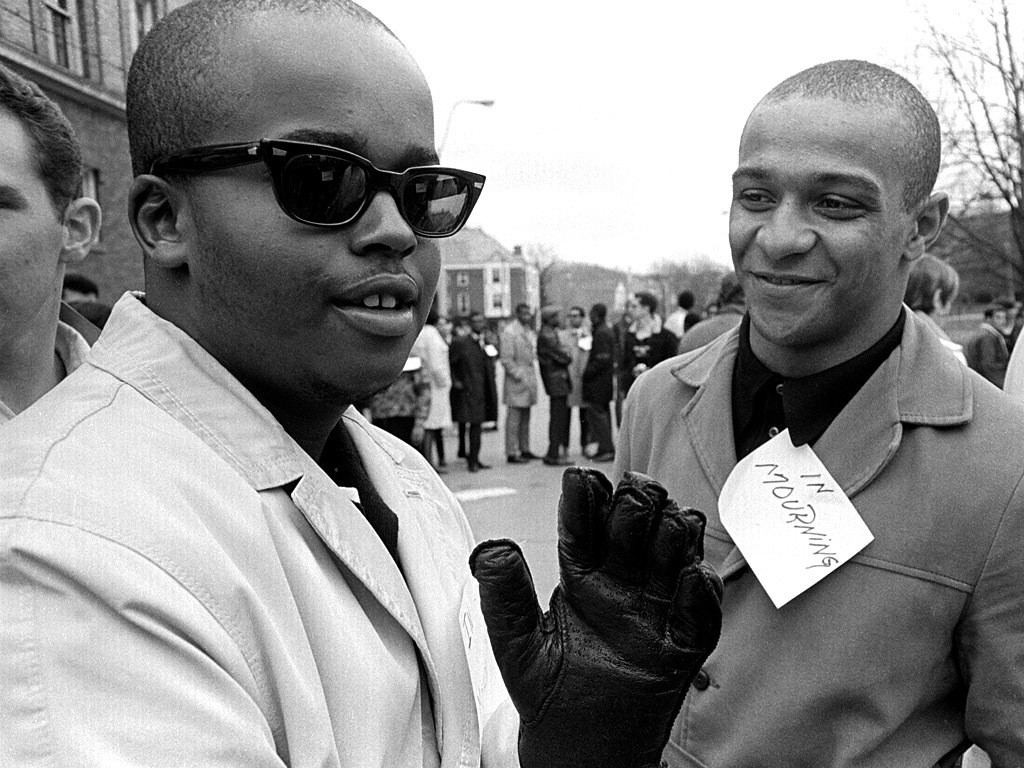
The front ranks were heavily represented by black students, many wearing signs that said “In Mourning.”
Not your normal gathering
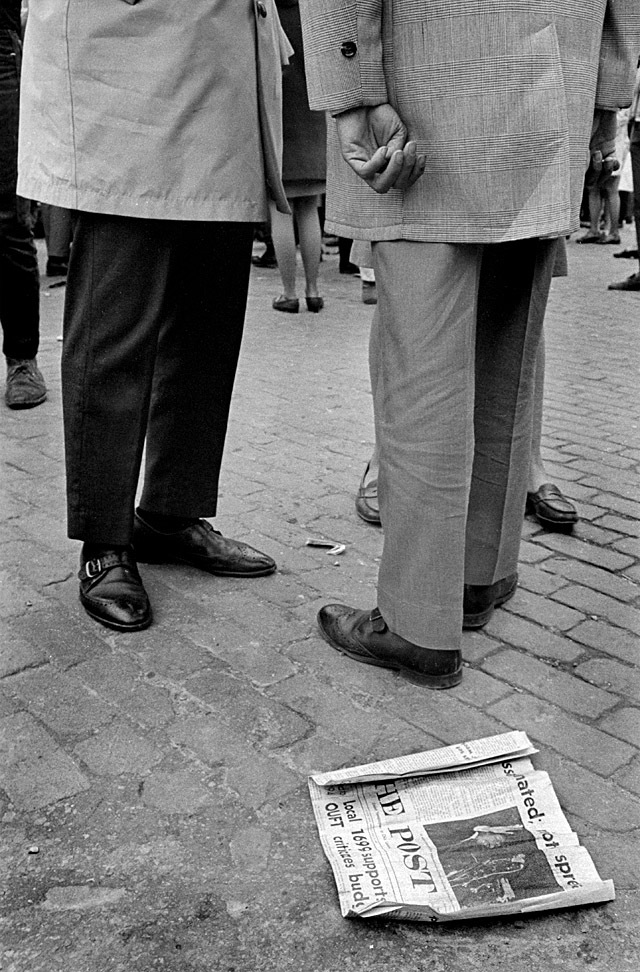
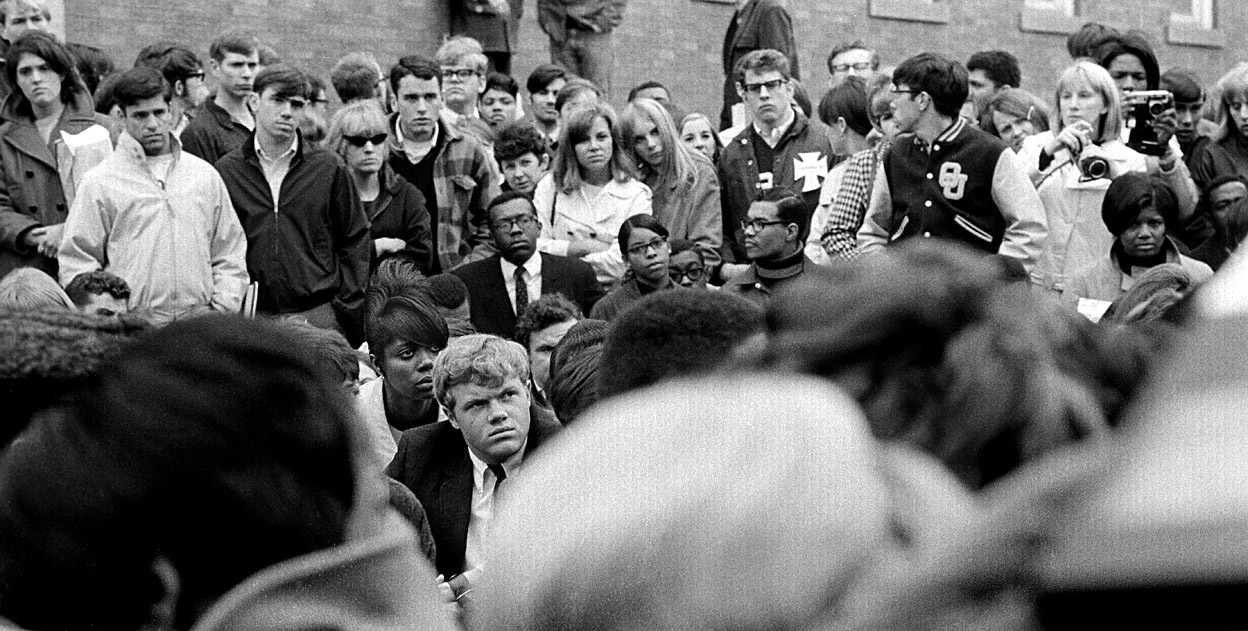
Most of the white students in the back were dressed more casually, but this wasn’t your normal student gathering.
The mood was solemn and there was no laughing or calling across the group.
I had been to many protests, concerts and gatherings on the Main Green, but this one had a feeling of dignity about it.
Instead of being your normal batch of campus radicals, you had a mixture of jocks, sorority girls, frat boys, professors and townspeople all coming together to try to make sense of what had happened.
The racial mix on this day was probably proportional to the school’s makeup.
The ceremony ended
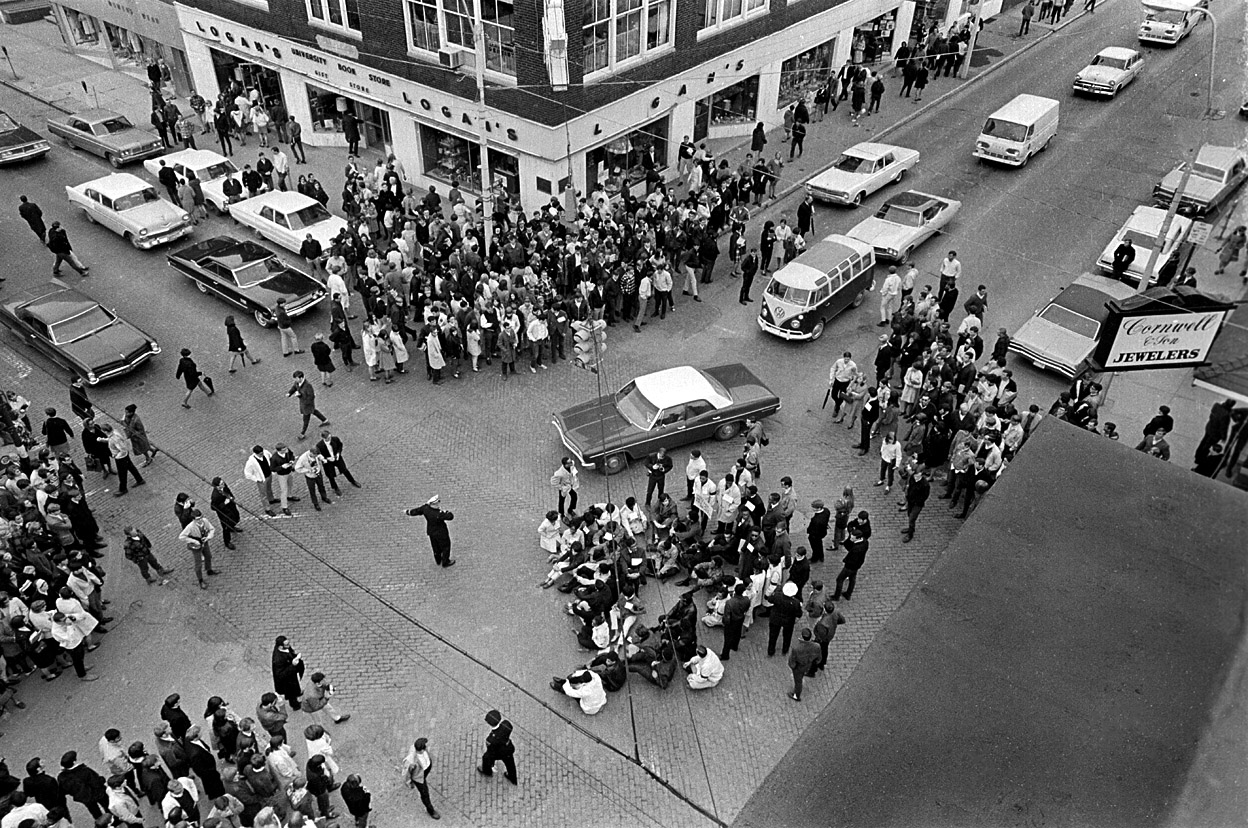
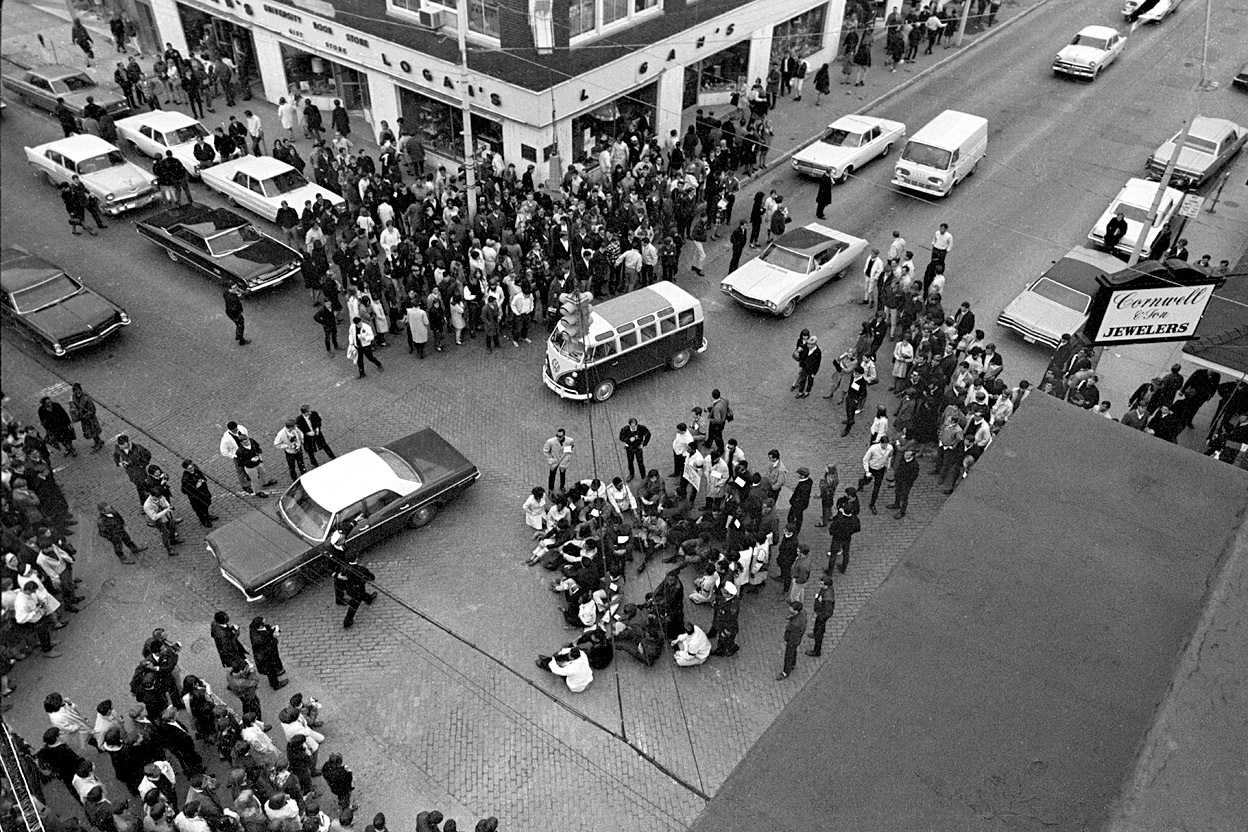
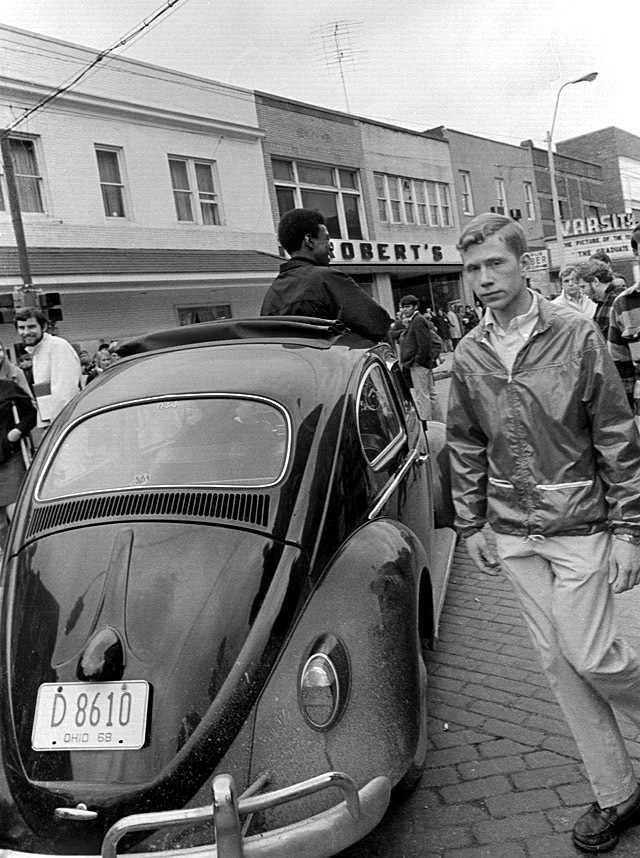
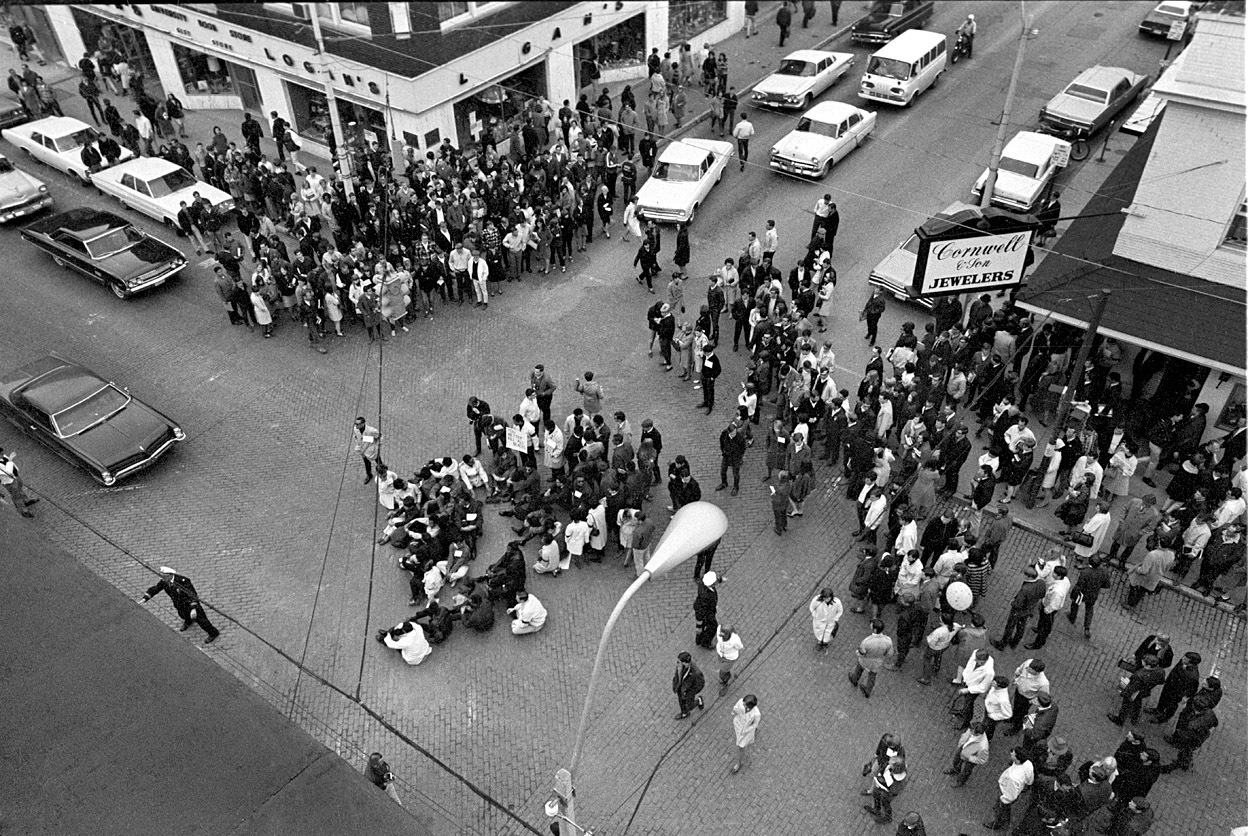
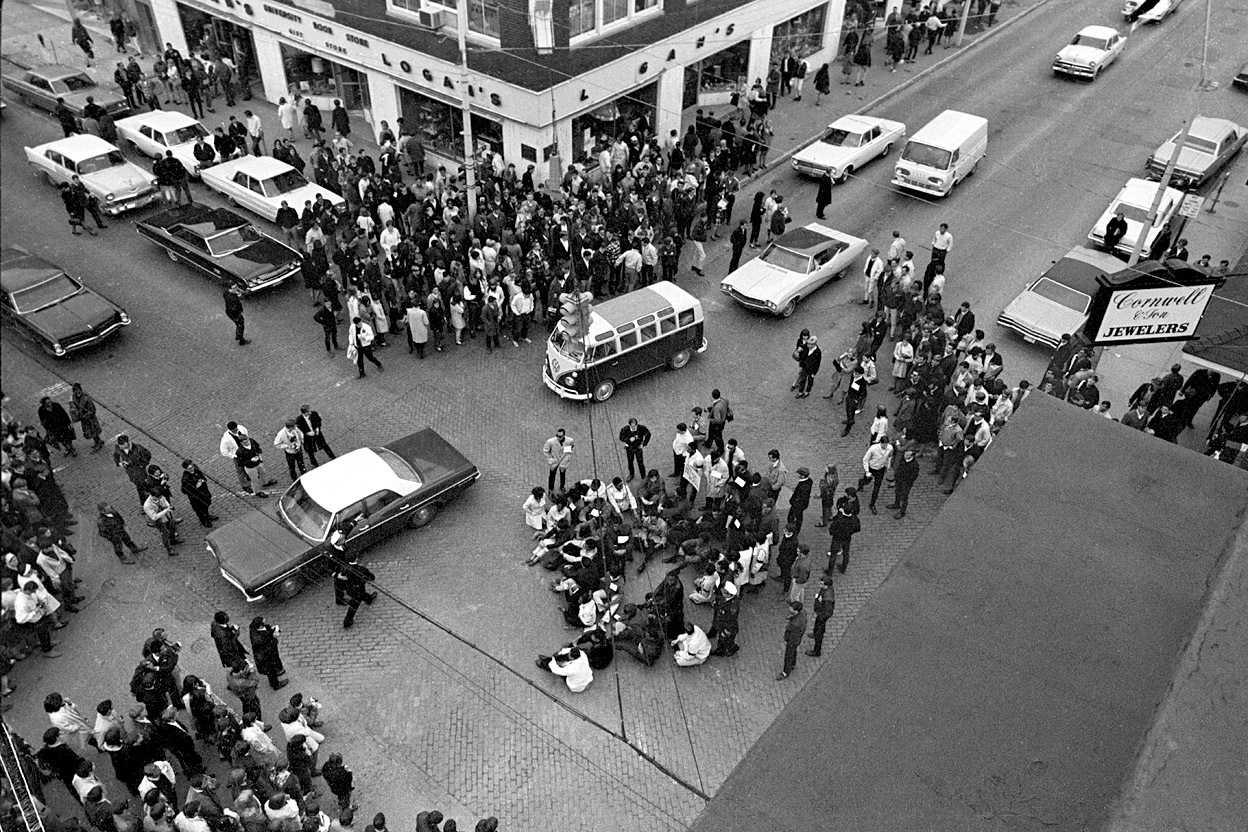
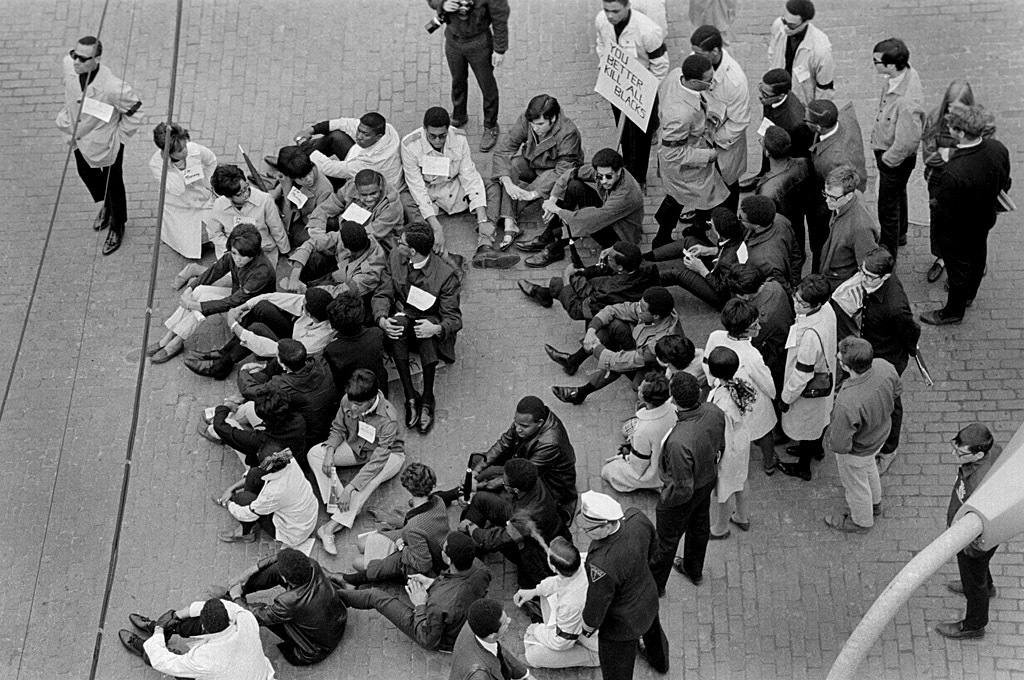
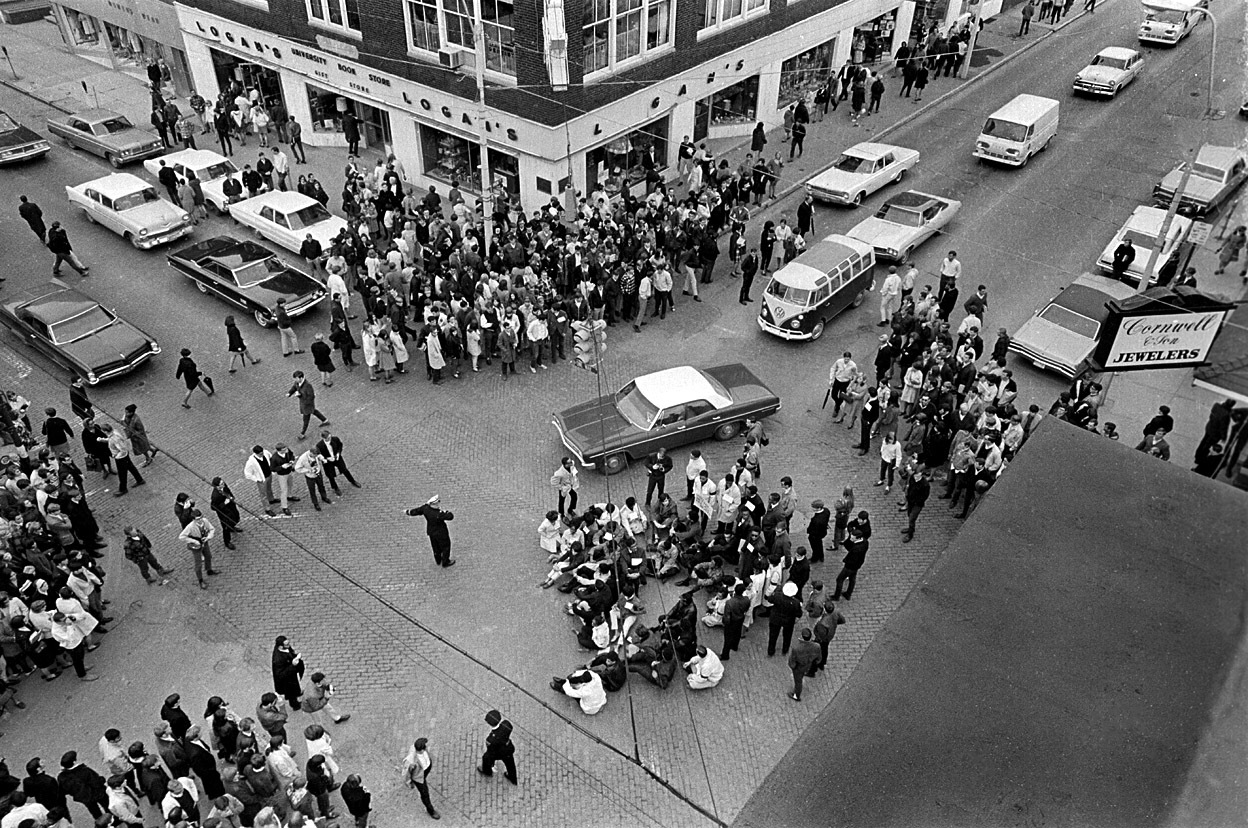
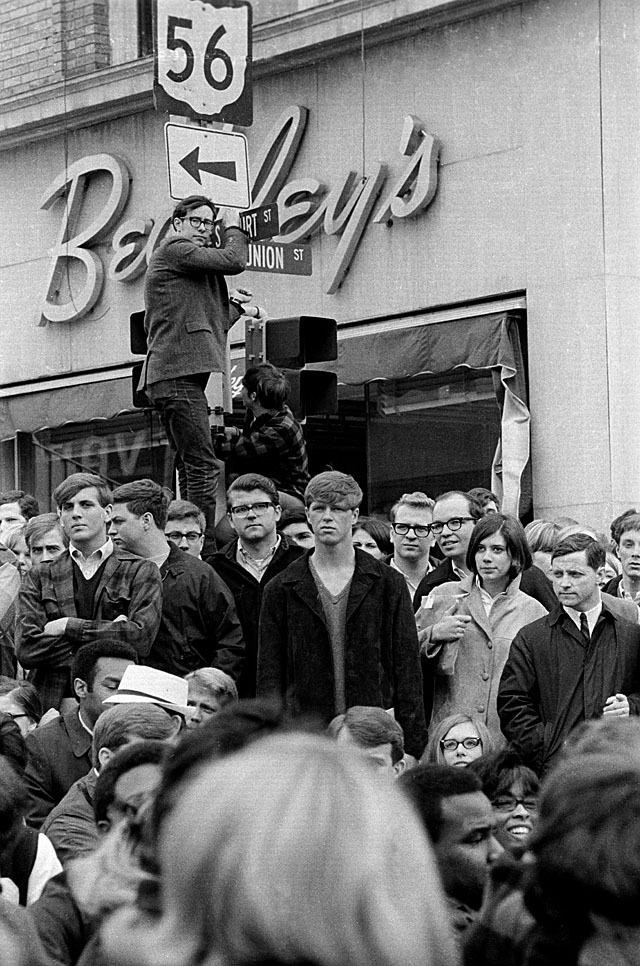
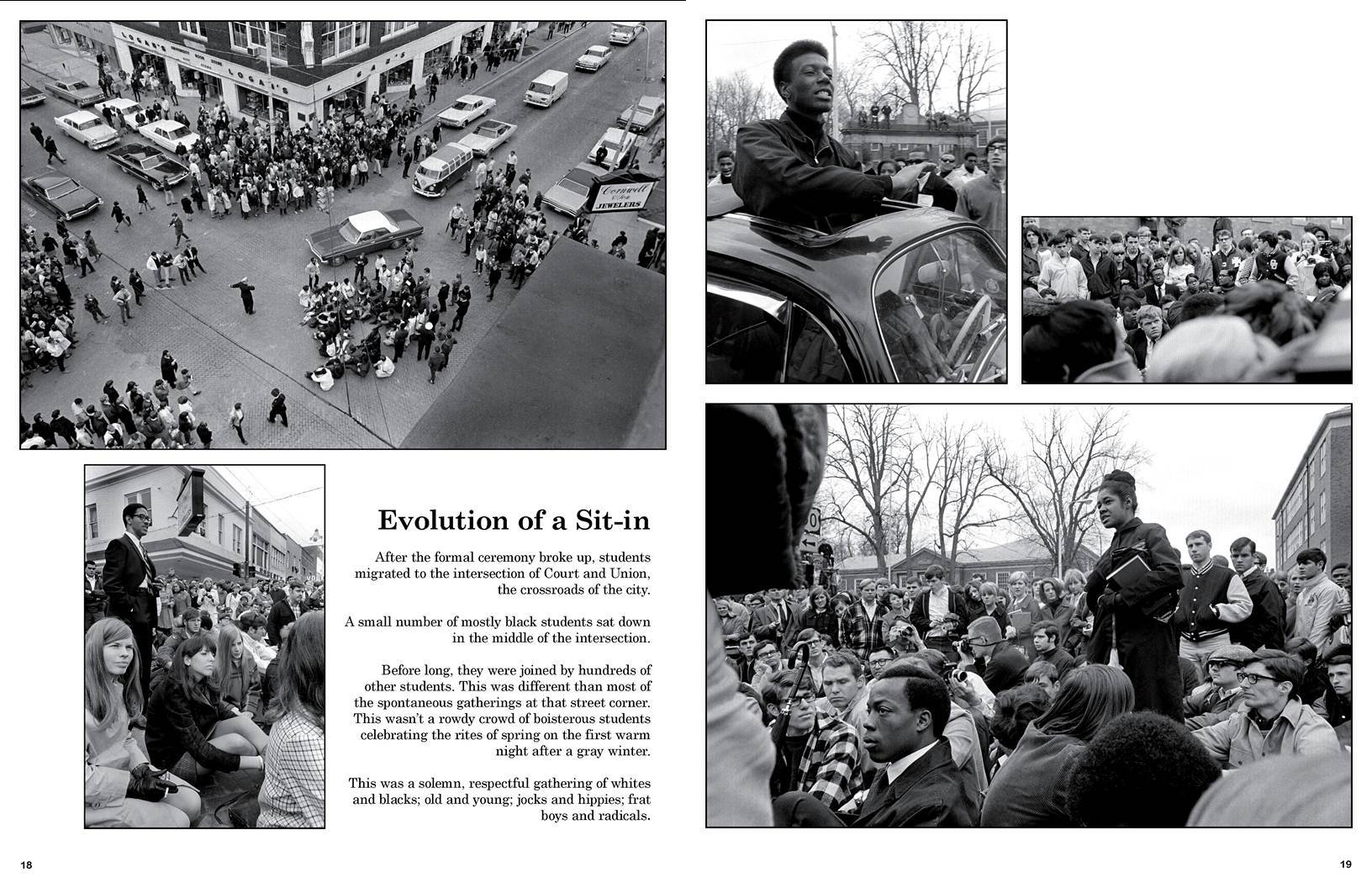
After the formal ceremony ended, the crowd started to disperse. Many of them walked a block north to Court and Union, the main intersection in town.
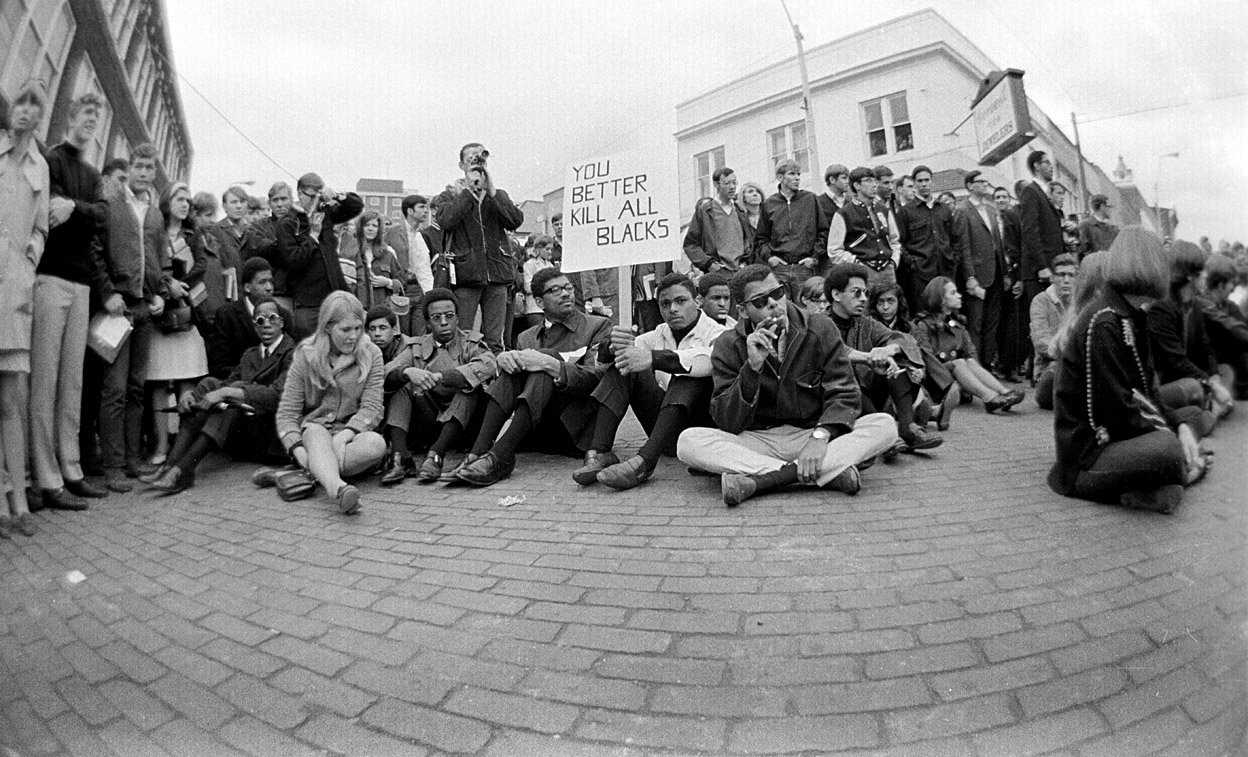
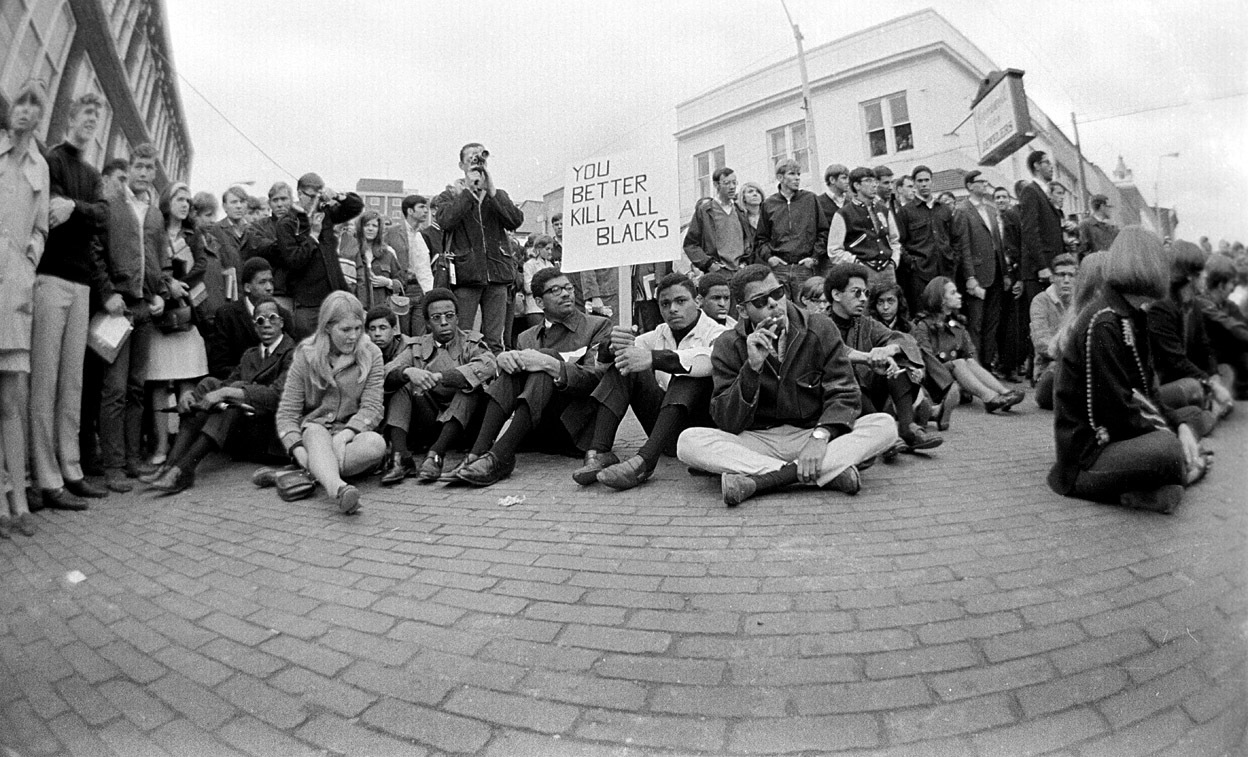
A small group of students sit down
A small group of students sat down in the middle of the intersection.
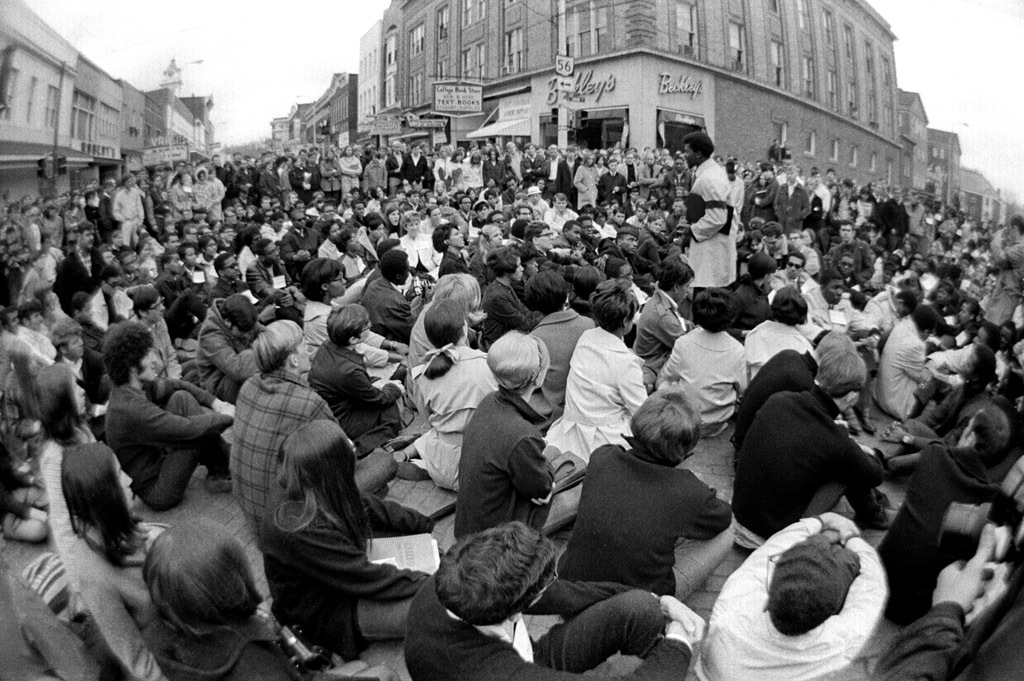
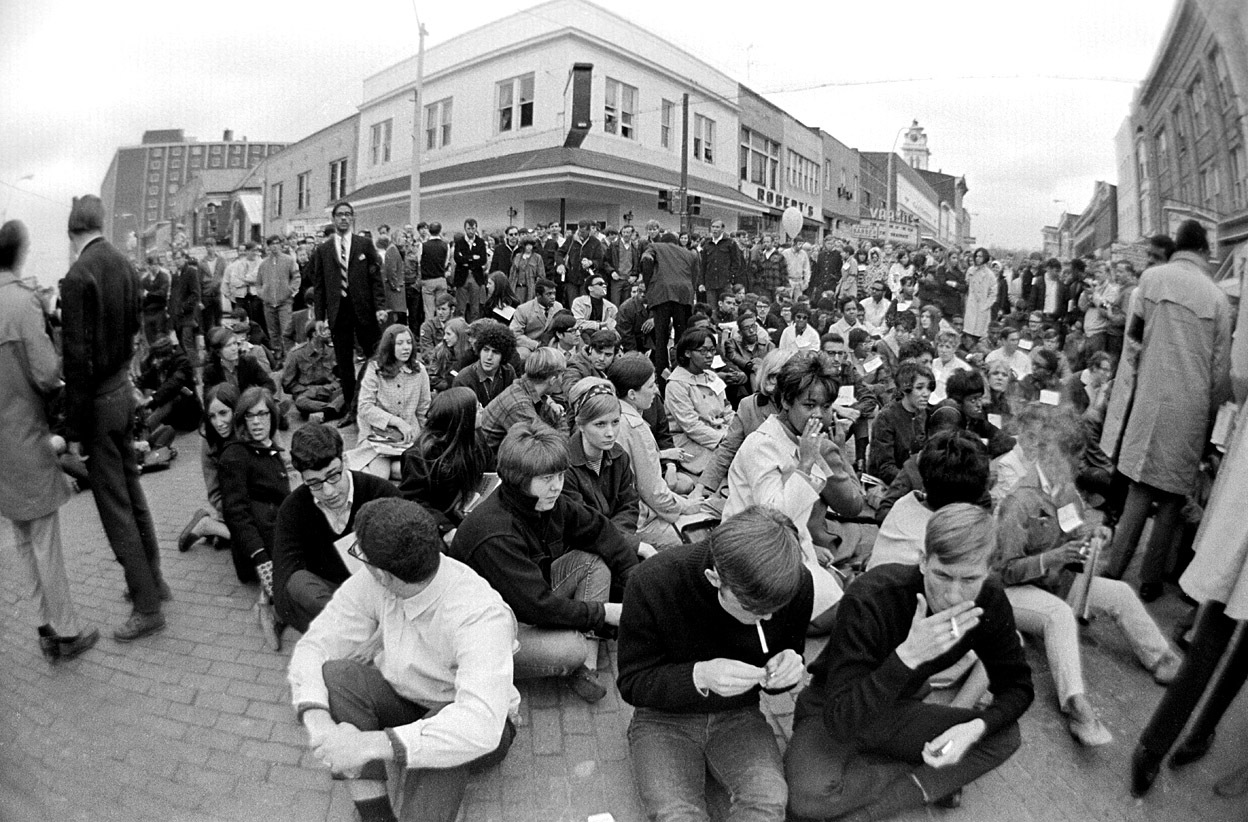
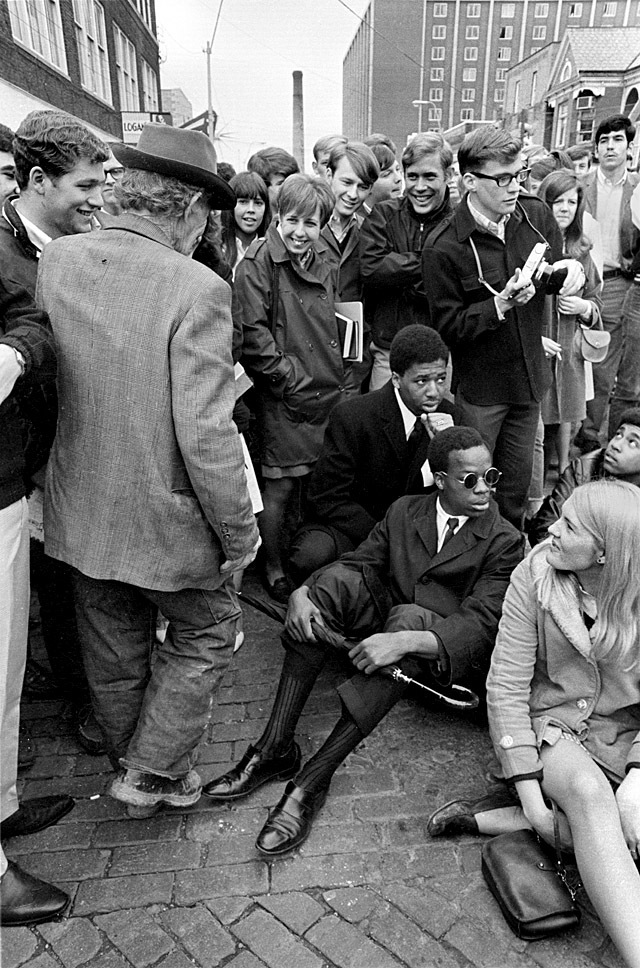
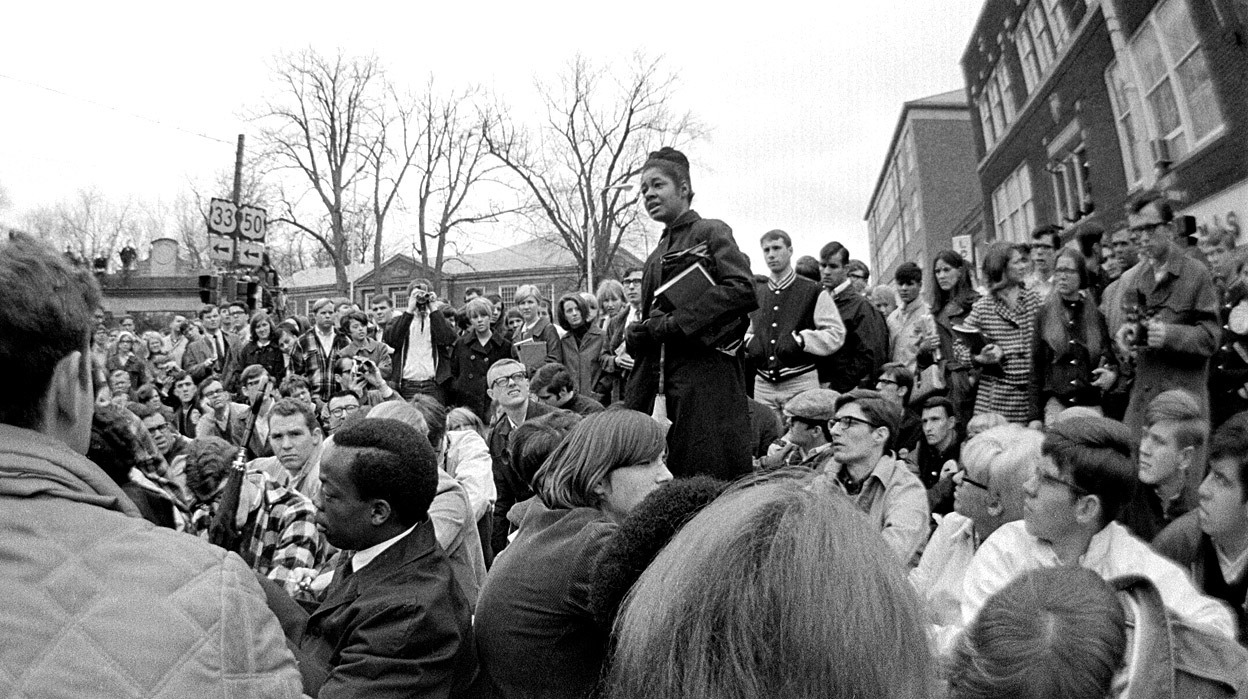
The crowd grows
More and more students joined the sit-in. Again, uncharacteristically, this wasn’t your normal group of rowdy drunk students who block this intersection on the first warm spring night after a cold winter. You can tell from the expressions that this is a serious occasion.
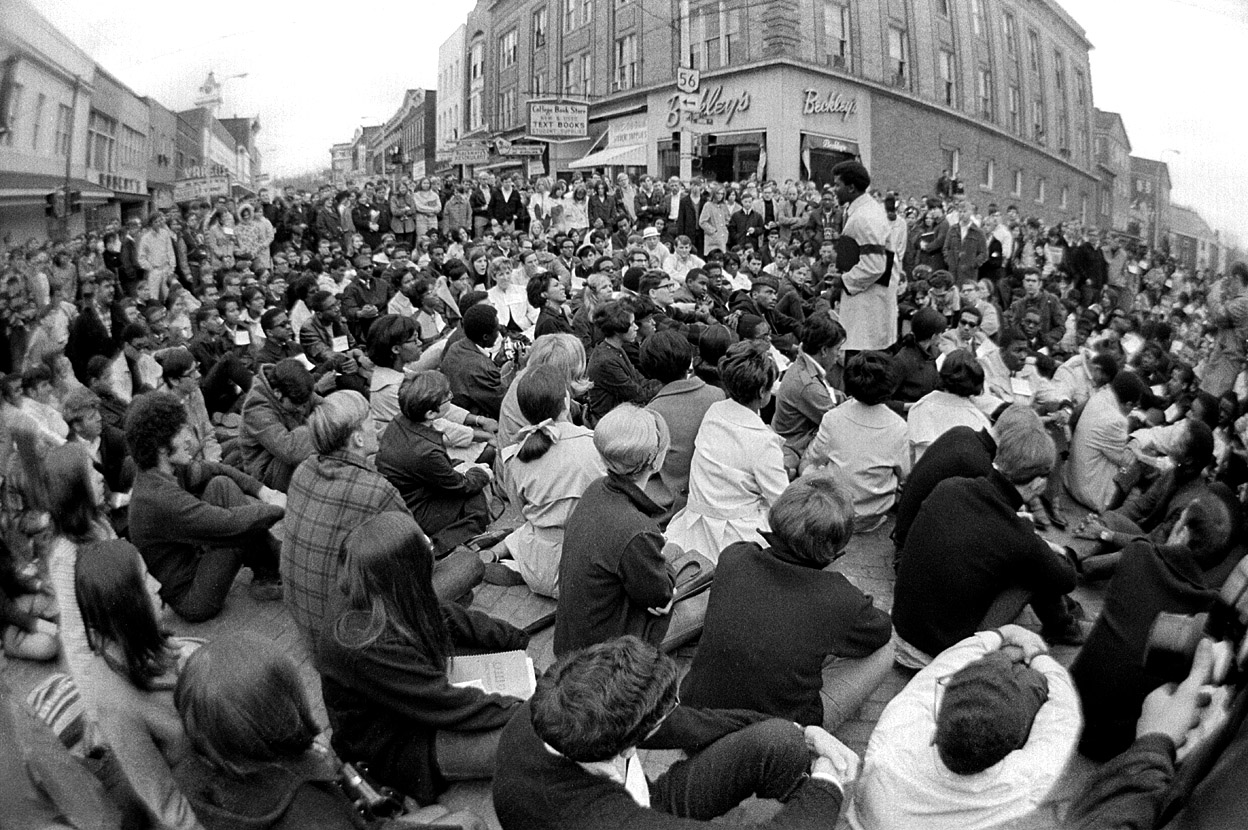
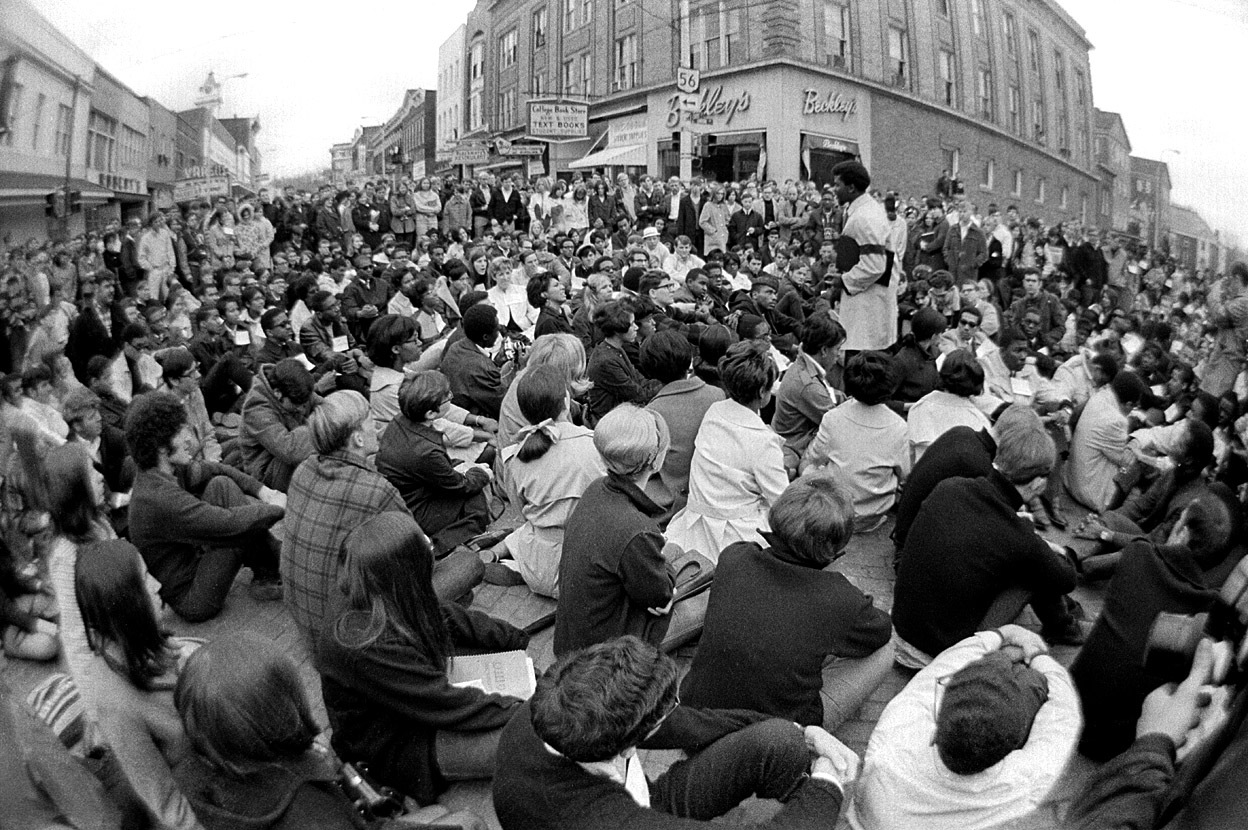
All of downtown is blocked
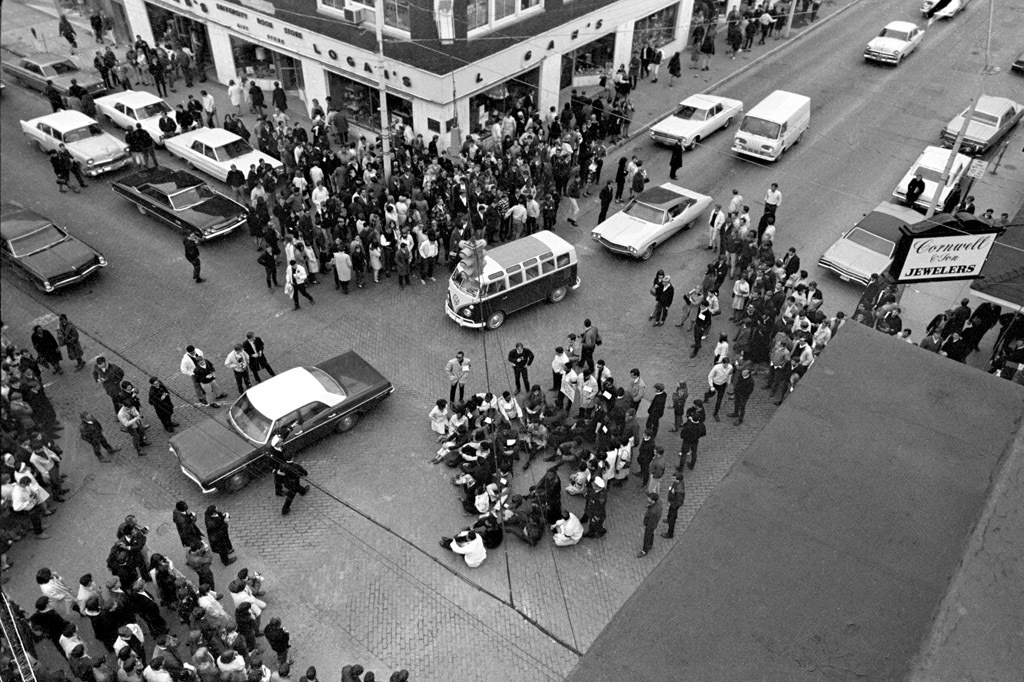
Finally, the whole intersection for at least a half-block in all directions was full of students.
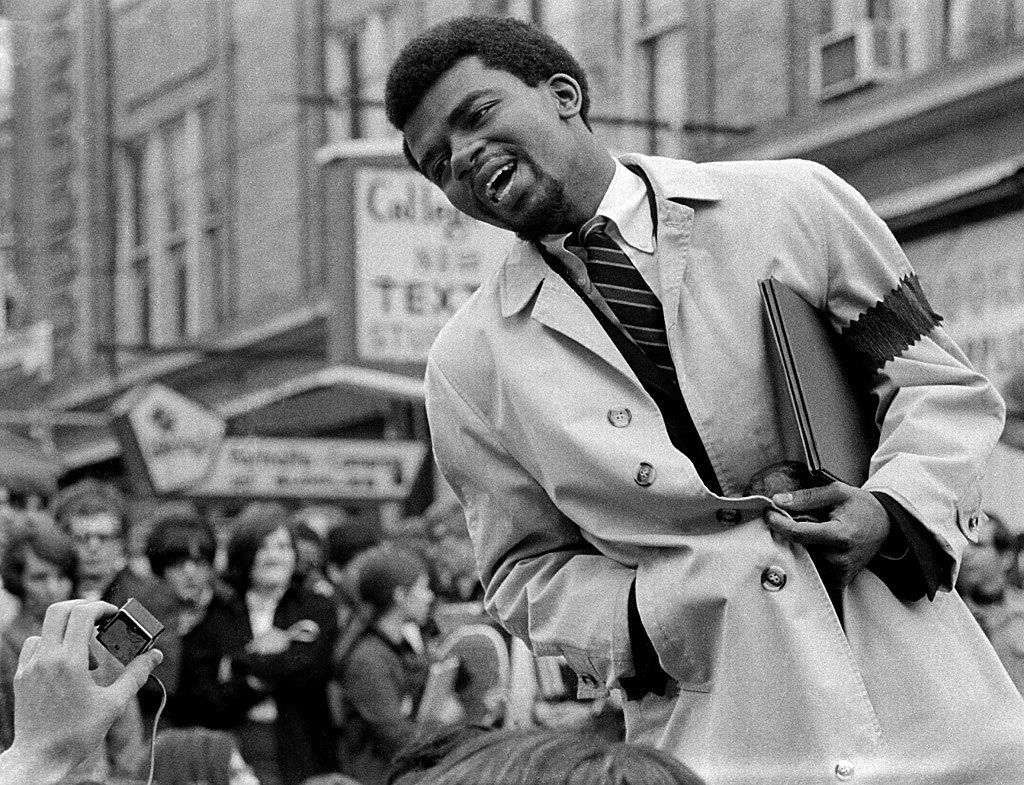
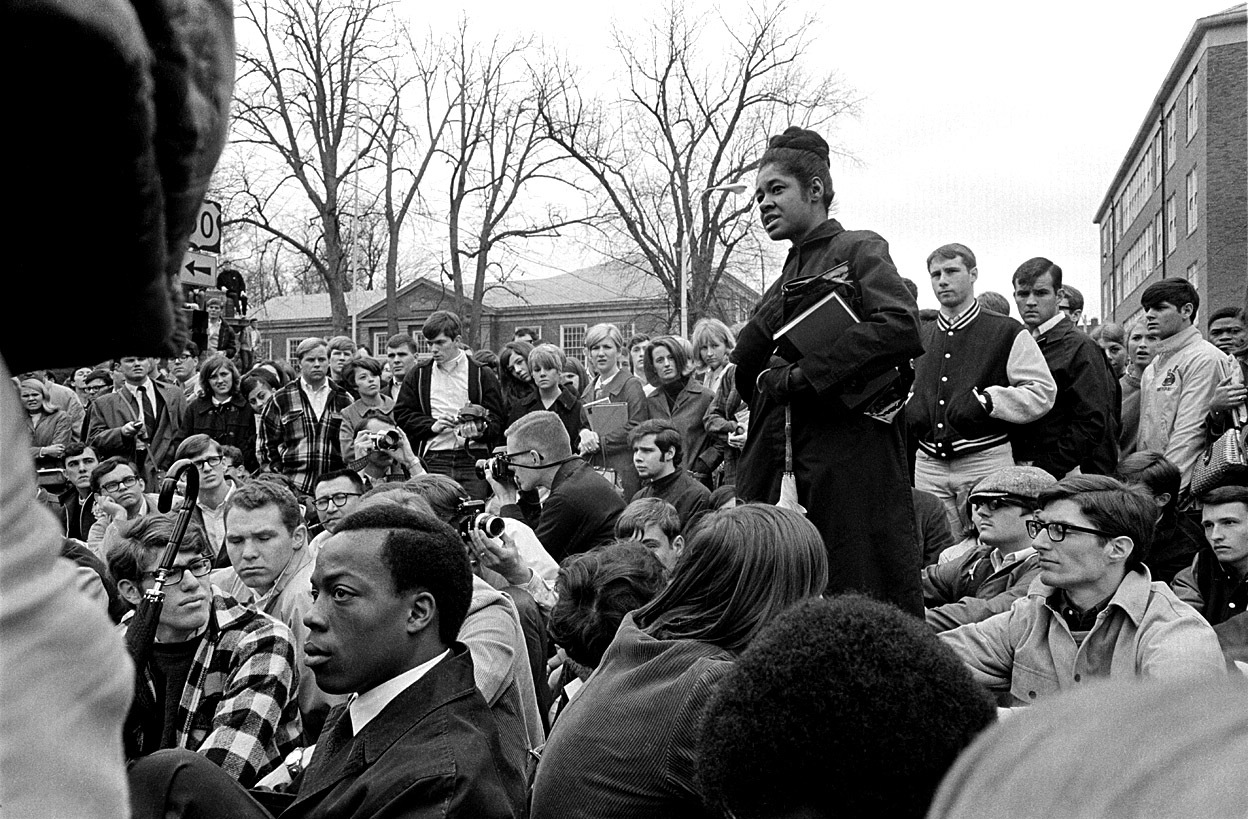
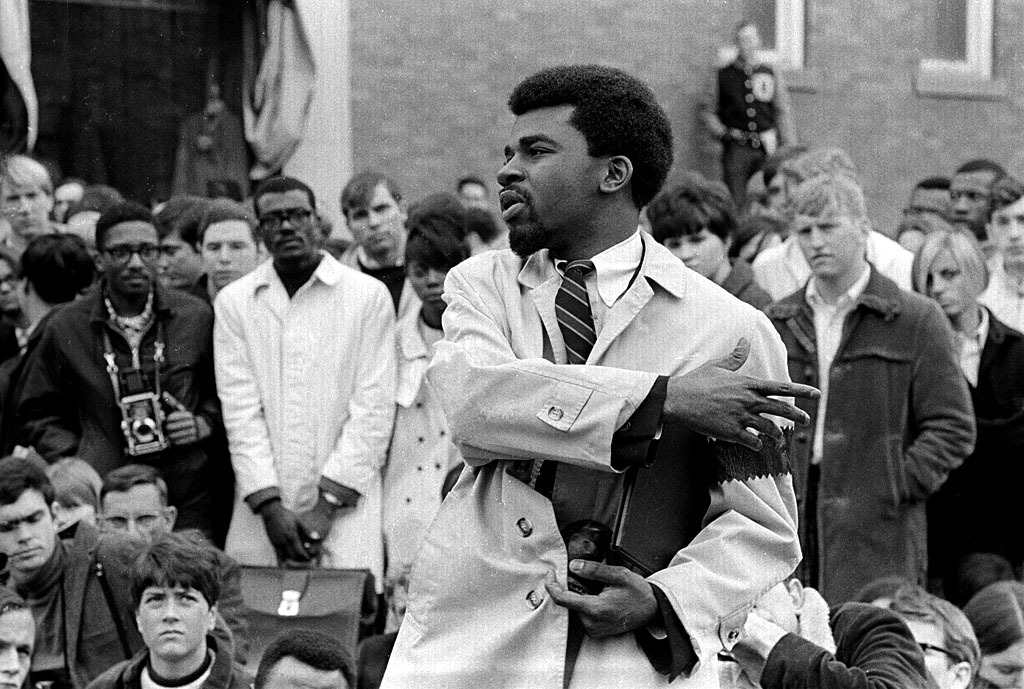
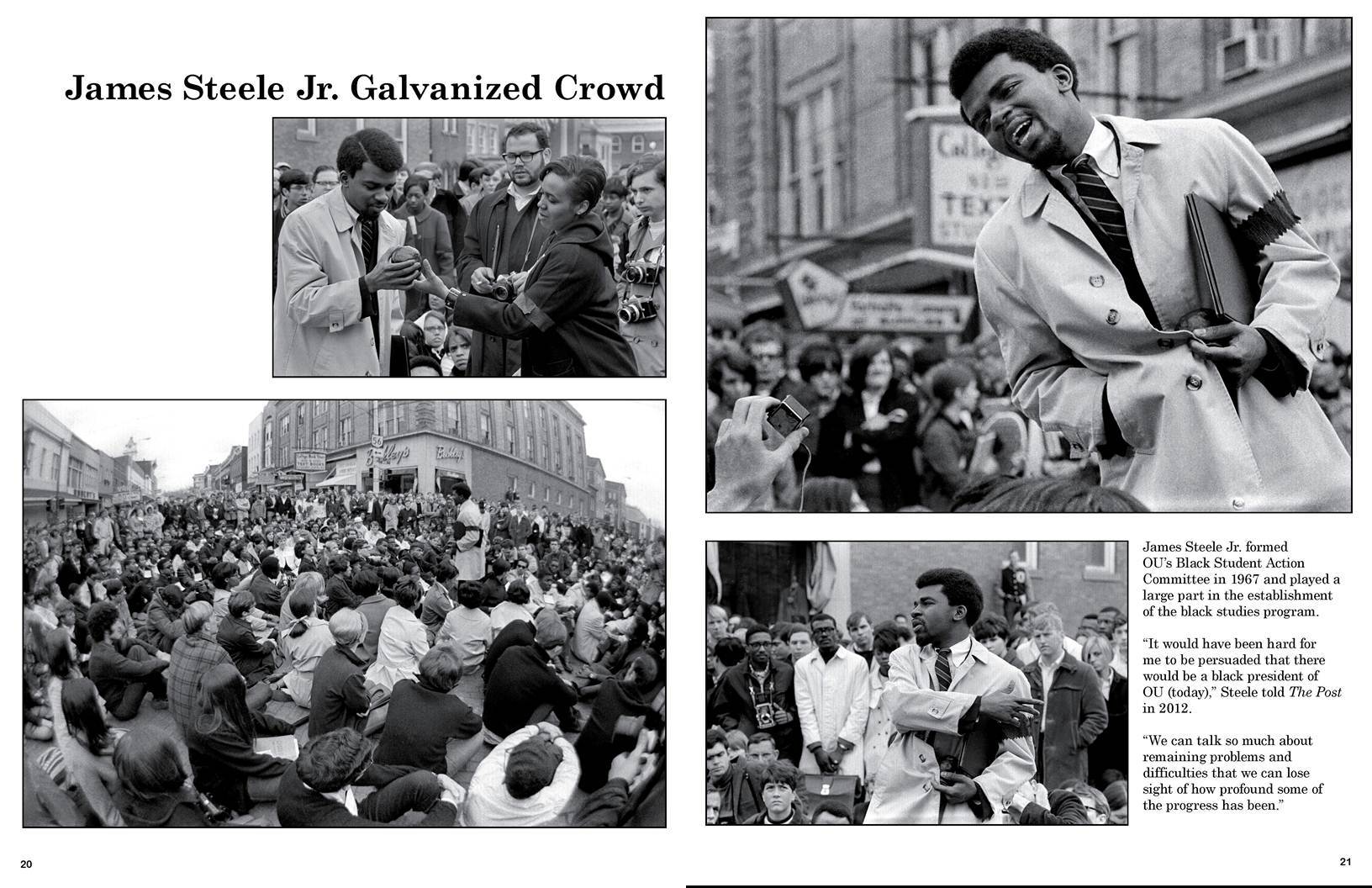
James Steele addresses crowd
James Steele, who was one of the speakers at the formal ceremony, addresses the crowd.
I should explain something before we get to the part where things turn ugly. Ohio University was founded in 1804, so the local police have a lot of experience in dealing with unruly students.
The usual procedure was to see if they’d break up on their own. If not, a half-dozen cops would show up in “bats and hats,” somebody would read the riot act over a bullhorn, then there would be some pushing and shoving, followed by everybody heading back on campus.
Rarely were any arrests made. Some bricks and bottles might get thrown and a few windows could get broken, but I never heard of any looting of the downtown stores. The police didn’t even use teargas at any event I covered until the spring of 1970.
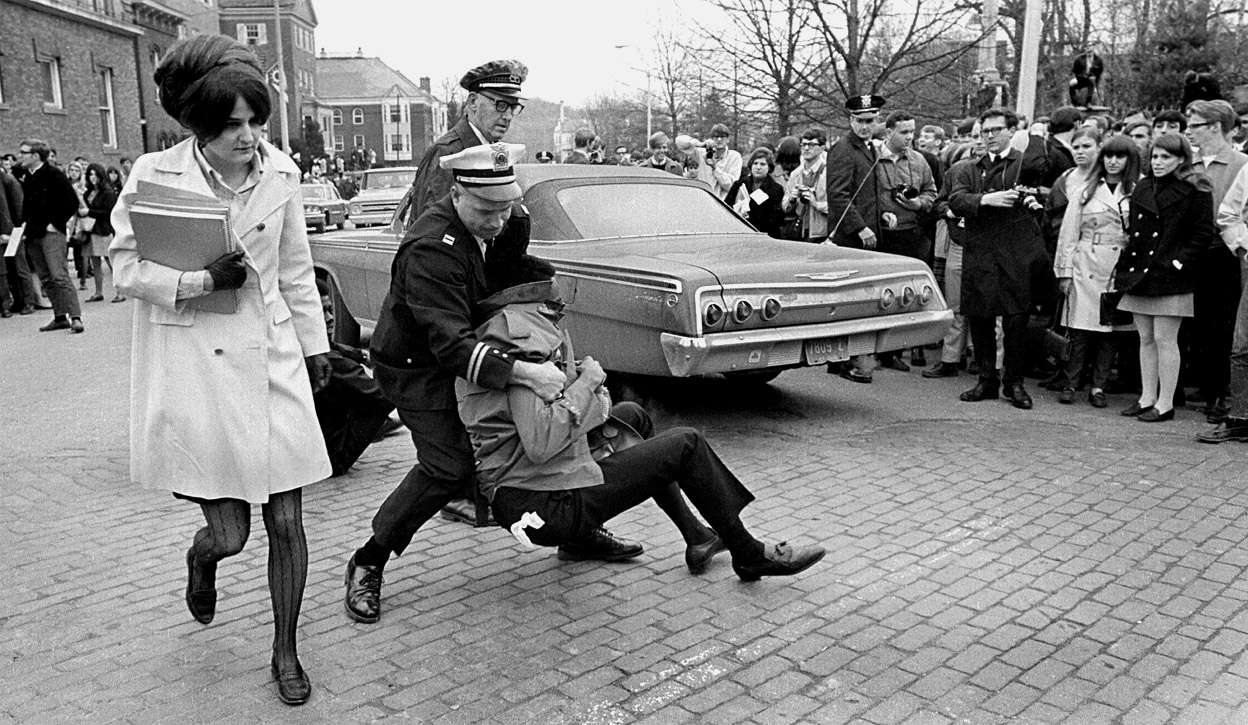
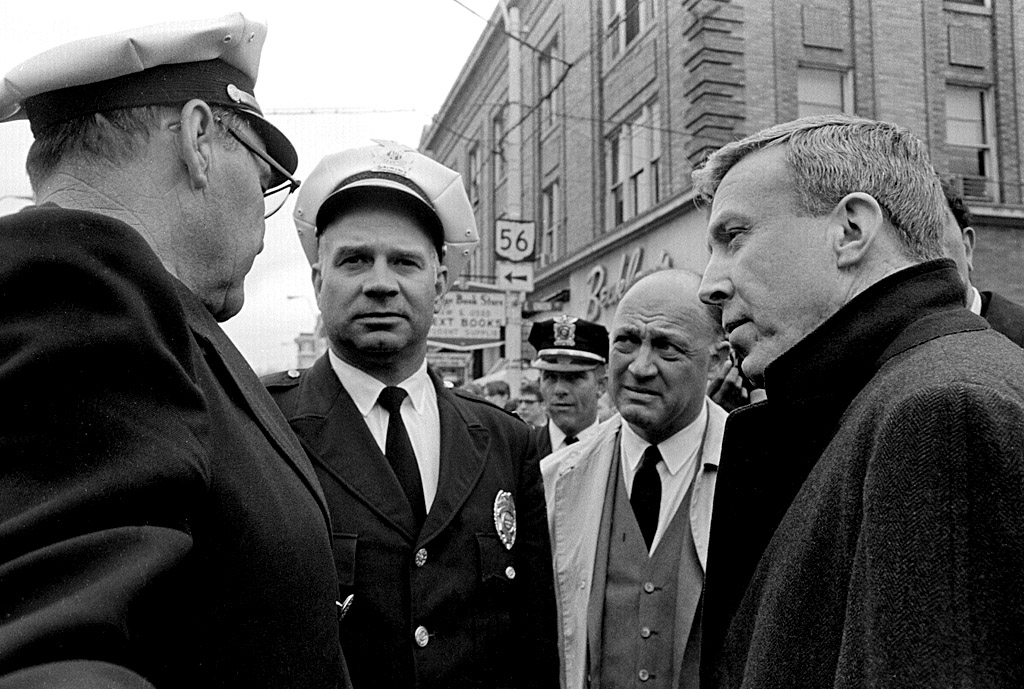
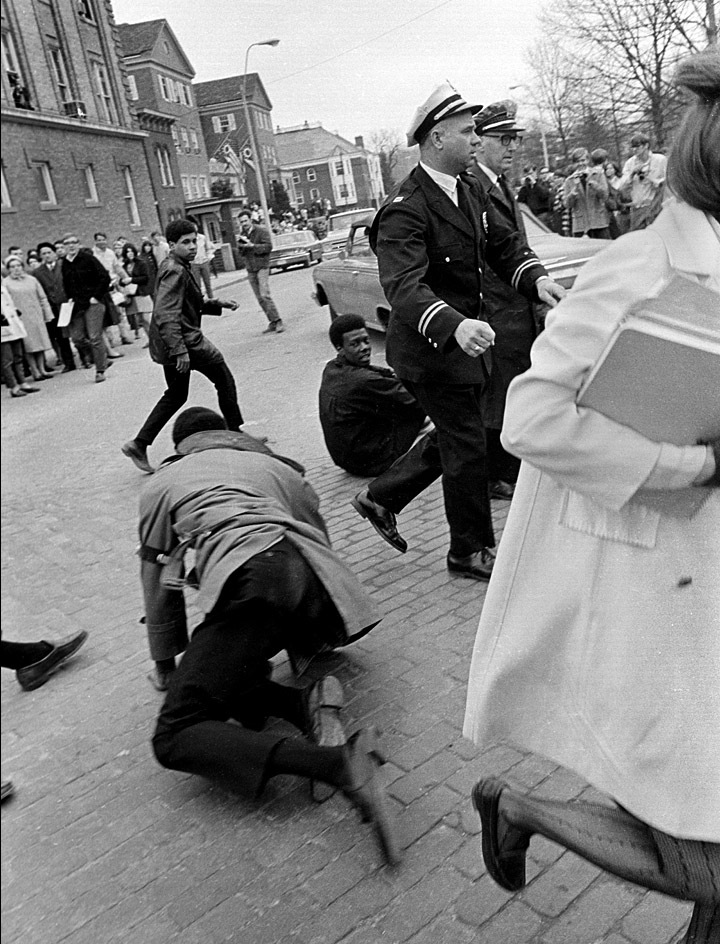
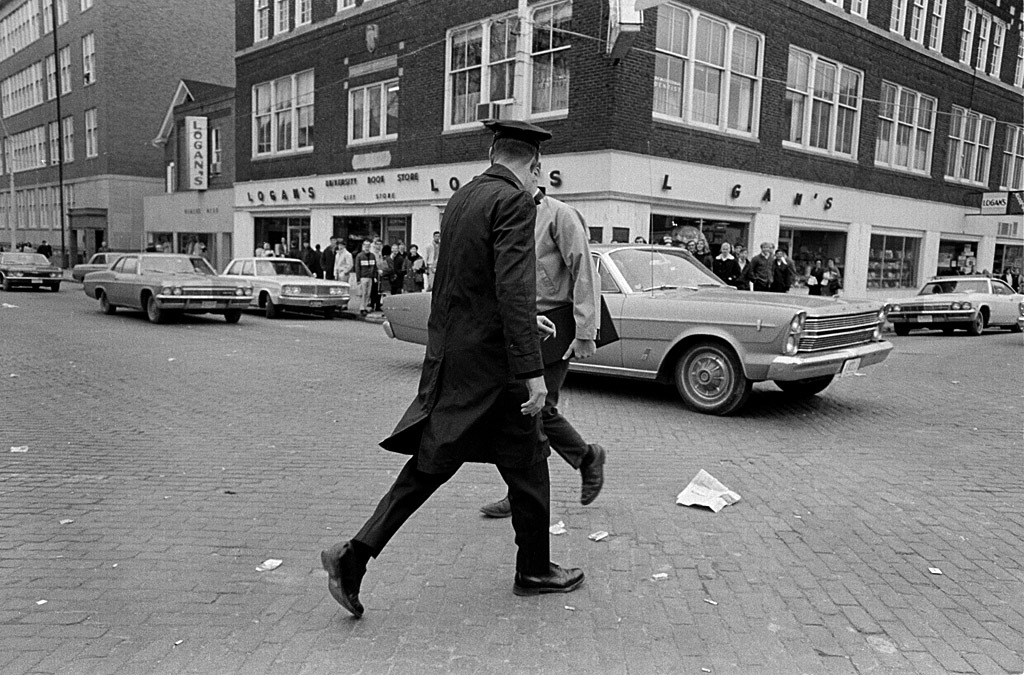
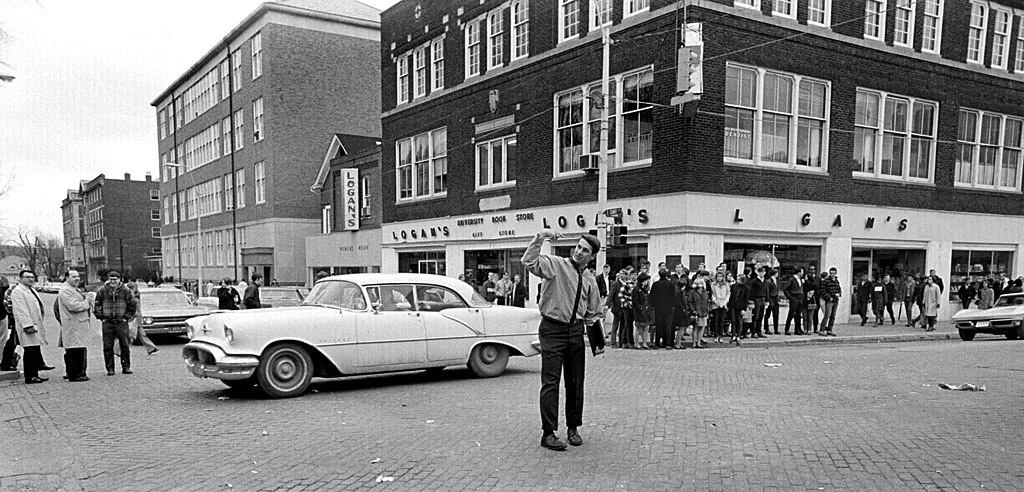
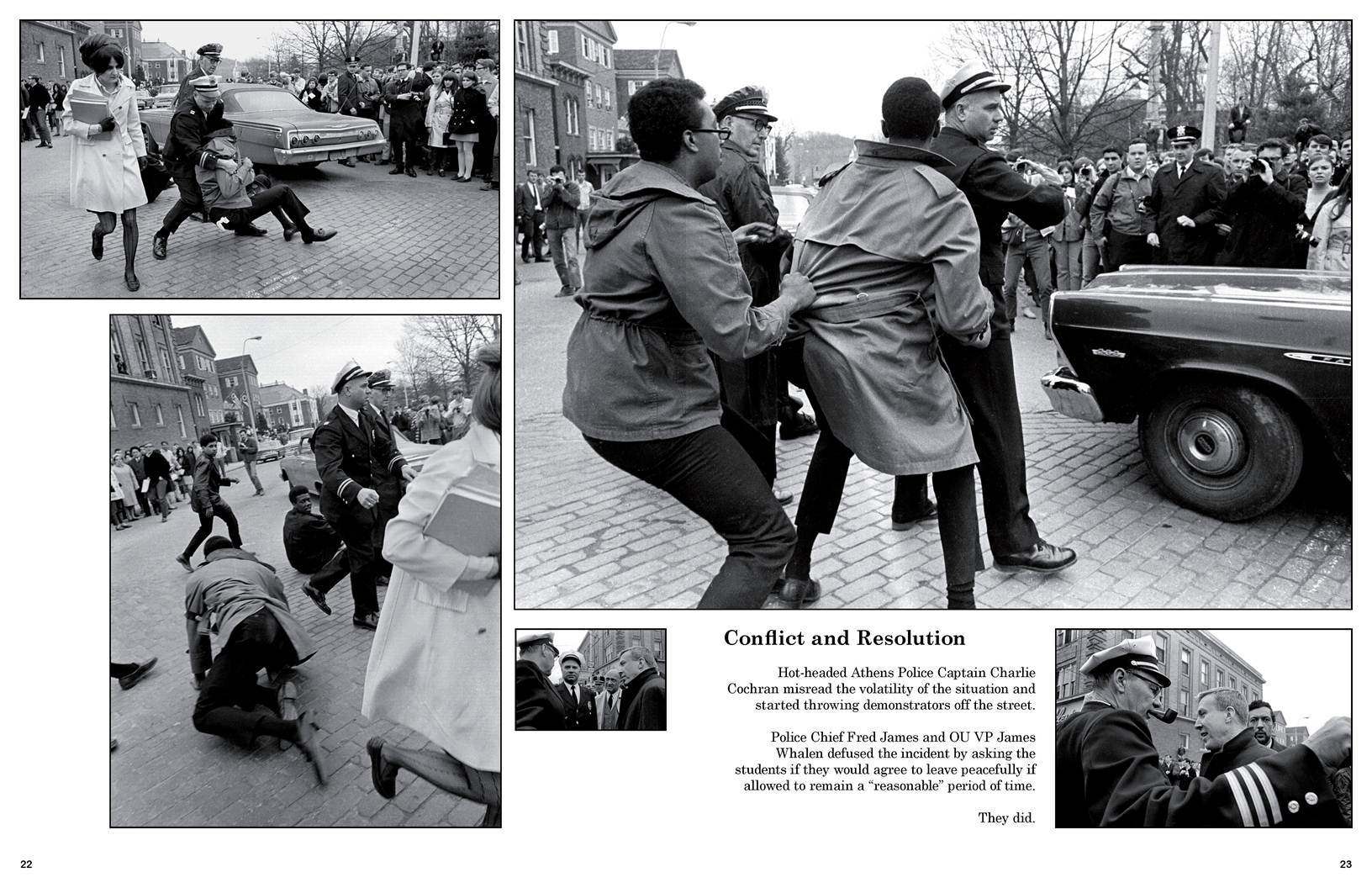
Captain Charlie Cochran didn’t follow script
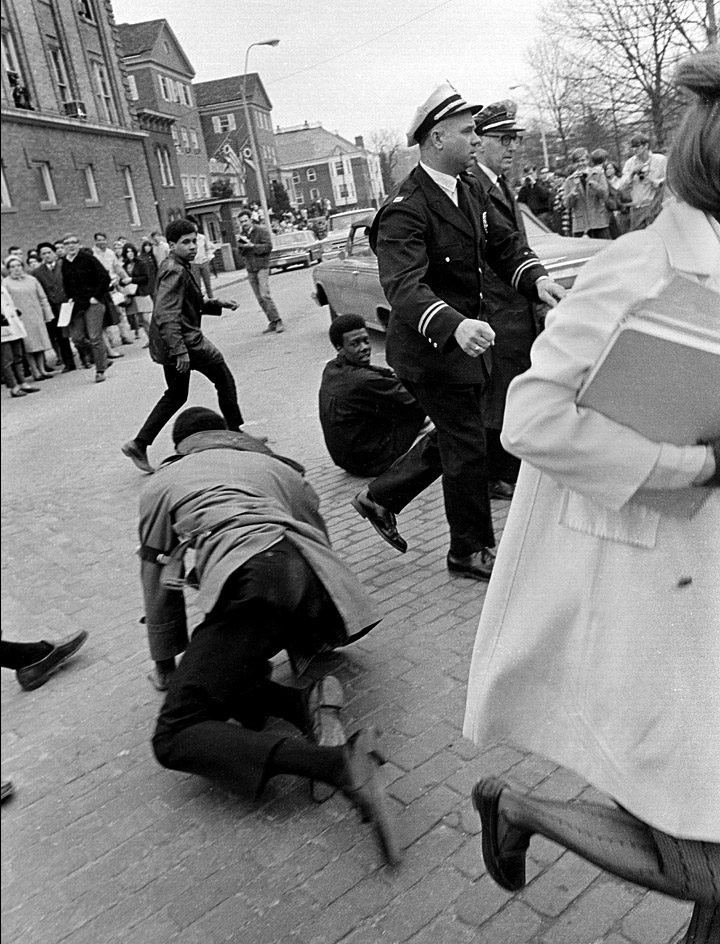
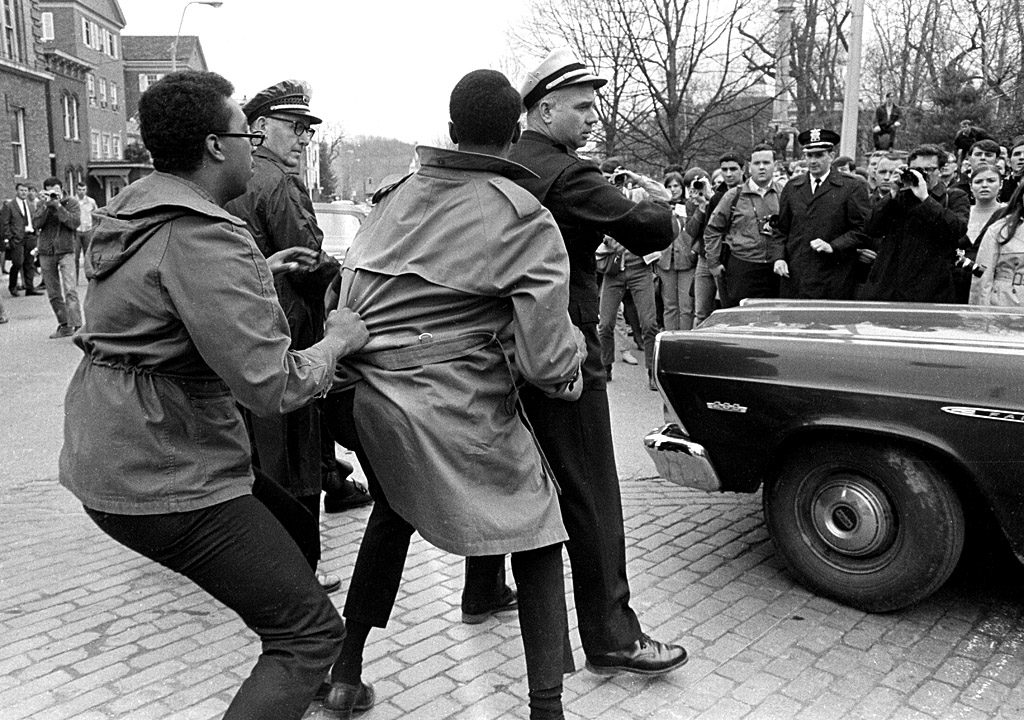
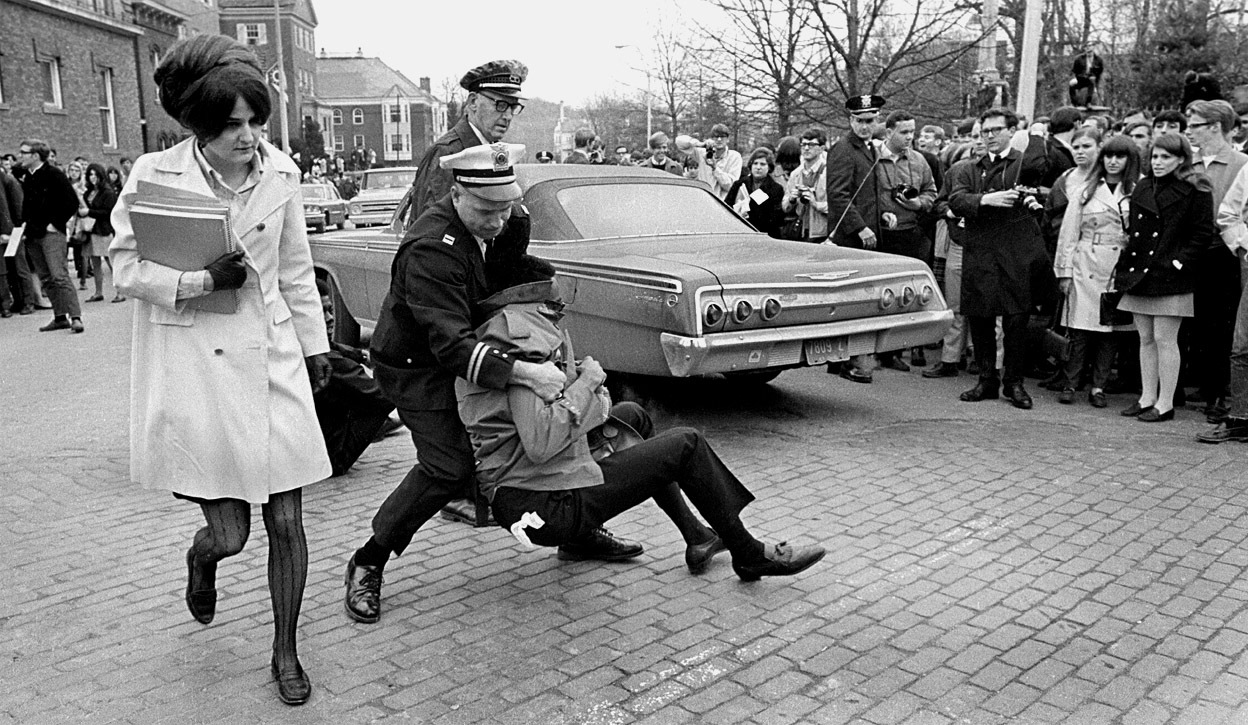
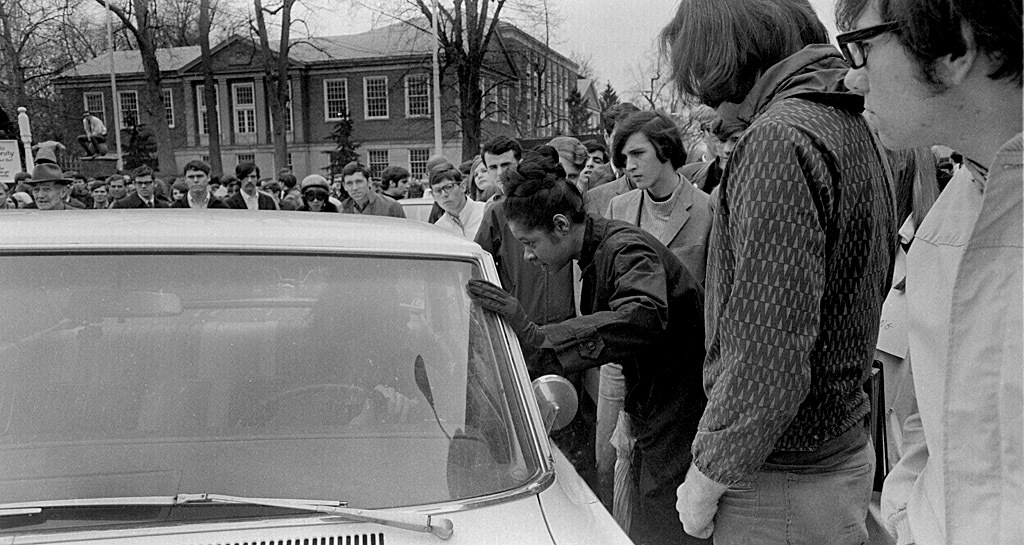
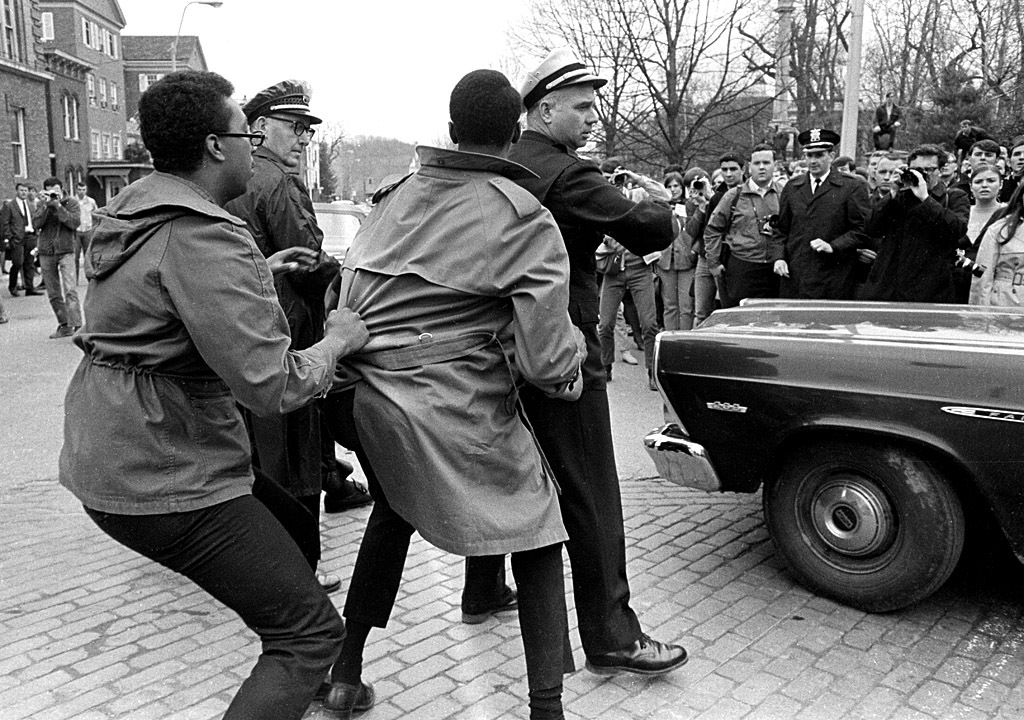
Athens Police Captain Charlie Cochran, always a hothead, didn’t follow the script. Instead of giving the normal order to disperse and having enough officers present to enforce it, he waded into the demonstrators and literally threw them off “my street.”
Seriously misread crowd
Charlie didn’t realize this wasn’t your normal unfocused mob of kids out for a good time. These folks had seen their national leader gunned down. They were hurting and looking for a place to direct their anger. They didn’t take kindly to being manhandled on a day of mourning.
Cooler head prevails
A friend grabbed the fellow who had been thrown to the ground just before he could retaliate. If the two had tangled, I’m convinced the whole crowd would have joined in and someone would have been seriously hurt.
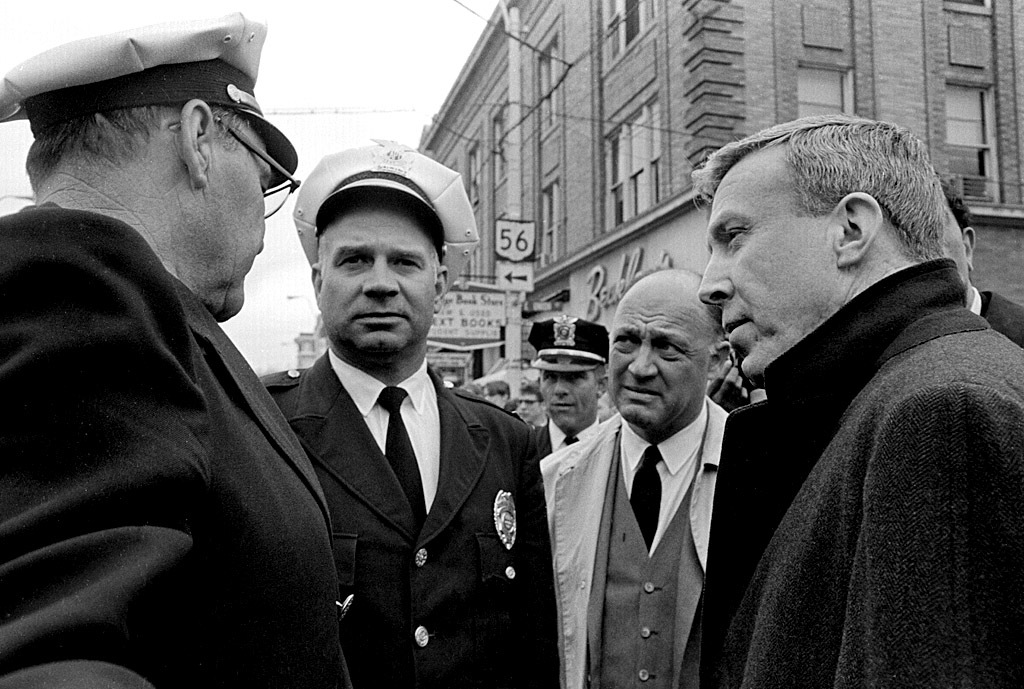
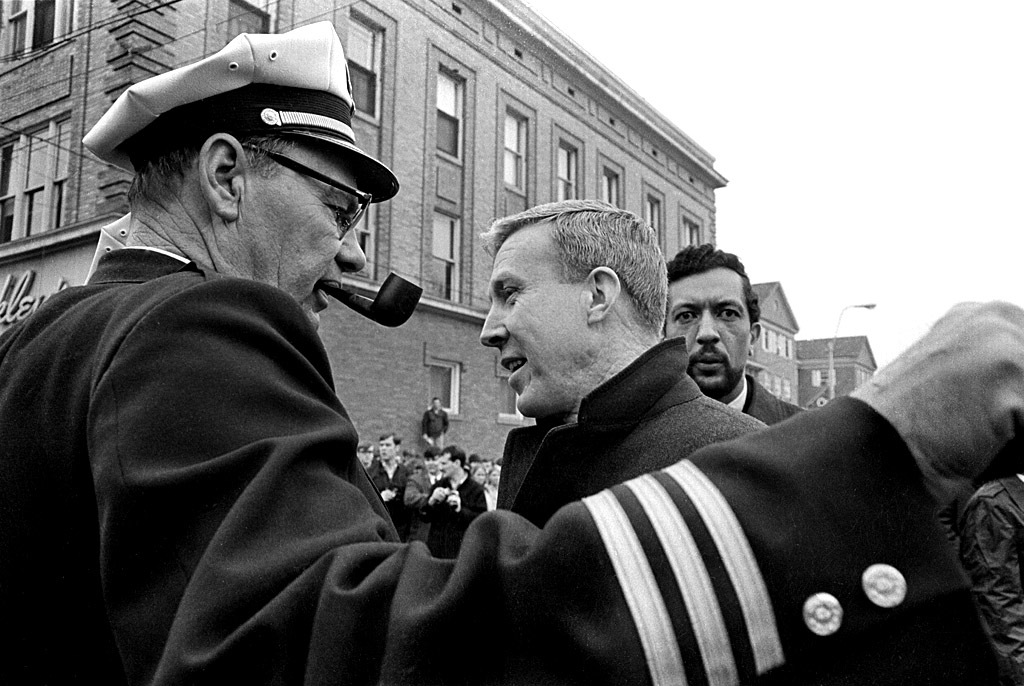
Chief, James Whalen works out compromise
Before things could get out of hand, Police Chief Fred James, left, and James Whalen, university vice president for administrative affairs, right, worked out a compromise.
The chief agreed to allow the students to continue the demonstration for a “reasonable amount of time” and the students agreed to leave peacefully after that.
Charlie didn’t look happy to have me part of this confab, but this isn’t the first nor the last time that we’d have an awkward moment together. I’m not sure who the concerned citizen in the middle was.
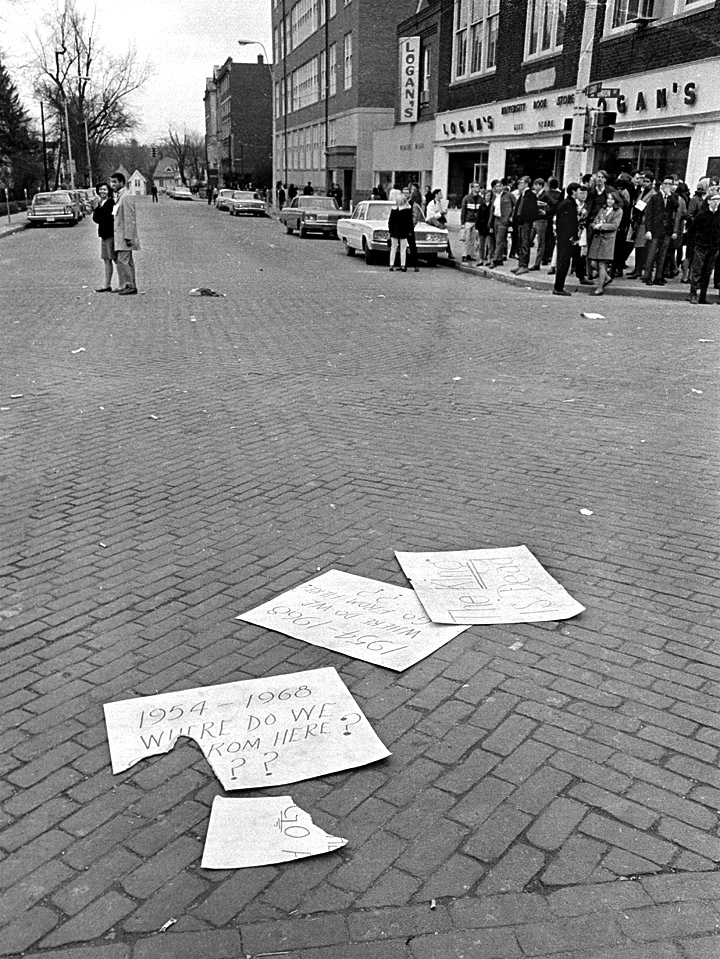
Before long, intersection open
The bulk of the crowd retreated to the corners, then, after a “reasonable time,” everyone else moved on.
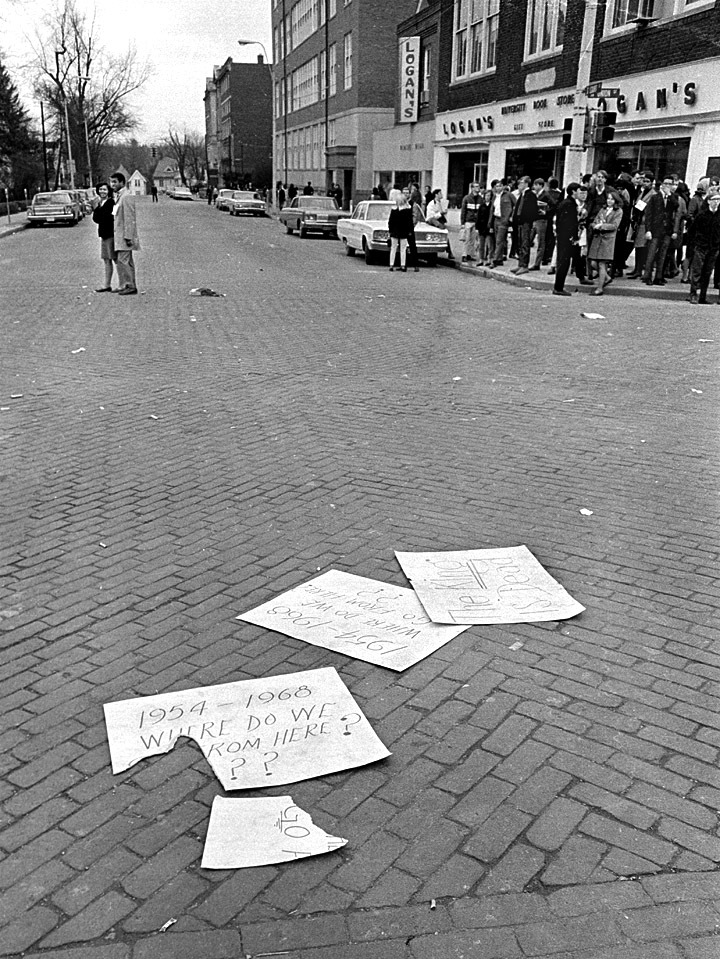
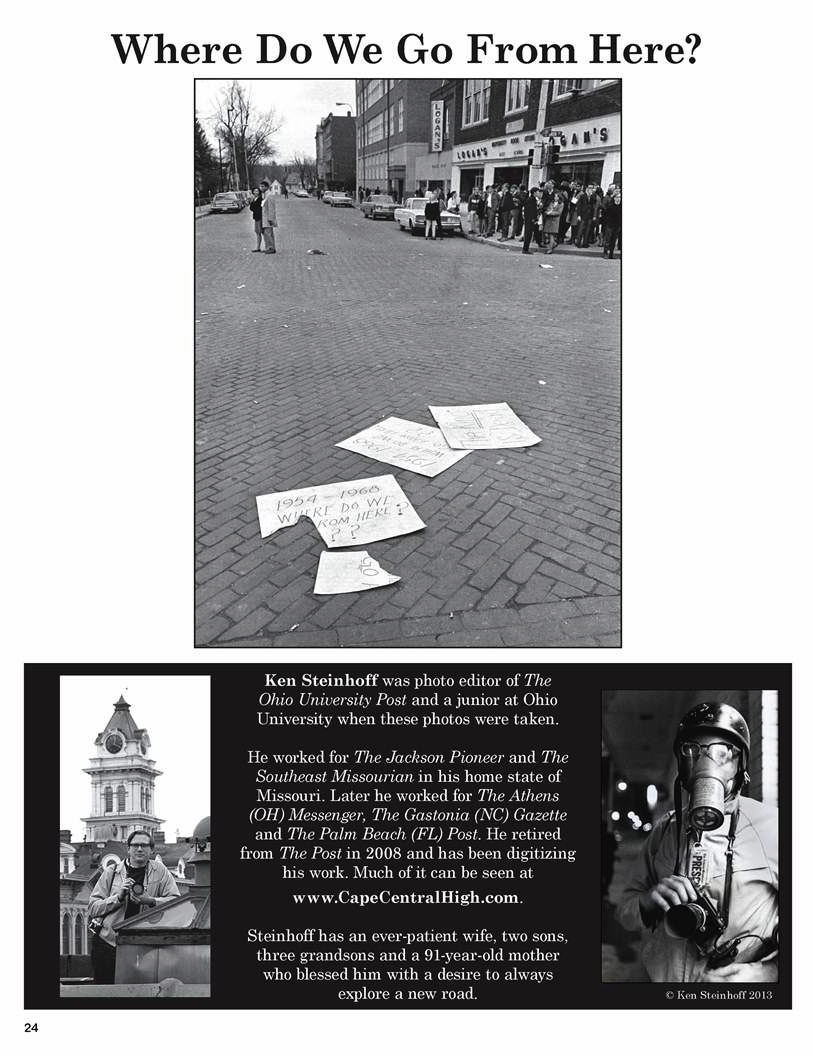
“Where do we go from here?”
A writer in The Athena, the university yearbook, penned, “The King is Dead! It echoed in microphones; and hearts were horrified throughout the campus, country, and world. Martin Luther King Jr. started a dream, but a bullet couldn’t shatter it. Now, where will his dream go?
“We talk about the coup d’etats of South America and the street riots in Europe, but when will we stop destroying our Kennedys and Luthers? Let us not scatter after the black arm bands have been put away.”
I’ve included a wide variety of photos. If you were there that day, you might want to share them with your grandkids. Click on any photo to make it larger, then click on the left or right side of the image to move through the gallery.
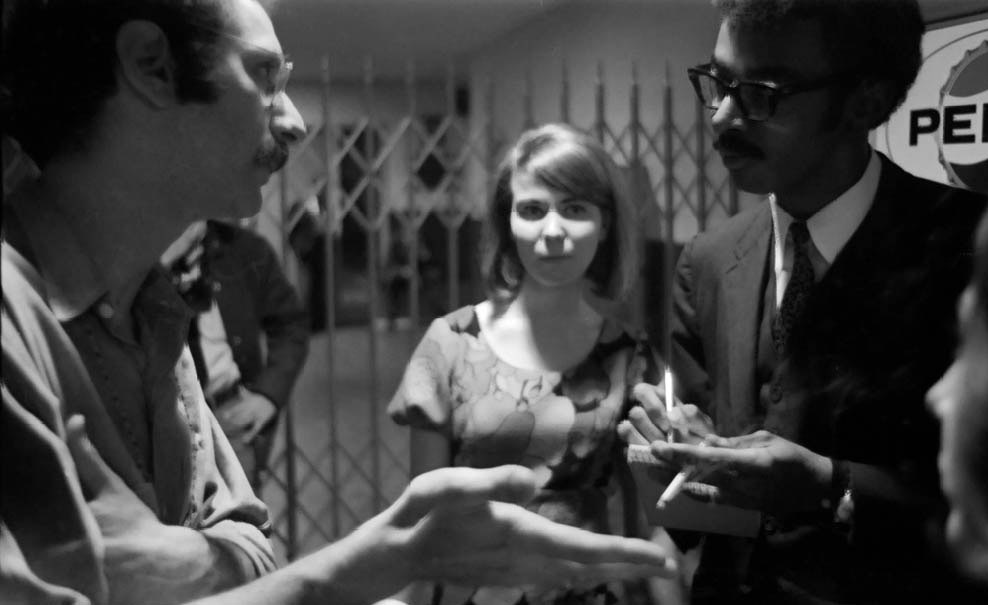
Post and Athena folks, I’m pretty sure I’ve spotted Clarence Page, Joyce Halasa, Ed Pieratt, Todd Schofer and Tom Price. (Now that I think of it, I think this is a class I flunked because I didn’t turn in an assignment. Wonder if I could submit this for extra credit 43 years late.)
2013 Exhibit Catalog
In 2013, I was invited to put together an exhibit of the Day of Mourning photos for Sigma Gamma Rho, Inc., in conjunction with the College of Arts and Sciences, the Athens Historical Society and Museum, the Foster and Helen Cornwell Lecture Series, University College, the Campus Involvement Center, The Athens Messenger and The Post.
Here is a catalog of selected photos in the exhibit.
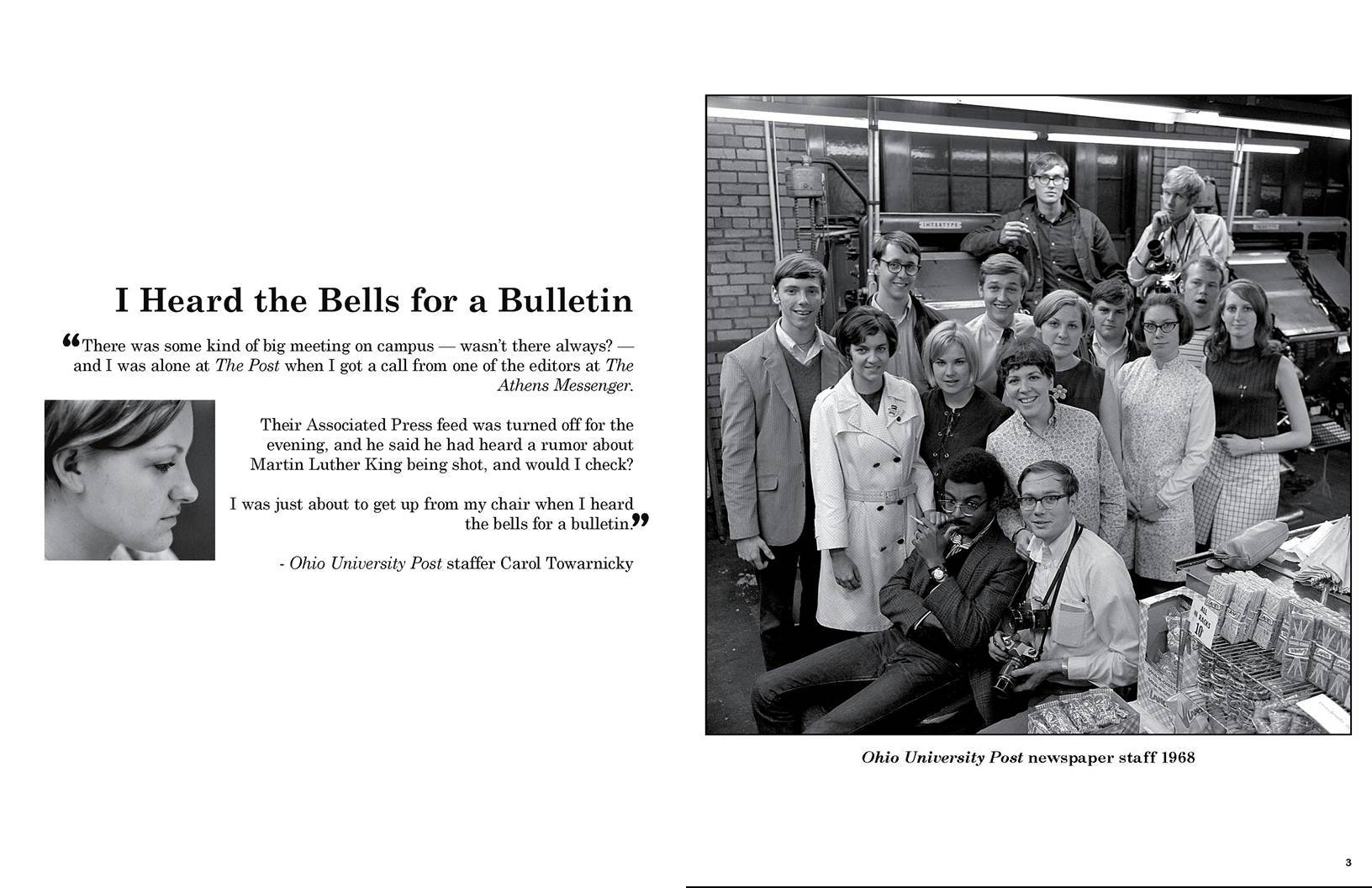
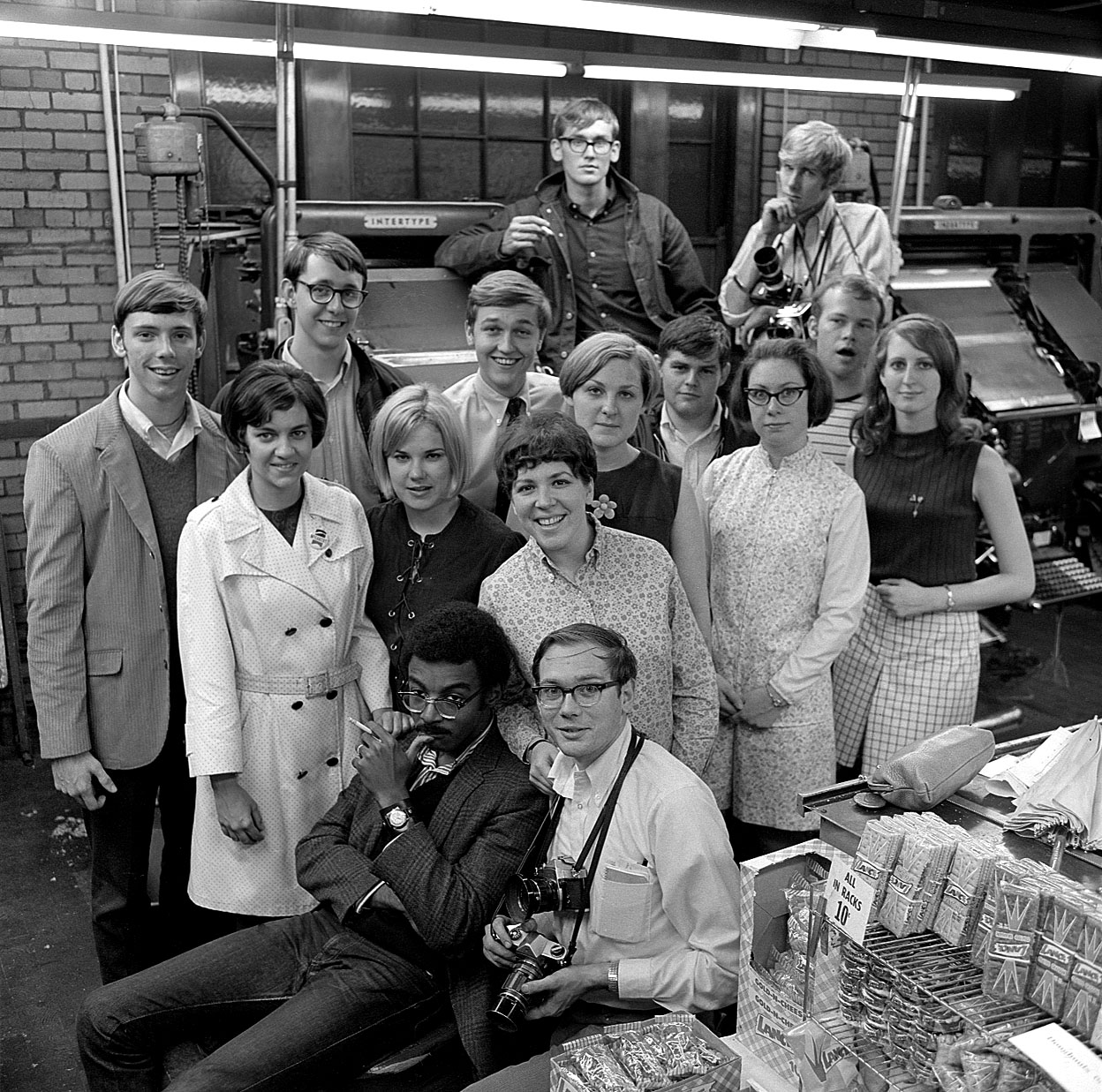
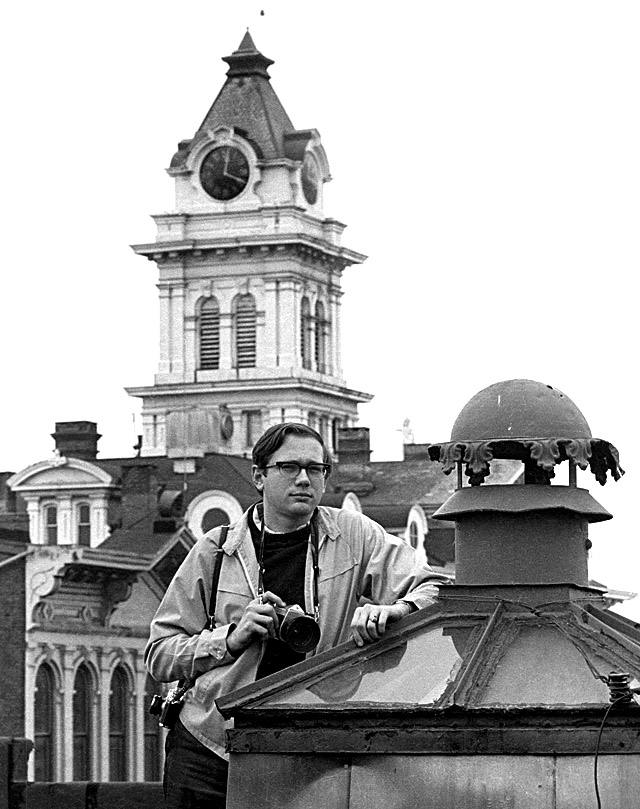
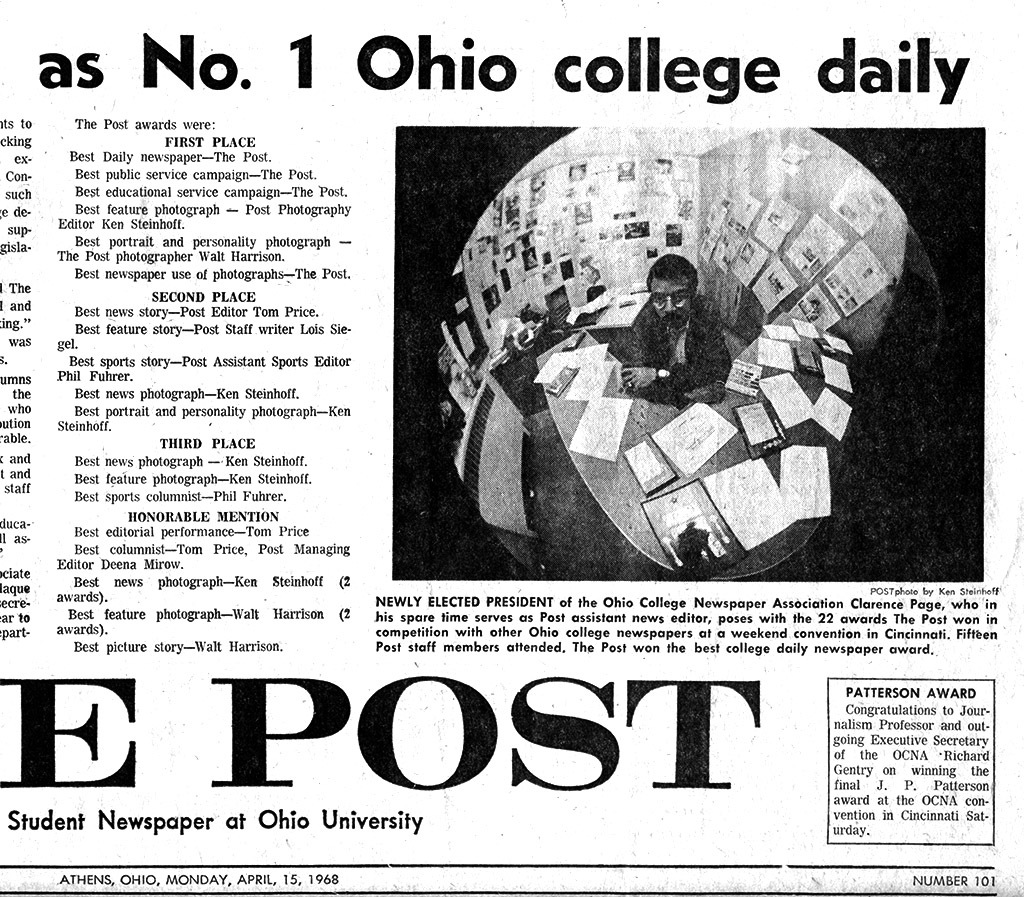
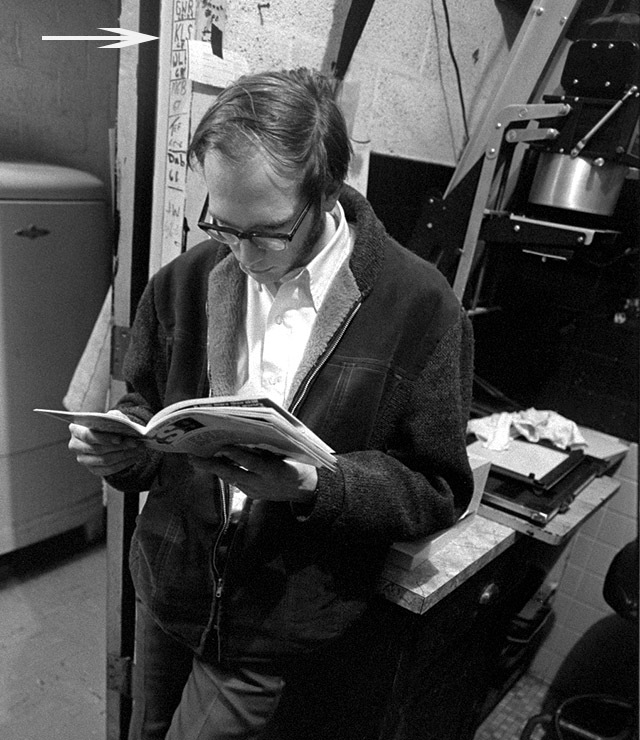
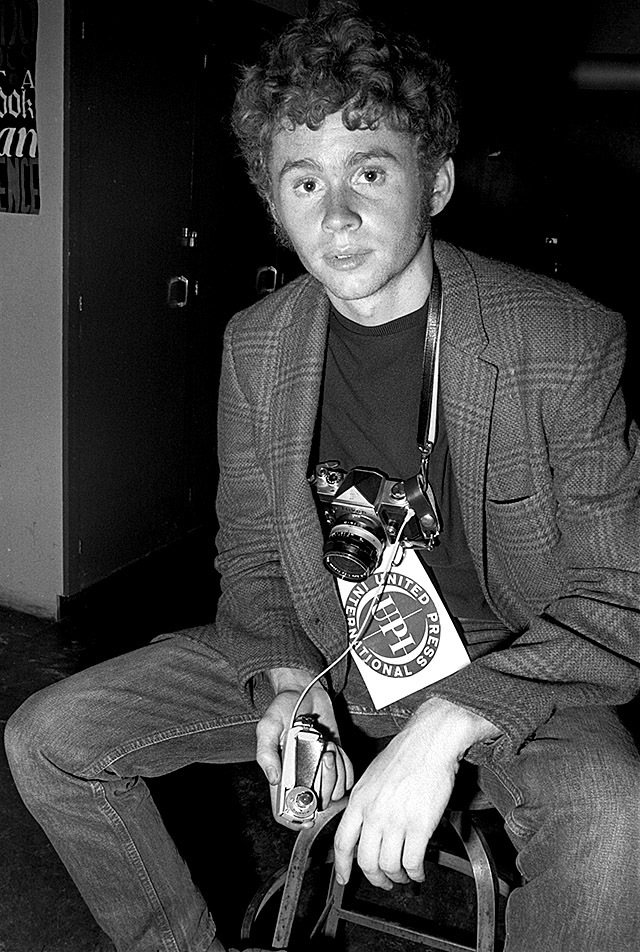
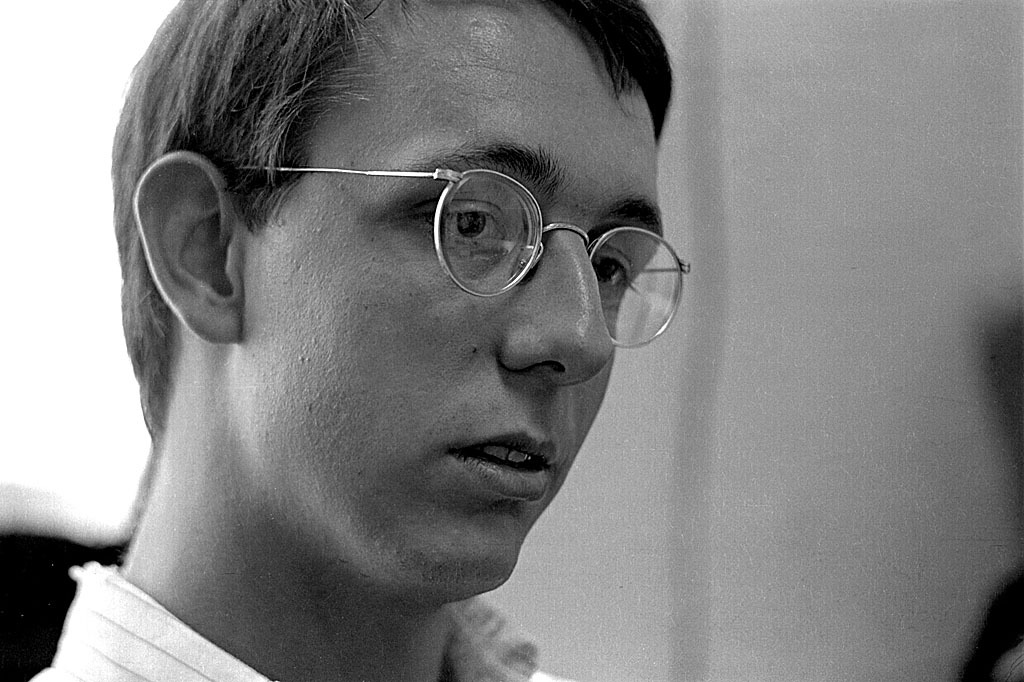
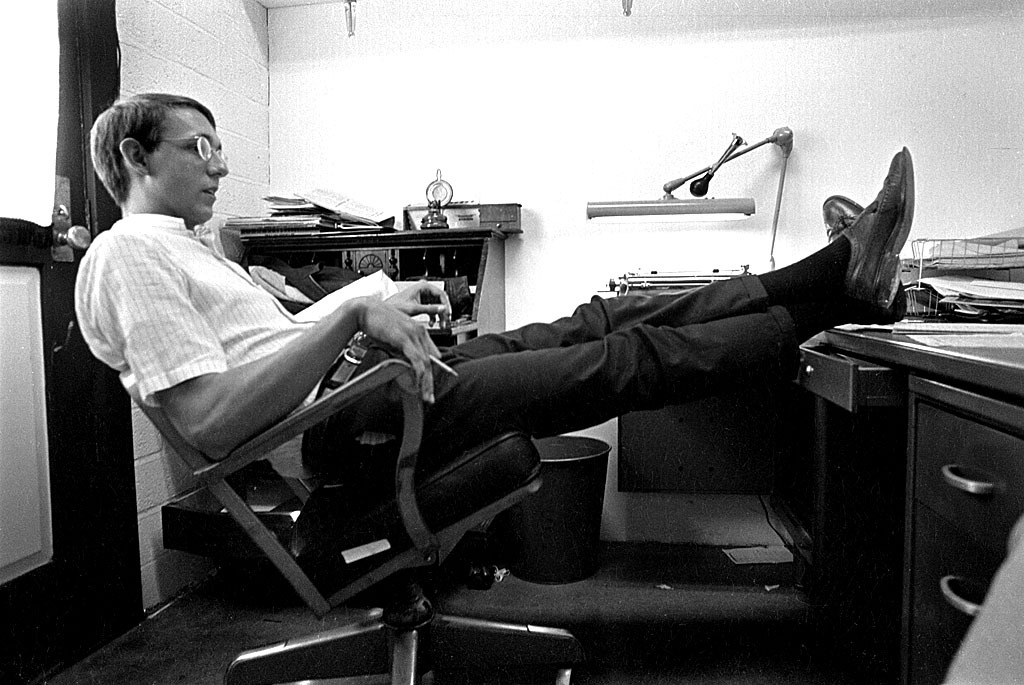
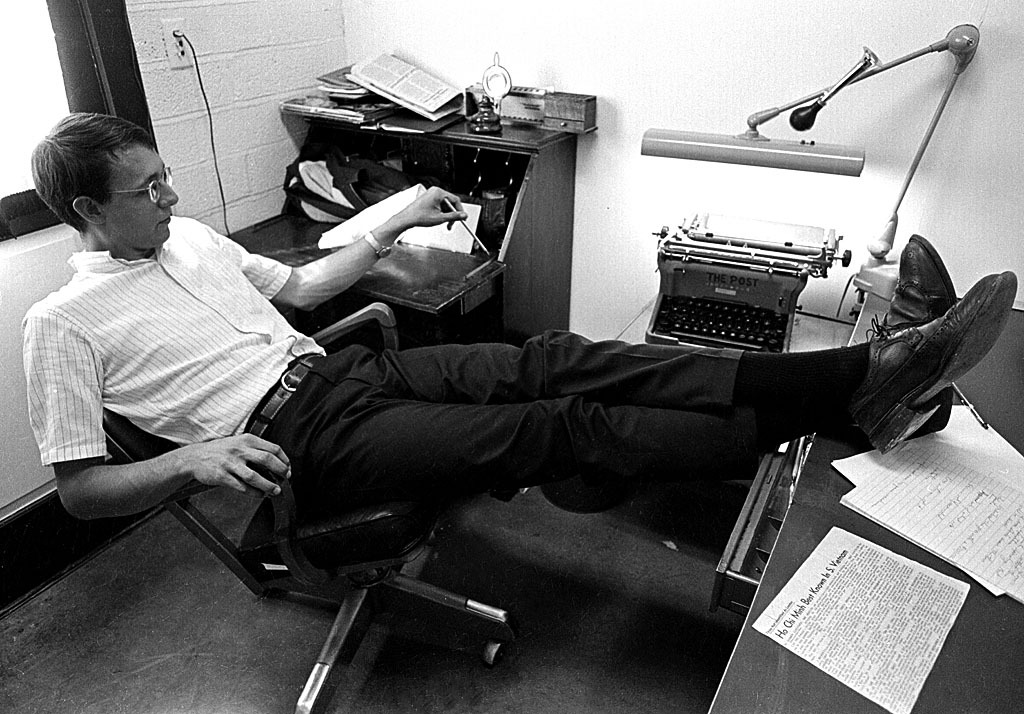
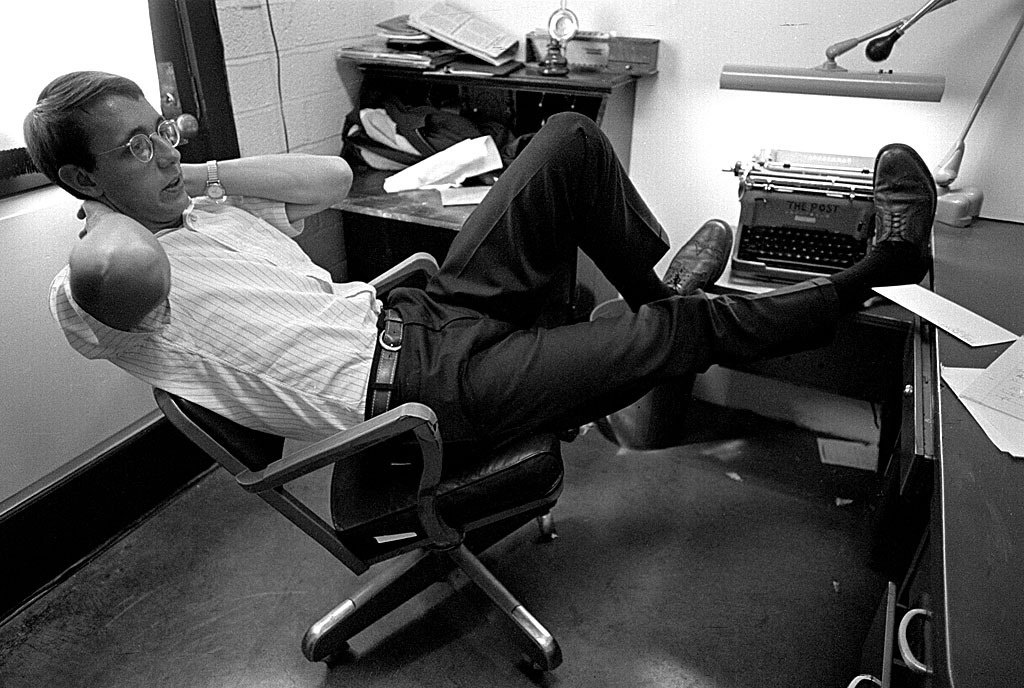
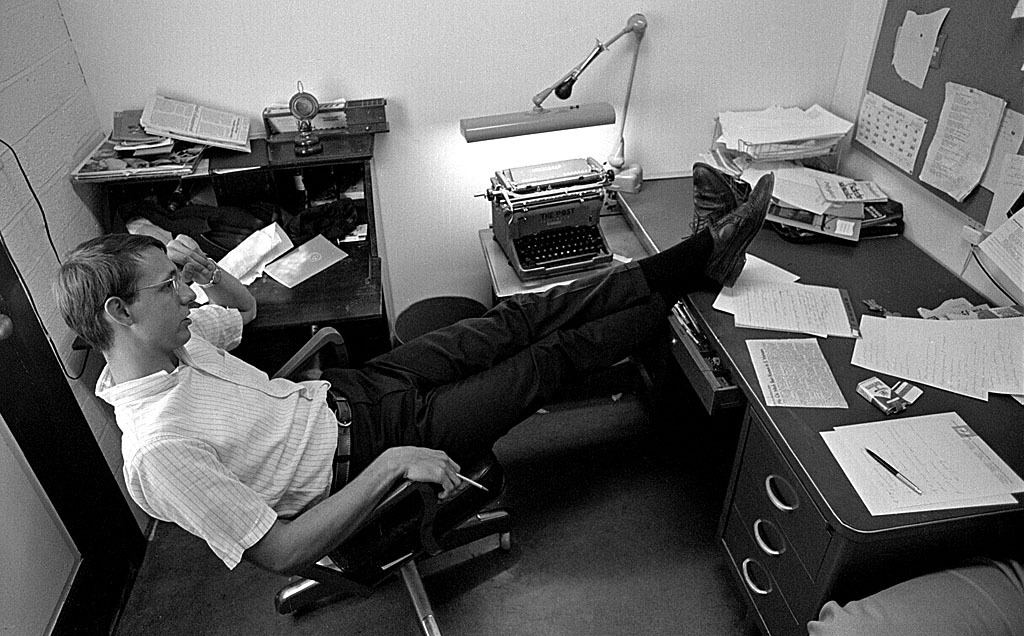
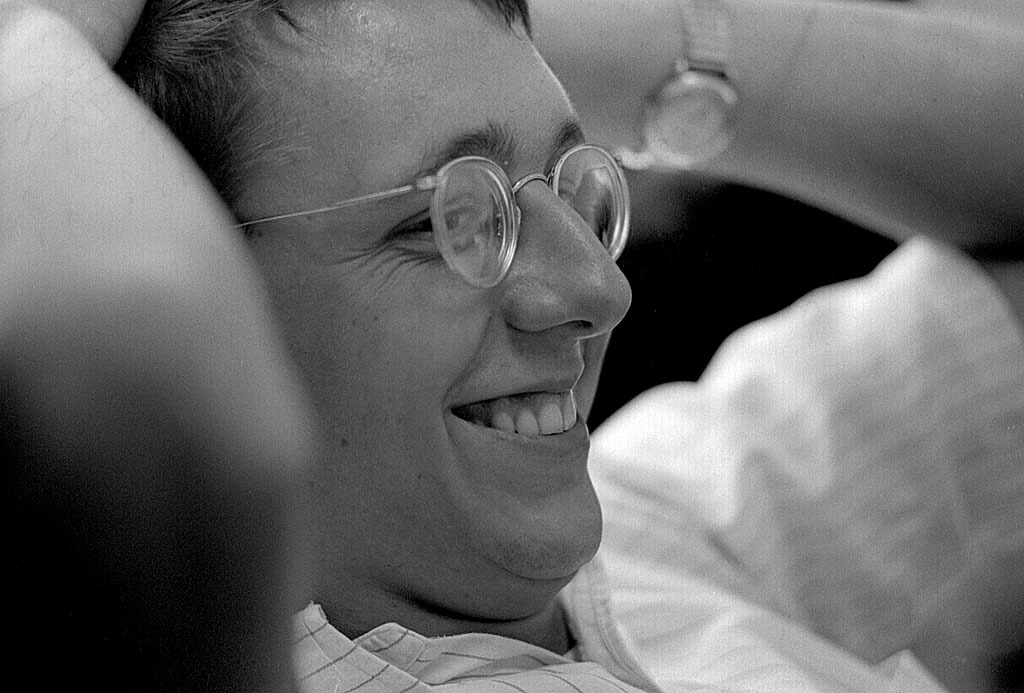
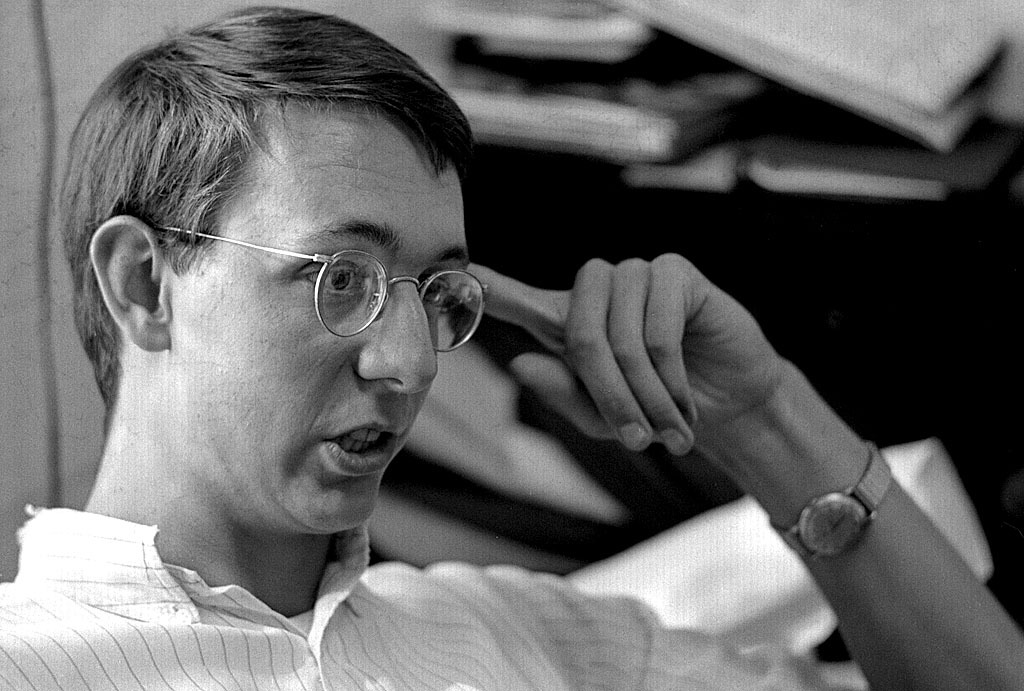
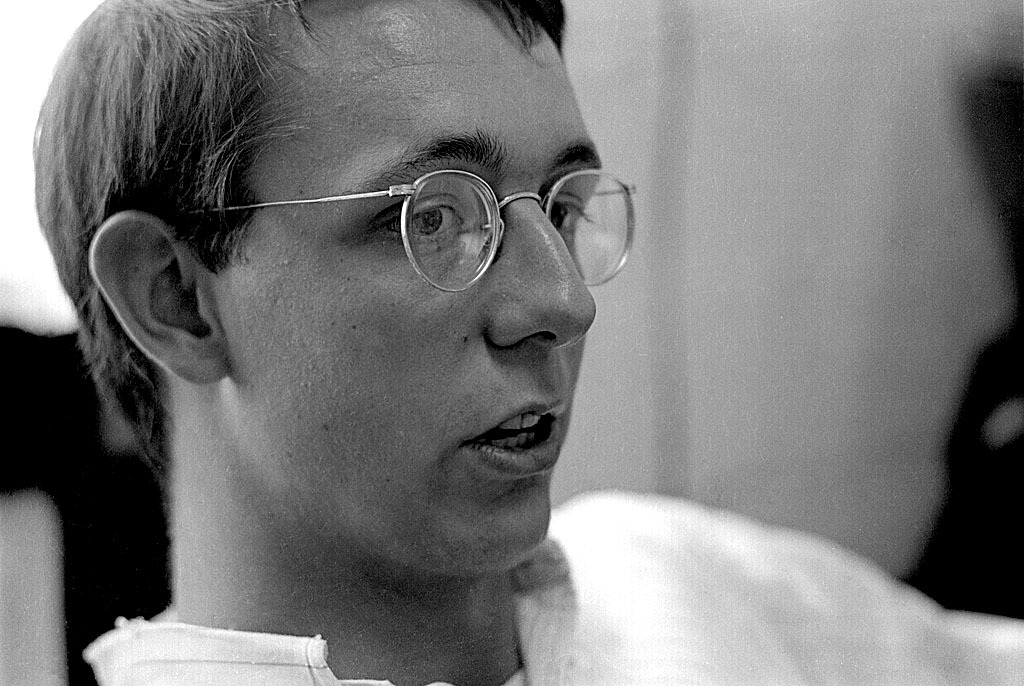
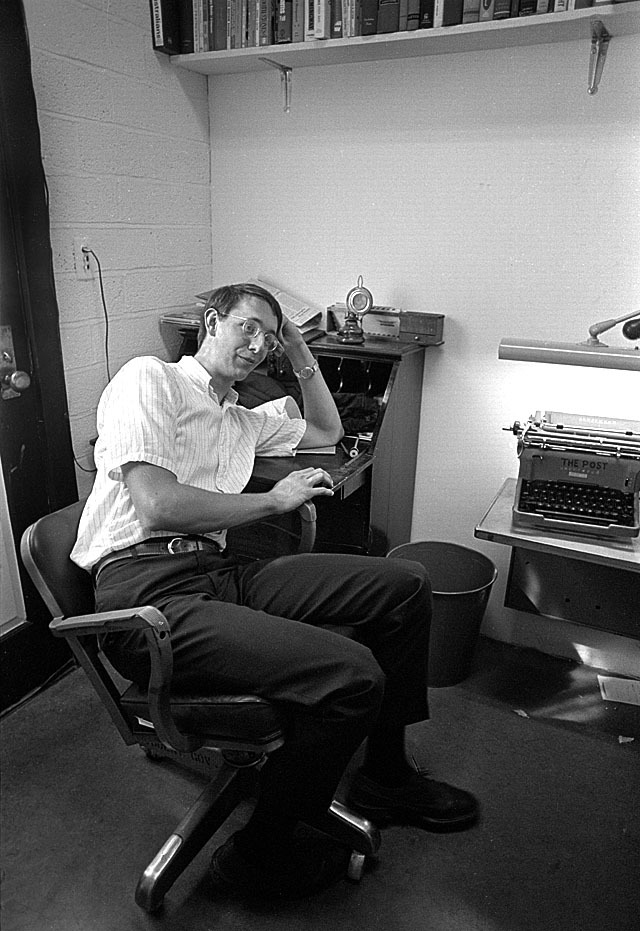
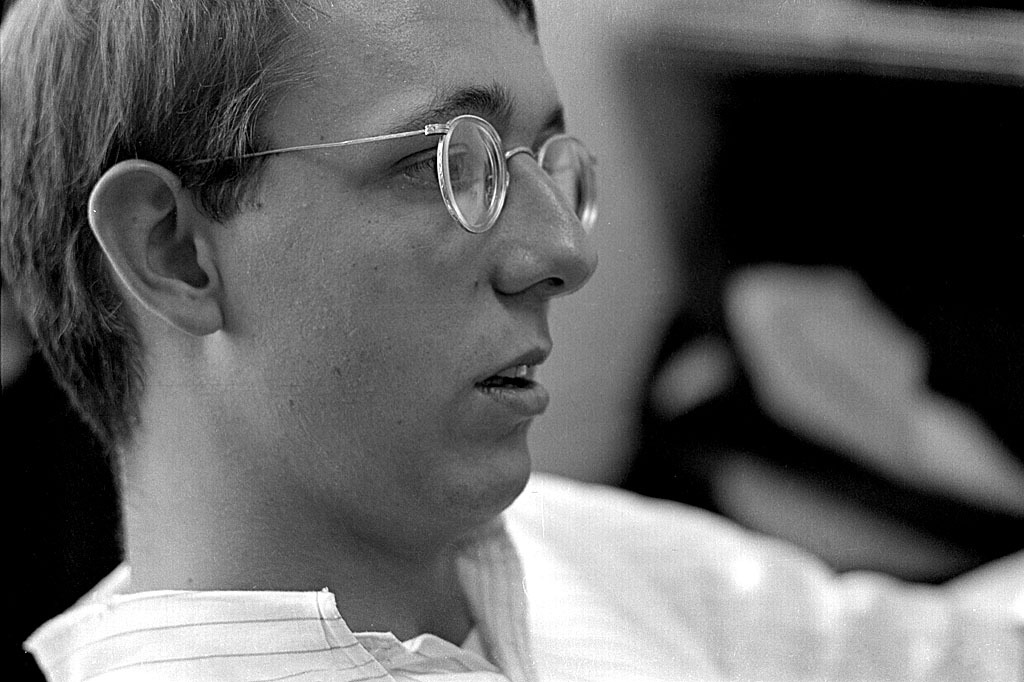
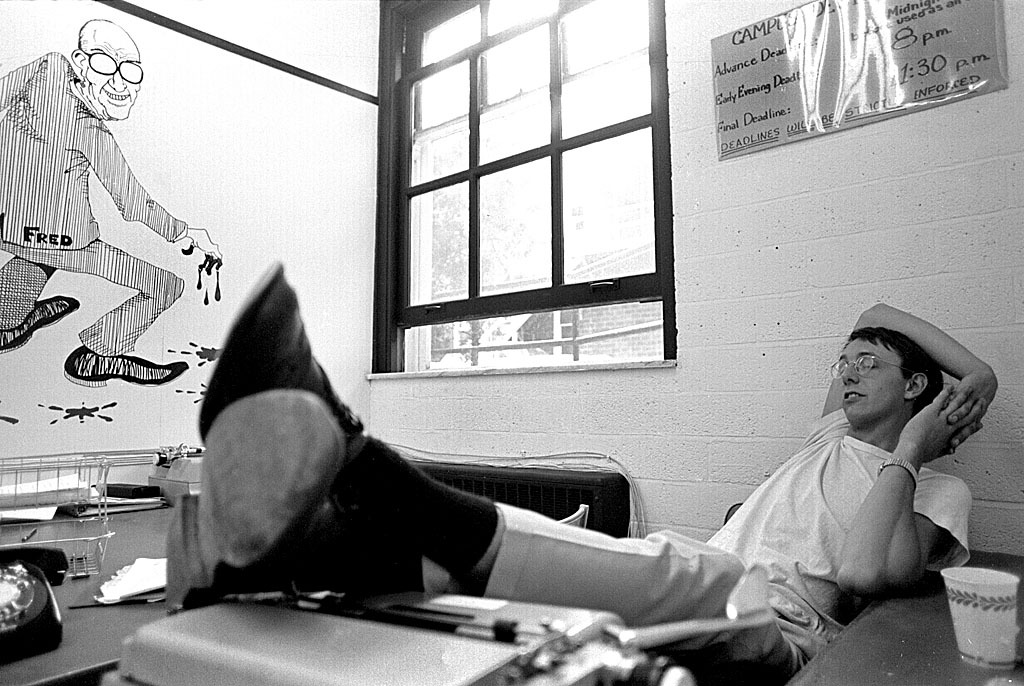
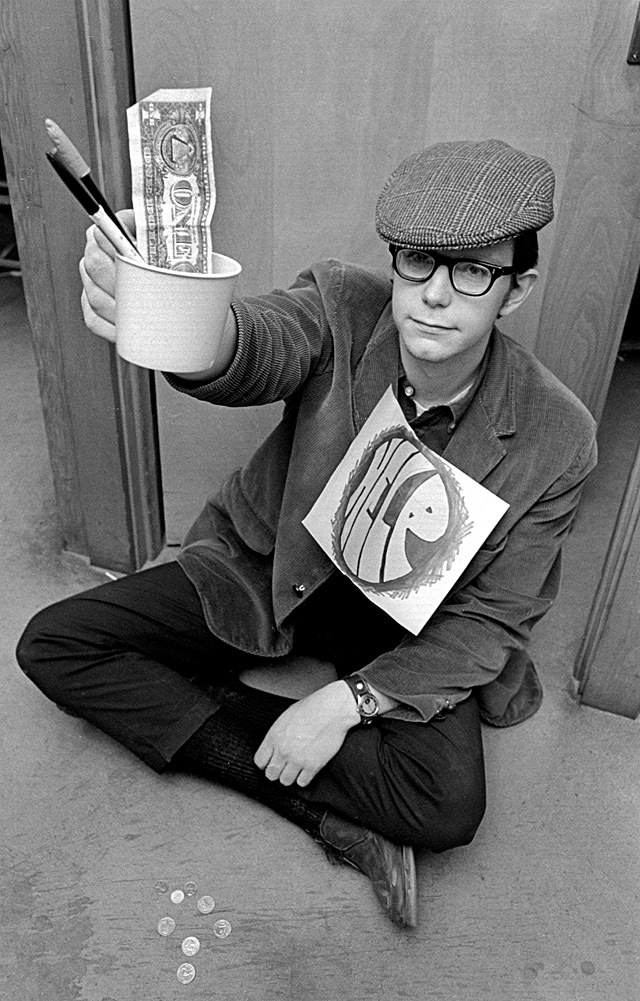
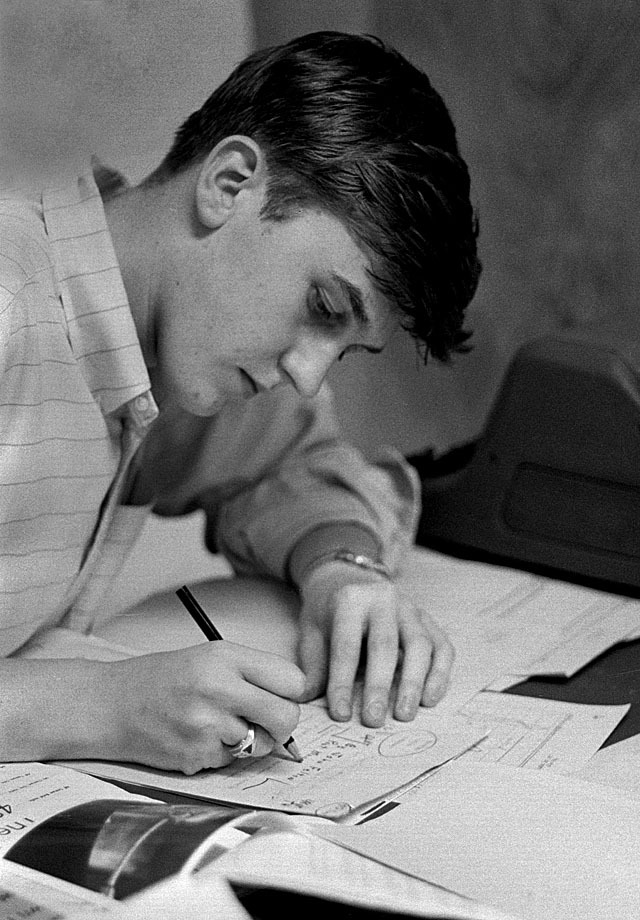
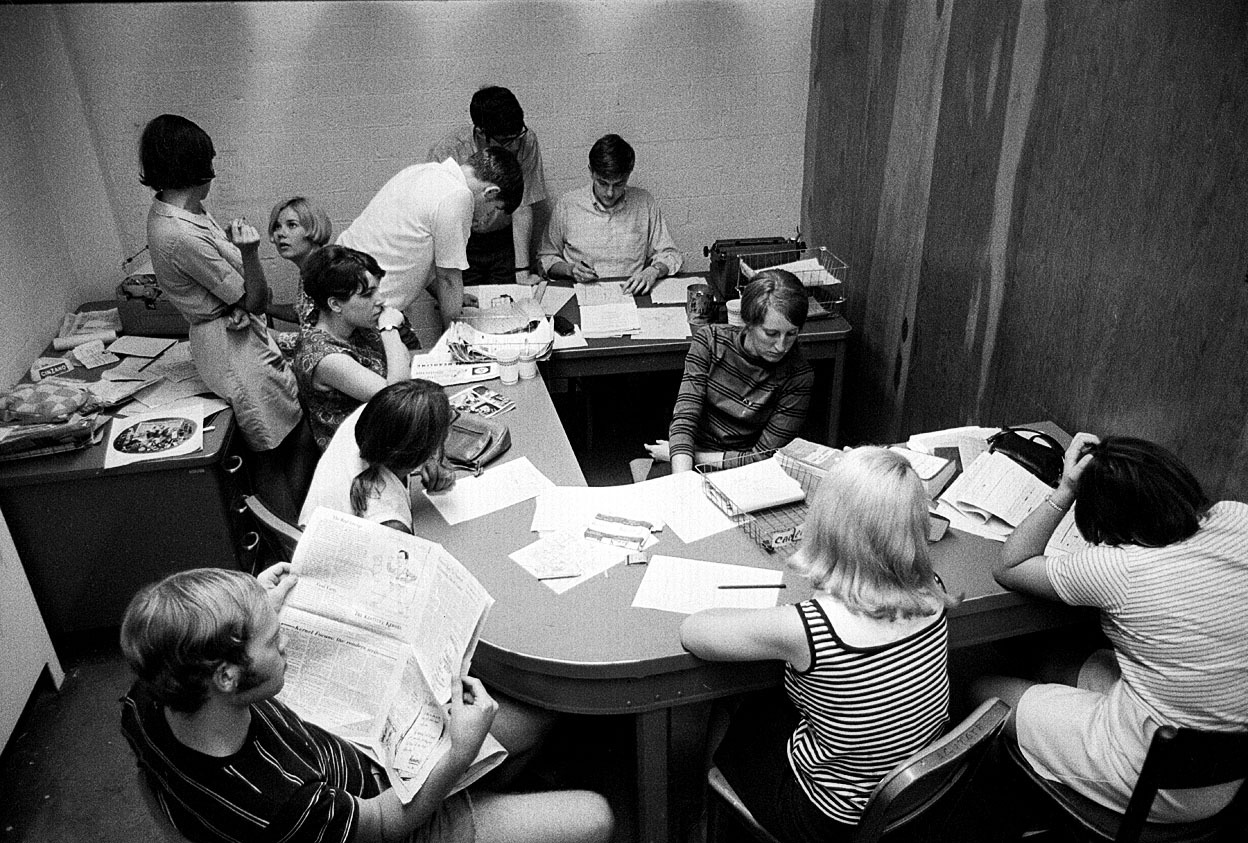
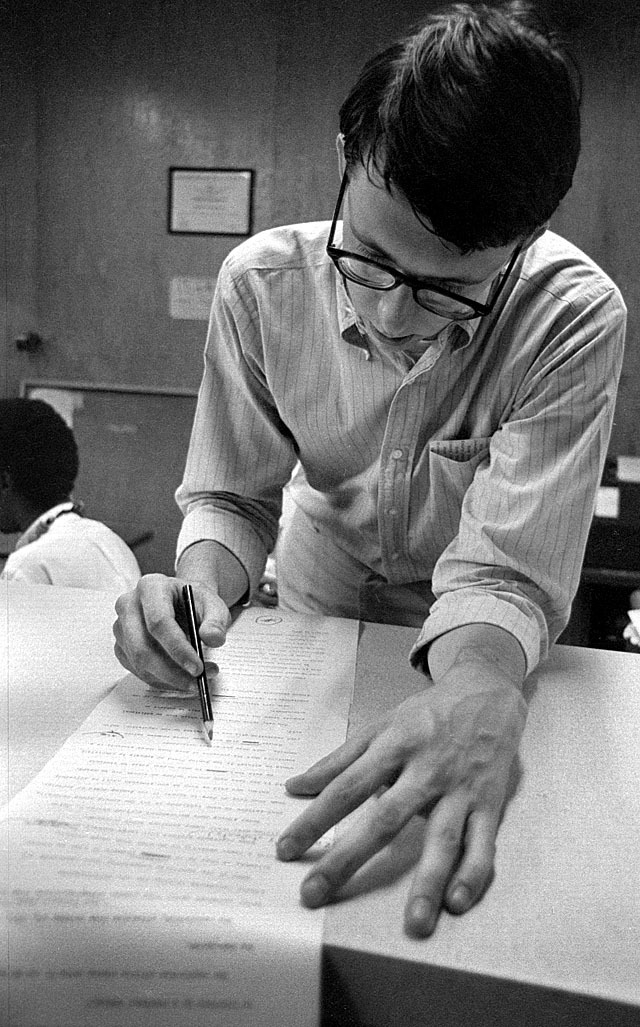
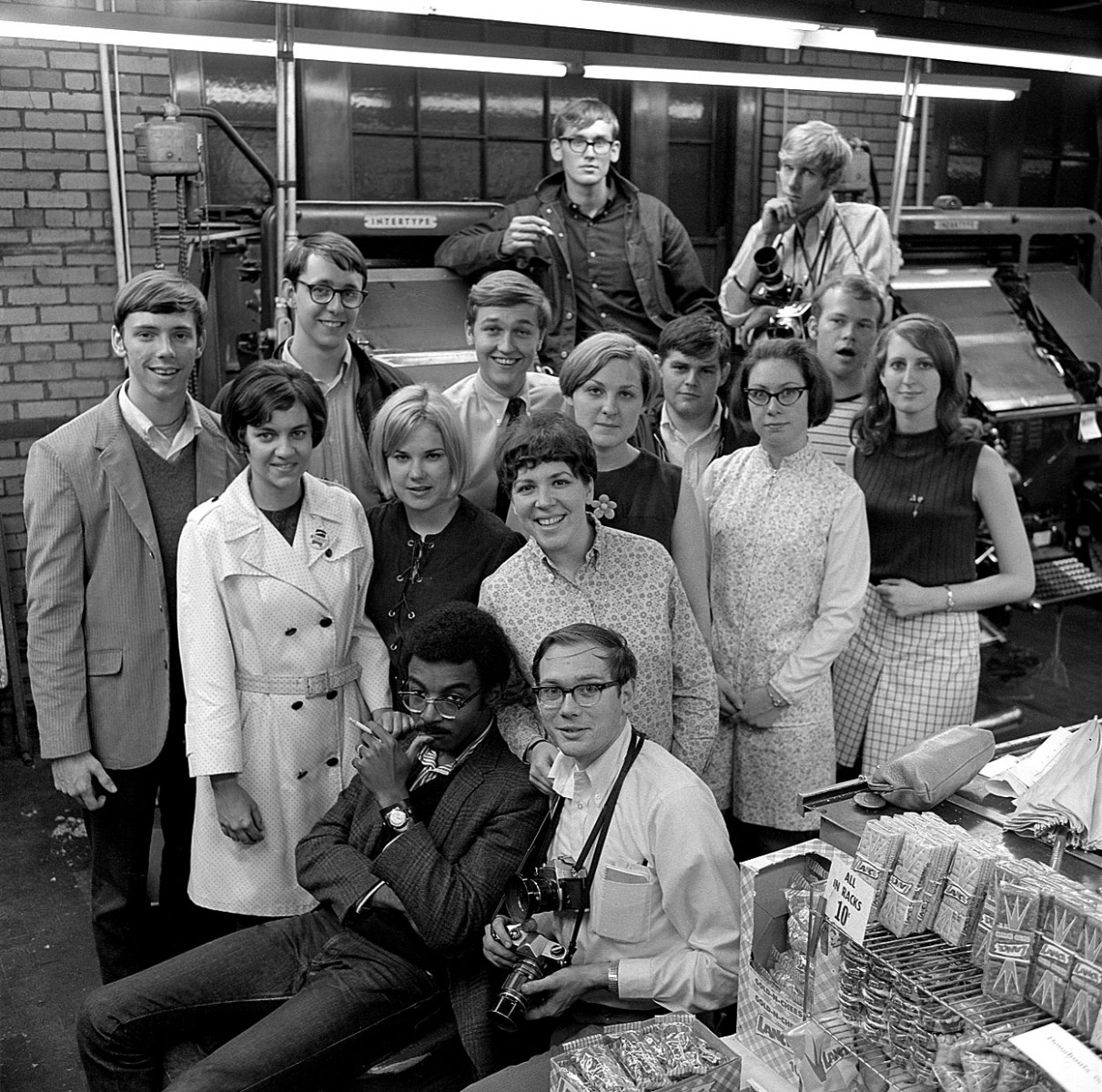
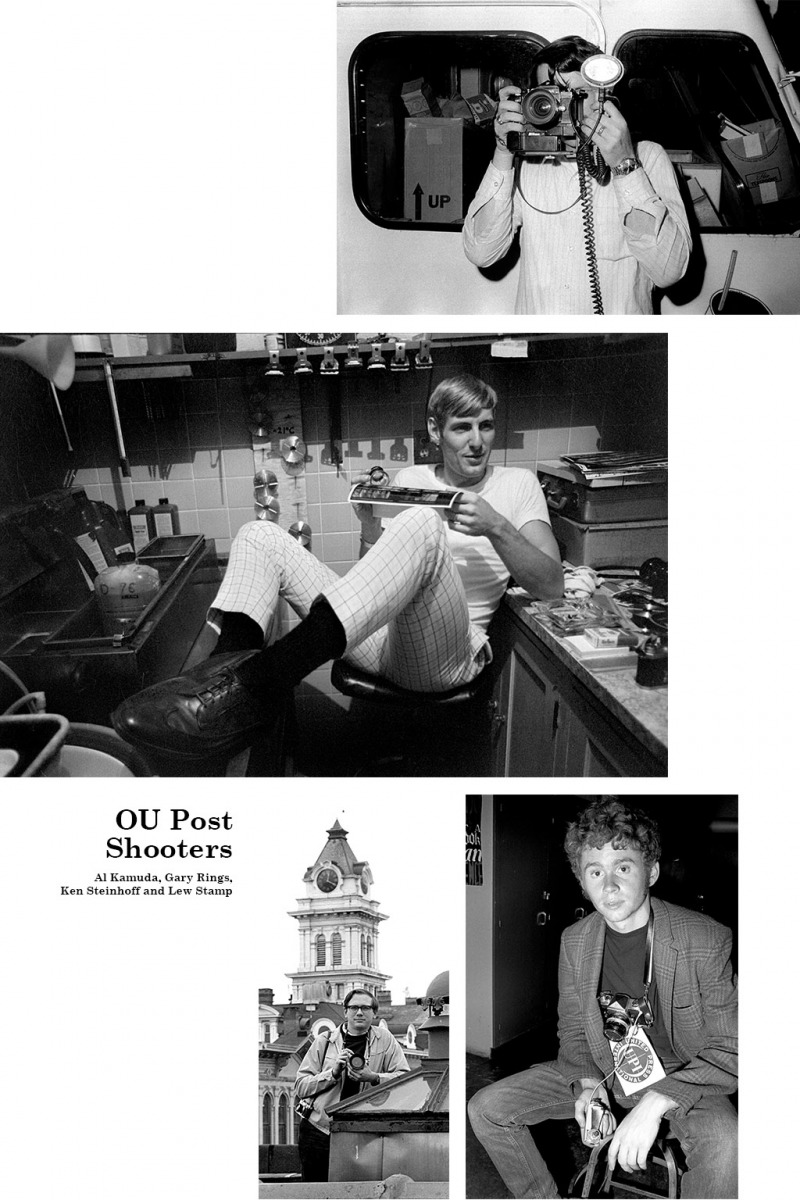
I’m going to stray off the Cape Girardeau reservation to run some photos of folks I worked with at The Ohio University Post in Athens, Ohio, in 1967 and 1968. April Fool’s Day is as good a time as ever to publish them. The student newspaper is celebrating its 100th year with a special alumni reunion April 13-15. Despite what some folks might think, I was NOT around in 1912 when the paper launched as The Green and White.
The event organizers are looking for photos of old staffers (old as in age AND as in former). You regular readers can tune out for a day while I wallow in Ohio nostalgia for a day or so. Click on any photo to make it larger.
The OU Post saved my college career
I was woefully unprepared for life in a big, impersonal university when I transferred in as a junior. It was a good thing my first stop after unpacking my bags in the dorm room I shared with two freshmen was The Post.
See, regular students in the Fine Arts program worked in gang darkrooms using chemicals mixed by other students who may or may not care if they got it right. The darkroom equipment was old and abused. I was used to working in my own darkroom where everything was well-maintained and everything had a place.
Post photo editor Walt Harrison saw my portfolio and hired me on the spot. He saw I was an experienced newspaper photographer, but didn’t know that I was a lousy technician with no formal training. When you print for newspaper publication, for example, you print differently than you do for prints that hang on the wall. Newspaper photos are made up of tiny dots that transfer ink to the equivalent of splintery toilet paper. The process causes the image to pick up contrast, so you have to print “flat” when you send it back to the engravers or it won’t reproduce properly.
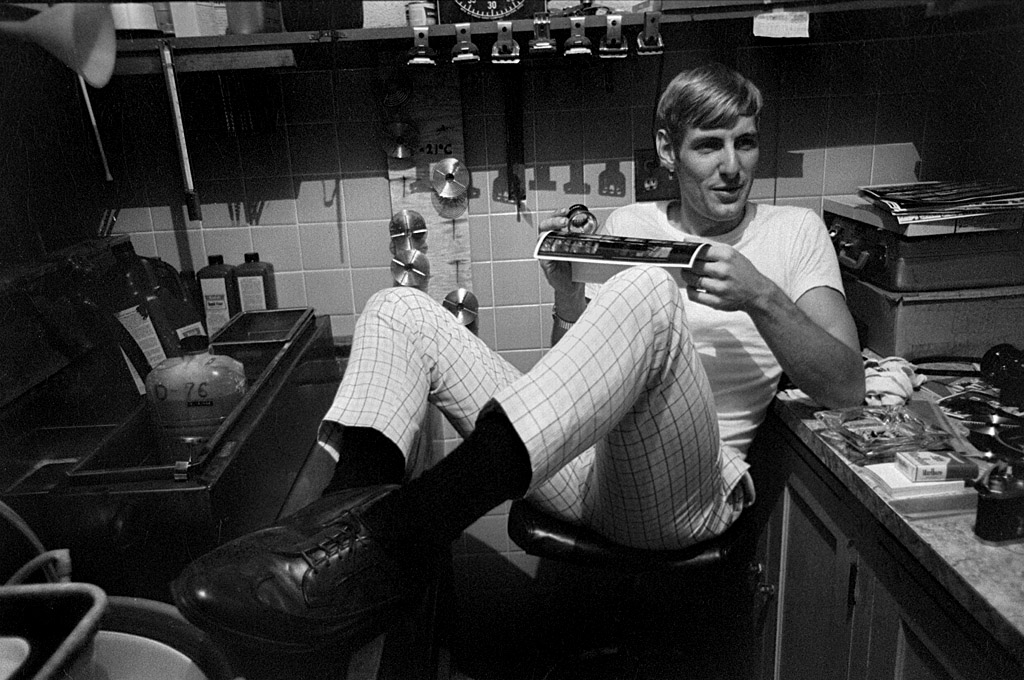
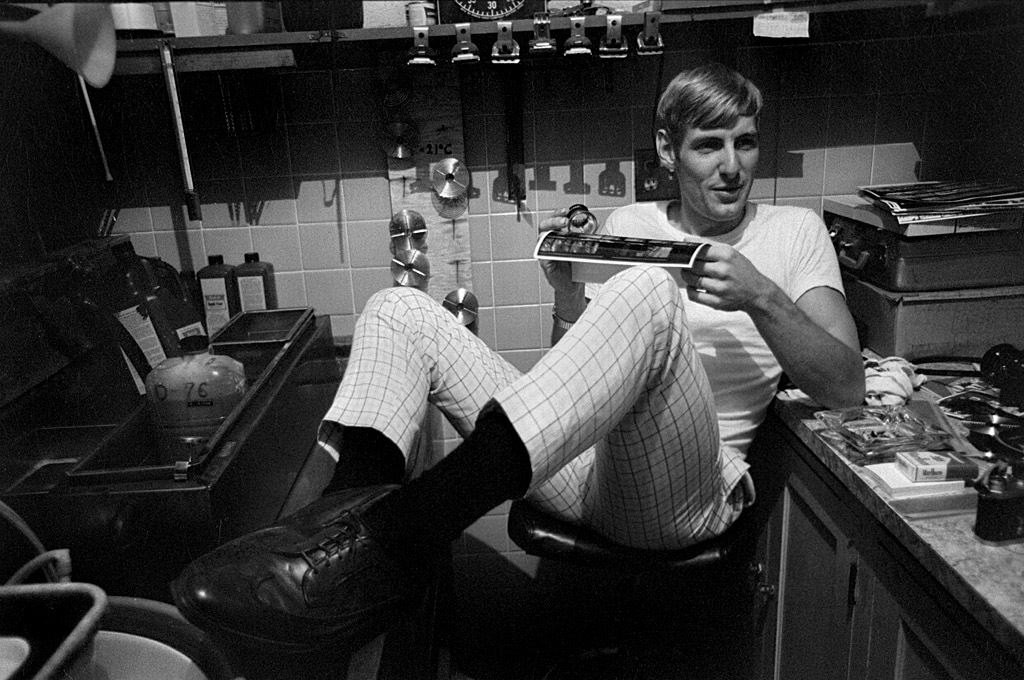
Tiny, but efficient darkroom
I couldn’t understand why my instructors kept kicking my prints back for being flat. Fortunately, the folks on The Post and the Athena yearbook gave me the help and criticism I needed to understand what I needed to do. One night I went to cover a routine assignment, then made the first “good” print of my career to that point. A light went off in my head and I suddenly got it. My work steadily improved from that point as I grew in confidence. I cleaned up in the Ohio College Newspaper Association contest that year because most student photographers don’t have as much hard news in their portfolios.
When Walt stepped down as photo editor, I took over his job. I didn’t even know it was a paid position until I got a check at the end of the school year. It didn’t make any difference to me: all I knew was that I had a darkroom shared with only two or three other shooters, a boundless supply of film and paper, and a bunch of accomplished photographers who weren’t shy about critiquing my work. I learned more from them than from any of my classes.
“Radical” Editor Andy Alexander
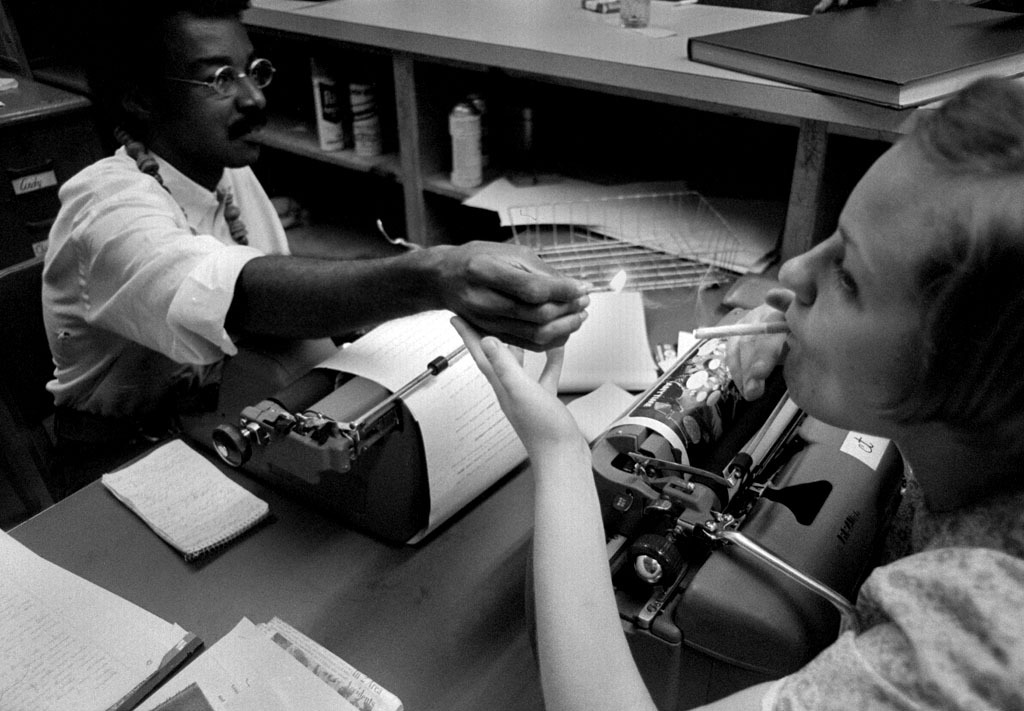
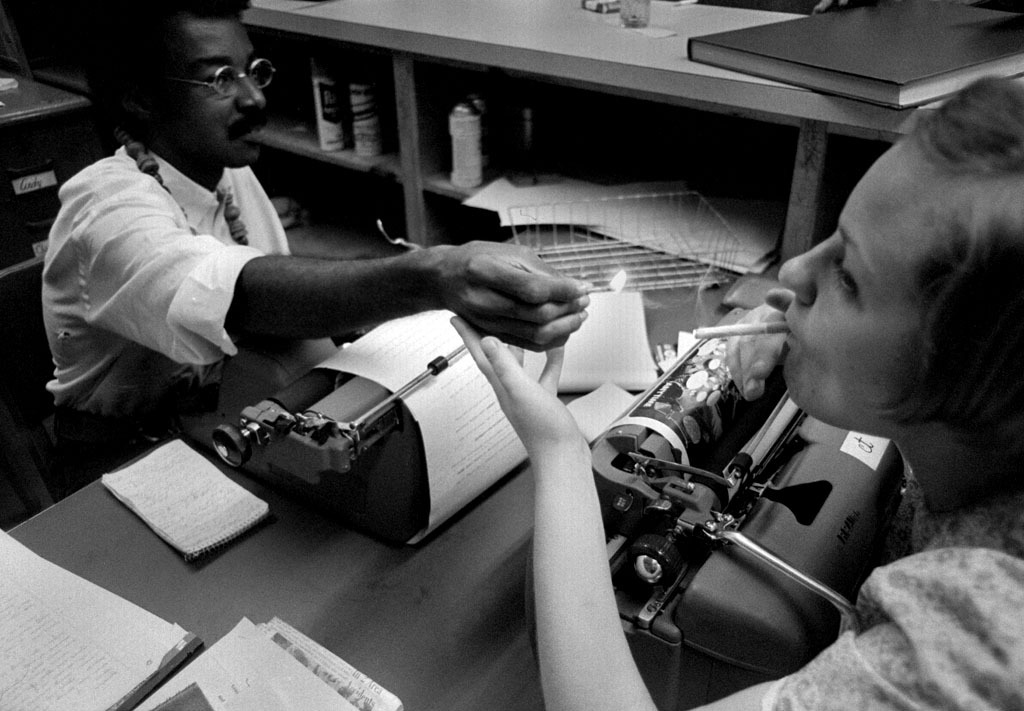
There are lots of photos of Andy Alexander because I had a freelance job from The Dayton Daily News to illustrate a story former Postie reporter Carol Towarnicky wrote about him. (I always called Carol “CT” because I couldn’t spell, let alone pronounce Towarnicky.) CT’s story said “Andy Alexander never marched in an anti-war demonstration. But he has marched through a few rice paddies, which would explain why the ex-Eagle Scout something talks about the United States in four-letter obscenities. And why the short-haired radical sometimes disparages the New Left.
Because Andy Alexander has a jump on most college students. He’s been there. He’s seen Vietnam. And it appalled him.” Here’s CT’s story on Andy Alexander.
Andy financed a trip to Vietnam the past summer out of his own pocket. “I went to make a name for myself,” he explained matter-of-factly. “I doubt I found any newsman who was there out of dedication… Everyone wanted to make it big, fast. Some of them died trying.” He spent two summers reporting for the Melbourne (Australia) Herald. A year before he found himself in Prague, reporting the Russian invasion of Czechoslovakia.
I liked Andy. The Dayton Daily News might think he was a radical, but I found him a solid, steady pro who ran the student newspaper as well as any paper I’ve worked for.
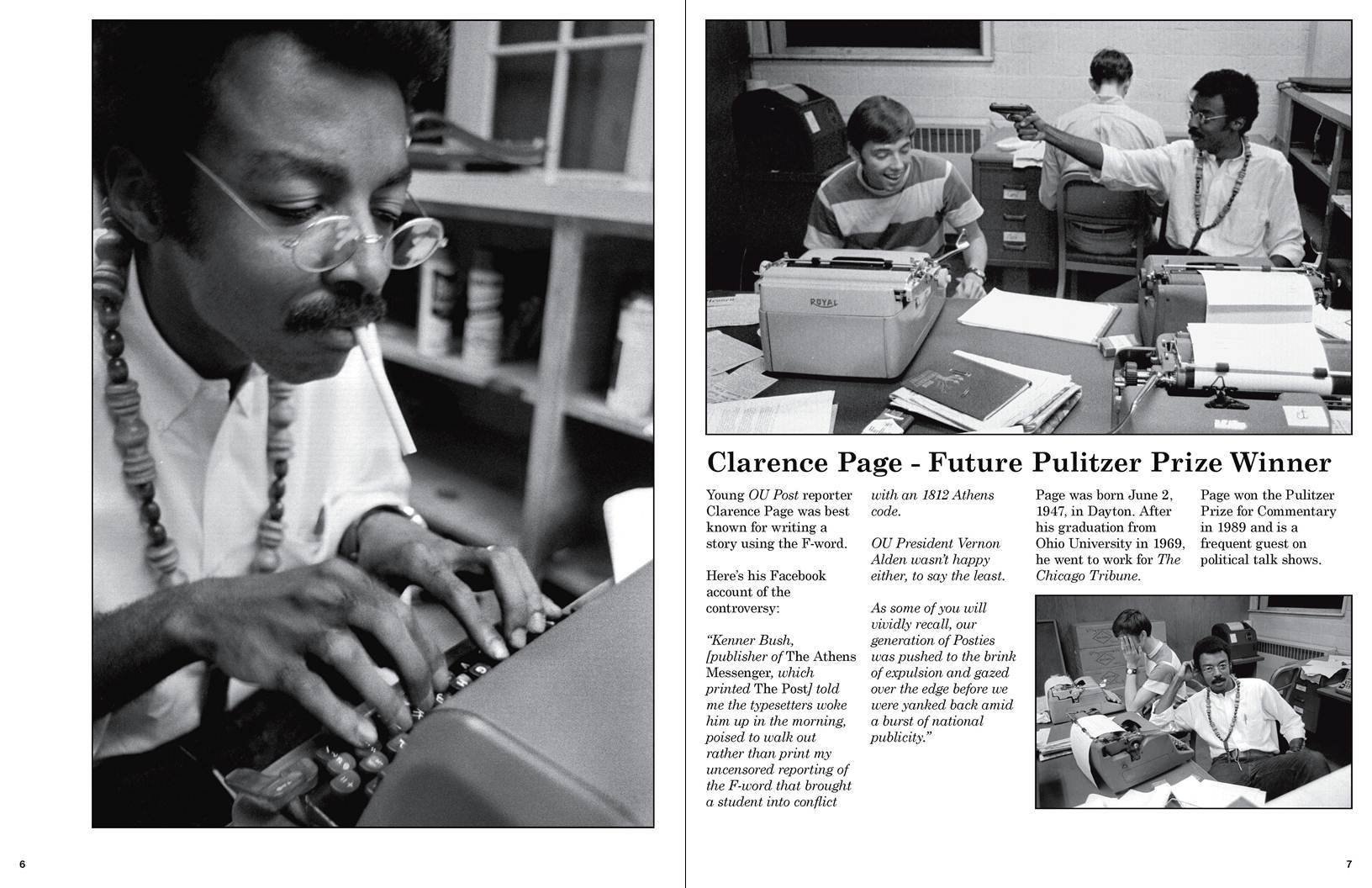
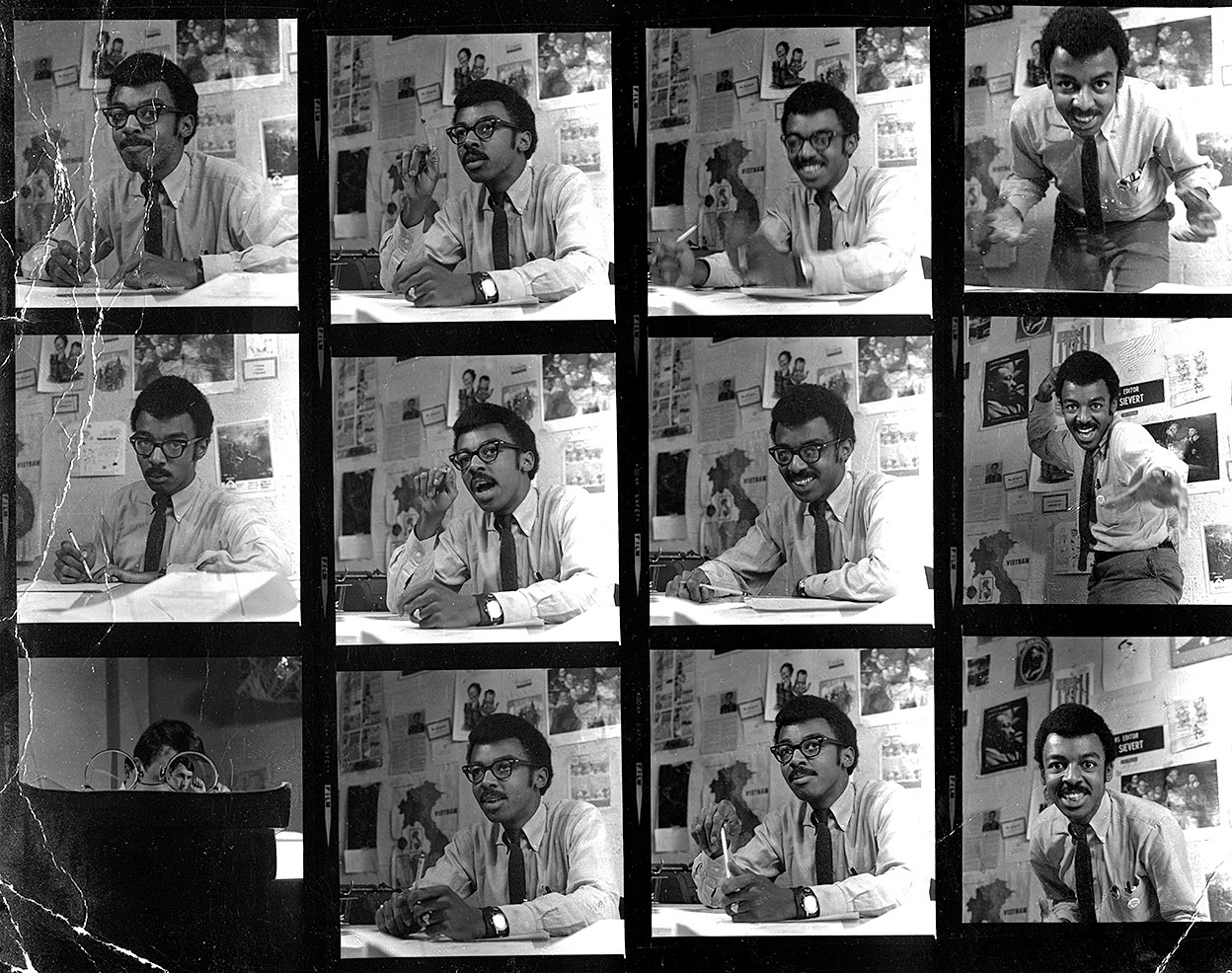
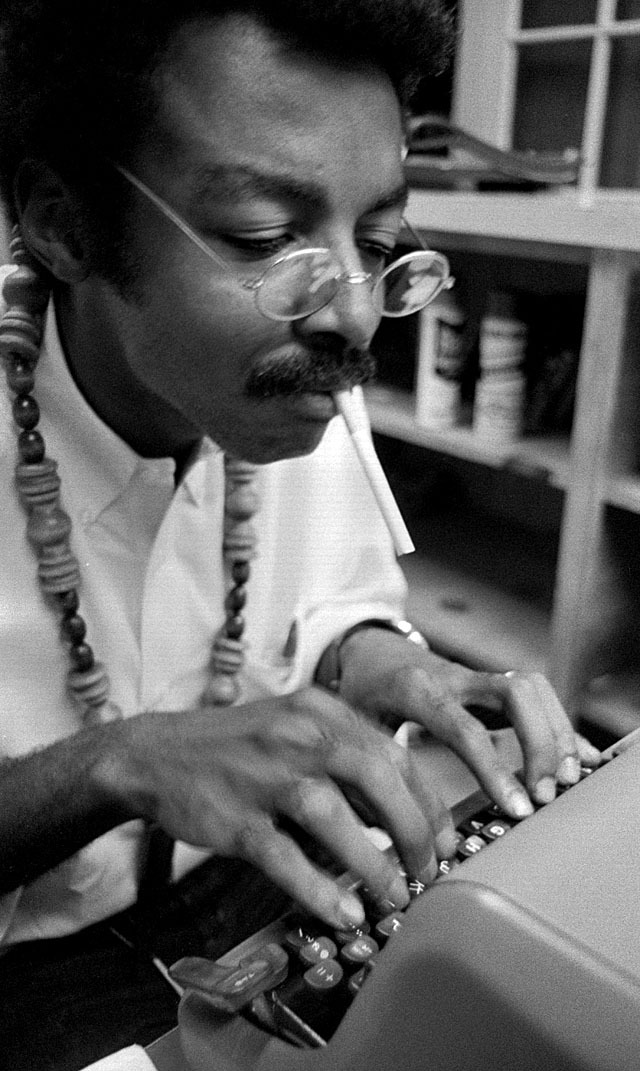
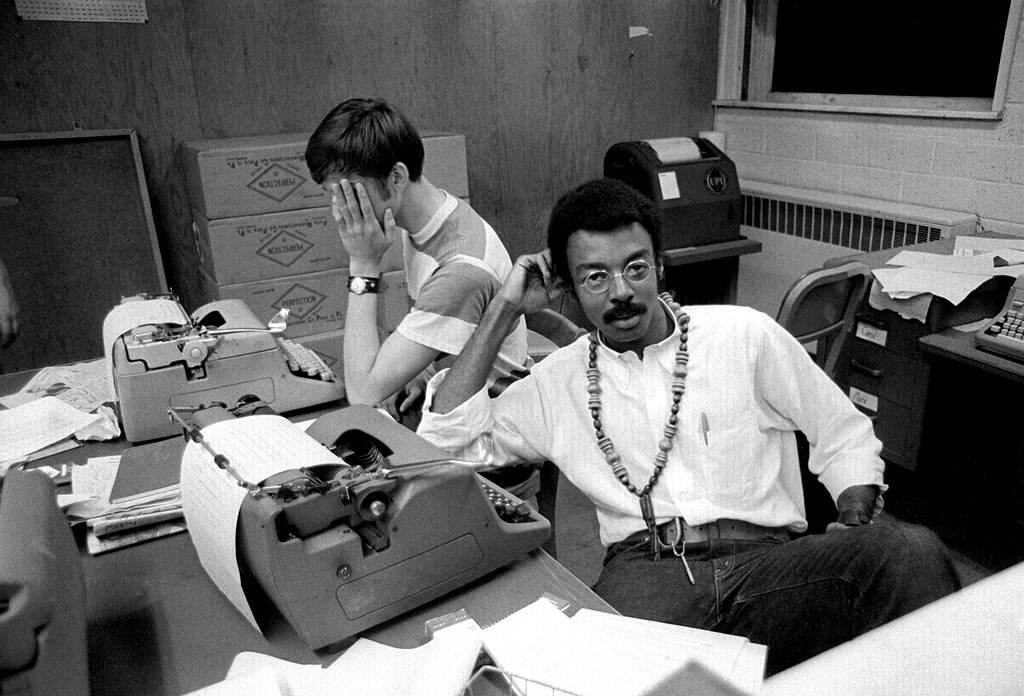
Clarence Page like you don’t see on TV
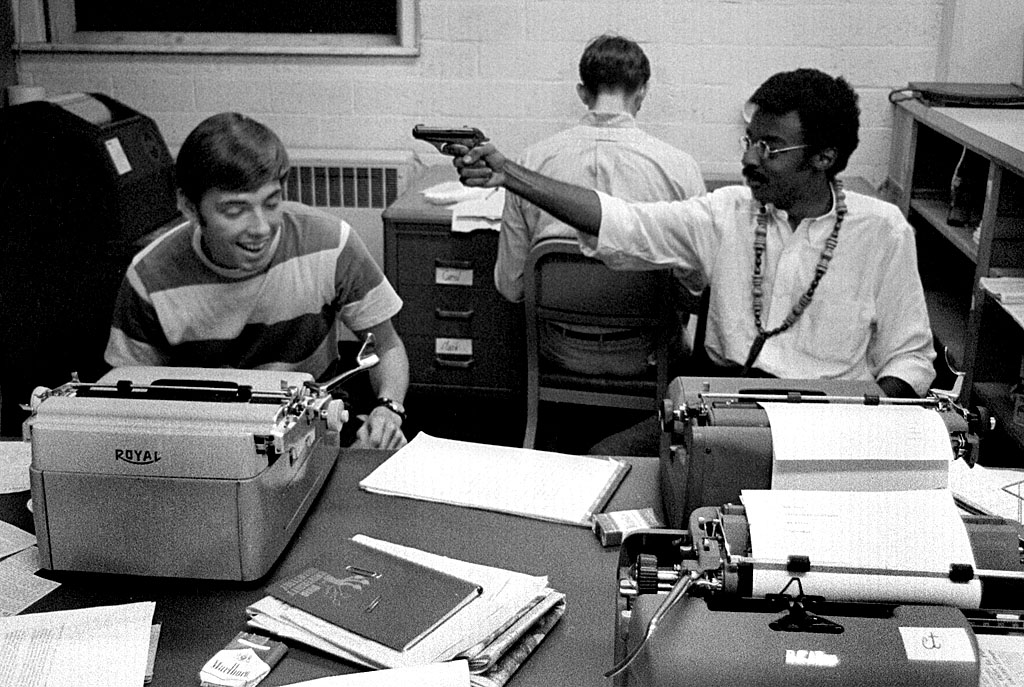
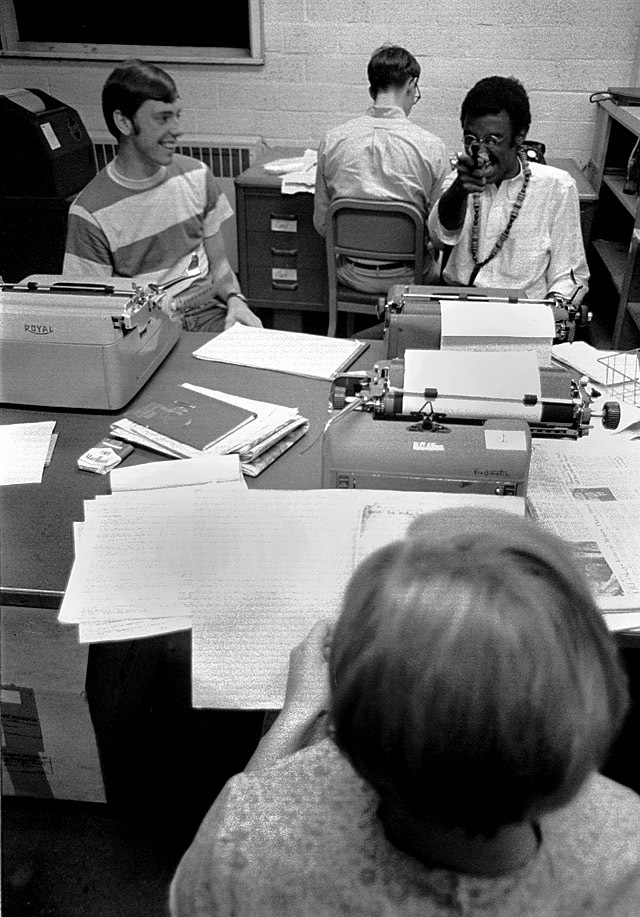
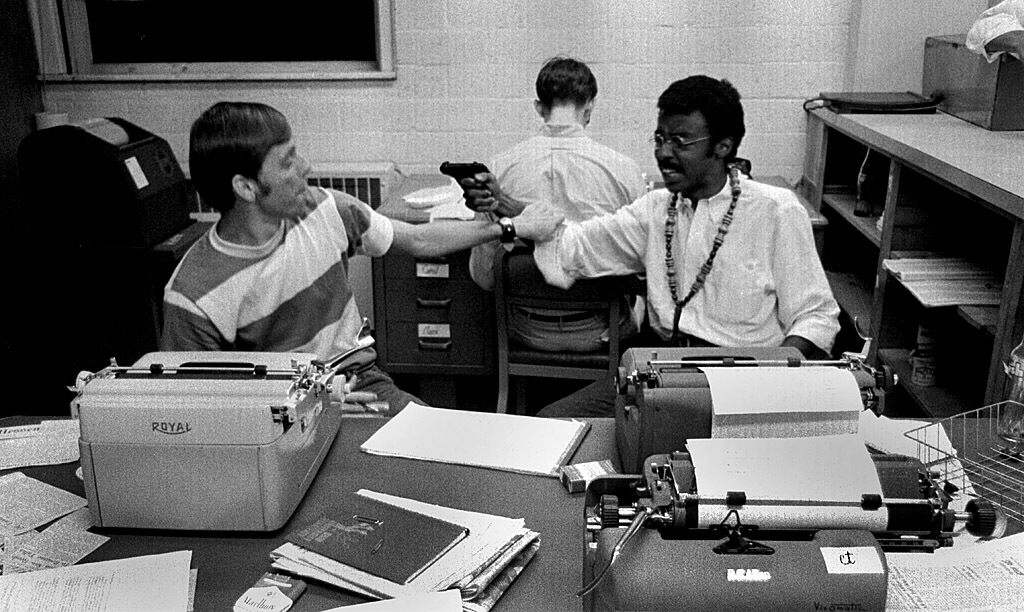
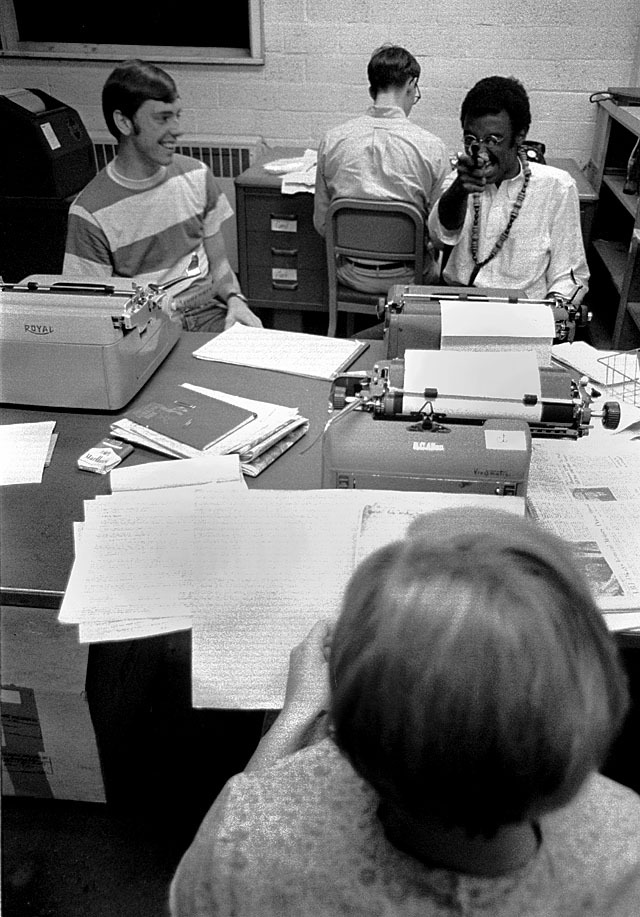
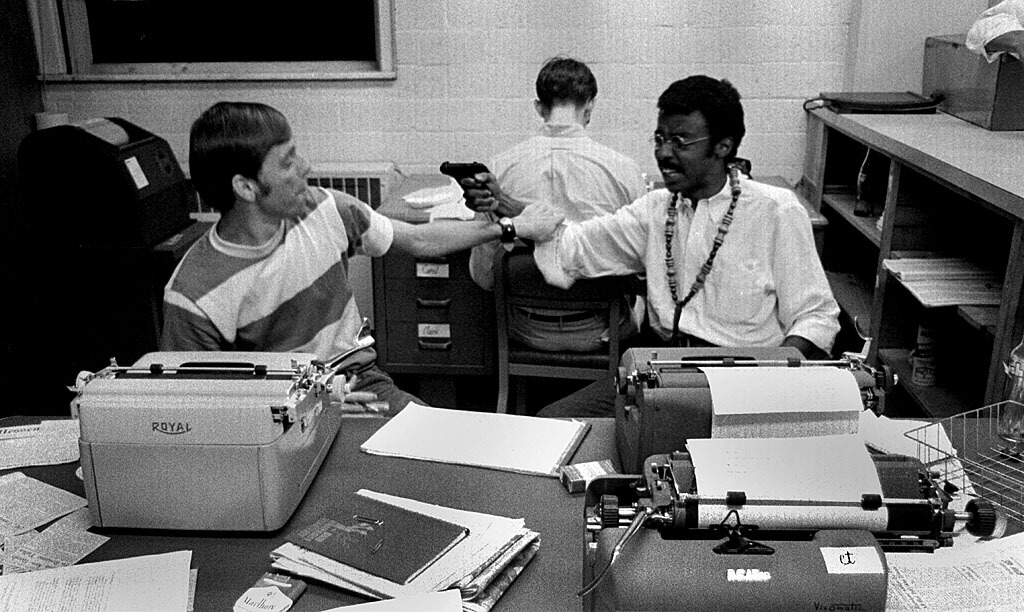
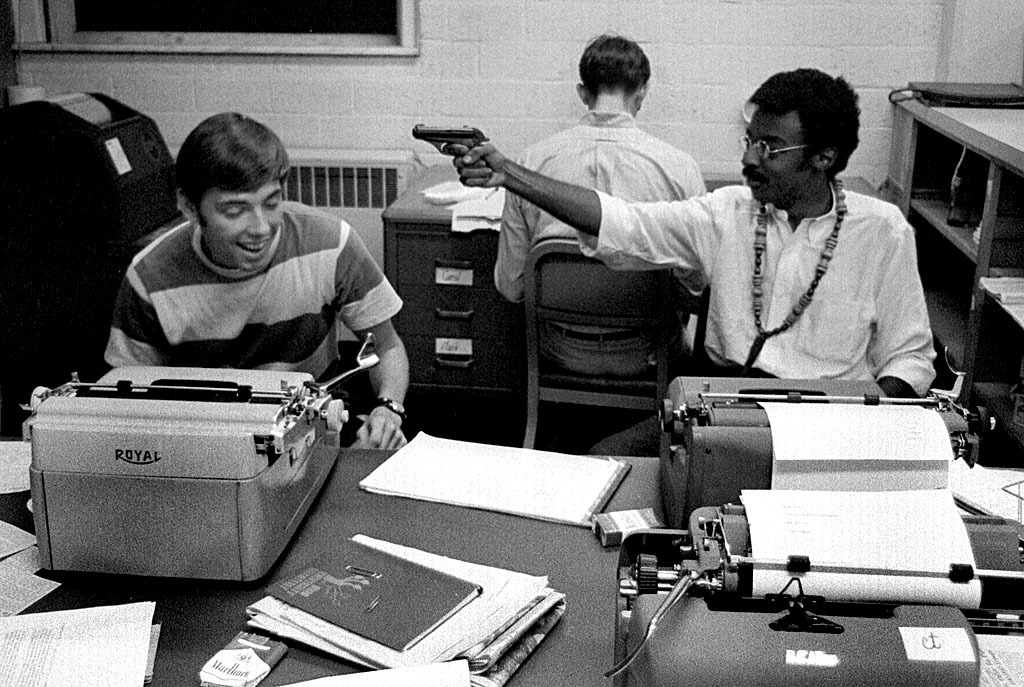
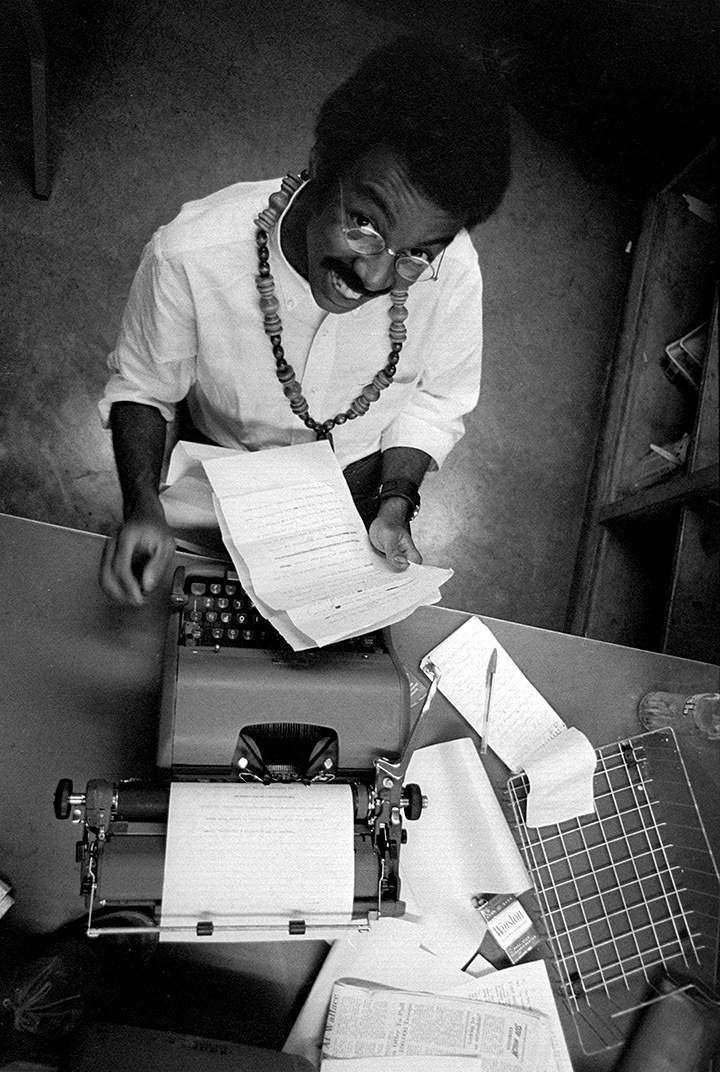
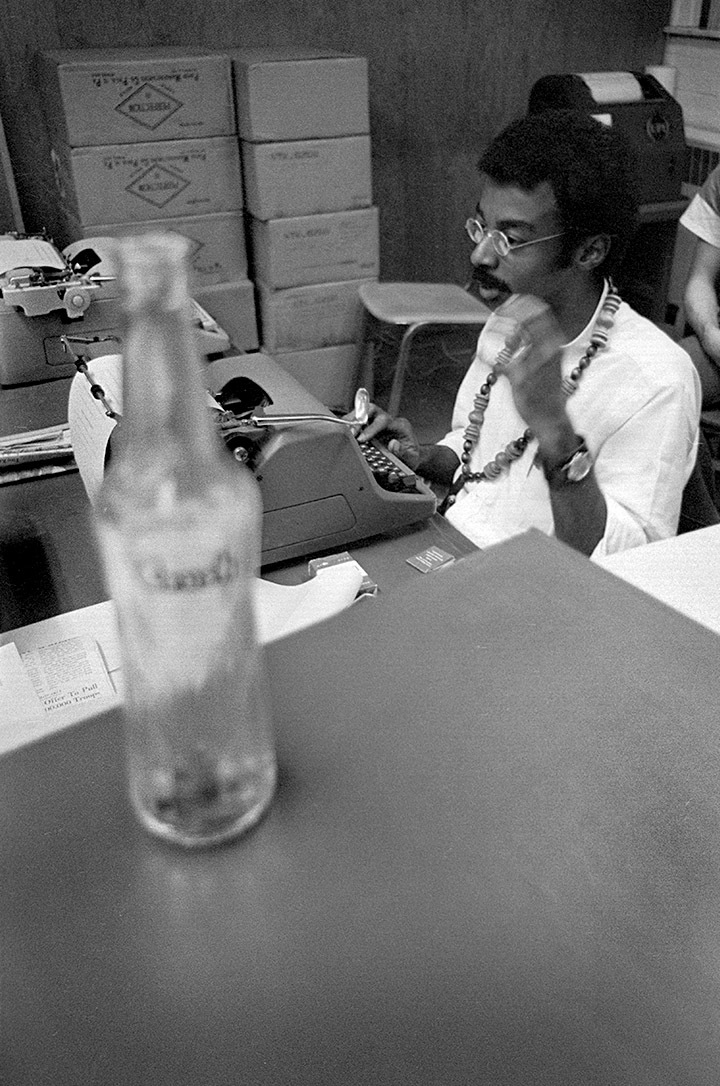
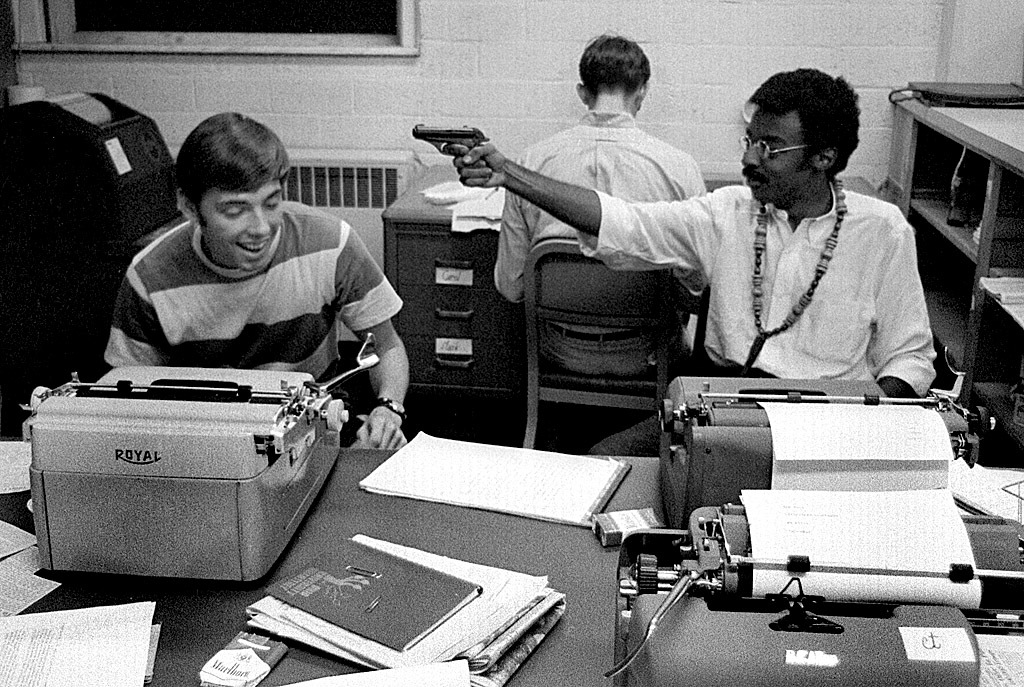
When you see Chicago Tribune Pulitzer Prize winner Clarence Page as a frequent talking head on the news shows, he doesn’t look like the Clarence I knew. Here, Clarance points what I hope is a toy gun at Mark Roth. Unflappable editor Andy, with his back to the camera, ignores the tomfoolery going on behind him.
Clarence was a solid reporter who was always ready to push the boundaries. One night he used the F-word in a story and The Athens Messenger’s production crew almost didn’t publish the paper that night. The fact that The OU Post has been in existence was in spite of Clarence, not because of him.
I heard Clarence pontificating about something on NPR the other afternoon and had the same sense of unease as when I heard that classmate Jim Stone was trying to explain science to politicians and that Bill Clinton had been elected president. I mean, aren’t they supposed to have adults doing those jobs?
Expectant fathers
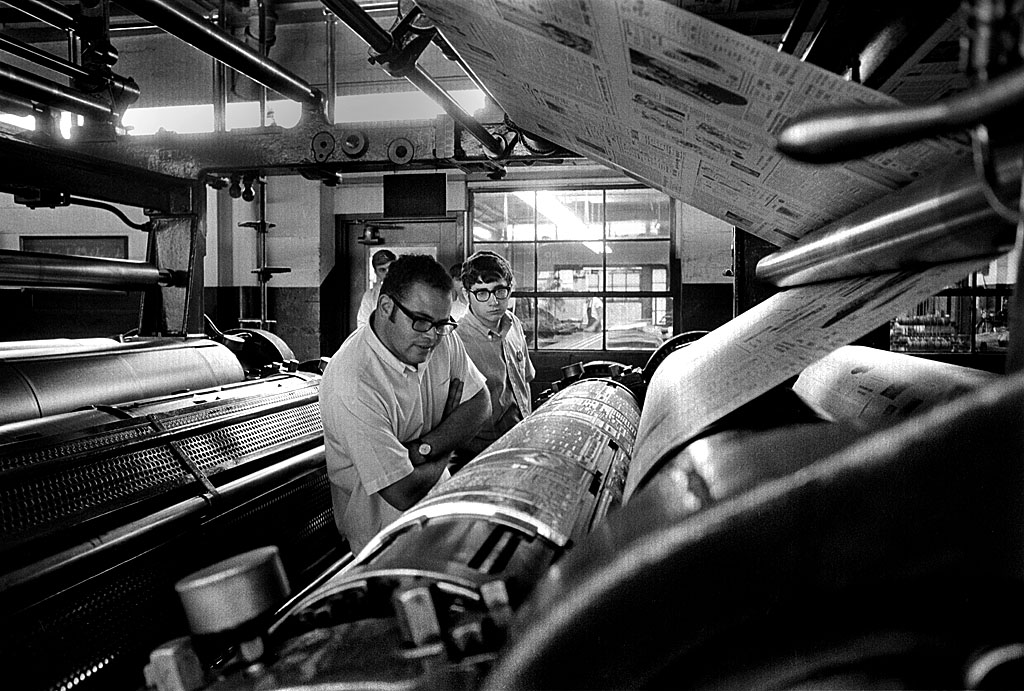
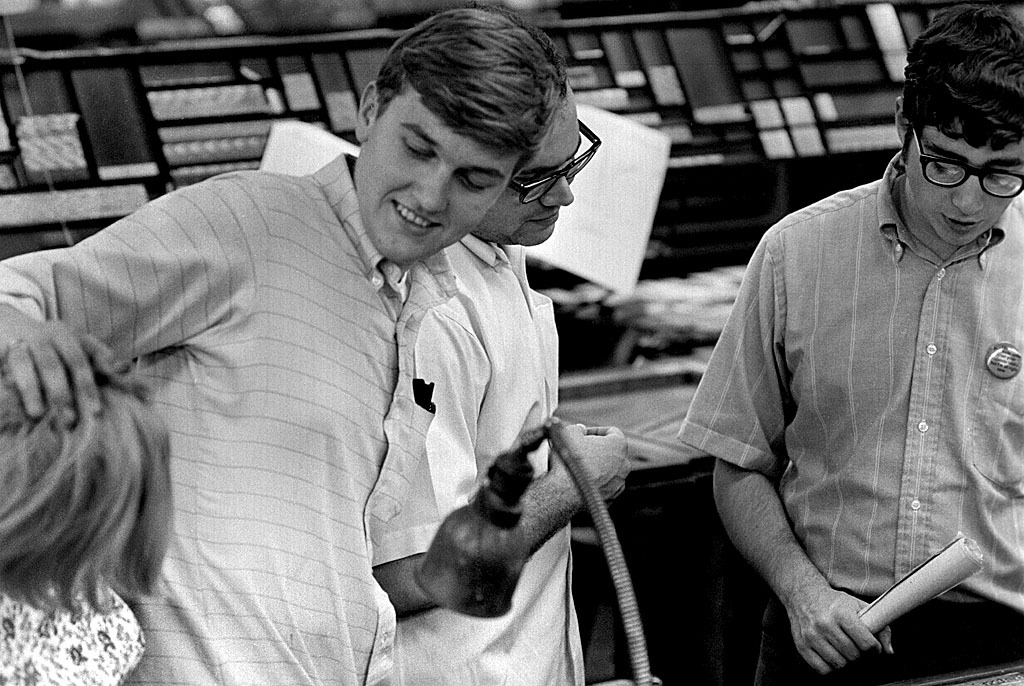
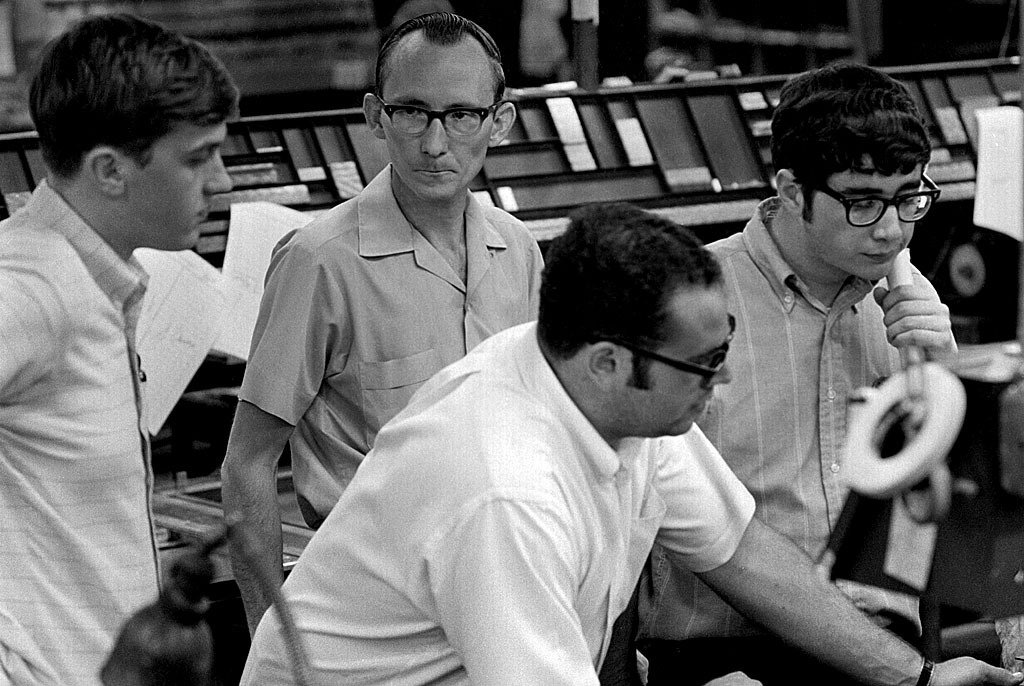
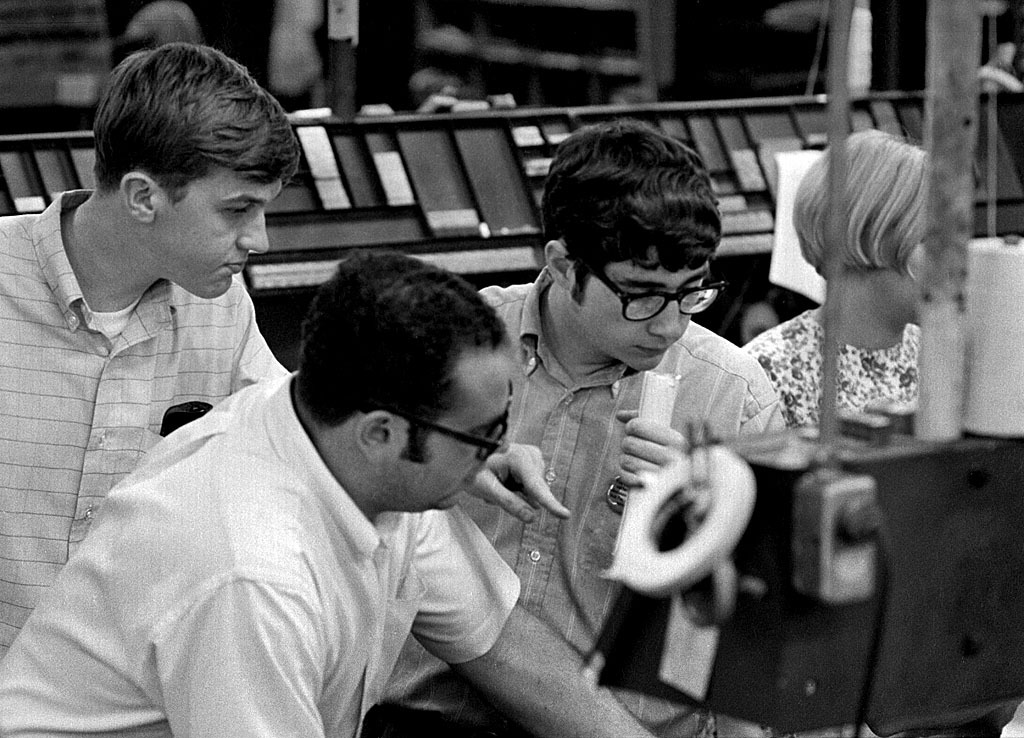
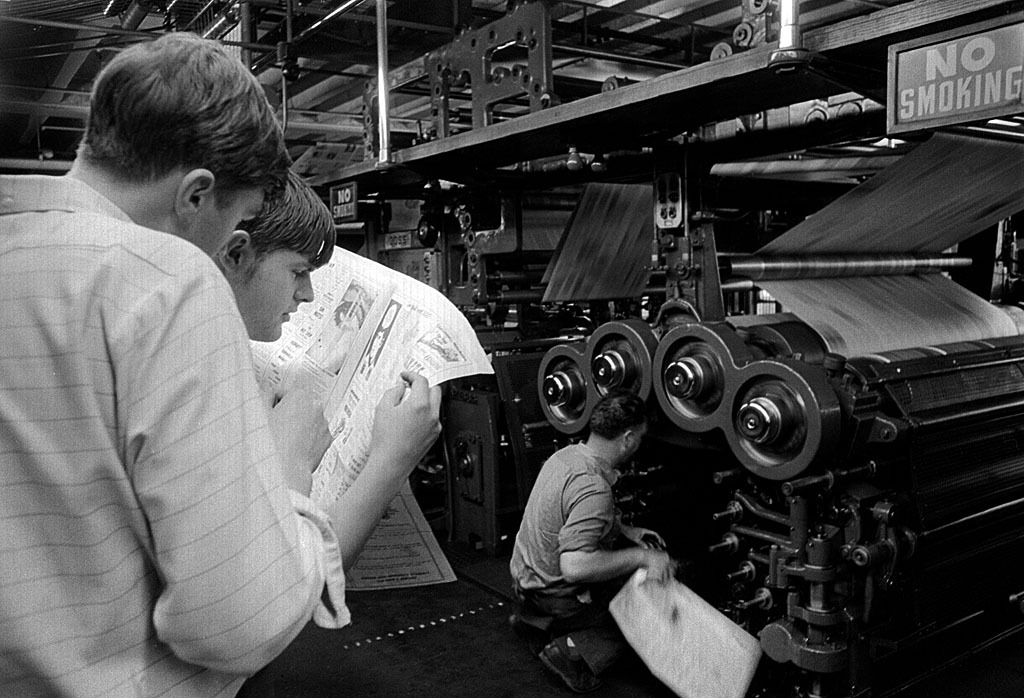
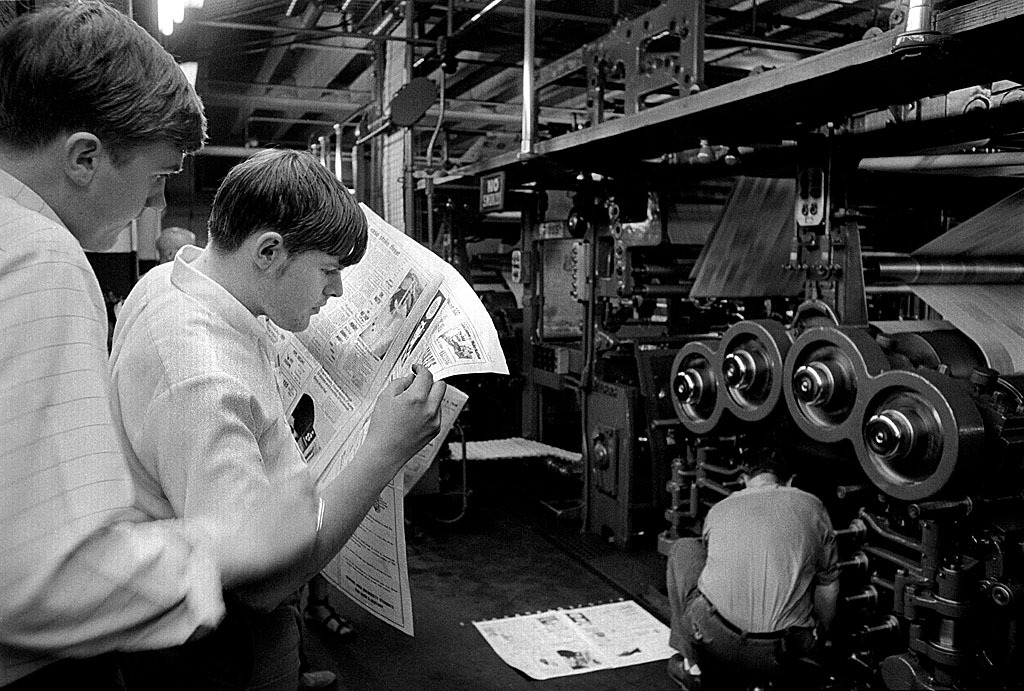
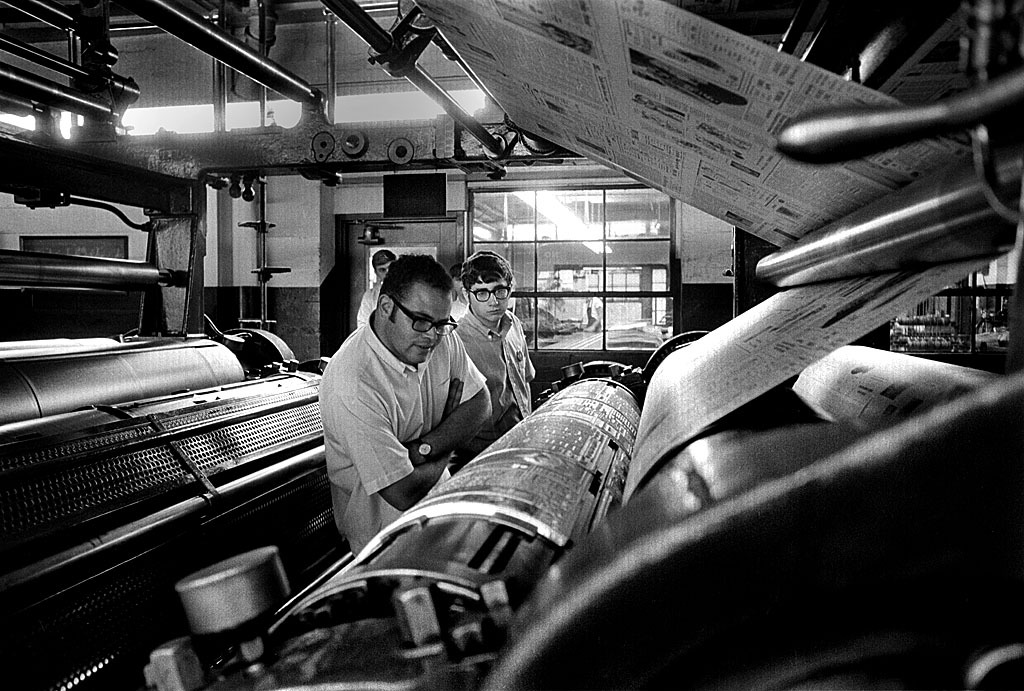
This was the first edition of the new school year to come rolling off The Messenger’s presses in 1968. Jesse Rotman, Bill Sievert and Tom Hodson were pacing the floor like fathers-to-be in a delivery room.
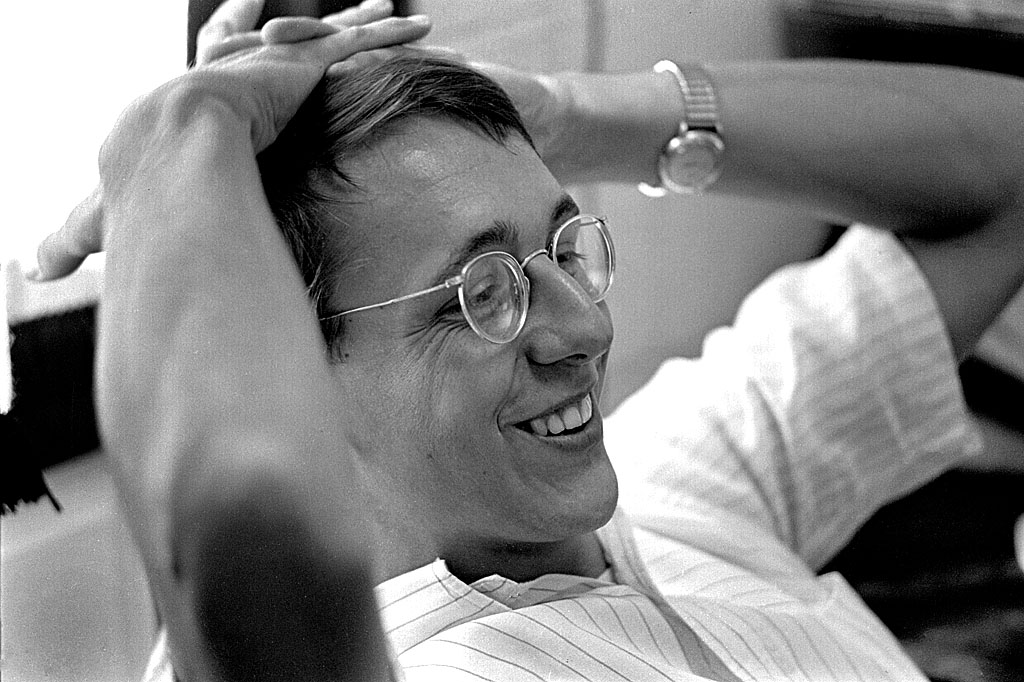
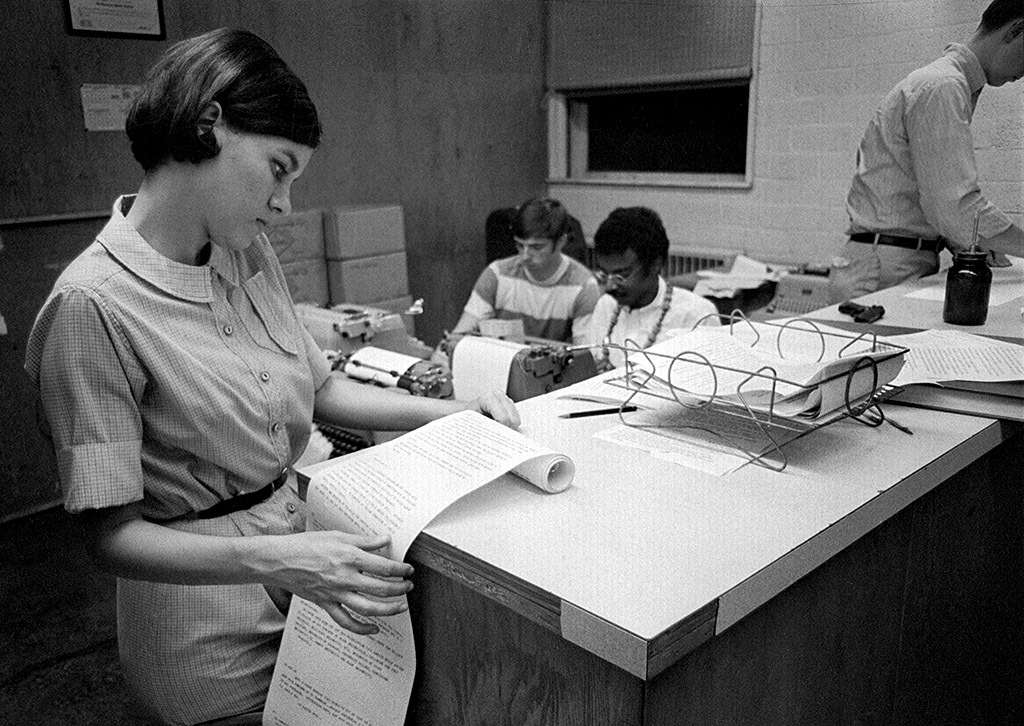
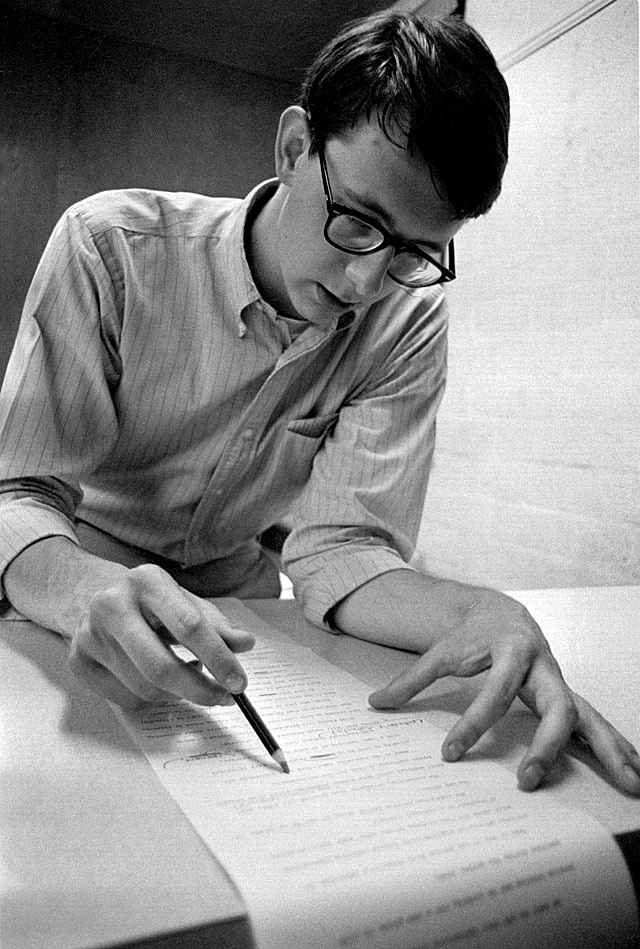
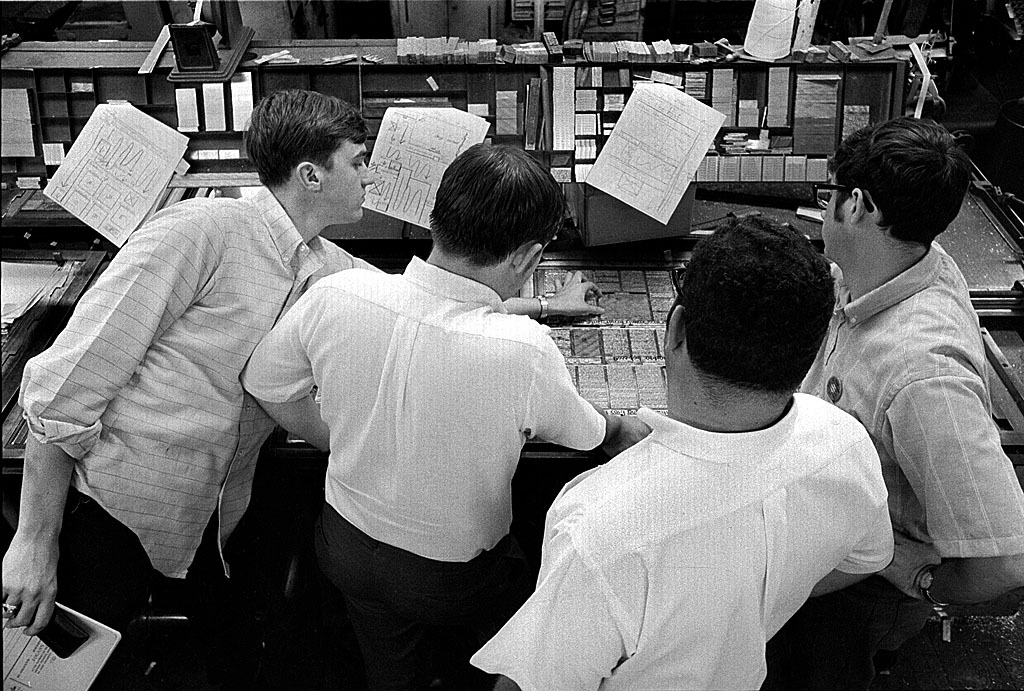
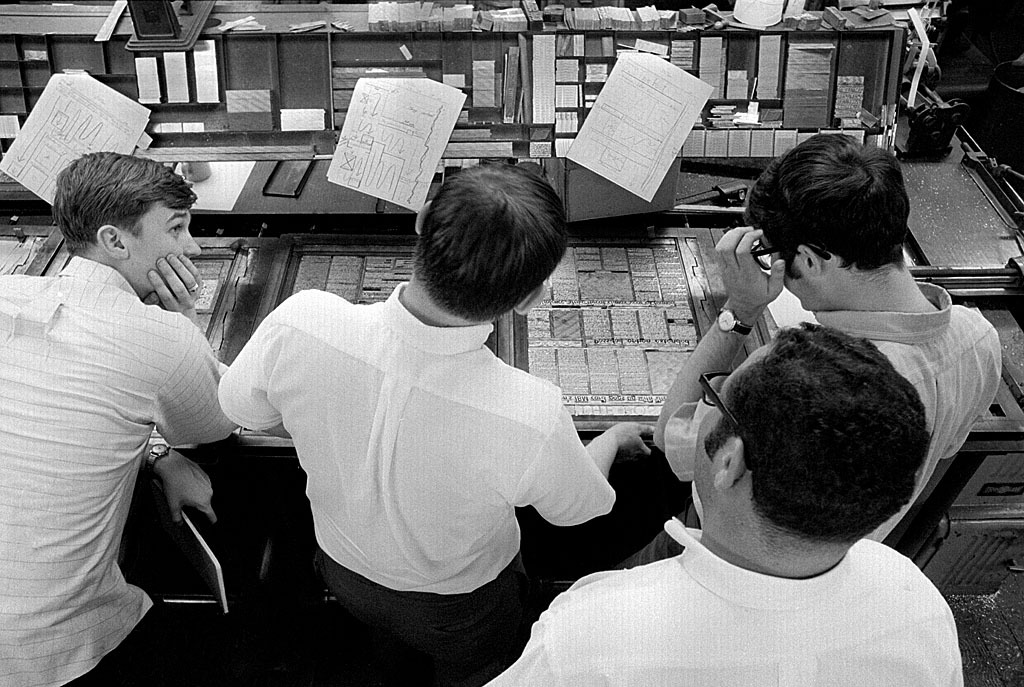
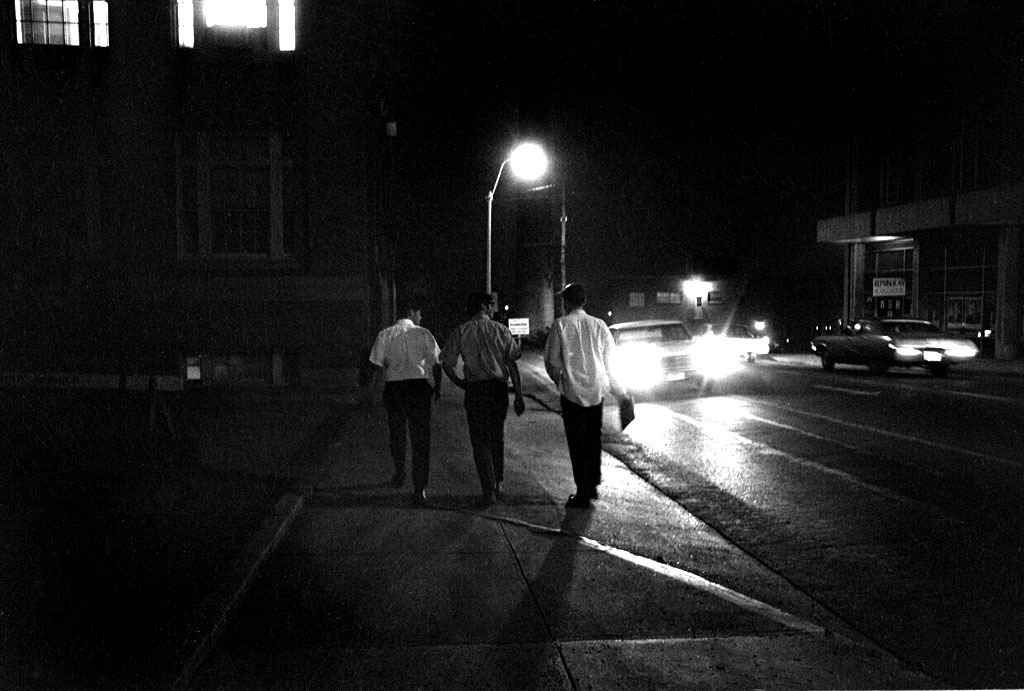
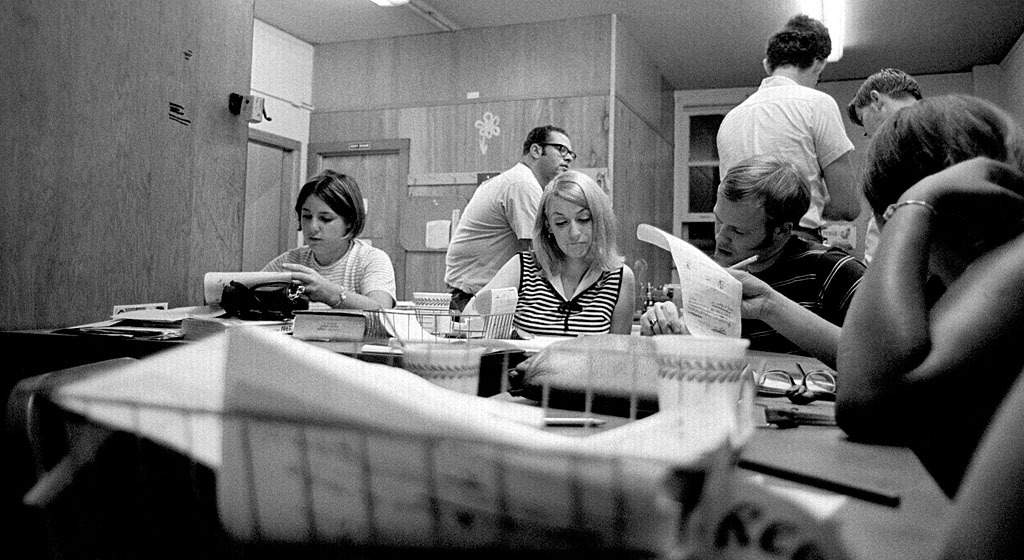
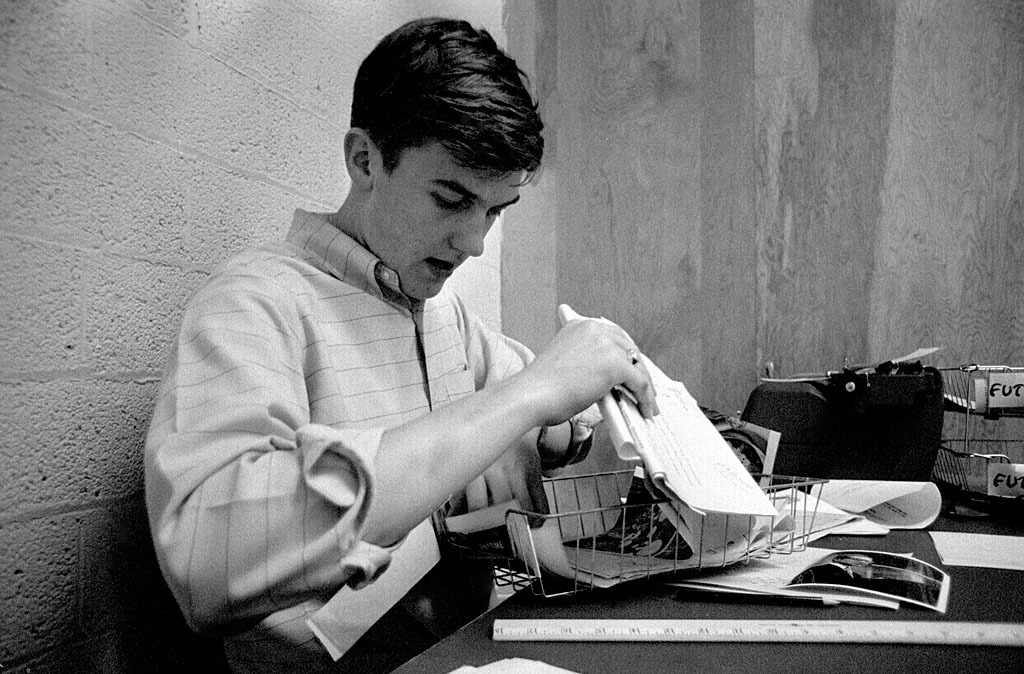
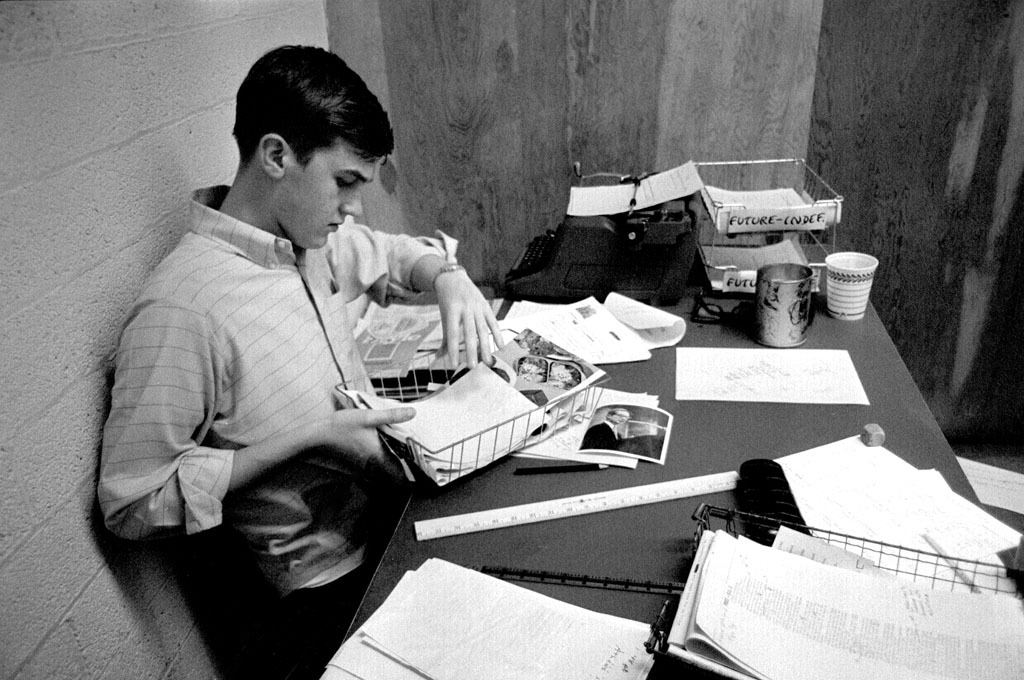
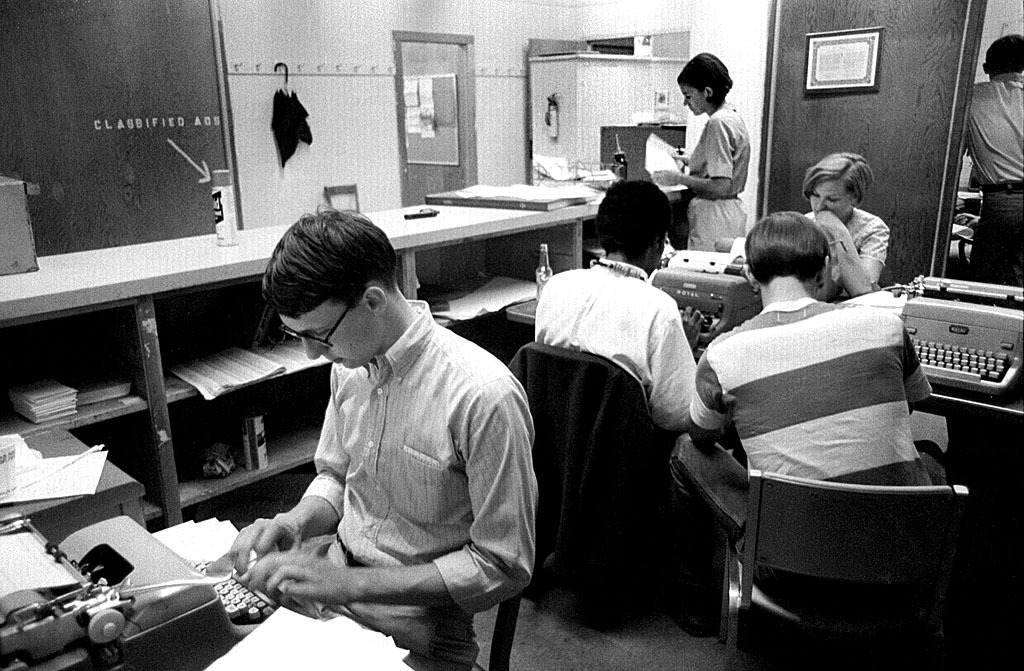
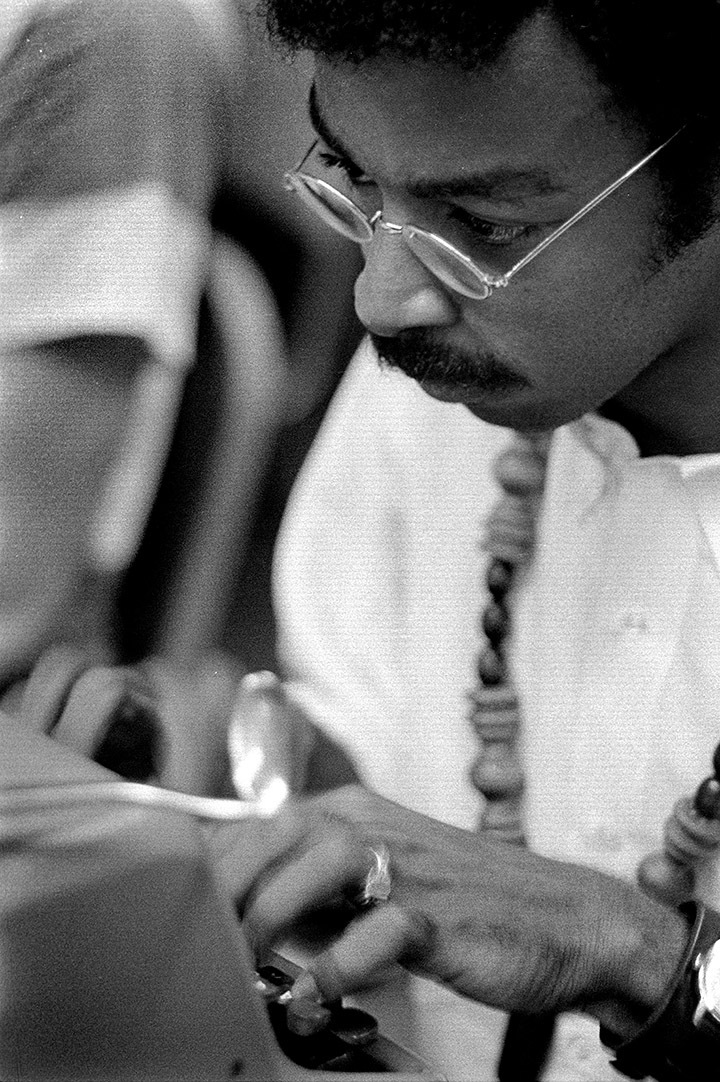
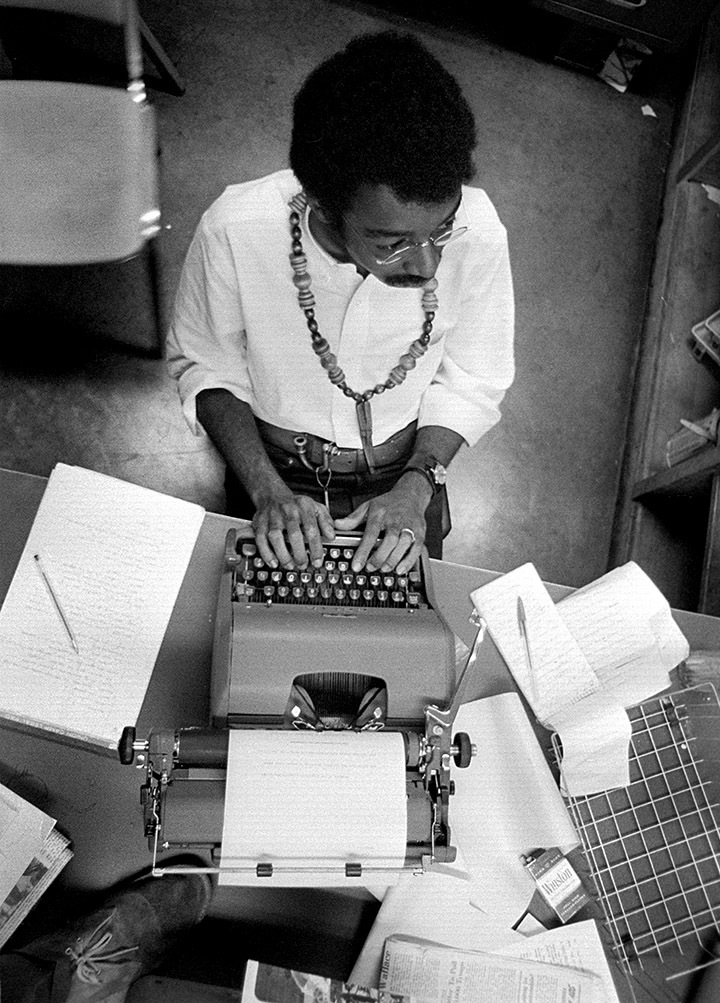
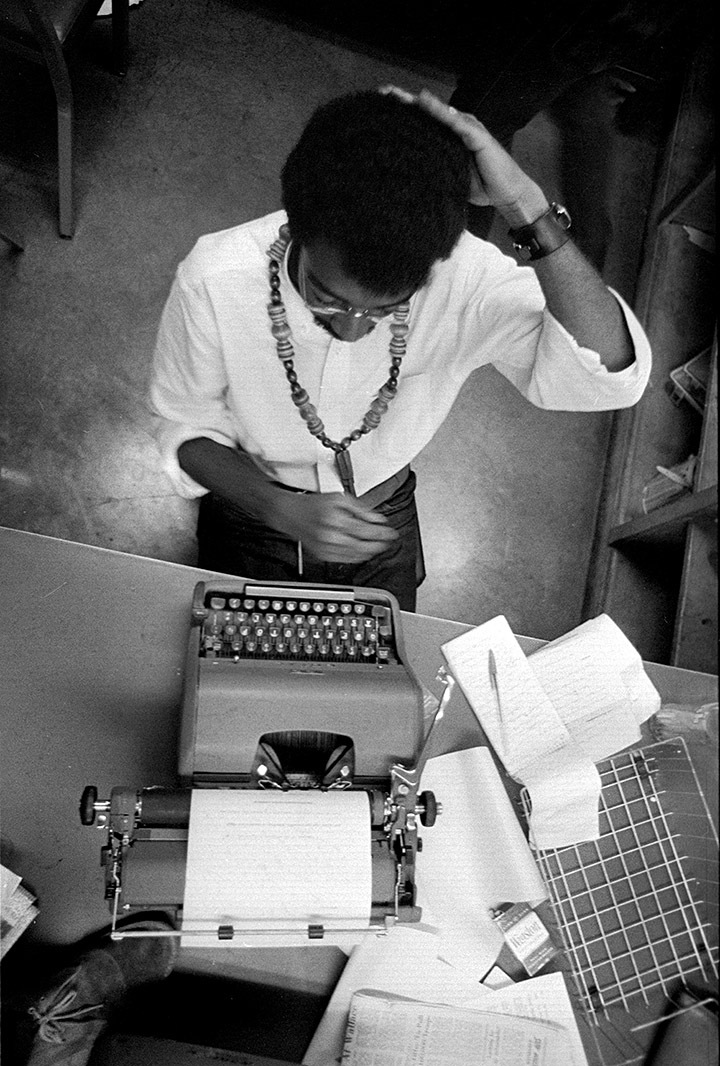
Here’s a collection of photos of Ohio University Post staffers at work (mostly). Click on any photo to make it larger, then click on the left or right side of the image to move through the gallery.

 I covered a lot of concerts and music groups without really knowing (or caring) who they were. I didn’t even bother to label the negative envelope in many cases, so I don’t know if the group went on to become famous or they were were just a garage band that somebody wanted to review.
 Compounding my embarrassment, I asked Wife Lila, “Is he still alive?” she said that he was not only alive, but she had gone with a friend to see him perform in West Palm Beach not long ago. “He still puts on a fantastic show.”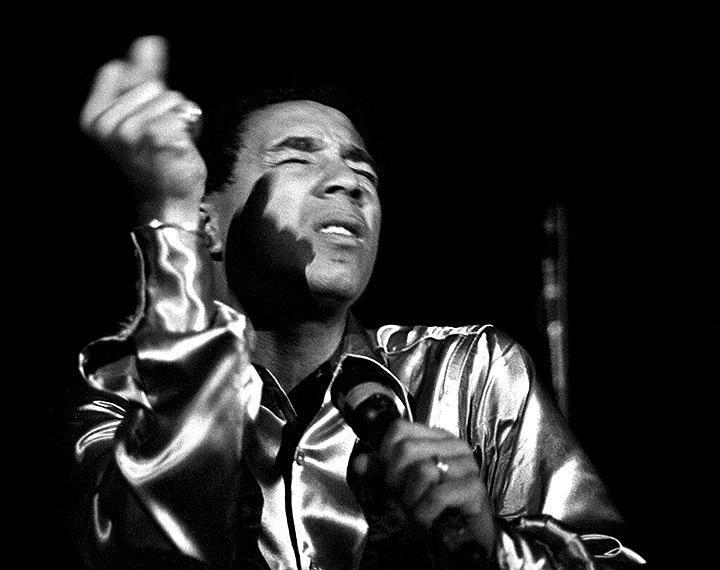
 s
s