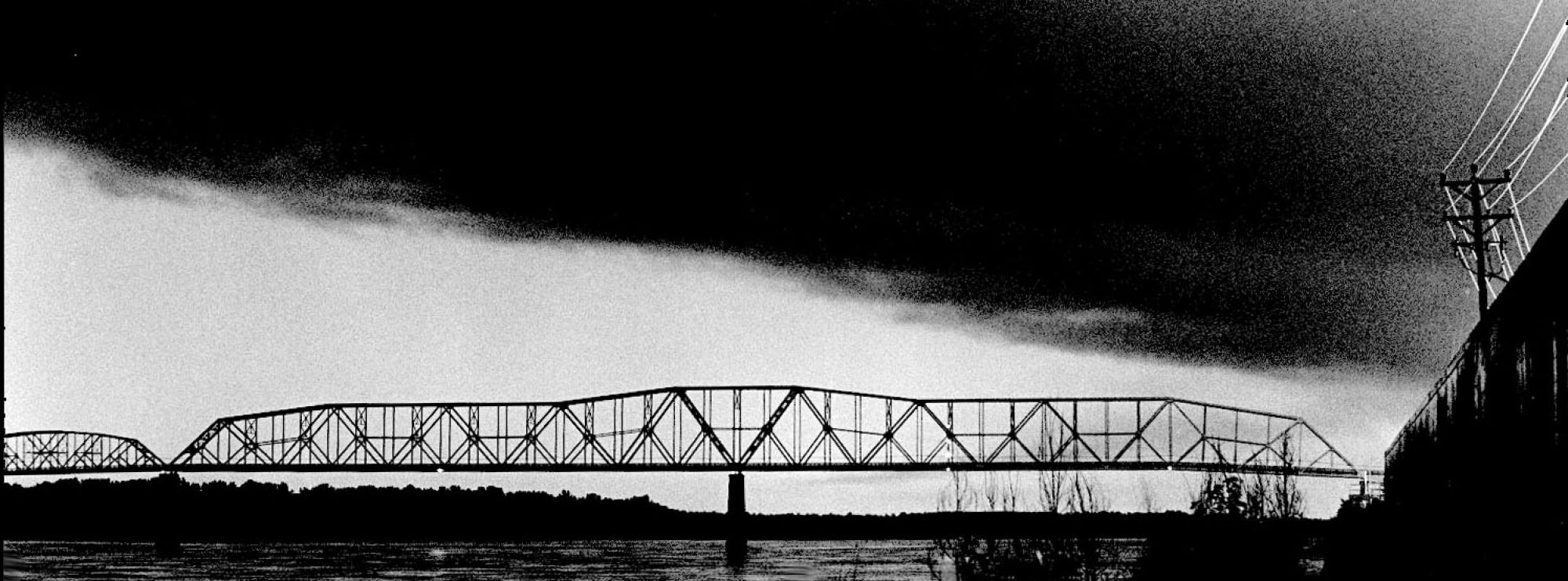
Silver Bridge Collapse

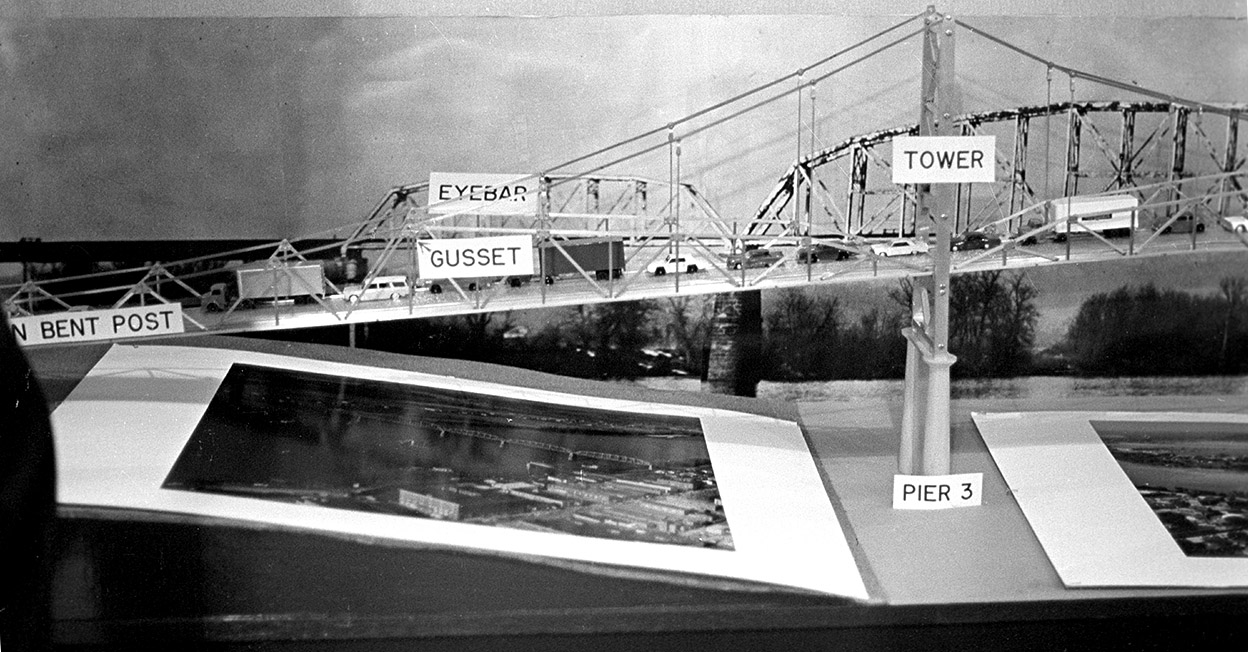
Model of Pt. Pleasant Silver Bridge 08-10-1968Chuck Beckley, who was a high school kid working as a lab tech at The Athens Messenger  47 years ago, posted a photo to Facebook of a roadside marker that read:

Silver Bridge Collapse

Constructed in 1928, connected Point Pleasant and Kanauga, OH. Name credited to aluminum colored paint used. First eye-bar suspension bridge of its type in US. Rush hour collapse on 15 December 1967 resulted in 31 vehicles falling into the river, killing 46 and injuring 9. Failed eye-bar joint and weld identified as cause. Resulted in passage of national bridge inspection standards in 1968.

The model above is one that was exhibited at a fair I covered in Point Pleasant, West Virginia.

Who covered it?
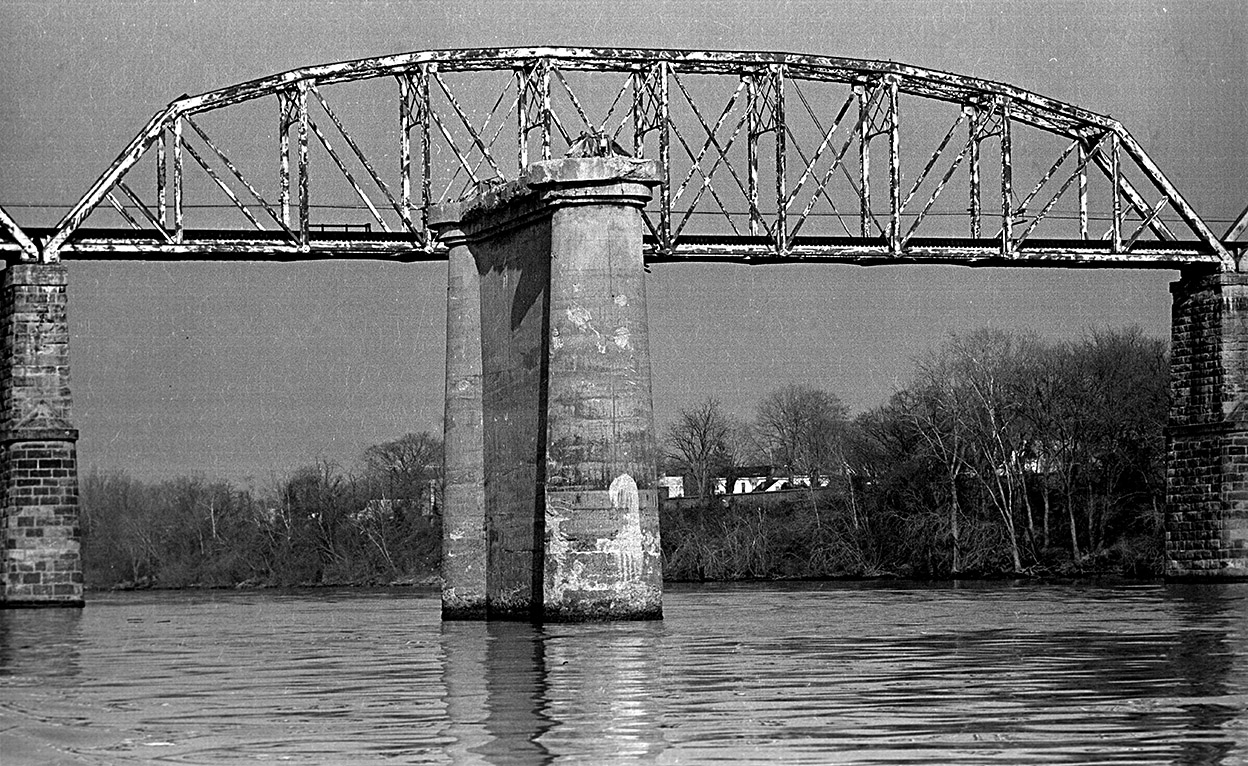
Silver Bridge piers 12-06-1969Churck asked Bob Rogers, “Did I pick up film from the bus station for you and Jon [Webb], or Ken for this?”

It wasn’t me. I didn’t start working for The Messenger until the summer of 1968. On that particular day, I was on a train about half-way to Cincinnati headed back to Cape for Christmas break. At one of the stops, a passenger got on and started spreading the word about a big bridge collapse in Point Pleasant. He didn’t have a whole lot of details, and I was anxious to get home to see family and Girlfriend Lila, so I didn’t give it much thought.

I spent a lot of time later covering the building of the new Silver Memorial Bridge. Here are the piers of the old bridge. If the railroad bridge in the background is indicative of how well bridges were maintained in those days, it’s no wonder the bridge went down.

Over in less than a minute
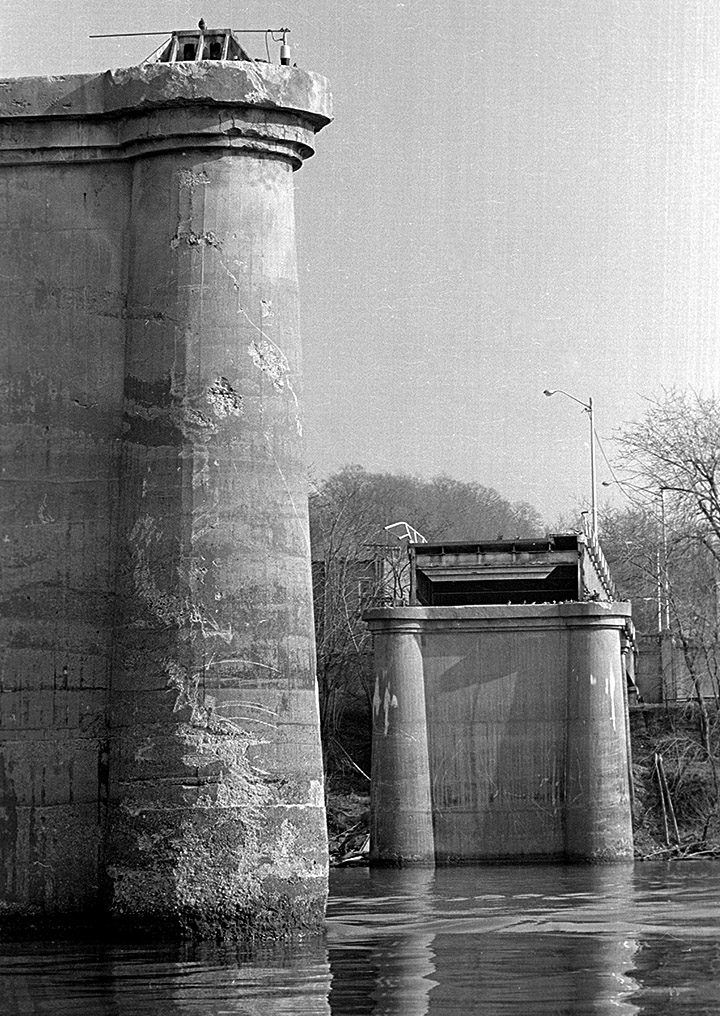
Silver Bridge piers 12-06-1969Even though I didn’t cover the actual tragedy, I’m haunted by the gouges and scars on this pier. In other photos on that roll, you can still see cables and wires dangling down into the water.

The National Institute of Standards and Technology website explained it in chilling detail:

On December 15, 1967 at about 5PM the traffic signal at one end of the Silver Bridge turned red. The rush hour traffic, together with the Christmas shopping traffic, completely occupied the main span of the bridge connecting Point Pleasant, West Virginia with Kanauga, Ohio. Suddenly a loud cracking sound was heard and one of the main towers began to twist and fall.

In less than a minute, all three spans of the bridge collapsed into the icy Ohio River, carrying with them all the cars, trucks, and people. Forty-six died.

[The failure of an eyebar set the chain of events in motion] Once this eyebar failed, the pin fell out, unpinning this part of the suspension chain. The adjacent tower was subjected to an asymmetrical loading that caused it to rotate and allow the western span to twist in a northerly direction. This span crashed down on the western shore, folding over on top of the falling cars and trucks. Loaded by the whole weight of the center span, which had now become unsupported on its western end, the east tower fell westward into the river along with the center span. Finally, the west tower collapsed toward Pt. Pleasant and into the Ohio River, completing the destruction of the Silver Bridge.

Two bodies were never recovered.

 Silver Memorial Bridge
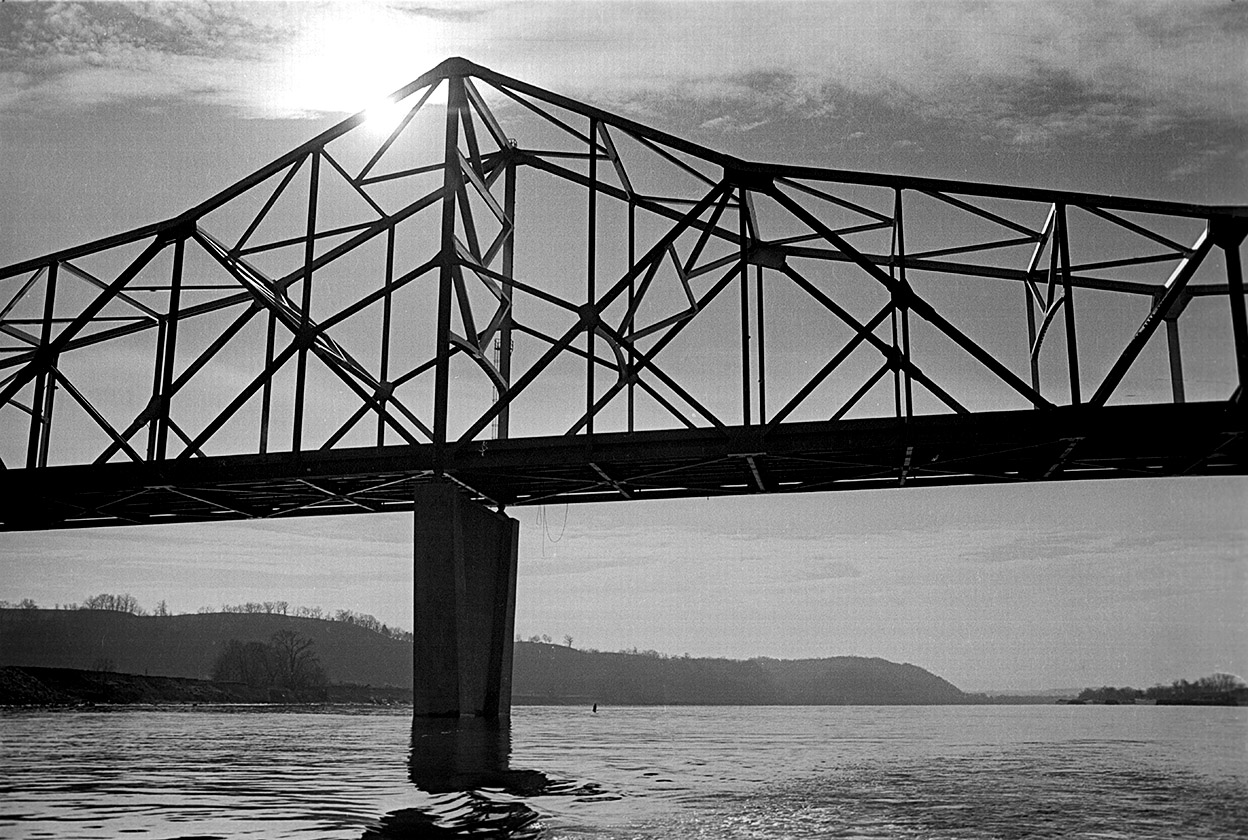
Silver Memorial Bridge 12-06-1969I took this photo of the new Silver Memorial Bridge on December 6, 1969. The replacement bridge opened on December 15, 1969, exactly two years after the collapse.

When I went through that area last summer, I looked for any remnants of the old Silver Bridge. Either I was in the wrong place or every trace of it has been removed. I still think about what it must have been like to have been stuck in that traffic jam nearly half a century ago.

James Baughn’s Bridgehunter website has more information on the bridge and its collapse.
Typewriters and Pens

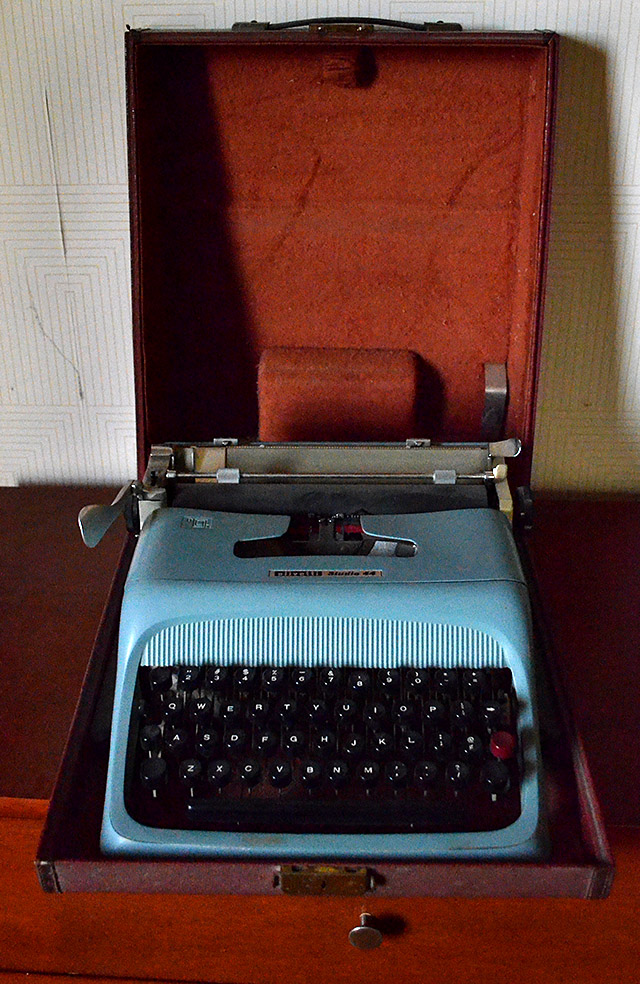
Steinhoff Olivetti typewriter 11-05-2013_0043Brother Mark has my old portable Olivetti typewriter. I call it mine, but Dad never specifically gave it to me. I remember how proud he was when he brought it home: It was a cool blue color and lived in a red felt-lined case. He was impressed at how light it was and how good the keys felt.
It ended up on my desk in the basement, typed a gazillion high school papers, then it went away to Ohio University with me.

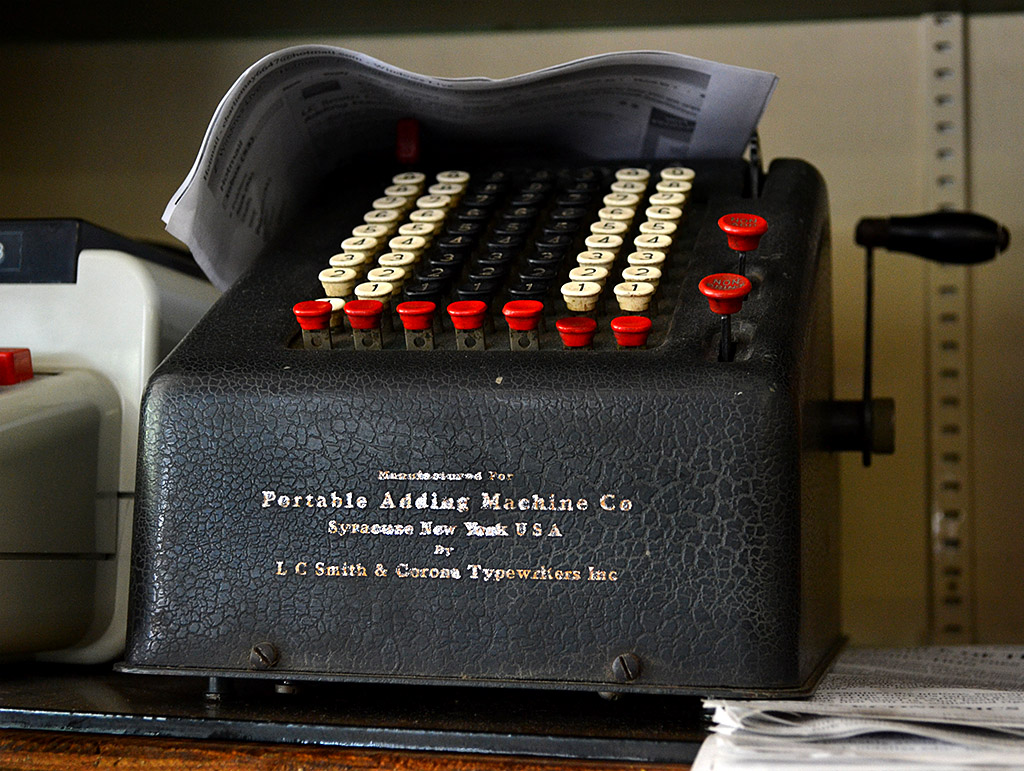
Because Dad always had an office at home, in addition to one somewhere else, I always had access to a typewriter and a hand-cranked adding machine. That explains why my handwriting is lousy (and my math skills are equally bad).

An excuse to run typewriter photos

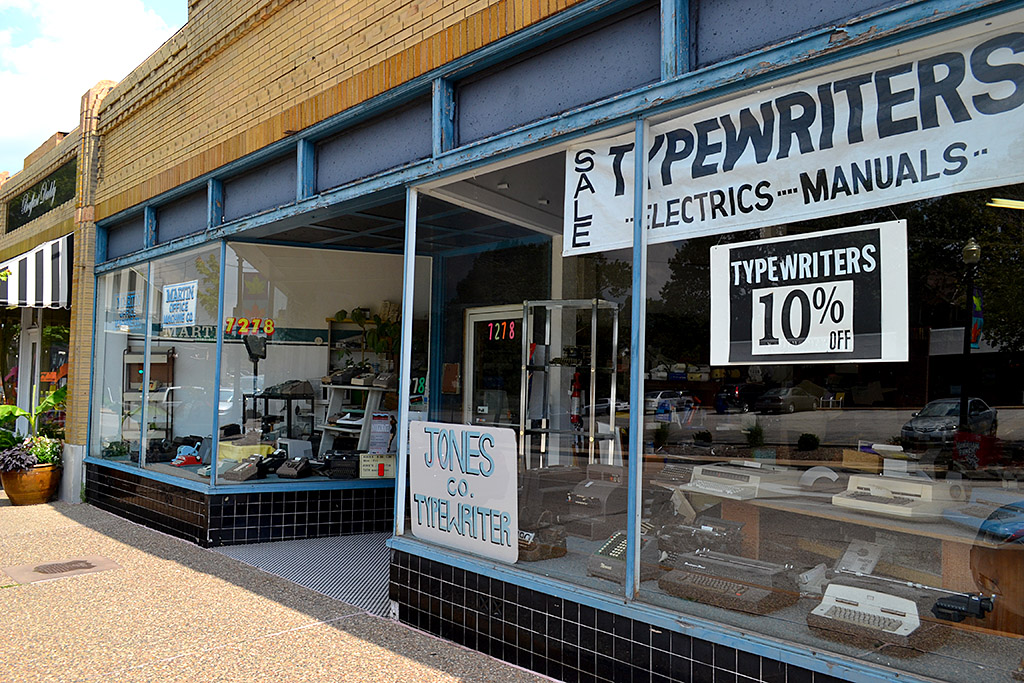
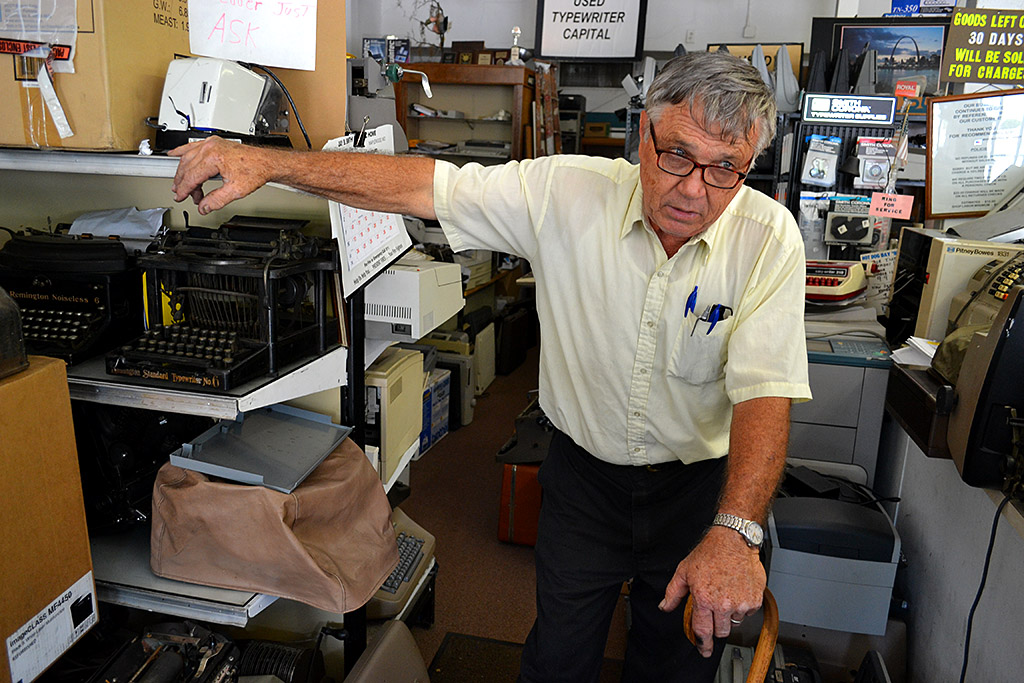
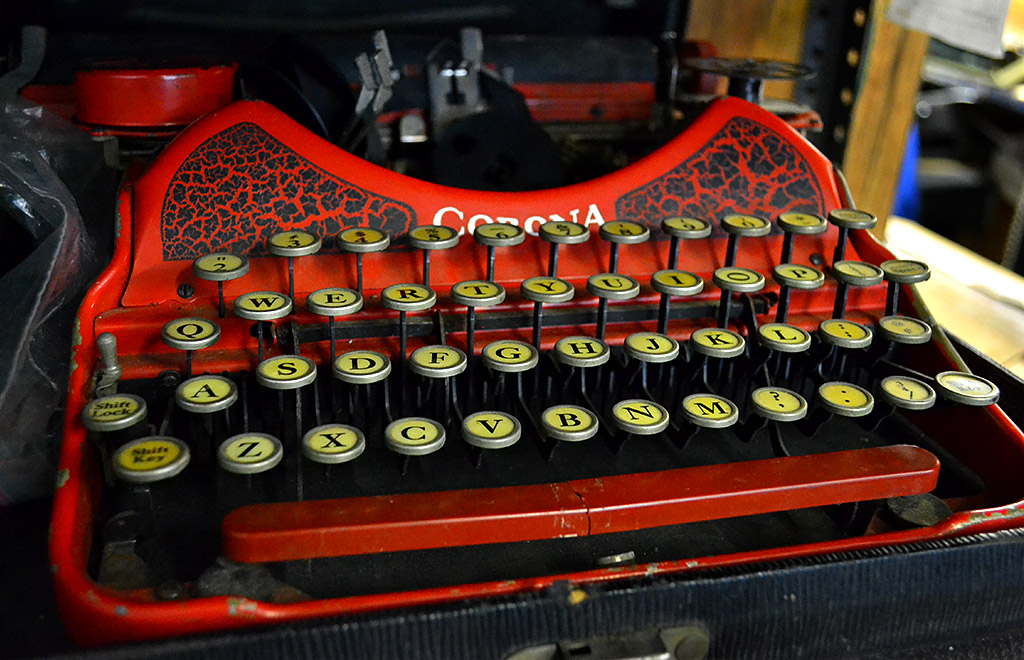
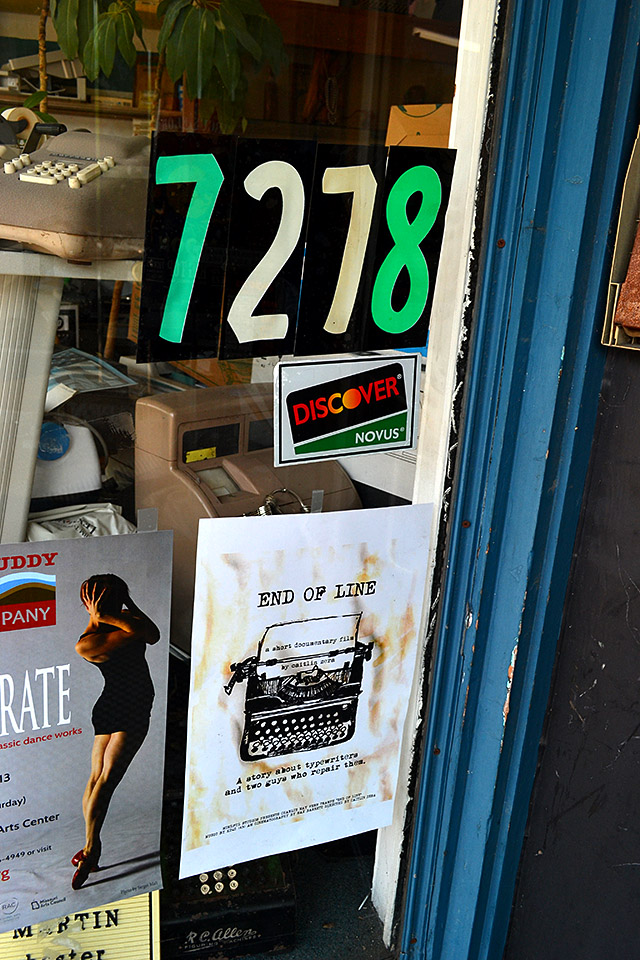
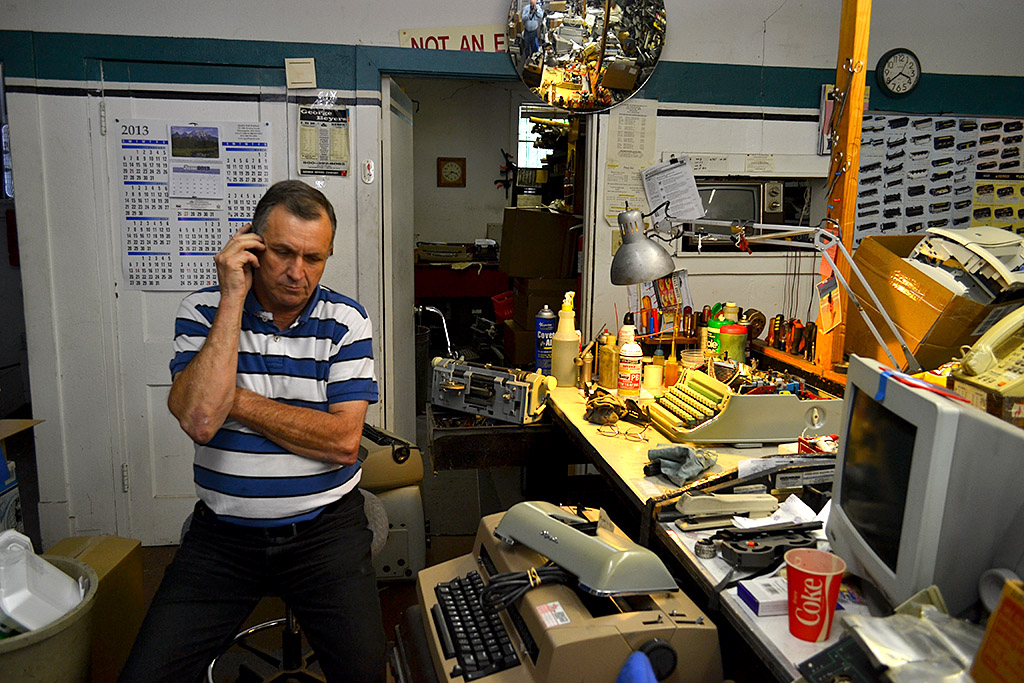
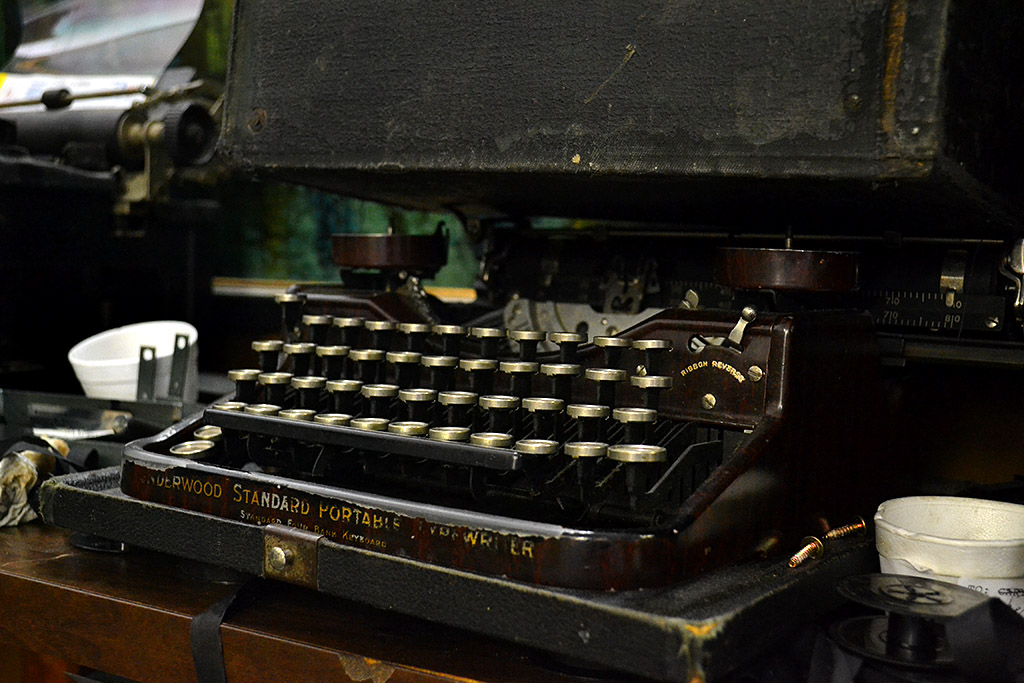
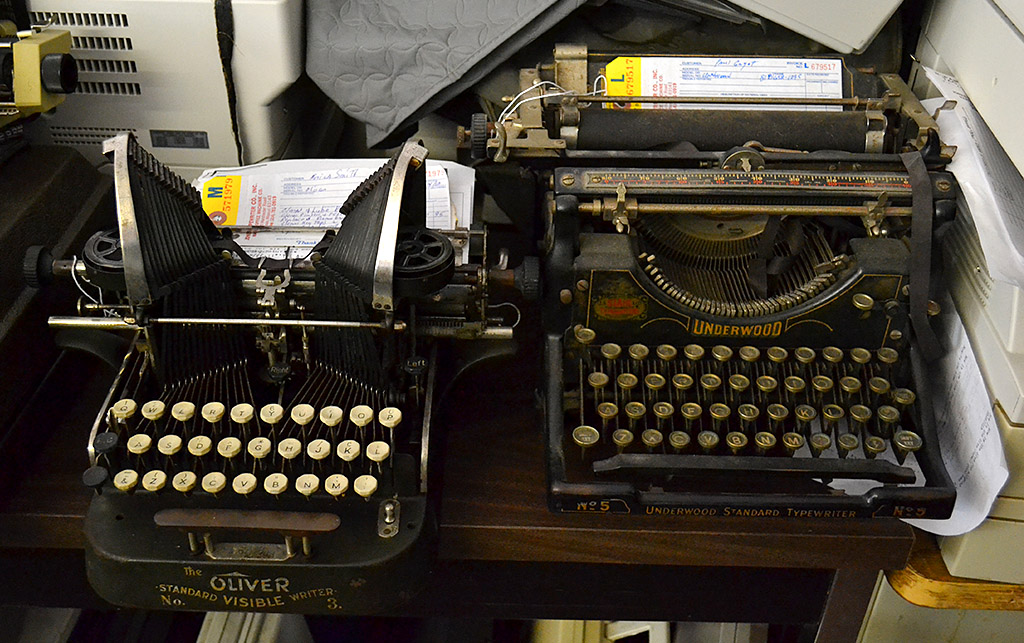
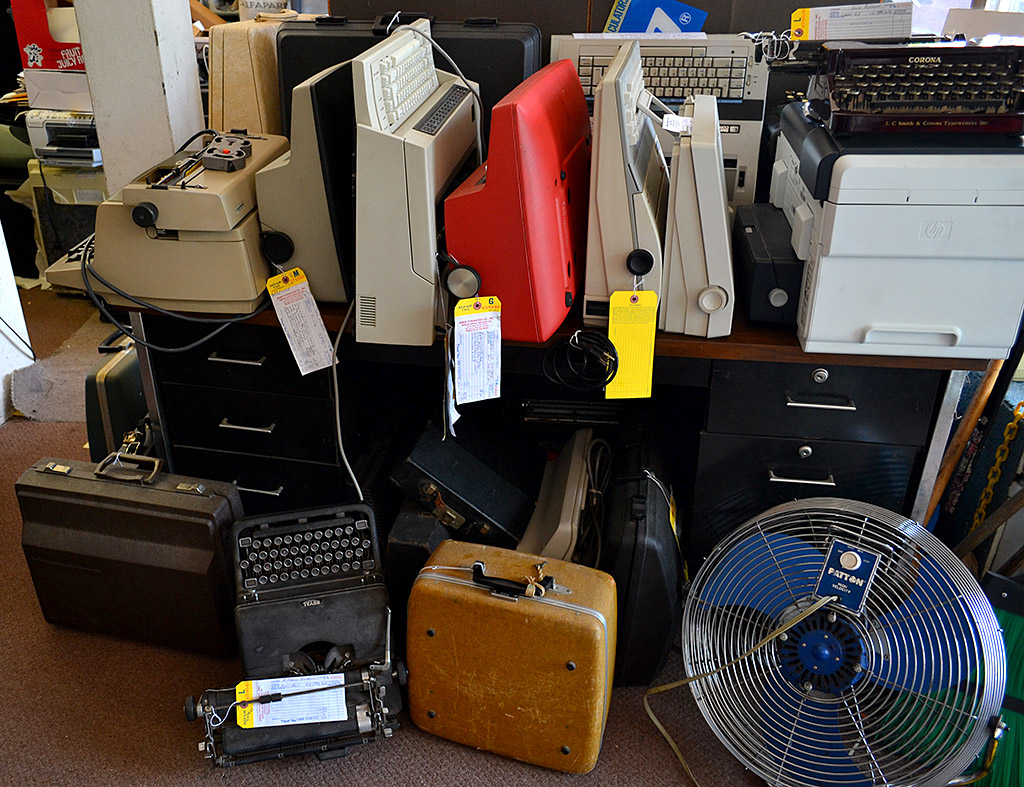
Jones Typewriter Company 07-03-2013The lead shot is an excuse for me to run some photos I took July 3 when I was in St. Louis. On the way to meet Mary, an old friend from my Jackson Pioneer days, I saw an interesting typewriter repair shop on Manchester in Maplewood. I was running late (what’s new) and figured I’d never get back there again. As it turned out, I was meeting up with someone else the next day and passed the shop again. This time I stopped.

This is where the story gets embarrassing: I took a bunch of notes when I talked to the two brothers who owned the joint, but I must have left that notebook in Florida.

As it turns out, the repair place might not be there today. I did a quick web search and found a July 28, 2013, story that said Jones Typewriter might be leaving its Maplewood location because the rent had been raised too many times.

My own typewriter stories

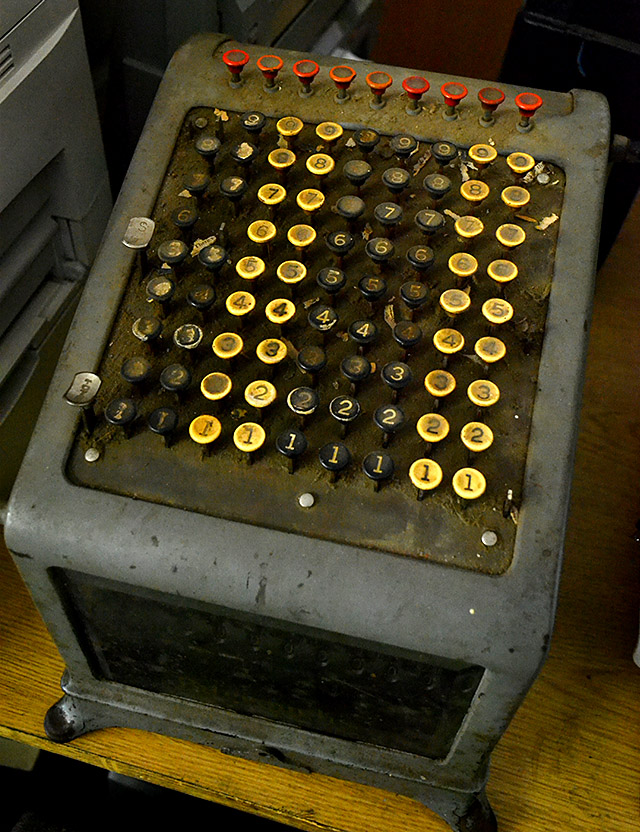
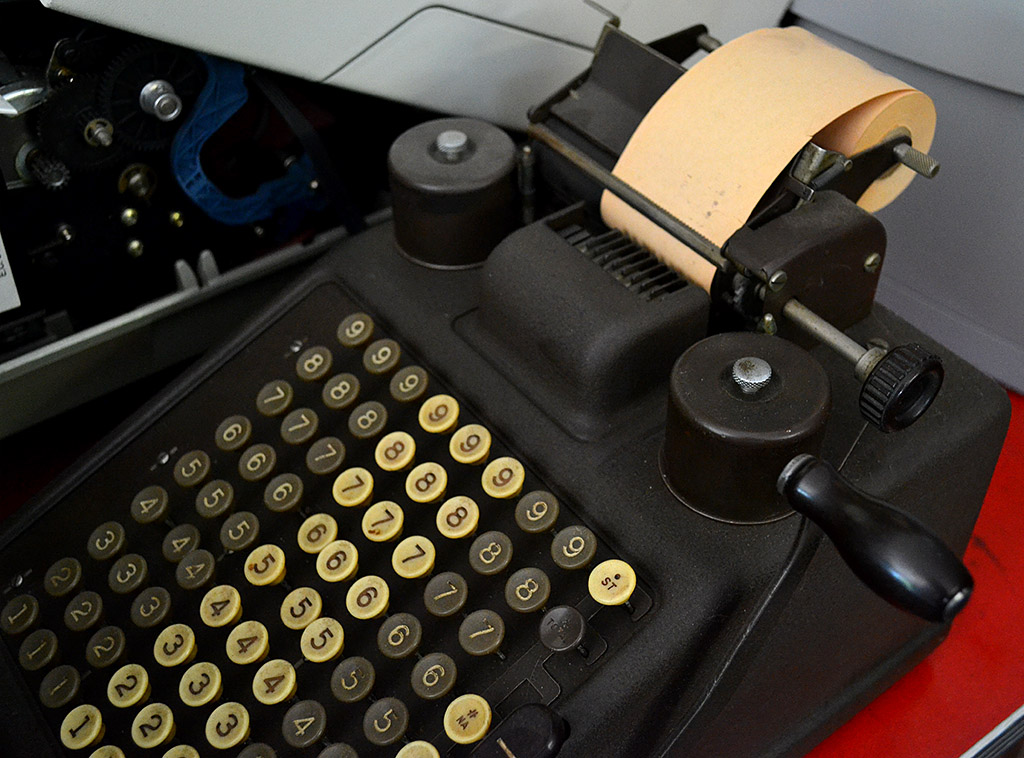
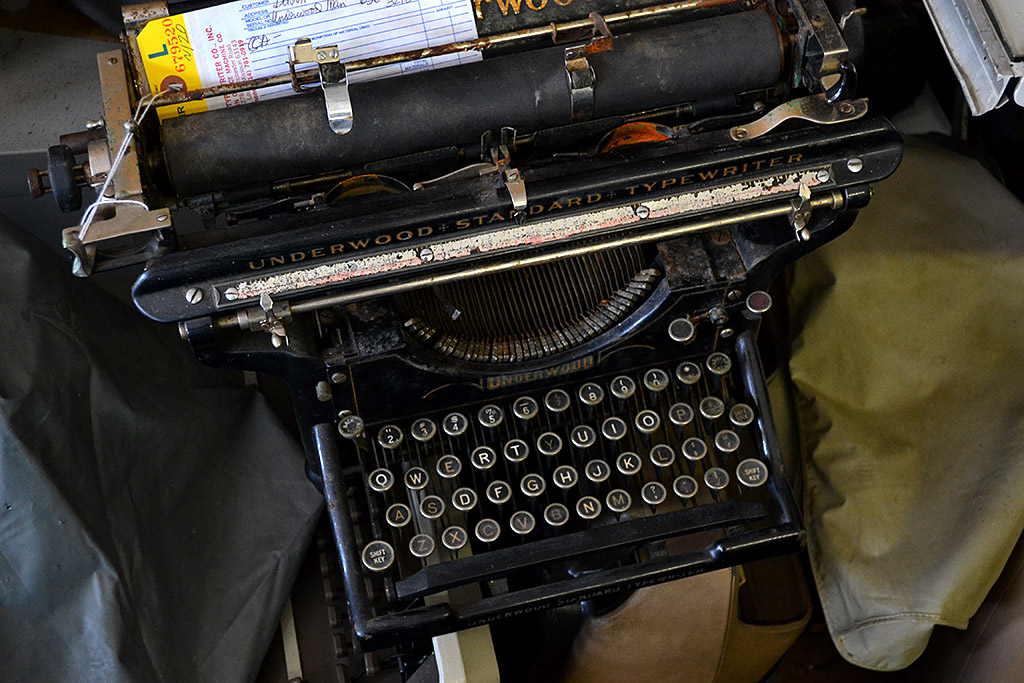
Jones Typewriter Company 07-03-2013In the absence of real info about the Jones business, I’ll blather on about my other typewriter experiences, then run a gallery of photos from the place where typewriters and calculators go to be reborn, even if cannibalization must occur.

I don’t know how Mark ended up with the typewriter. I probably brought it back home after I left Athens. By the time I started working at The Athens Messenger, I had access to a full-blown typewriter and good workspace to do whatever schoolwork needed to be typed.

Special IBM Selectrics

Jones Typewriter Company 07-03-2013Not long after I started at The Palm Beach Post, the newspaper’s old manual typewriters were replaced with IBM Selectrics that had special characters on the magic spinning balls that put words on paper. Reporters would type their stories and the pages would be scanned and turned into type that was pasted up by the composing room. The special characters were formatting commands for bold, italic, and the like. You could use them as a regular typewriter if you avoided the special characters.

I kept putting in budget requests for more typewriters for the photo department, but they kept being rejected because “we’ll have lots of spares when we get the new pagination system.” After being turned down three times, I decided drastic measures needed to be taken.

Shhhh, here’s a secret

Jones Typewriter Company 07-03-2013I’m going to tell you a little secret. I’m not with the company anymore; all of the old Selectrics are probably in a landfill, and I think the statute of limitations has run out on my transgressions, so I think I’m safe.

I would wander around the building until I saw a typewriter wearing a cover sitting in a corner or a hallway, obviously not in someone’s workspace. I would wait until nobody was looking, take off the cover, type, “Am I being used?” on a scrap piece of copy paper, then replace the cover.

If I checked back two weeks later and the note was still there, the typewriter would find itself in the photo department. Management never asked where the typewriters came from nor why I had quit asking for new ones. So far as I know, nobody ever reported any missing typewriters to security.

Besides, how could it be stealing if the property never left the premises, right?

Where’s the green ribbon?

Jones Typewriter Company 07-03-2013I just noticed that my old Olivetti at the top of the page has a conventional black and red ribbon. For those folks who have never used a typewriter, you normally typed with the black portion of the ribbon. If you were doing bookkeeping and wanted to emphasize a negative number, you’d switch to the red part. Hence, the expression, “in the red” for losing money.

Dad had a thing for green. He had a green ribbon in his typewriters, painted his tools green and wrote with a green fountain pen. I did the same, for the most part.

I have a weakness for hardware and office supply stores. Since Missourian Office Supply was next door to the newspaper office and since I had an employee discount, I bought a selection of colors of ink cartridges for the fountain pen I used for school work. I think some of my teachers may have objected to my unconventional color choices, but I likely ignored them or switched to blue or black for their classes.

Thank goodness for felt tips

I had a few of the really old-fashioned fountain pens that had a bladder inside that you filled by pulling up on a lever while the pen’s tip was dipped in a bottle of ink. They leaked and always ran out of ink at the wrong time. Ink cartridges were much neater and you could carry spares. I abandoned ink pens when felt tips became common. They fitted my sloppy note-taking style better than fountain pens.

To show how old I am, I can remember that some of my grade school desks still had holes for ink wells. Or, they might have been to hold water for the dinosaurs to drink, who knows?

Hurricane gives, hurricane takes away

Jones Typewriter Company 07-03-2013My favorite ballpoint of all time was a Papermate pen I found on the steps of The Post in 1979 when I came back from vacation because Hurricane David was barreling down on Florida. David was a Category 5 storm went it went over the Dominican Republic, so this looked like it was going to be the real deal.

I drove 19 hours straight and pulled into West Palm Beach about 2 in the morning just as the winds were really starting to whip up. Fortunately for us, the mountains had knocked the storm down to a Cat 1. Still, we had some aluminum awnings blow off our house, never to be seen again.

I carried that pen every day until it slipped through a hole in my pocket while covering Hurricane Elena in 1985. I hope someone in Pascagoula, Mississippi, found it and loved it as much as I did.

Jones Typewriter Company photo gallery

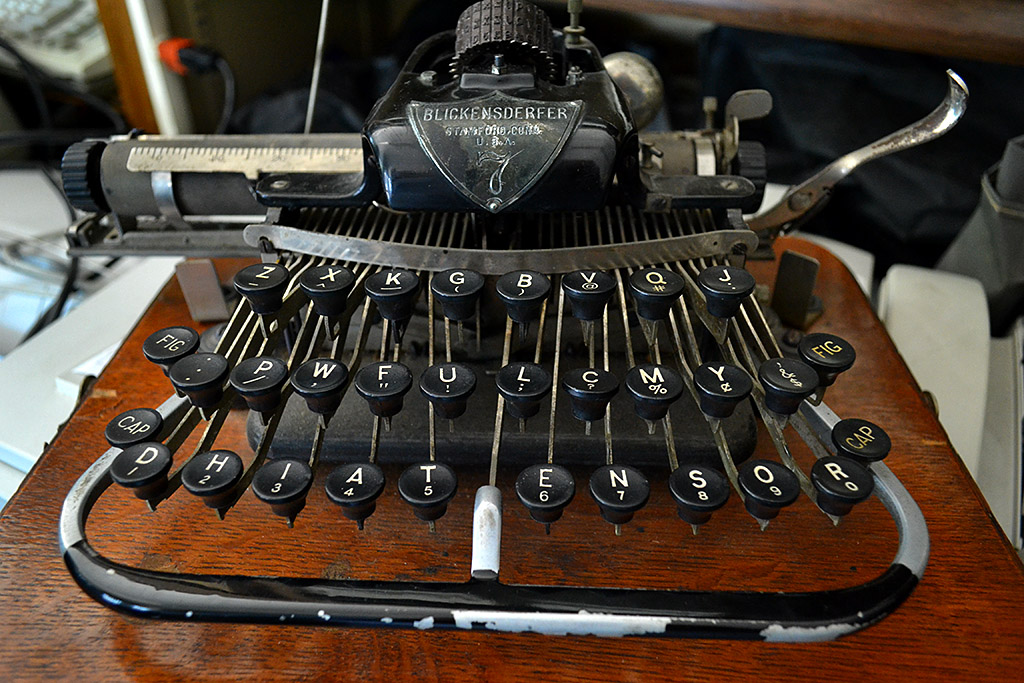
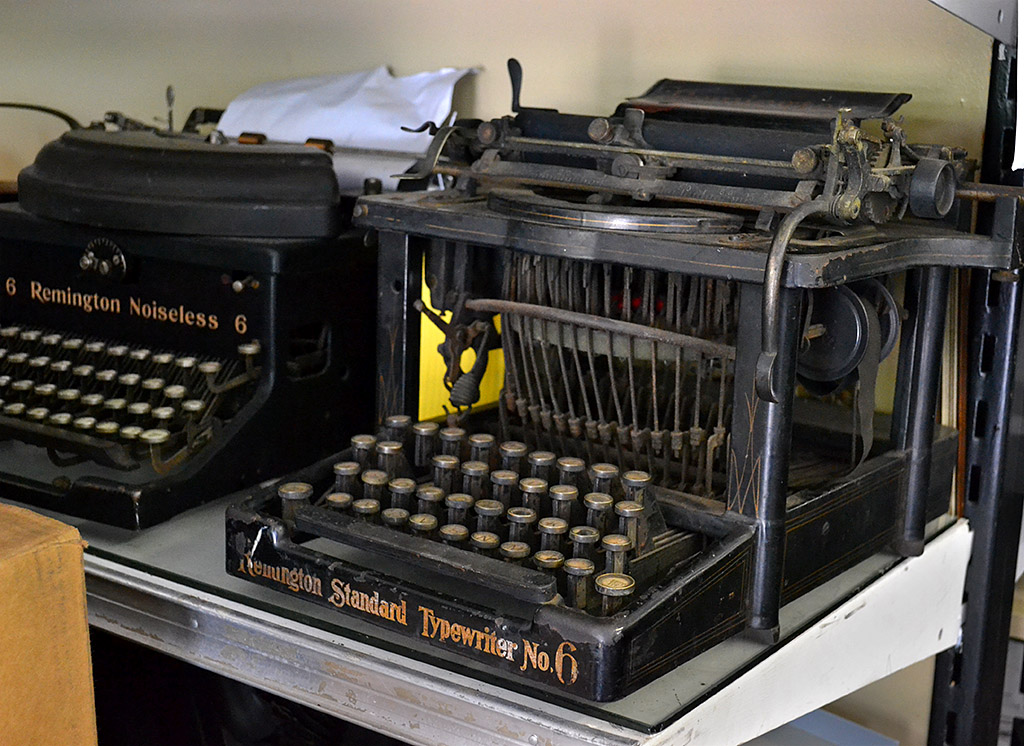
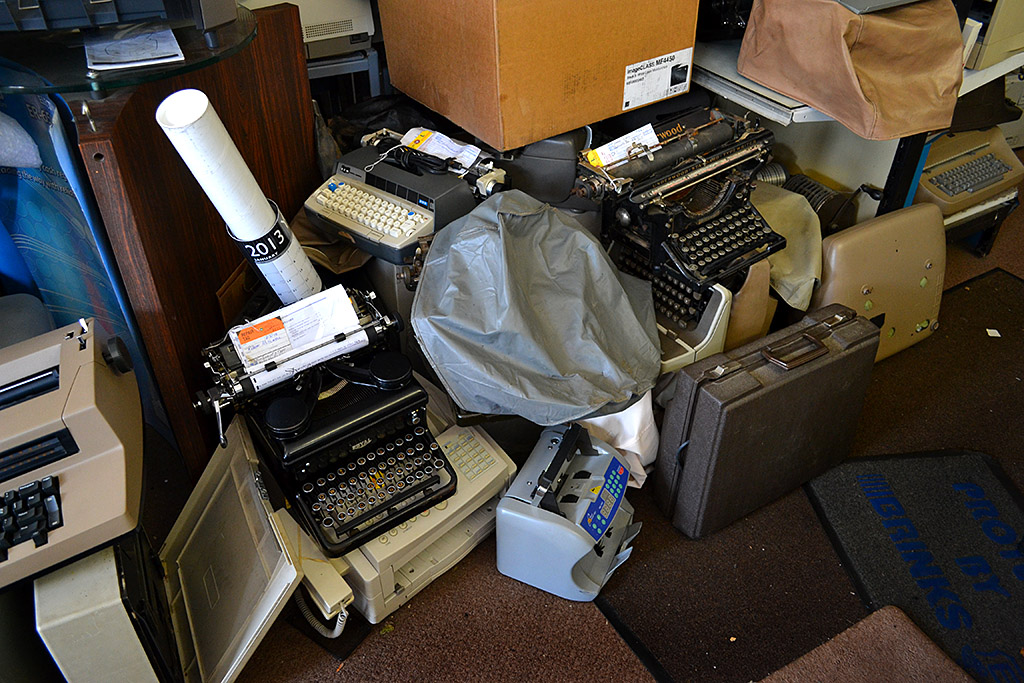
The place was a cross between a repair shop and a museum. I hope the brothers and their typewriters found a new home if they did decide to move. There are a lot of writers out there who prefer turning out their works on a manual typewriter rather than a computer word processor. (I’m not one of them.) Click on any photo to make it larger, then click on the sides to move through the gallery.


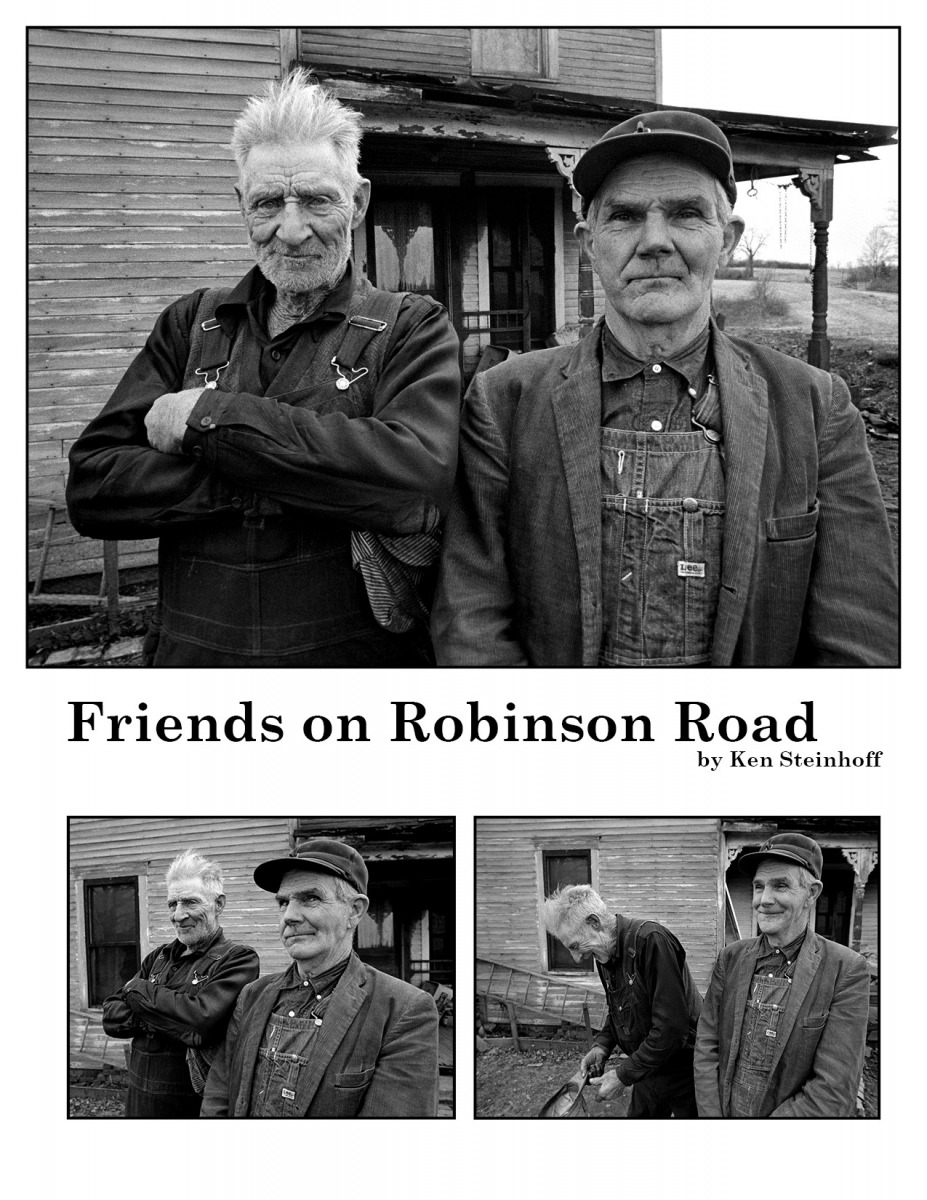
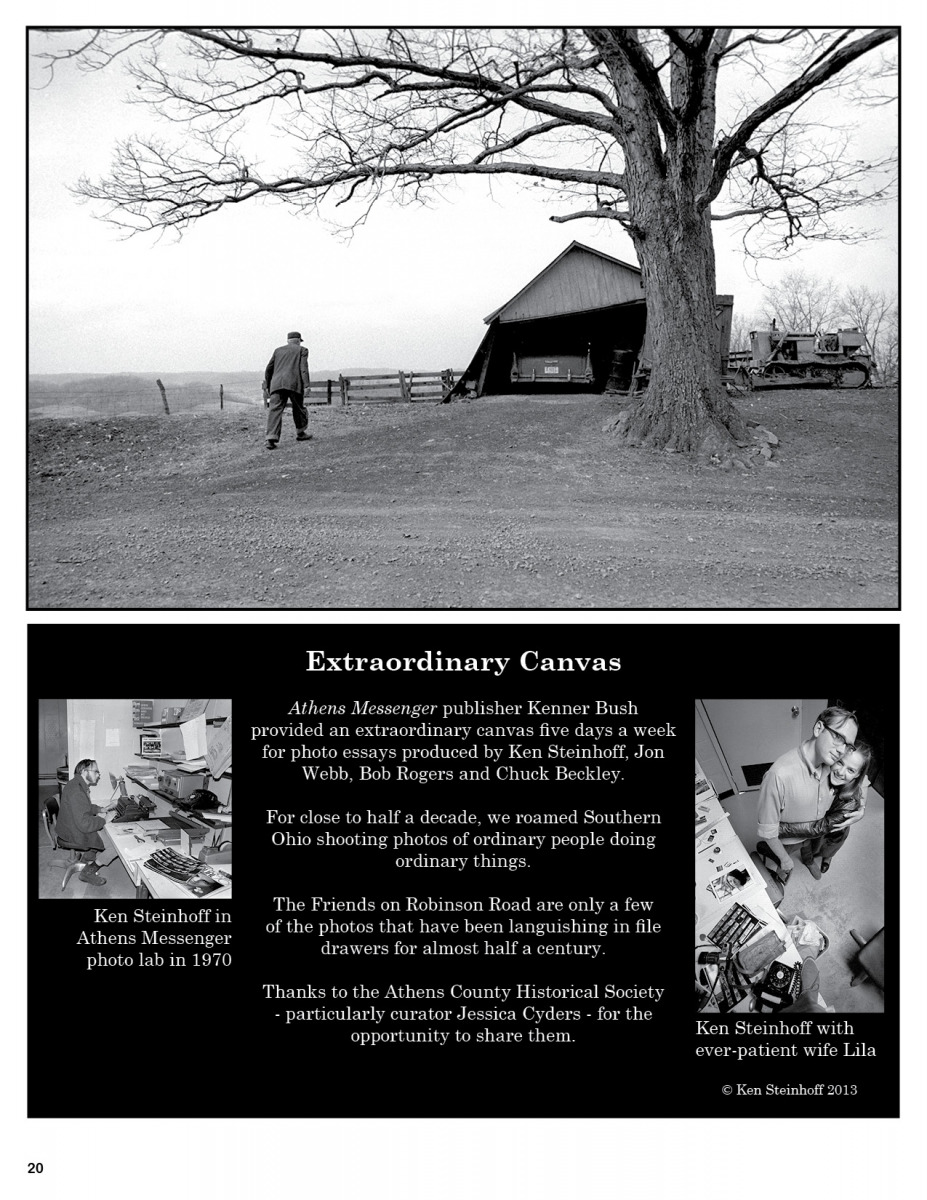
Friends on Robinson Road Exhibit

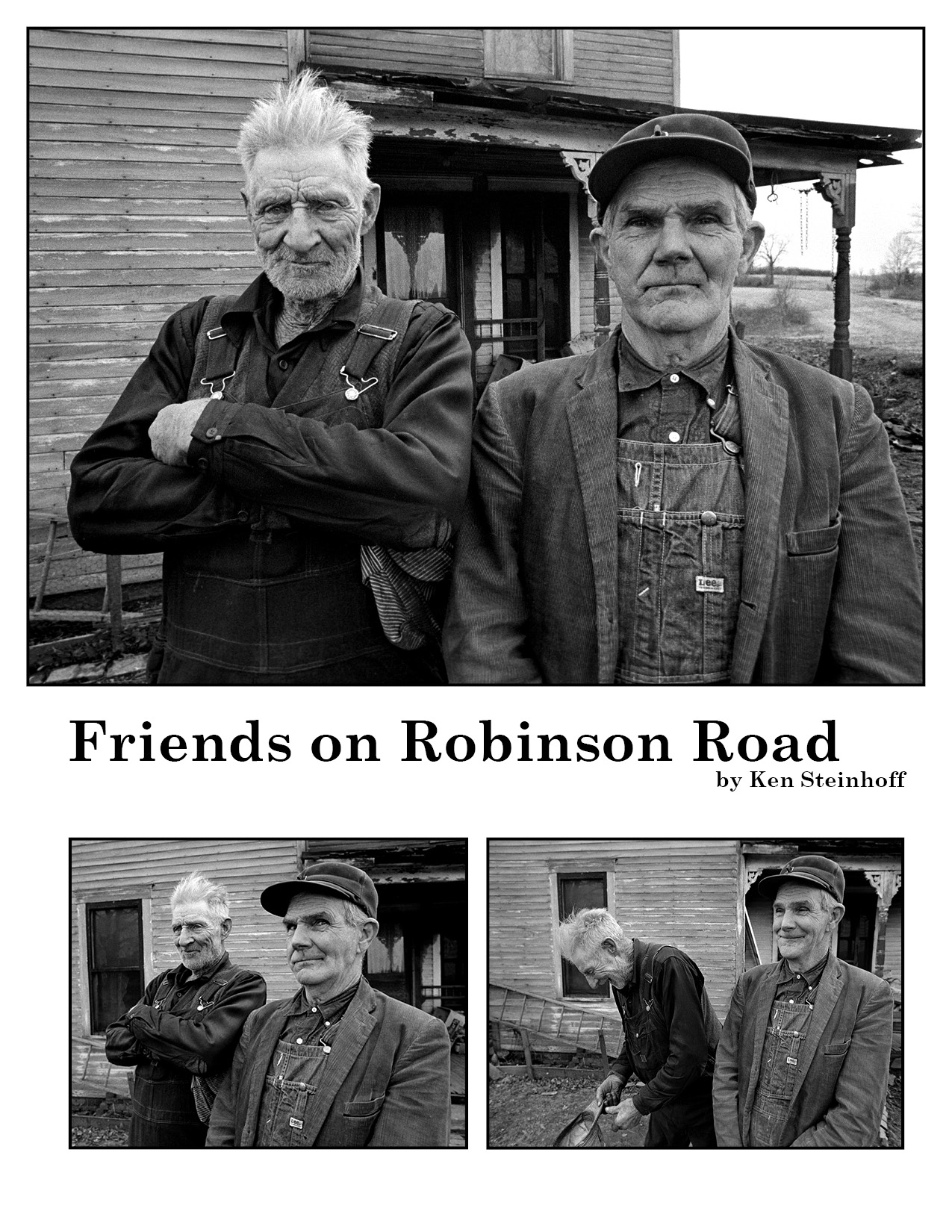
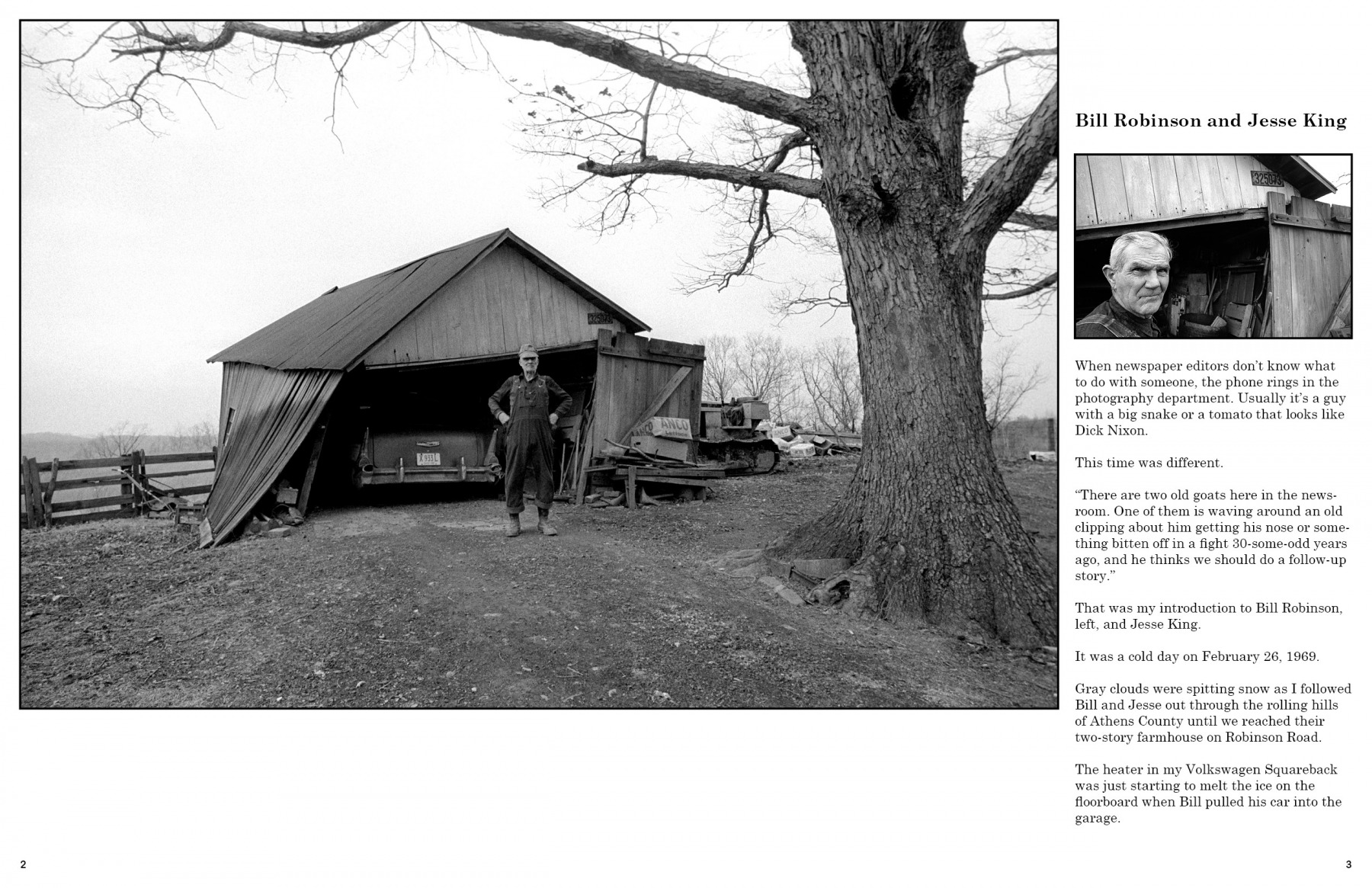
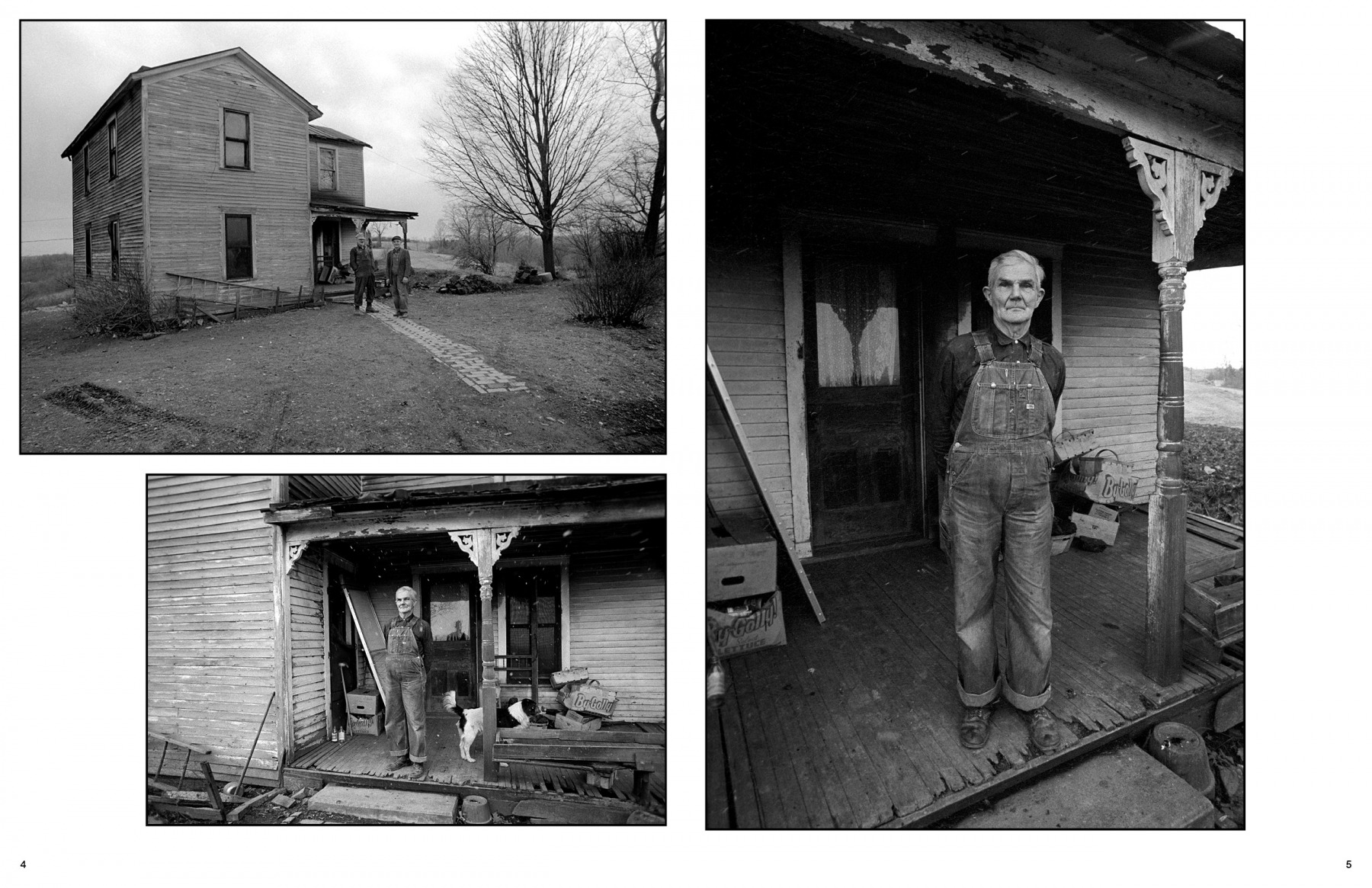
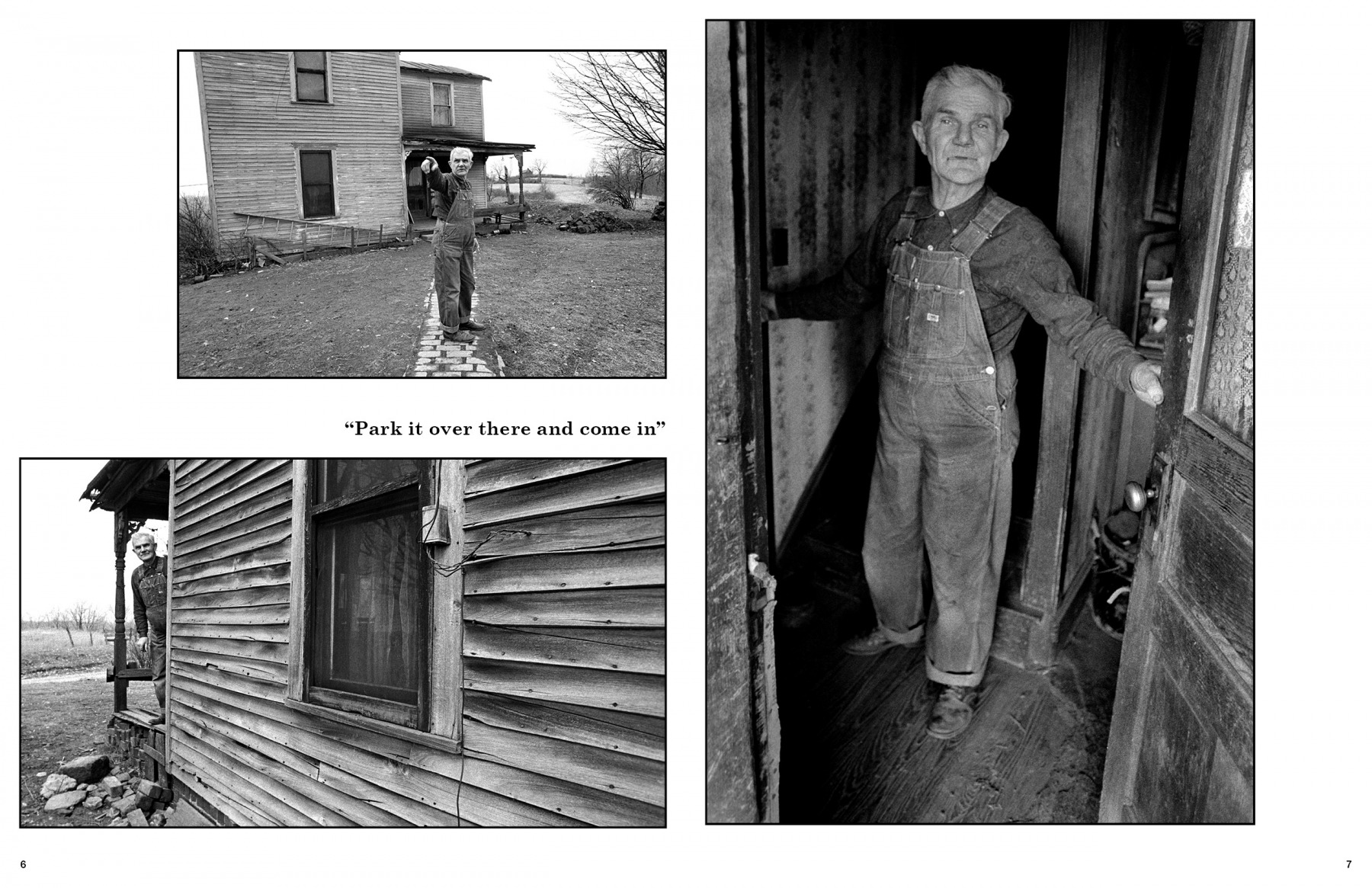
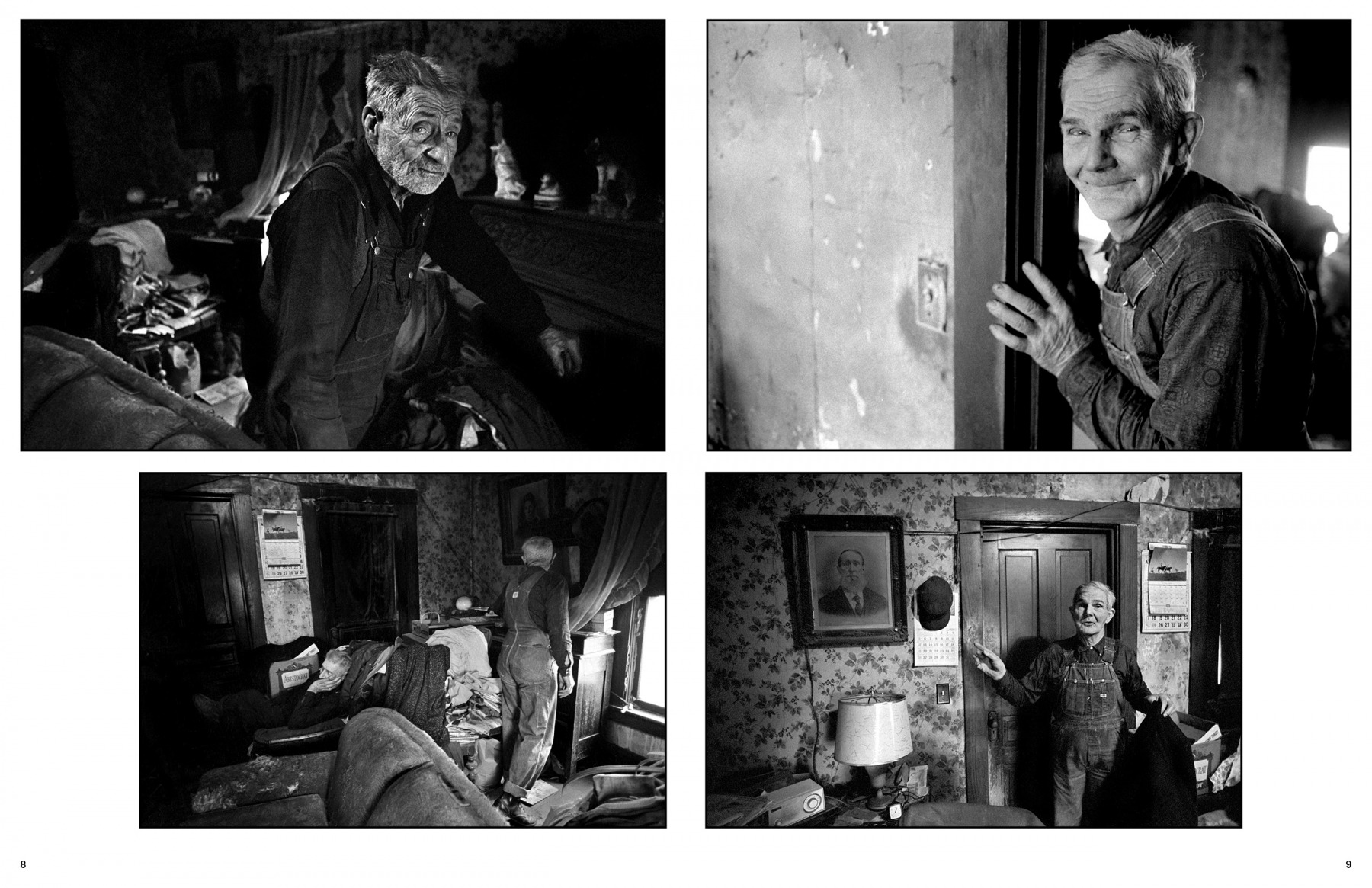
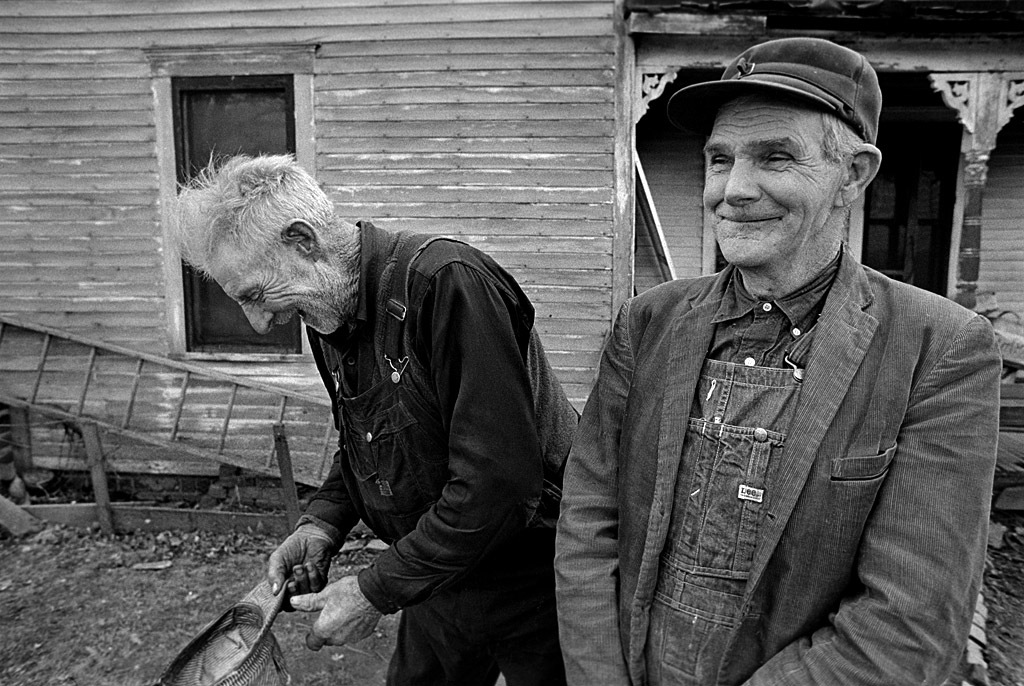
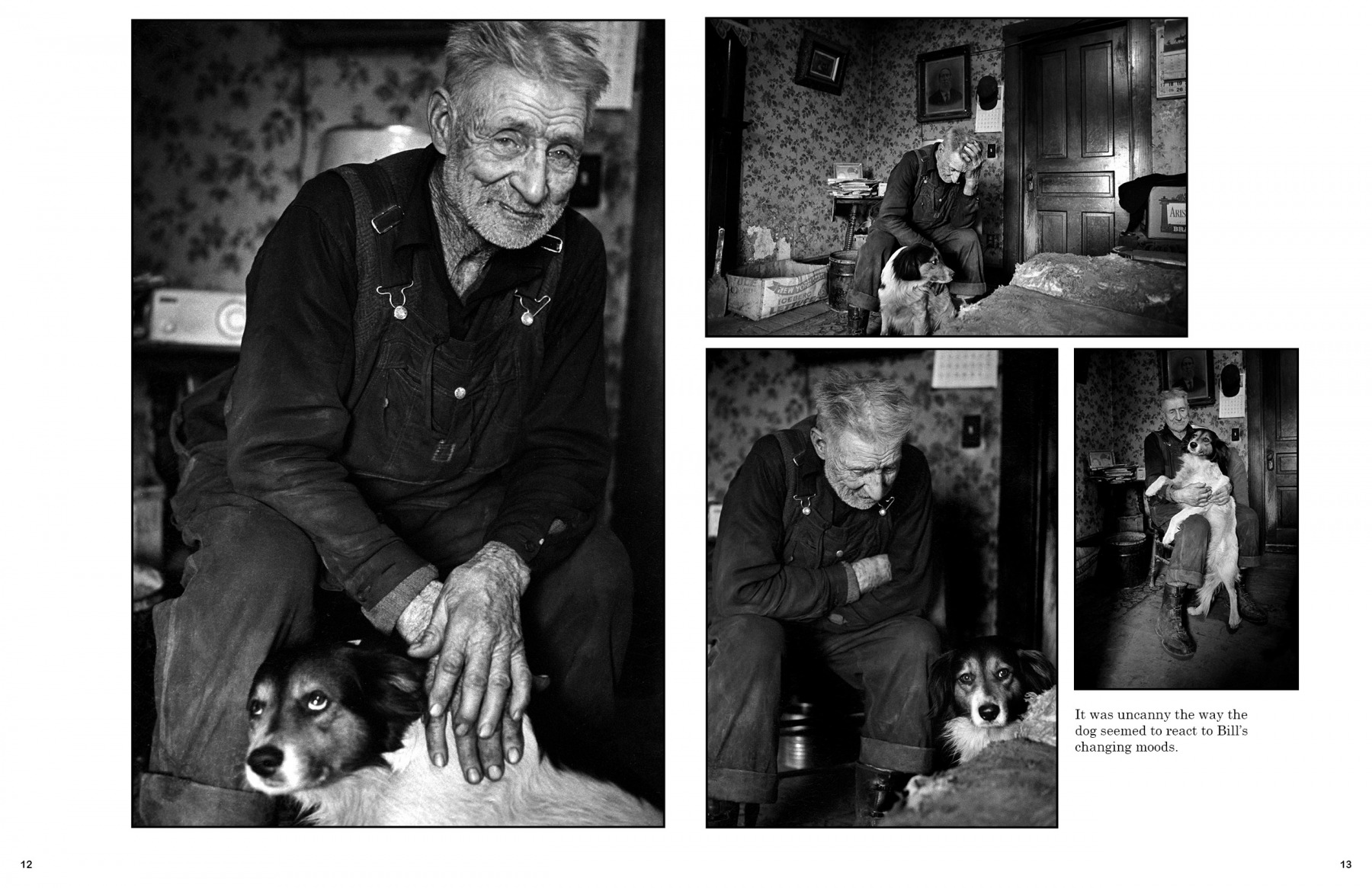
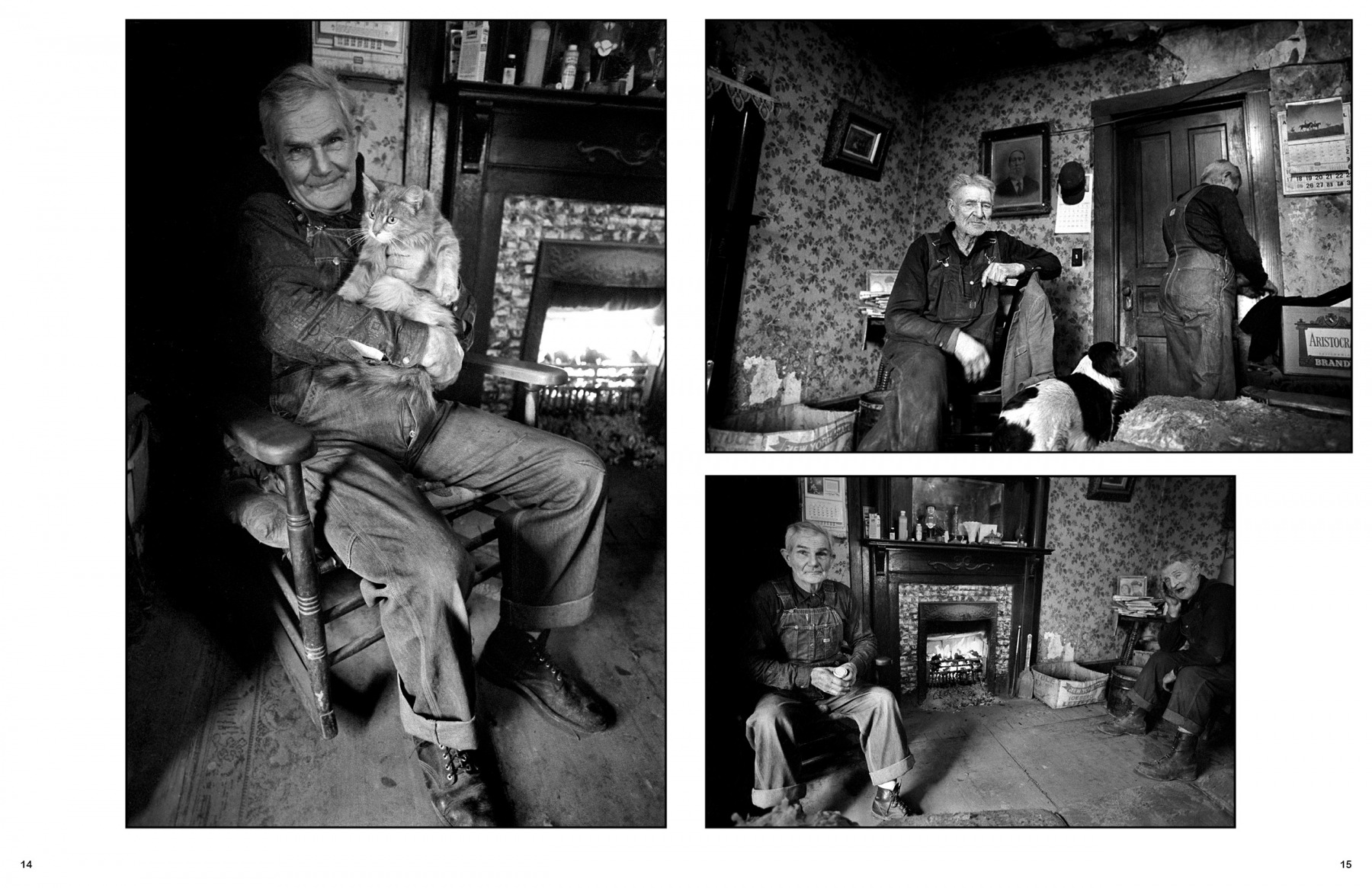
Friends on Robinson Road exhibit catalog for 07-28-2013 showI’ll be doing a presentation at the Athens County Historical Society and Museum on July 28. The topic is Friends on Robinson Road, an Athens Messenger picture story I shot in 1969. I mentioned them in a post for Valentine’s Day 2012.

UPDATE

Here’s an update: when I went back to the area to see if I could find the old house, I discovered that the two men lived on Robinson Ridge Road, not Robinson Road.

My search led me to another interesting story about the Allen family who had been living on the same land since 1850.  Capt. Josiah Benton Allen, who lost an arm at Vicksburg, was one of the men responsible for the erection of the iconic Civil War memorial on the Main Green at Ohio University.

I was just looking through my notes, and remembered that Curator Jessica and I tracked down Jesse’s daughter Opal and her son Russell. When I asked him how well he knew his grandfather, he said, “I knew him as well as any of the grandkids; I knew where he hid his whiskey.”

Bill and Jesse were gravediggers for Clark Chapel’s Cemetery, where they, ironically, are buried in unmarked graves, so far as we could find out.

Here’s the show catalog

Click on any photo to make it larger, then click on the sides to move through the gallery.

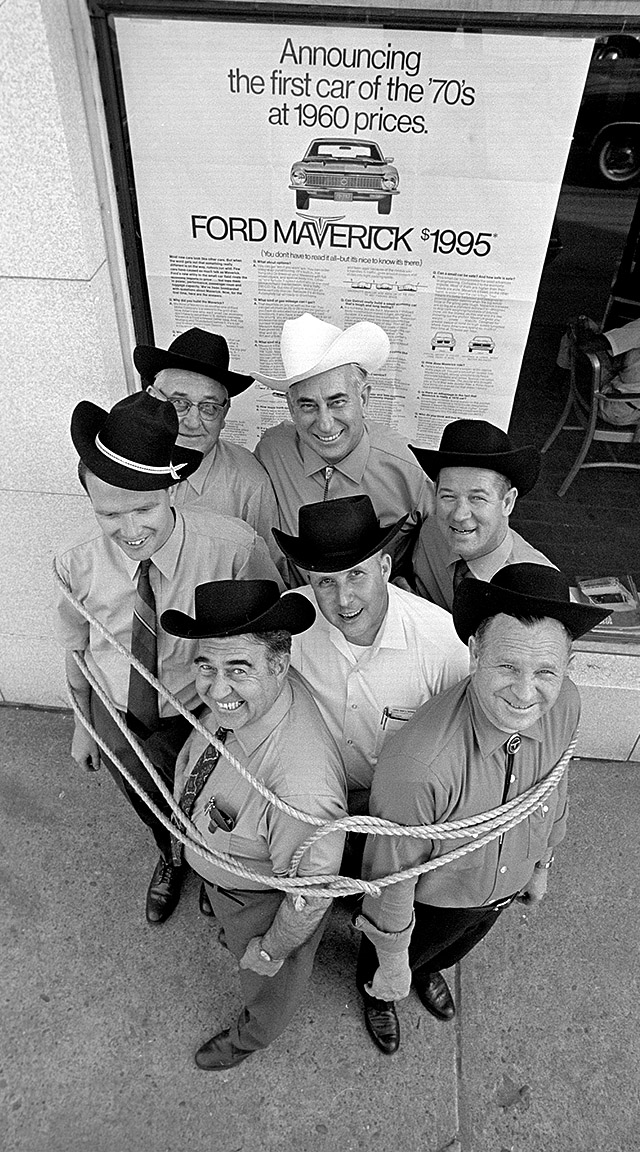
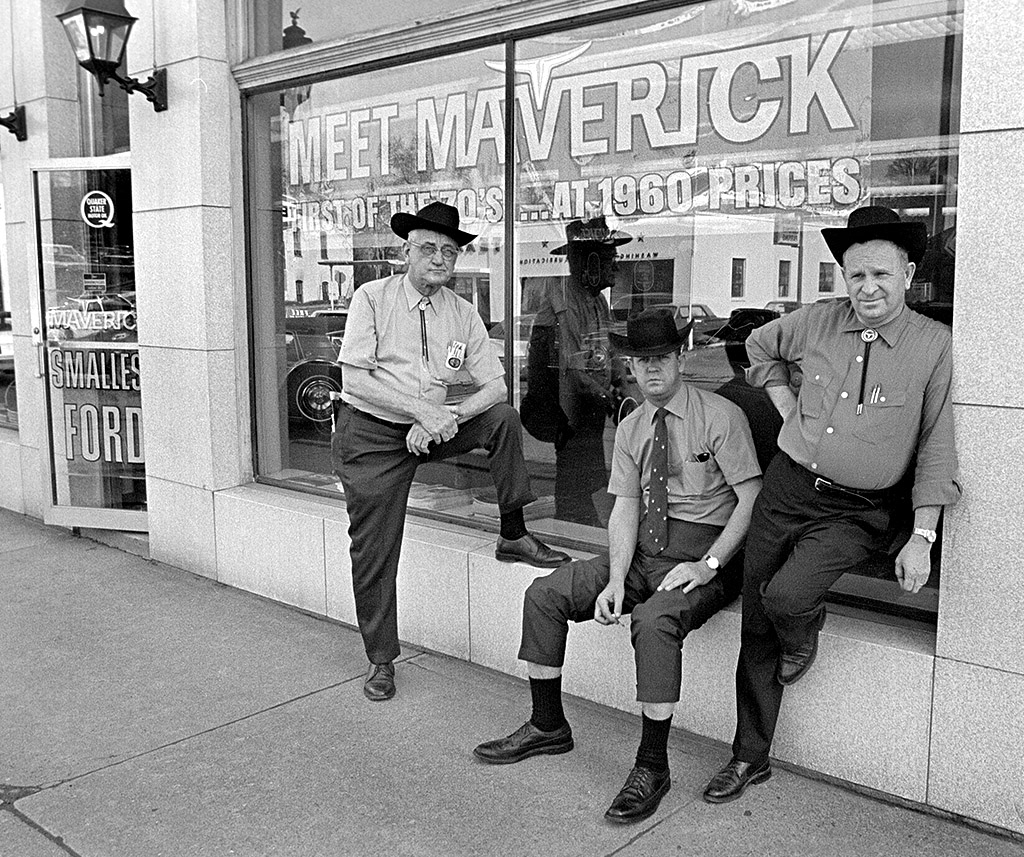
Ford Maverick – $1995*

Messenger Ford ad 04-17-1969These guys were ready to sell you ‘the first car of the 1970s at 1960 prices.” Step right up and drive off with a Ford Maverick for $1995. There’s an asterisk after the $1995, so that’s probably where they tell you that the tires, engine, steering wheel and seats are extra.

Are car salesmen born or made?

Messenger Ford ad 04-17-1969I hated shooting advertising photos. Partially because you ended up having to take hokey shots like this; partially because the next time you ran into them at a news event, they thought they still owned you. It gave me a great deal of pleasure to disabuse them of that idea.

These were taken for The Athens Messenger in April 1969. Based on the expression, these guys didn’t seem to think there was anything unusual about pretending to be roped cowboys (I’m not sure I understand that symbolism). I guess they figured anything goes so long as they met their quota.

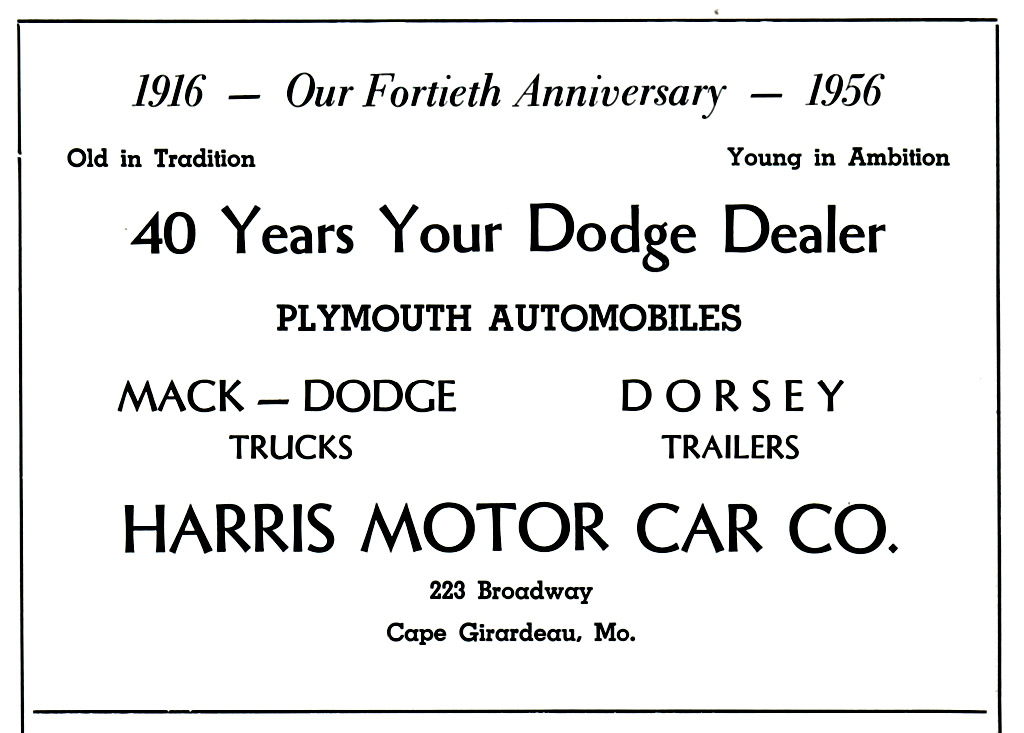
Cape car dealer ads

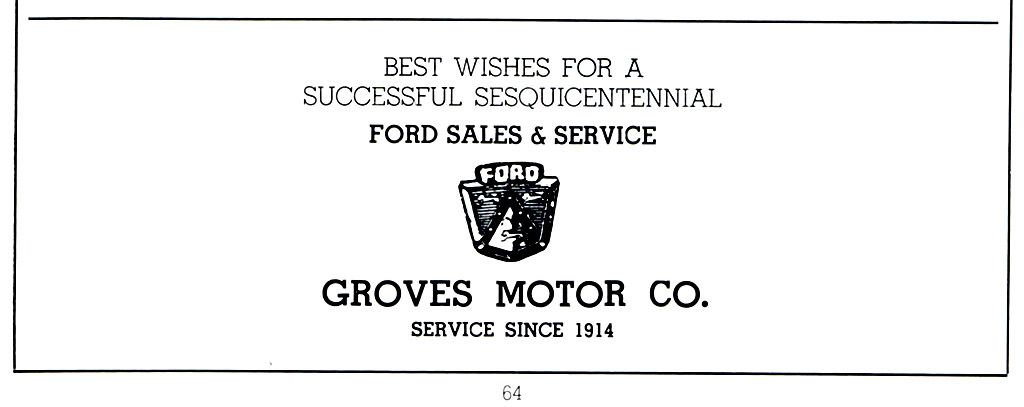
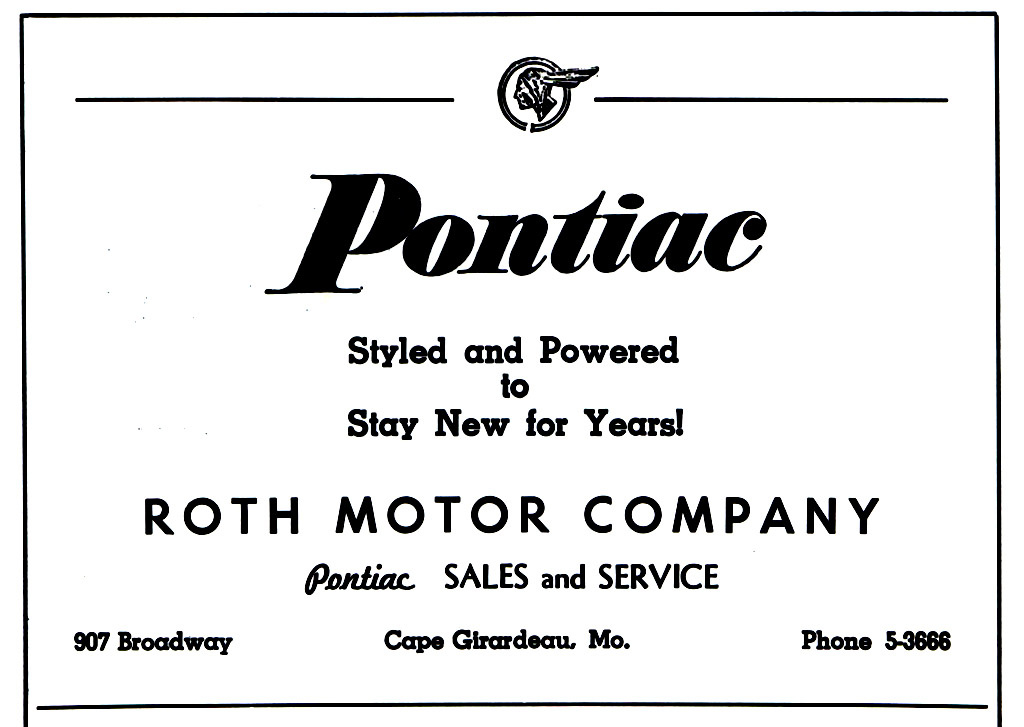
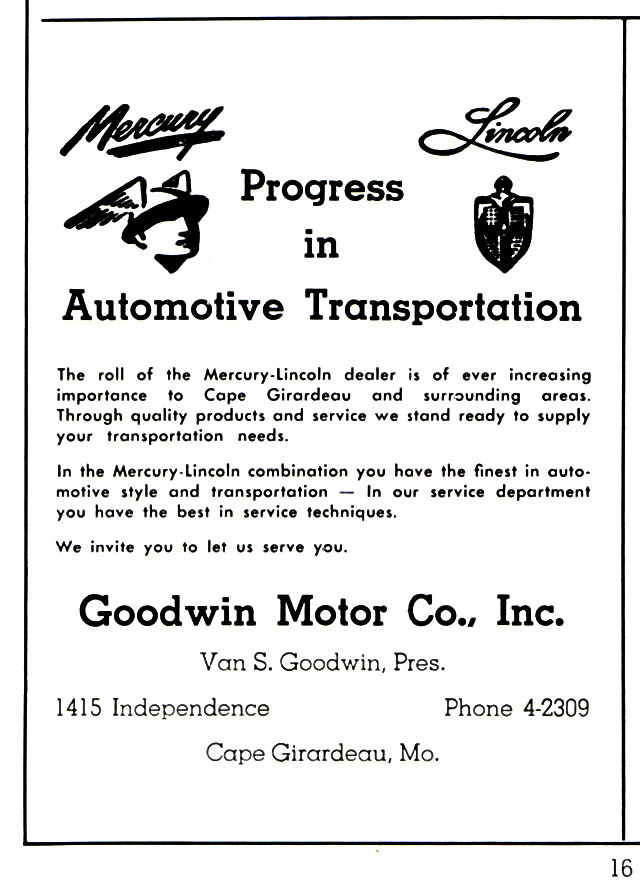
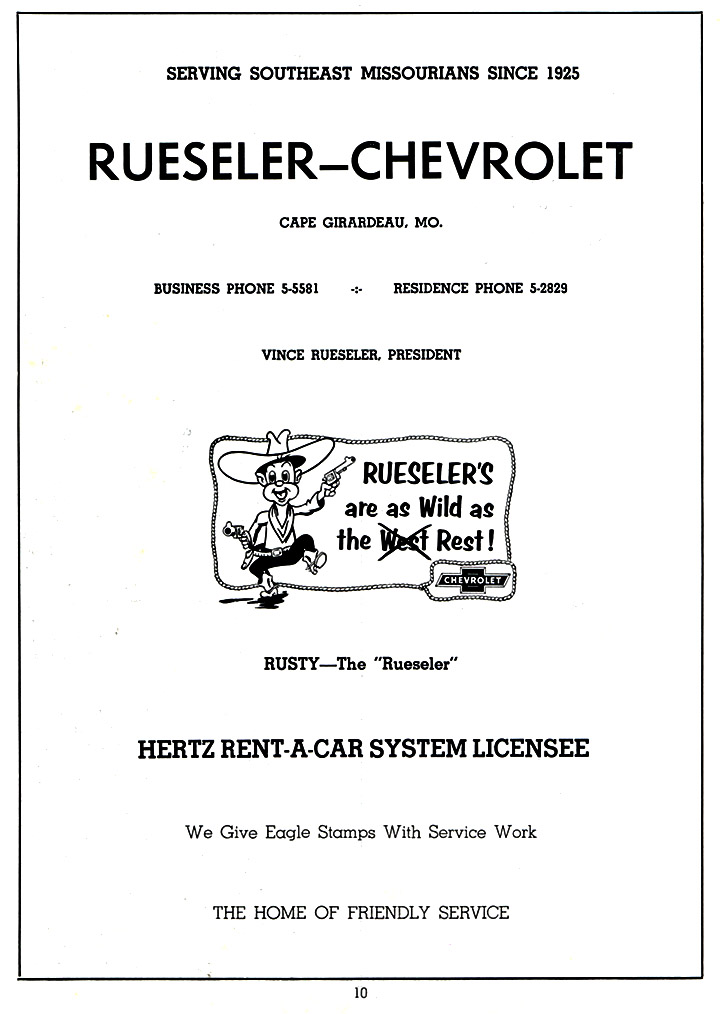
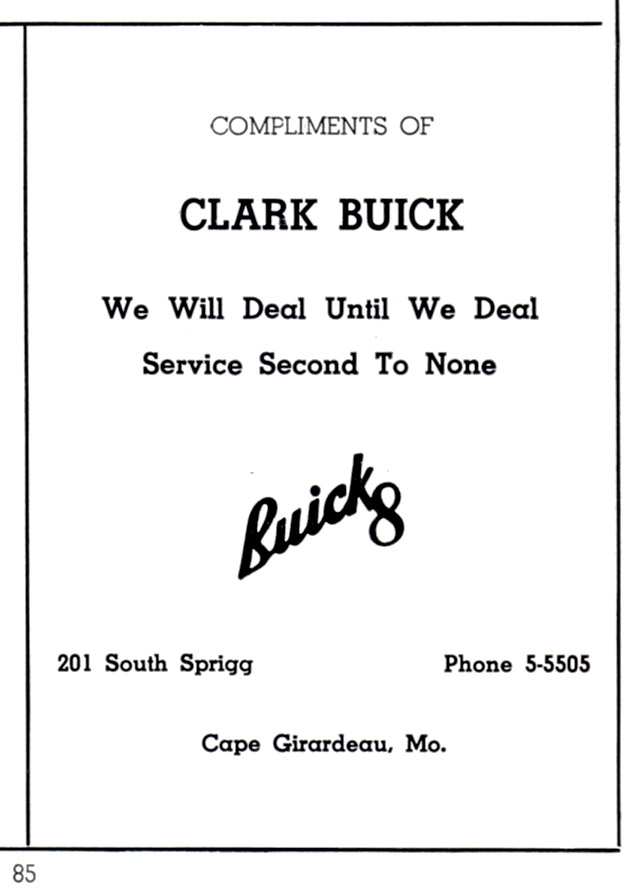
Here are some Cape car ads that ran in the 1956 Sesquicentennial booklet. I think one of the most curious slogans was in the Clark Buick ad: “We will deal until we deal.” They must have offered a pretty good deal to get Dad to buy our 1959 Buick LaSabre station wagon from them. Whoever did the Goodwin Motor Co. ad didn’t quite know the difference between the “roll” and the “role” of a Mercury-Lincoln dealer (it “is of ever increasing importance to Cape Girardeau”).

If you want to read about the early days of automobiles in Cape, follow this link. Here’s a piece on Rusty” and Rueseler Chevrolet.

Click on any image to make it larger, then click the sides to move through the gallery.