Wine Cellar Still a Partial Mystery

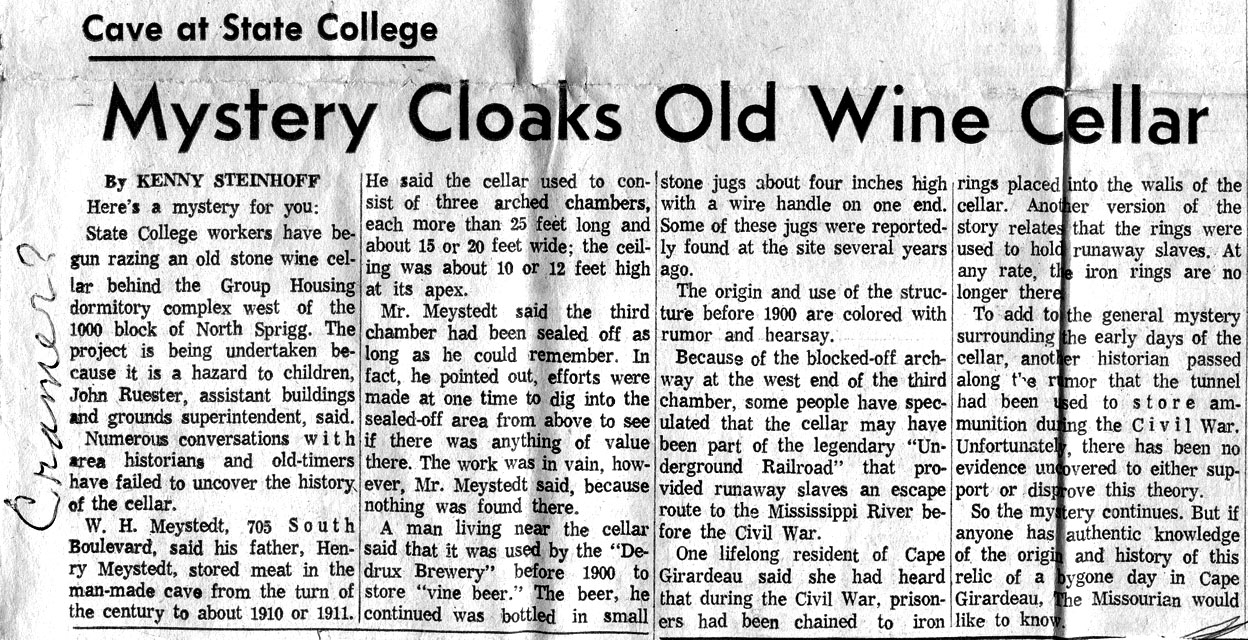
No wonder the North Sprigg Street wine / beer cellar jangled the memory bells yesterday: I WROTE The Missourian story about it.

Shy Reader did some snooping around and figured out why I couldn’t find the story: The Google Archive jumps from May 16 to June 6 and this story bylined “Kenny Steinhoff” ran May 17, 1966.

John Blue must have edited this story and given me the byline. My official newspaper name was Kenneth L. Steinhoff; he probably slapped the “Kenny” on it and shipped it to the backshop to be set into lead type. Click on it to make it easier to read.

The Old Cramer Home
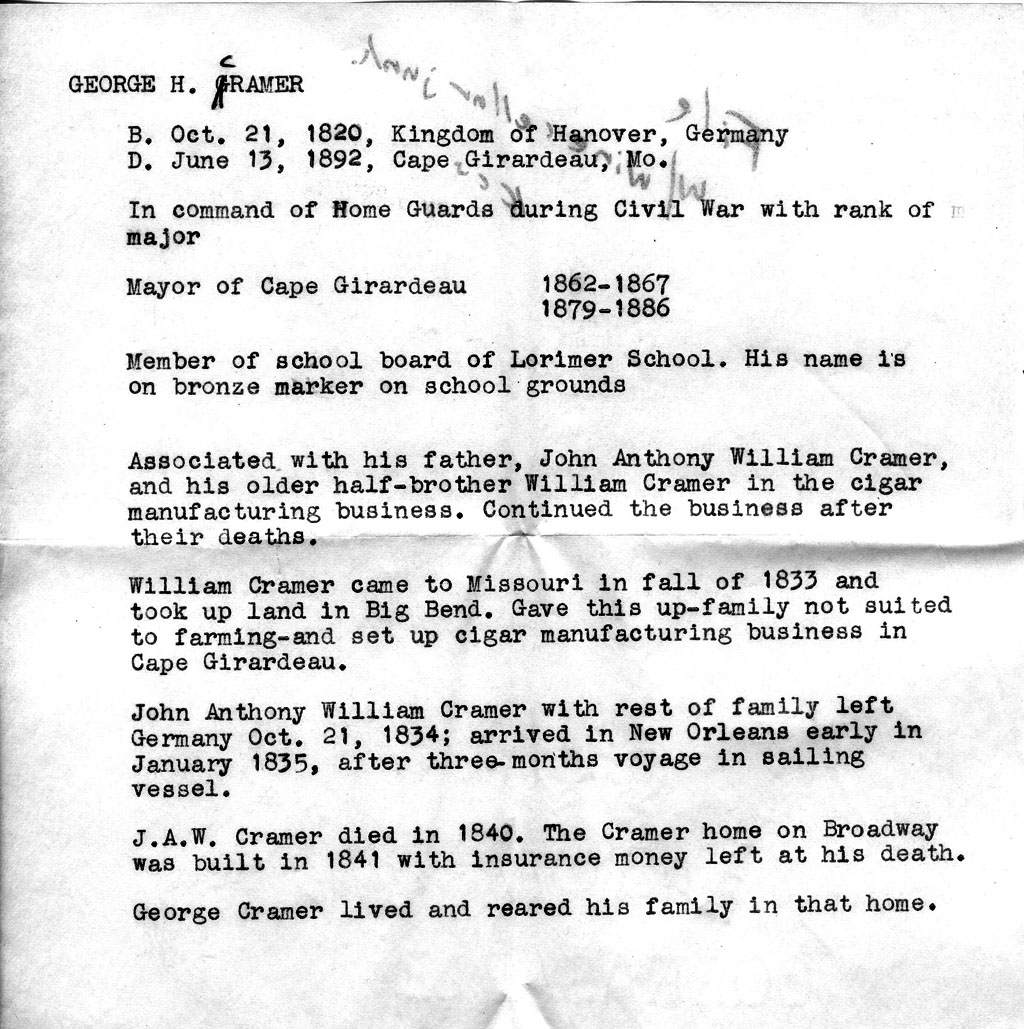
One of the advantages of Old Tech is that you can scrawl notes on the side of the clip. This one had the question “Cramer?” written on it, which led Shy Reader to these notes about the Cramer family.

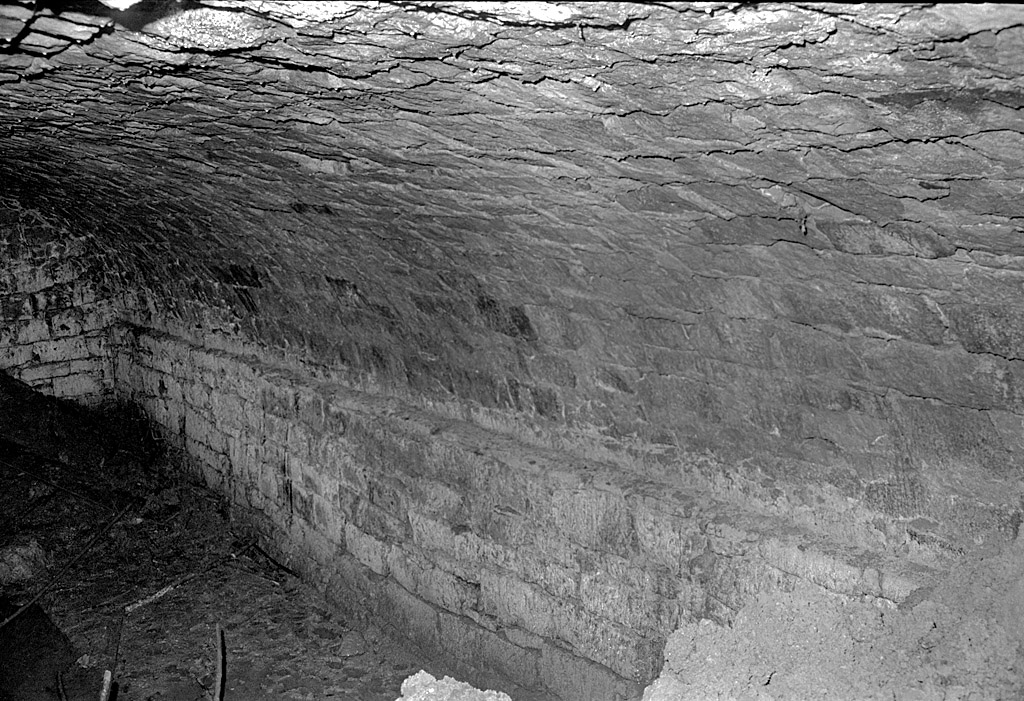
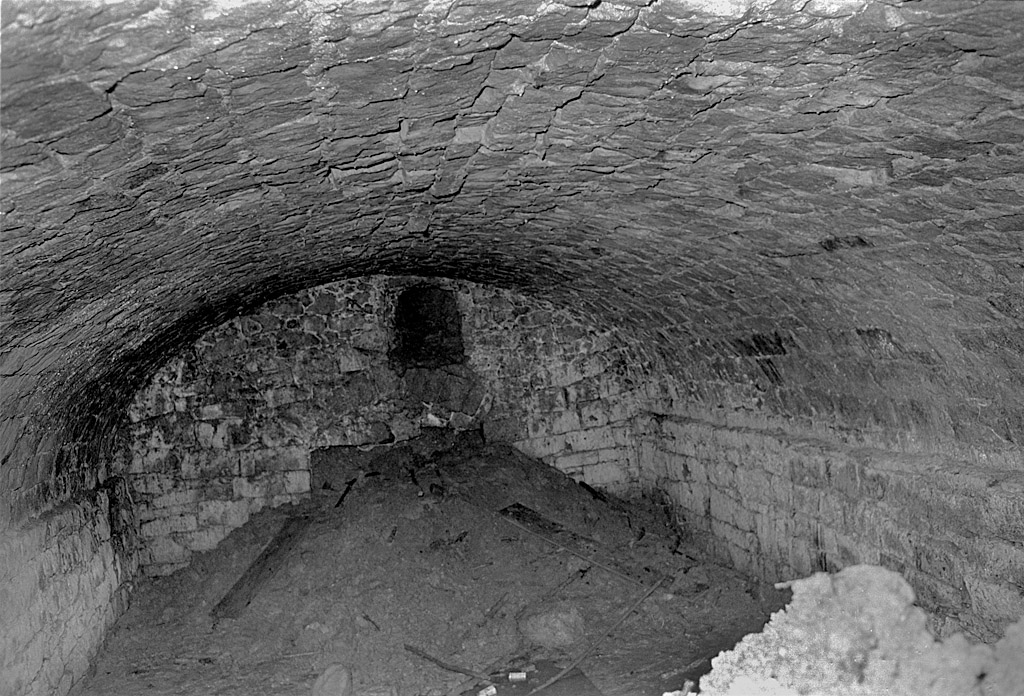
What do we know about the cellar?
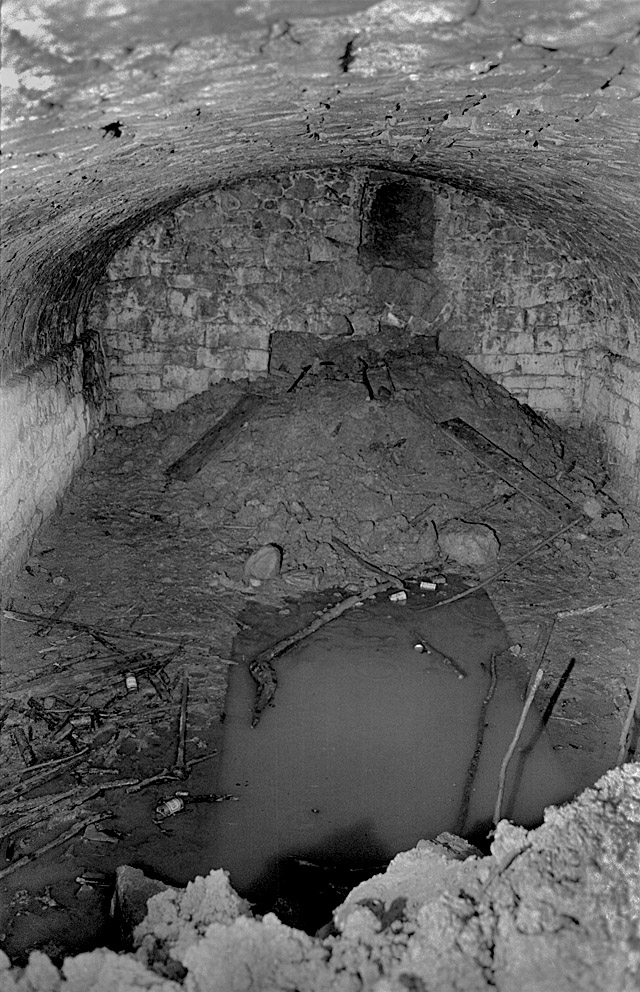
  • It was behind the SEMO Group Housing complex west of the 1000 block of North Sprigg
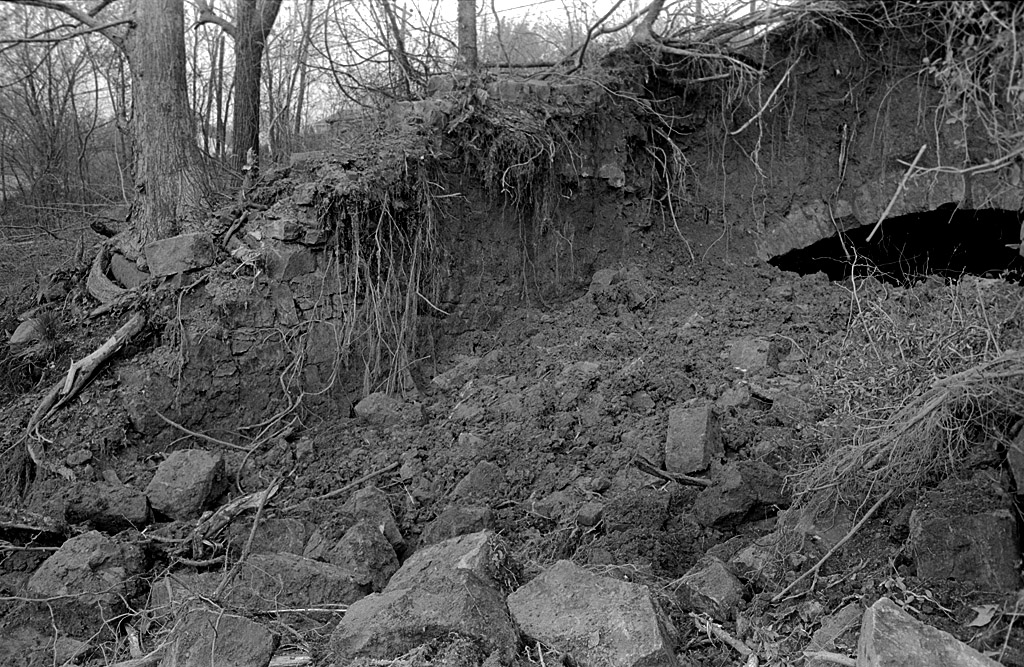
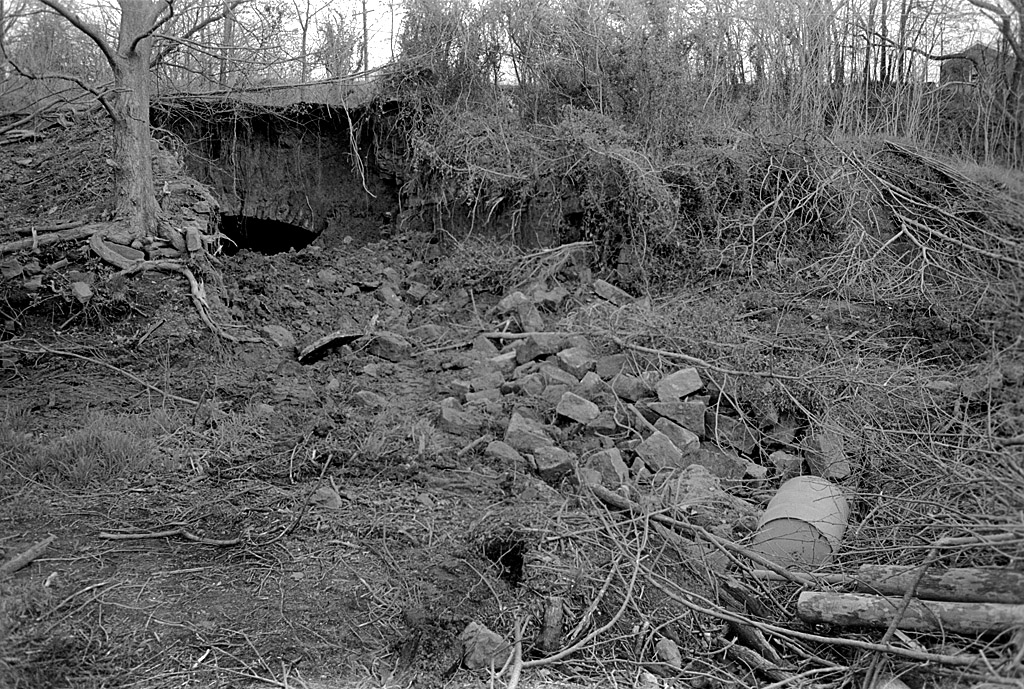
  • It was razed because it was a hazard to children
  • W.H. Meystedt said his father, Henry Meystedt, stored meat in the man-made cave from the early 1900s to 1910 or 1911
  • It consisted of three arched chambers, each more than 25 feet long and about 15 or 20 feet wide. It was 10 or 12 feet high at the apex.
  • The third chamber had been sealed off. When it was dug into from the top, it was empty.
  • Someone said that the cellar was used by the “Dedrux Brewery” before 1900 to store “vine beer.”
  • The origin and use of the cellar before 1900 is colored with rumor and speculation, involving the legendary Underground Railroad tunnels, Civil War prisoners and a possible ammunition dump.
  • “Kenny” Steinhoff asked if anyone who had authentic knowledge of the history of the relic of a bygone day to contact The Missourian, just like “Ken” Steinhoff did 45 years later.
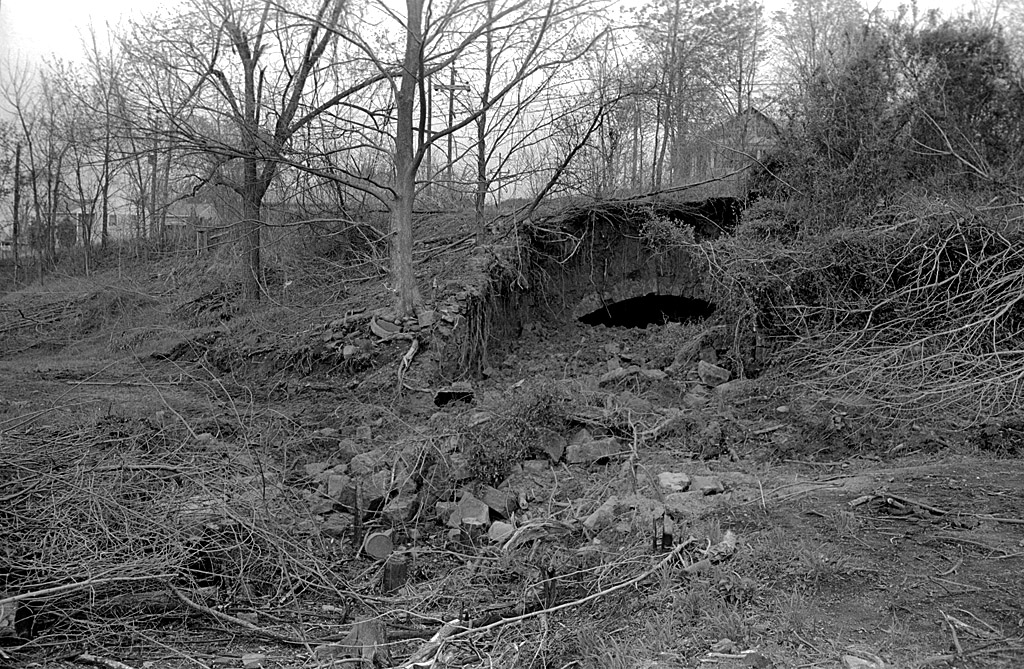
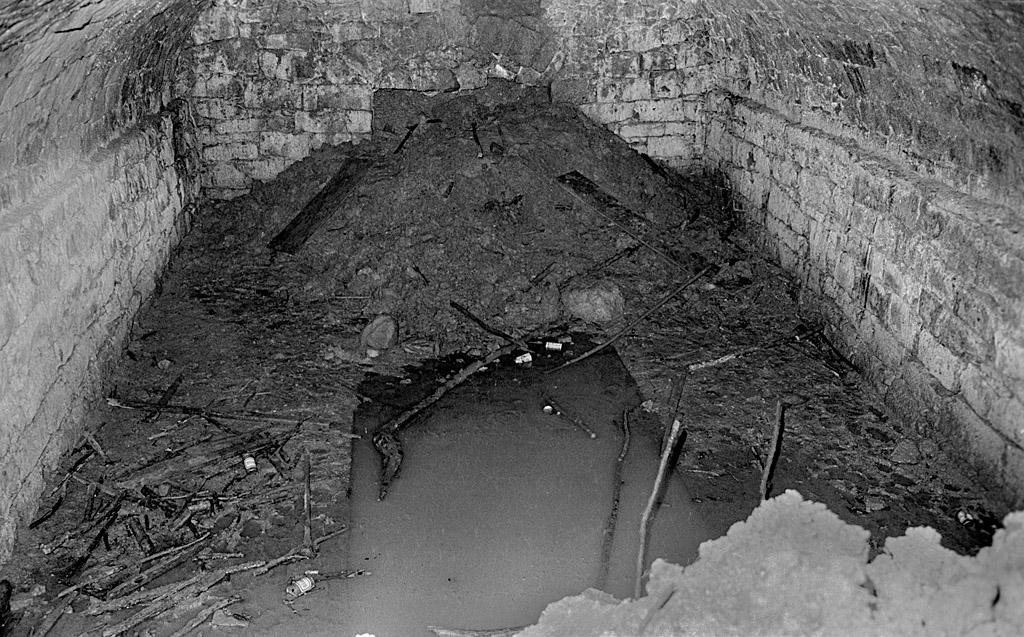
 

Sprigg Street Cellar

Here’s a mystery that’s been bugging me for months. In April of 1966, construction workers working along North Sprigg Street uncovered a large cellar that was thought to have housed beer or wine. I don’t remember if it was part of the dormitory construction or if Sprigg was being widened.

I’ve looked through Missourians for a month on either side of April, but haven’t been able to come up with a story, even though I’m pretty sure one ran.

A few Stag beer cans

I didn’t prowl inside the cellar, but I could see a few Stag beer cans floating around. I think there were of more recent origin. There was a flat floor, but there was a square section in the middle that was cut out. I don’t know if that might have been a sump area where water could collect to be pumped out.

Photo gallery

Anyone have any idea about the history of the cellar? Click on any photo to make it larger, then click on the left or right side to move through the gallery.

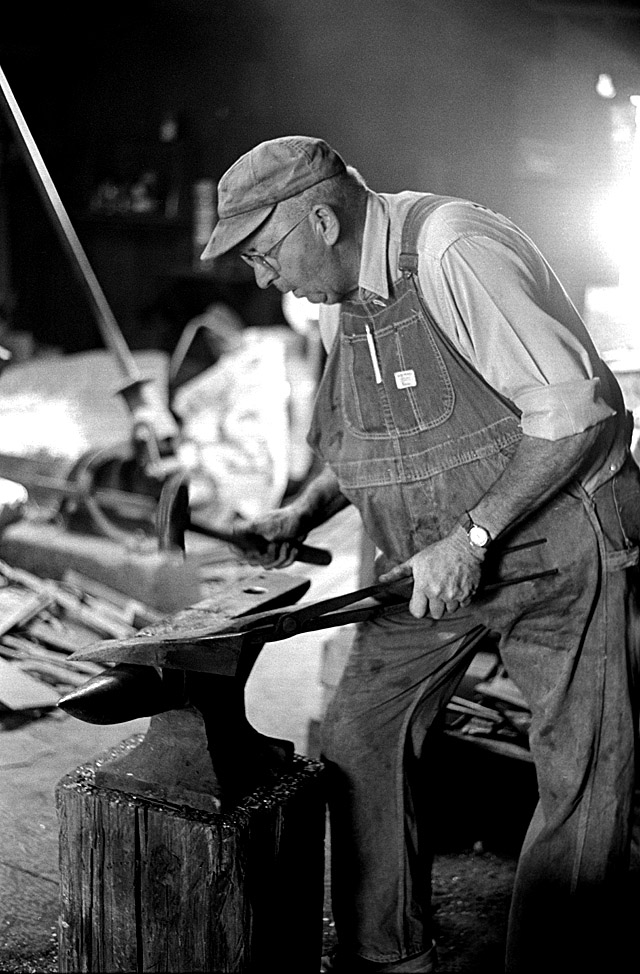
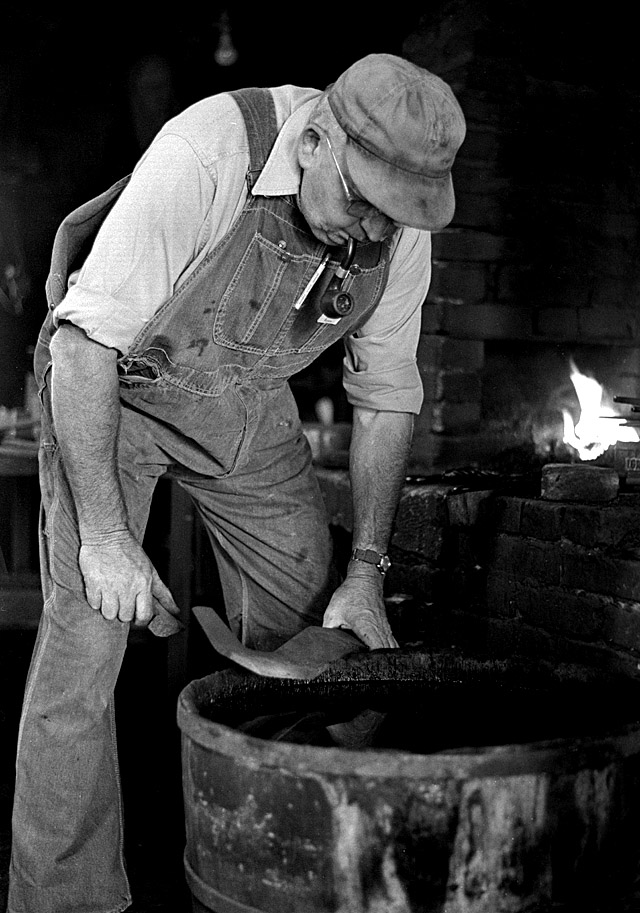
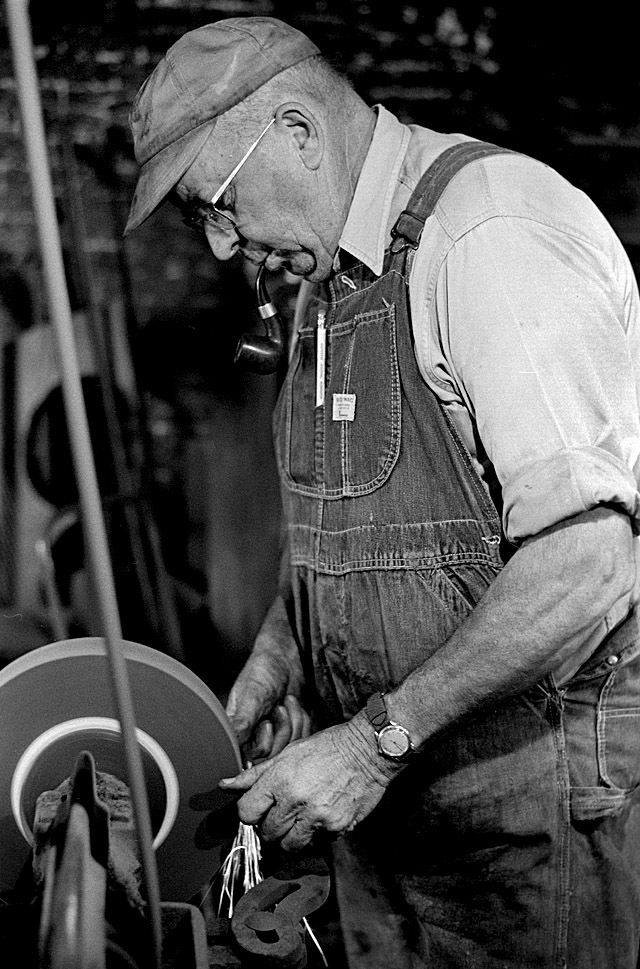
Frank J. Brockmeyer, Blacksmith

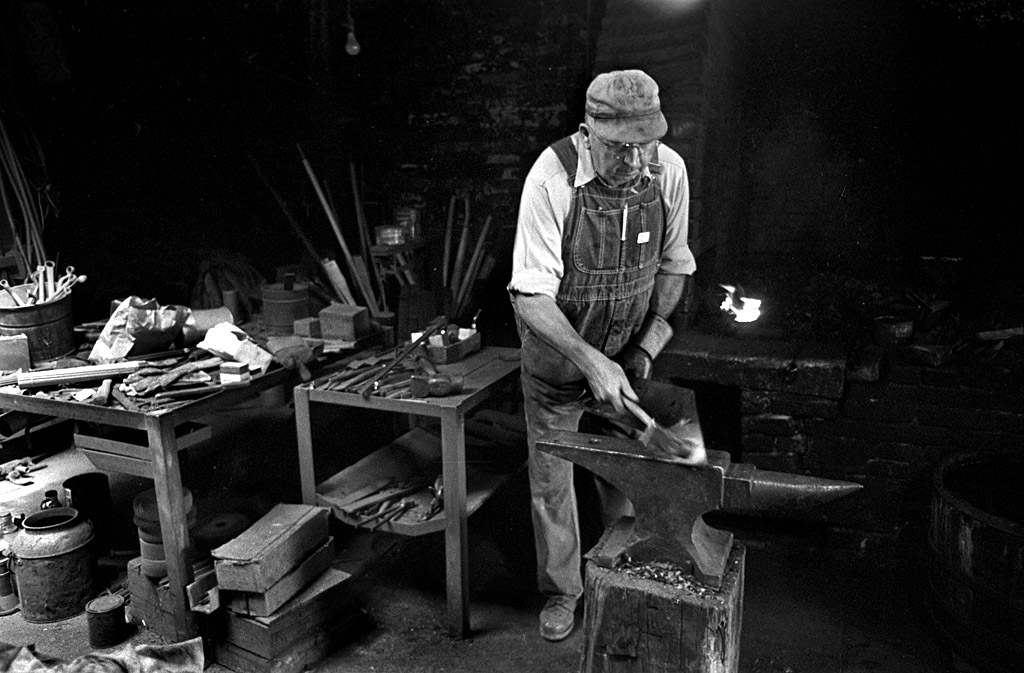
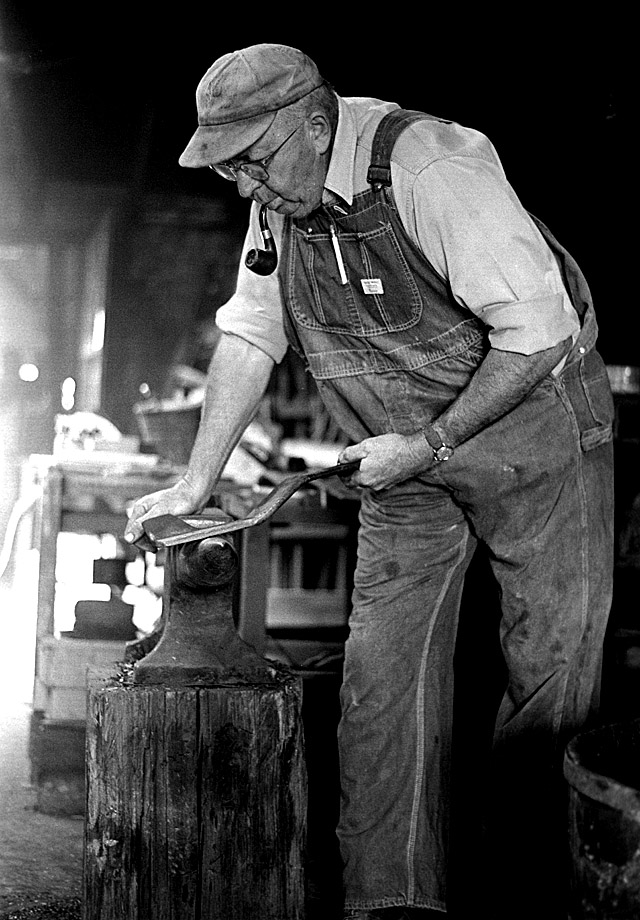
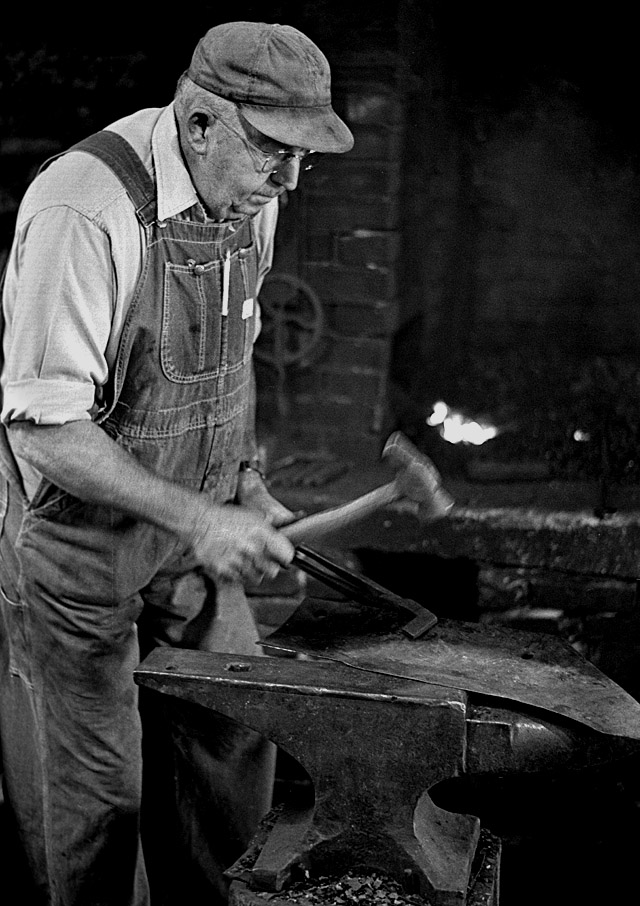
“For 42 years, Frank Brockmeyer has lifted, heated, pounded, molded and tempered hot steel,” I wrote in a rare bylined story on The Missourian’s front page August 23, 1967. (The paper doled out bylines about as often as it gave raises.) Unfortunately, the page was microfilmed at a 90-degree angle, so you can’t search on that date. You have to search for August 22, then lay on your side to read it.) Click on any photo to make it larger.
One of the last blacksmiths

Mr. Brockmeyer, who was going to turn 66 on September 17, was one of the city’s last blacksmiths. His shop – a small, sagging brick and wooden structure with a weatherbeaten door – was located at 35 South Spanish.
Massive anvils

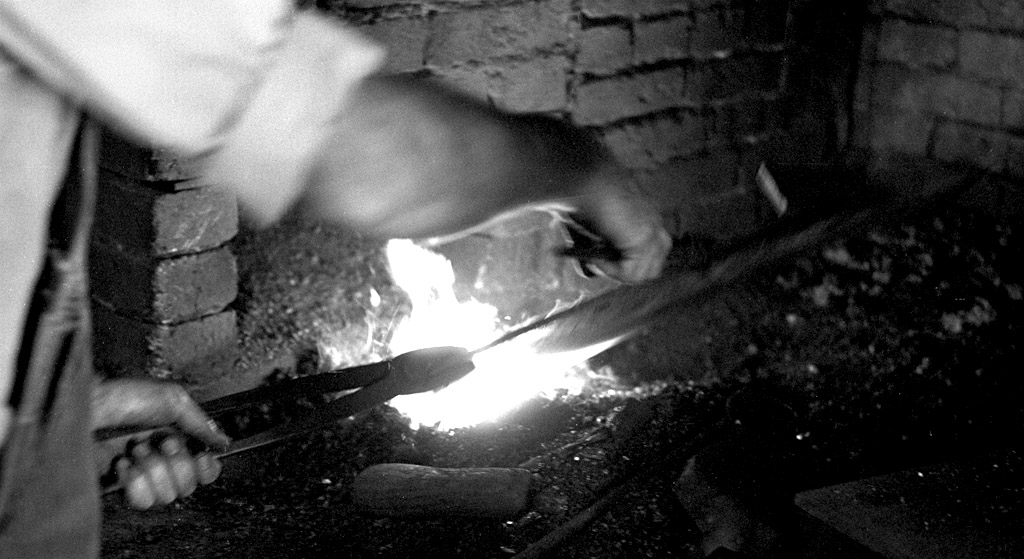
Behind the door were the tools of the smithy’s trade: the massive anvils securely anchored to equally massive blocks of wood; the huge wooden tub filled with water; the forge, and the tongs and sledge hammers and grinders and other paraphernalia.

The forge

The work is getting harder, “but any kind of work gets harder when you get older,” he quickly added, with a smile breaking out around the curved pipe usually carried in his mouth. “Lot of people think this is easy, but you try to hold this hot steel with tongs and swing at it with a hammer. Here – feel this hammer. That’s eight pounds,” he said.

Hired as apprentice in 1925

Back in 1925, when Mr. Brockmeyer was apprenticed to Joe G. Schonhoff, owners brought their horses into the building to be shod. After the shop acquired so much equipment that there wasn’t enough room for the operation, they went to the farms to do the job. The original owners started the business in a different location in 1890.

The worst thing you can do

Those days were past. Mr. Brockmeyer said it had been 27 years since he had last shod a horse, and he didn’t appear to have missed the task. “Do you know the worst thing you can do?” he asked. “It’s shoeing a horse laying down.” Noting a perplexed look on his listener [another rare thing: Missourian reporters were not to insert themselves into the story] he continued, “That’s where you have to rope him, throw him, hogtie him and then shoe him.”

You can’t trust newspapers

I was curious to see if the paper had run any other stories about Mr. Brockmeyer. I found his obituary in the May 15, 1983, paper, the day he died at 81. He was born Sept. 17, 1901, at Apple Creek, the son of Theodore and Mary Schumer Brockmeyer. On Sept. 24, 1924, he married the former Mary Eftink of Oran, who survived him. The couple had nine children. His only son tried blacksmithing, but didn’t like it, Mr. Brockmeyer said.

The obit said he was a self-employed blacksmith, operating a shop on South Spanish from 1925 until his retirement in 1963. He couldn’t have retired in 1963, because I shot him working in 1967, back when he shared his philosophy of work: “When things get too rough, I just quit and go fishing.”

1967 Steam Thresher and Old Settlers Reunion

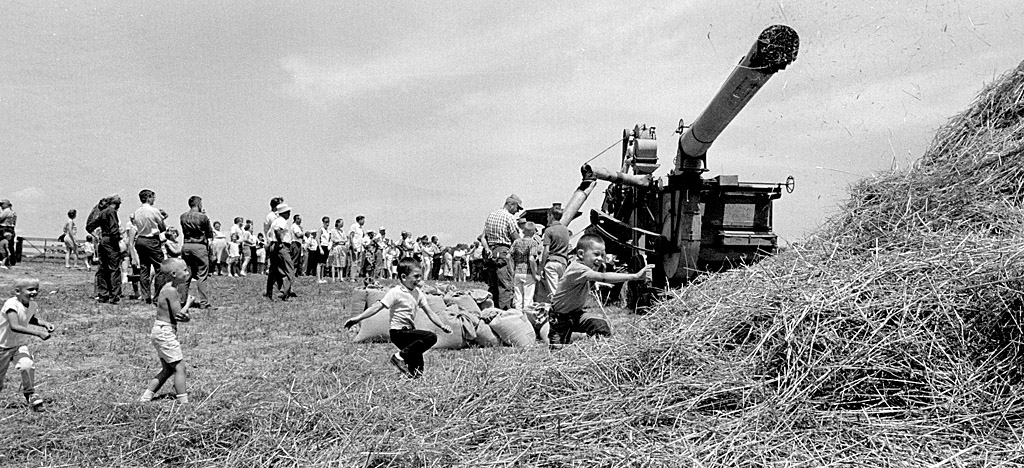
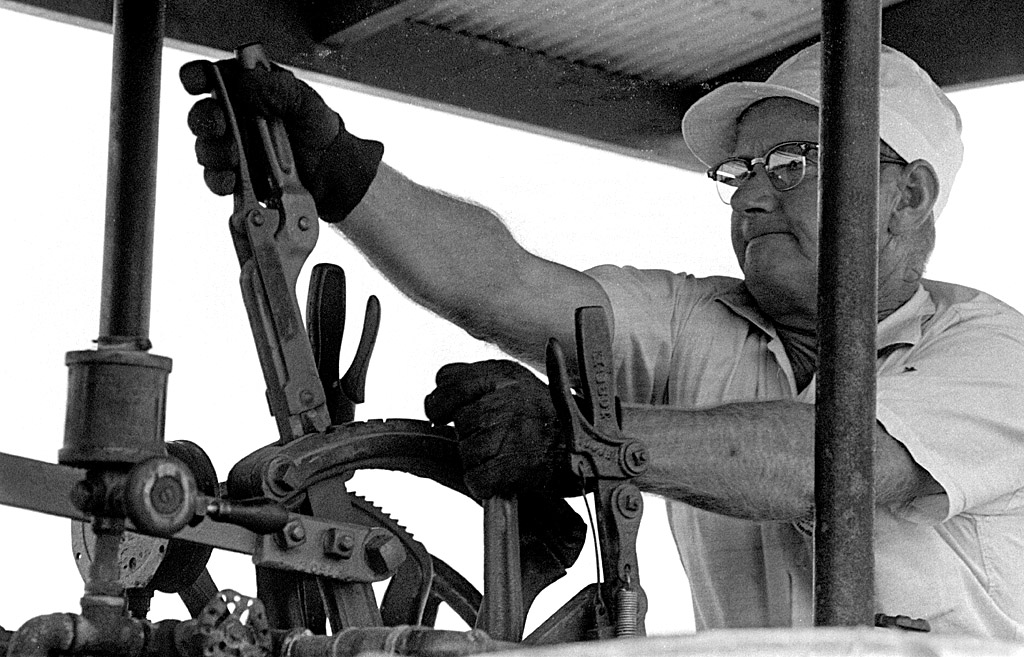
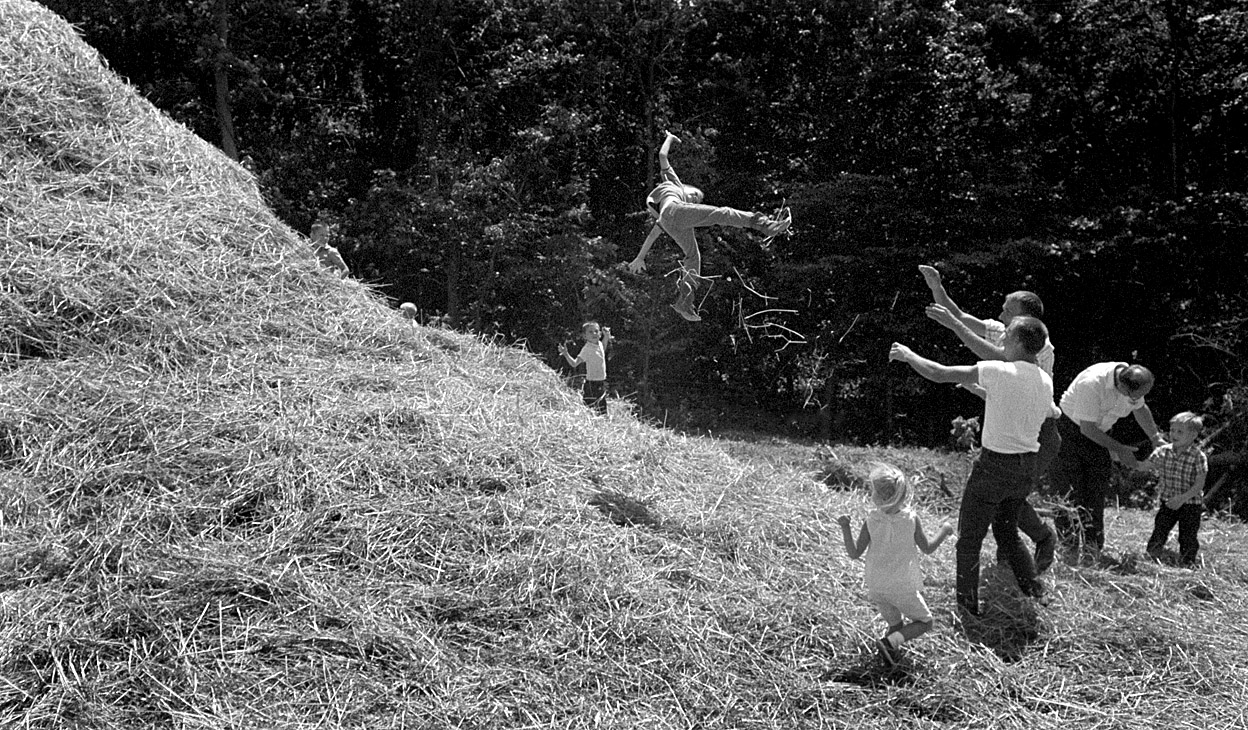
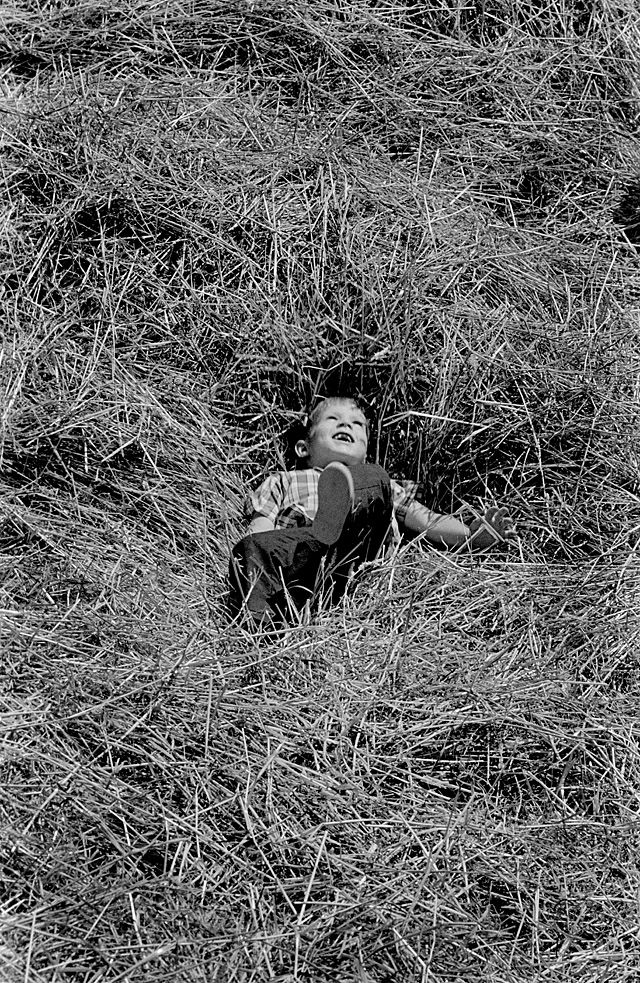
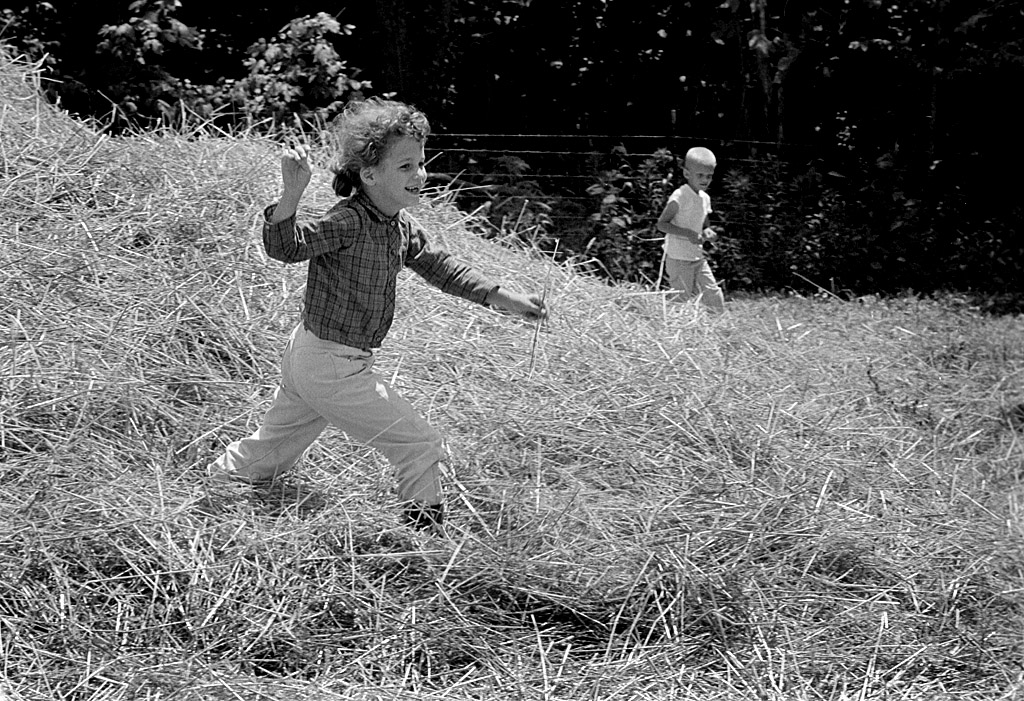
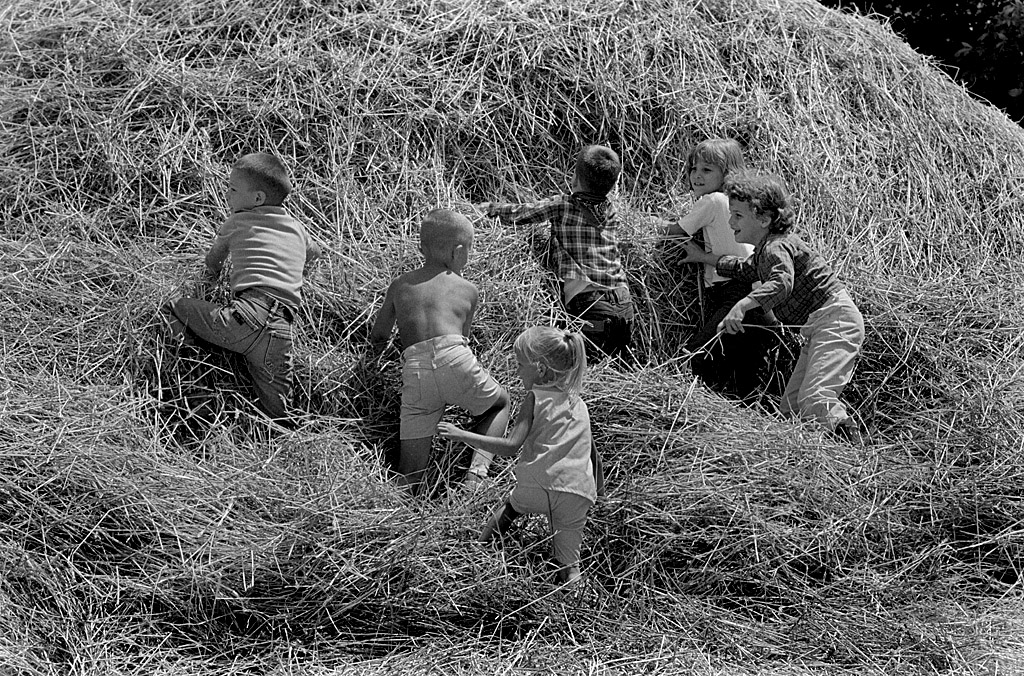
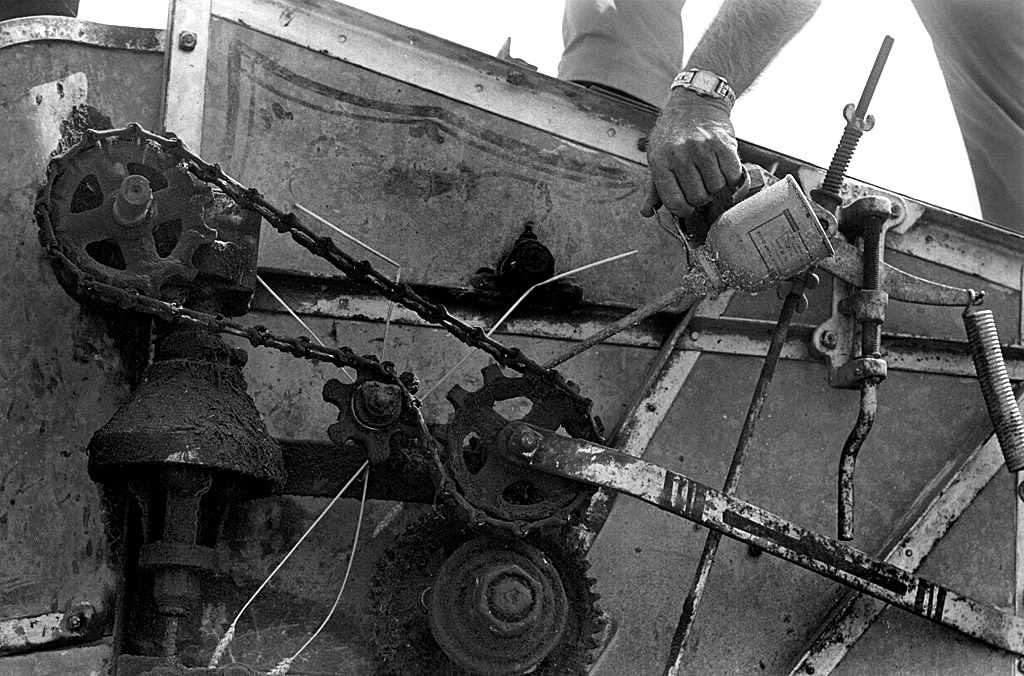
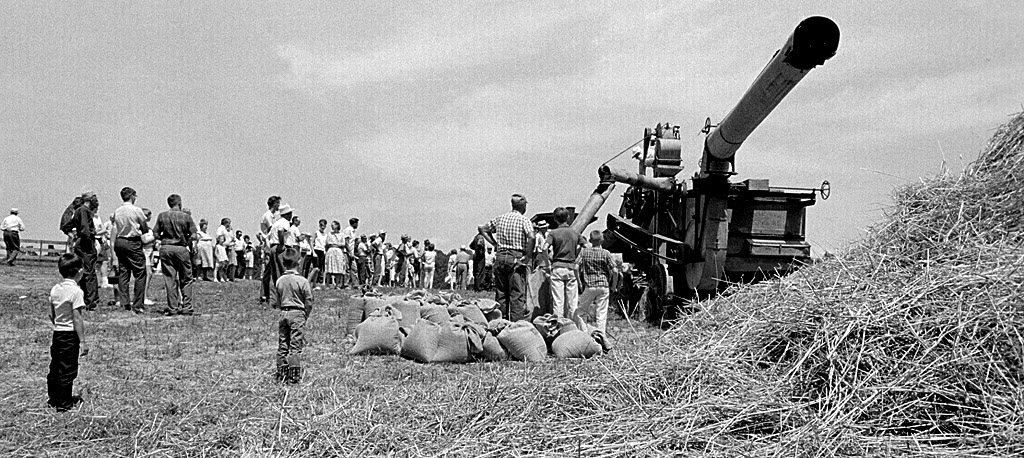
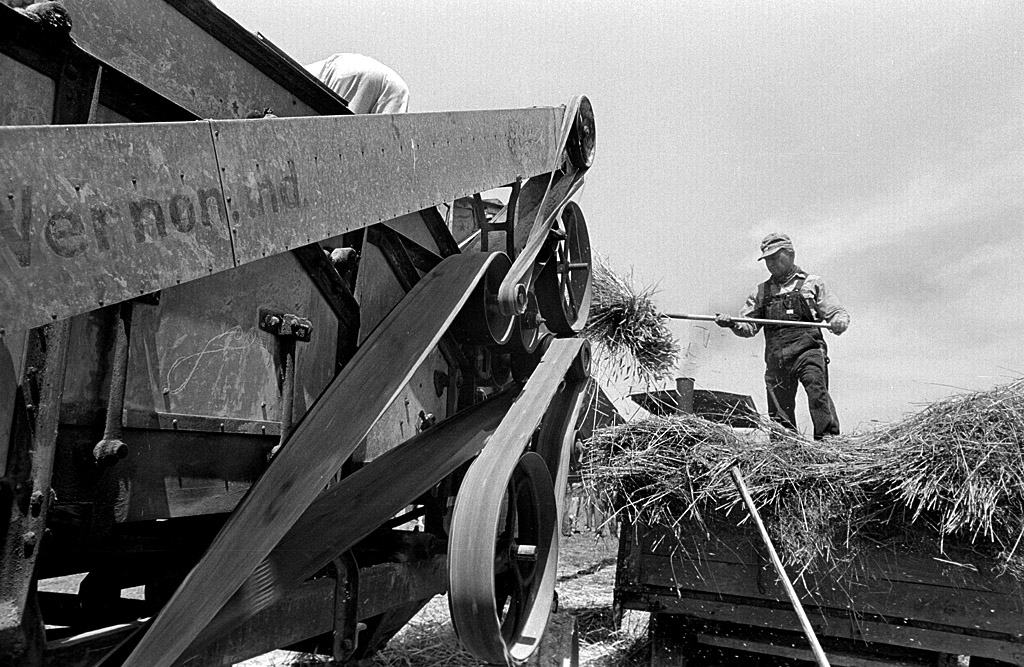
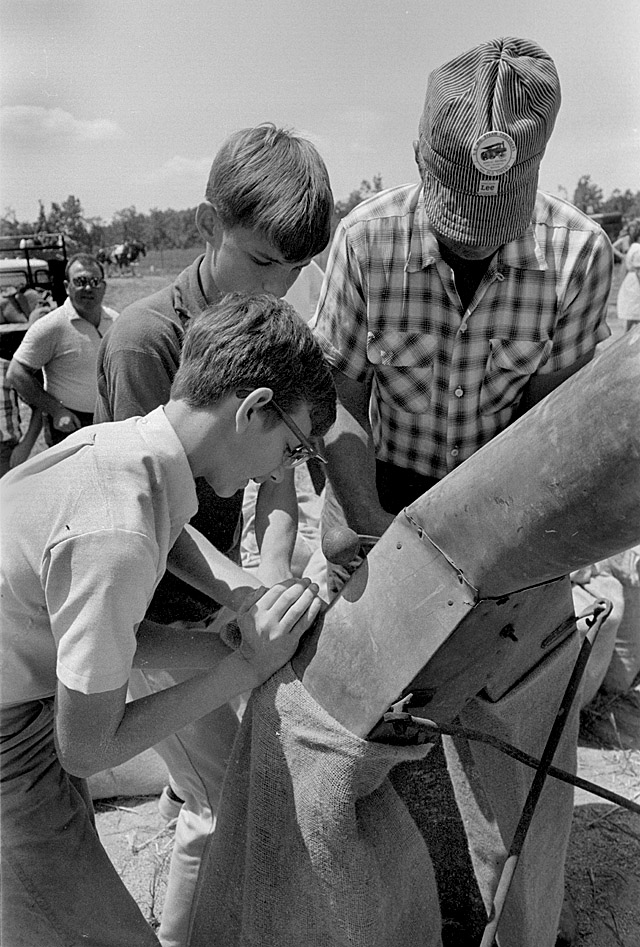
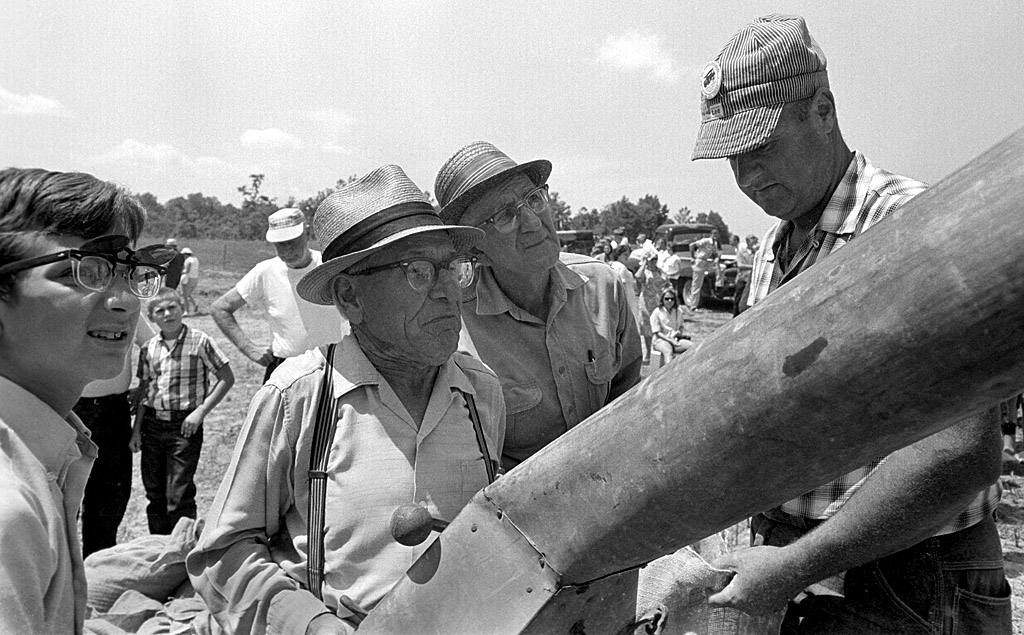
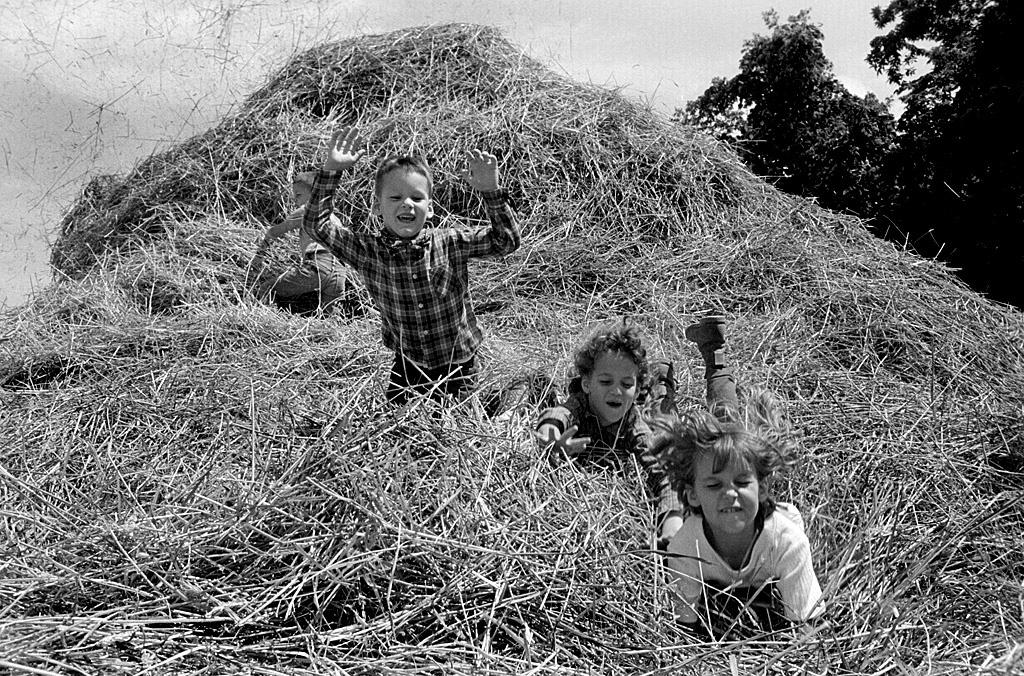
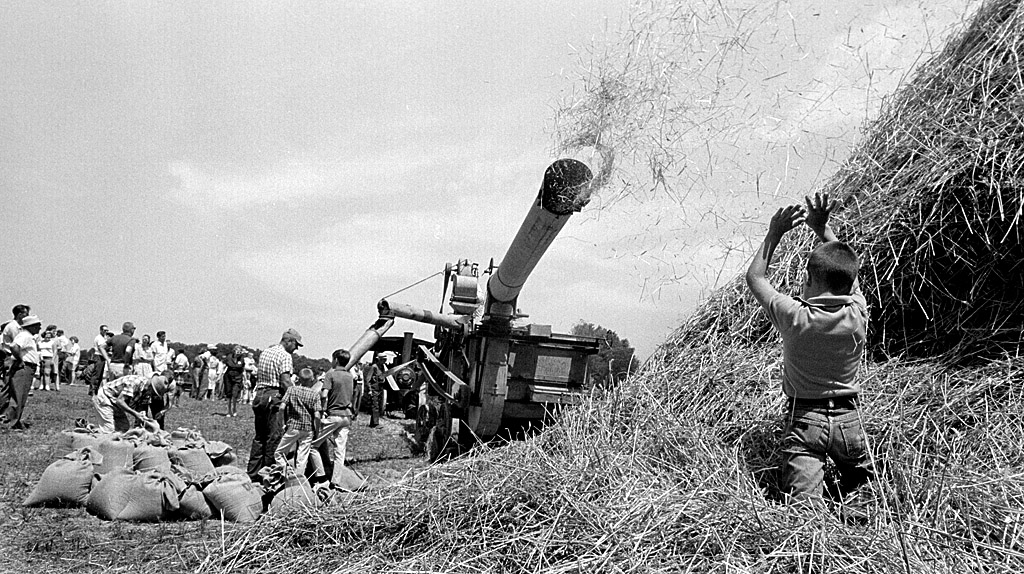
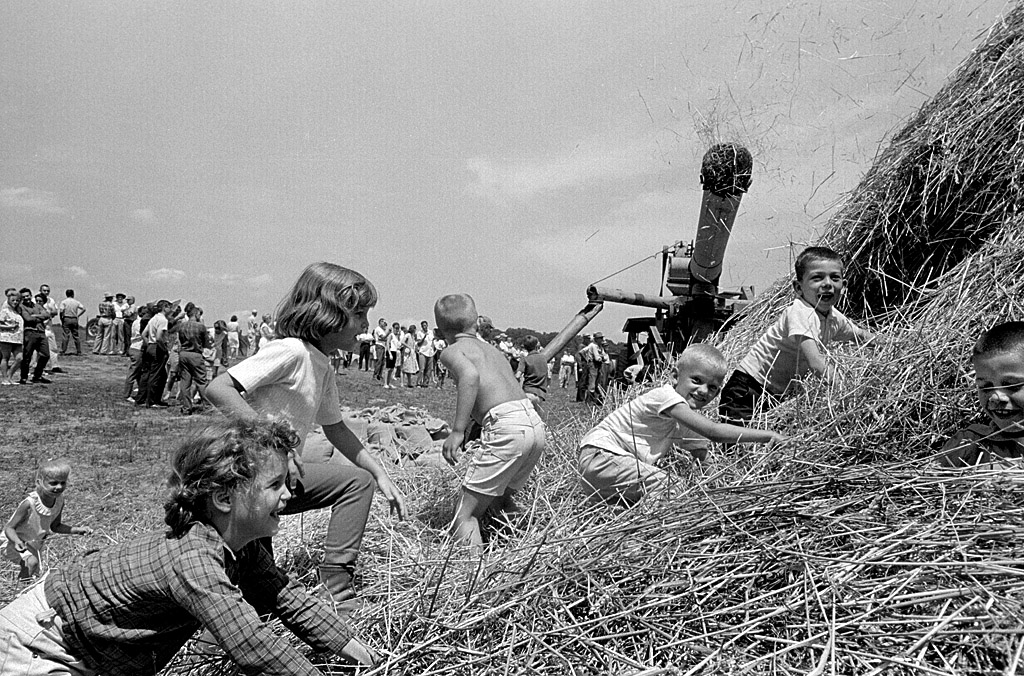
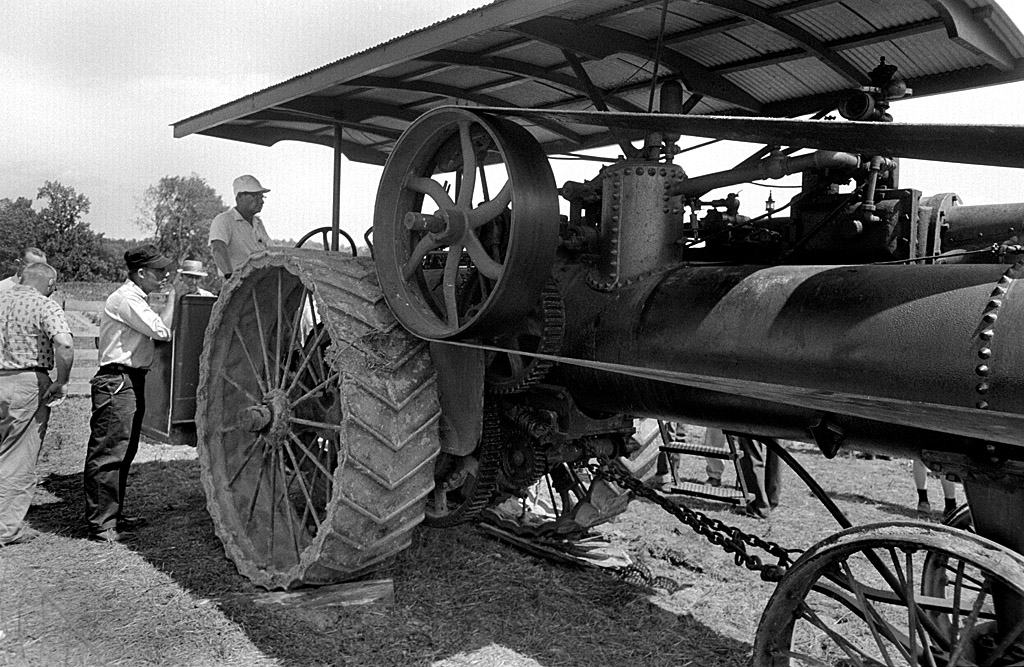
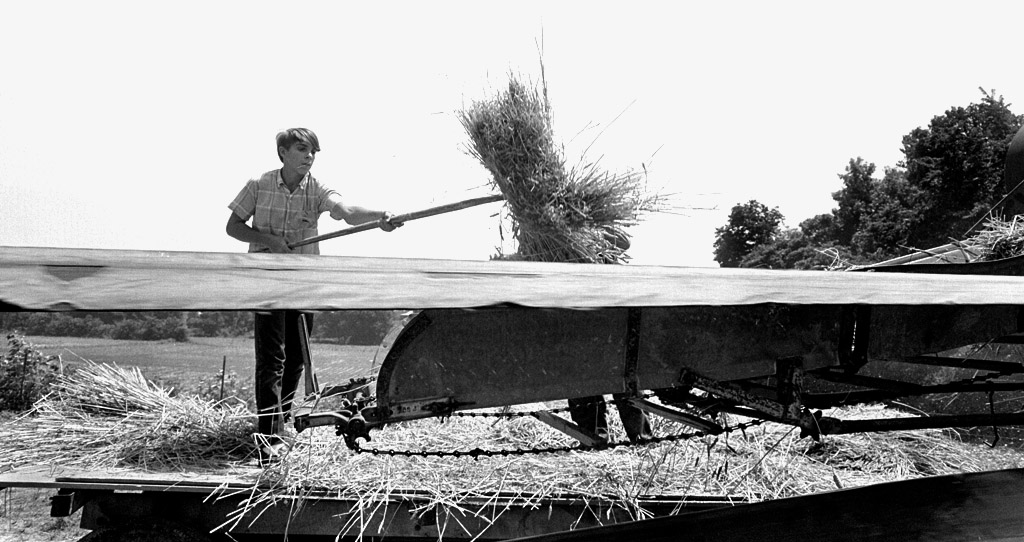
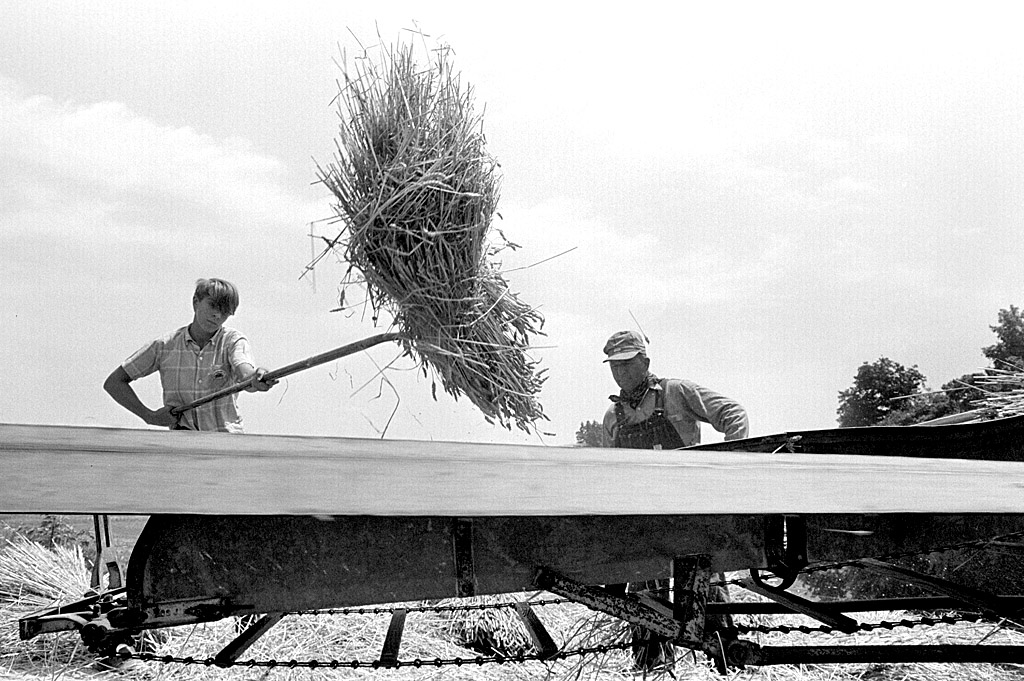
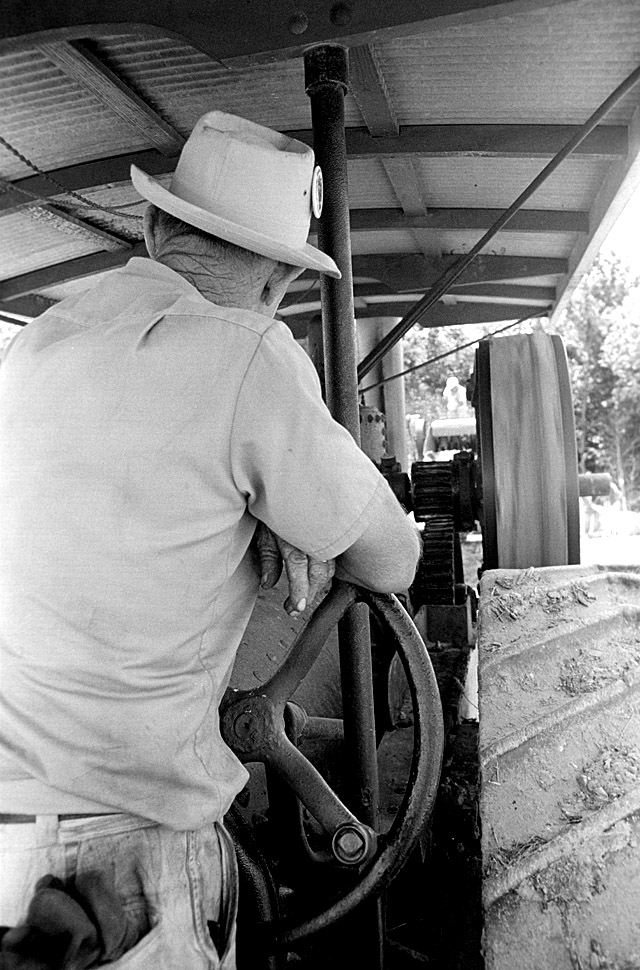
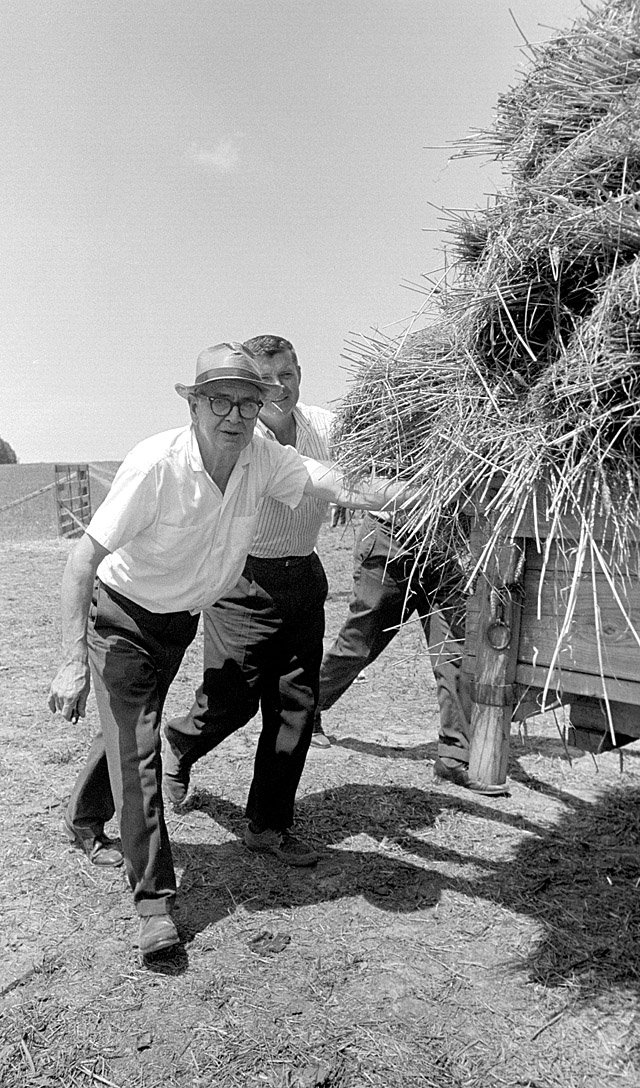
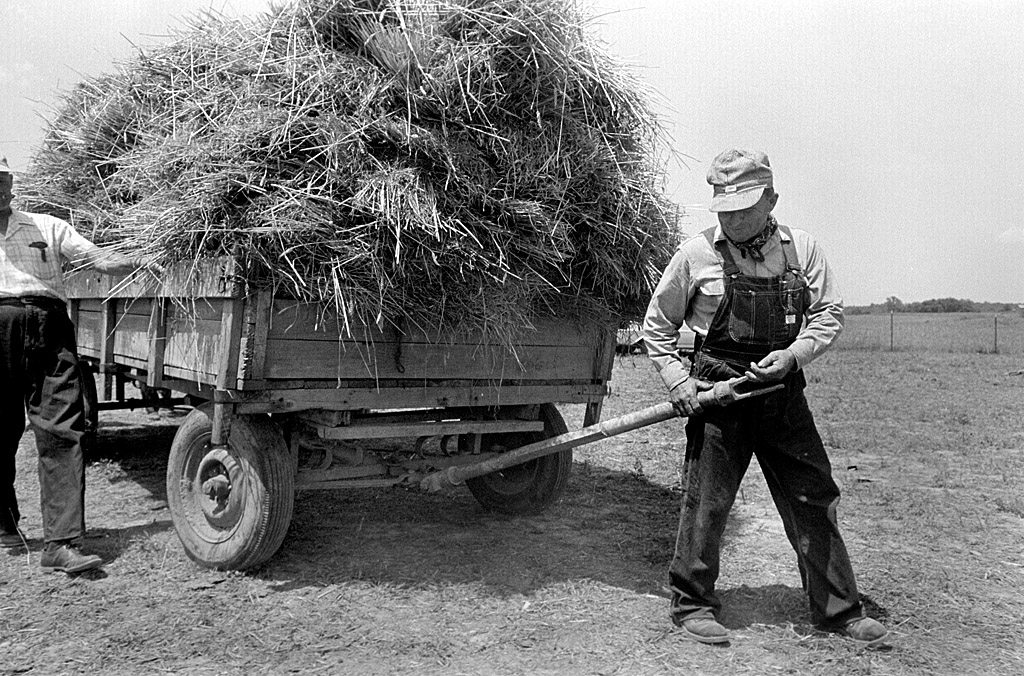
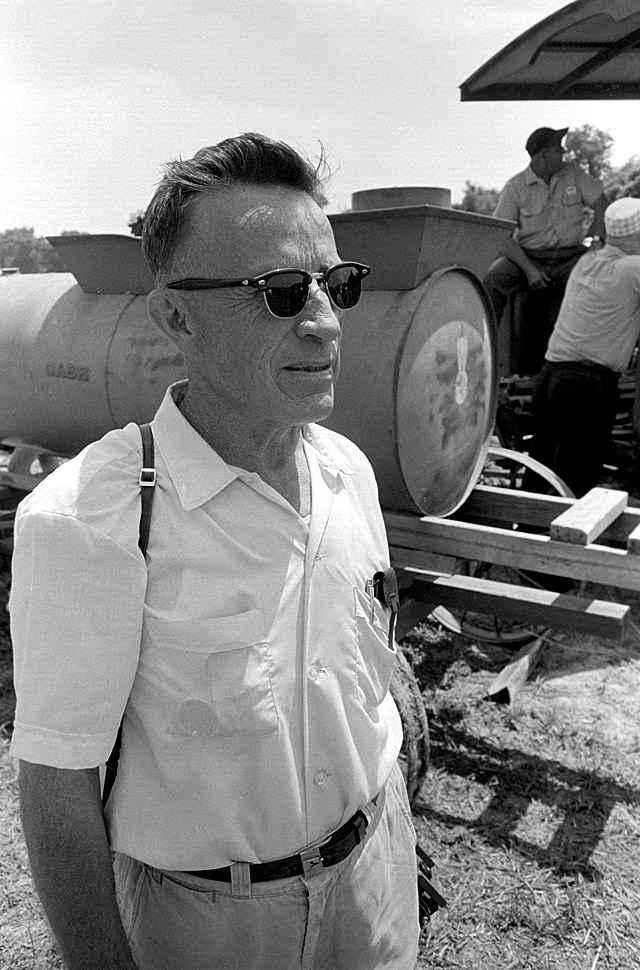
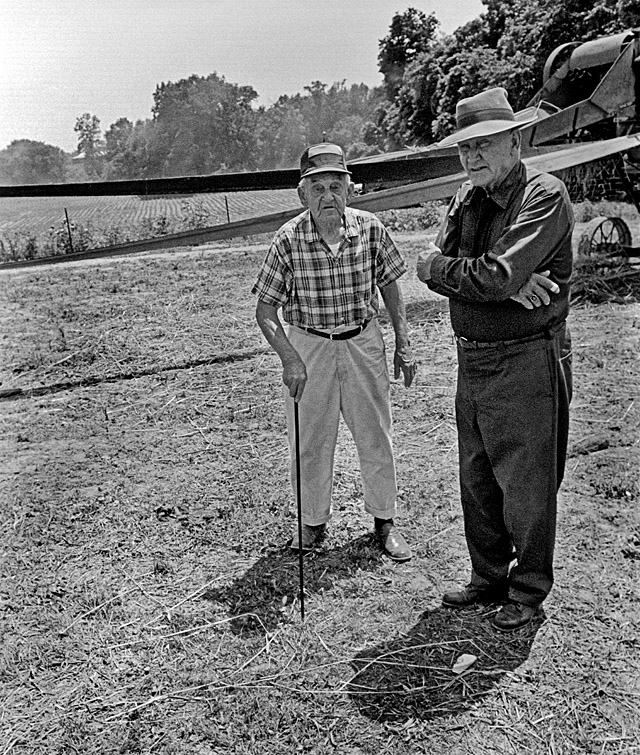
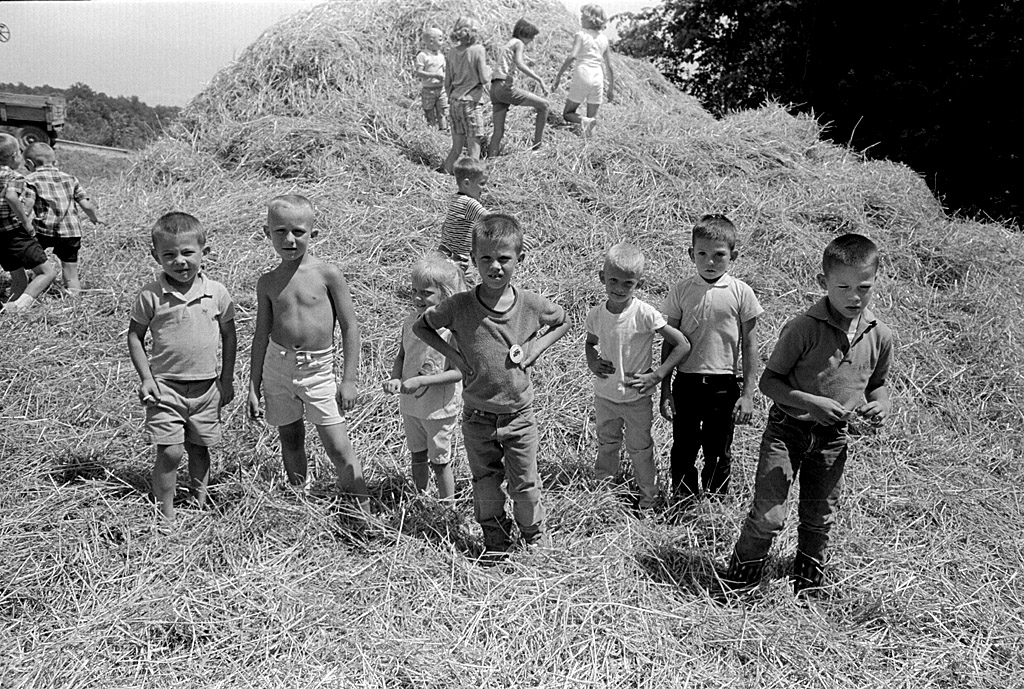
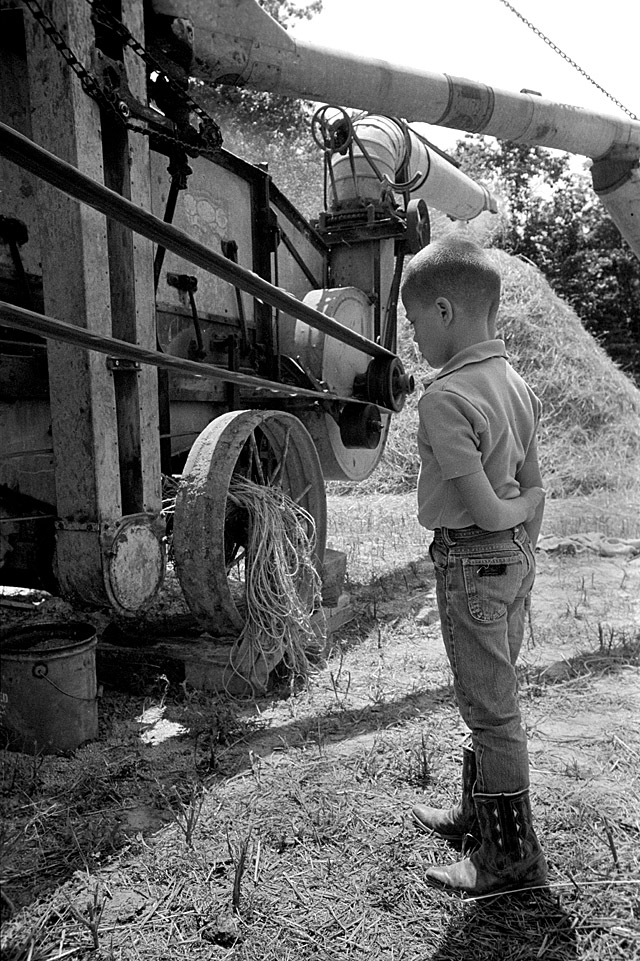
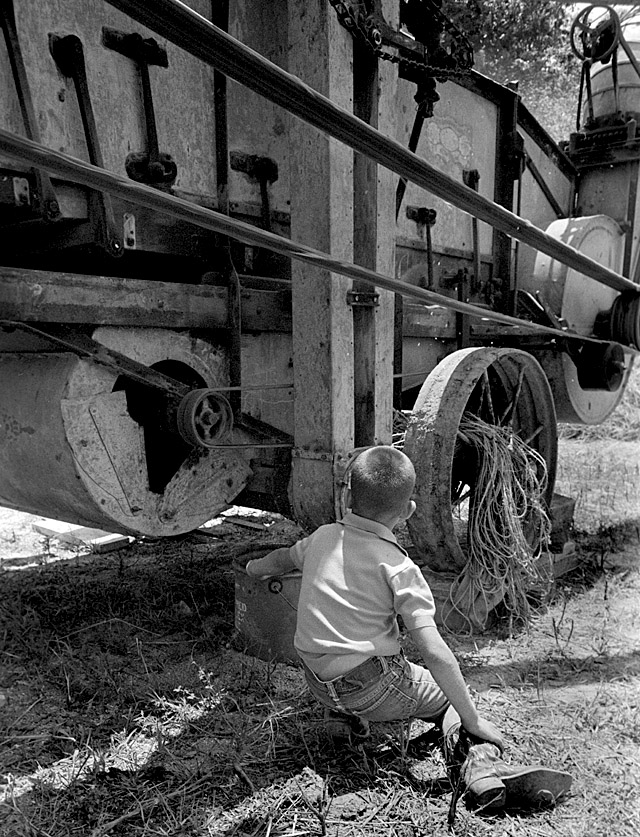
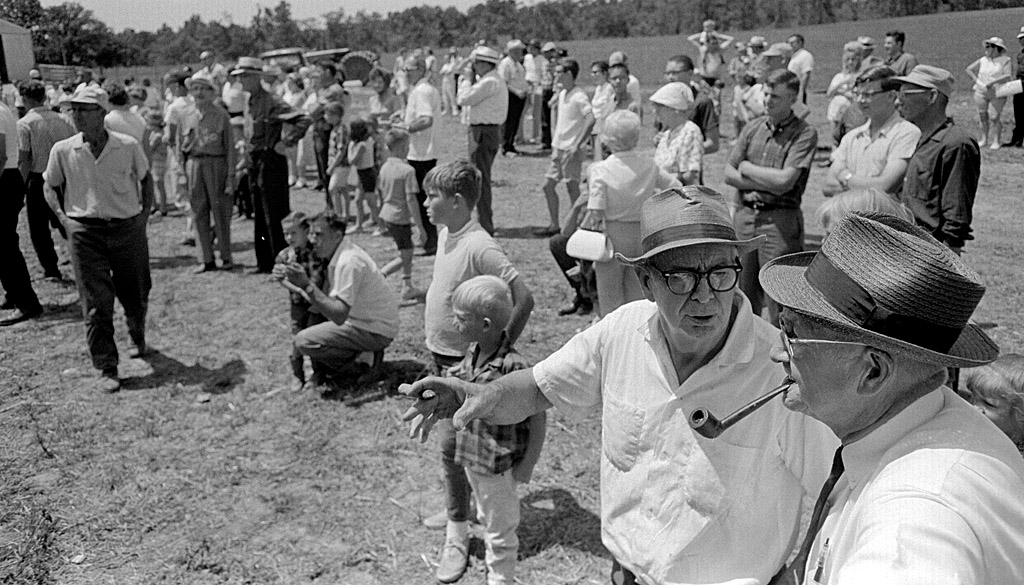
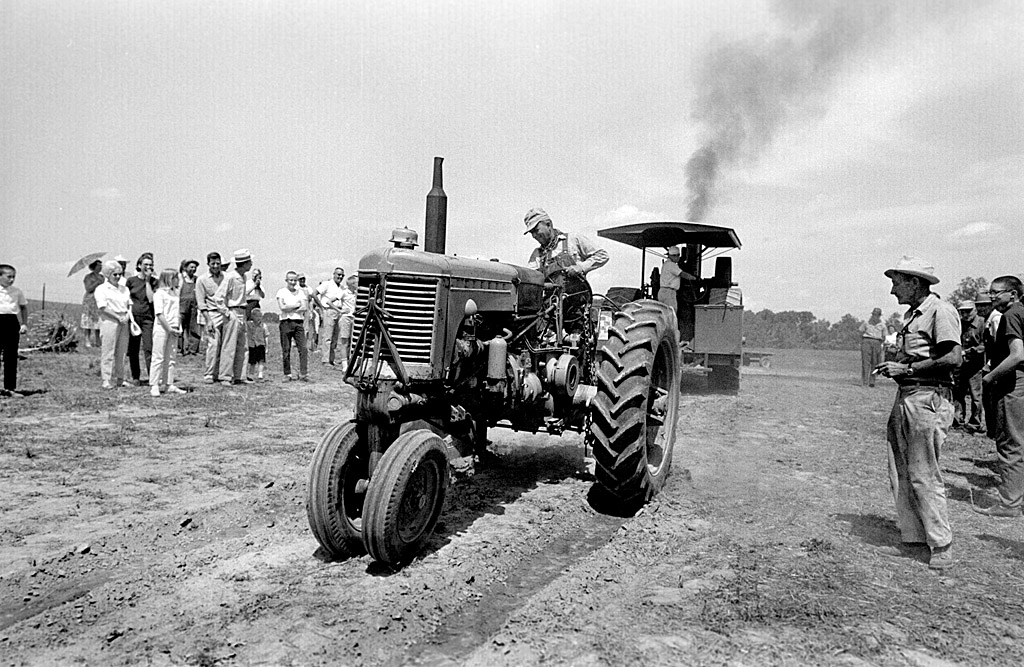
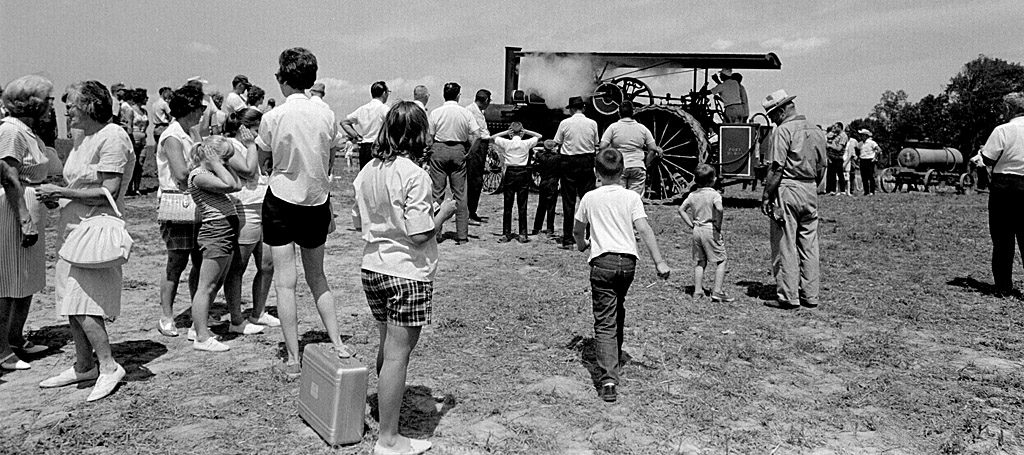
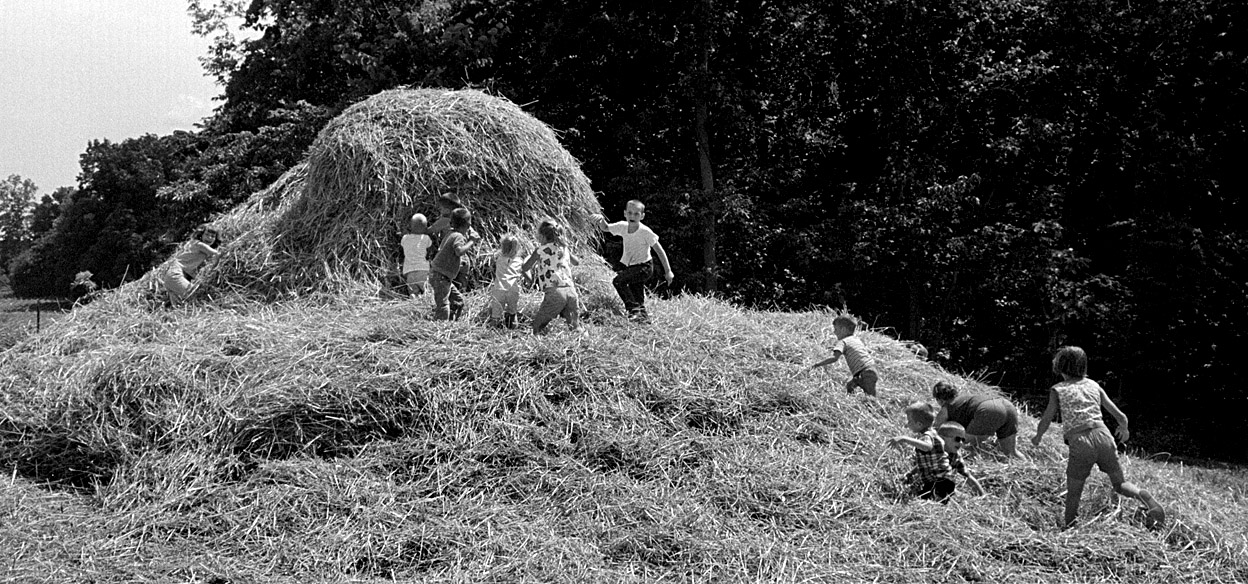
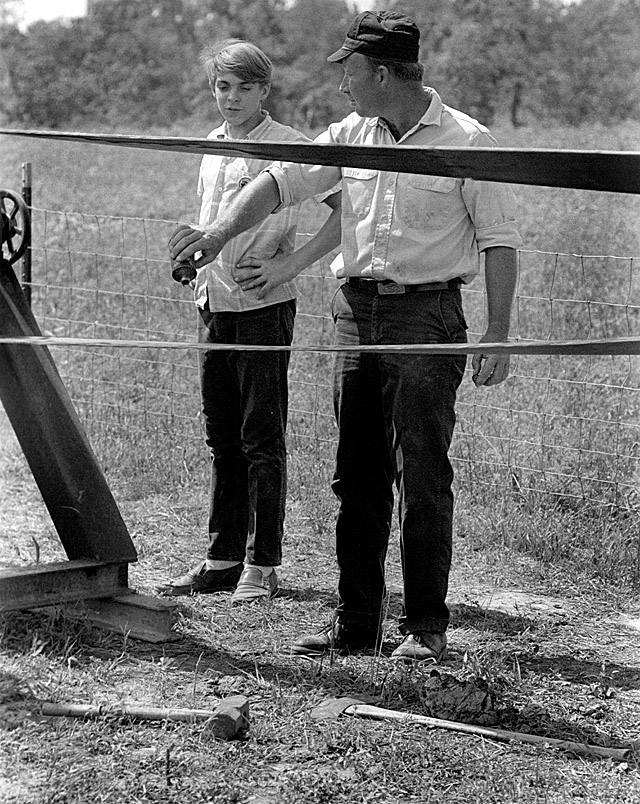
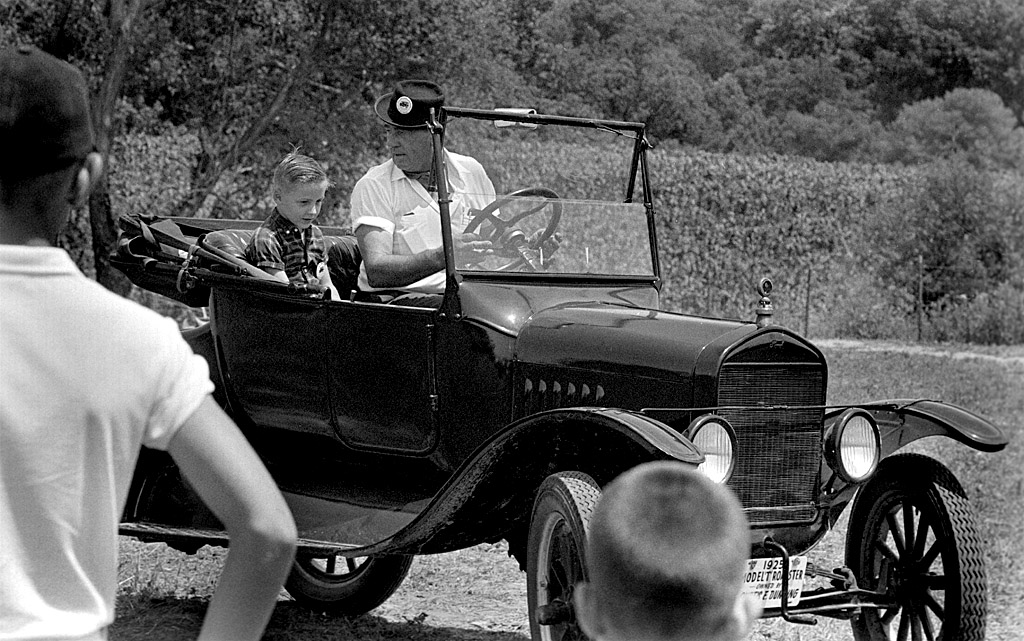
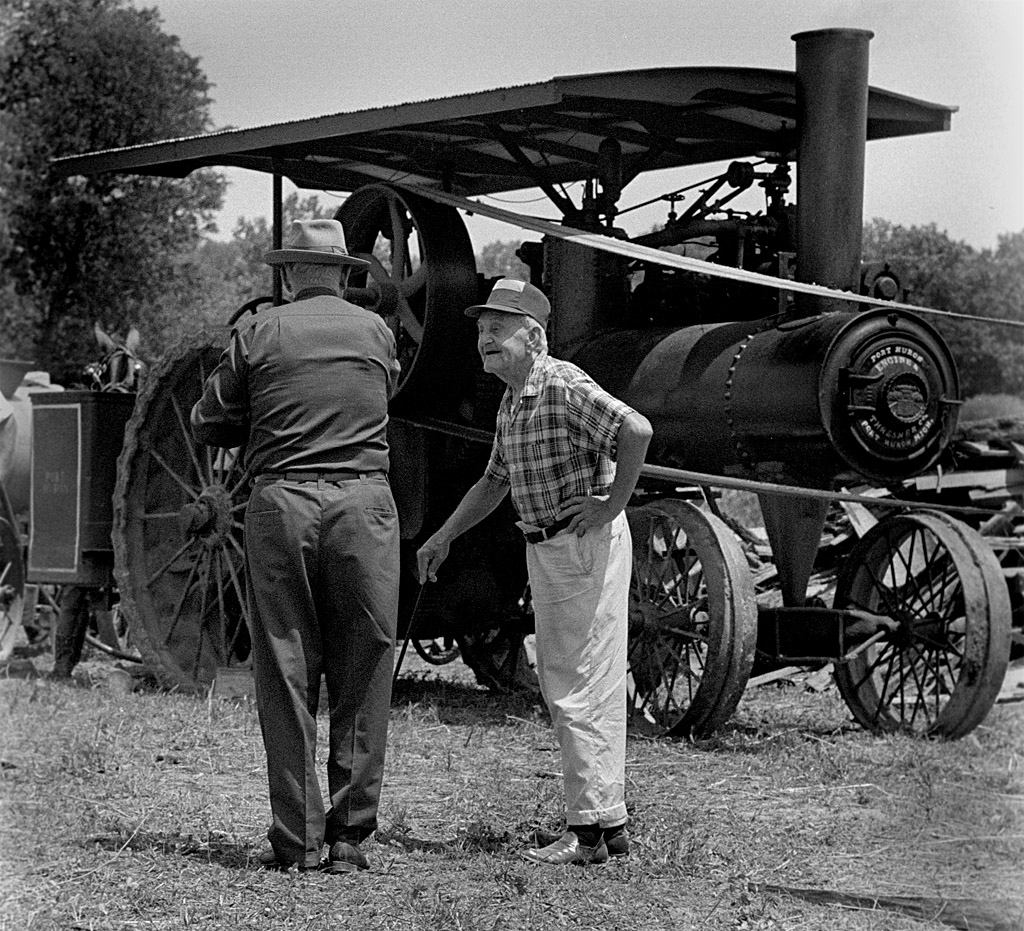
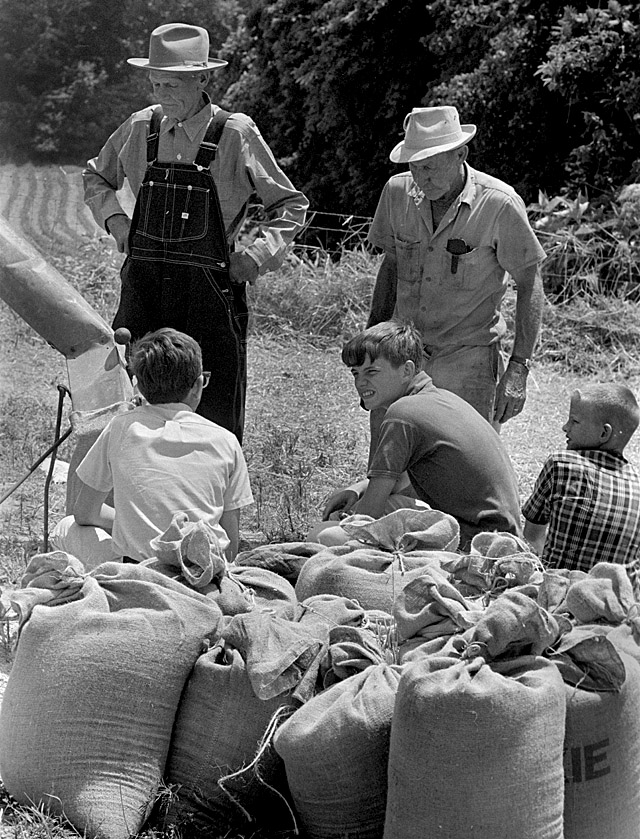
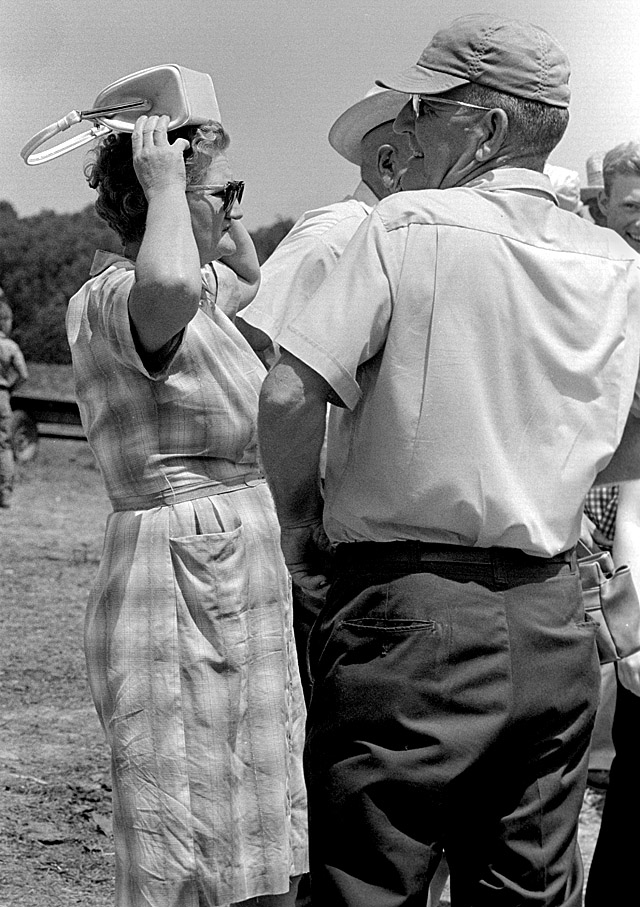
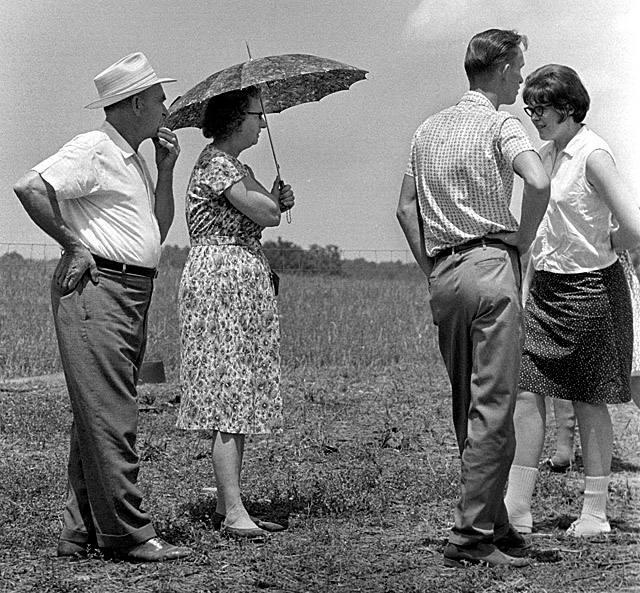
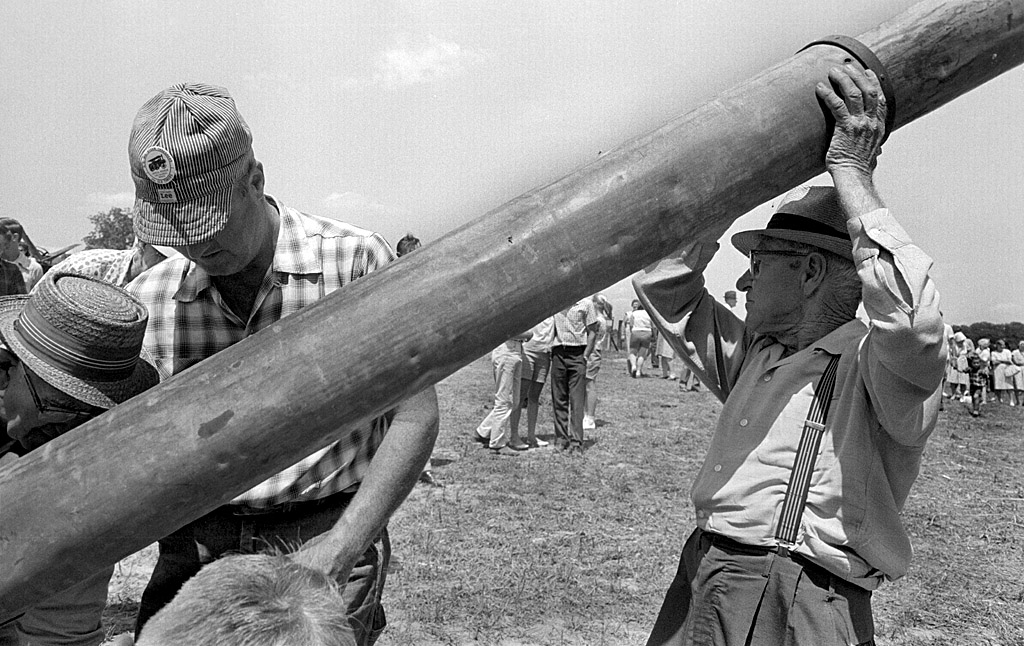
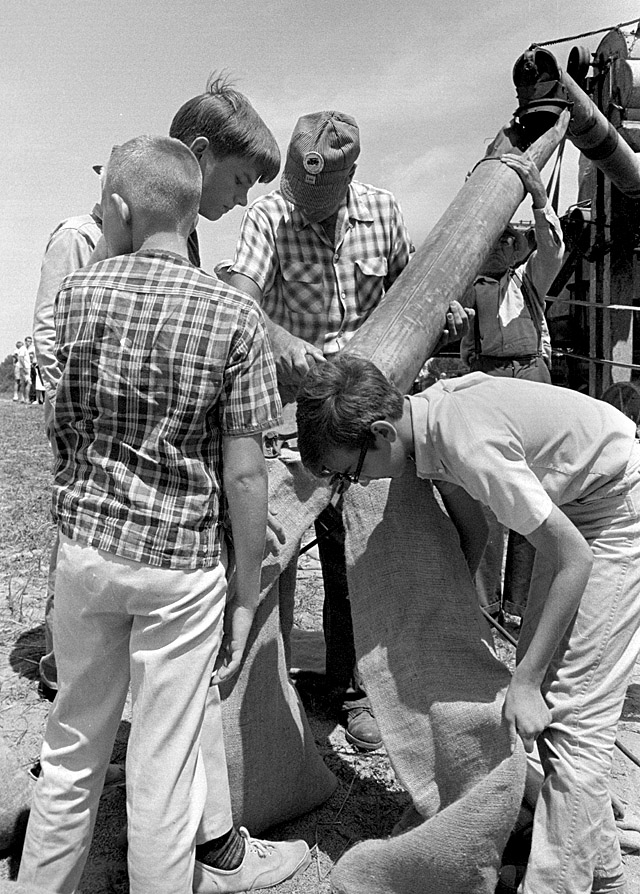
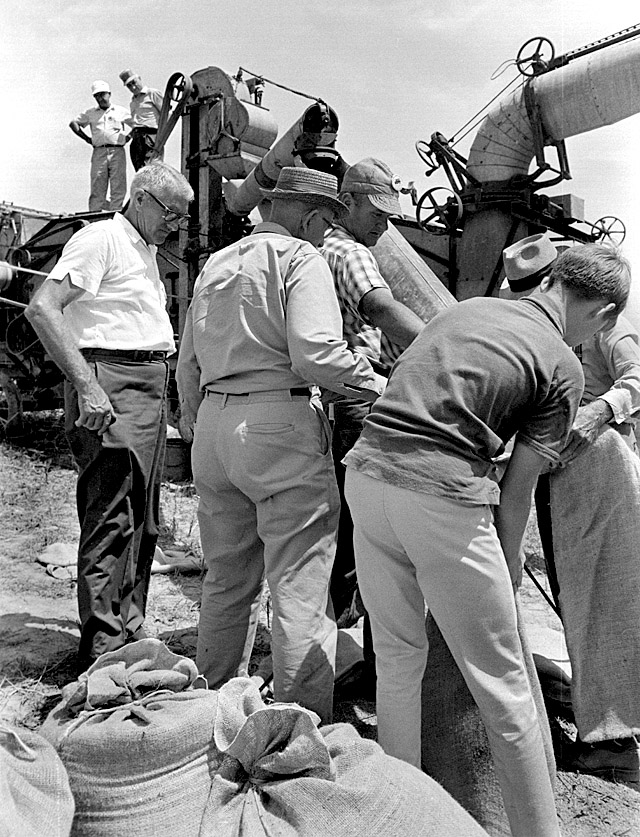
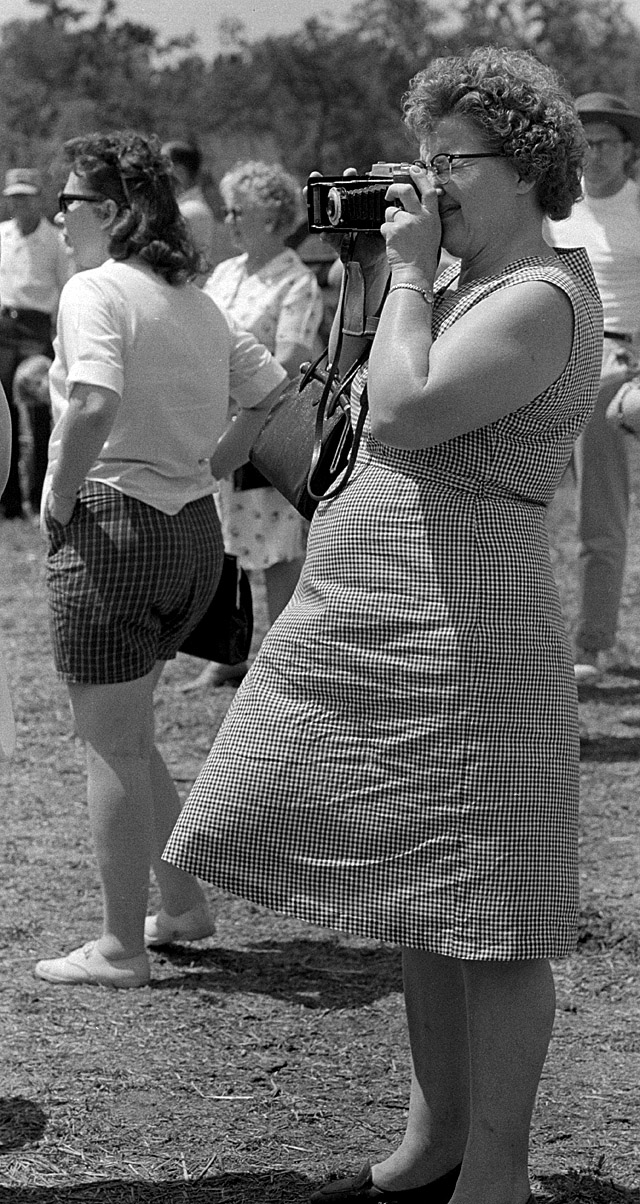
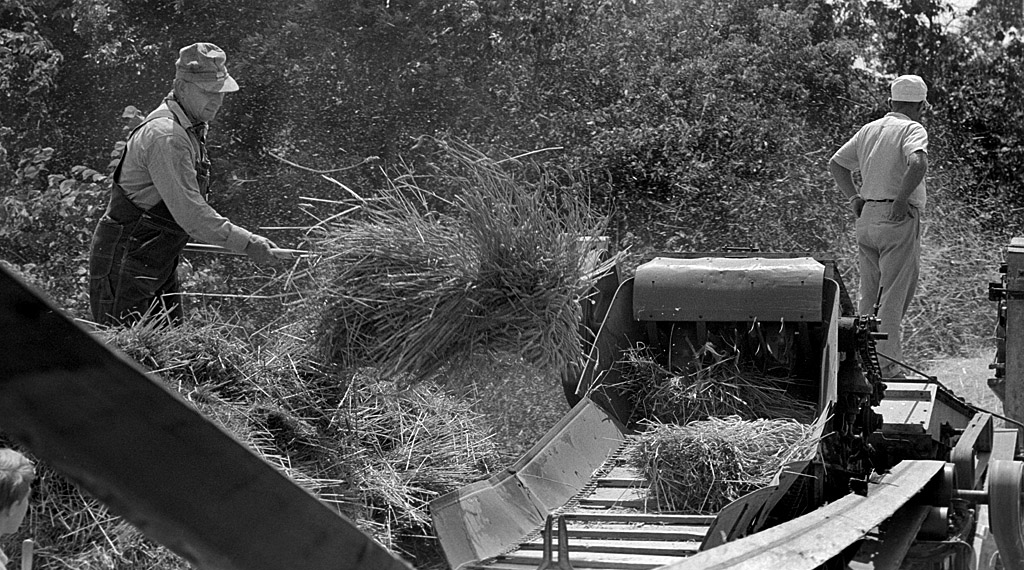
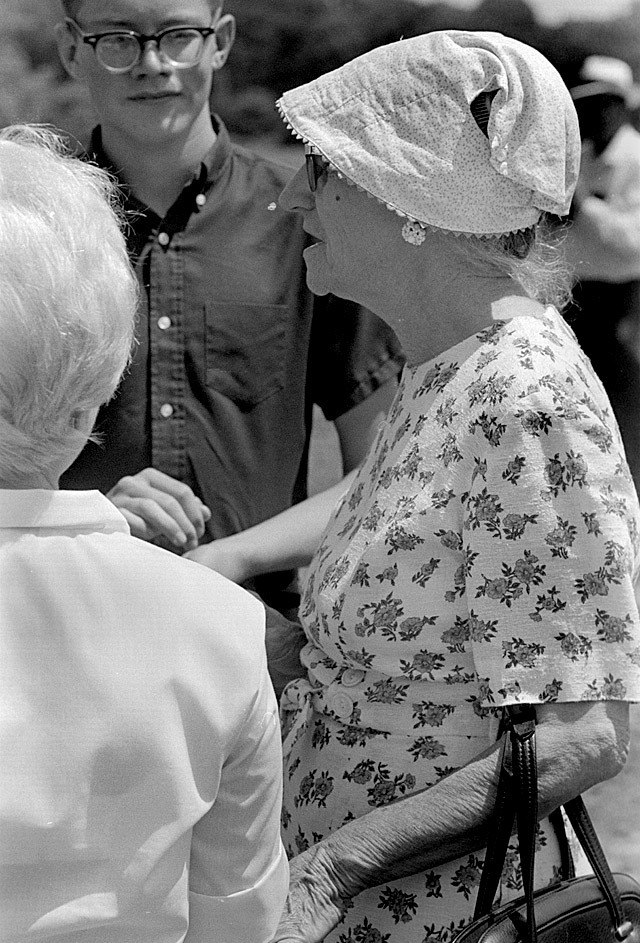
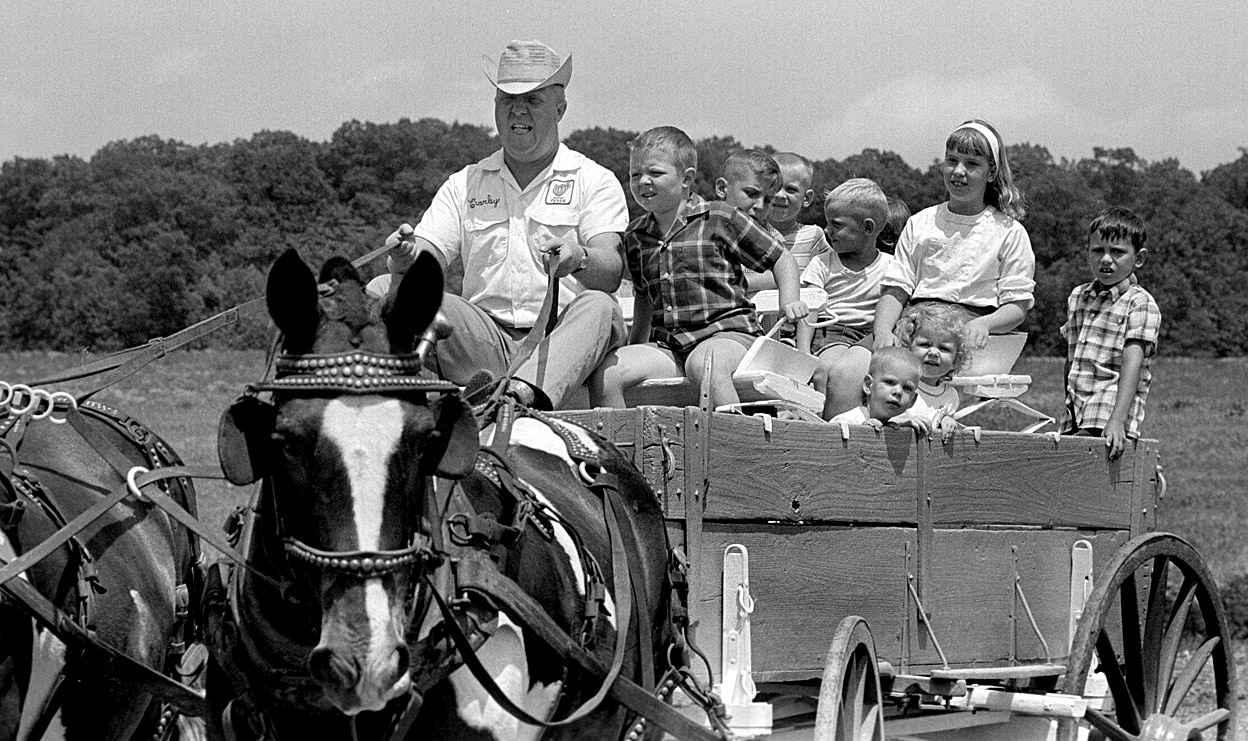
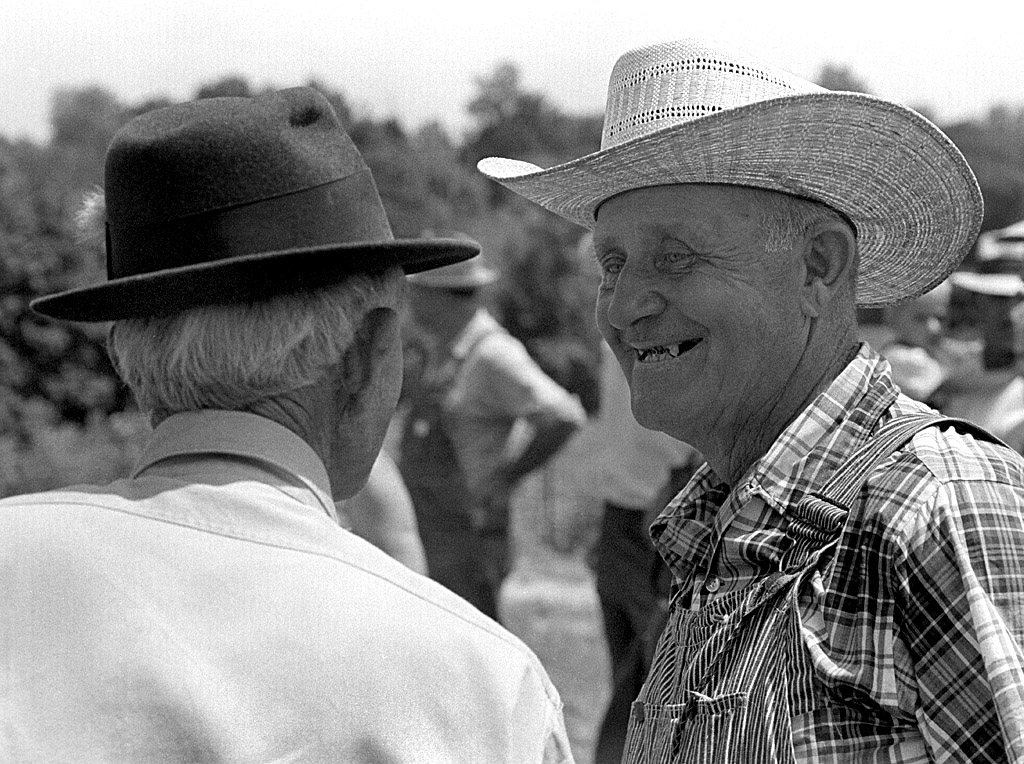
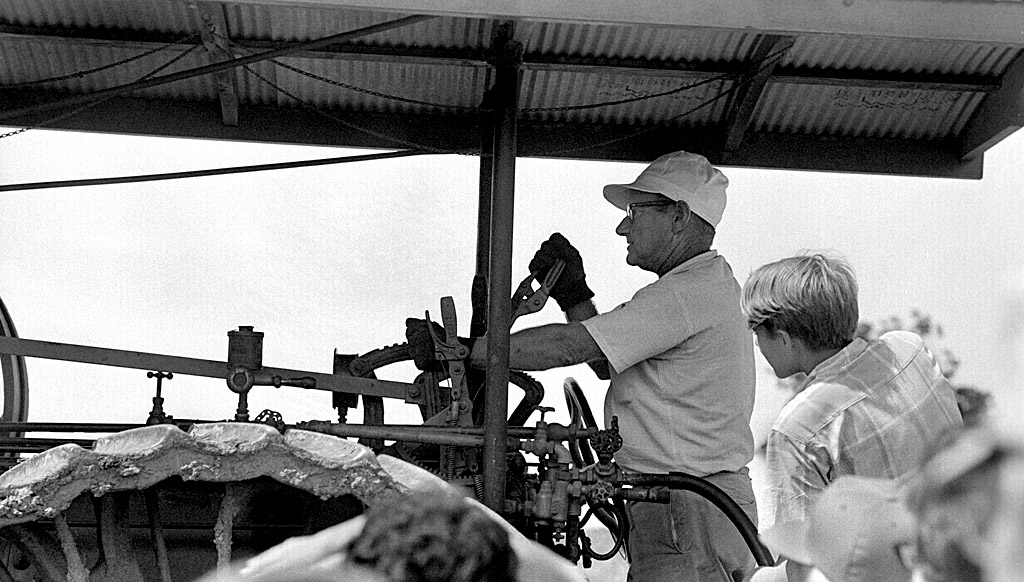
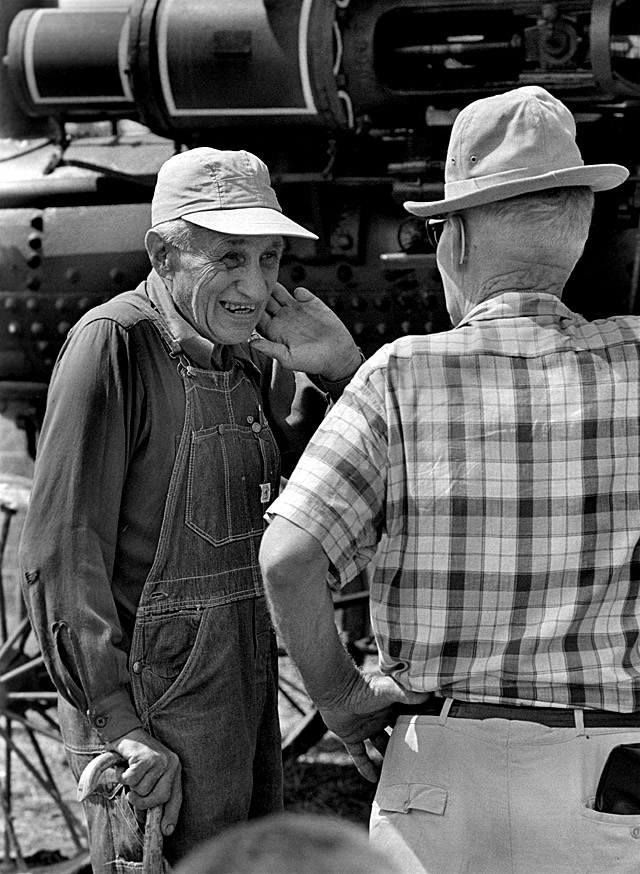
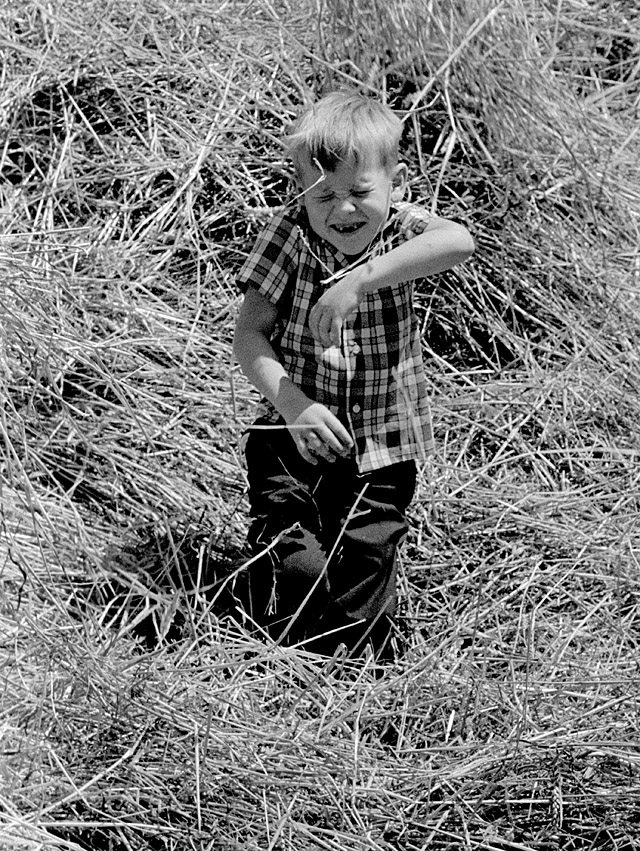
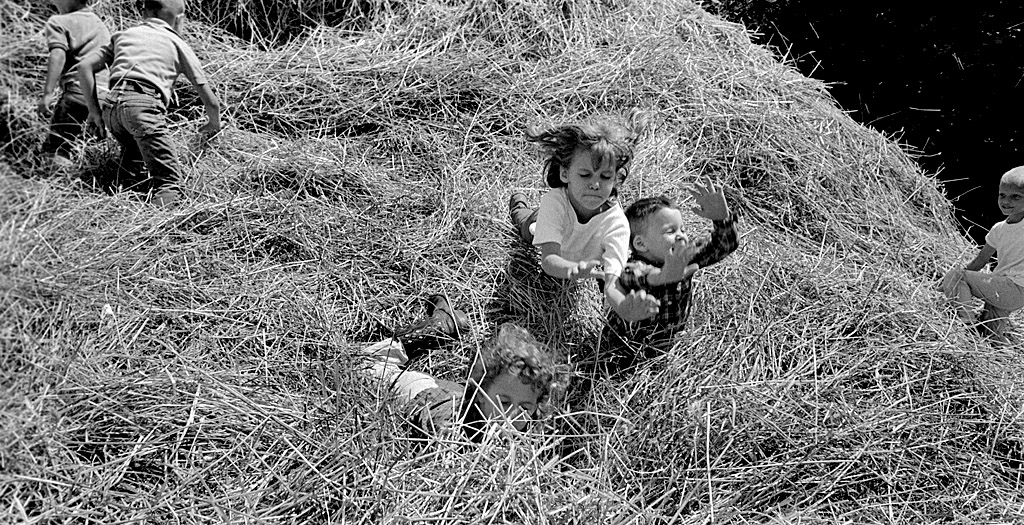
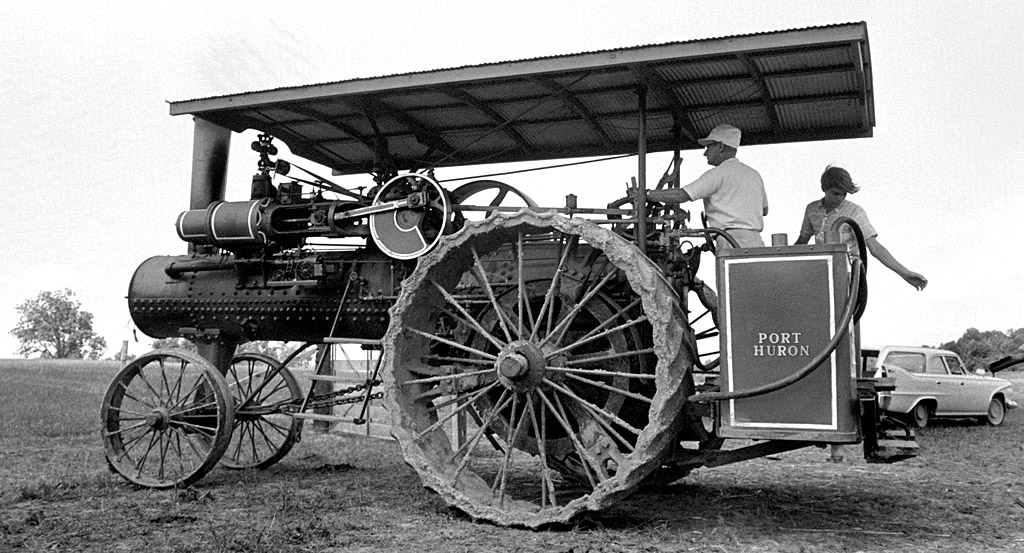
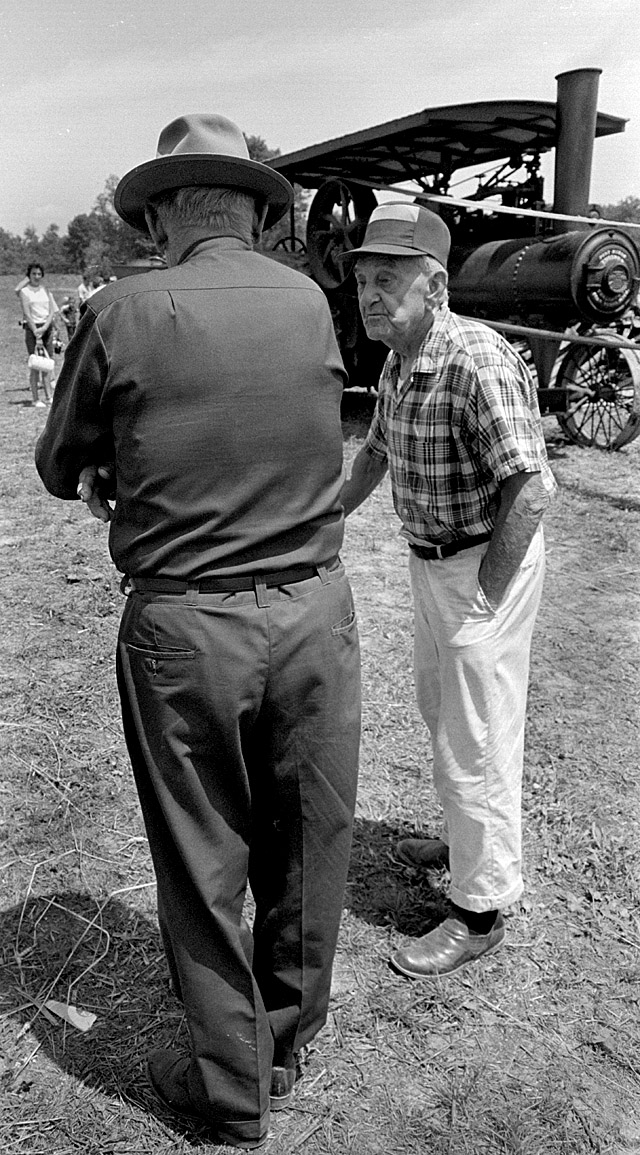
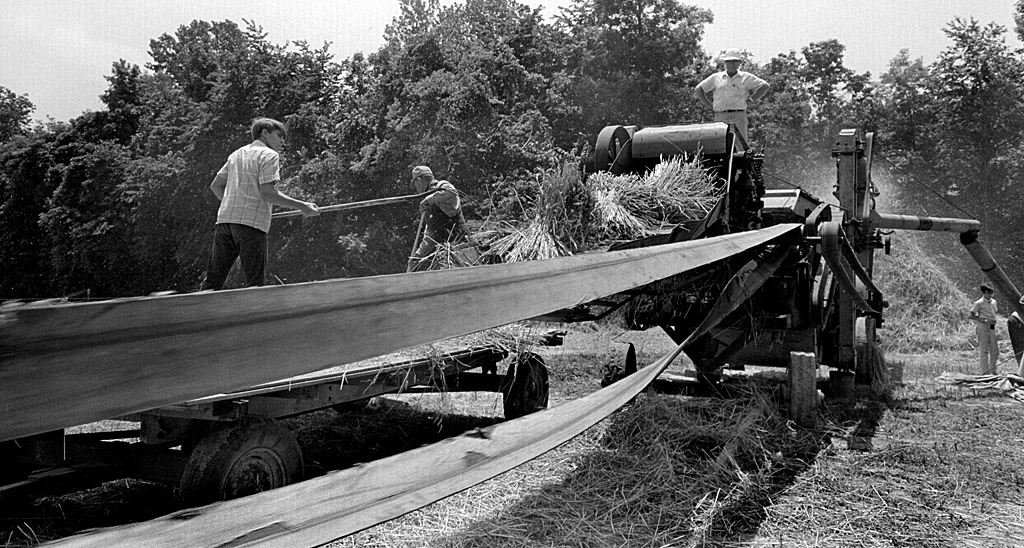
The caption that ran with a photograph similar to this one on the front page of the July 3, 1967, Missourian read, “Chaff spews from the muzzle of an ancient separator, adding to the pile of straw which small boys find irresistible. The scene was part of the seventh annual Cape County Steam Thresher and Old Settlers Reunion held on the Earl Kirchhoff farm north of Cape Girardeau Saturday and Sunday. Old farm machinery showed how things were done years ago. The event Sunday was attended by about 200 persons.”

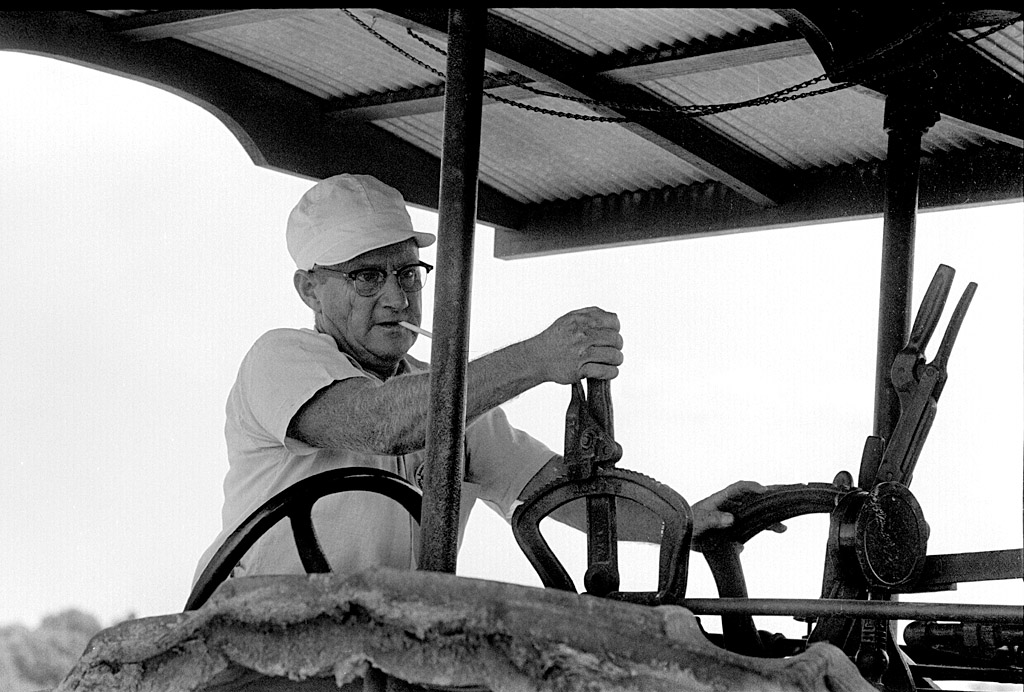
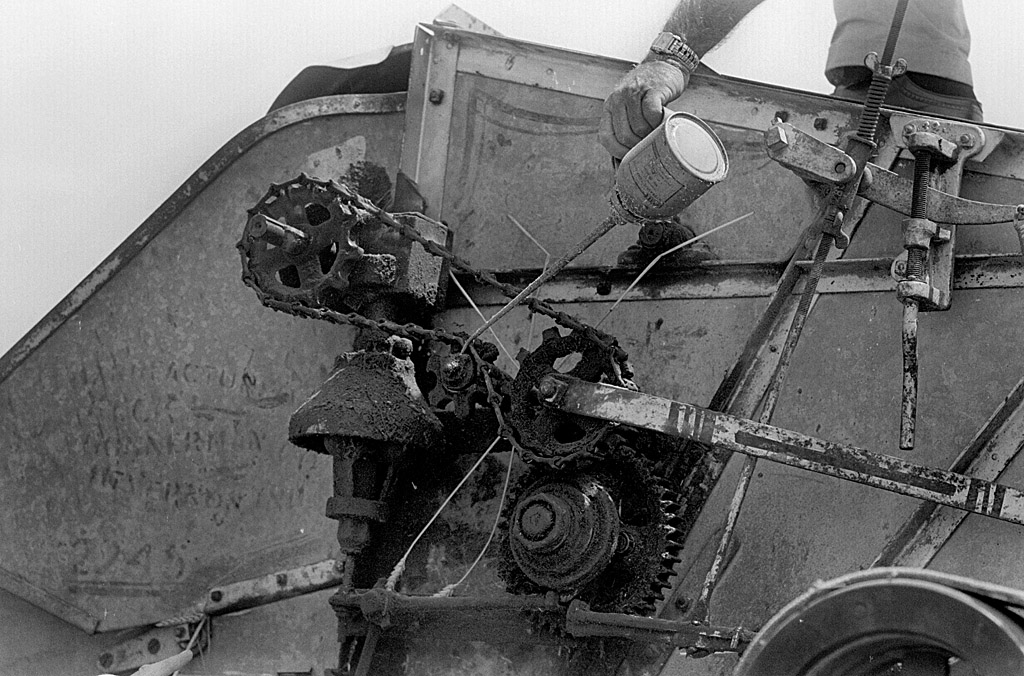
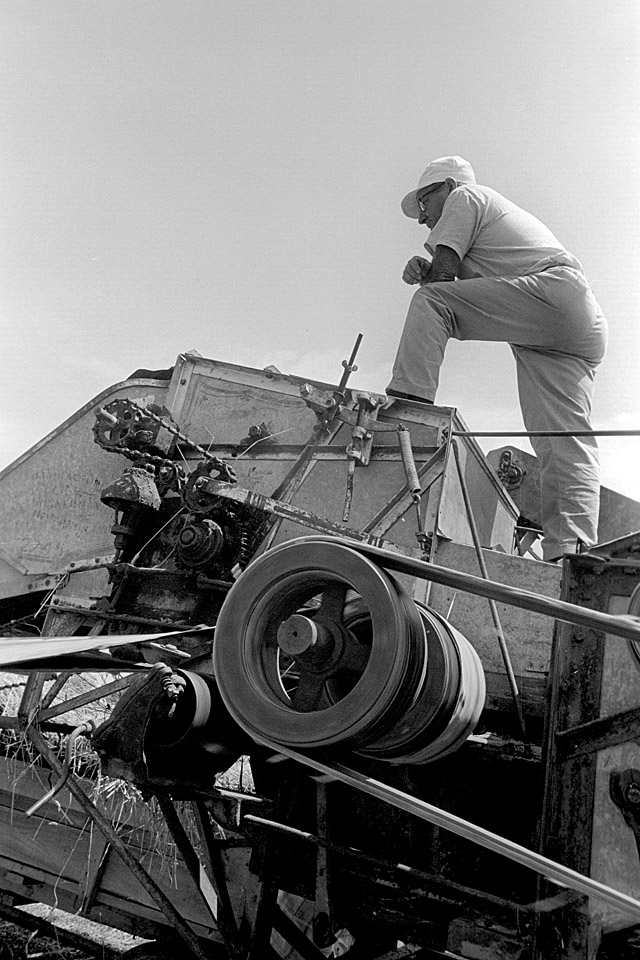
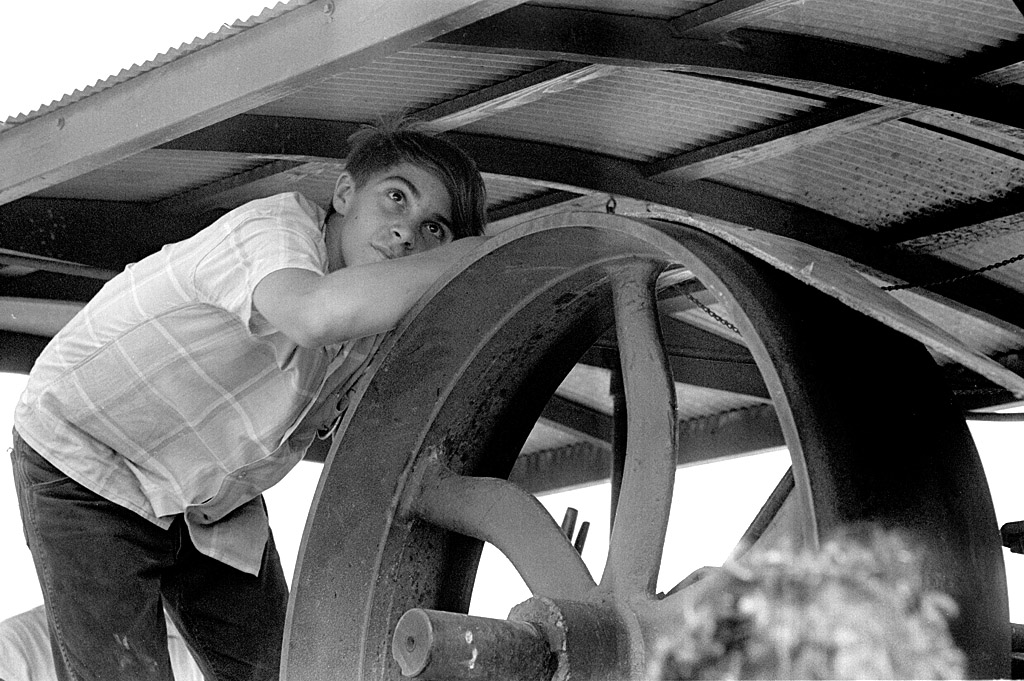
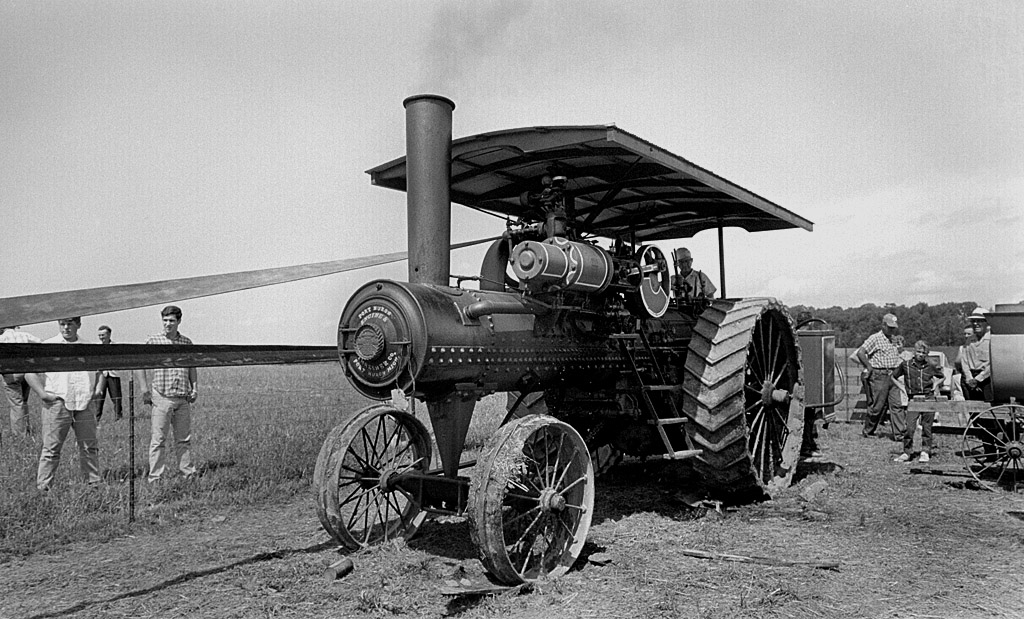
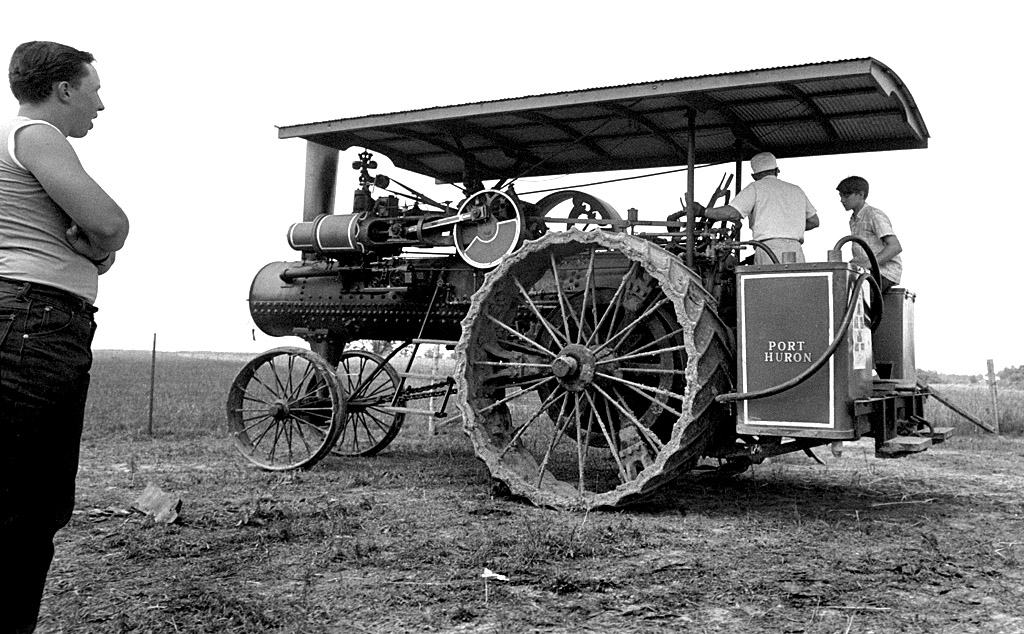
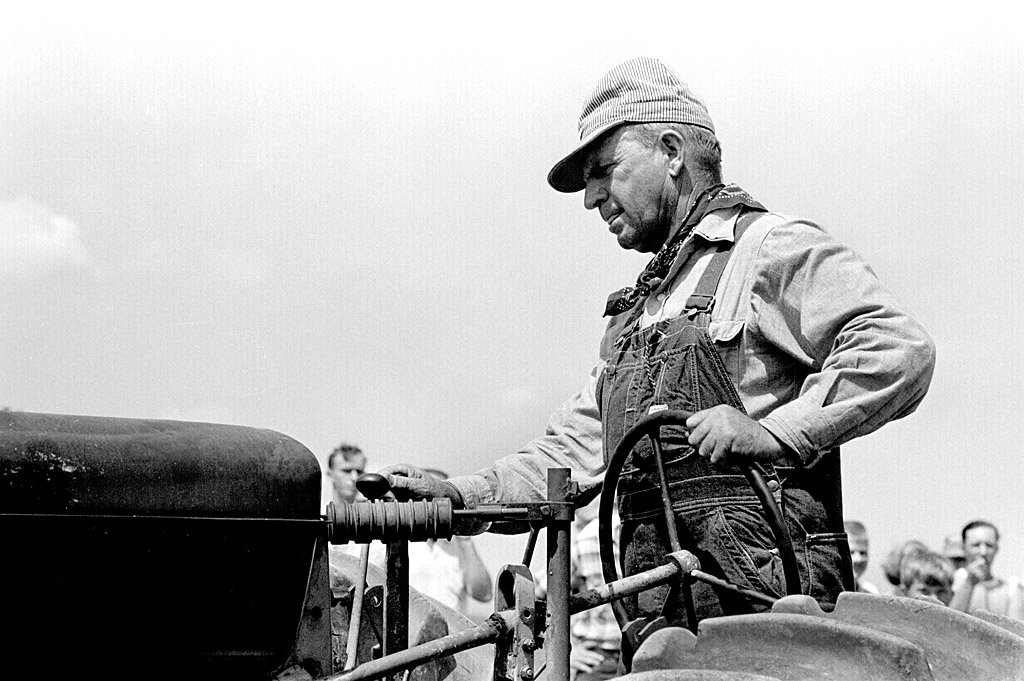
Operating a Port Huron engine is serious business

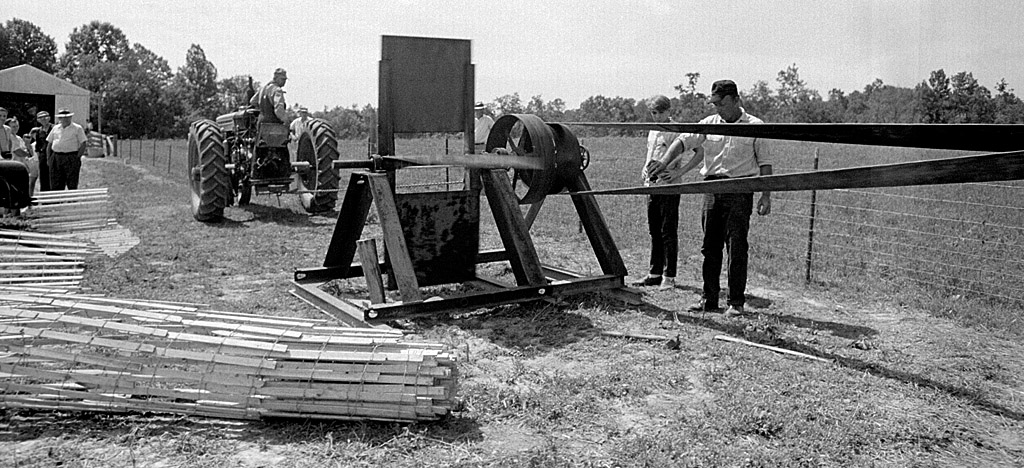
I didn’t realize how many other frames I had taken of the event until I kept pulling negative sleeves out of the drawer. I’m printing them because I assume there are some steam engine fans out there who will be interested.

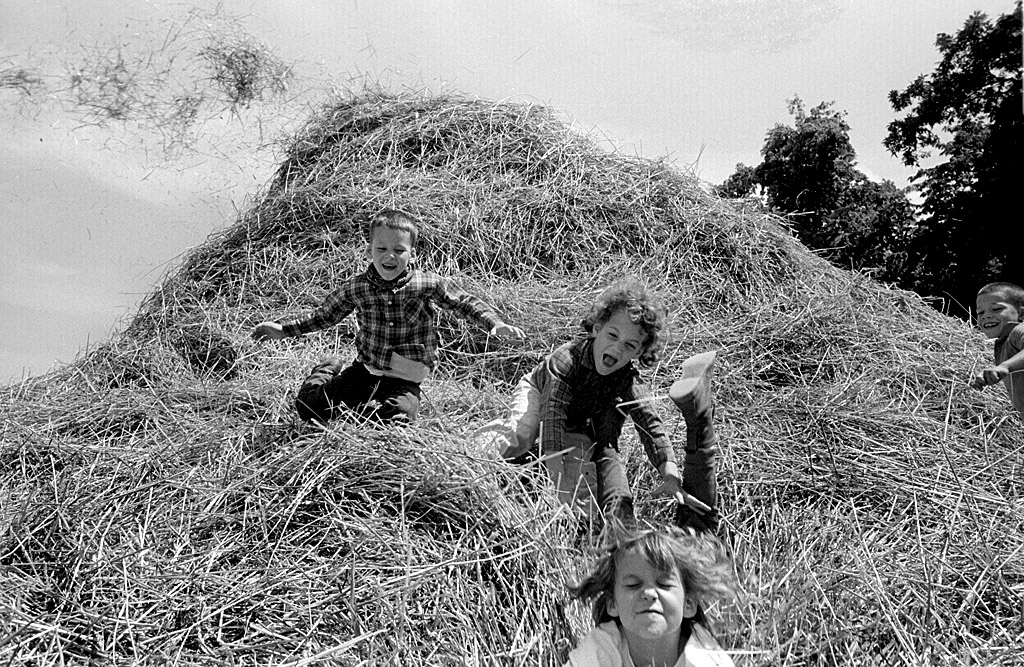
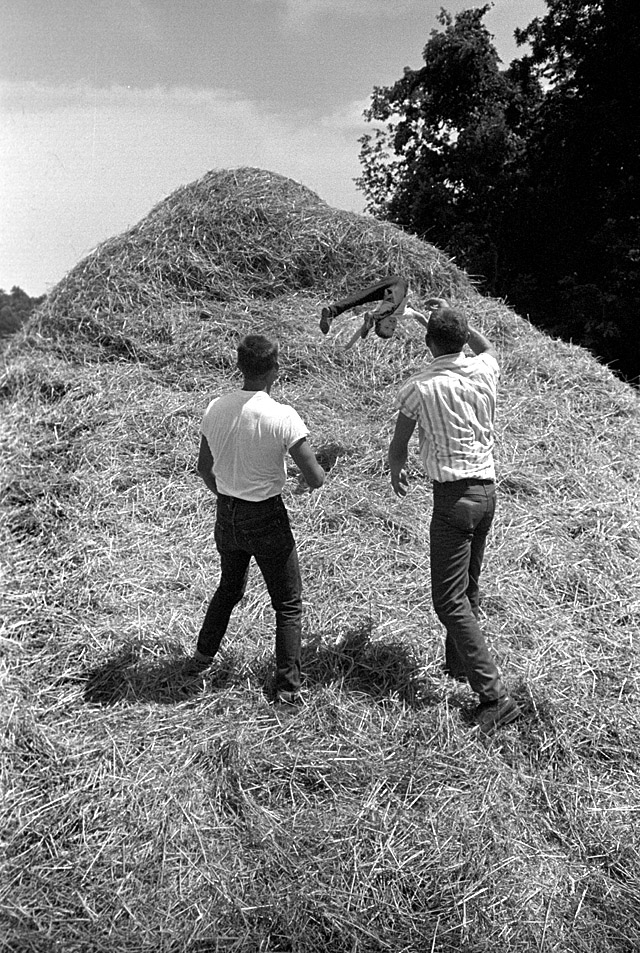
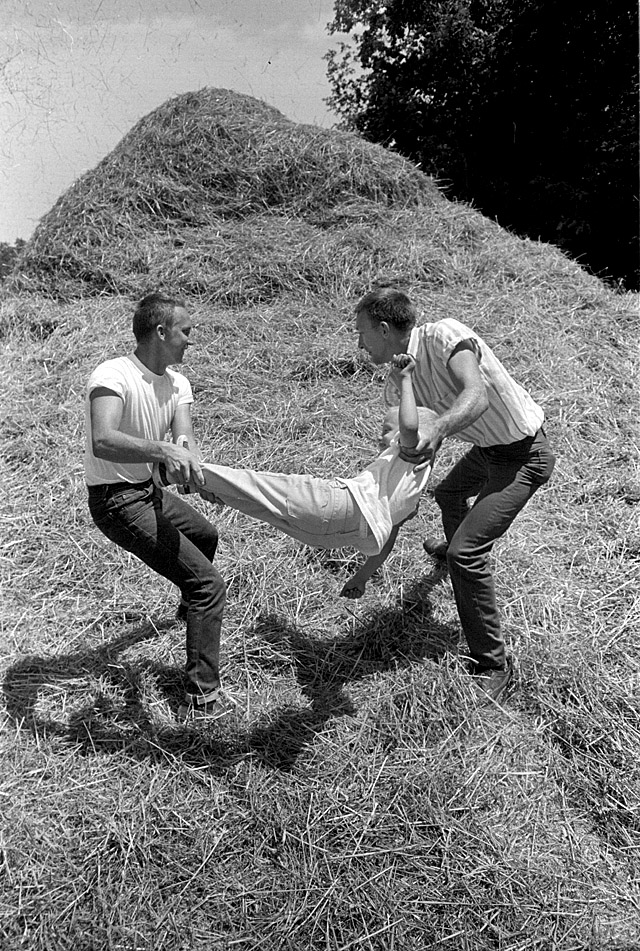
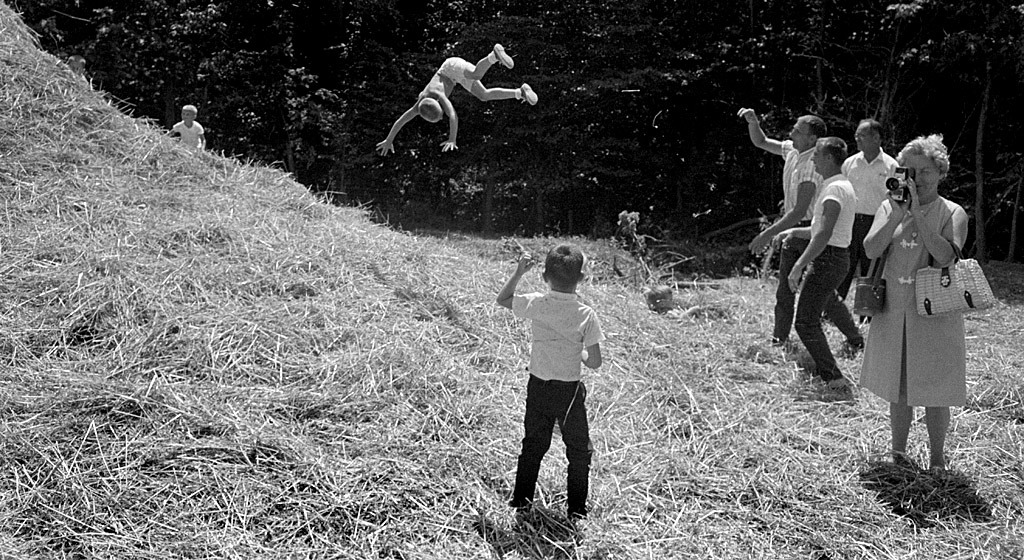
Kids loved the straw pile

There are probably 83 reasons why you couldn’t do this today, but THESE kids had a blast and kept lining up to go again.

Not sure where these were taken

I never did get clear on whether or not these photos were taken at what it now called the Chuck Maevers Memorial Gardens on the west side of Hwy 127 at Egypt Mills. Were any of you among the 200 who showed up for the event?

Photo gallery

Click on any photo to make it larger, then click on the left or right side to move through the gallery. From a technical standpoint, these were taken at the absolutely worst time of day: noonish, when the sun was almost directly overhead making for horrible shadows. Hint: don’t shoot then unless you have no choice.