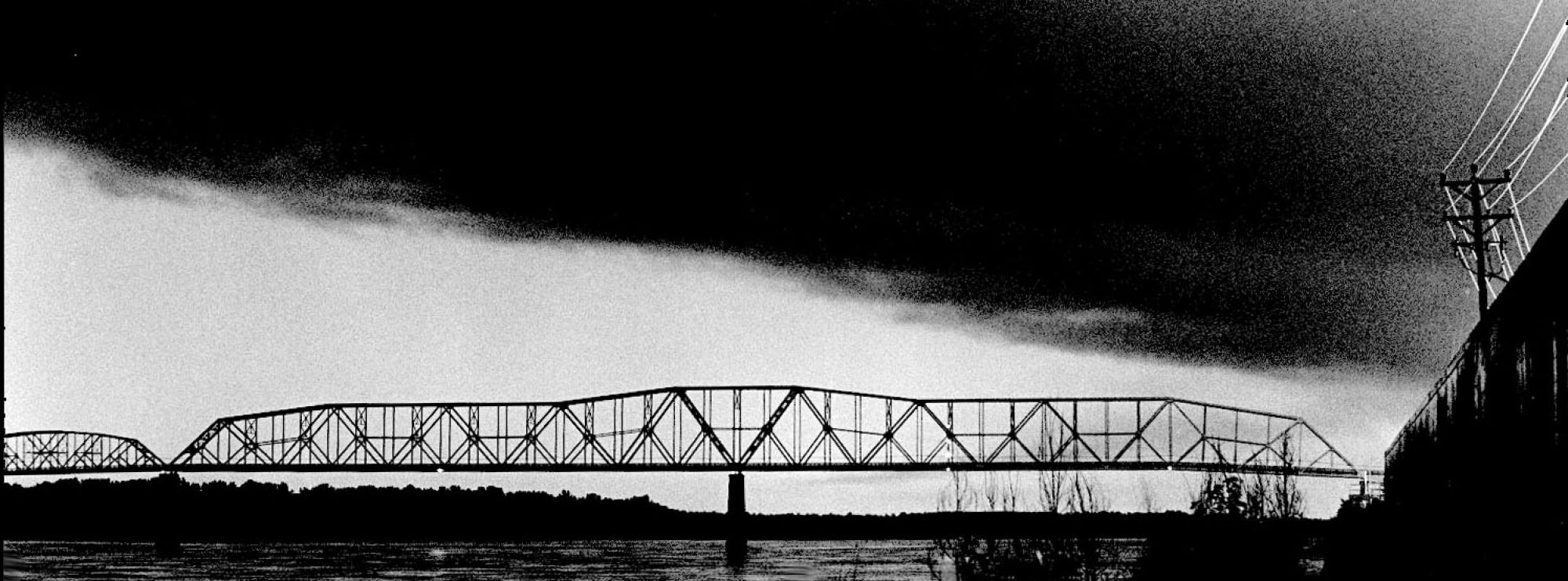
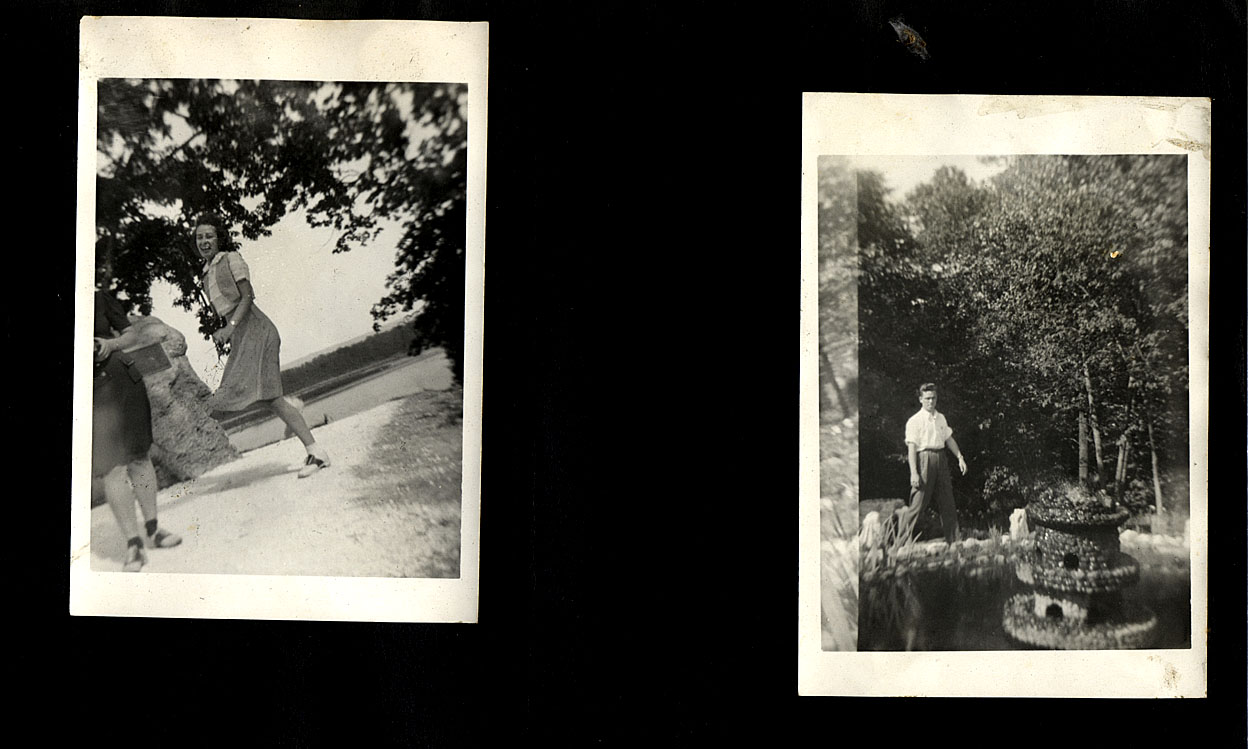
 I scanned a really cool photo of my mother on top of Cape Rock. Then, I looked closely at the photo next to it and recognized it as the fountain in the small park just north of the water plant on Cape Rock Drive. I’m going to guess the photos were taken in the early 1940s. [Click on the photos to make them larger.]
Aerial of Cape Rock and the water plant today
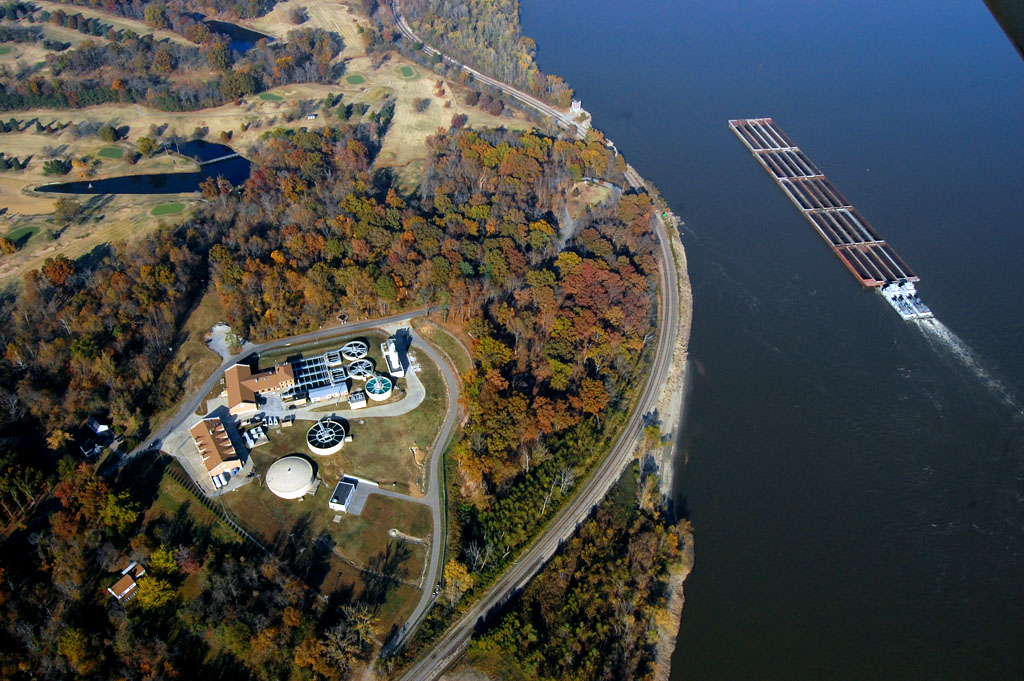 Here’s an aerial I shot last November of the area. The water plant is in the center, The small park with the fountain is directly across the street. The towboat is pushing barges off Cape Rock. The Country Club golf course is at the top left.
“Outstanding example of good taste”
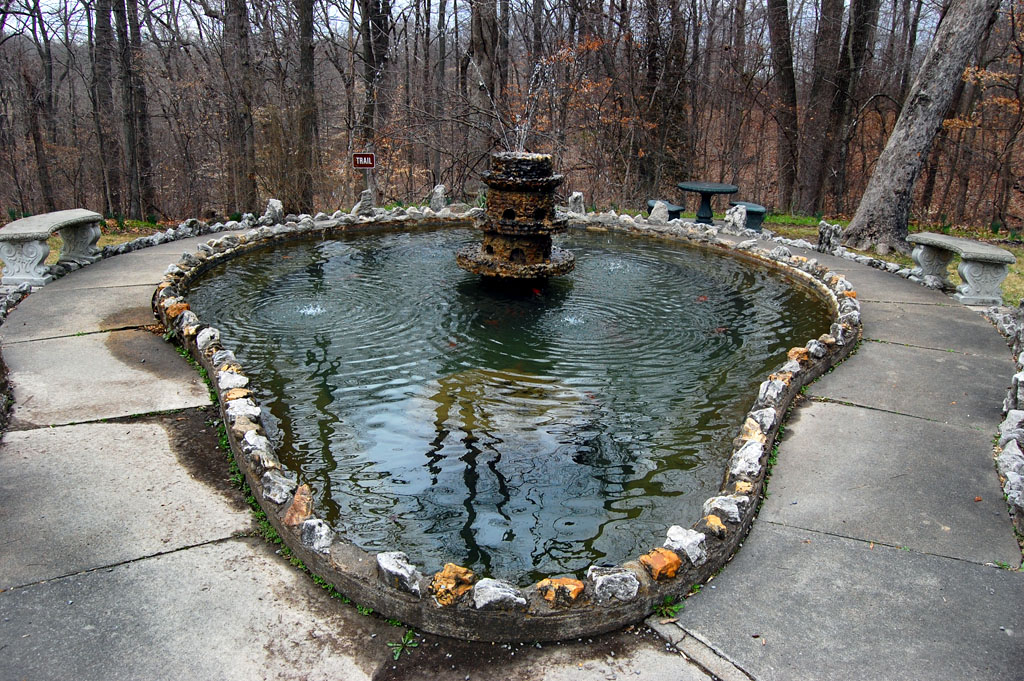 A May 21, 1931, Page One Missourian story gushed, “A project of the Better Service Club…might be described as one outstanding example of good taste in landscaping and beautification in this city… Situated on the brow of a wooded ravine just north of the site to be occupied by the new $250,000 water plant, the rock garden and its central fountain forms an attractive background to the woodland.
This garden was built for the employees by Judge I.R. Kelso of the Utilities company… The cost of lighting the place and planting it to flower and shrubbery will be borne by the employees, who will also maintain the project.”
Has electric fountain
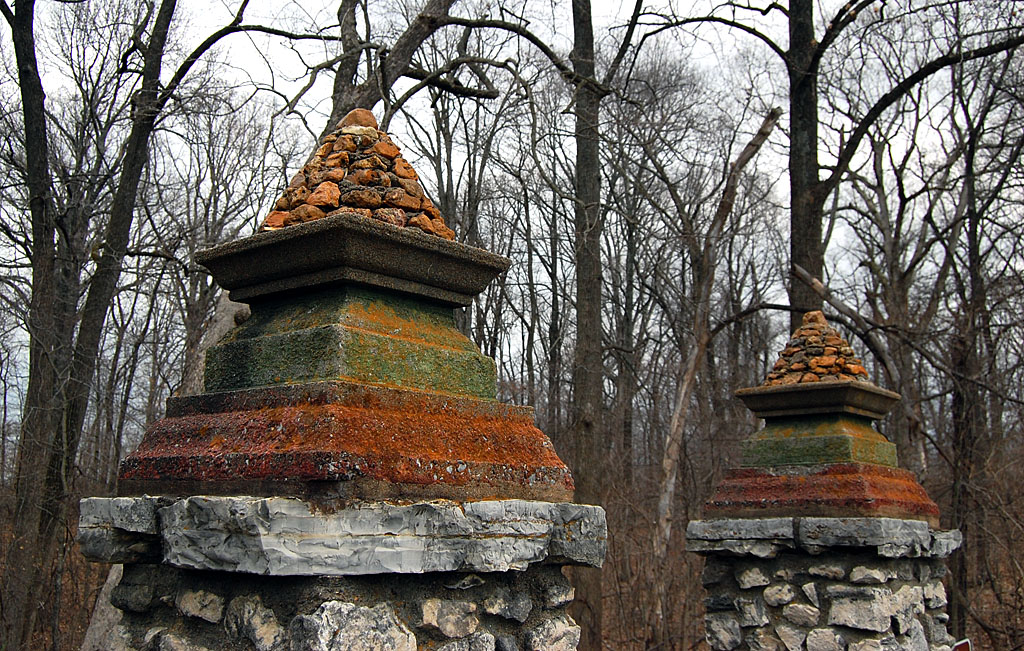 “A feature of this garden spot is an electric fountain, the only one of its kind as far as is known in Southern Missouri. Four huge stone pillars form an entrance to this small park, two of the pillars being located at each end of the park and containing an ornamental lamp, and two others forming a support for a proposed illuminated sign.
The large pool, including the fountain, forms the central structure of the garden. The entire garden is bounded by an attractive design of stone arranged in a tasteful manner under the supervision of Tony Haas. Around the edge of the large pool a walk has been constructed, leading from the entrance, and on the inside of the walk is a concrete, rock and brick trough for water planting. The fountain will be a bowl-shaped affair, with a circular spray which can be adjusted to a diameter from seven to 70 feet. A center spray will be forced about 20 feet high.”
[Note: I read in another account that the pool was shaped to resemble a light bulb, keeping with the utility theme.]
Night illumination
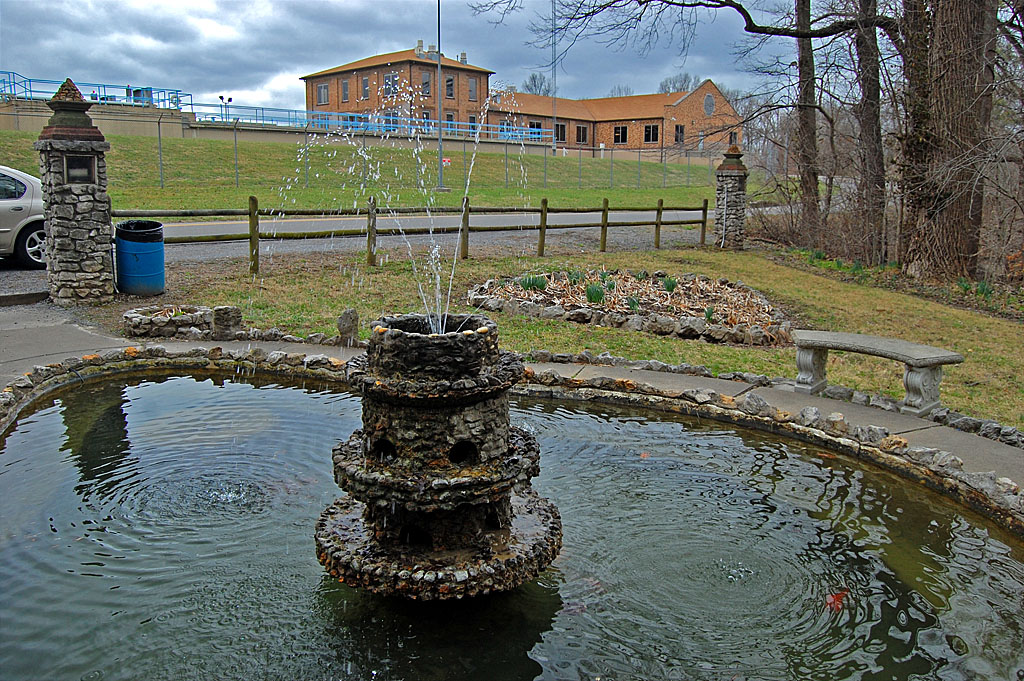 “Around the base of the fountain beneath the water surface a sealed case contained lights of seven different colors will be arranged to give a vari-colored illumination to the sprays from the fountain, forming a beautiful spectacle at night. Four floodlights concealed in the entrance pillars will also play on the fountain.”
Sun dial and crystal ball planned
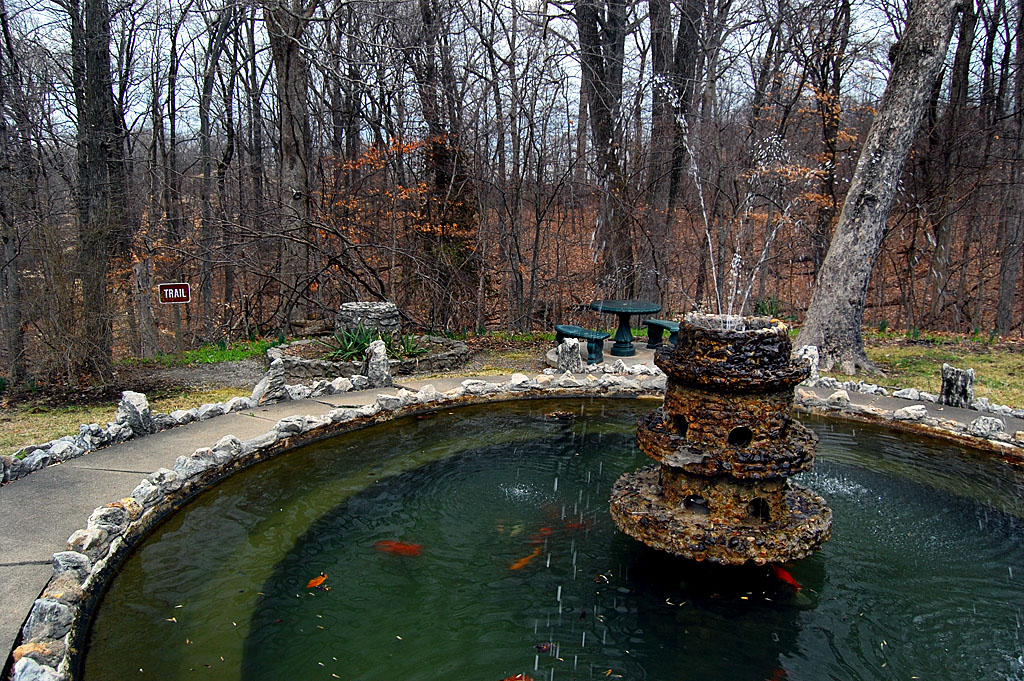 “North of the pool will be a sun dial and a crystal ball will also be included in the arrangement. A pleasing feature of the beautification plans is the retaining of much of the native growth of the site. A large tree and smaller trees have been left growing at advantageous points in the garden.
“It is the plan of the employees to landscape an adjacent plot of ground to the park and provide a recreation center which will include tennis courts and other similar facilities.”
Almost lost?
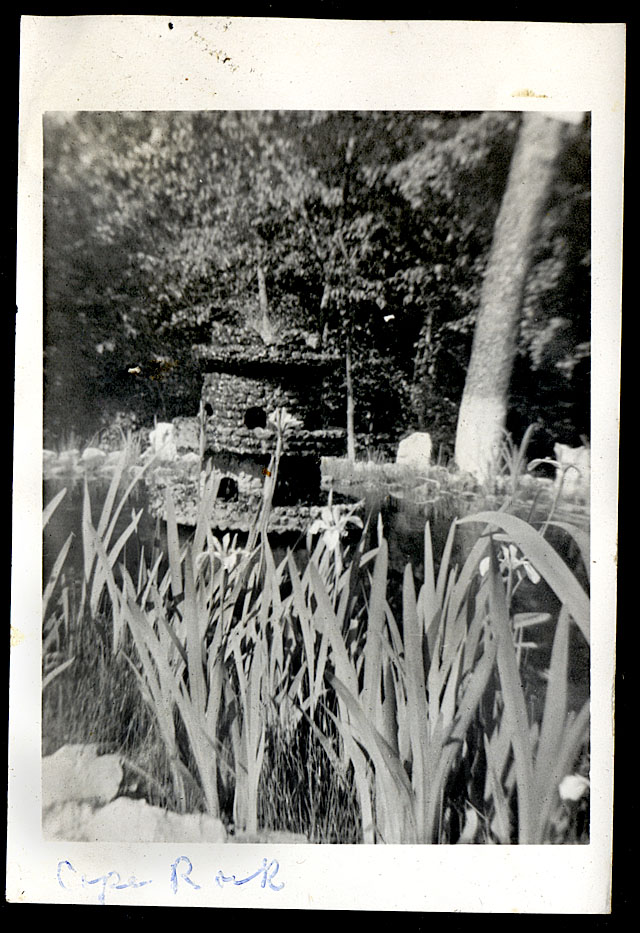 I could swear that I read somewhere that the park was almost lost not too long ago but a land swap was worked out. I’ve looked through all my bookmarks and couldn’t find the story again. The good news is that is still looks much like it did in the 40s and will, hopefully, be there for many more generations.
Missourian photographer Fred Lynch and I compared notes one day about how many times we had relied on that fountain for weather wild art.