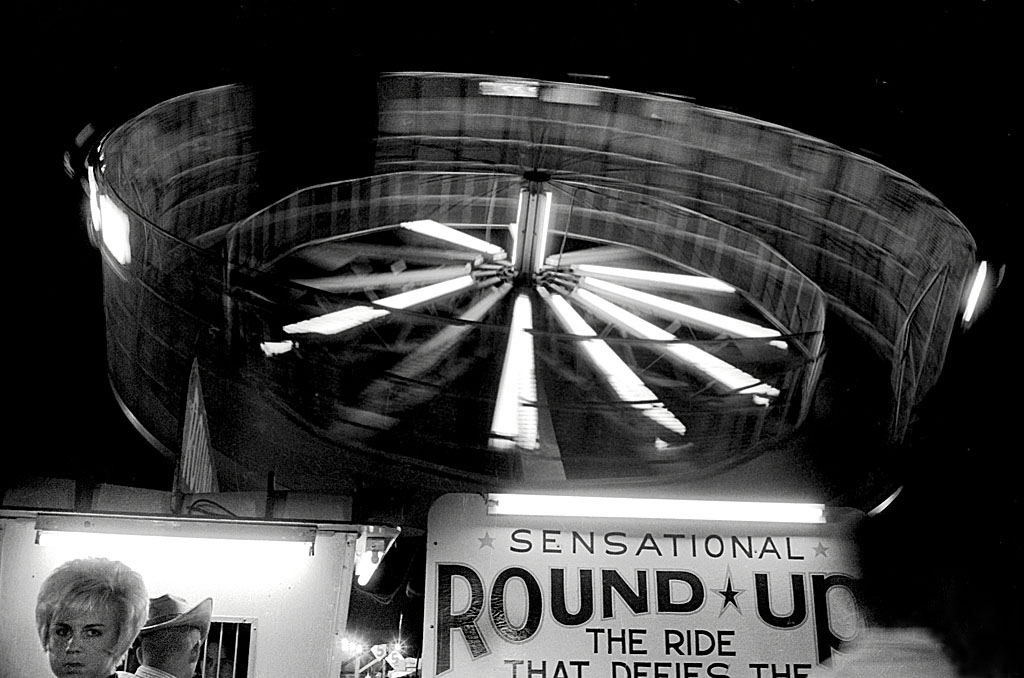
 The Southeast Missouri District Fair in Cape Girardeau was my first newspaper undercover investigation assignment. Jackson Pioneer Editor Gary Fredericks decided he and I would go to the fair to see if we could uncover and document gambling violations on the fair’s midway. I have no way of knowing whether or not he had any evidence of the gambling or if he just wanted to go to the fair.
[Editor’s note: I THINK Gary was editor. We had so many come and go it was hard to tell who was wearing the Editor hat on any give day. I also can’t remember if his last name had an “S” on the end. We’ll just call him Gary from here on out to be safe.]
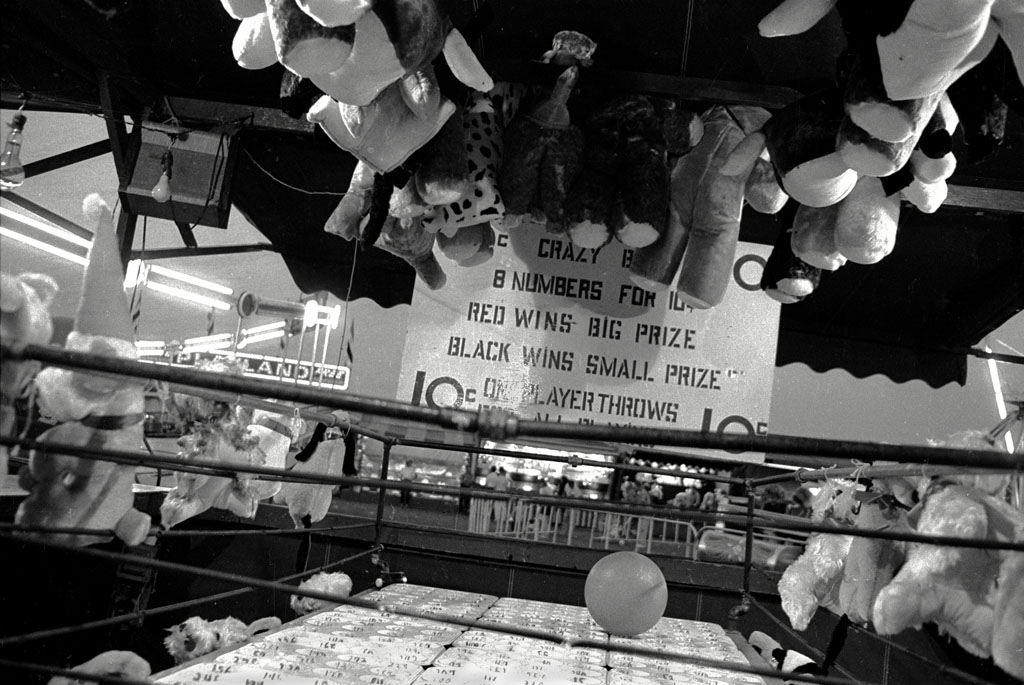
Mike’s Krazy Ball – Gary’s Krazy Theories
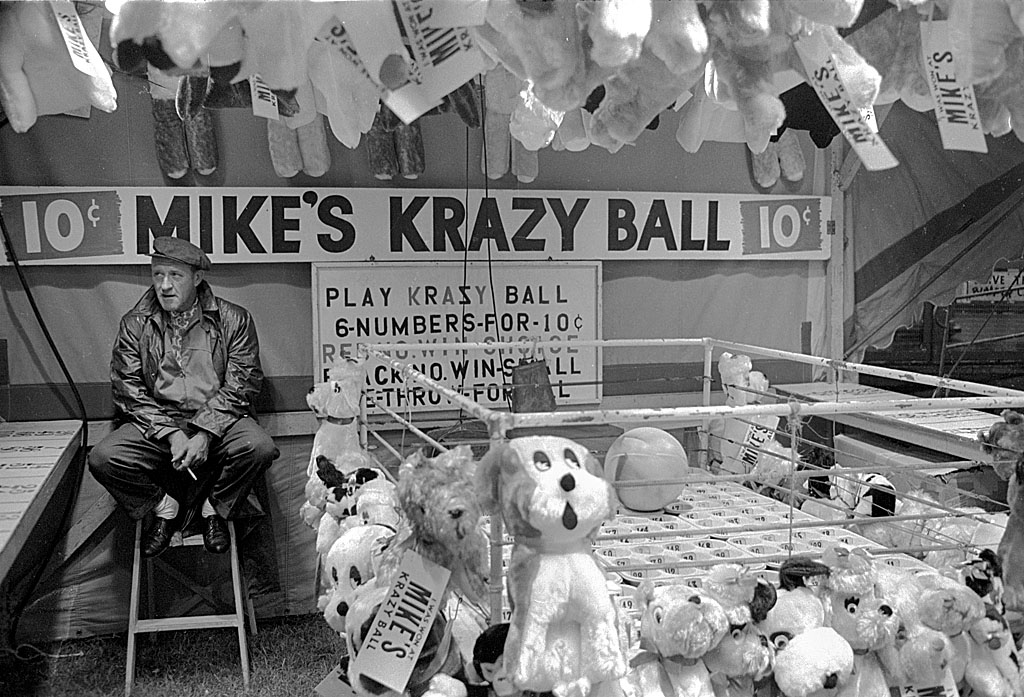 Gary had a number of theories
- The midway games were either rigged
- Or, they weren’t games of skill, which would make them gambling
- If they were gambling, the cops had been paid off
- UFOs were real.
Gary was capable of multi-tasking. He was working on that last theory at the same time.
Gary was playing, I was shooting
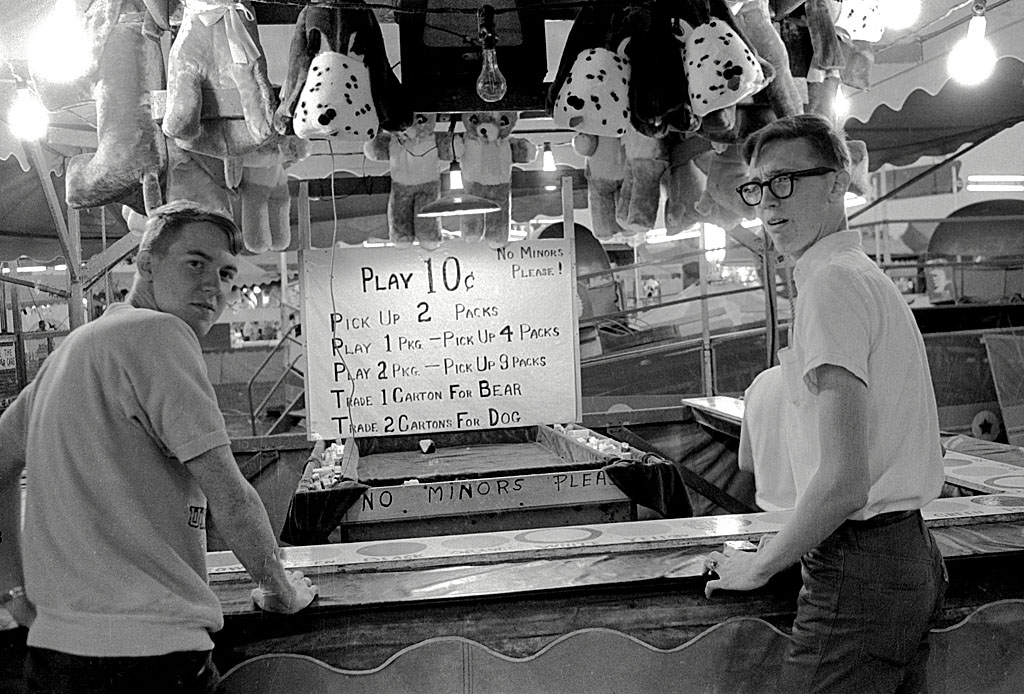
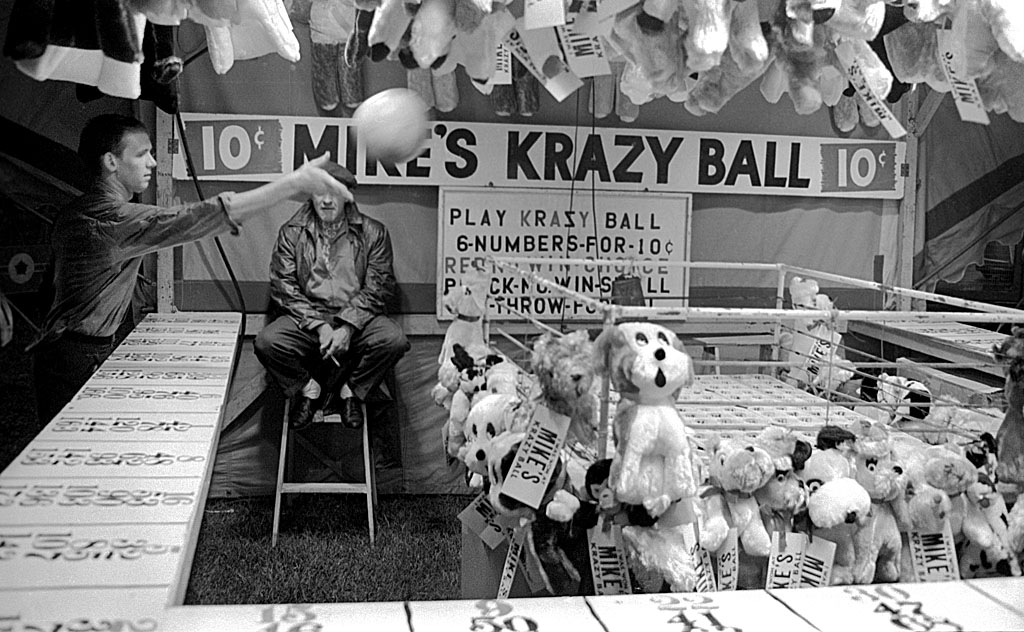 That’s Editor Gary pitching the Krazy ball trying to win a piece of plush (stuffed toy). I presume the enthusiastic gentleman perched on the stool is Mike. I’m not sure how Gary rated this stand.
Was THIS game rigged?
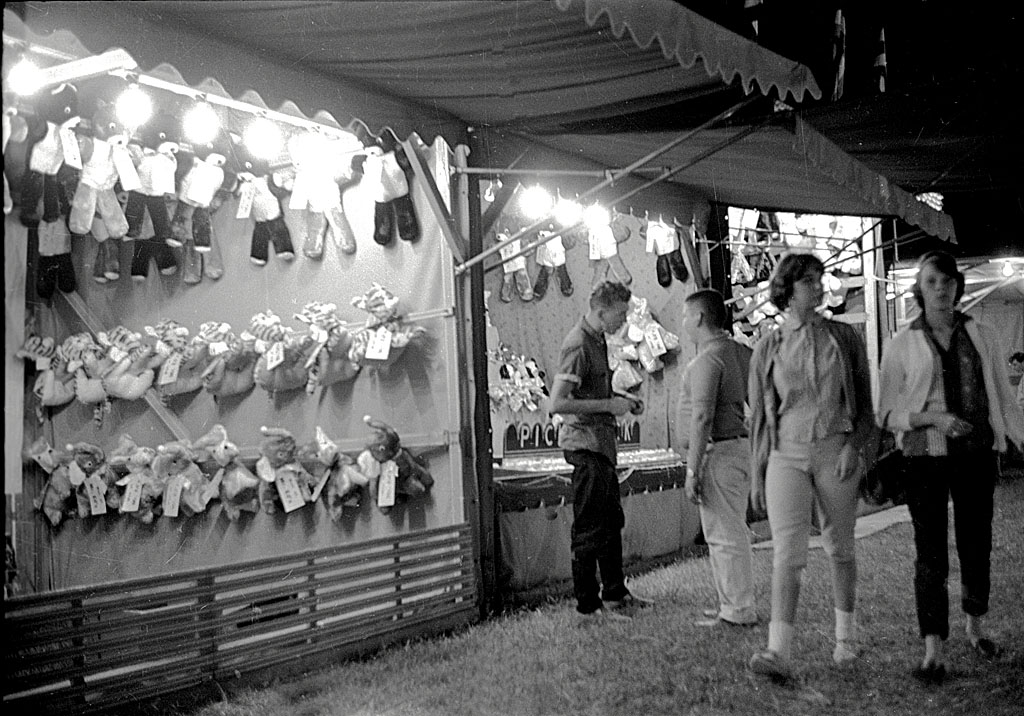
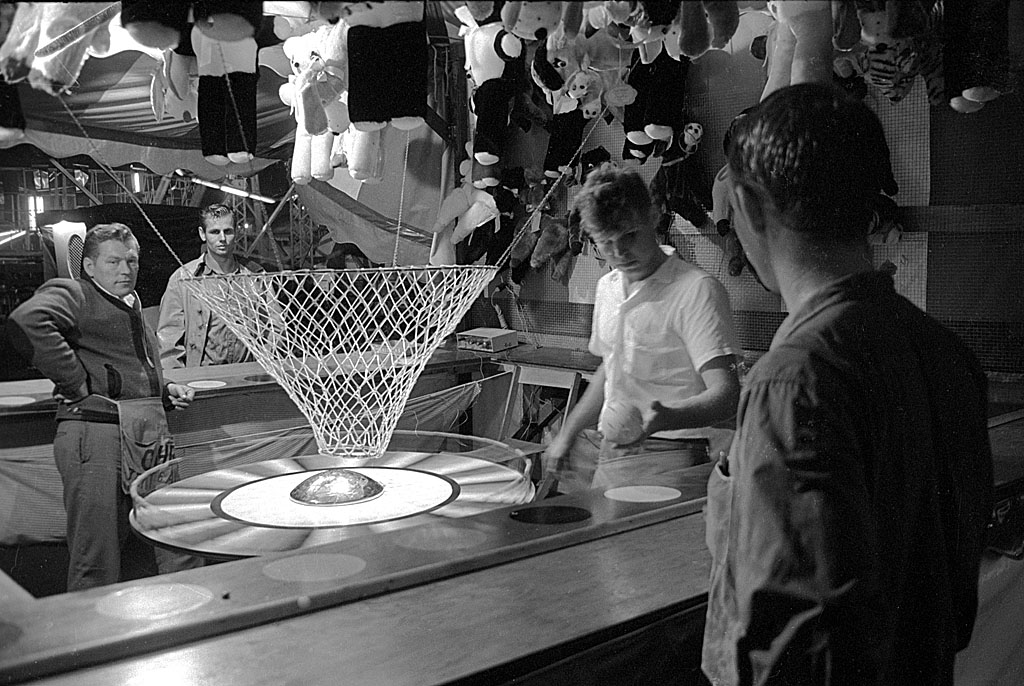 Soon we meandered over to this game. You might detect some kinda bad vibes coming off the gentleman at the left. I was beginning to get the feeling that he might not like me.
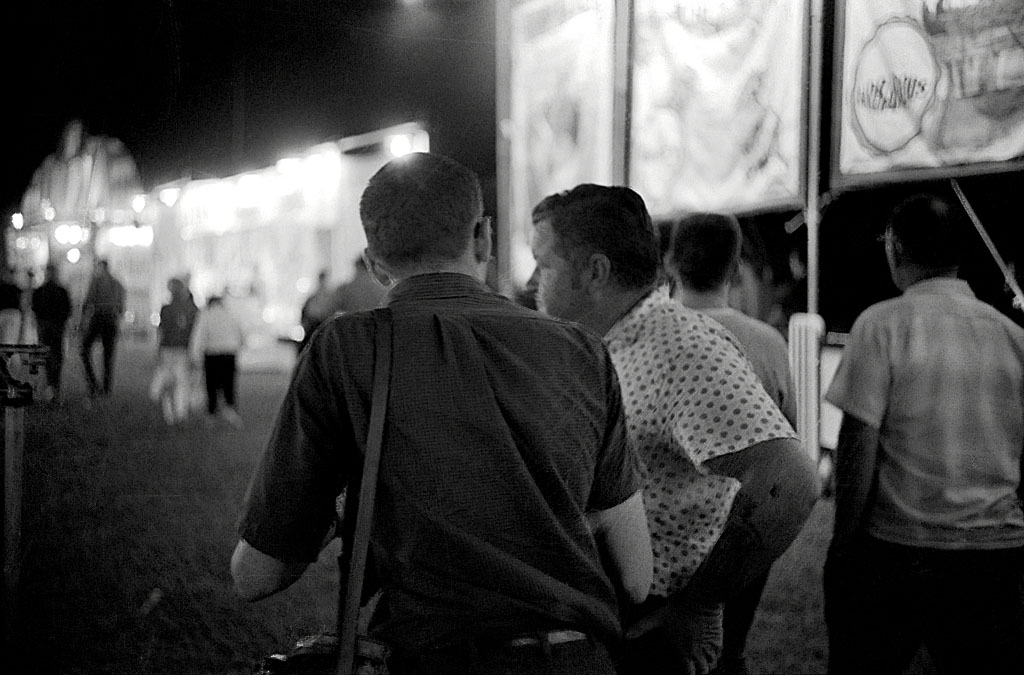
Nice man concerned with my safety
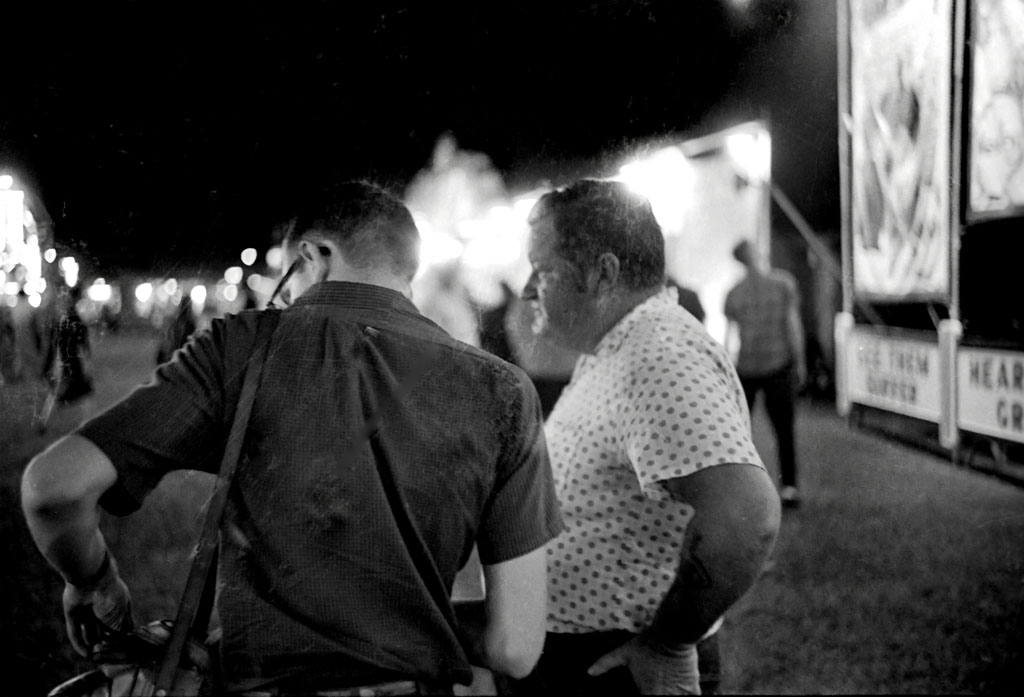 Before long, this nice man came over to talk with me. He was joined by two other burly fellows who wanted to make sure I got back to my car safely at the end of the evening, which, coincidentally, was Right Now. Gary shot this with a camera I slipped him when I thought things might be going south.
I was 5’10 and weighed maybe 105 pounds in those days, so they wouldn’t have had to be too big to meet my definition of “burly.” At any rate, I thought that maybe since they were kind enough to offer me an escort off the grounds that it would have been ungracious to refuse.
I don’t remember what kind of story Gary ended up writing. It may have had something to do with UFOs.
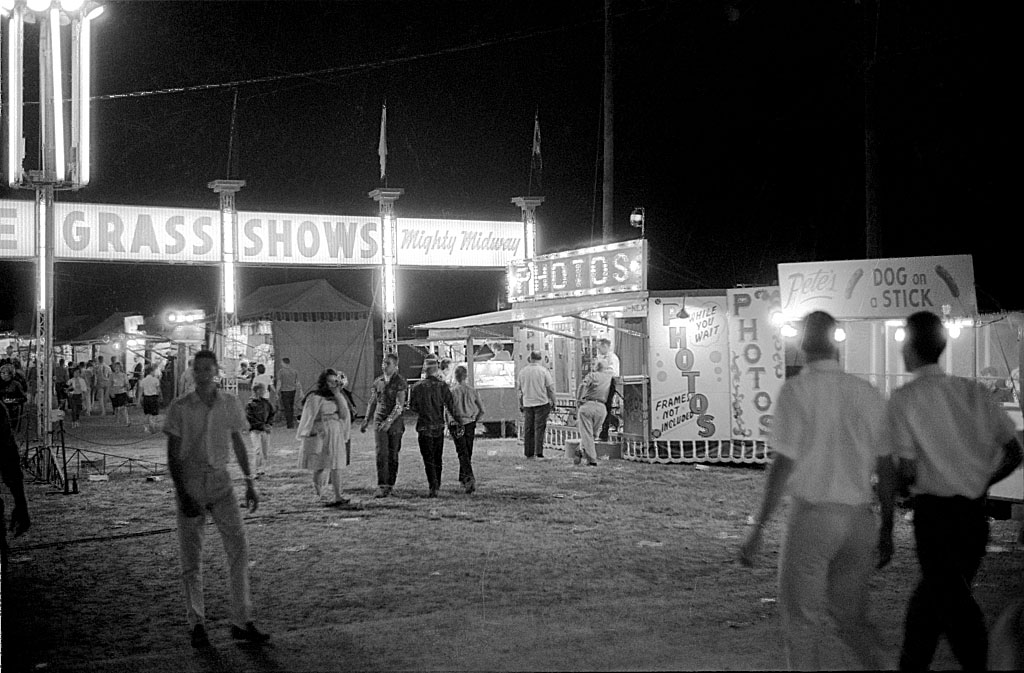
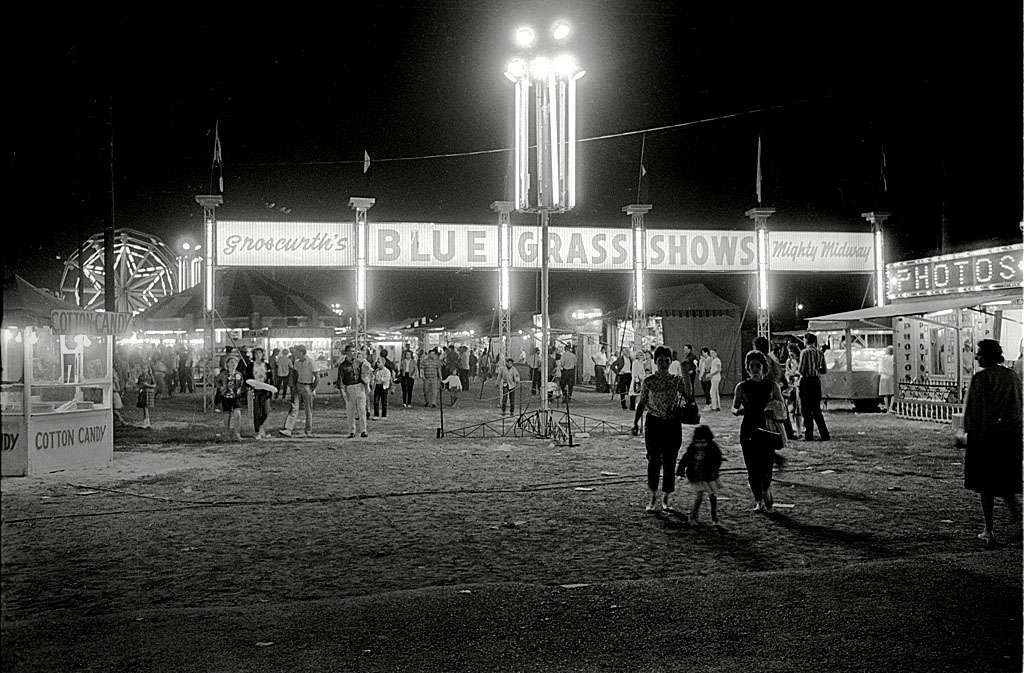
Blue Grass Shows Mighty Midway
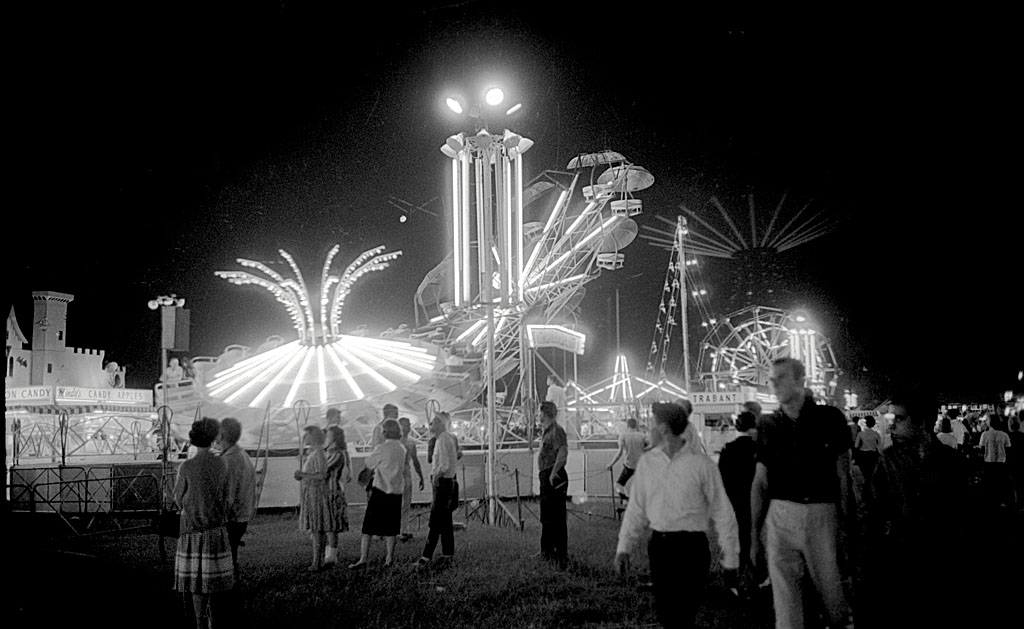 When I wasn’t getting kicked out, the SEMO Fair ranked right up there with Christmas, the 4th of July and your birthday for big events. It was such a big deal that the schools let out for Fair Day.
Bottle deposits kept the day going
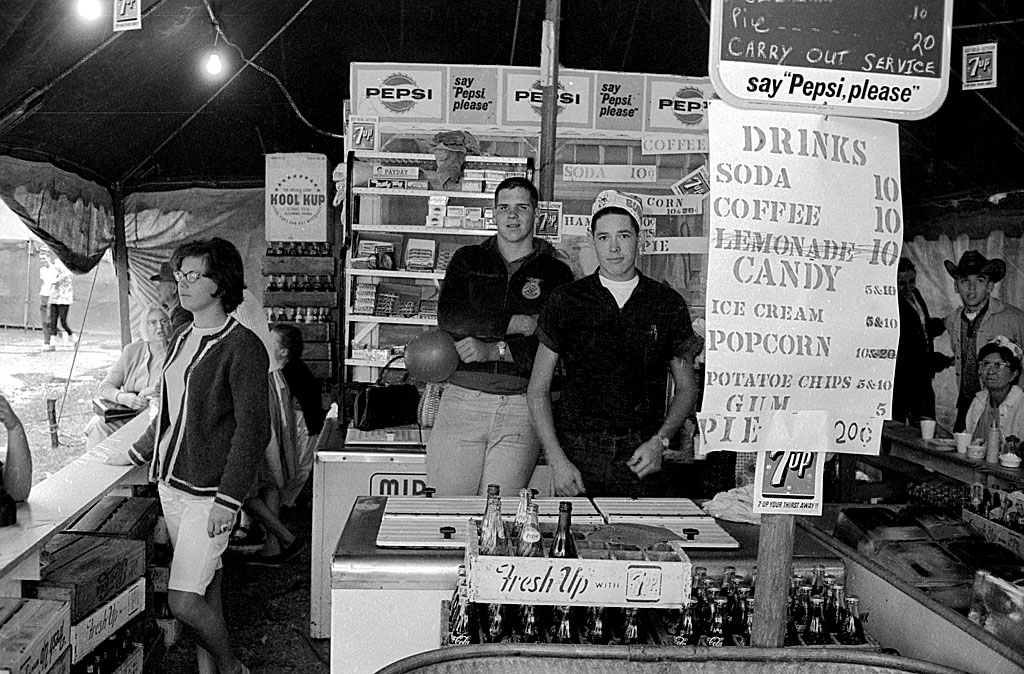 When you ran out of money, you’d scrounge the grounds looking for soda bottles to turn in for the two-cent deposit to food stands like this one.
Fair used as local fundraiser
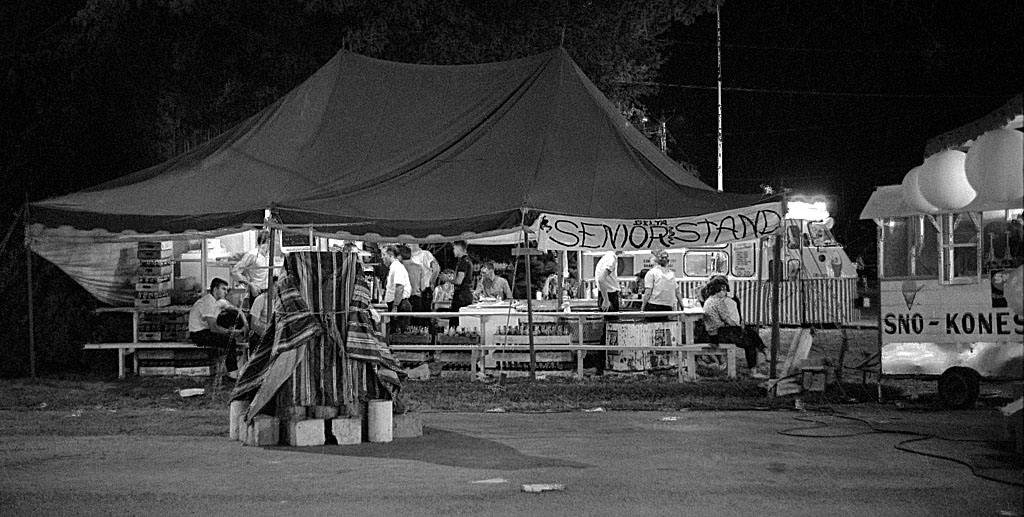 Many local service service clubs and schools set up tents and stands to make money. This one has a sign, Delta Senior Stand. Note the electrical wires snaking along the ground.
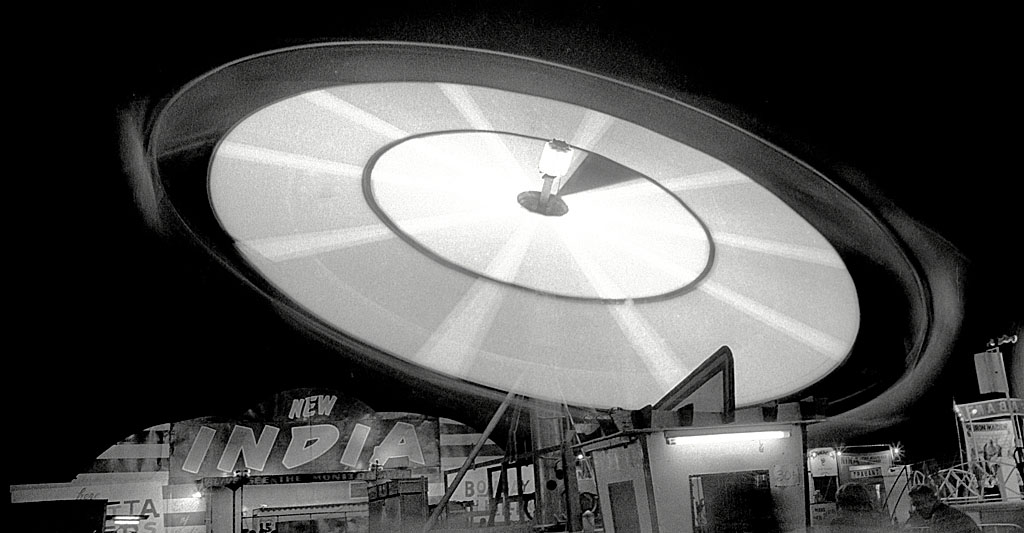
Power for the grounds was provided by huge generators on the back of 18-wheelers. Huge cables the size of your wrist would feed into junction boxes on the ground, which would, in turn, fed into smaller cables. I always wondered why nobody got electrocuted when it rained. I’ll never forget the sound those generators made. They were noisy all the time, but they would scream when a big ride started up and they had to catch up with the sudden load.
Midway laid out in horseshoe shape
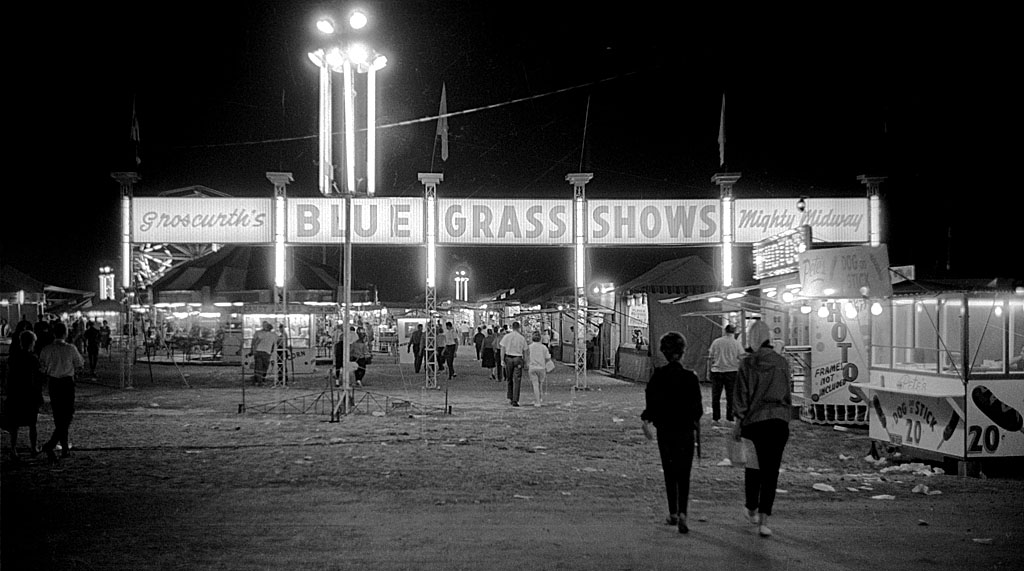 Most midways were laid out in a U shape was designed to draw crowds throughout the entire carnival and maximize spending. Crowds tended to enter the right leg, so the stands on that side were more valuable and were either owned by the promoter or went for big rents.
I wasn’t old enough for The Follies
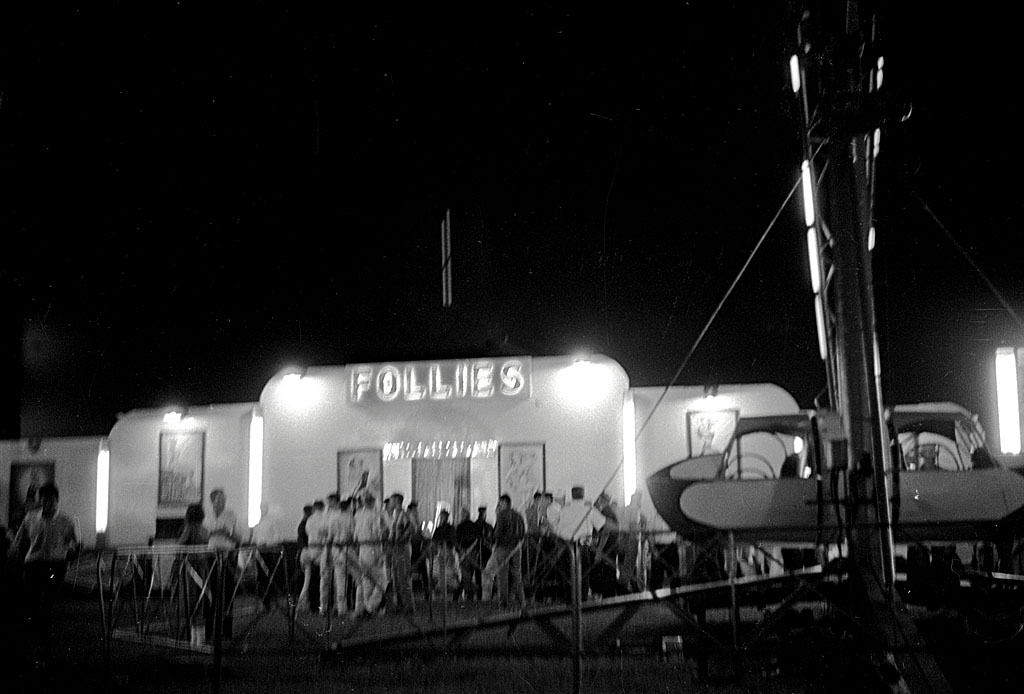 Game concessions were usually the first joints along the outside of the right leg of the U. Rides would be located down the center column, with the carousel traditionally being the first ride beyond the front gate. After the games, the crowd would find the shows and the penny arcade.
The right hand bend was where the girlie show lived. I never made it into The Follies. I’ll have to let someone else fill me in on what you saw there.
The left leg would contain more shows and games all the way back to the front gate. They had slimmer pickings because a lot of money drained off before it got to them.
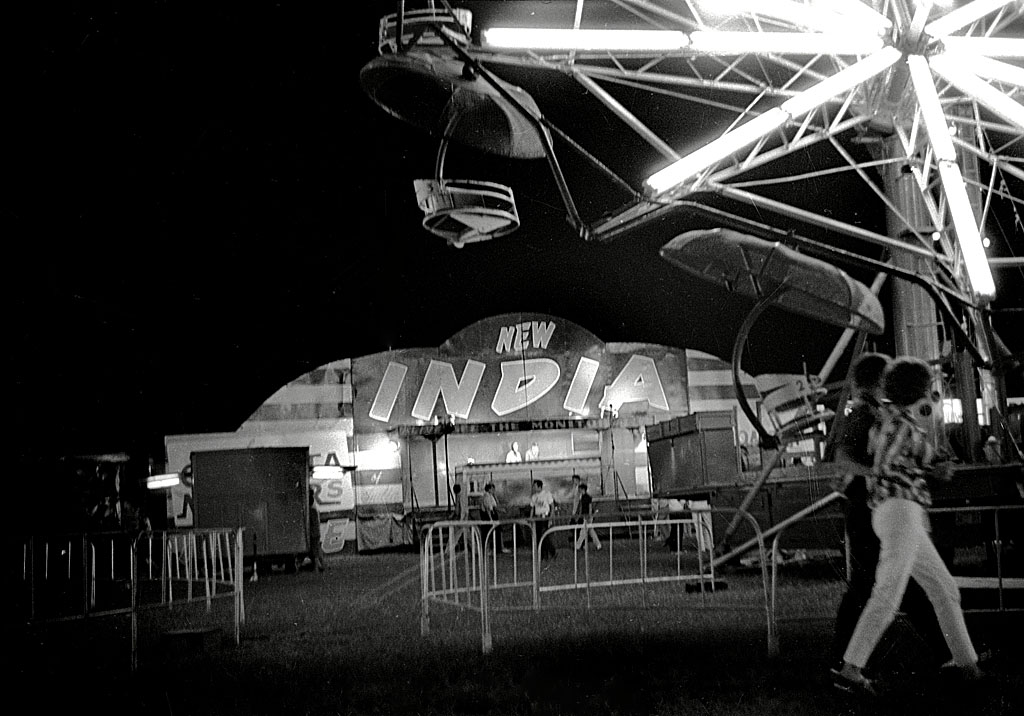
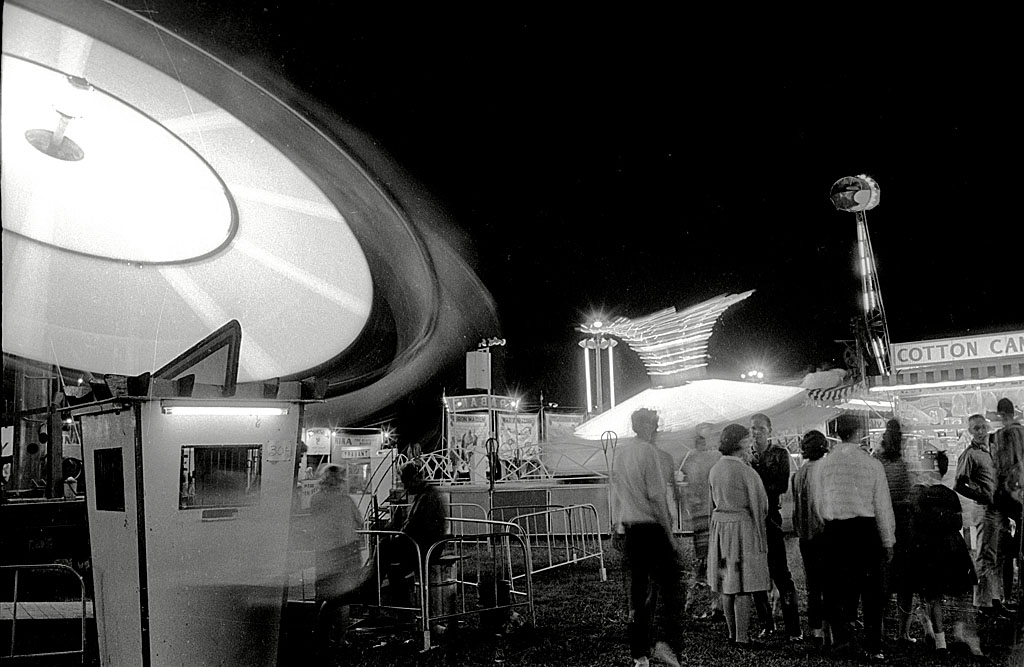
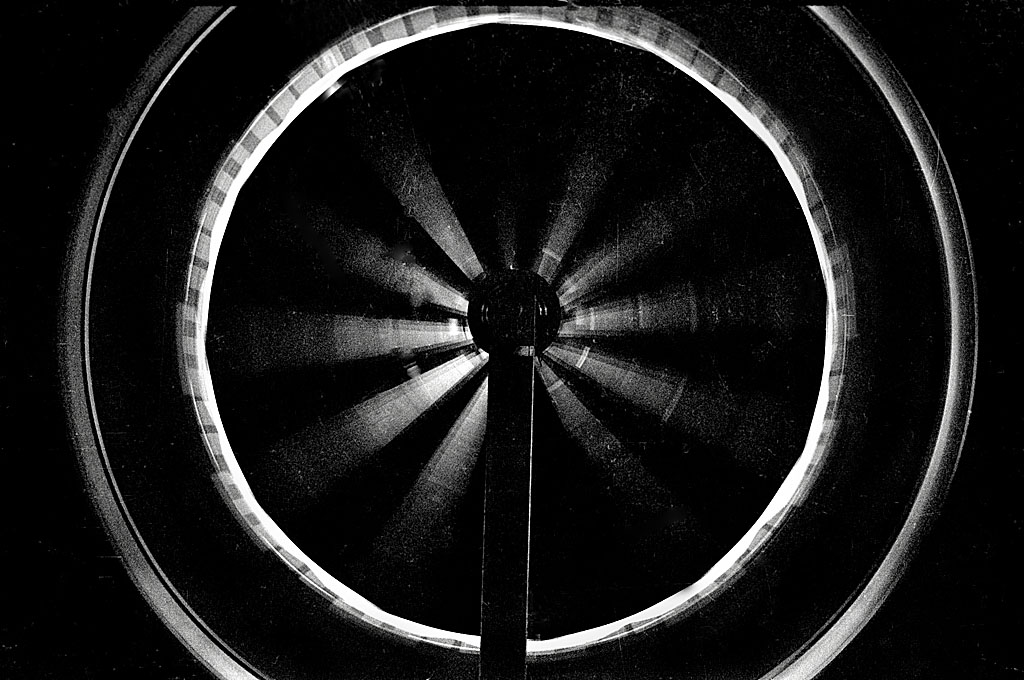
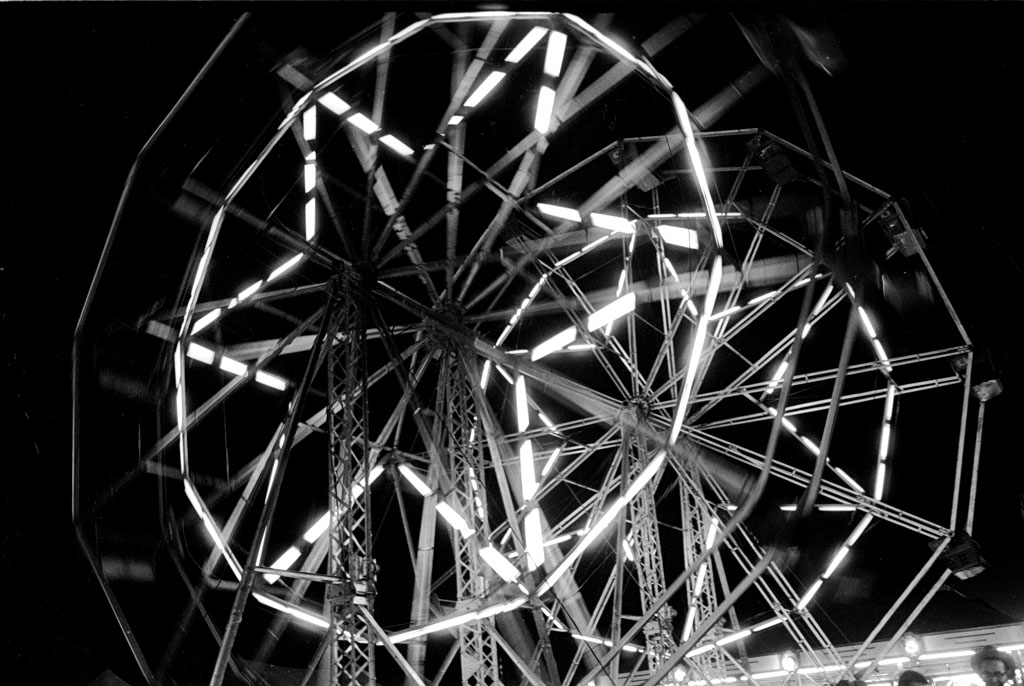
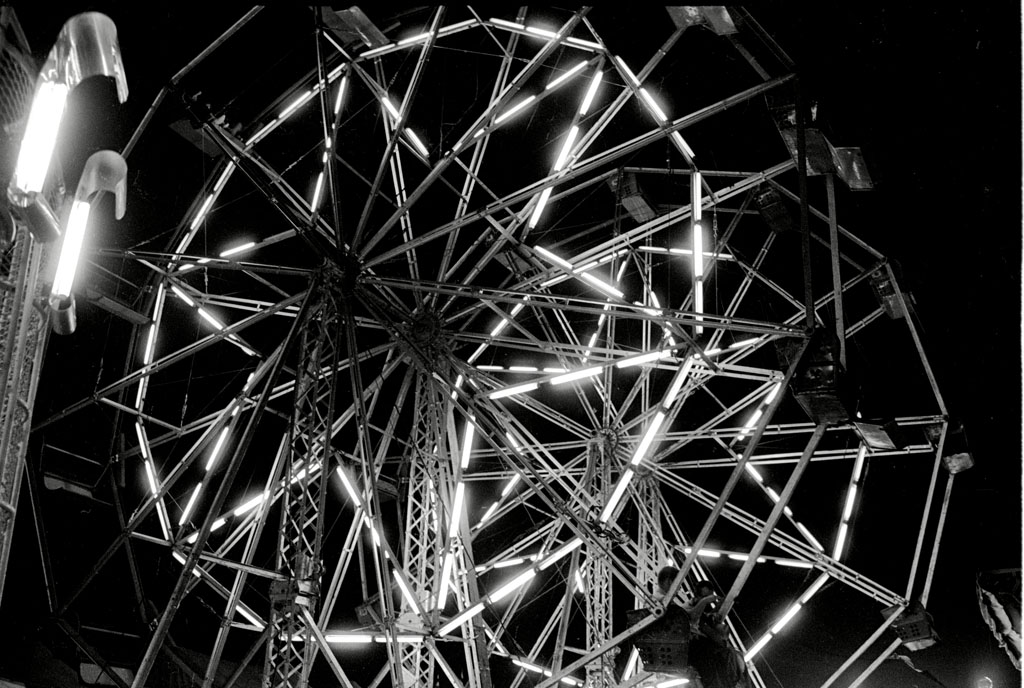
Ferris Wheel dominated the skyline
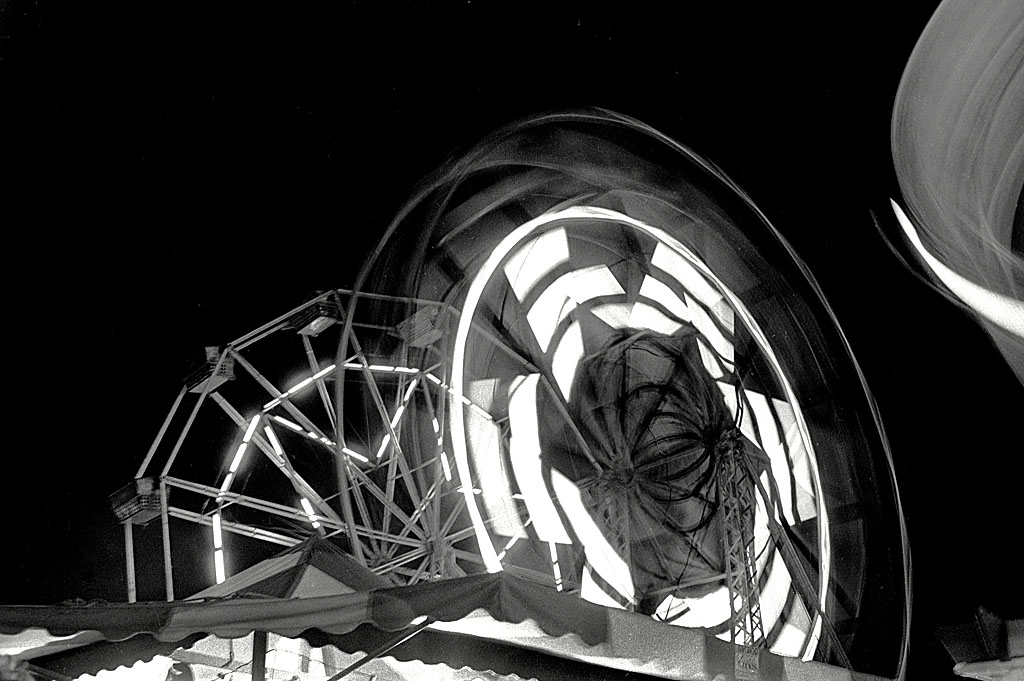 Other rides might be more spectacular, but the “wheel” traditionally signaled the end of the night. Because it was generally the tallest ride and could be seen throughout the whole midway, the carnival would use it to signal that the midway was closed for the night. When it went dark, it was time to go back to the trailers to get ready for the next day.
Carny could be your friend – or not
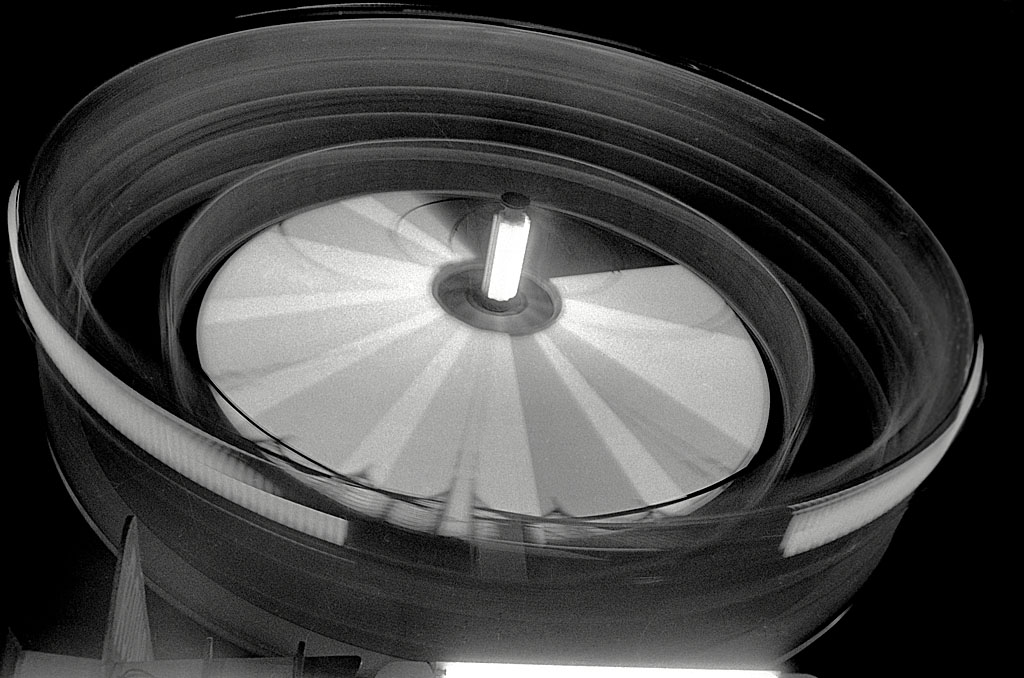 The greasy, tattooed guy with his cigarettes rolled up in his T-shirt sleeve who took your ticket when you got on a ride could be your friend – or not – depending on how he sized you up. He could give you a great ride or, by cleverly working the clutch, he could shake the change out of your pockets and make you puke on your girlfriend.
While we were scouting bottles for the deposits, we tried to look for loose change under the big rides. The carnies would run us off, though, because they considered that “their” money.
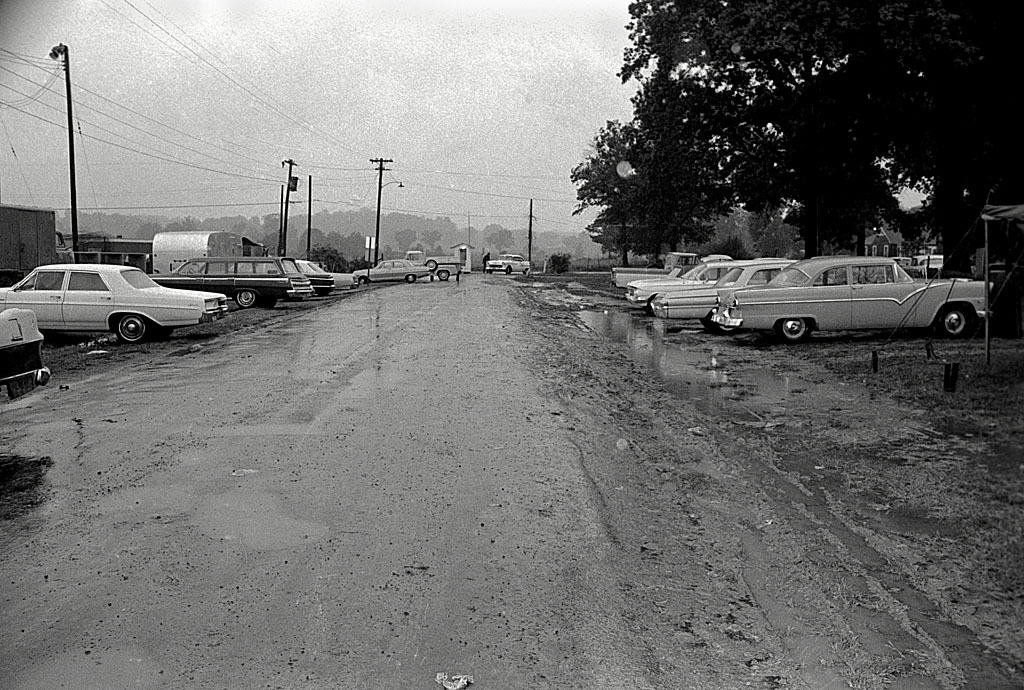
Not a Fair Week without rain
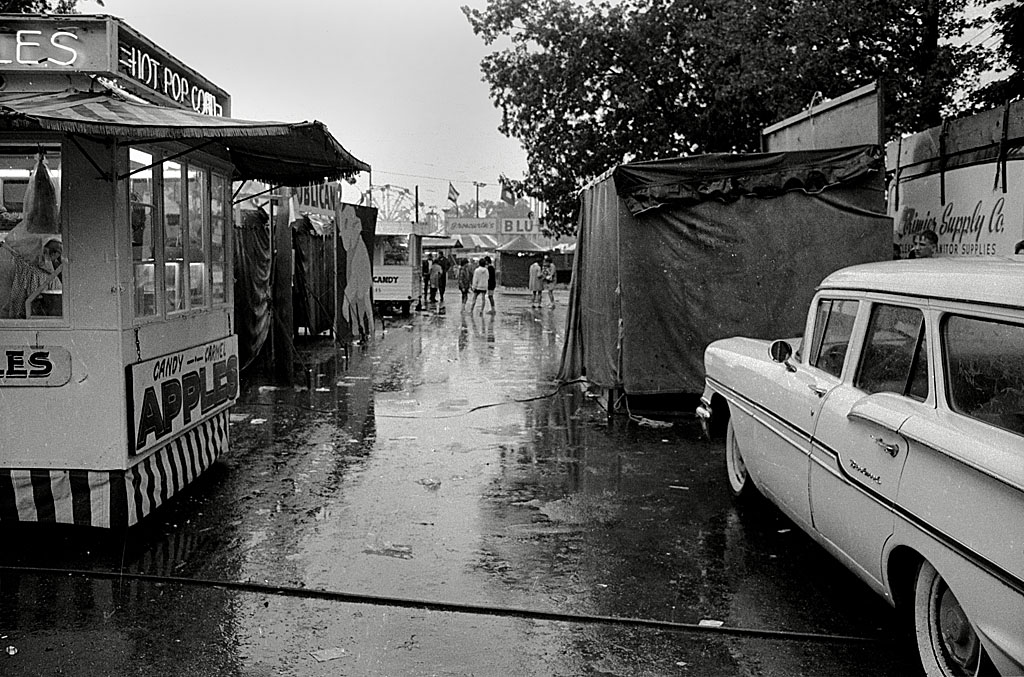 SEMO fairs are either hot and dusty or rainy and muddy. Frequently, they are both. Sometimes they even mix in cold and windy with the rainy.
Crafts and Good food
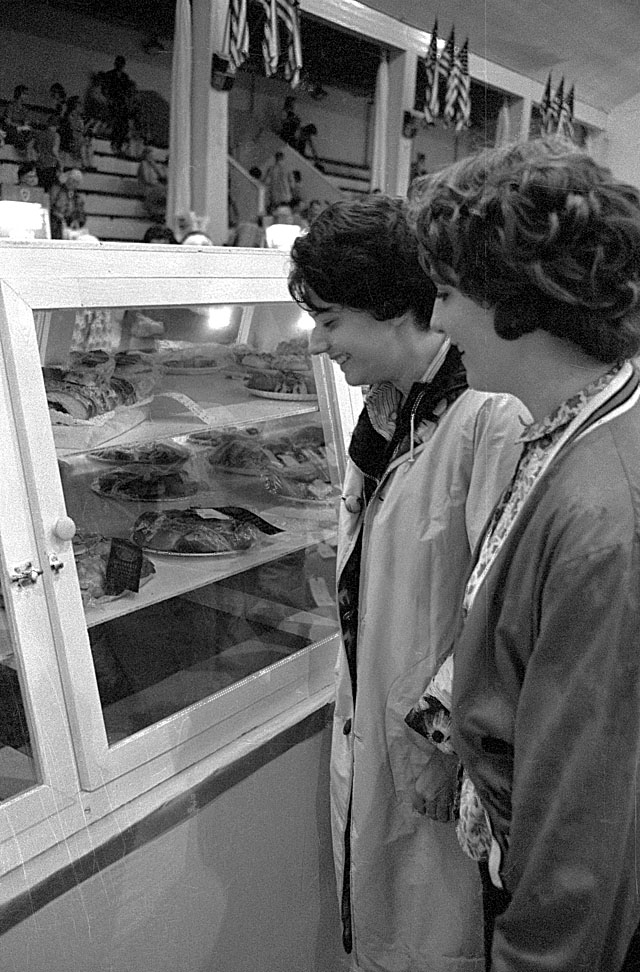 All of the action didn’t take place on the midway. Cape was an agricultural area, so there were plenty of 4H and livestock exhibits. The Arena building was stuffed with baking contests, quilts and sewing competitions with their blue, red and white ribbons.
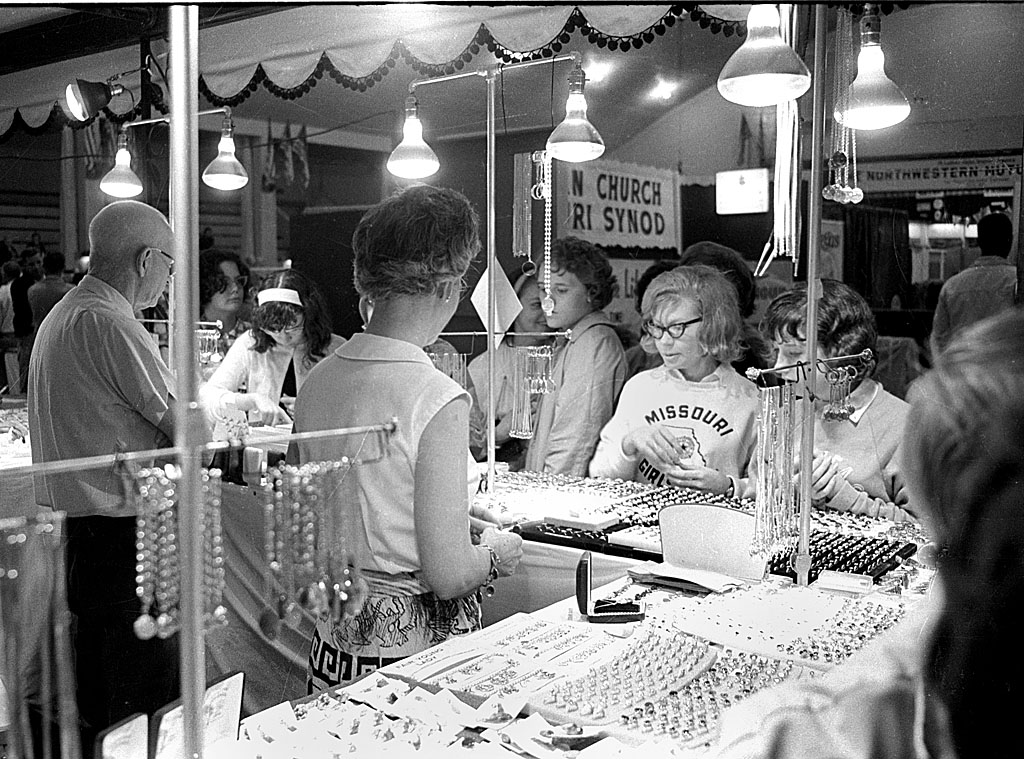
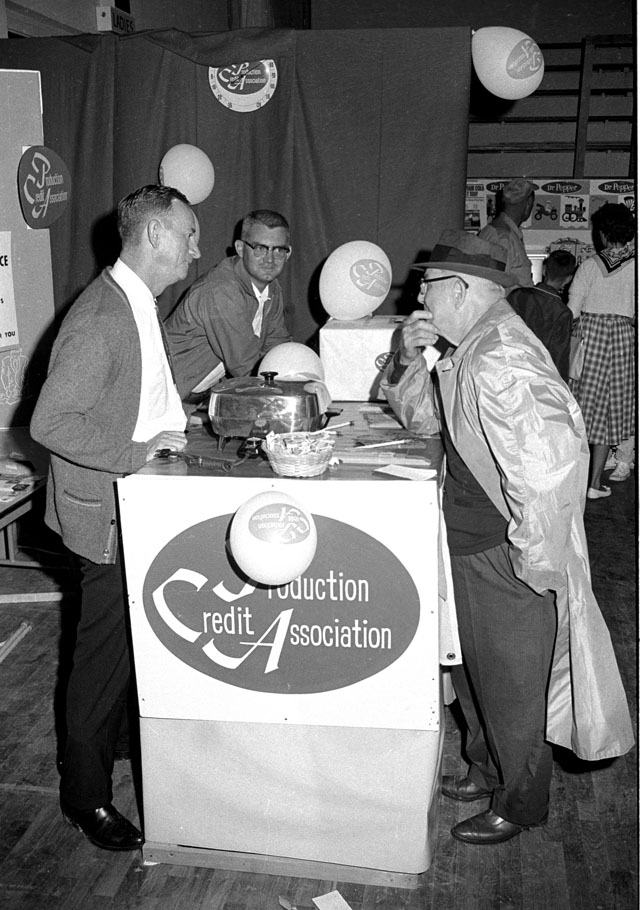
In addition to the exhibits, there were scores of booths set up that were the Real World equivalents of the Home Shopping Network. Barkers were hawking every imaginable thing. No kid – and few adults – went home without a shopping bag of handouts and samples.
It was a great place to go when you had run out of money and soda bottles.
Southeast Missouri District Fair Gallery
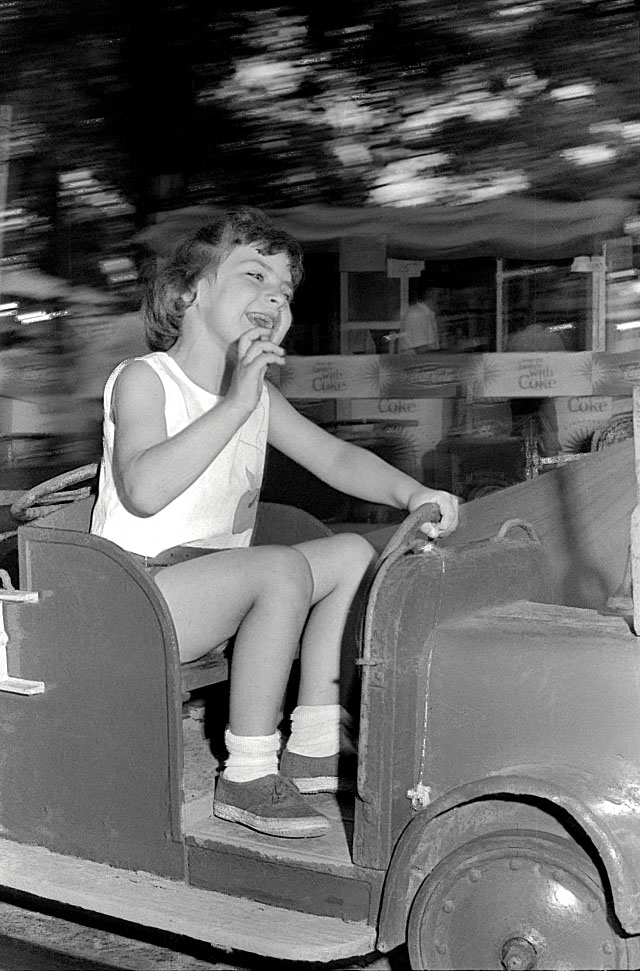
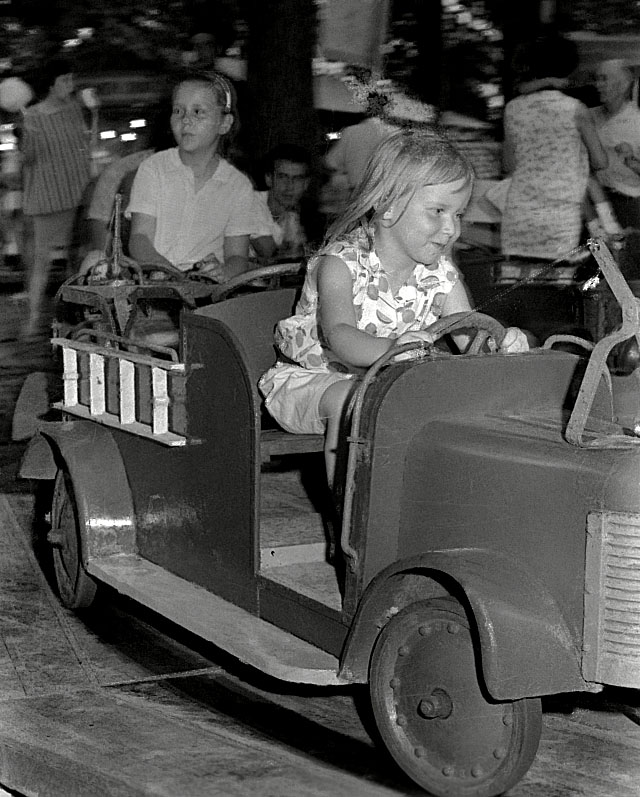
Here’s a gallery of photos taken at the Southeast Missouri District Fair in the middle and / or late 60s. I don’t know that they were all taken in the same year. The earliest photos would have been of the 1964 fair. Click on any image to make it larger, then click on the left or right wide of the photo to move through the gallery.