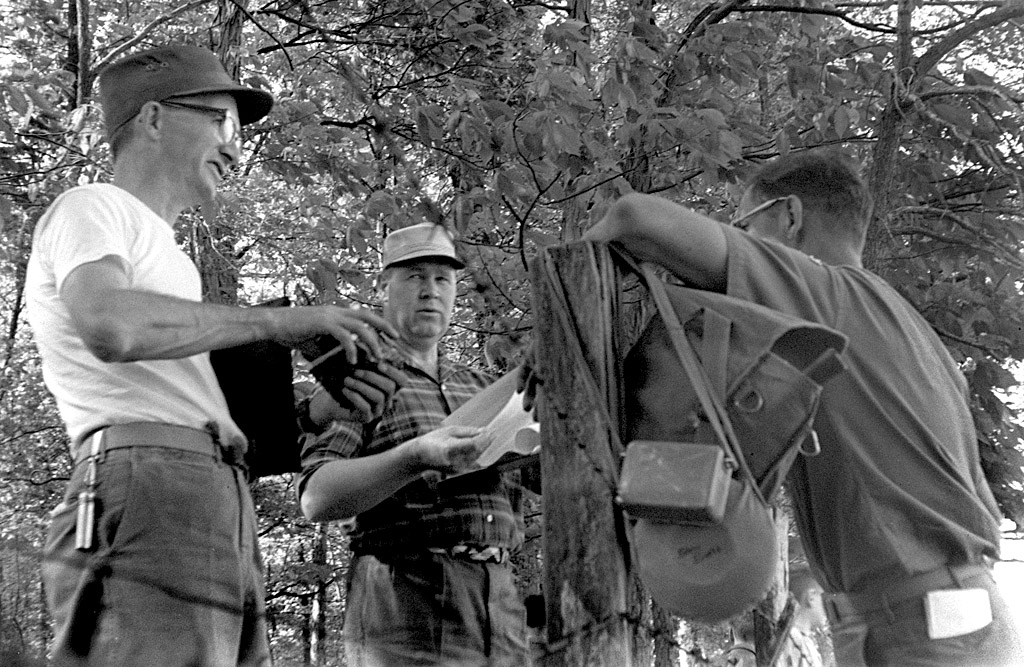
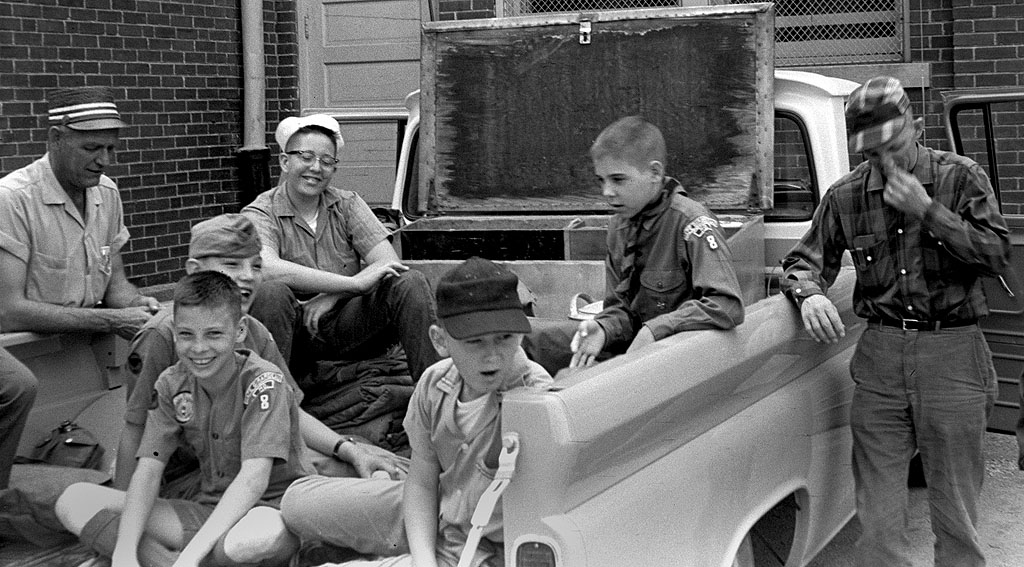
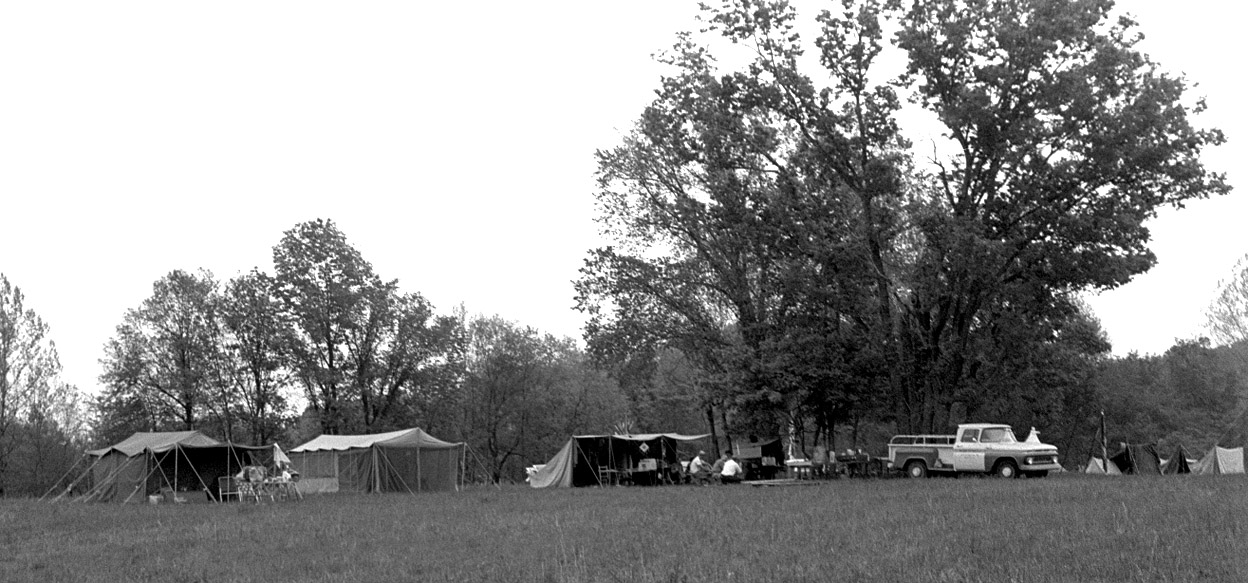
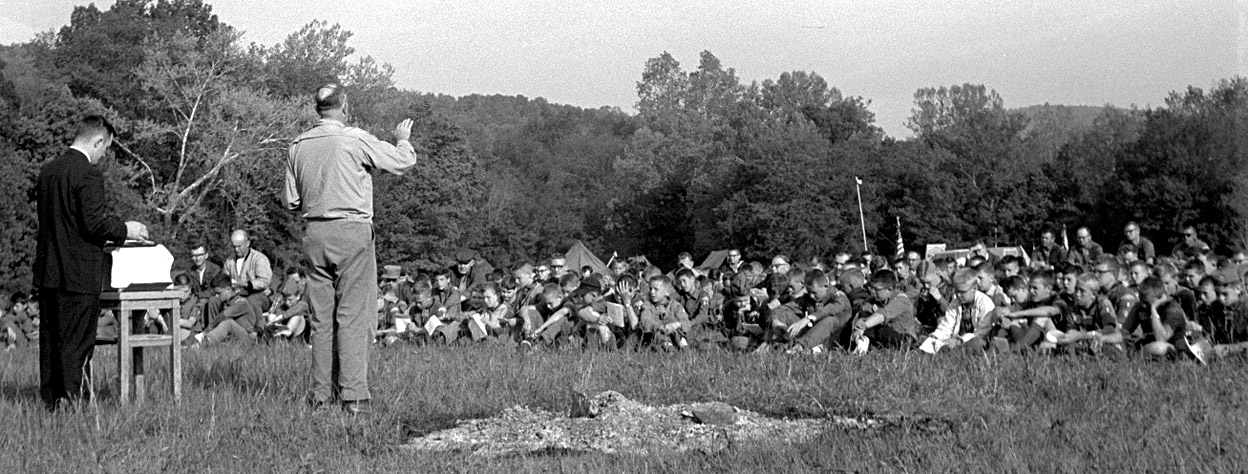
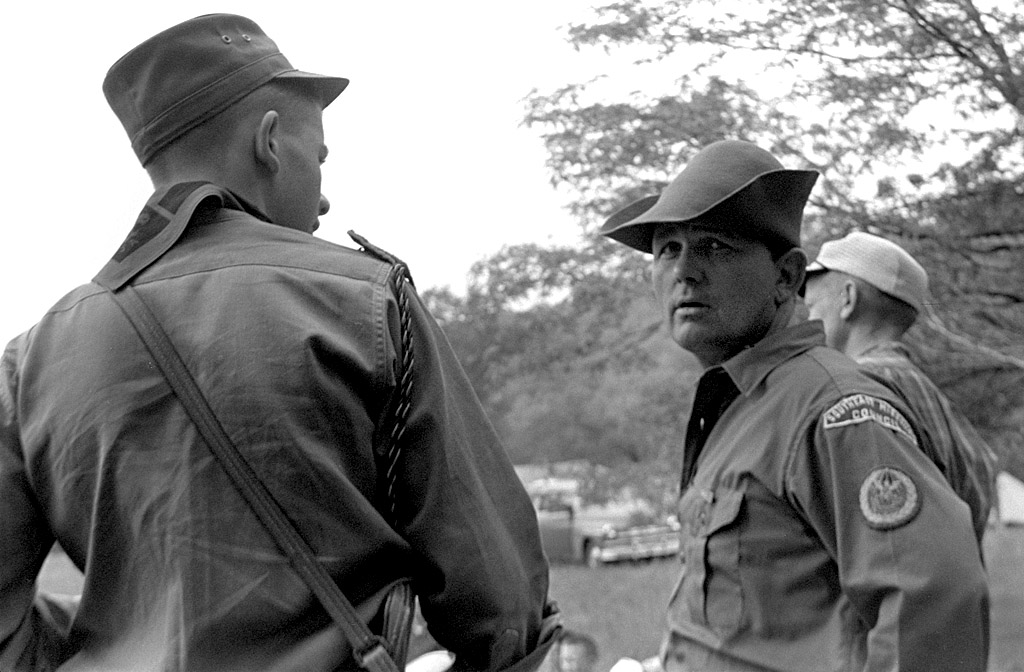
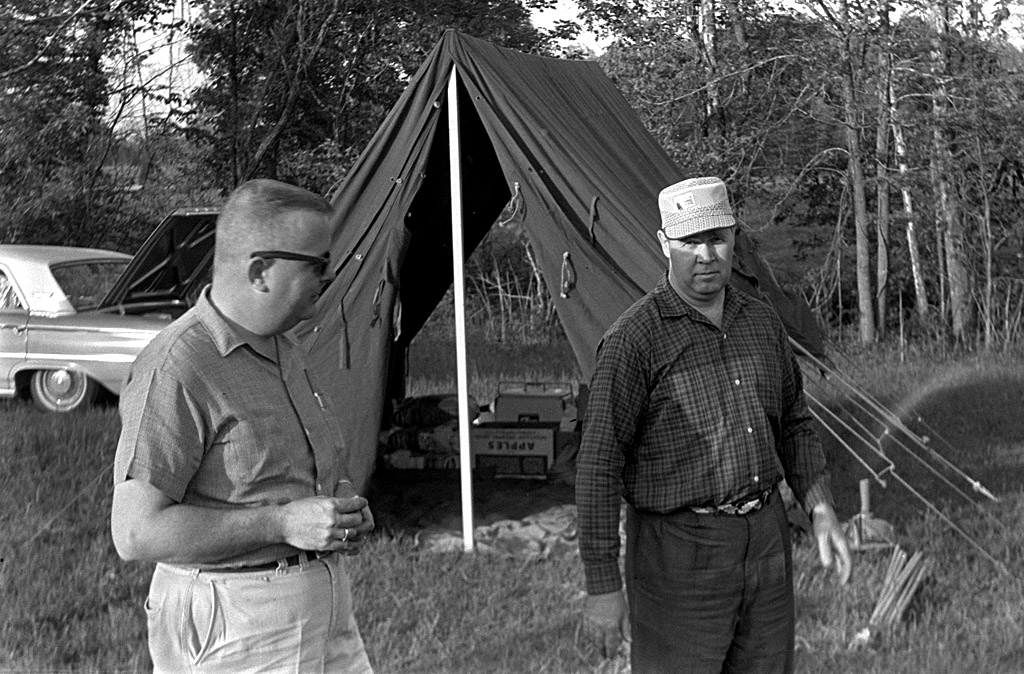
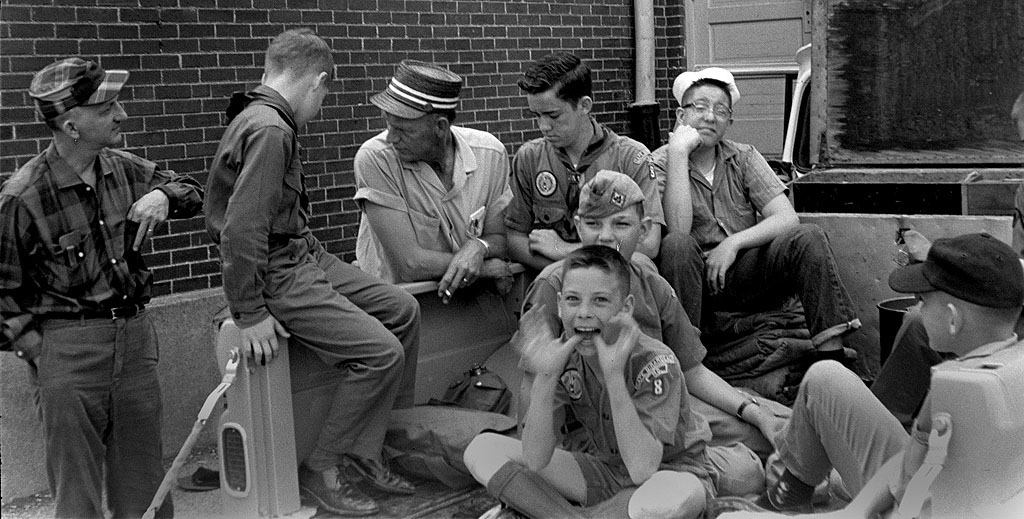
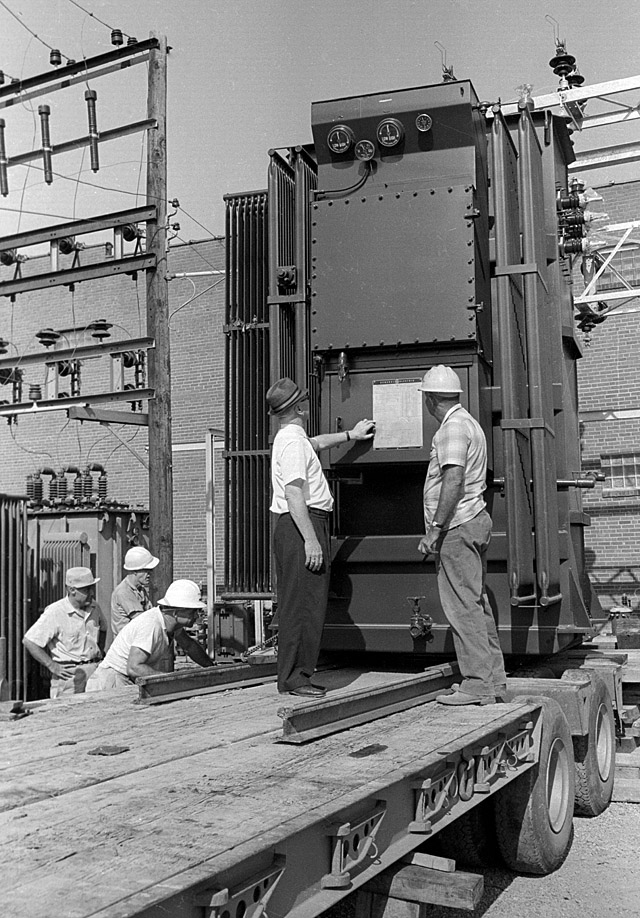
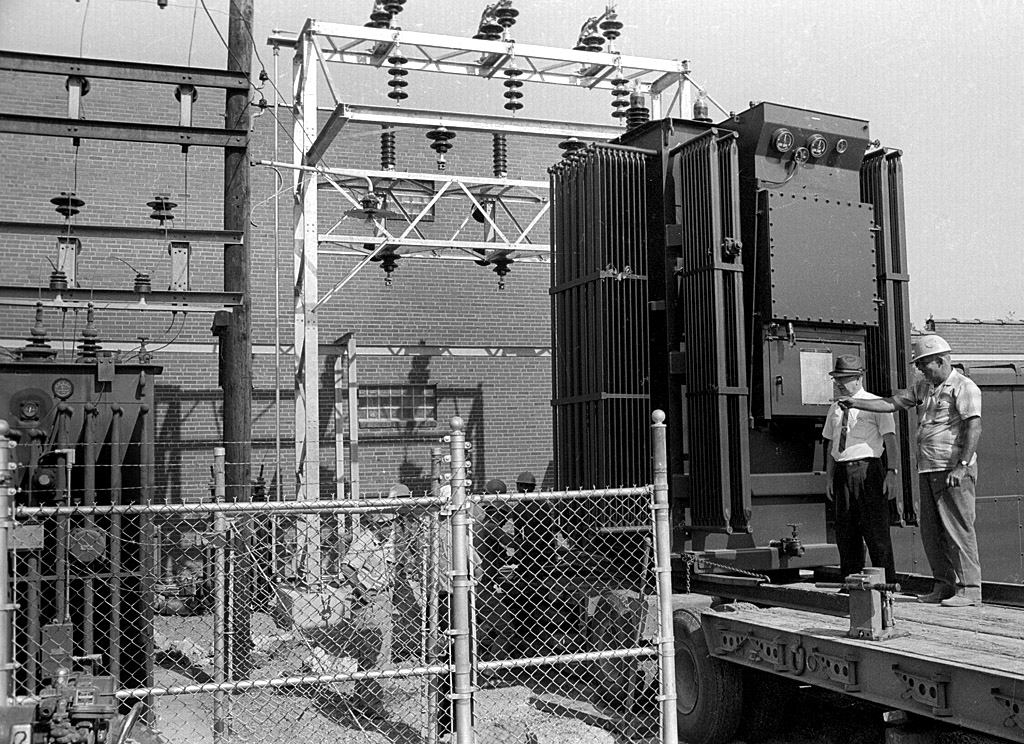
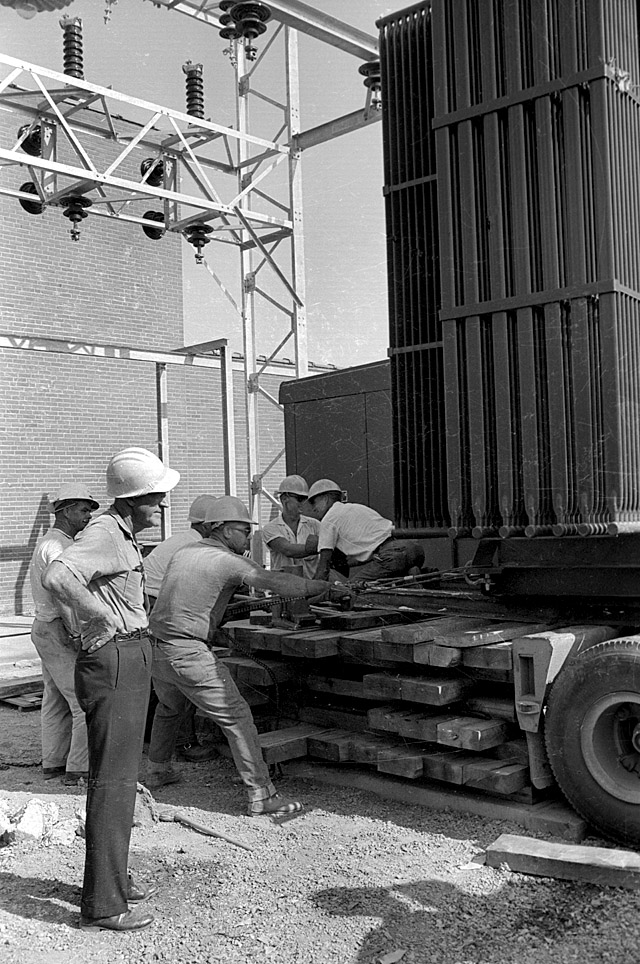
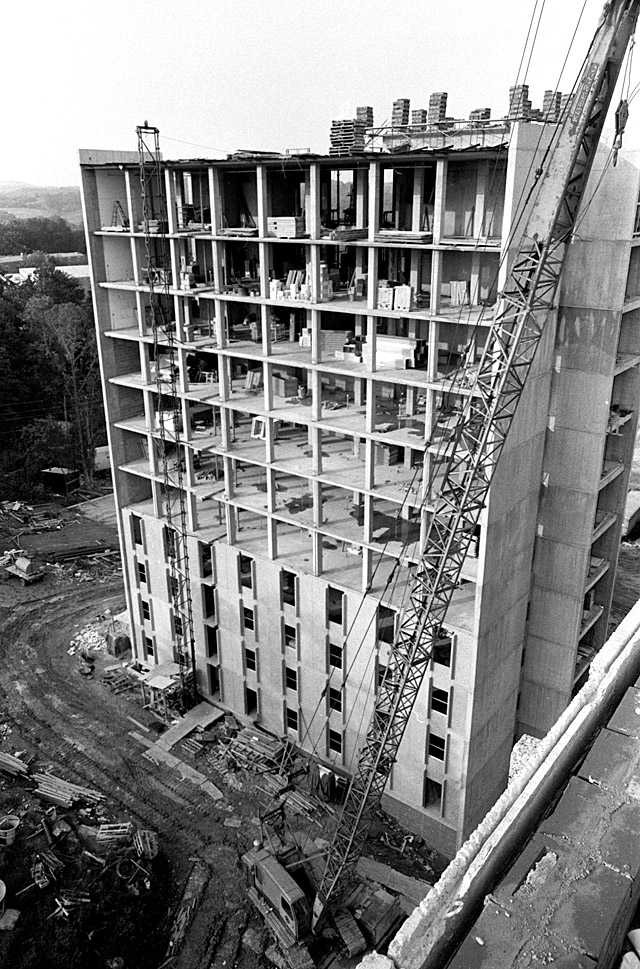
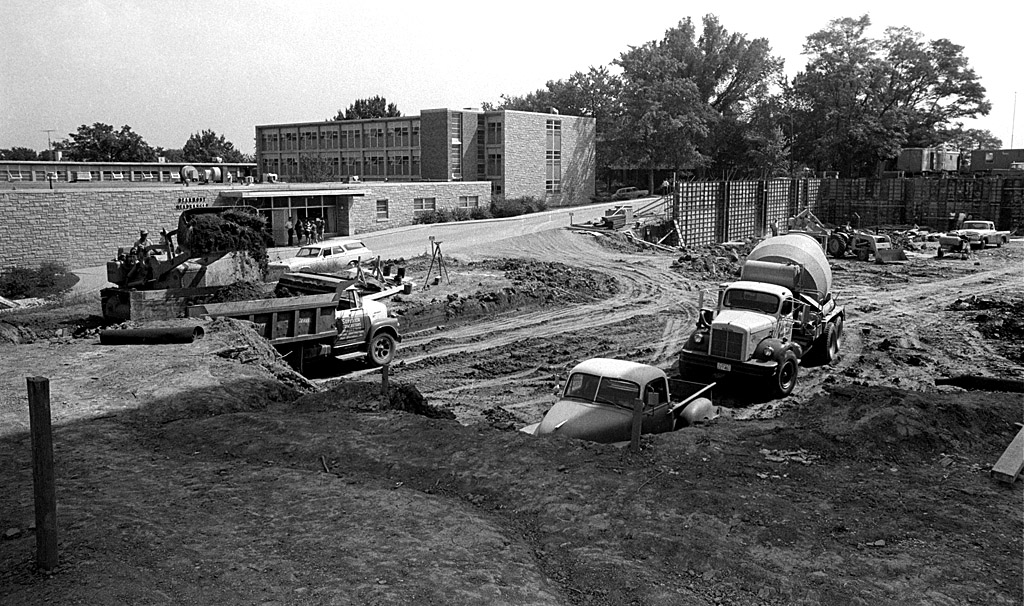
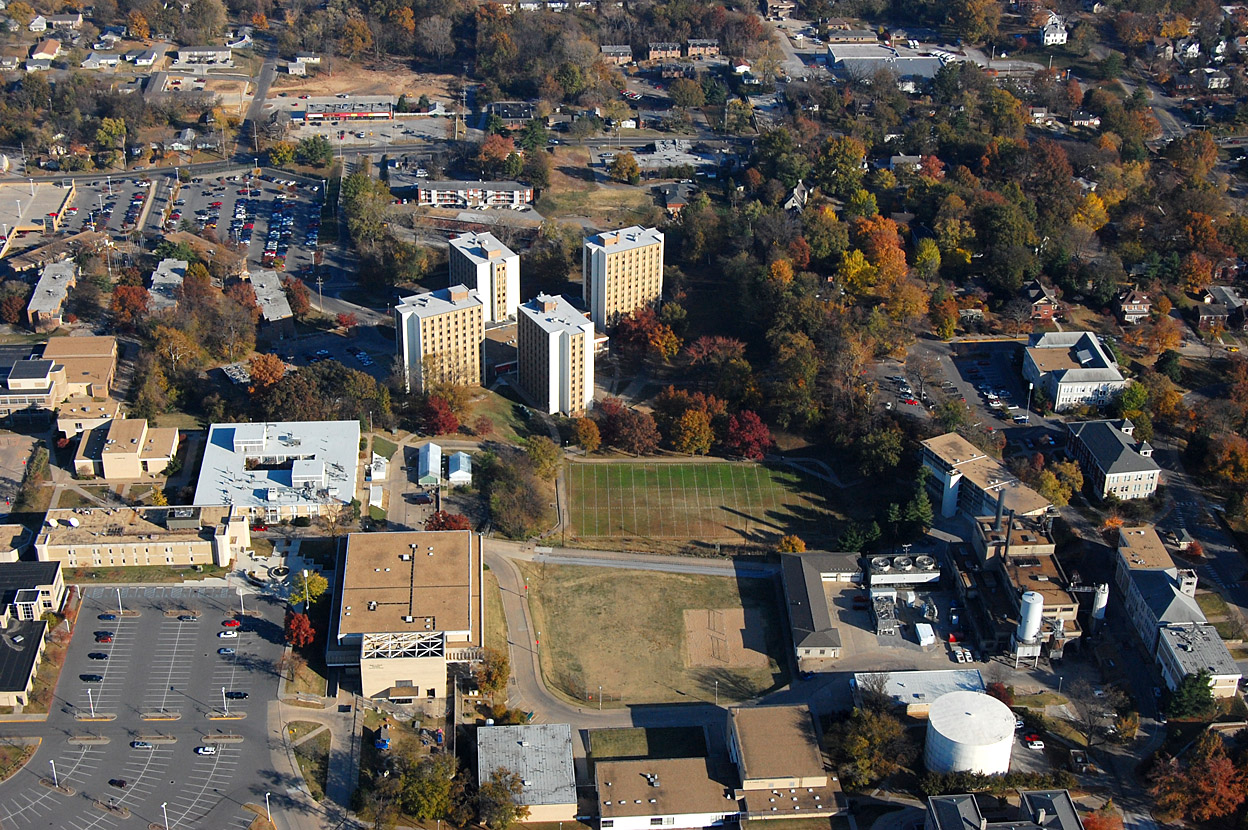
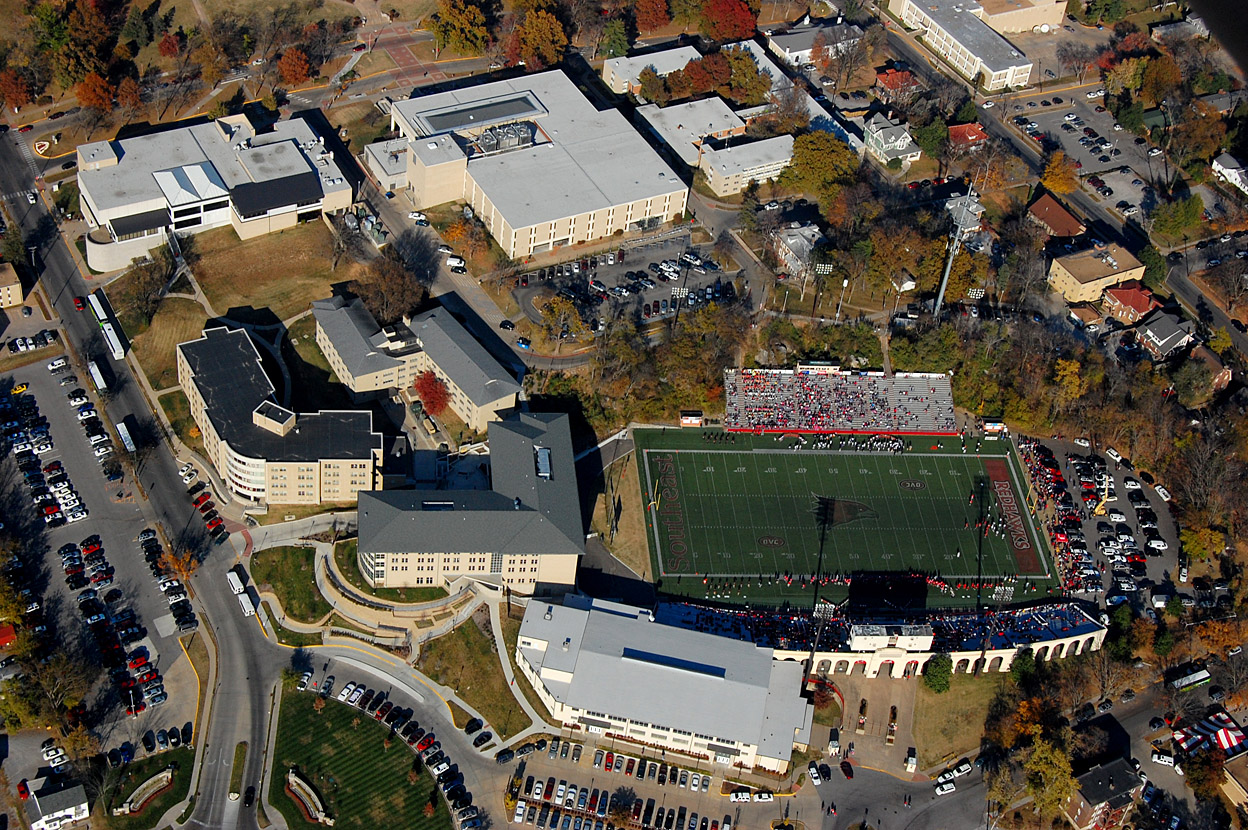
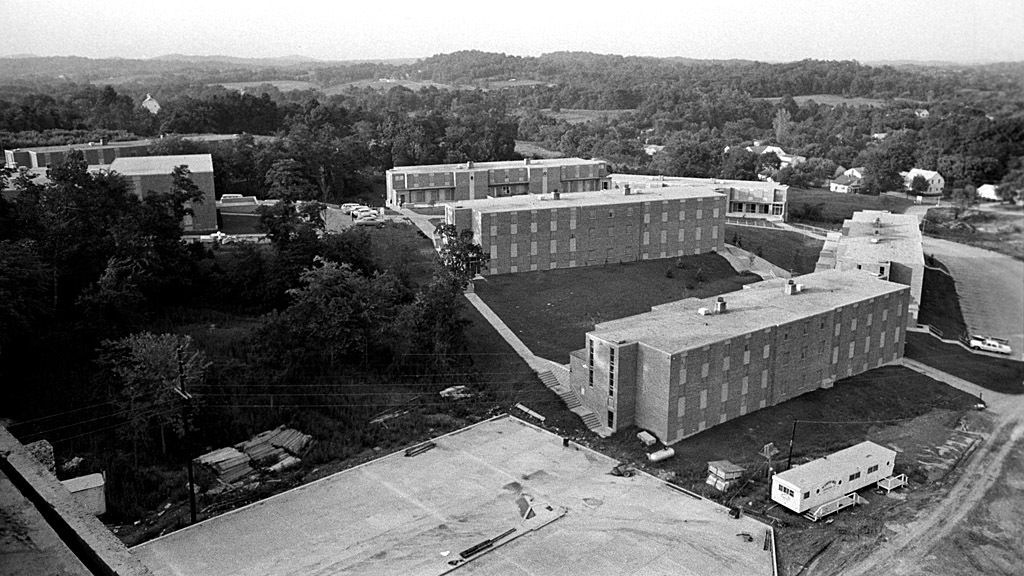
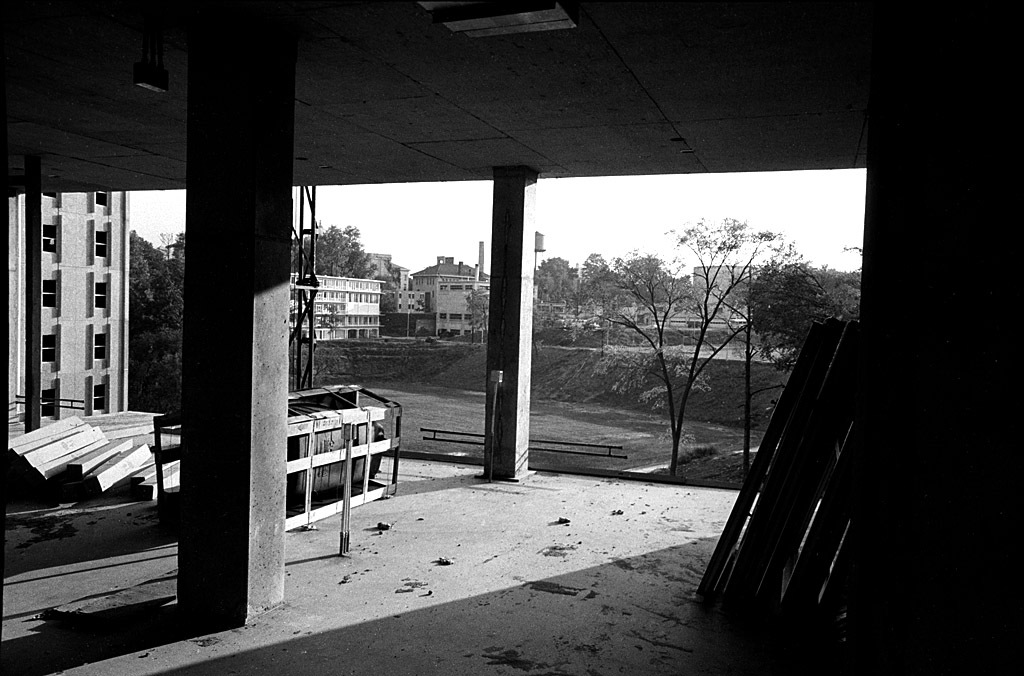
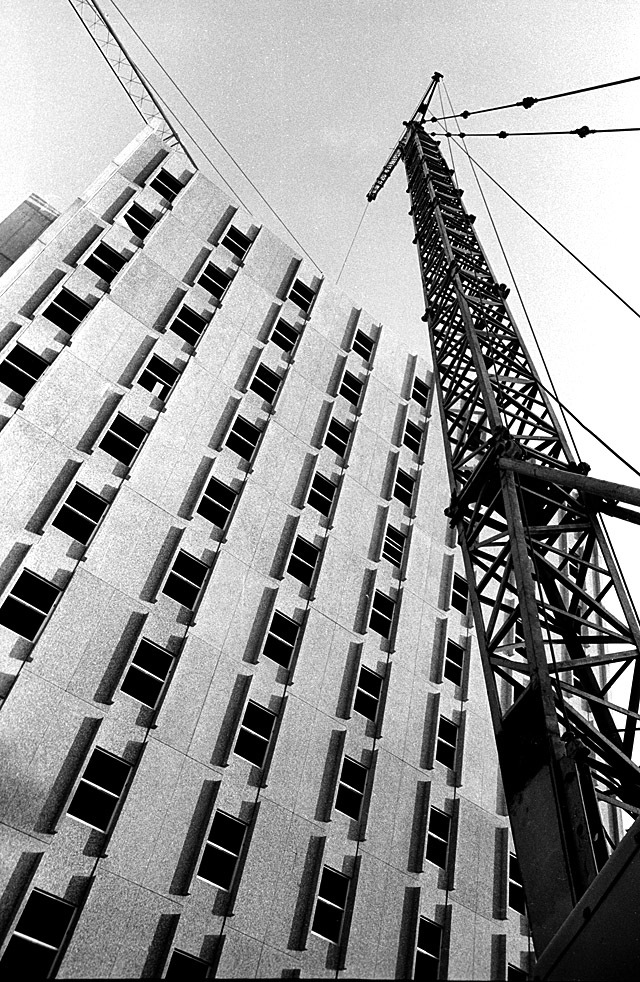
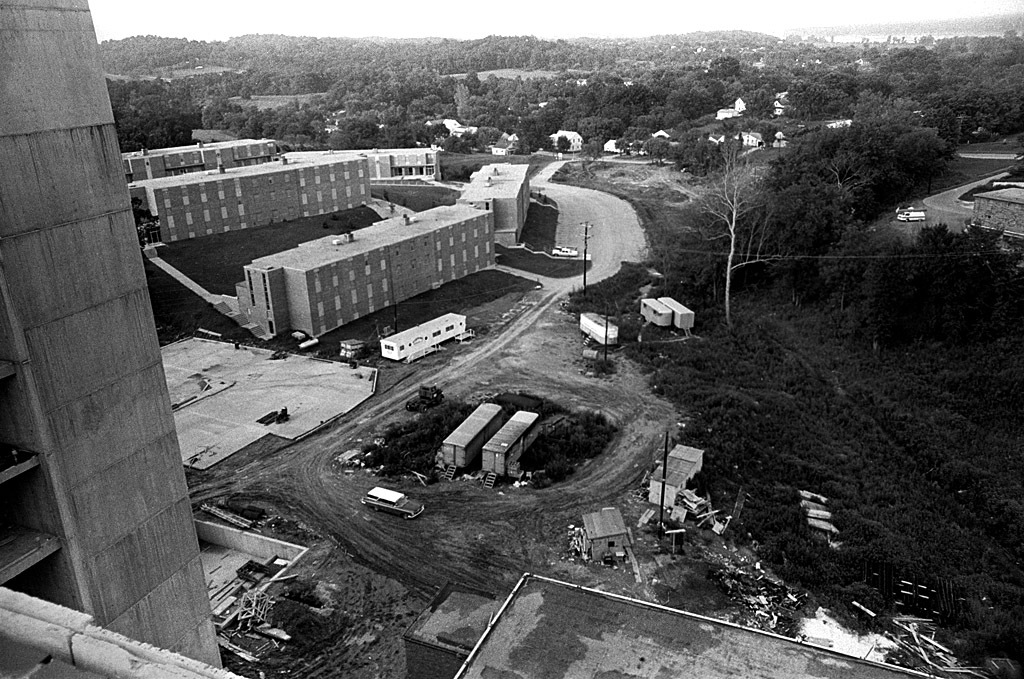
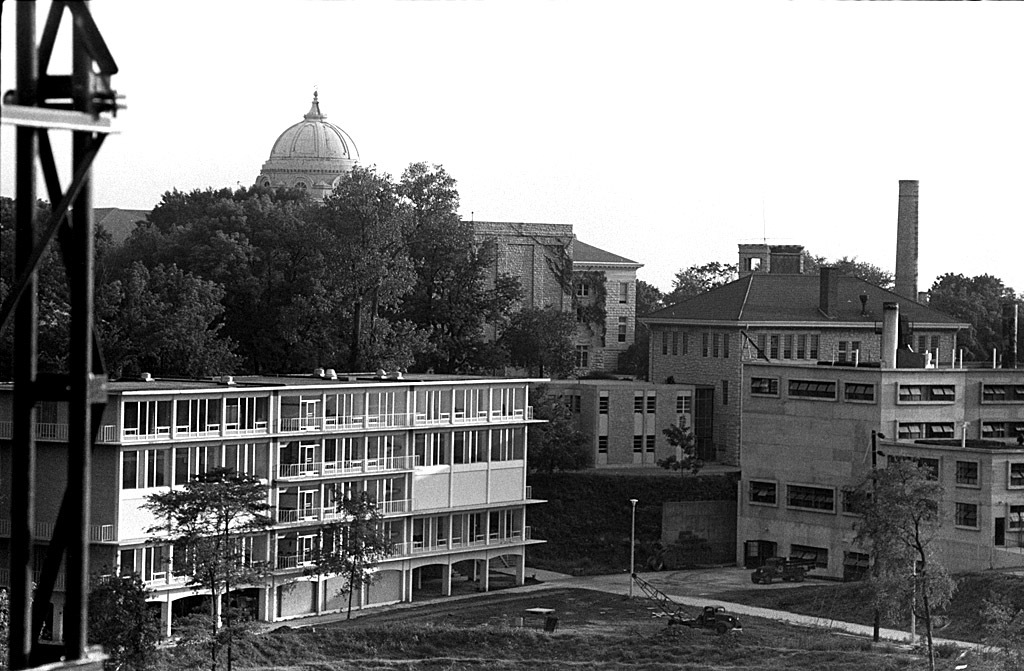
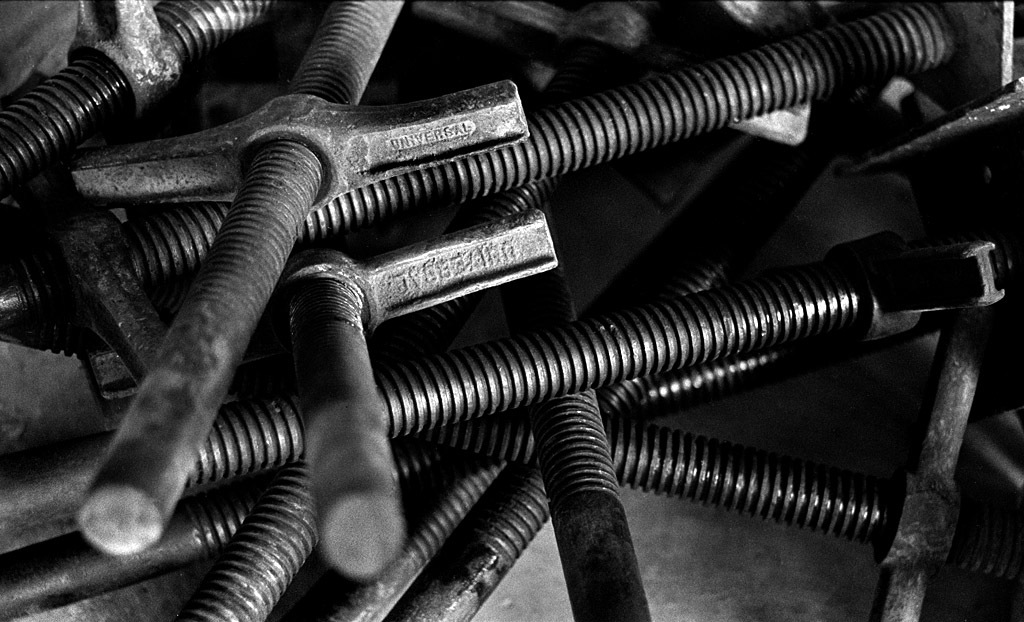
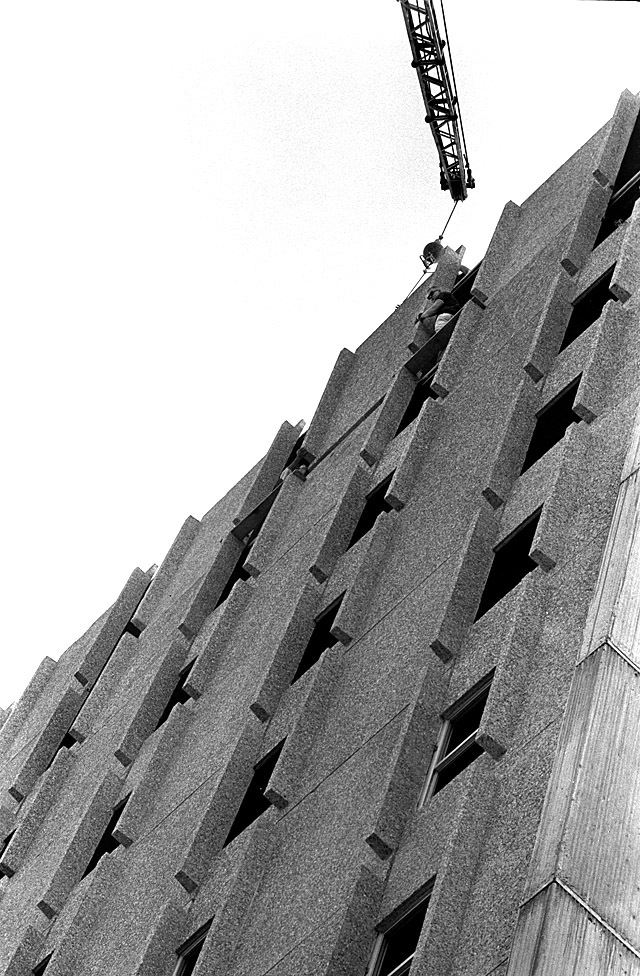
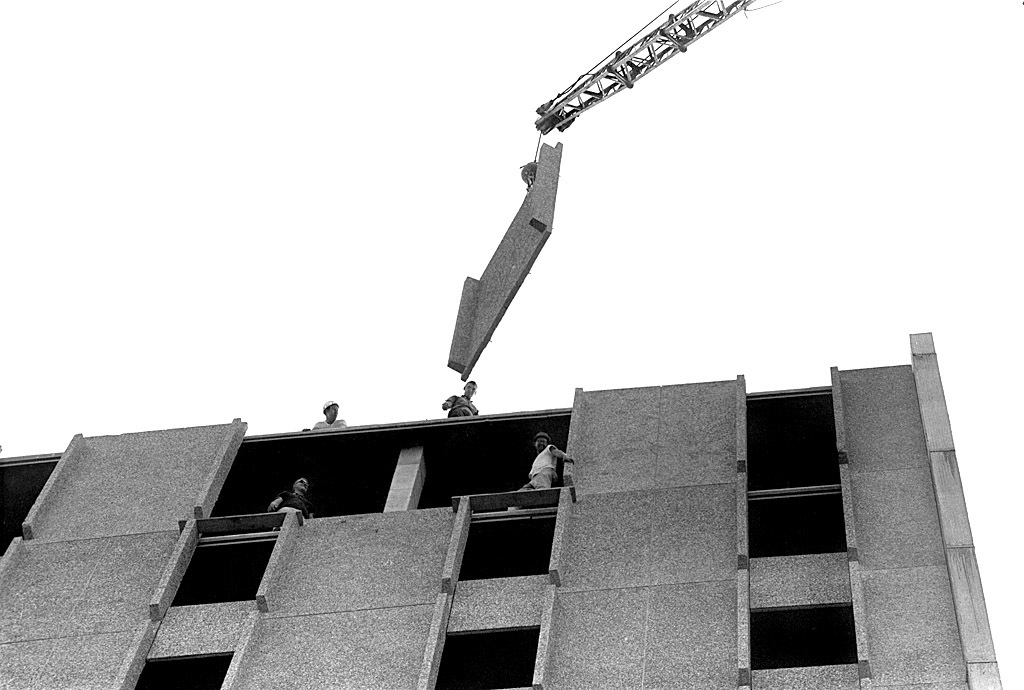
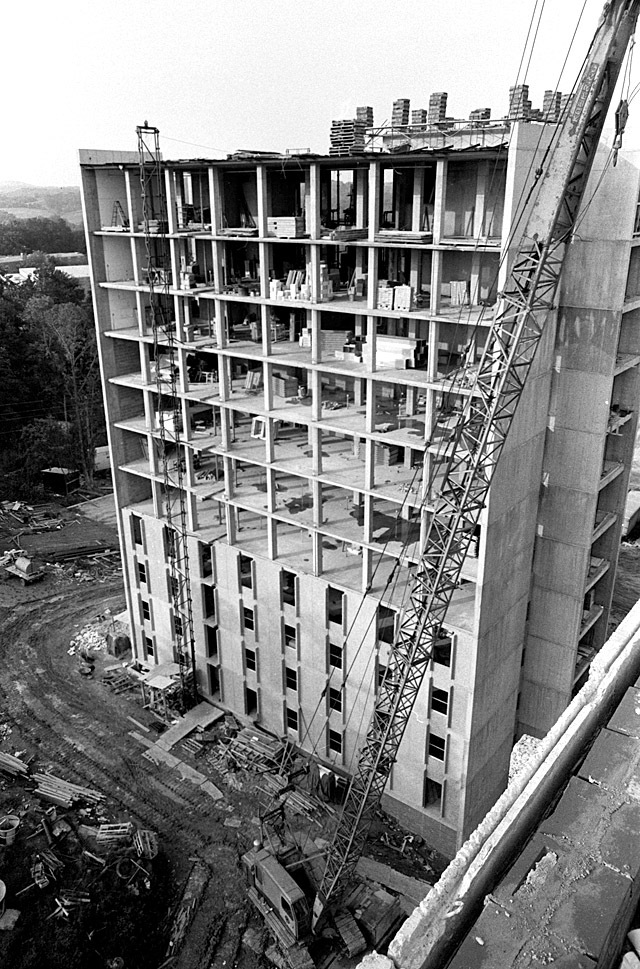
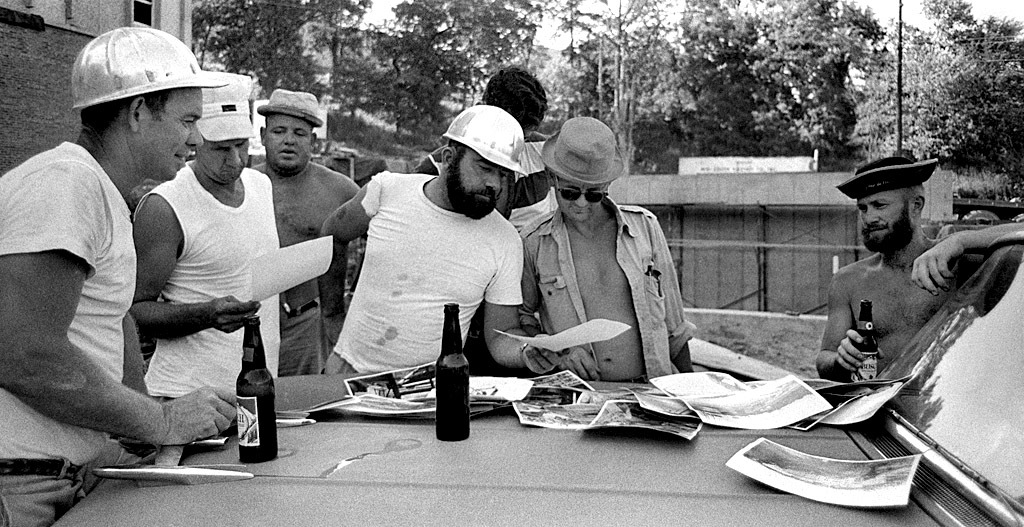
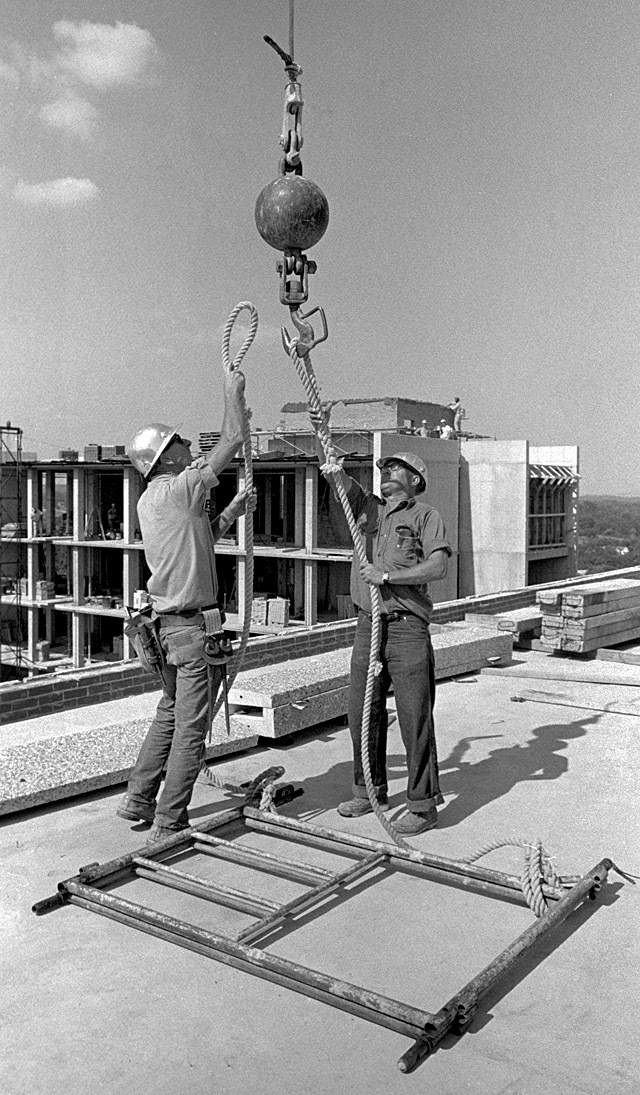
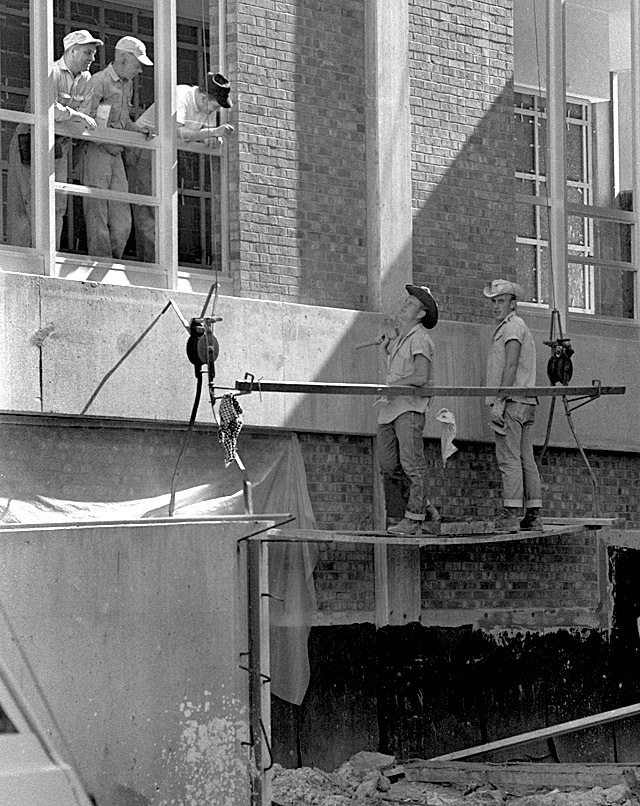
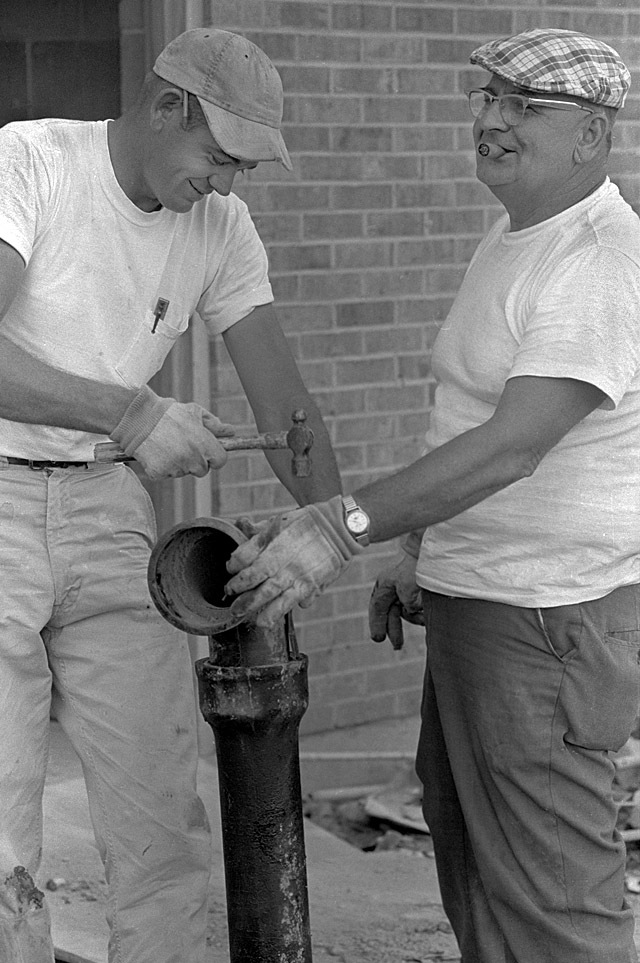
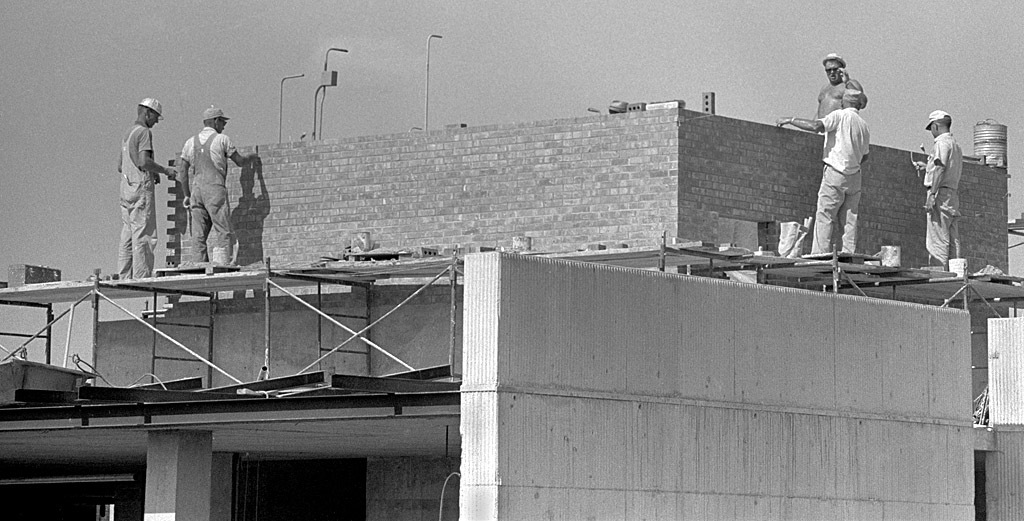
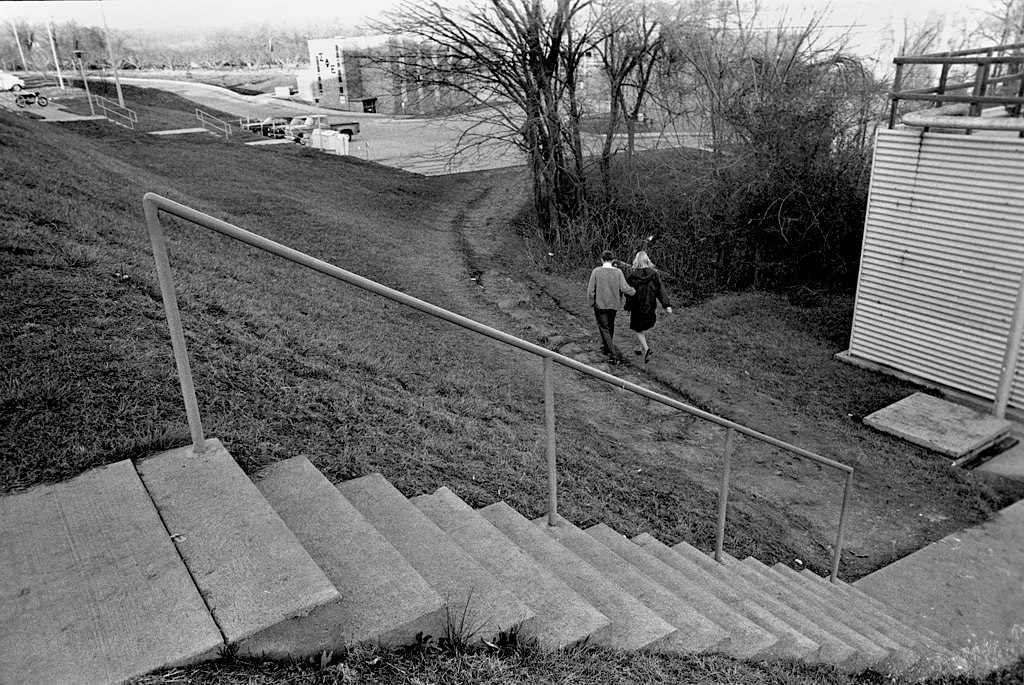
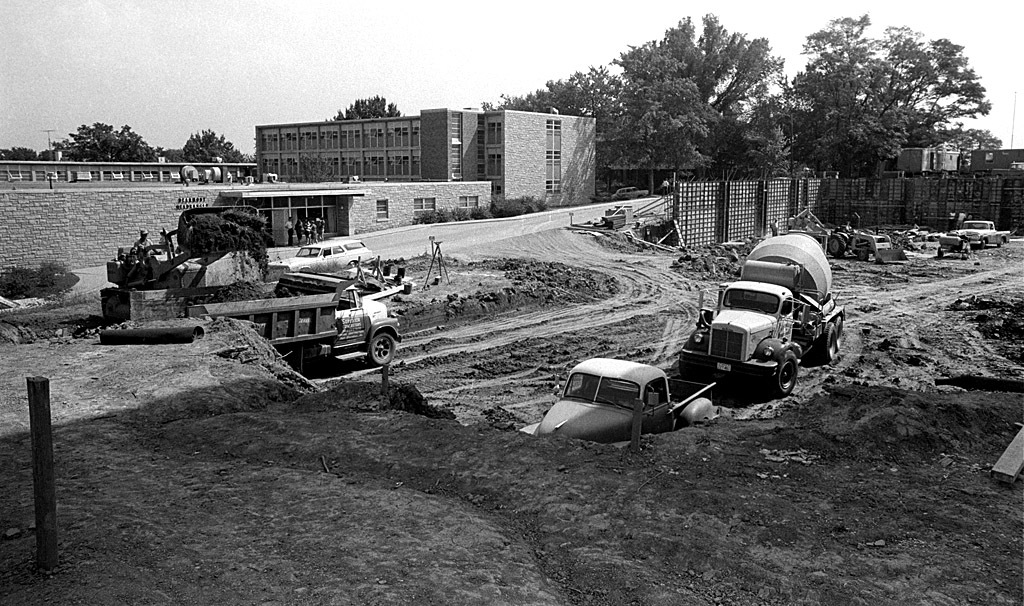
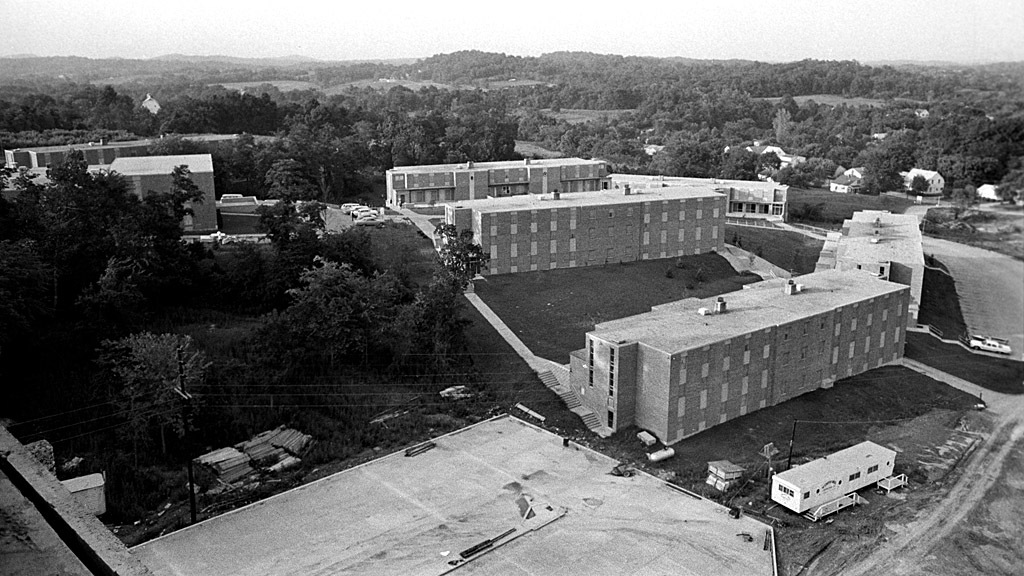
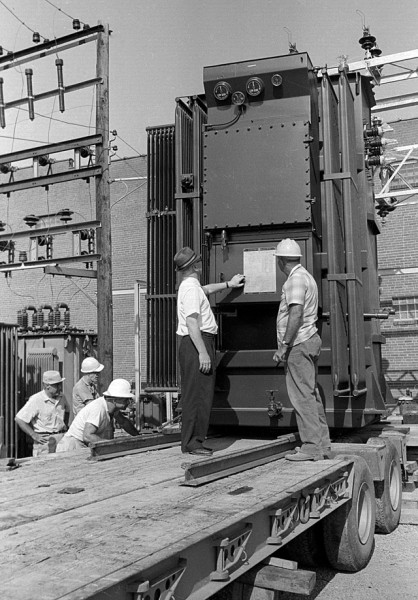
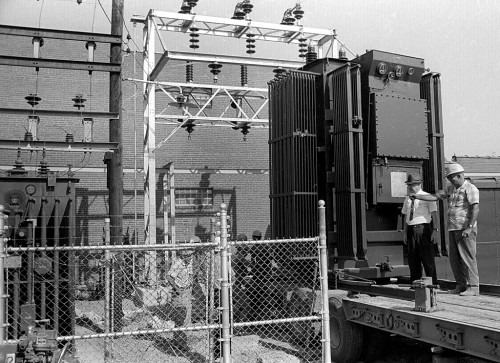
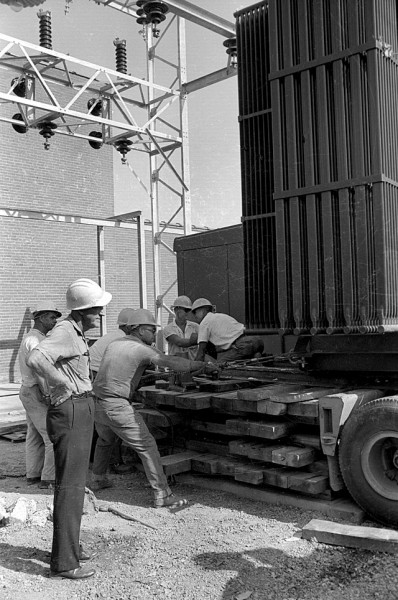
 Looks like someone is getting a new transformer or other high-voltage piece of equipment. These photos were on the same roll as the Scott City fire truck, so they may have been taken somewhere around there, but I don’t know that for sure. Click on any photo to make it larger (but don’t look too closely. This film is scratched up pretty badly).
Telecommunications: squirting electrons
 I spent the last dozen years of my newspaper career as the telecommunications manager. That sounds a little odd, but telecom is all about managing projects helping people communicate. It was pretty easy to understand: you squirt electrons in this end and they come out way over there. I had installed enough two-way radios to have that principle down pat.
Lucky for the paper, there were two guys already in the department who knew what they were doing. My Number Two guy, Mike, had two main responsibilities: keep the phones running and kick me under the table if I started to say something dumb in a meeting.
My most important lesson came one night when the building’s electrical crew had to kill all the power to make some repairs. We had a telephone switch that we called The Cash Register because it handled the classified and circulation department call centers. It was an ancient box that was so old we couldn’t get new parts for it. We had to go out on the secondary market for used and abused stuff that had a failure rate of about two out of three.
The Cash Register didn’t wake up
 Old equipment runs fairly well as long as you don’t shut it down. Unfortunately, when it came time to wake up The Cash Register when the power came back on, it decided that it LIKED napping. I was there that night, not because I was of any help, but just as a sign of support to my troops. About four in the morning, two hours before the call centers were supposed to open, I asked Mike the question that all techs hate to hear: “Any idea what the problem is?” The obvious, unstated answer is, “No. If I knew how to fix it, we’d have all been in bed two hours ago.”
Mike was the calmest, best troubleshooter I’ve ever seen. The world could be blowing up around him and he’d keep working through the checklist until he found out which hamster needed kicking.
It boils down to AM and FM
He turned to me and said in quiet, measured tones and with great patience, “What we have here is AM and we need FM.”
We’re in my arena now. This is language I understand. “Amplitude Modulation instead of Frequency modulation? Those are radio terms. What does that have to do with a phone switch?”
“No,” he explained. “What we have is AM – Almost Magic. What we need is FM – Freaking Magic (except he didn’t say “freaking).”
That’s the night everything there was to know about telecommunications and most of life in general became crystal clear. It all boils down to AM and FM.
Can you keep it going another year?
The first year I was telecom manager, I went into a capital budget meeting with a request to replace The Cash Register. Management asked if I could milk one more year out of it. Mike, unfortunately, wasn’t there to kick me under the table, so I said we’d try.
The second year, I went into the hearing with the same request, only more urgently worded. When management asked the inevitable question if I could keep it running one more year if they increased my maintenance budget I was ready.
“No, in fact, you can cut the budget to 25 cents if we don’t replace The Cash Register. That’s about enough to buy one bullet. It’s gonna be a toss-up whether I use it on the switch or me if it hiccups one more time.” They gave me the quarter-million bucks I’d asked for instead of two bits, so life was good.
Staying away from sparky stuff
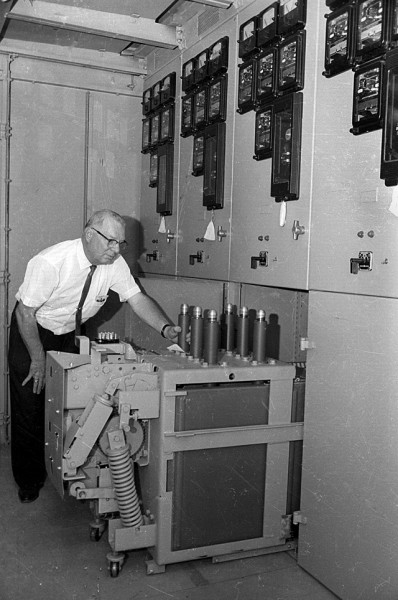
Our universe was divided into Low Voltage and Sparky Stuff. Management must have known about my limitations because they put me in charge of the low voltage data stuff. Oh, sure, you might get a little 90-volt buzz if you happened to be holding onto a telephone pair if someone happened to be calling it, but that’s minor compared to what the Sparky Guys worked with.
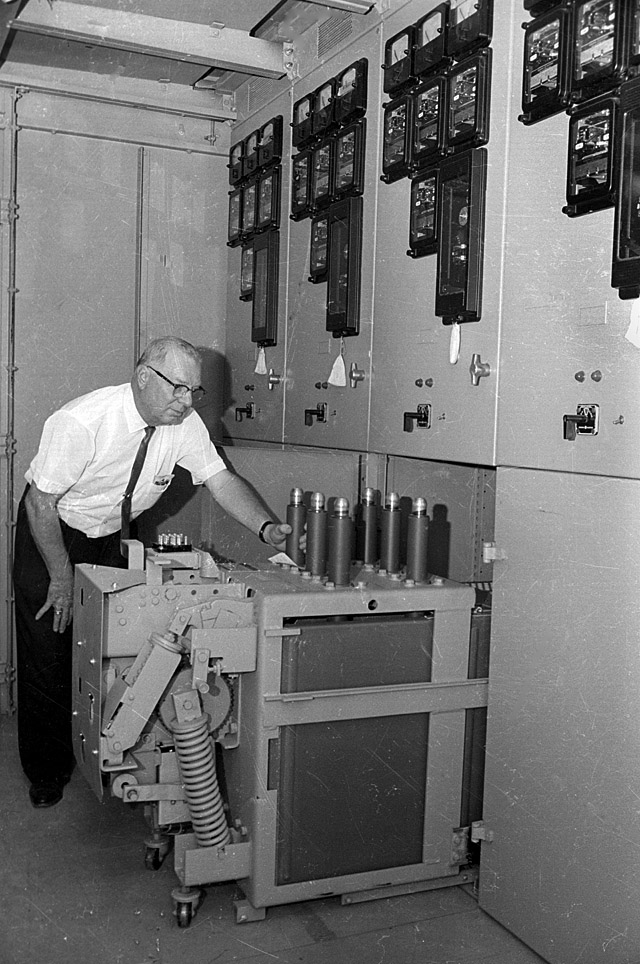
From time to time we’d have to venture into the building’s power vaults. Newspaper presses and elevators and the like take a lot of juice, so our switch gear was almost this big. When you’re dealing with stuff like this, you don’t just push a button to connect to the outside world. We’d watch the Sparky guys pull down down a big lever attached to springs like this, then they’d beat feet to get out of the vault. After a few seconds, the spring would fire the connectors into the grid with an impressive CRACK!! and the smell of ozone. The spring-loading was to minimize the time and distance that an arc would jump. A human couldn’t do it fast enough.
After that impressive display, we’d slink back to our safe telephone switch room to see if we could find someone who could be persuaded to hold the two ends of a phone cable while somebody in another room dialed the phone number. Hey, even low voltage guys have to have fun.