Department of “Why Bother?”

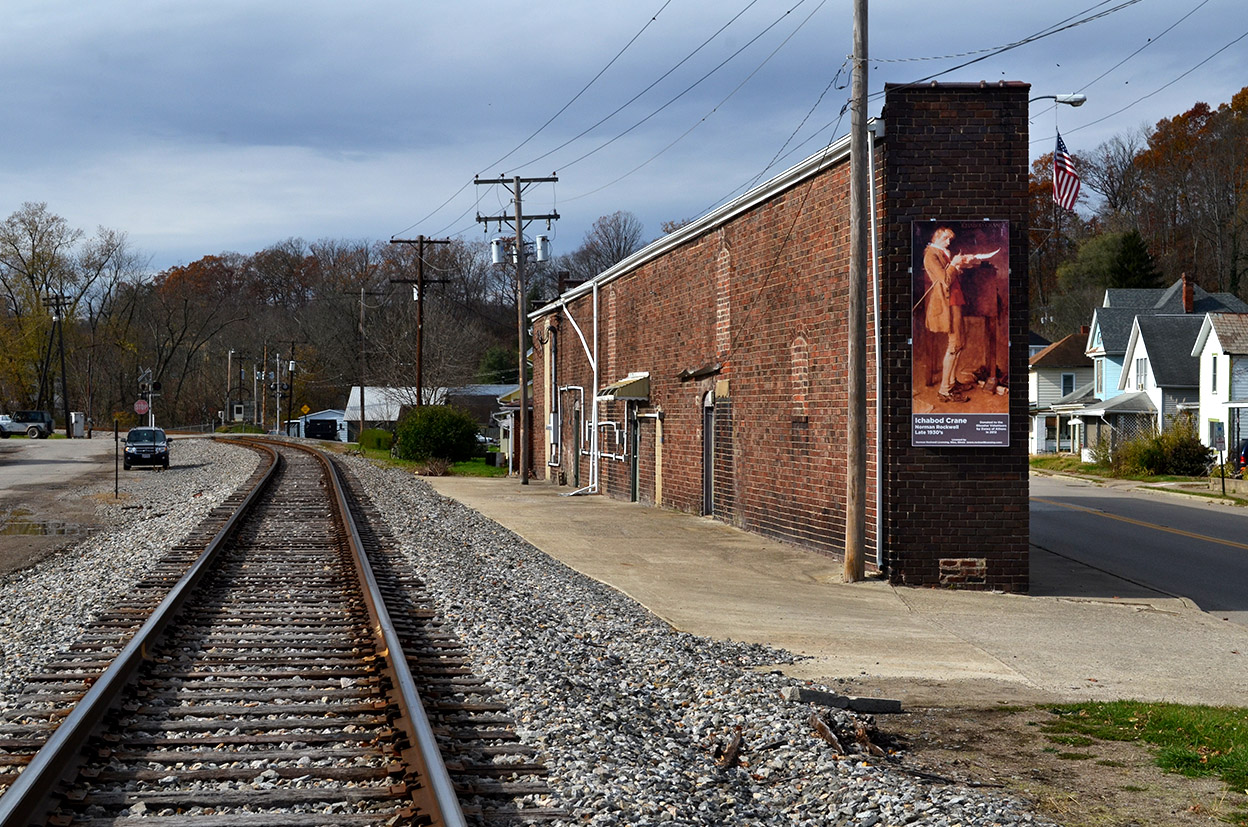
Skinny brick building in Glouster OH 11-09-2014I didn’t pay much attention to this building when I was northbound through Glouster to the Burr Oak Lodge where I was staying the last time I was in Athens, Ohio, but I did a double take on the way south. (Glouster is the place where I shot the epitome of a small-town football game last fall.)

That is one skinny building
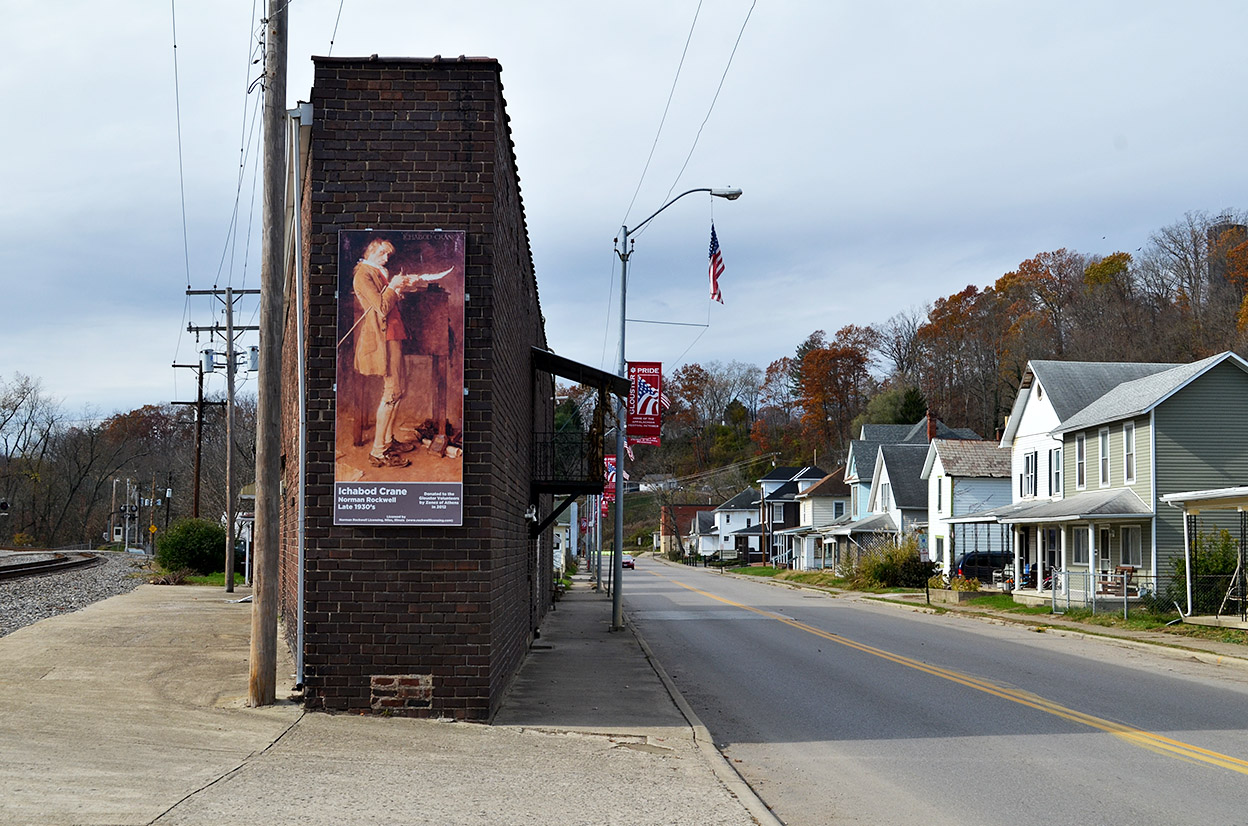
Skinny brick building in Glouster OH 11-09-2014I had to stop to make sure it wasn’t an optical illusion.

No, it really WAS that skinny. It got bigger at the other end, but I could easily span the back wall without having to stretch my arms out as big as I had gestured before to describe the size of a fish that got away. (Click on the photos to make them larger.)

Only eight bricks wide
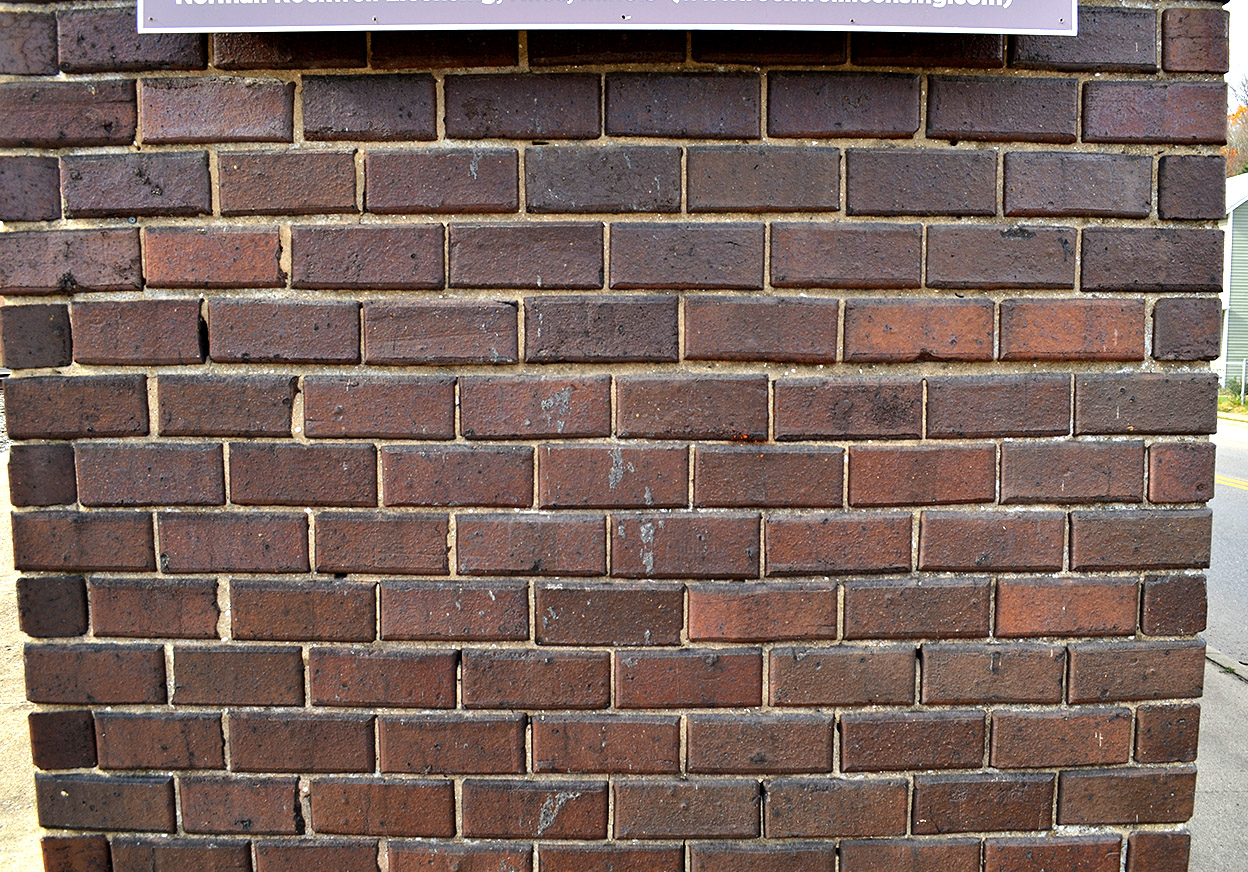
Skinny brick building in Glouster OH 11-09-2014That wall was only eight bricks wide. If a standard brick is eight inches long, and you figure the space for the mortar between the bricks is half an inch or less, that would be, let’s see 8″ x 8 bricks x 7 mortar rows @ 1/2 inch equals just 67.5 inches or a little more than 5-1/2 feet wide. Allowing for the thickness of the walls, the open space inside the thin end would have had to have been less than four feet.

Why would anybody use that many bricks, not to count the labor of laying them, for such a small return of space?

I don’t know the answer to that question, but my guess is that both bricks and labor were cheap in Glouster when that building was constructed.

Bricks were a big deal
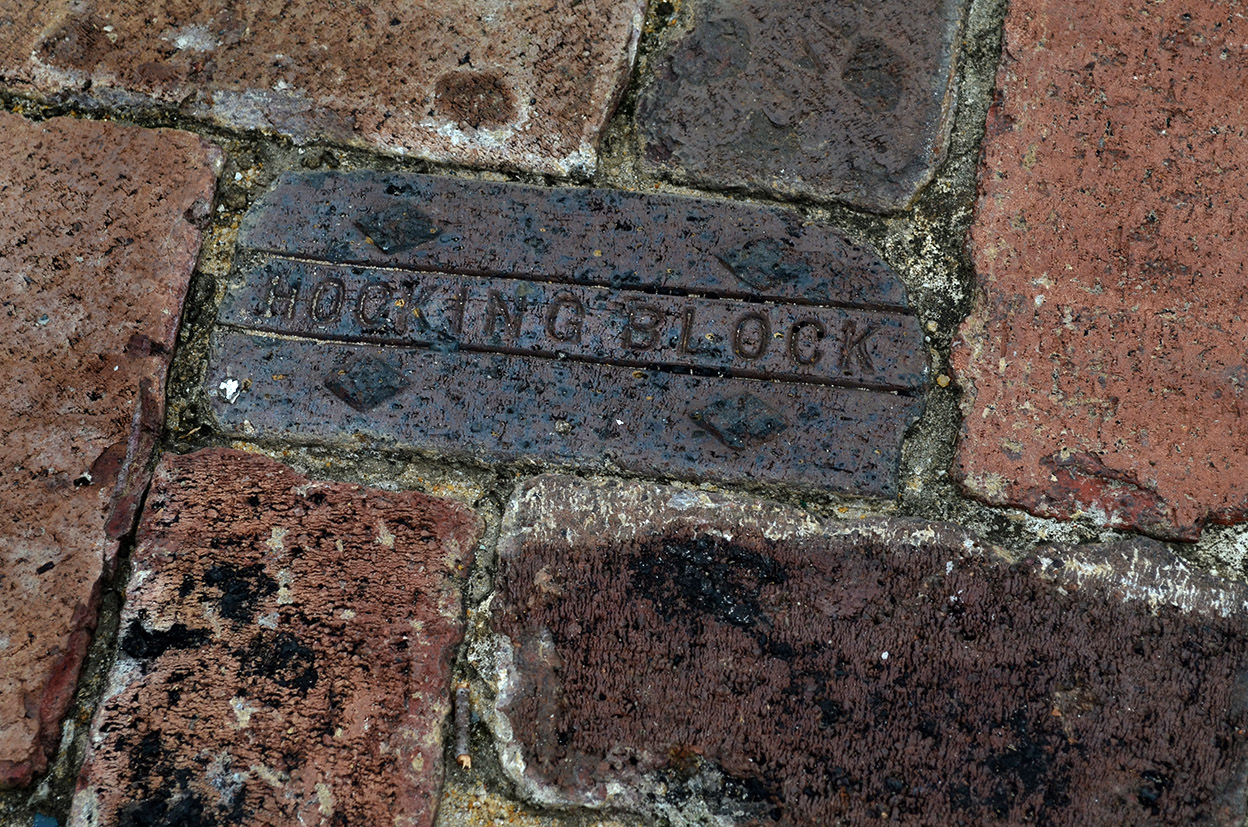
Hocking Block - Ray Charles Plaza - 05-14-2014Here’s a really good history of the region that explains how important the iron, coal and brick industries were.

Curator Jessica is somewhat of a brick expert, so she’s always looking for SE Ohio bricks like this Hocking brick she spotted when we were walking around the Ray Charles Plaza in Albany, Ga.
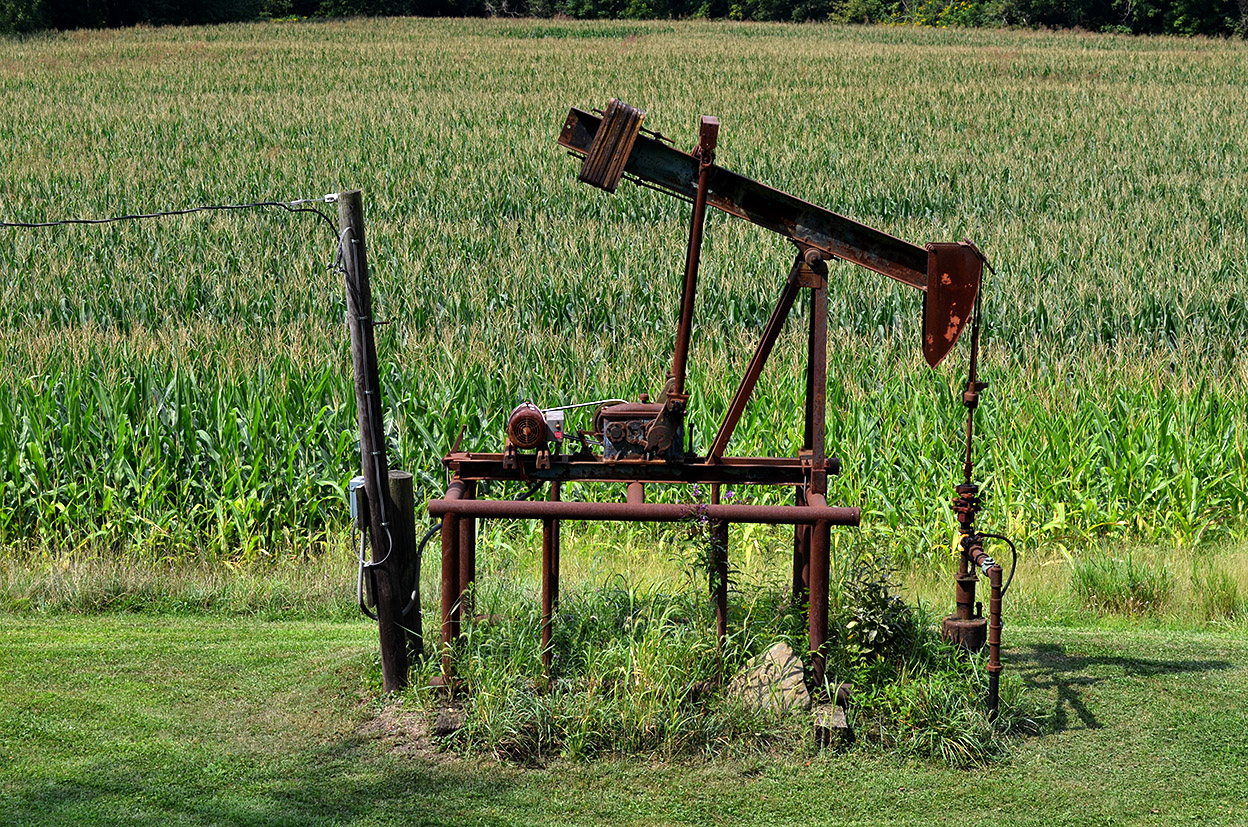
Pumpjacks in Athens County

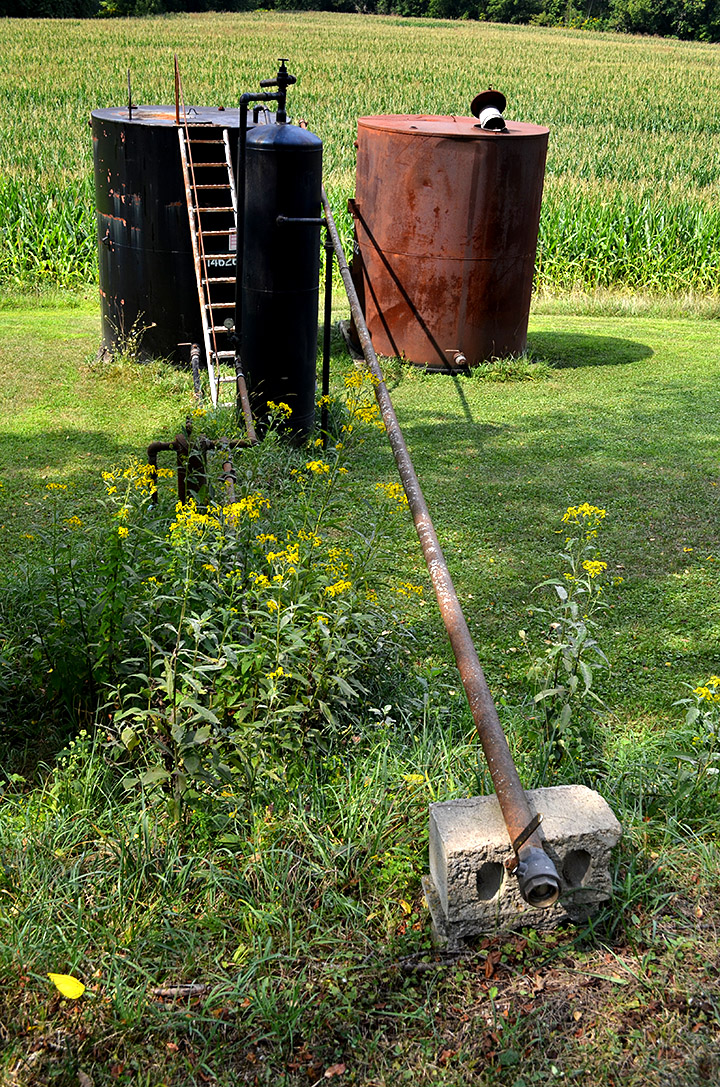
Athens County natural gas wellI was all excited back on September 18, 2014, when gas in Jackson dropped to $3.03. On December, 14, I celebrated that gas in Florida had fallen below $2.50. This week, I gassed up for $2.13, and Neighbor Jacqie got it for seven cents less two days later

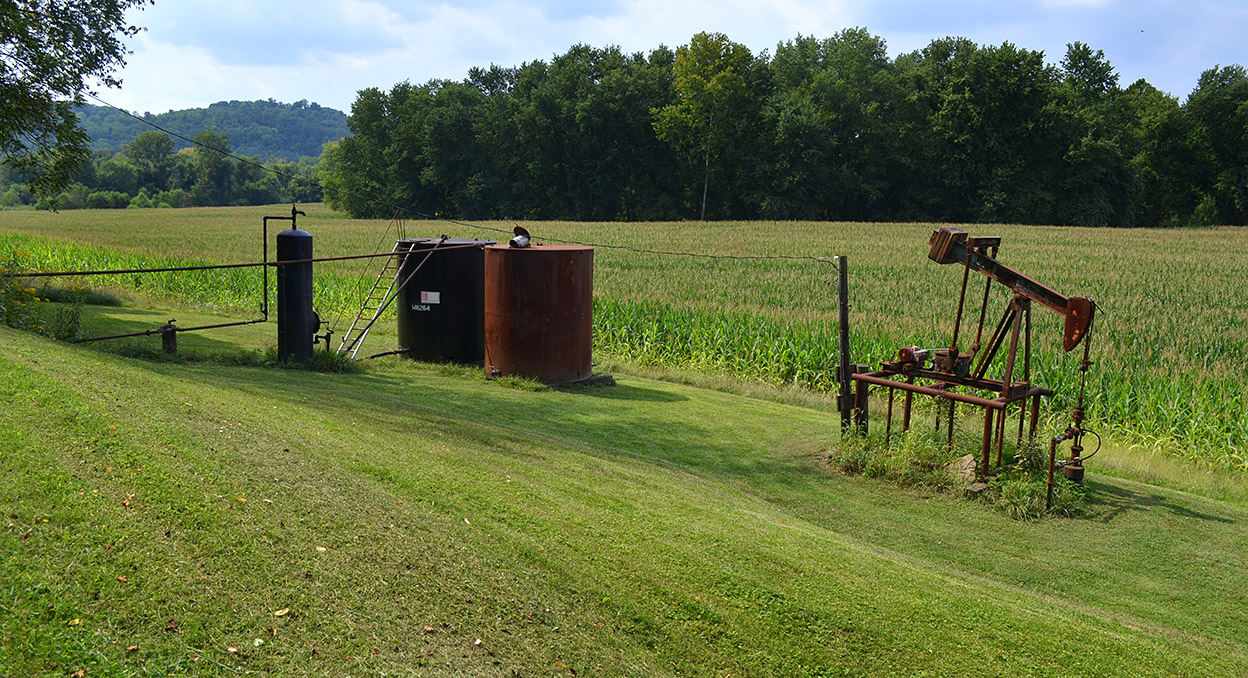
That got me to thinking about this pumping rig I spotted in Athens County last summer. I was hoping I would run across one because they used to be pretty common in that area.

Other names for pumpjack

In case you aren’t familiar with the term “pumpjack” (I wasn’t), it is also called “oil horse, donkey pumper, nodding donkey, pumping unit, horsehead pump, rocking horse, beam pump, dinosaur, sucker rod pump (SRP), grasshopper pump, Big Texan, thirsty bird, or jack pump). It is the overground drive for a reciprocating piston pump in an oil well.”

In the old days, you’d drive by a field that was covered with a thick sludge of oily goop and see pipes running to a central collection point. For some reason, I don’t think I ever shot one. Maybe it was just too ugly in a not-neat way.

Here is a site that explains how those old “jackline”operations work, along with a lot of other interesting history. That sounds like what I remember. They’ve pretty much become obsolete.

Drilling rig hit gas

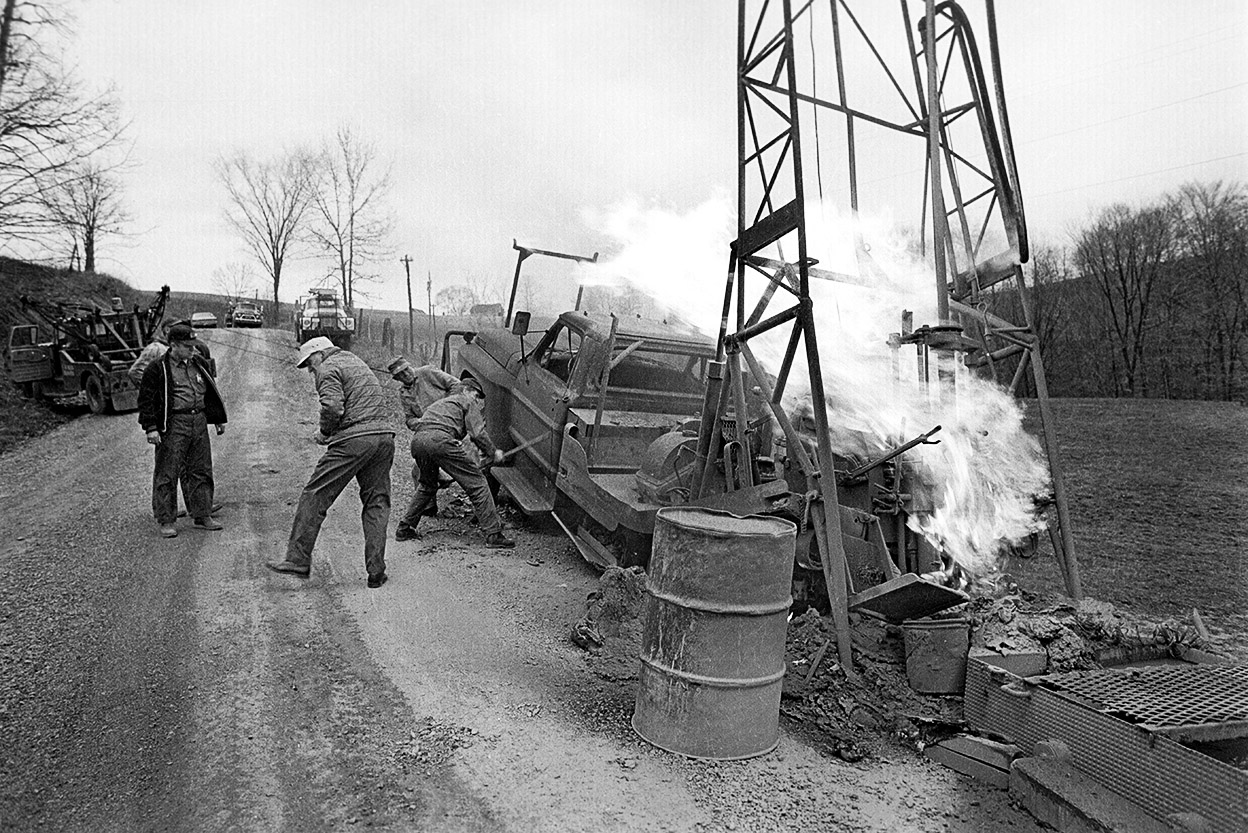
Drilling rig fire 03-29-1969The closest I came to photographing anything like that was this fire. I don’t know why this drilling rig was working right next to the road on a chilly day in March of 1969, but it must have hit a pocket of natural gas, and all it took was one spark to light it off.

How does thing work?

Athens County natural gas wellCurator Jessica and I found this while we were running around looking for neat stuff. I asked her how it worked.

Curators are supposed to know everything, plus, she’s married to T.J., who is an associate professor of mechanical engineering at Ohio University. I figured she’d have picked up this kind of knowledge through osmosis.

Instead of breaking a stick off a tree and sketching out the whole thing in the dirt alongside the road, she said, “Wait until dinner and have T.J. explain it to you.”

Natural gas is the target

Athens County natural gas wellT.J. is an effective teacher. The first thing he explained was that the target is natural gas, not oil, as I had always thought.

His description pretty much matched this explanation given on Wikipedia. He’s known on campus as a tough grader, so rather than try to parrot what he said, I’m going to let this illustration explain it. (He doesn’t tolerate students who copy the work of others, so I may STILL be in trouble.)

When I asked why they went to all the trouble to use the walking beam with its horse head for a small operation like this (I’ve seen giant ones out West), he explained that the walking beam with a counterweight can do all the heavy lifting, enabling the use of a much smaller motor than if it was connected directly.

I don’t have any idea what kind of volume the wells produce nor how many of them are in operation. A lot of them were sitting idle when we passed by, but we saw one large one that looked like it was fairly new.


David Louis Motel Sign

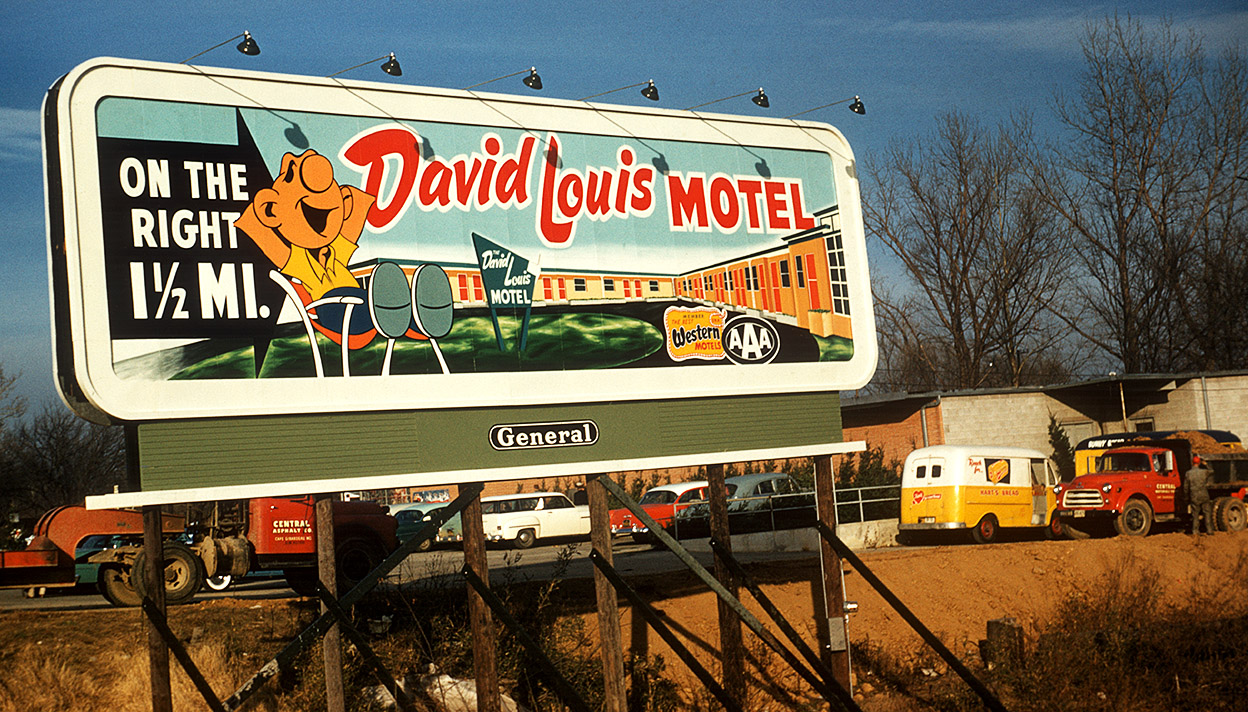
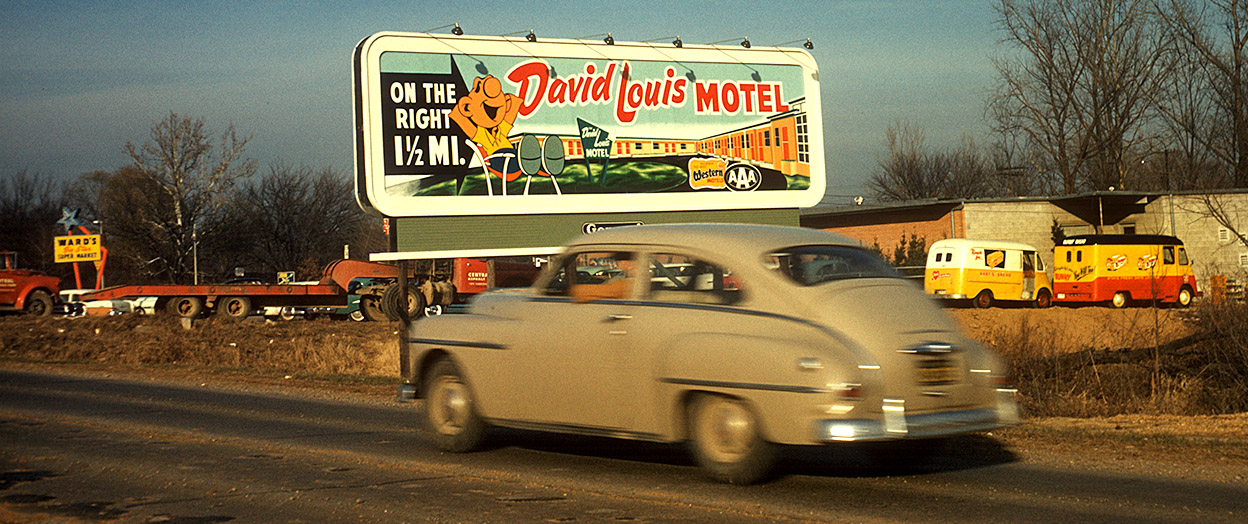
David Louis Motel SignHere’s another dip into the Terry Hopkins General Sign box.

When I was doing daily picture pages at The Athens Messenger, I had a technique for having an easy day. I’d shoot something like a old general store and run an outside photo on Monday with the caption, “Tomorrow we’ll go inside.” That let me get a two-fer out of the story.

This is going to be somewhat like that. Today we’ll look at a sign advertising the David Louis Motel, a name that didn’t stick around long. The next day, we’ll go into the history of the renamed motel and see photos of what is there today. You can click on the photos to make them larger.

My perspective has changed

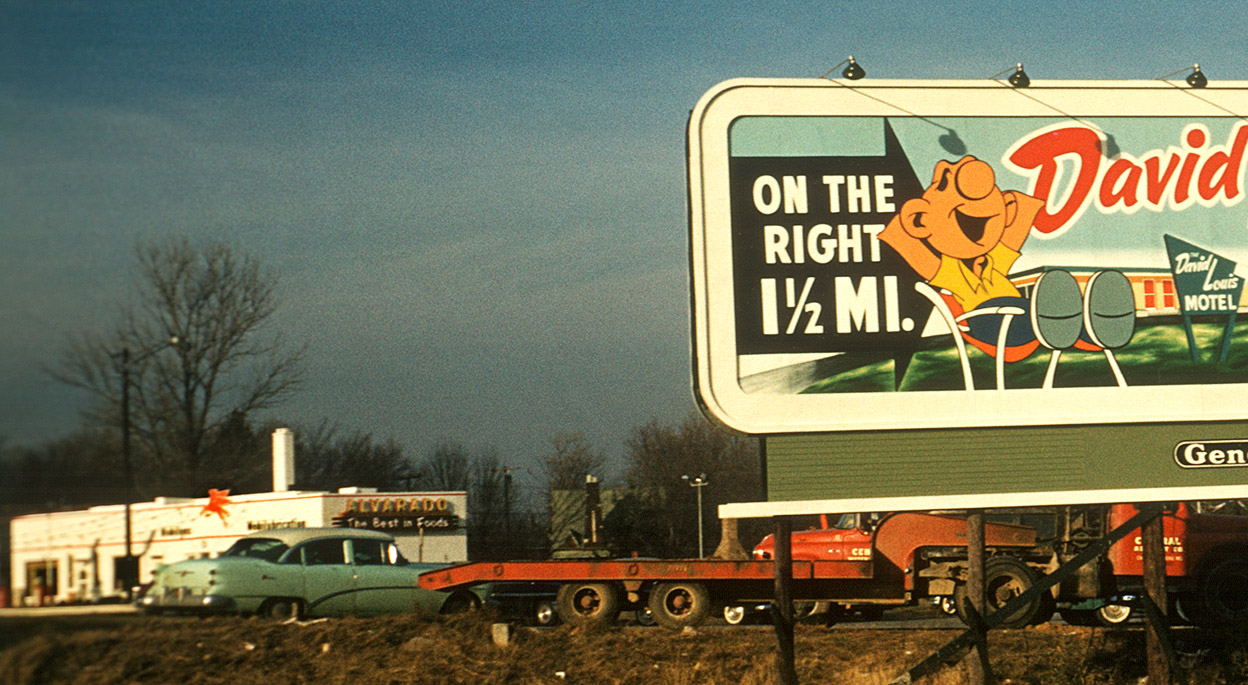
David Louis Motel SignI spent years editing my shooting session down to the most striking and story-telling image and ignoring the rest because newspaper space was finite.

Hanging around with museum folks like Carla Jordan in Altenburg and Curator Jessica in Athens has given me a totally different perspective: I crop more loosely to keep background objects visible and I run more photos that are similar but contain slightly different details. It’s those little details that I used to crop out that contain valuable historical information.

This is a good example. The picture at the top of the page shows the sign best, but looking off to the left edge of the frame above shows the old Alvarado service station and restaurant with its sign proclaiming “The Best in Foods” on its side.

Ward’s Big Star

David Louis Motel SignA frame from a slightly different angle shows the yellow sign for Ward’s Big Star Super Market at the left. I can remember going in there lots of times with Mother.

The store must have been getting bread deliveries: that’s a Hart’s Bread truck on the left and a Bunny Bread truck on the right.

The two red trucks are from Central Asphalt. I thought maybe they were paving the parking lot, but the lot is full of cars.It looks like they may be working behind Ward’s.

There’s no date stamp on the slide mounts. Anybody want to guess about when it was taken based on the cars in the photos?

The trees are devoid of leaves, so it must be either fall or winter. The day is warm enough that the man driving by has his window down, but chilly enough that he’s wearing a long-sleeve shirt.


Gateway Arch from I-55

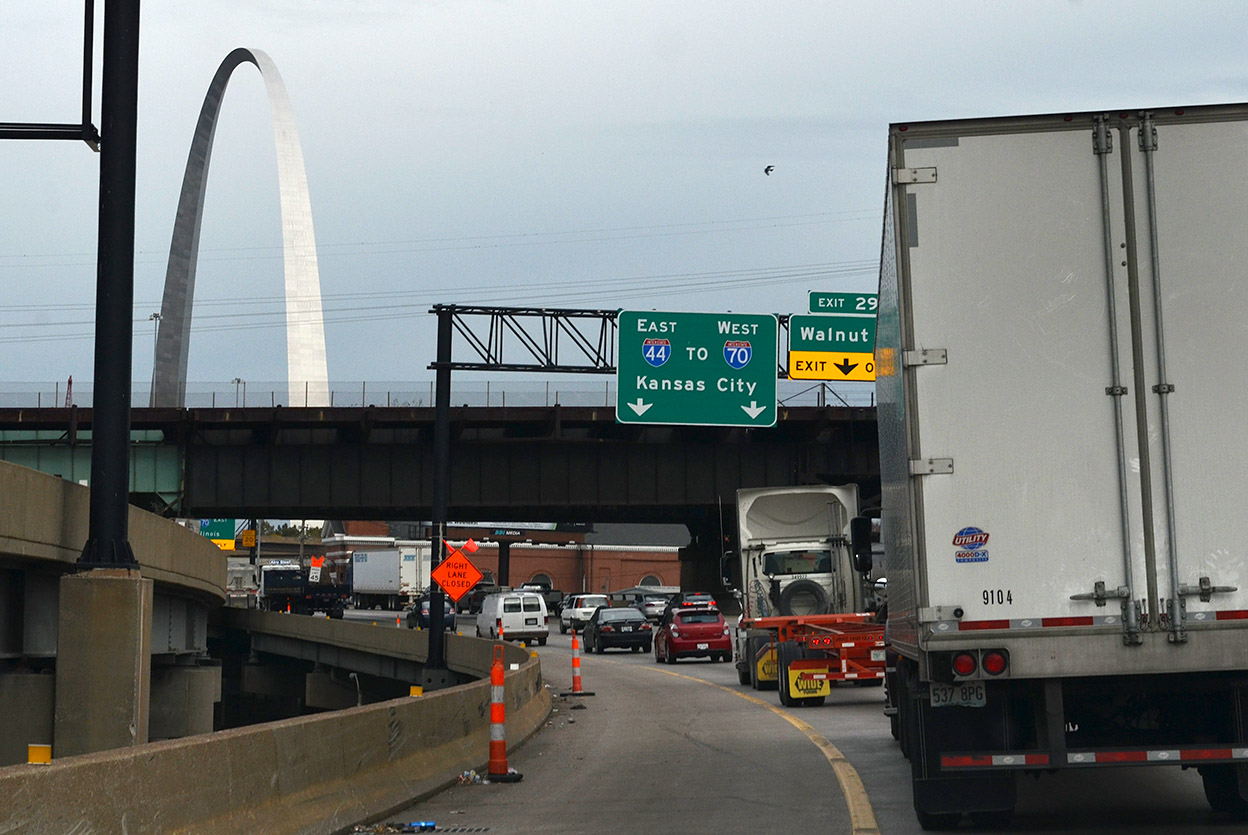
Gateway Arch from I-55 10-30-2014

I got to see this view of the Gateway Arch from I-55 twice on my last trip to Missouri. Once on my way to drop off Wife Lila at the airport to fly back home to West Palm Beach on October 28, and once when I went to Lambert to pick up Curator Jessica on October 30.

Jessica had already done the obligatory Arch Lick last fall, so she said we didn’t need to go do it again. We opted to go to the City Museum instead.

And, there were no safety hazards involved in the taking of this photo. Road construction had traffic dead stopped at this location both days, so I had plenty of time.to shoot.