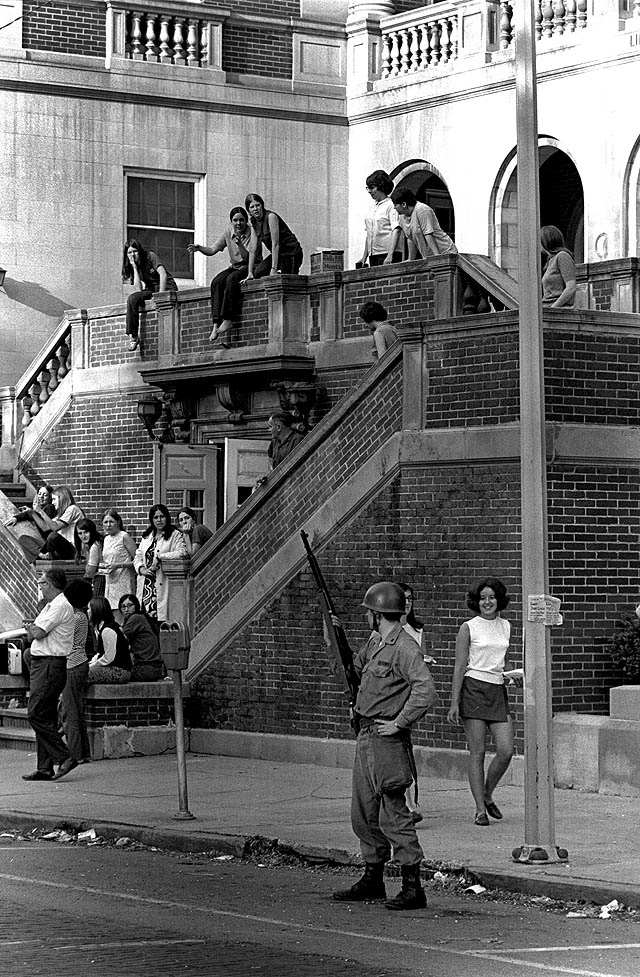
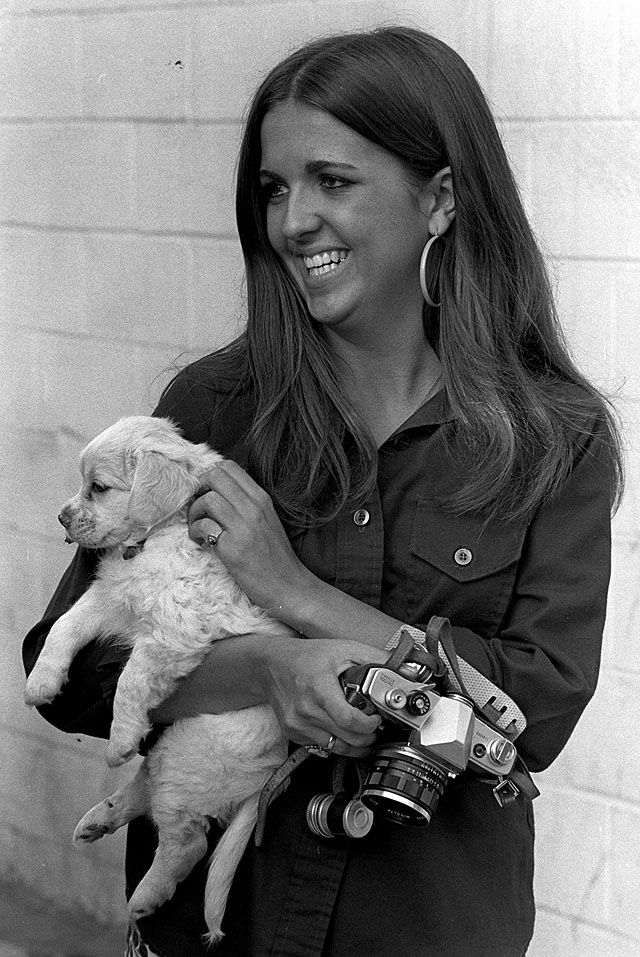
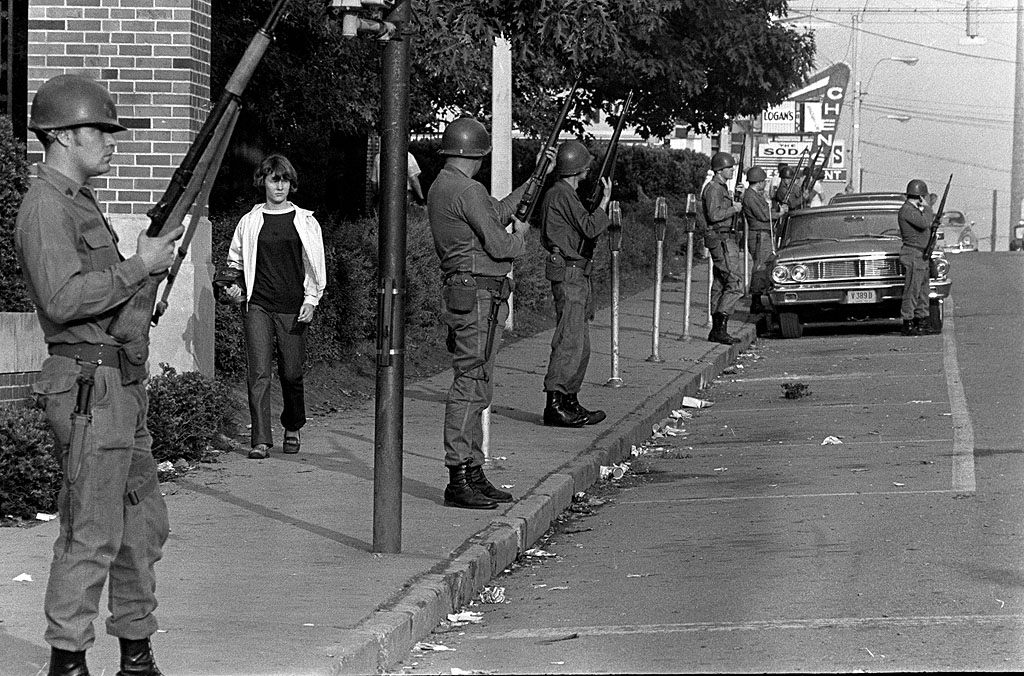
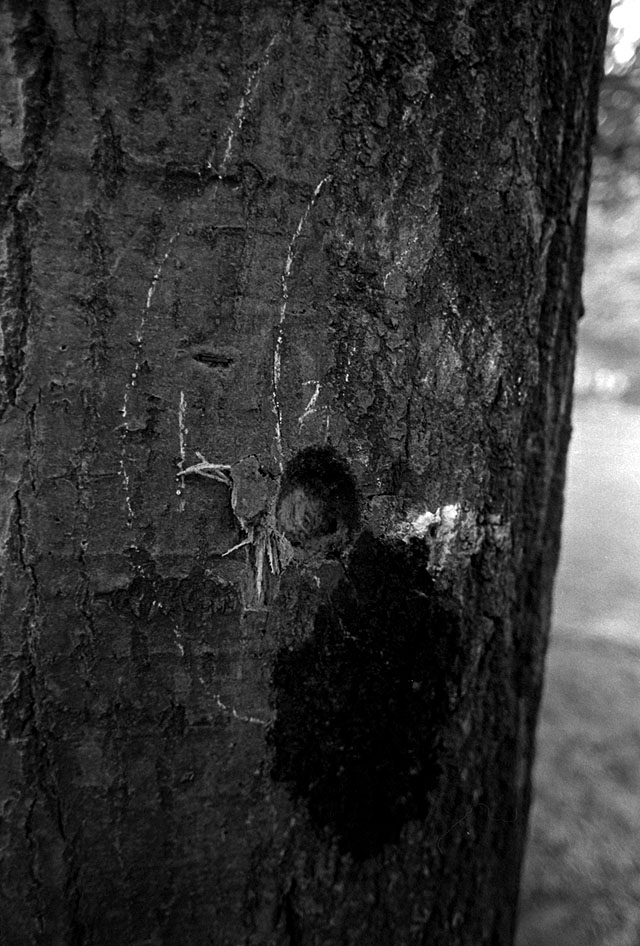
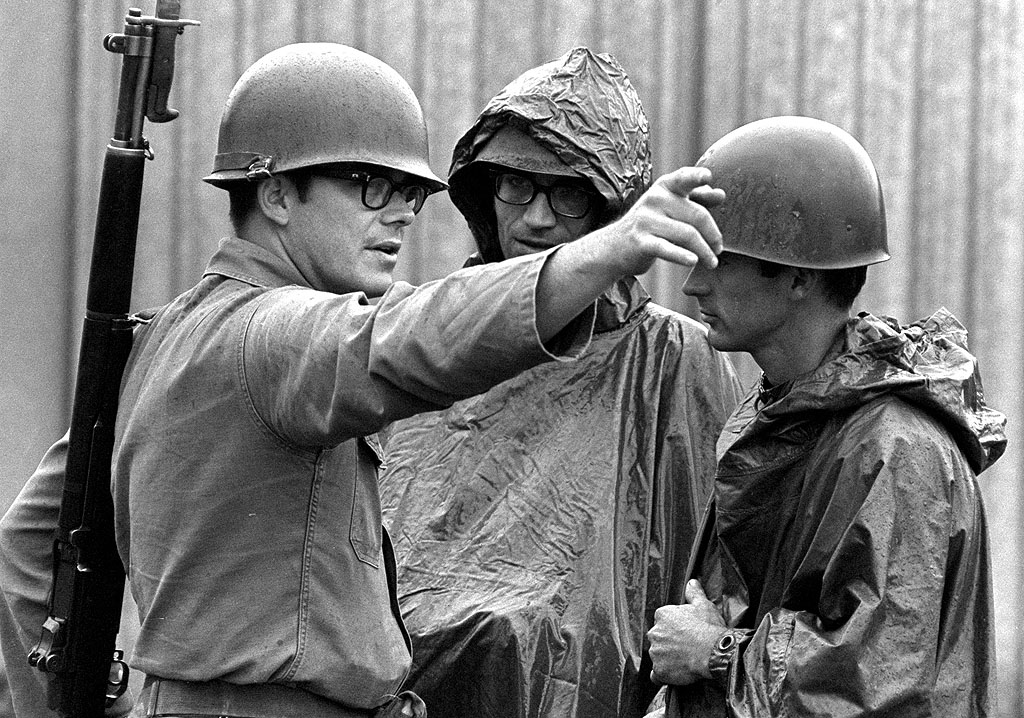
I wrote on my other blog last year that I can always count on getting a message from John Lopinot on May 4. Usually the subject line says it all: Never Forget. May 4, of course, is the day that four Kent State students were gunned down by the Ohio National Guard.
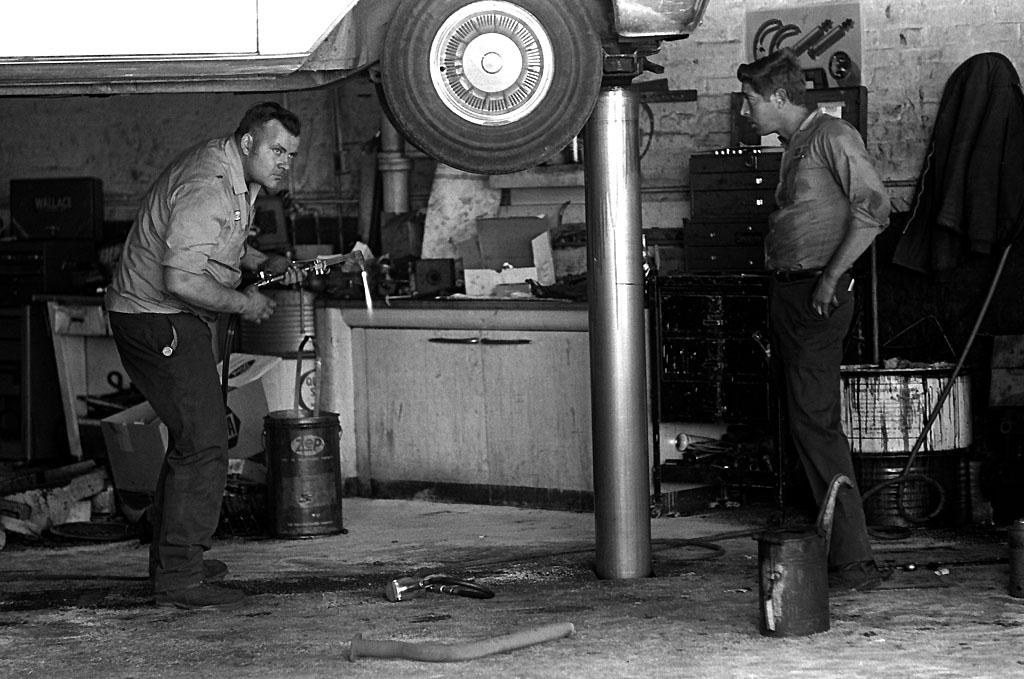
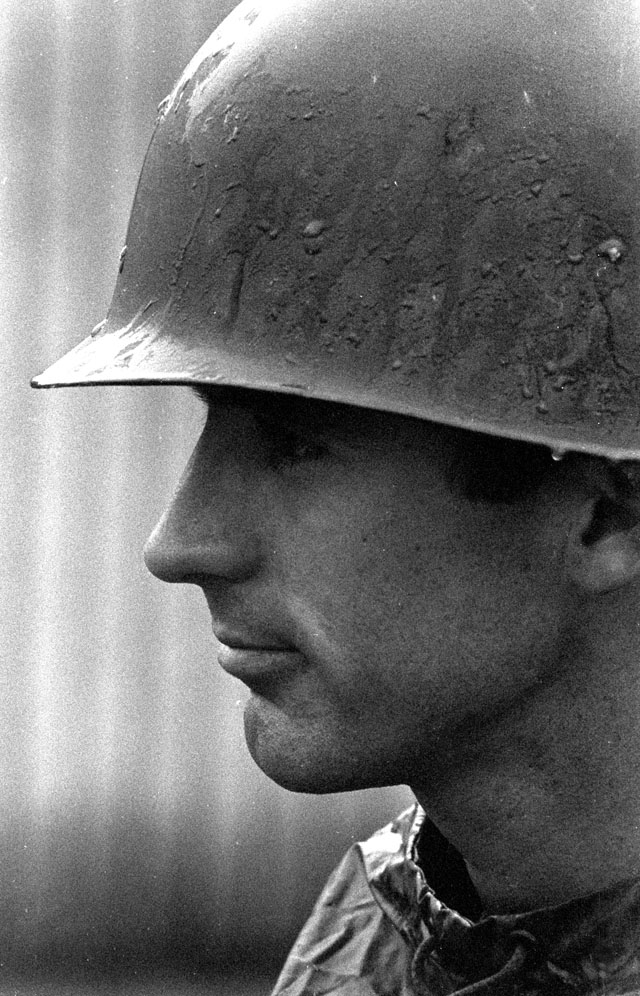
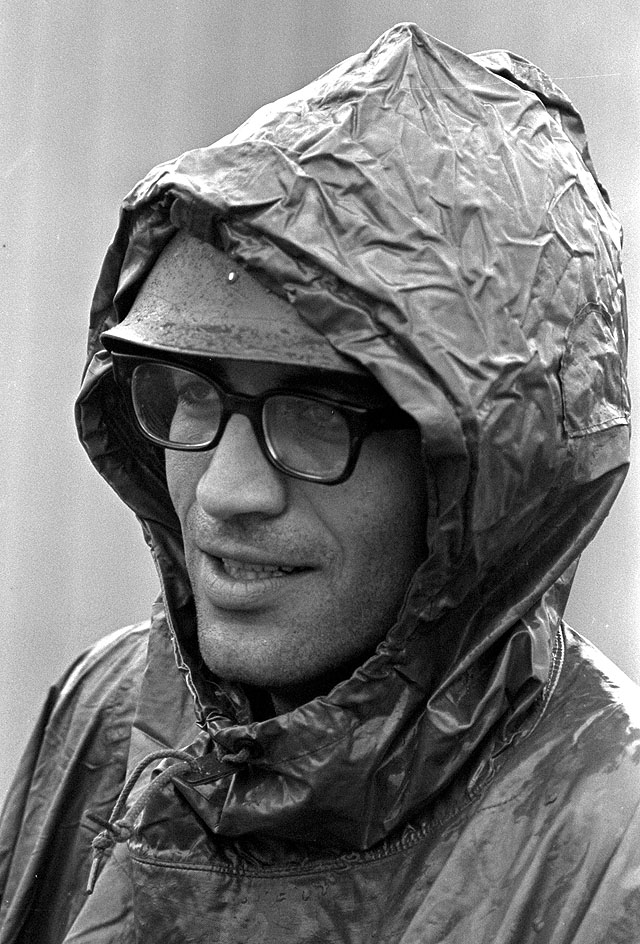
What would cause this look?
The short answer is opportunistic politicians.
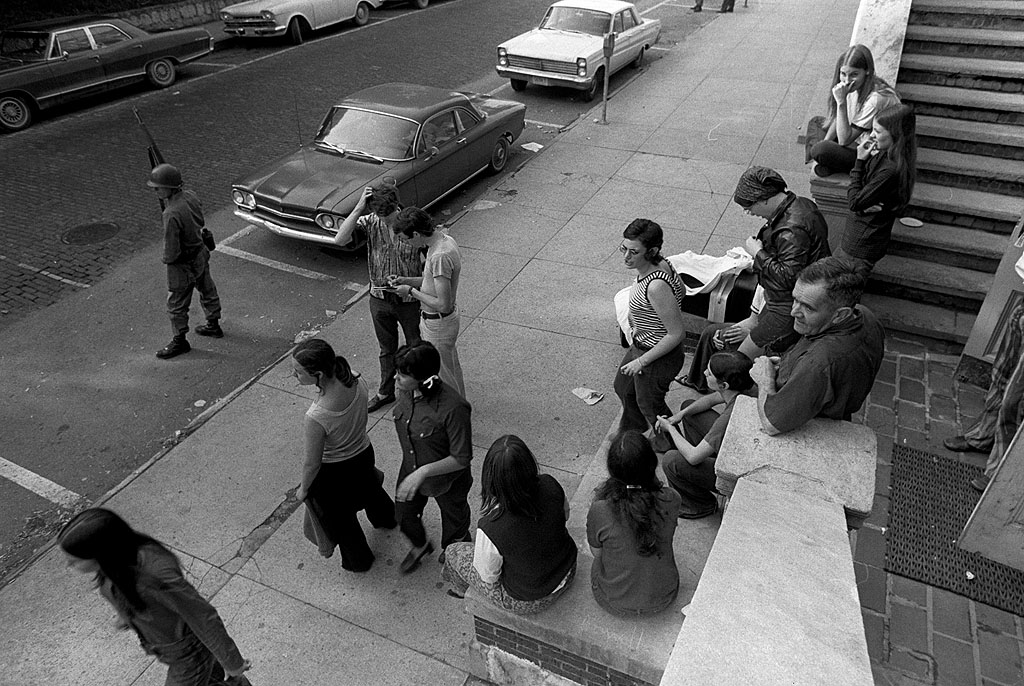
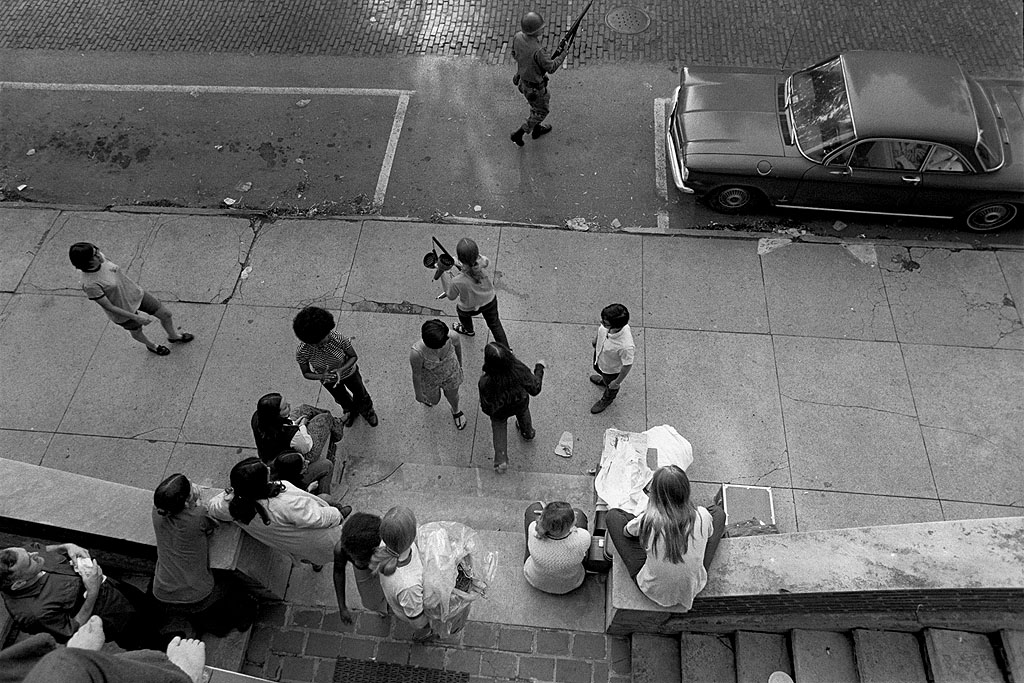
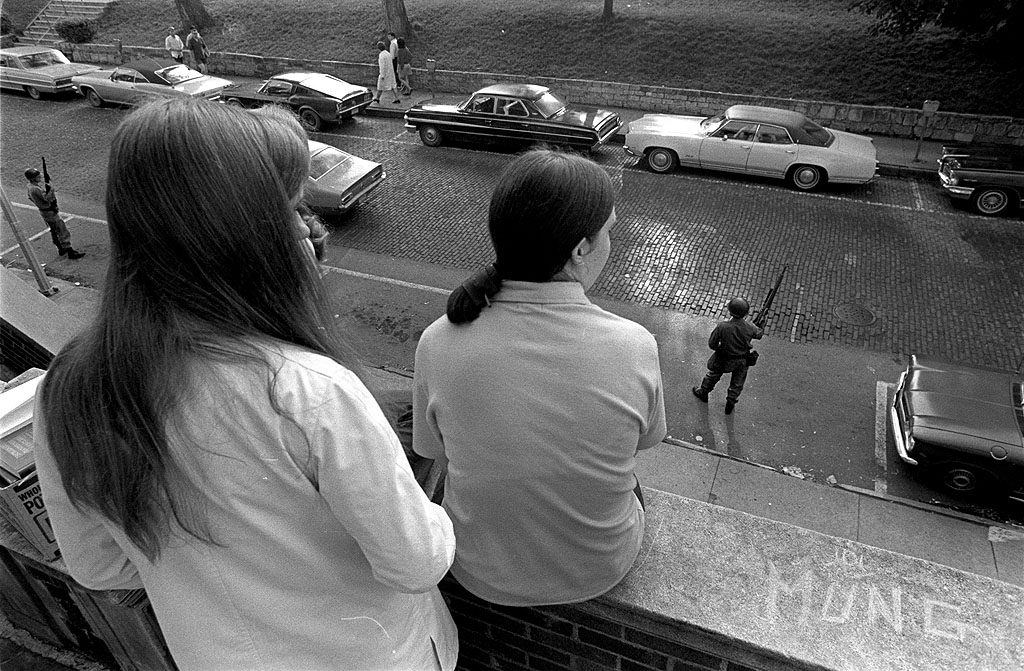
I had expected this would be the year when I would do the definitive piece on what a small Ohio university town was like in the months leading up to the shootings and the days afterward. I wasn’t at Kent State, but in Athens, Ohio, the home of Ohio University.
 At two in the morning, I was looking at 545 scanned negatives and a stack containing at least that many more. The best I can do for the 40th anniversary is to hit some of the high spots.
A nation near civil war
It’s hard to remember how torn apart this country was in the late 60s. The country was polarized by age divisions, by feelings about the Vietnam War, by economics and by race. Opportunistic politicians promoted those rifts for their own advantage.
Richard Nixon, while running for president in 1968, told the electorate that the country was torn by division: “America has suffered a fever of words, from inflated rhetoric that fans discontent into hatred; from bombastic rhetoric that postures instead of persuading. We cannot learn from one another until we stop shouting at one another – until we speak quietly enough so that our words can be heard as well as our voices.”
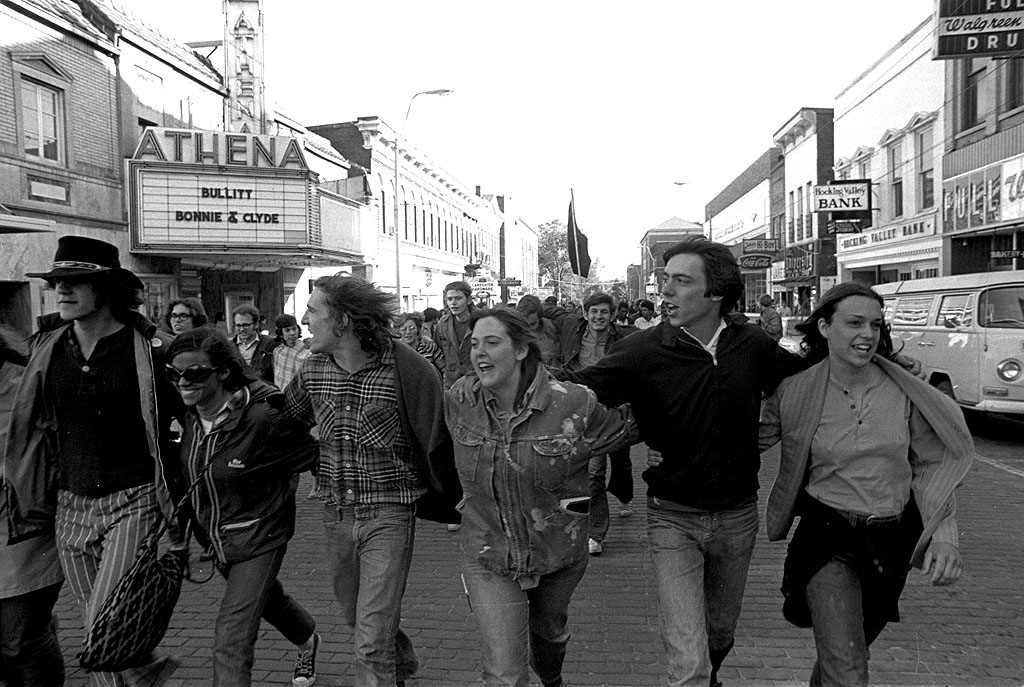
Peace march on Court Street
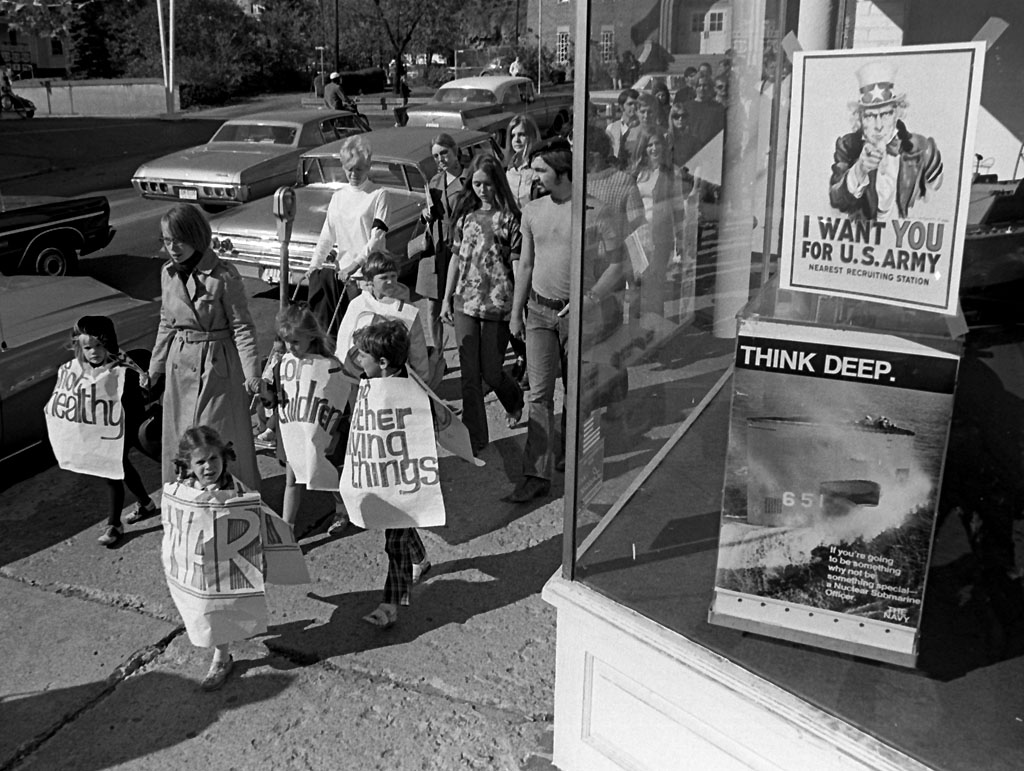
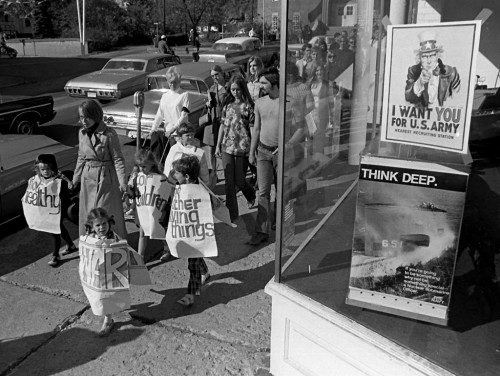 Athens religious leaders led a peaceful, non-violent march down the main drag in Athens on a beautiful October day in 1969. (My film sleeves are dated Oct. 16, 1969, but that might have represented when I processed the film, because Wikipedia says Moratorium Day was celebrated on Oct. 15.) The ministers and these children were at the head of the line.
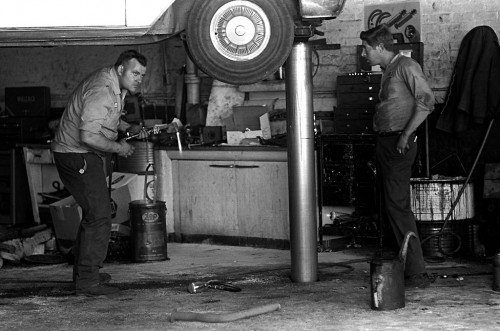
The garage with the glowering man was on the parade route. I didn’t even notice that frame when I edited the film 41 years ago. Maybe I was so used to seeing that reaction that it didn’t register then like it does now.
Moratorium to End the War in Vietnam
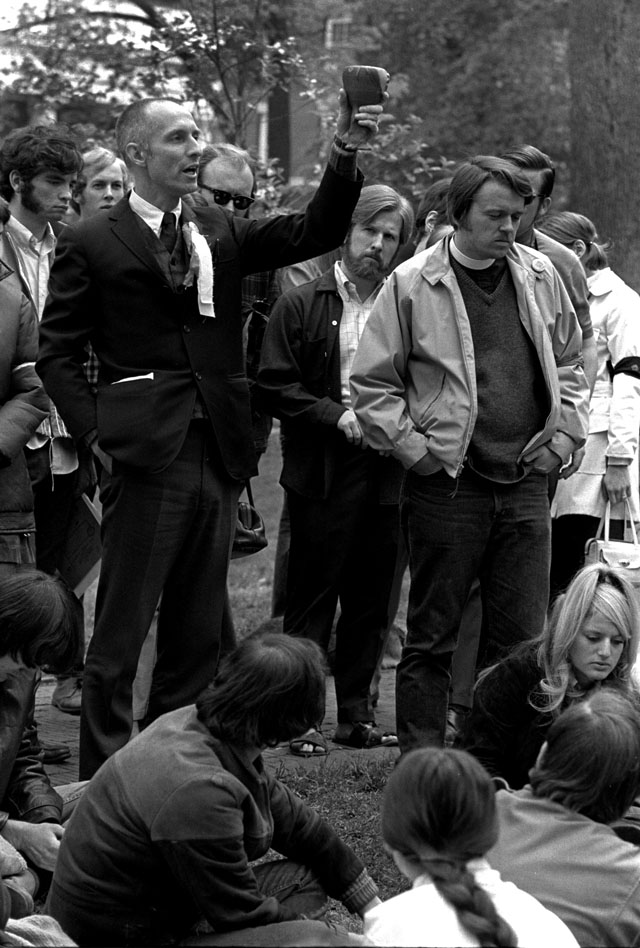
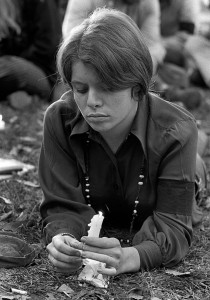 Moratorium Day – a day to take off from work or classes and think about the war – was centered on the College Green in the heart of the campus and downtown Athens. It’s a beautiful setting with huge trees all around. The crowd ebbed and flowed throughout the day. It may have ranged from a few hundred to maybe a thousand at any one time.
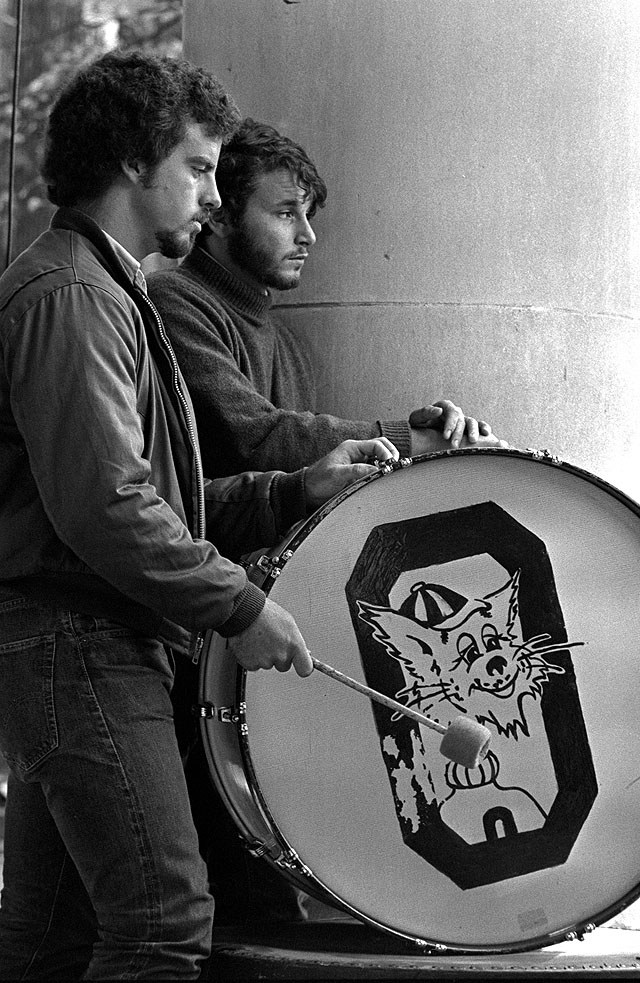
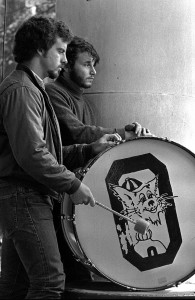
There were a number of speakers, all forgettable. The thing that has haunted me since that day was a relay of volunteers reading the names of the servicemen killed in Vietnam. Every name was accompanied by a drumbeat on a drum with a smiling OU Bobcat mascot on its side.
If it takes about two seconds to read each name, you need about 24 hours to work your way through 50,000 names. The sound system wasn’t strong enough to carry the names much farther than the immediate area, but that drum beat was audible throughout most of downtown and the central area dorms.
Drumbeat marks the dead
 Boom.
Boom.
Boom.
Boom.
Even if you couldn’t hear the names, you couldn’t escape the realization that every beat represented someone just about your age who was dead.
Dead.
Dead.
Barry McGuire’s Eve of Destruction
I think of that drum when I listen to Barry McGuire sing this part of Eve of Destruction:
The Pounding Of The Drum The Pride And Disgrace
You Can Bury Your Dead But Don’t Leave A Trace
Hate Your Next-door Neighbor But Don’t Forget To Say Grace
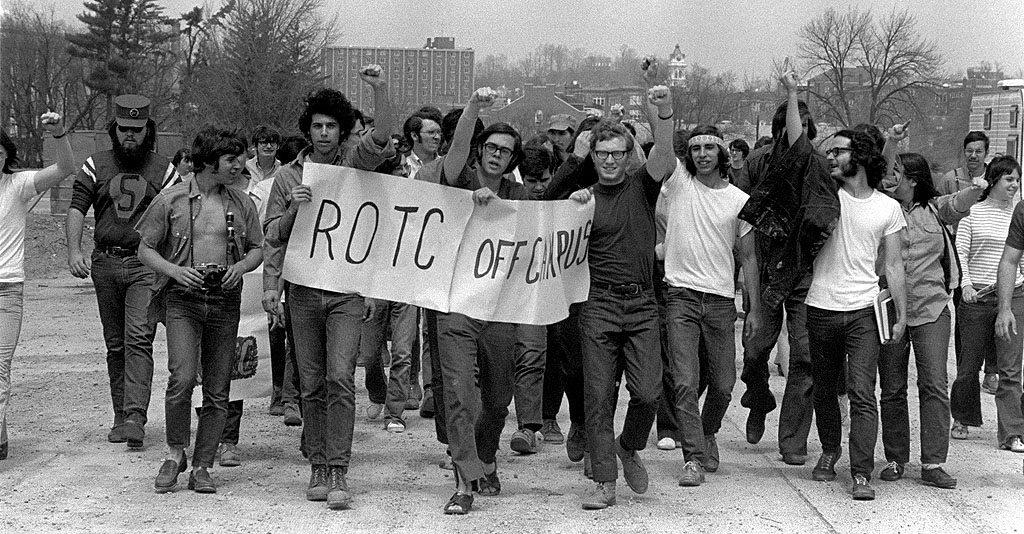
ROTC: a stand-in for the war
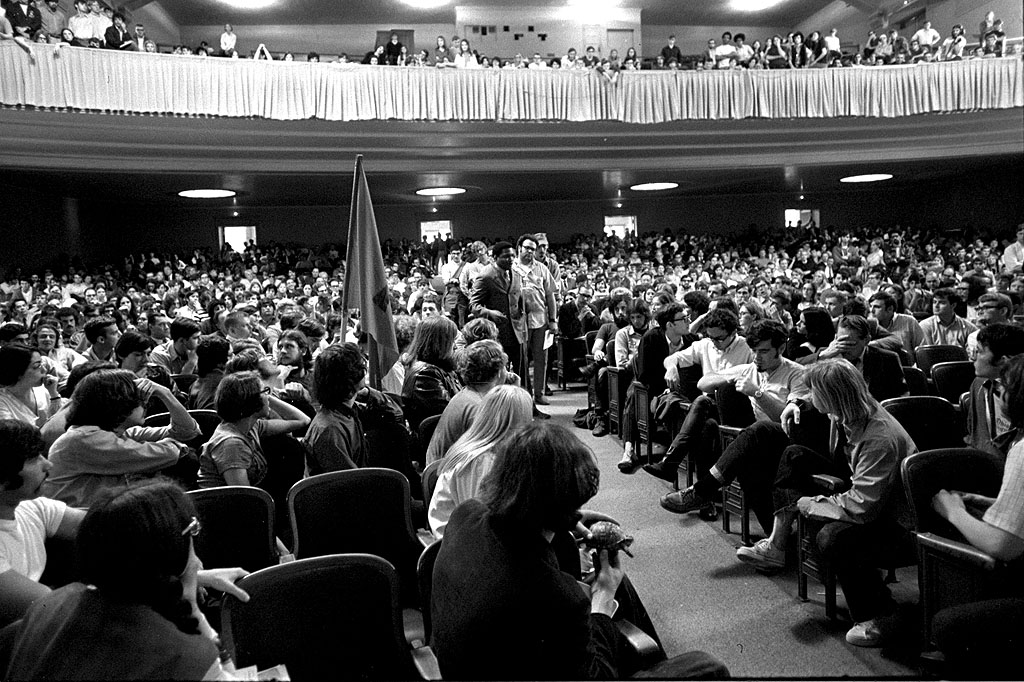
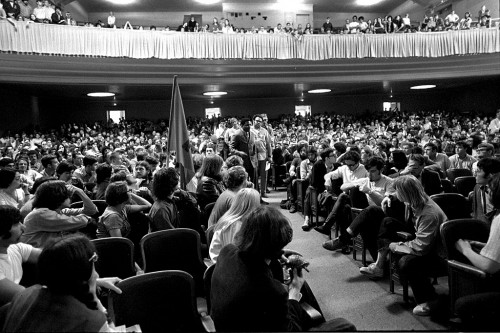 Whether or not ROTC should be on campus was the surrogate issue for the debate over whether the university should be pro-war or anti-war. I attended small meetings and big meetings like this one for months. (I’m not sure if I noticed the guy in the front row with the turtle when I shot it.)
Photographers love action
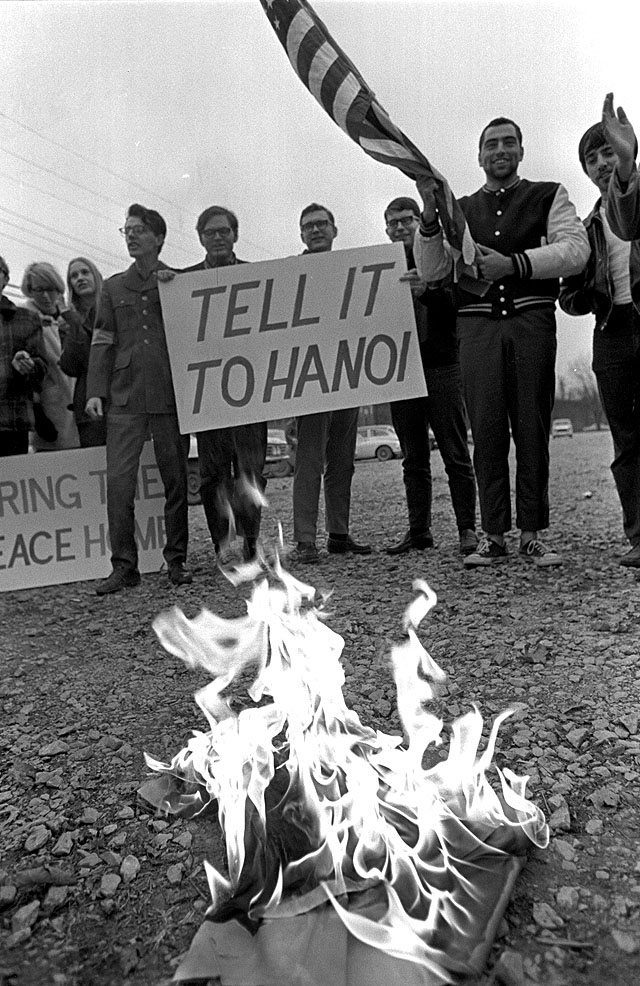
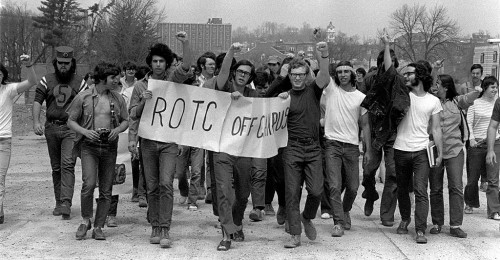 Photographers gravitate to action. TV, in particular, has the slogan, “If it bleeds, it leads.” Demonstrators learned to play to that with marches, demonstrations, signs and street theater.
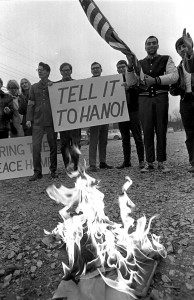 Unwittingly, they played right into the hands of the Nixon administration, which wanted something to demonize. Peter Davies, in The Truth about Kent State, wrote, “In less than two years the victors of that election [1968] had become masterful exponents of inflated, angry, bombastic rhetoric and evinced little inclination to learn from the dissenting views of others.“
Nov. 15, 1969, half a million people participated in a March on Washington. Nixon, in what has to be a classic understatement said, “Now, I understand that there has been, and continues to be, opposition to the war in Vietnam on the campuses and also in the nation.” He continued, “As far as this kind of activity is concerned, we expect it, however under no circumstances will I be affected whatever by it.”
Cambodian invasion
The war seemed to be winding down by the spring of 1970, and student activists were starting to shift their focus to more domestic issues. That changed when Nixon announced on Apr. 30, 1970, that he was going to have American forces invade Cambodia.
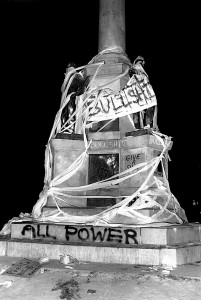 Reaction on campuses was swift and angry.
Dissenters should be treated as Nazis
Vice President Spiro Agnew, who later resigned in disgrace over petty bribery charges, escalated the rhetoric much as Nixon escalated the war. At a Republican fundraiser in Miami, Agnew recommended that campus dissenters be treated as if they were Nazis.
Four dead at Kent State
If you click on this sentence, you’ll be taken to my account of the day the Kent State shootings occurred.
OU students were stunned
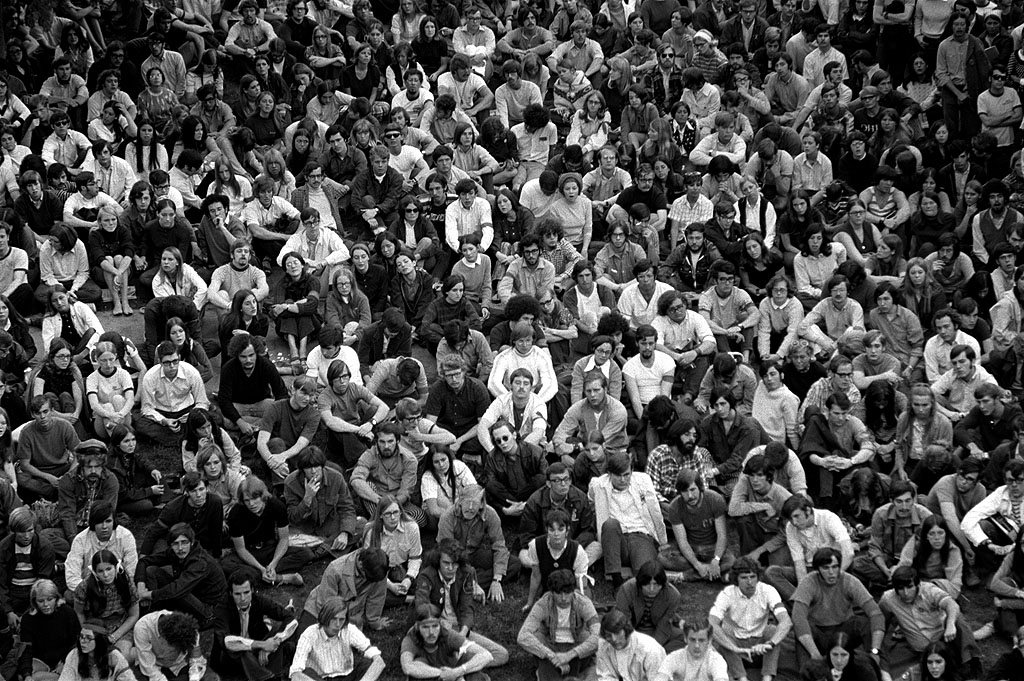
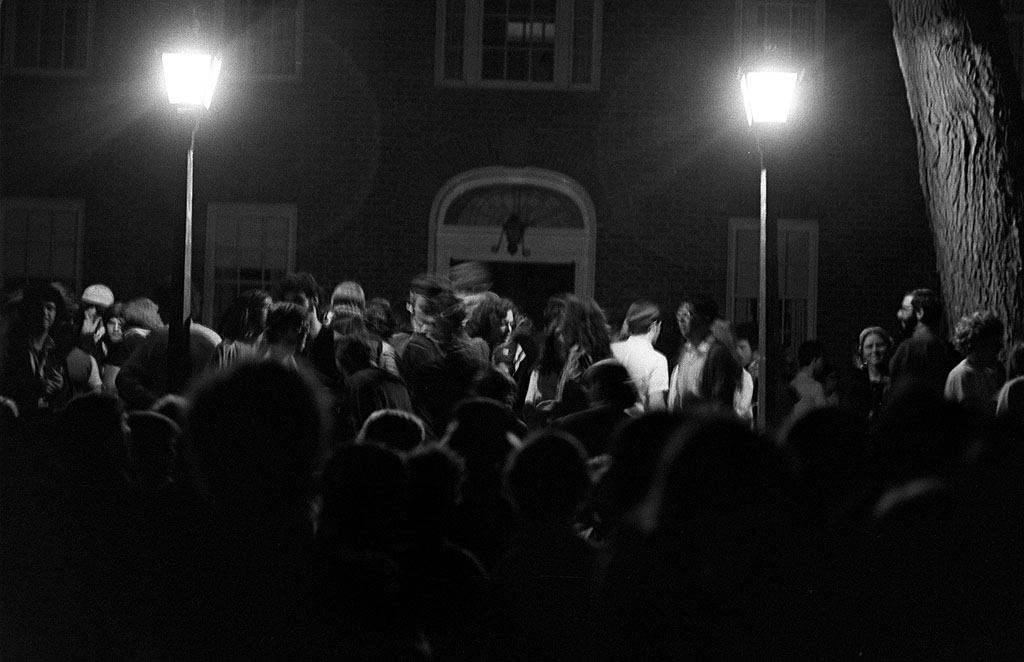
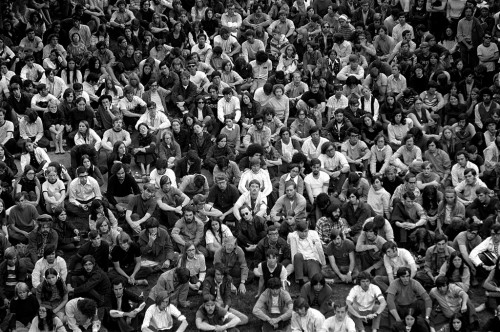 Students at Ohio University were stunned by the killings. One of the largest groups I can recall seeing turned out on the College Green to hear speakers and to be close to one another. The group wasn’t made up of your “usual suspect” campus radicals and protesters. Faculty members and Greeks were sitting side by side with long-haired hippies.
OU President Claude Sowle
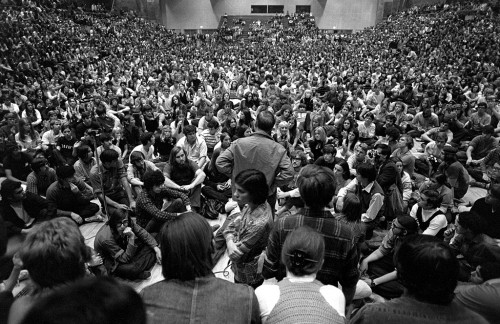
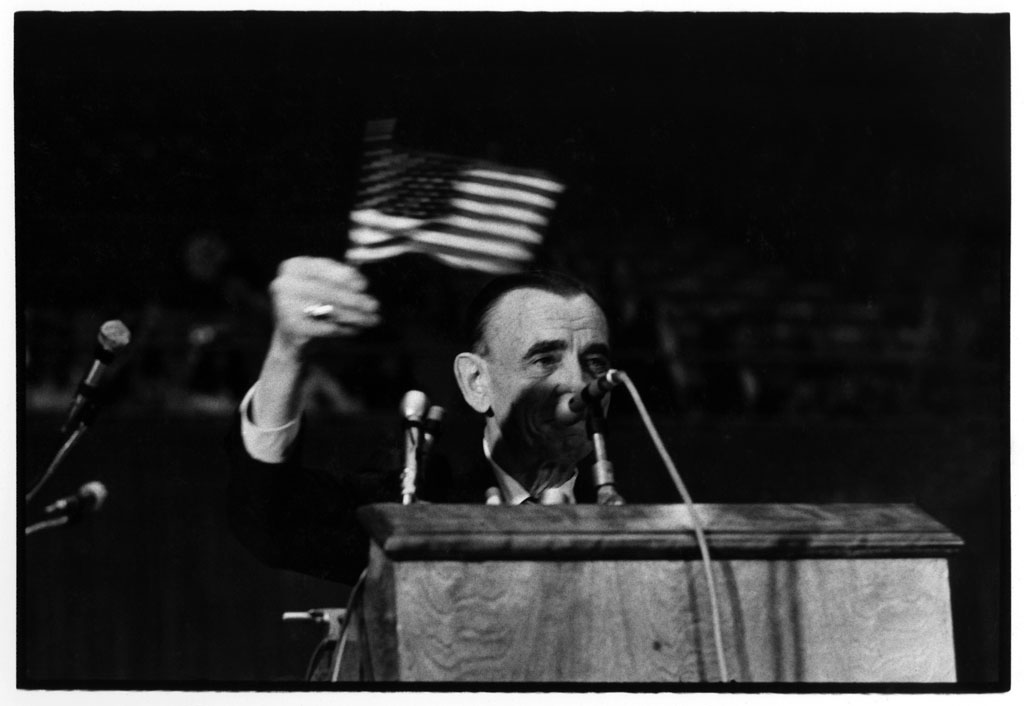
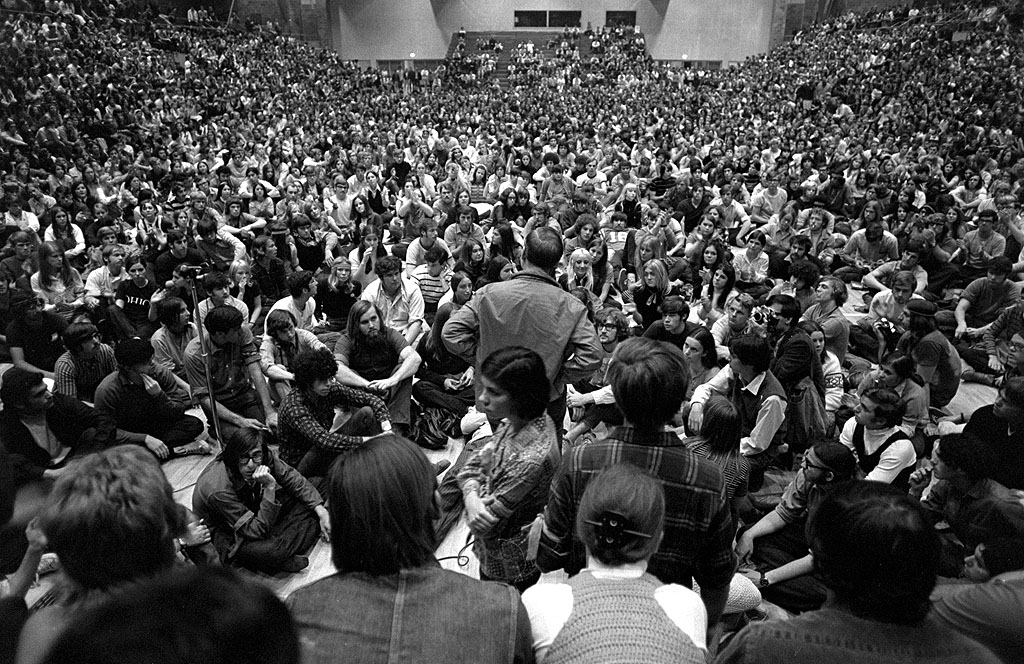
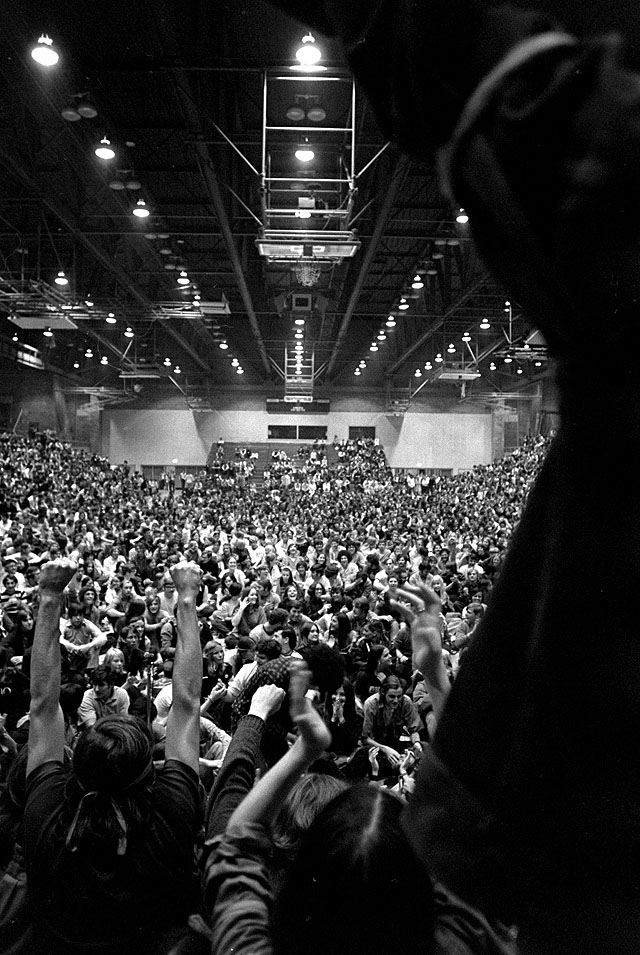
Another mass meeting was held in the Convocation Center, usually used for basketball games. Speakers, including university president Claude Sowle, lined up for their turn to speak. What I find astounding looking at these pictures today is that President Sowle (standing, in jacket, with back to camera) was surrounded by thousands of students without any security present.
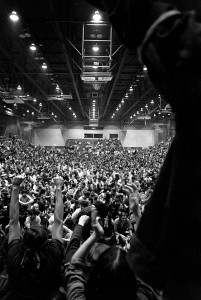 These are the same kinds of students Ohio Gov. James Rhodes characterized at a table-thumping law-and-order press conference in Kent on May 3 as “worse than the Brownshirts and the Communist element and also the night riders and the vigilantes. They’re the worst type of people that we harbor in America. I think that we’re up against the strongest, well-trained, militant, revolutionary group that has ever assembled in America. We’re going to eradicate the problem, we’re not going to treat the symptoms.”
That speech was widely broadcast, including into the National Guard’s bivouac area on the Kent State campus, something that was thought to give tacit approval, if not encouragement, to the shootings that would happen the next day. Rhodes was two days away from a tight primary race and he was hoping to fire up his base.
No-frill Communion
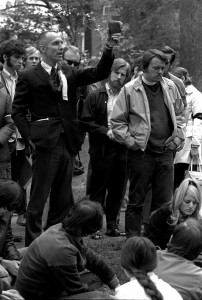
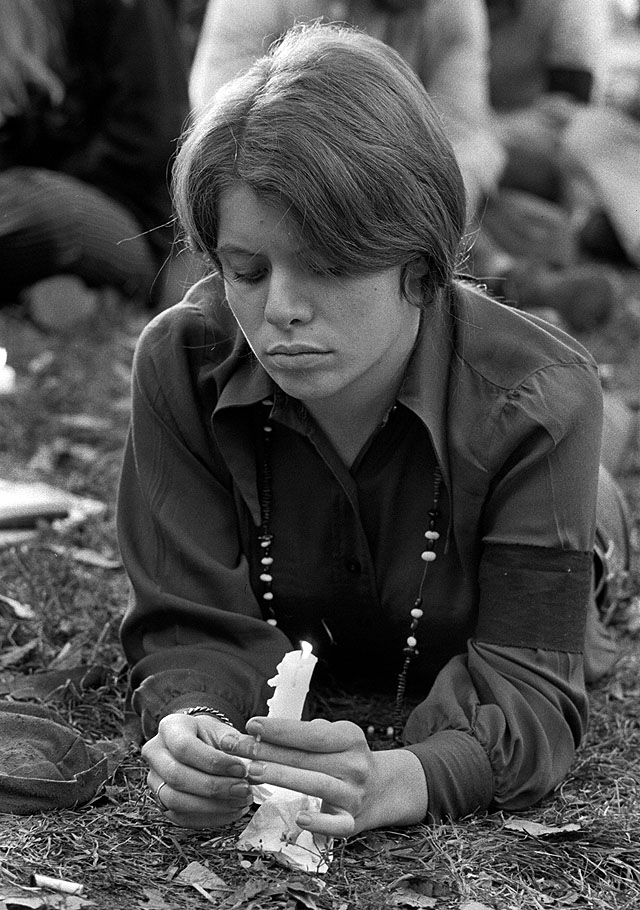
Some of the campus religious leaders announced a one-day fast in honor of the Kent State victims. It would be broken by the taking of Communion on the College Green the next day.
After having attended a Lutheran school for eight years, I always associated Communion with golden chalices, fancy wafer, droning organ music and great formality.
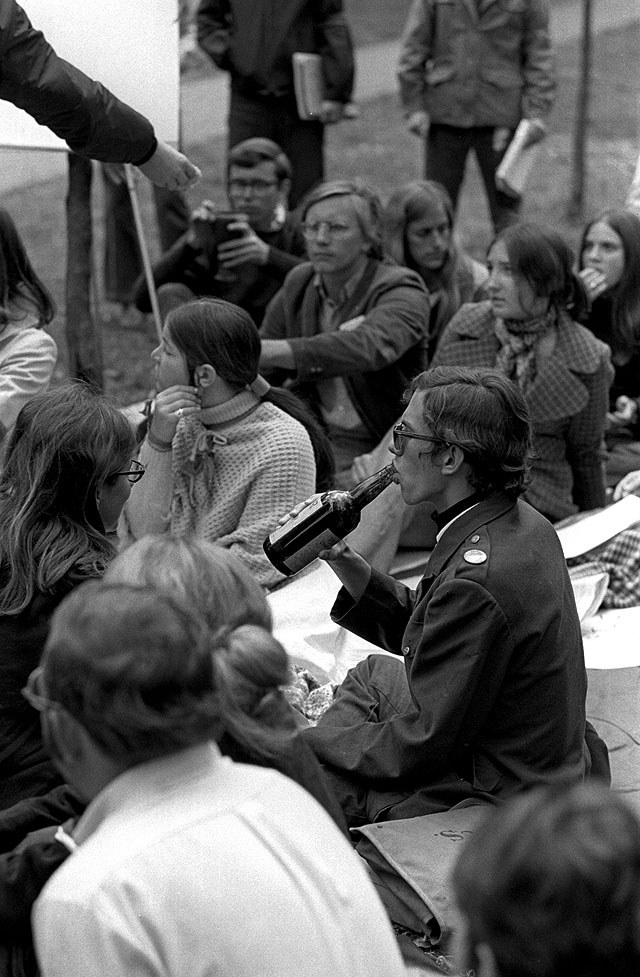
There were so many students participating in THIS communion service that the ministers had to dispatch someone to a nearby store to pick up some cheap bottles of wine and some loaves of ordinary bread off the shelf.
I understand Communion now
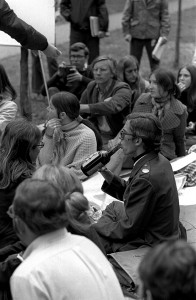 I usually never participate in the events I cover, but I understood, for the first time, the real meaning of communion. It wasn’t about the religious trappings, it was about coming together with something bigger than yourself.
I got in line for a chunk of bread and a swig out of a shared bottle of wine. I was never so moved by a religious ceremony before, and I’ve never felt like taking Communion since. I don’t know if it was the place, the people or the circumstances, but something special happened that afternoon.
Days and nights blurred
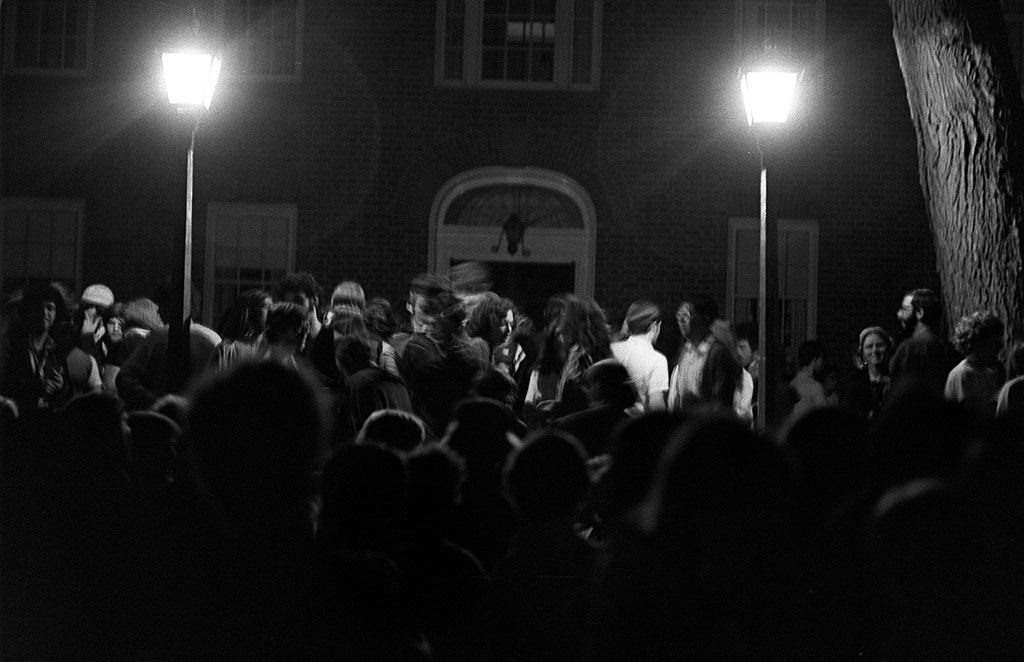
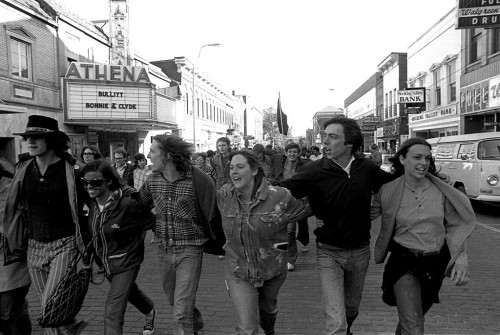 Almost every day there was some kind of rally, march, demonstration or protest. Most of them were fairly benign. It was almost like no one wanted to push the envelope too far after what happened on May 4.
Alcohol, not revolutionary spirits
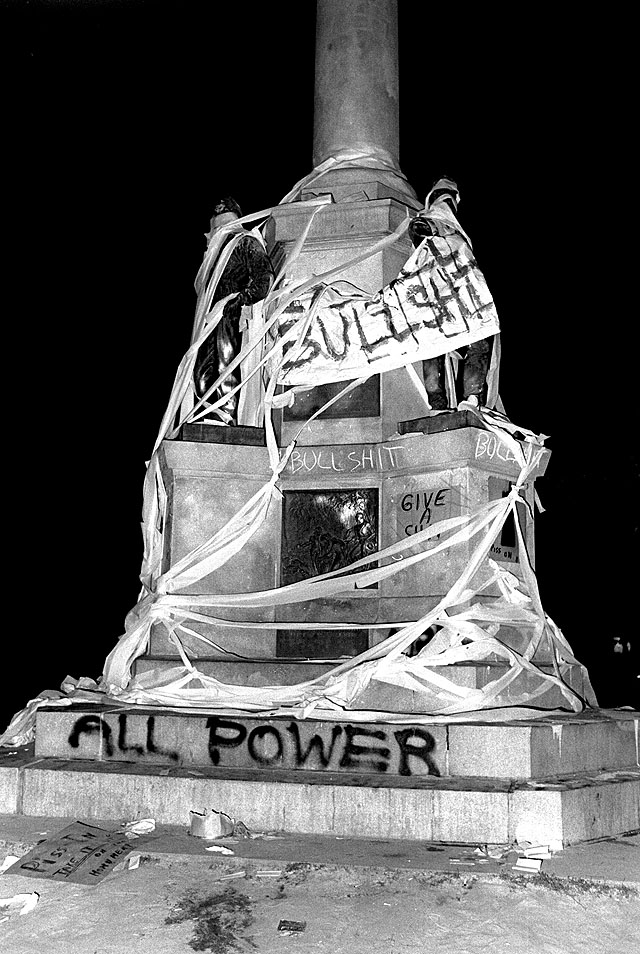
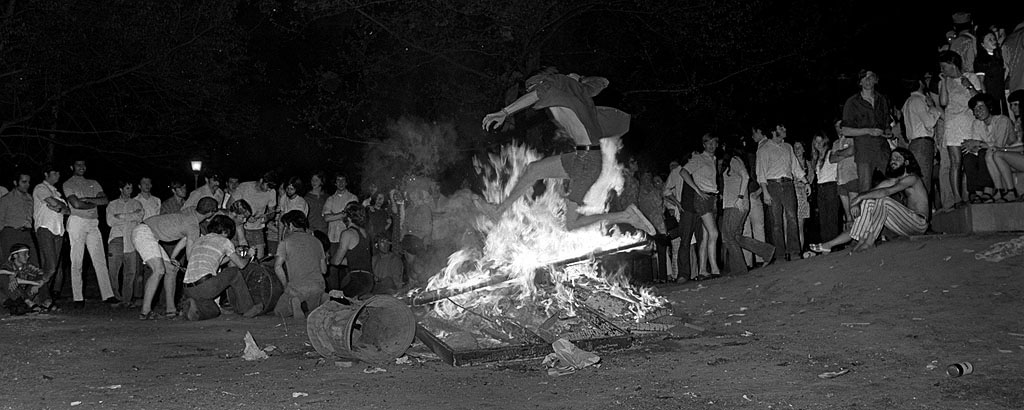
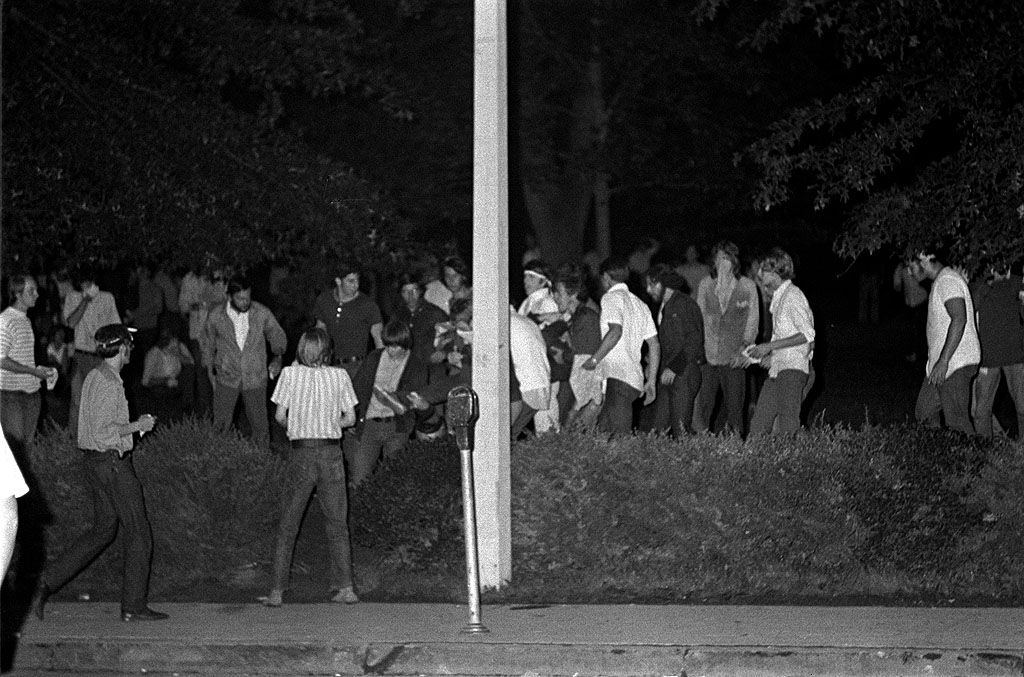
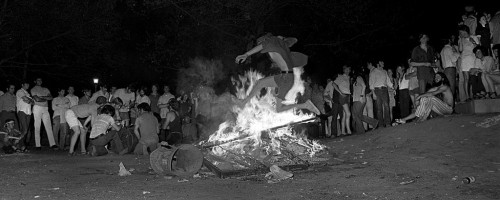 Even the night-time bonfires next to the War Memorial seemed fueled more by alcoholic spirits than the spirit of revolution. Ohio University has long celebrated The Rites of Spring where confrontations with local police were common when the first warm days chased the cold winter away.
The bars let out
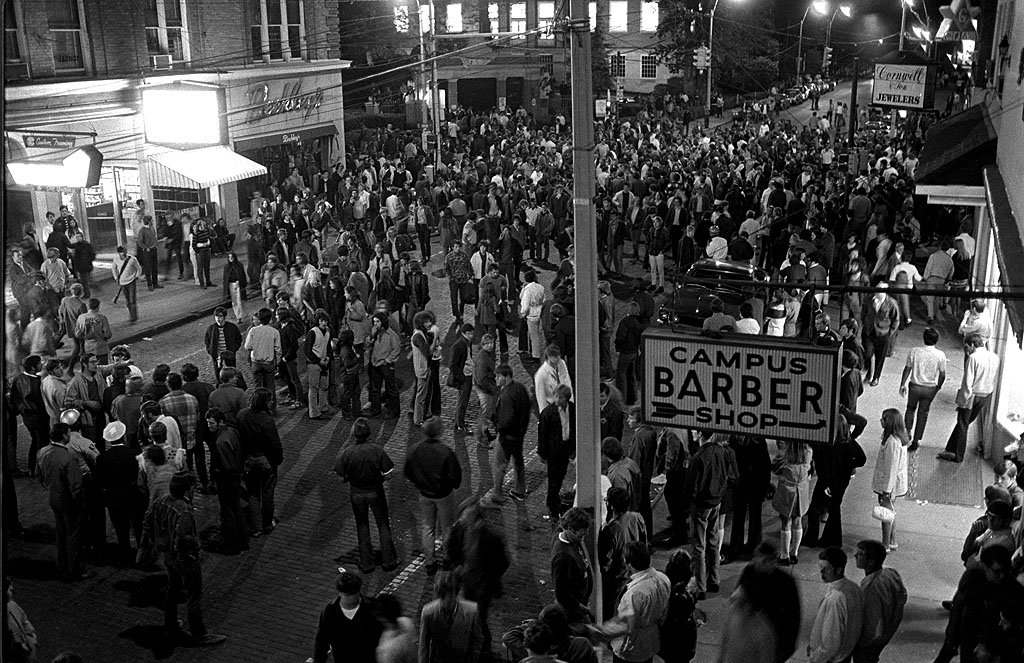
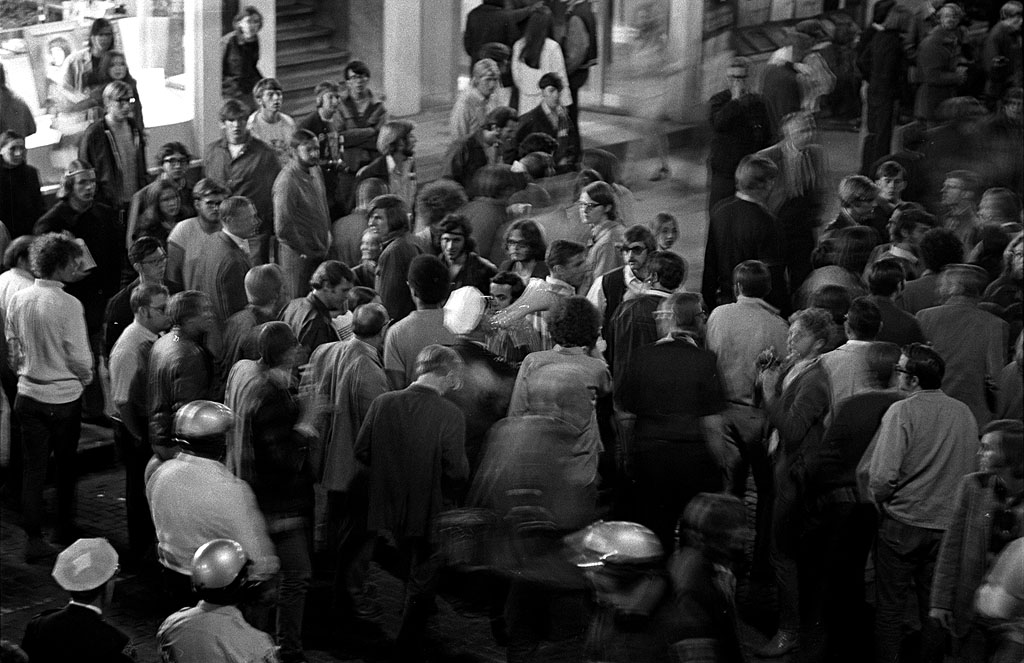
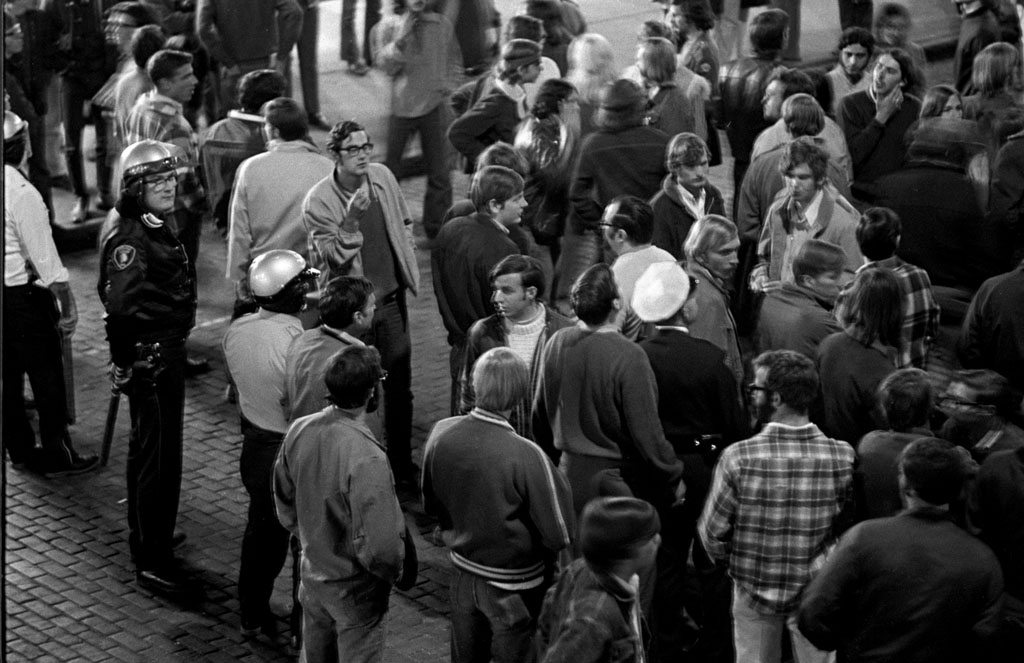
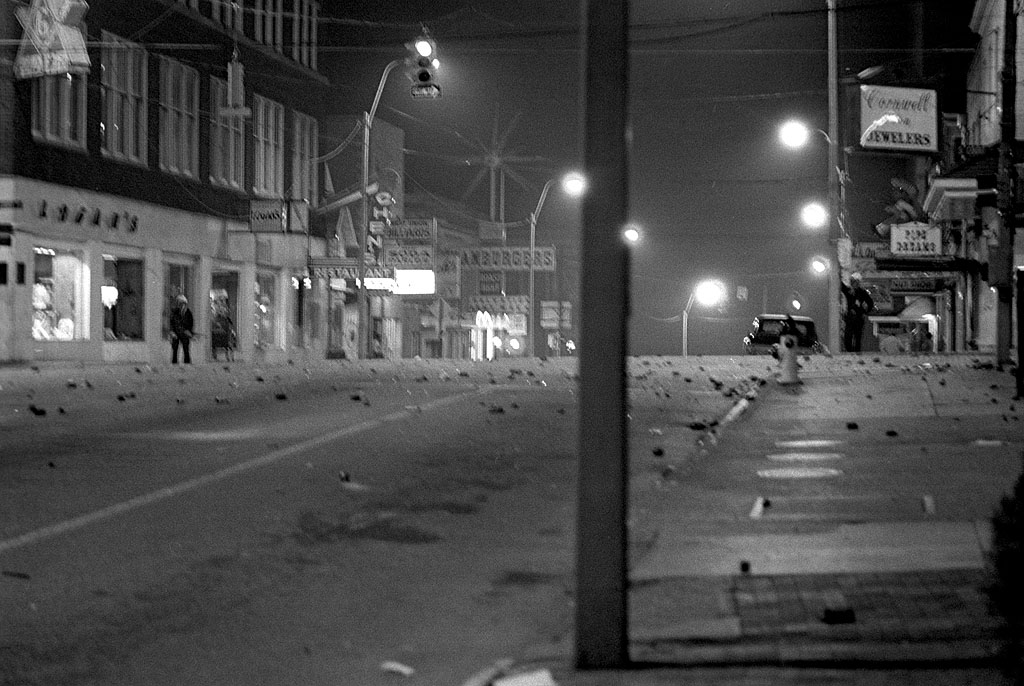
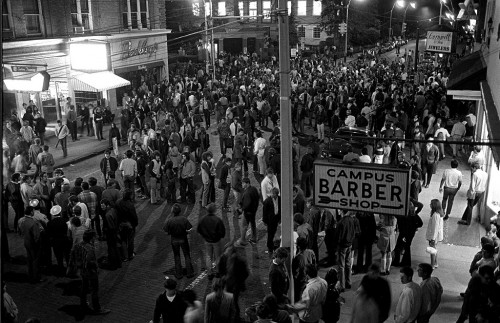 When the bars let out on a nice spring night, it’s not uncommon for the students to take over the major intersection in town at Court and Union. On this night, there’s some political tension in the air, but there are no political signs and no organization. It’s a crowd, not a mob.
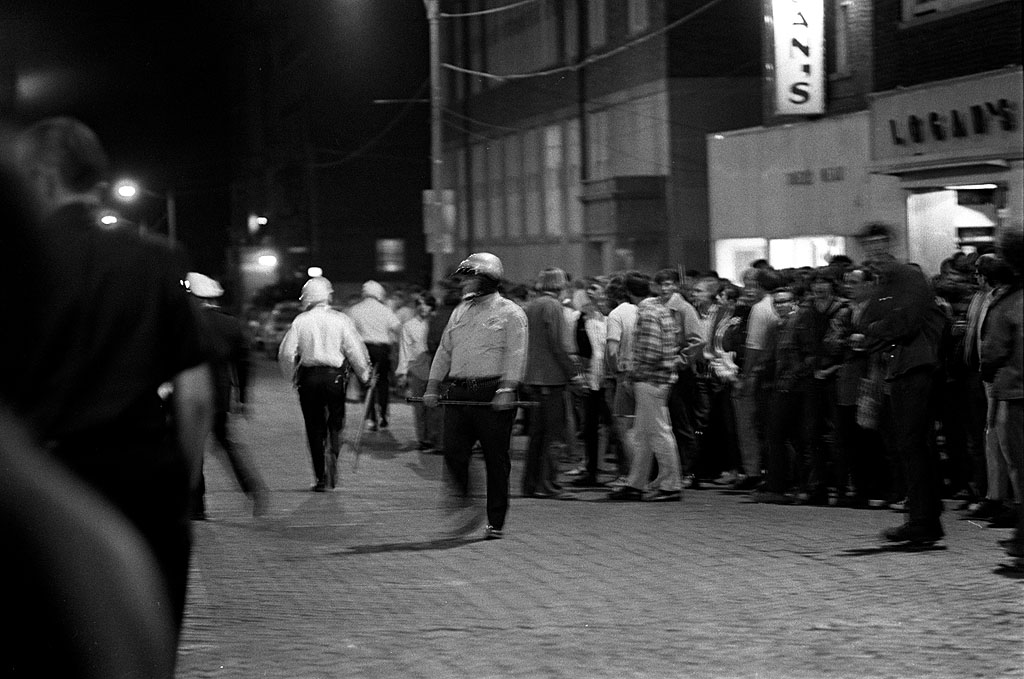
Officer reads the riot act
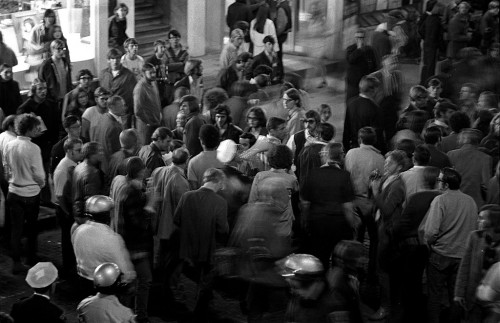 The officer in the center of the photo with the white hat uses a bull horn to tell the group to disperse. That’s commonly known as “reading the riot act.” It’s all part of the Rites of Spring ritual.
Streets clear, everyone goes home
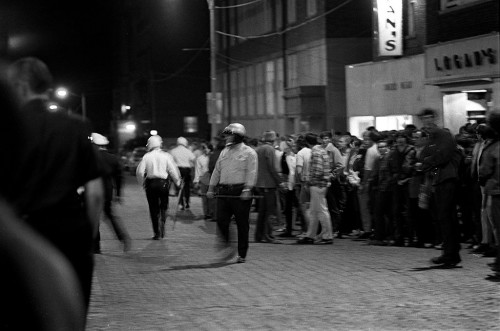 Everyone pretty much stayed withing the Rules of Engagement and nothing unusual happened. Police and students all seemed on their best behavior.
Library taken over
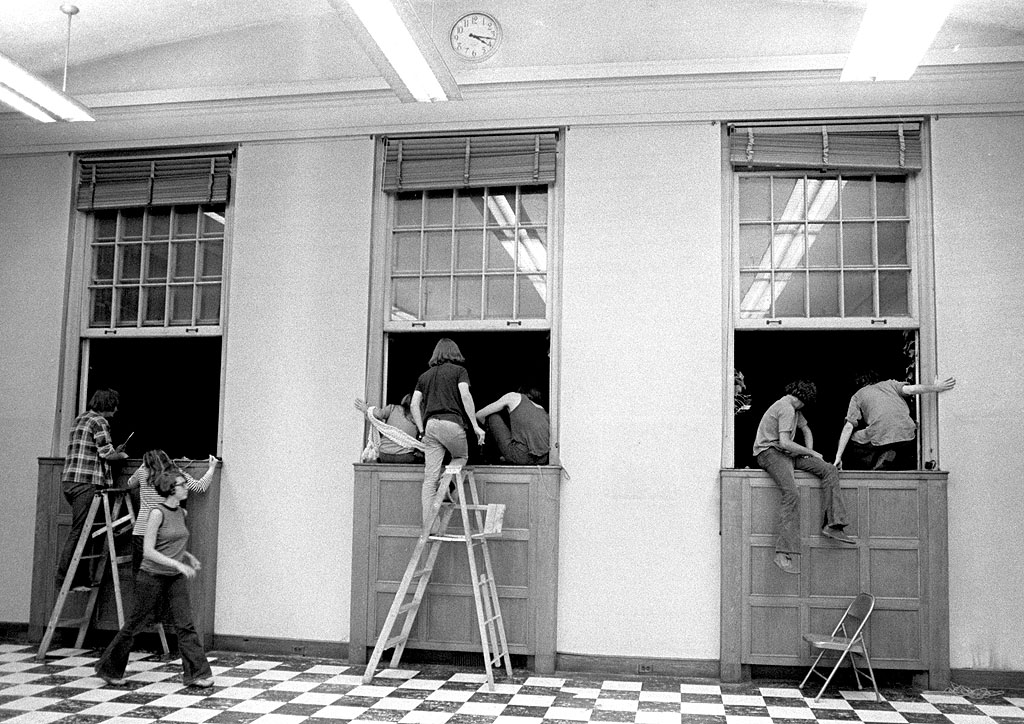
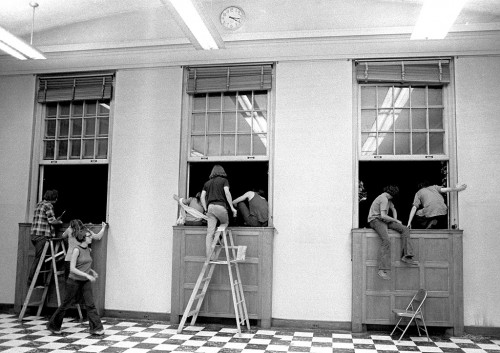 At some point during the week, Chubb Library was occupied by the students. Some of the reporters and photographers decided that we would stay in the library during the brief siege. We figured the students would be less likely to trash the place if we were there to record it. We also assumed the police wouldn’t storm the building if we were there to photograph any head cracking. We were keeping both sides honest.
Movement is losing steam
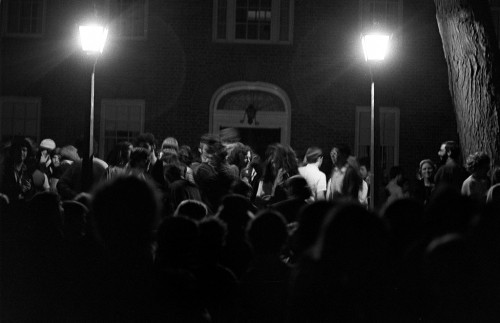 There was one last half-hearted night of protest that involved a relatively small crowd that marched on the president’s home. I don’t recall much happening and the group started to disperse. Other newspaper folks and I had the feeling that this was about the last gasp. The movement was running out of steam. Even students get tired.
Herded back to College Green
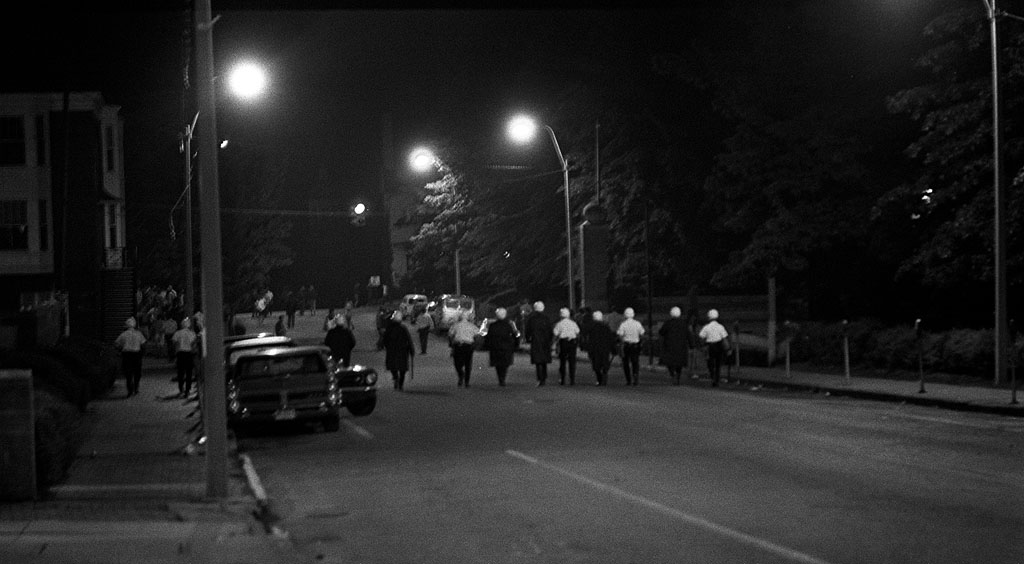
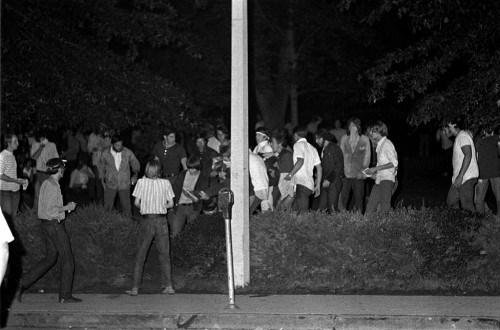 Students started running back to the group saying that the Green was surrounded by police who were keeping them from leaving. To this day, I think this was a result of bad intelligence on the part of the police or bad planning.
- I don’t think they realized that the energy was gone from the student movement and that it was about to collapse.
- If they had allowed the students to disperse on their own, everyone would have gone home and it would have been over.
Bats n’ hats
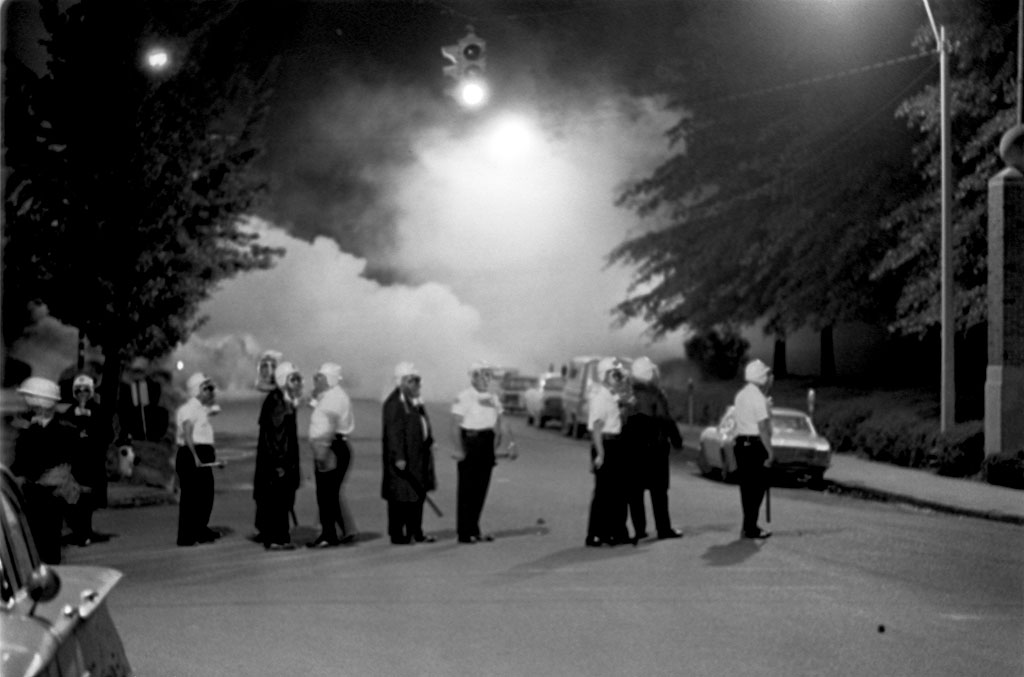
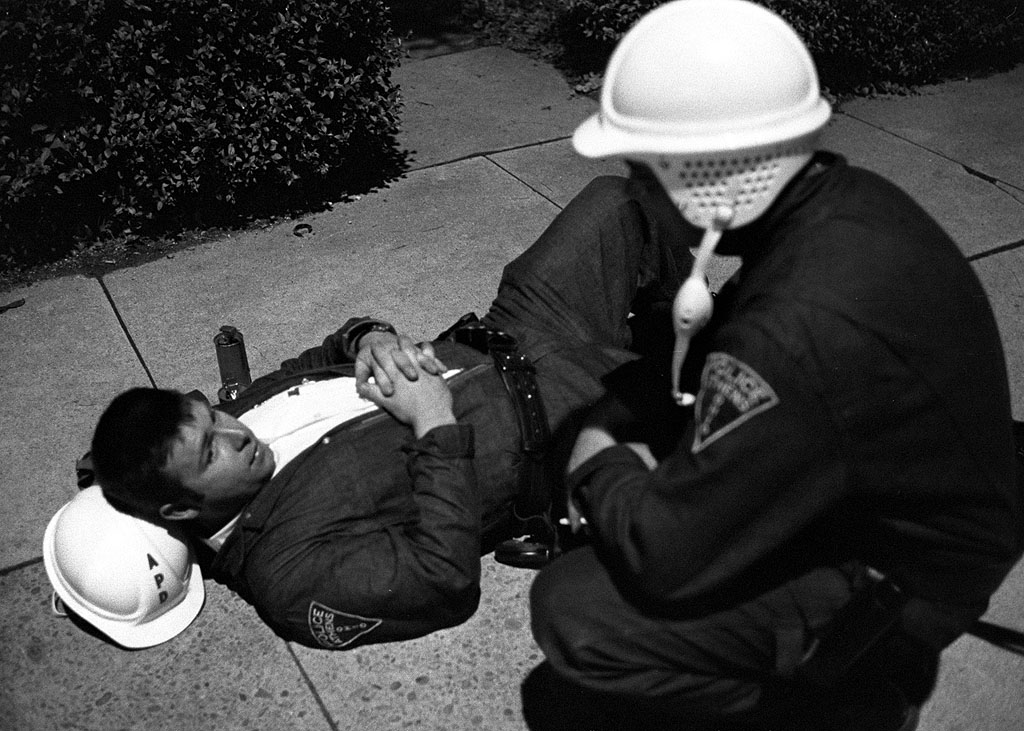
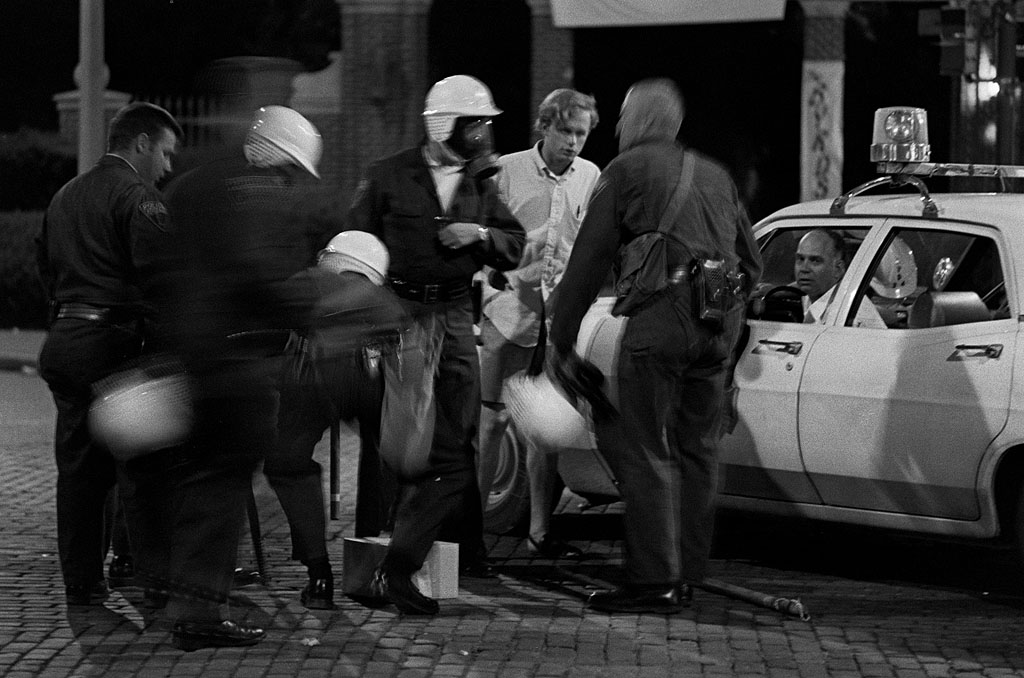
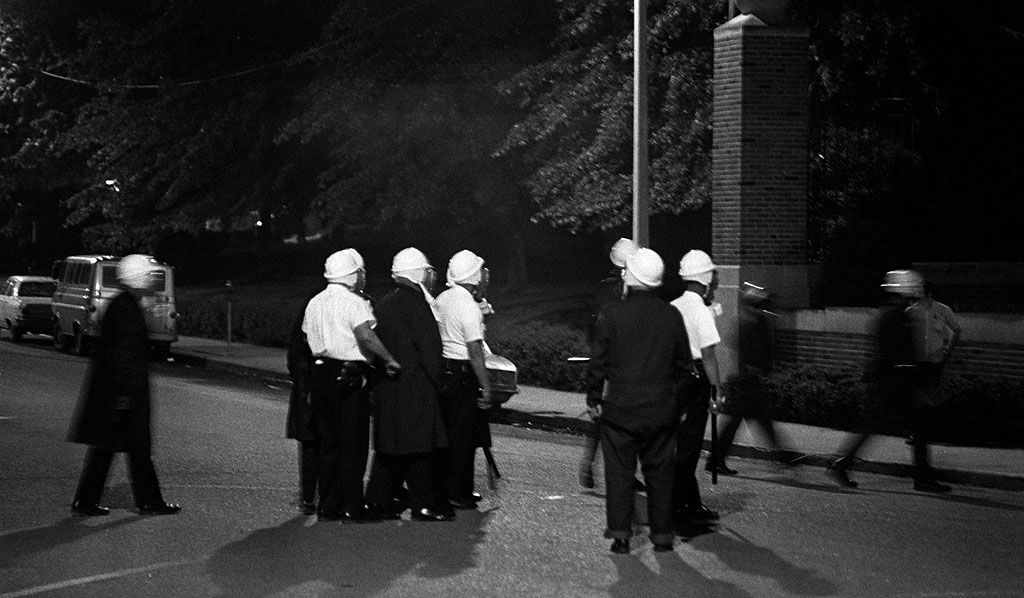
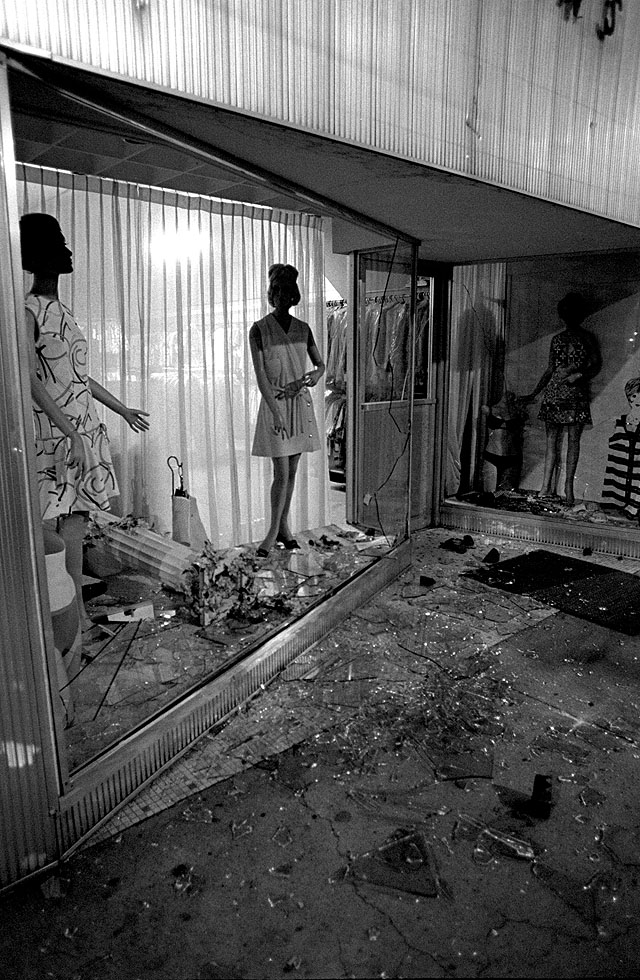
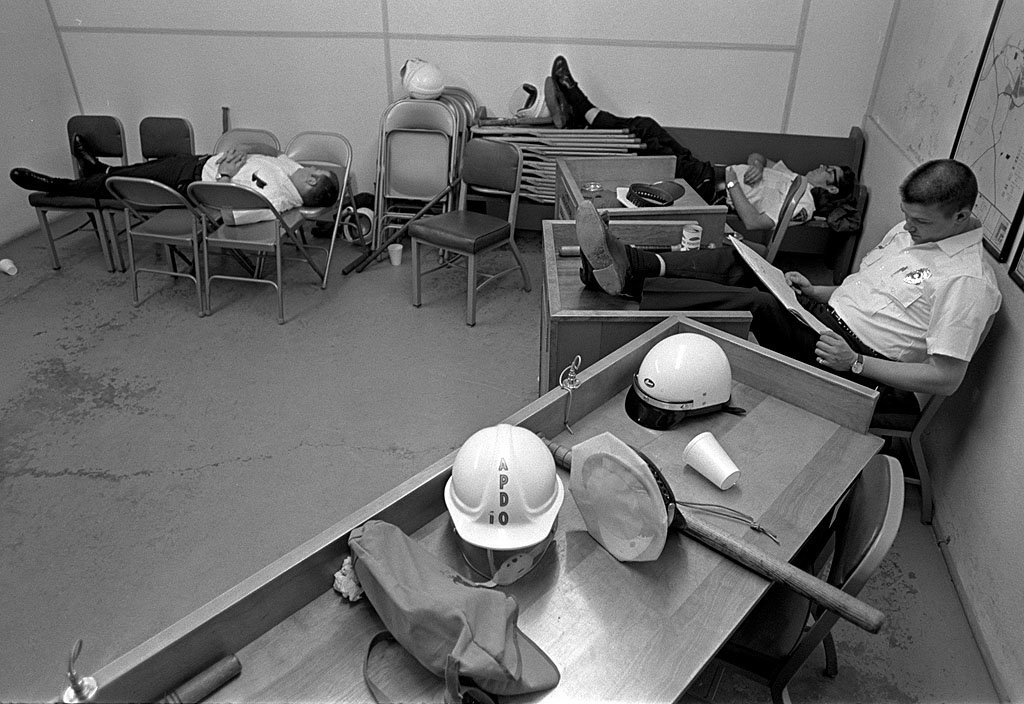
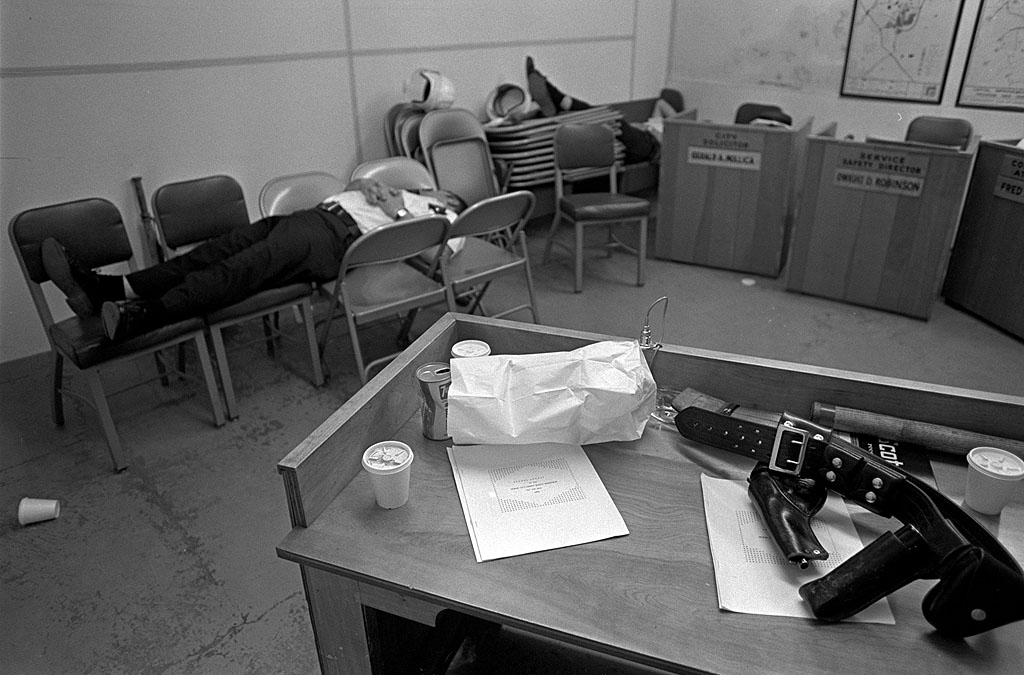
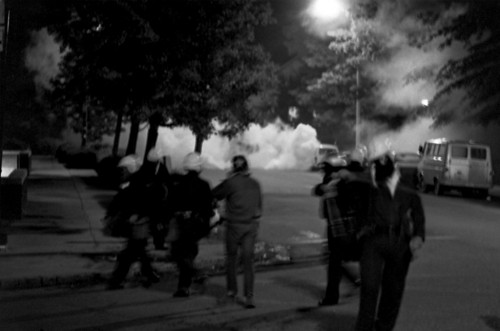 To make matters worse, I discovered that police from all over the area had been brought in for reinforcements. These folks rarely had contact with students and were even more poorly trained than the Athens PD.
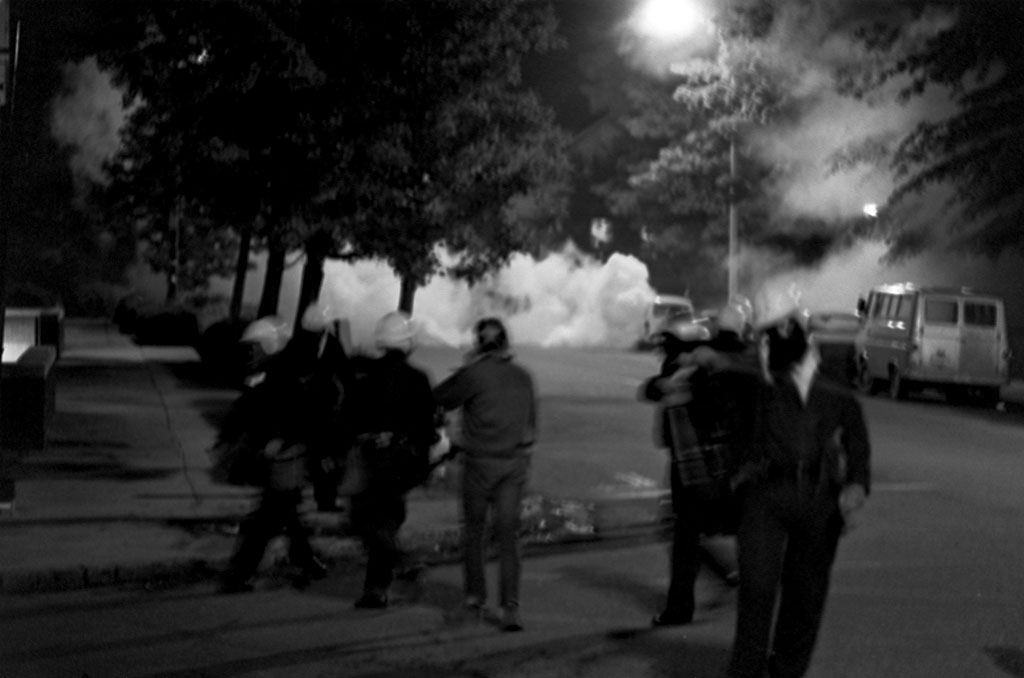
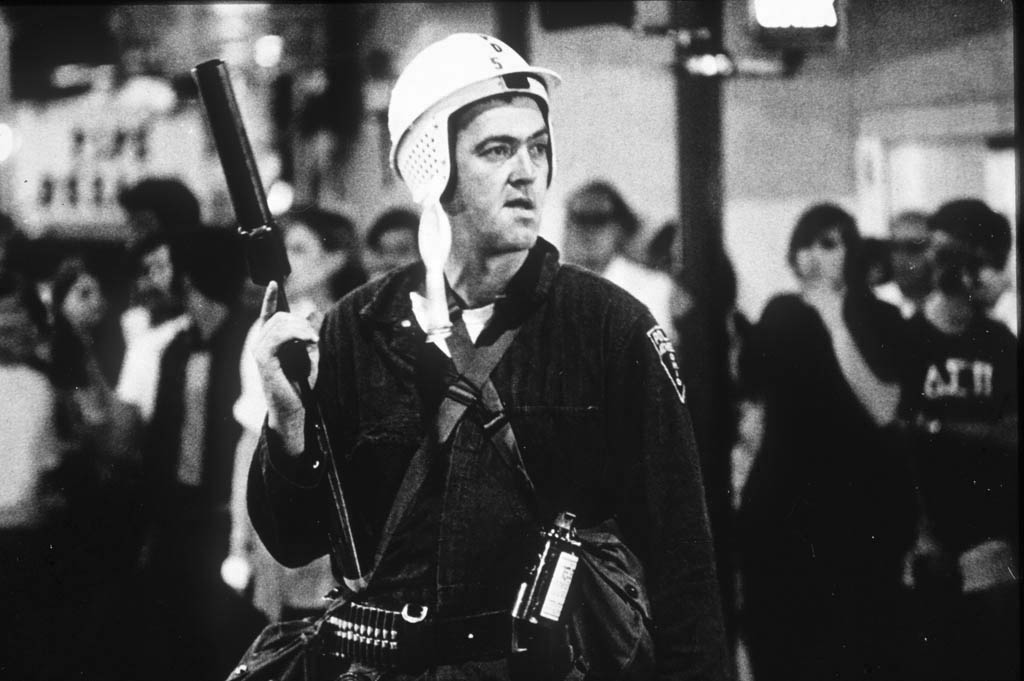
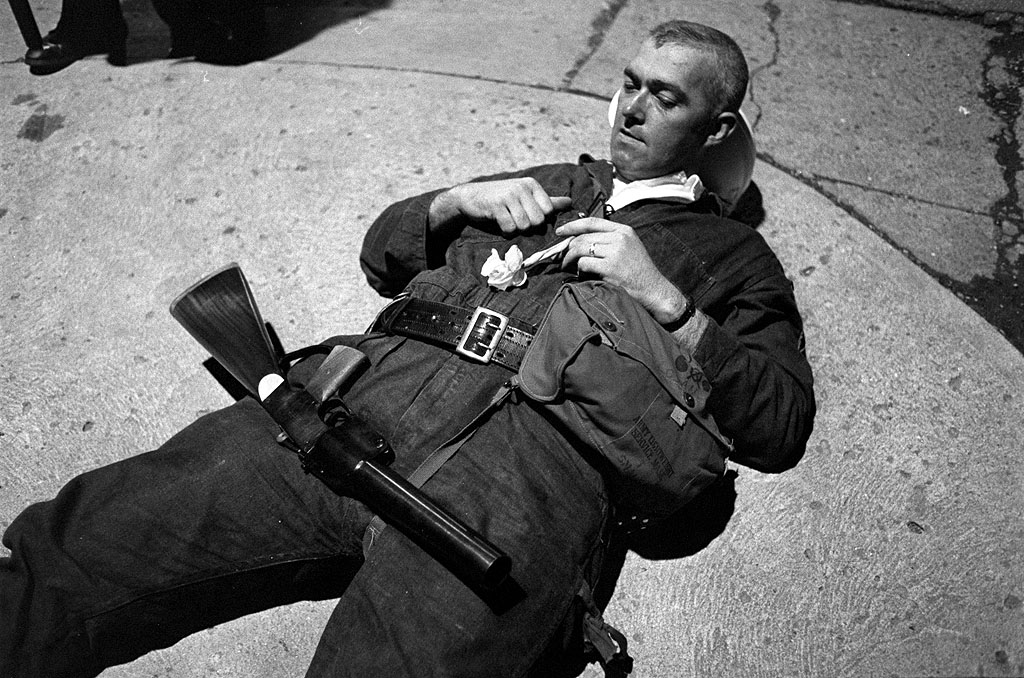
It wasn’t a good thing to see everyone decked out in full “bats ‘n hats” riot gear with gas masks. I don’t think I had ever seen Athens PD use gas before.
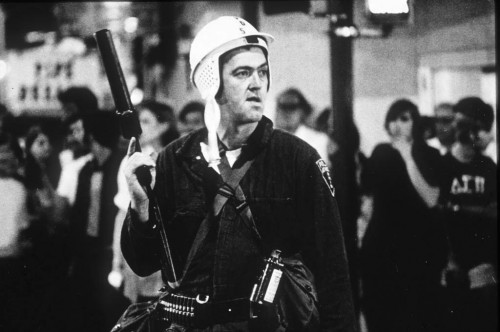 Like I described on my other blog, it wasn’t long before a cop I knew launched a tear gas grenade right toward me. It gave me great pleasure to give him a grin before I pulled on MY gas mask.
My tactical blunder
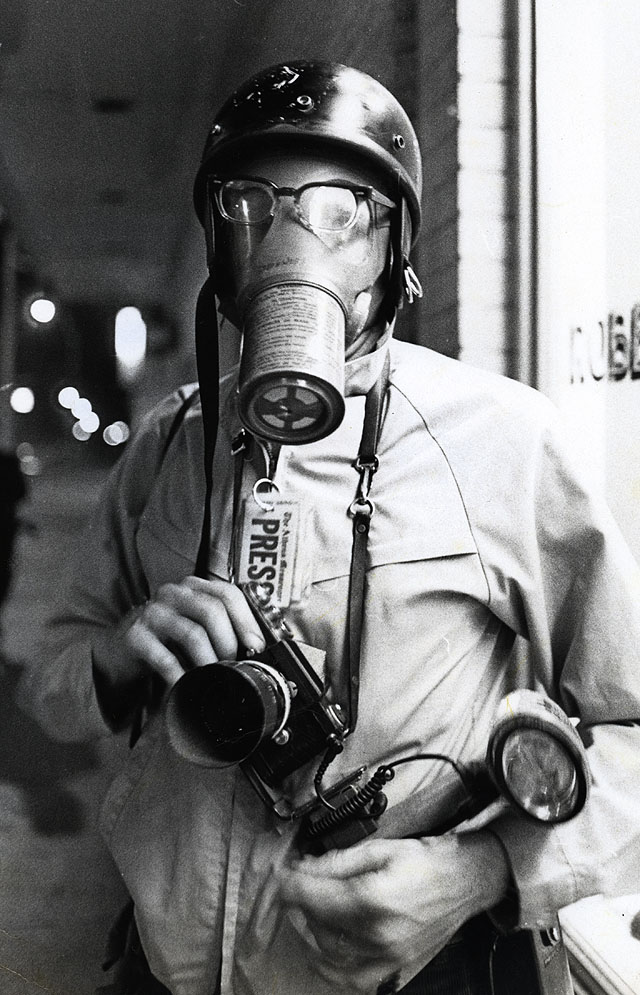
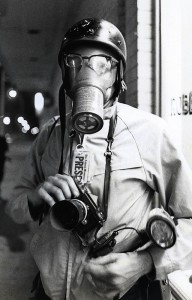 Friend and photographer Ed Pieratt shot me in my riot gear. I had to wear my glasses on the outside of the mask because I was blind without them. The old WWII mask kept the gas out, but the lenses fogged up so badly I couldn’t see WITH the mask or WITHOUT it. (By the next riot, I had a state of the art M16 mask courtesy of a policeman who “liberated” one for me. I had it fitted with prescription lenses and used it for another two decades.
I’m not happy with the photos from the night of the riot. For some reason, despite the fact that I specialized in shooting available light under lousy conditions, and despite that stuff I had shot by street lights earlier in the week looked good, I decided to bolt a flash on the camera.
Shooting flash draws attention to you – and can look like a muzzle flash from a gun – so you tend to shoot sparingly. It also makes for ugly pictures. Photographers shouldn’t think, they should shoot. Having that bleeping flash on the camera made me think, which caused me to miss photos I wish I’d had.
Ohio University shut down
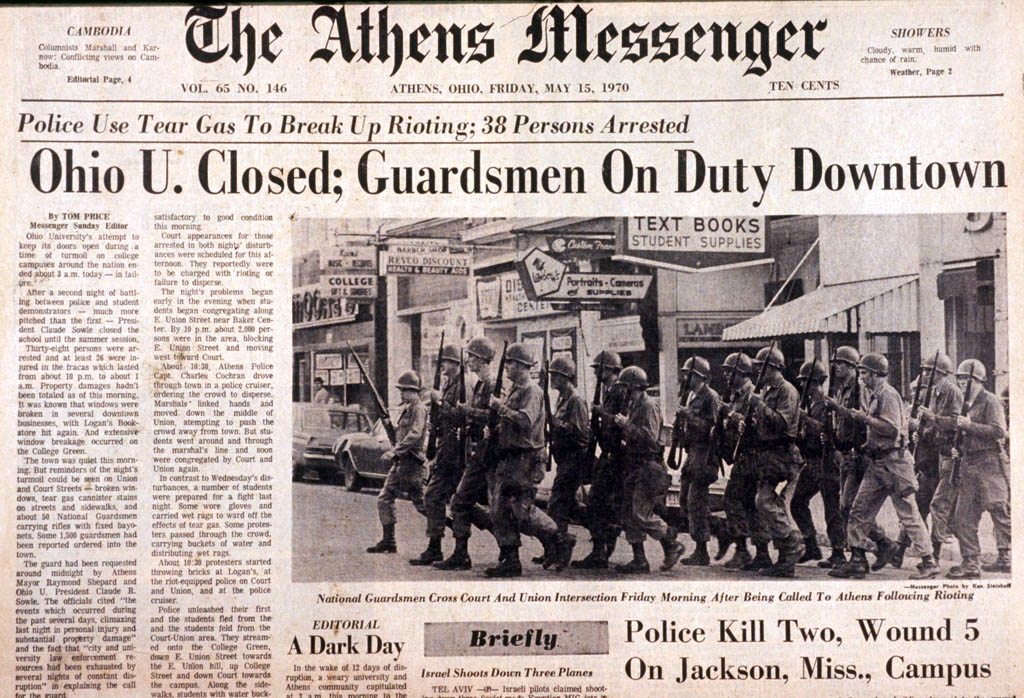
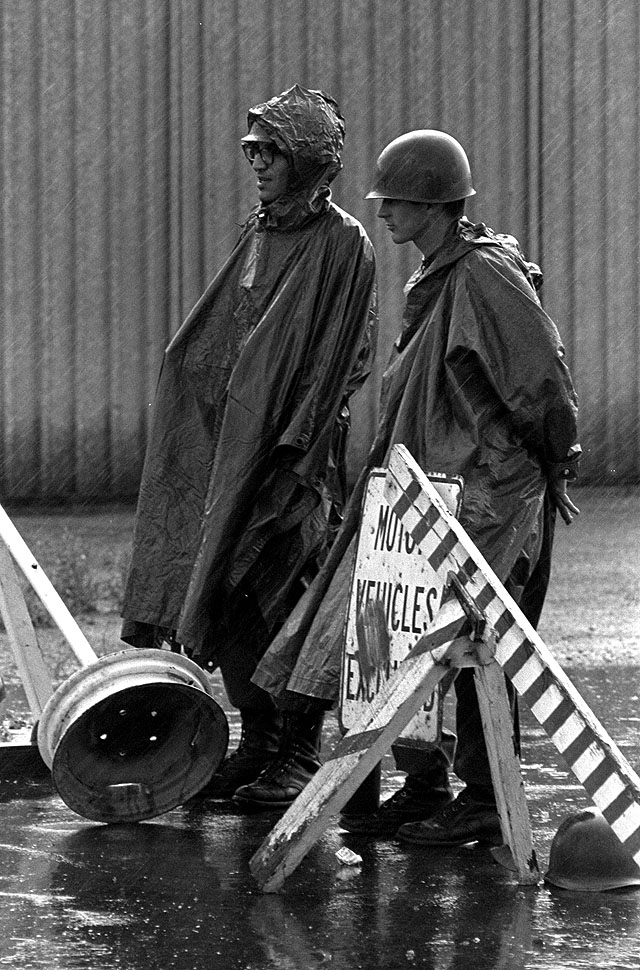
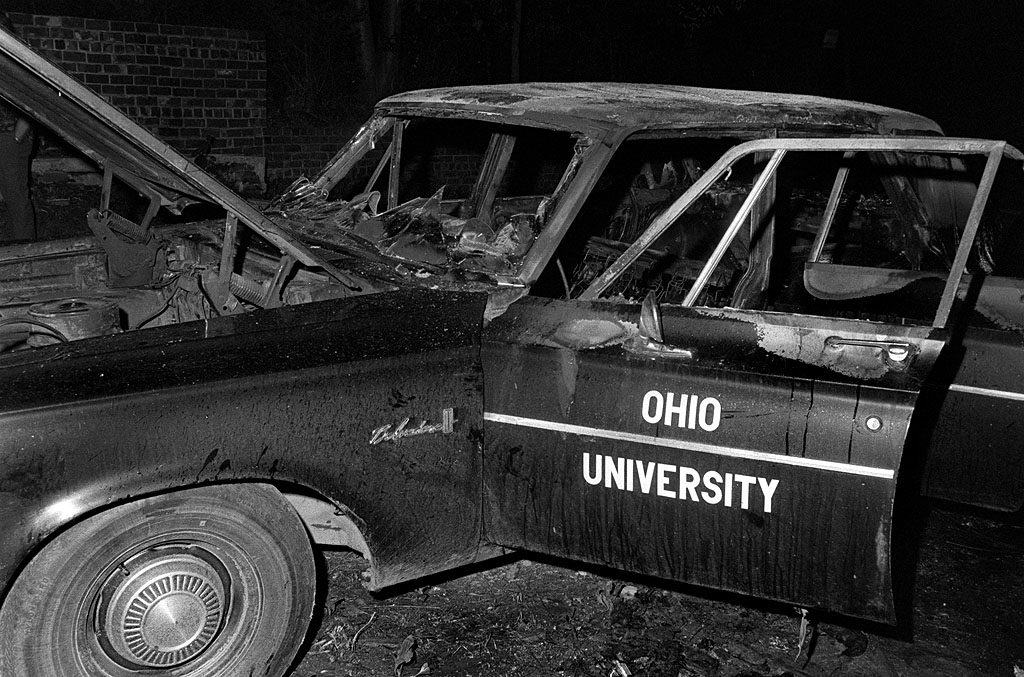
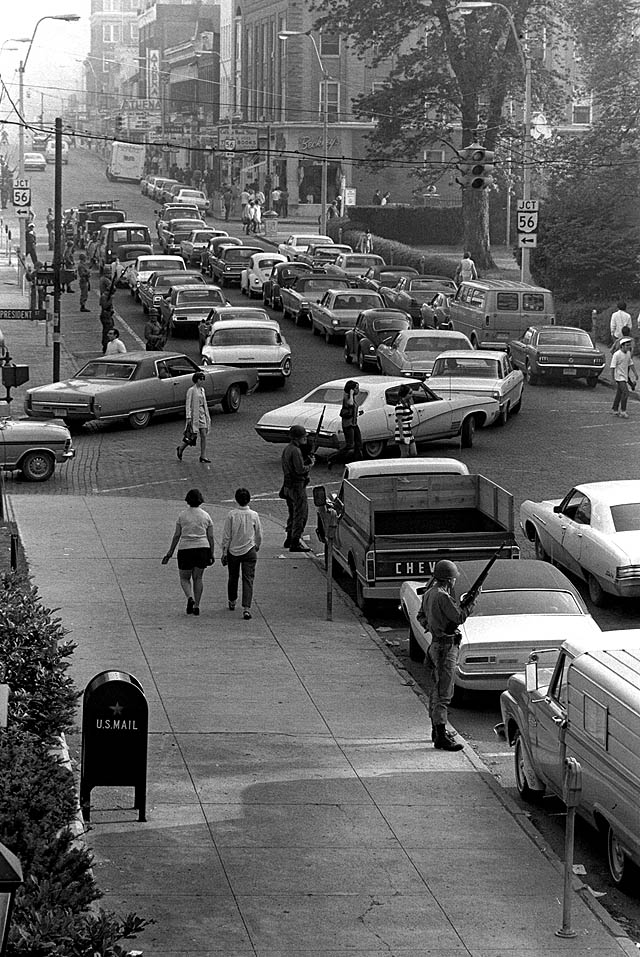
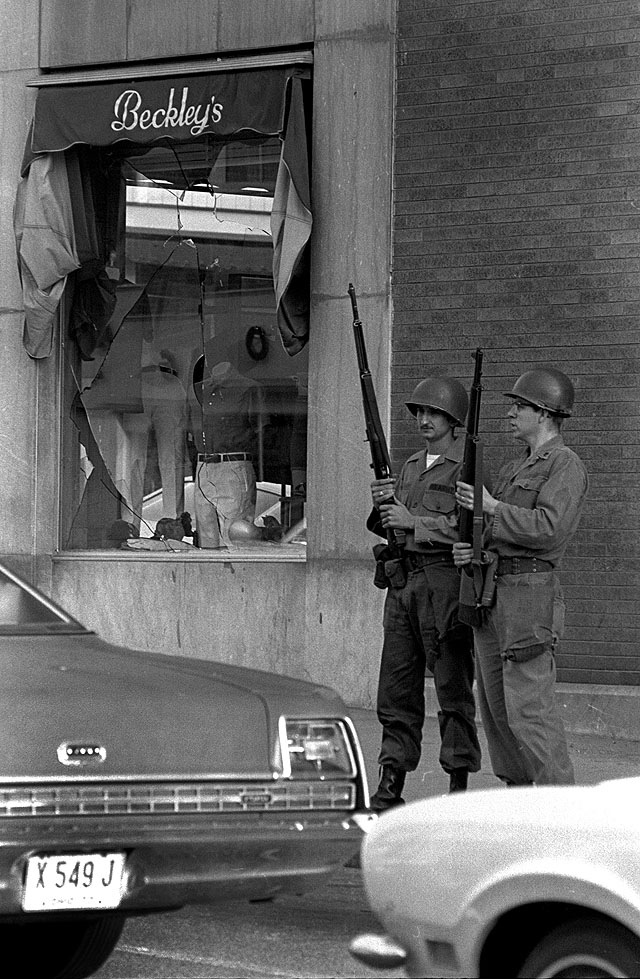
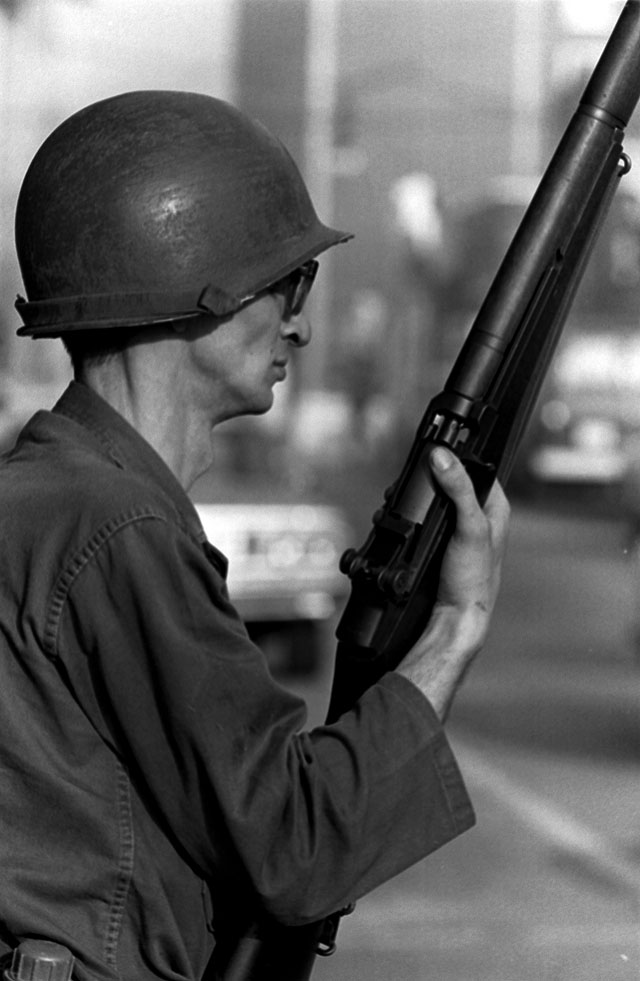
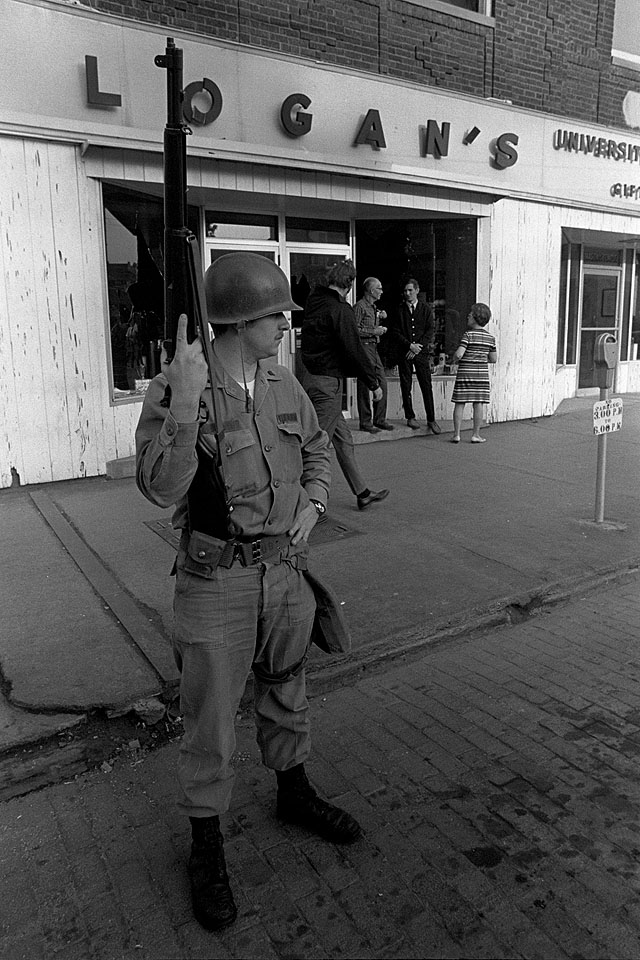
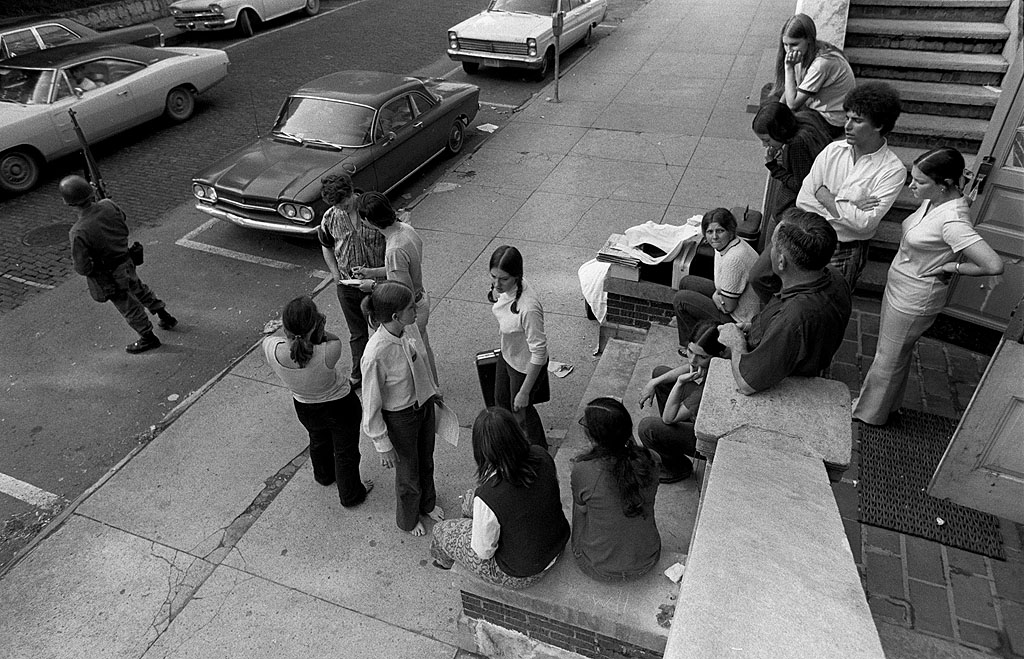
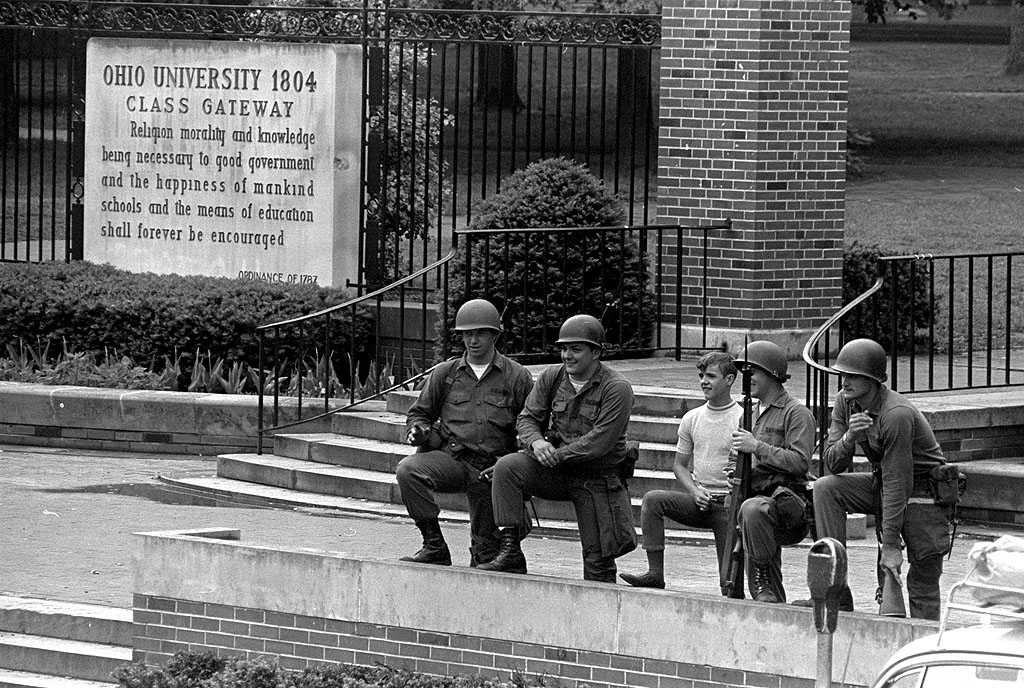
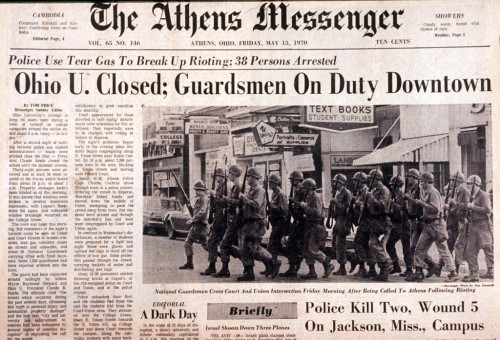 It was over. By morning, President Sowle had made the decision to close the university until the summer session. Mayor Raymond Shepard and President Sowle decided jointly to request the Ohio National Guard.
Students leave town
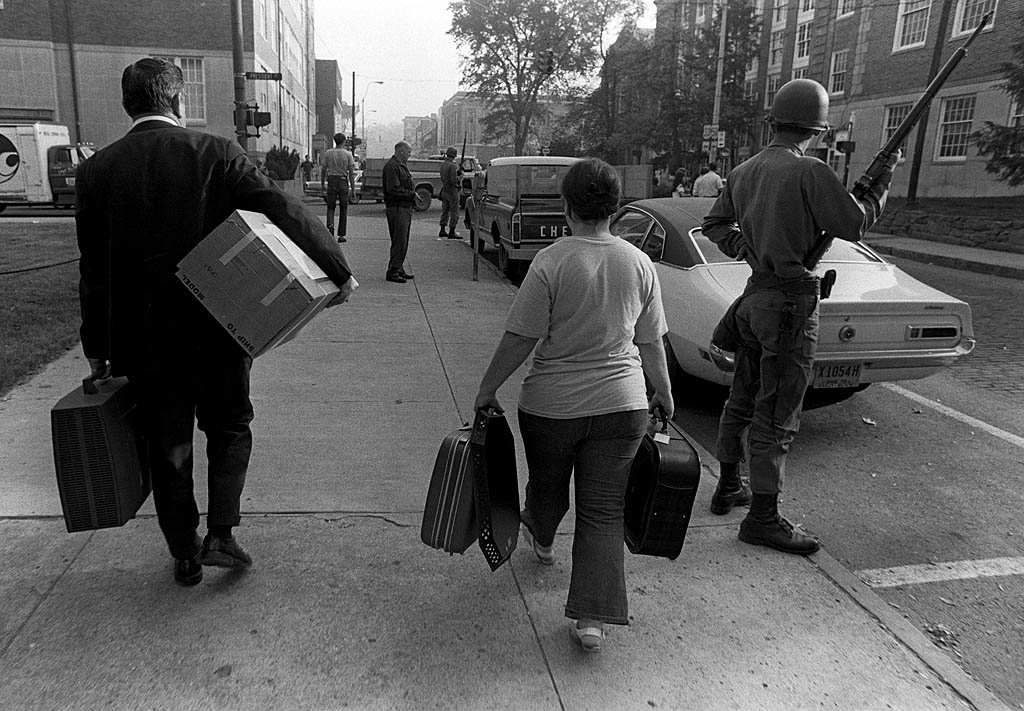
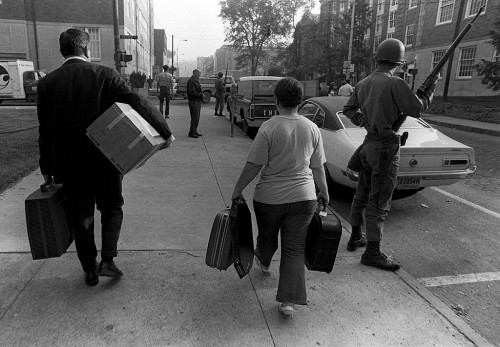 With tear gas power still falling from the trees and the whole town suffering from red, itchy eyes from the night before, carloads of anxious parents descended on Athens to pick up their kids.
Kent State garnered all the attention
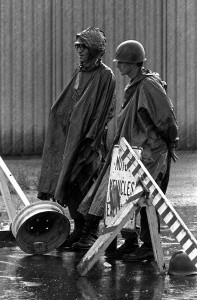 On the front page of The Messenger that detailed the closing of Ohio University is a story that has been dwarfed by Kent State: the killing of two students and the wounding of five at Jackson State University in Mississippi.
Does Agnew sound familiar?
Vice President Spiro Agnew said in April 1970, “One modest suggestion for the academic community: the next time a mob of students, waving their non-negotiable demands, starts pitching rocks at the Student Union – just imagine they are wearing brown shirts or white sheets and act accordingly.”
Shootings were “unwarranted”
The Scranton Commission concluded that the gunfire from the Ohio National Guard was “unnecessary, unwarranted, and inexcusable.”
James Michener, in his book Kent State: What Happened and Why, wrote that “a depressing number” of the four hundred Kent State students interviewed “had been told by their parents that it might have been a good thing if they had been shot.”
Think of that the next time someone on the left or the right loses touch with reality. Words can sometimes ignite more than the political base.
[Editor’s note: I’m sure there are some “facts” that are wrong. Dates on the film sleeves could be the day the photos were taken or they could be the date the film was processed. After weeks of marches, rallies, meeting, speeches and songifying, days and events run together. Like so many things I’ve covered, I’m glad to have been a witness to history, but once was enough.]
Gallery of photos from Ohio University
Click on any image to make it larger, then click on the left or right side of the photo to move through the gallery.
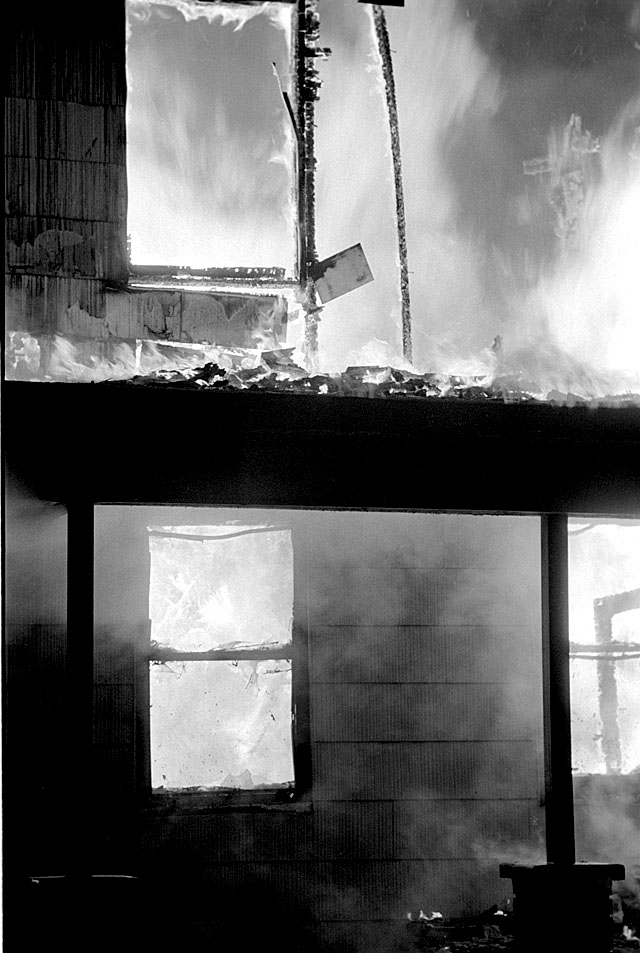
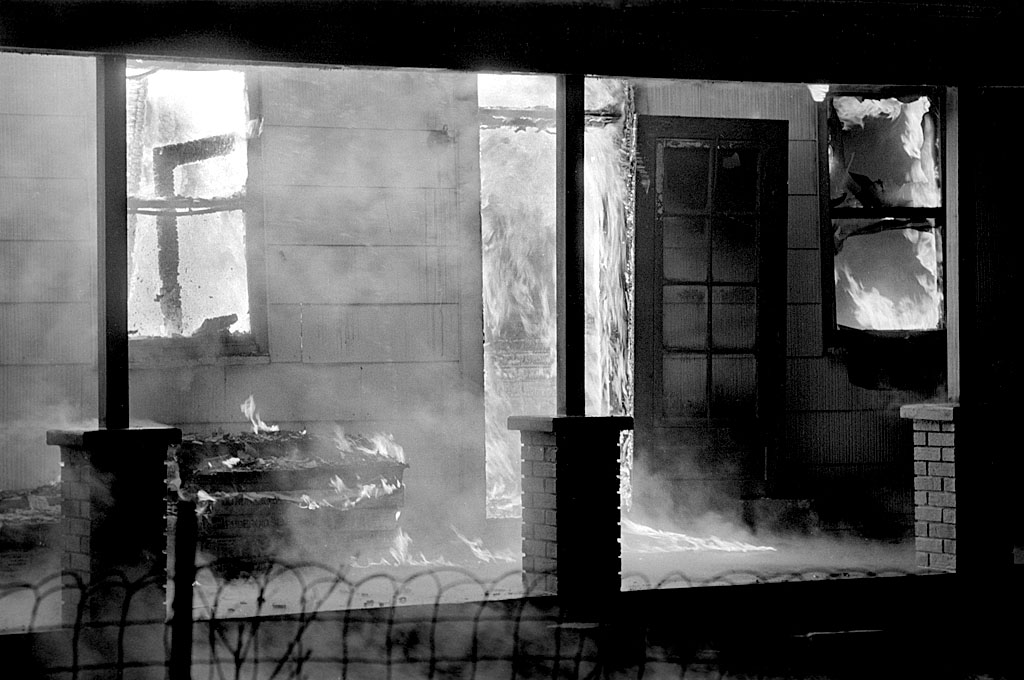
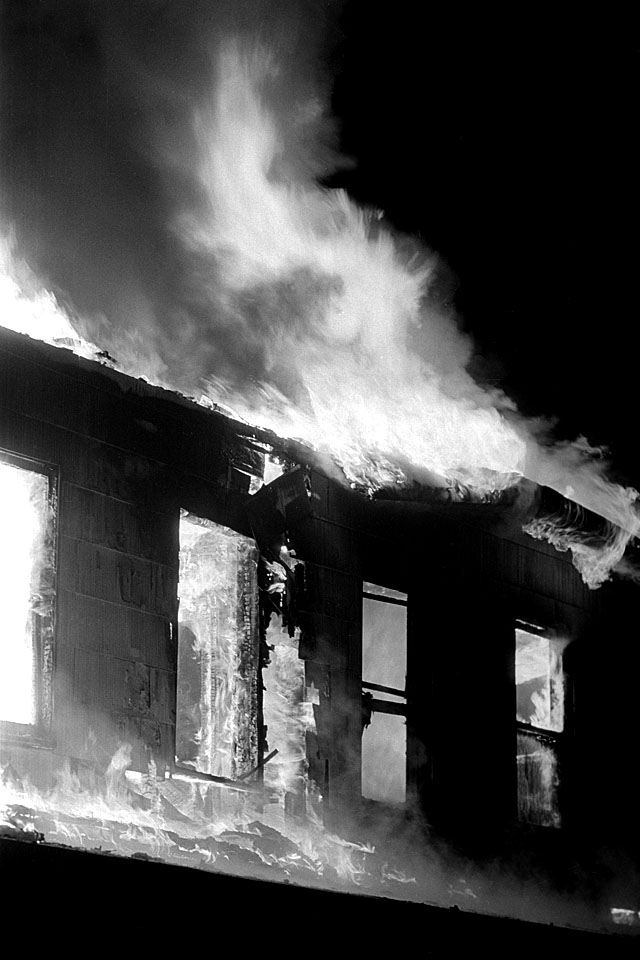
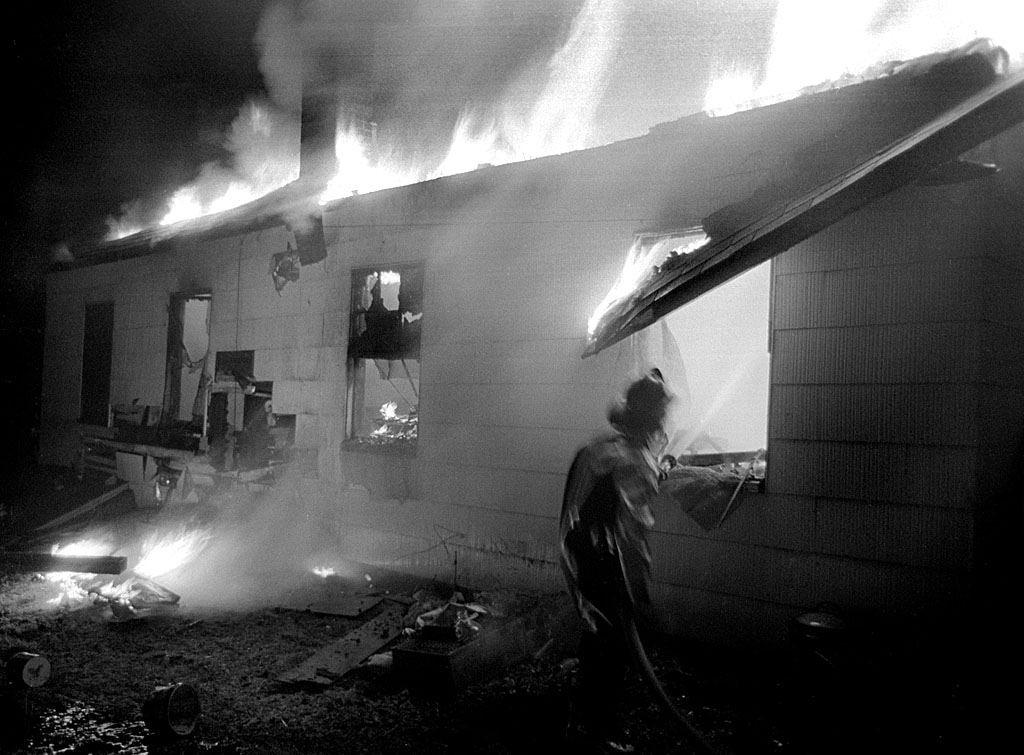
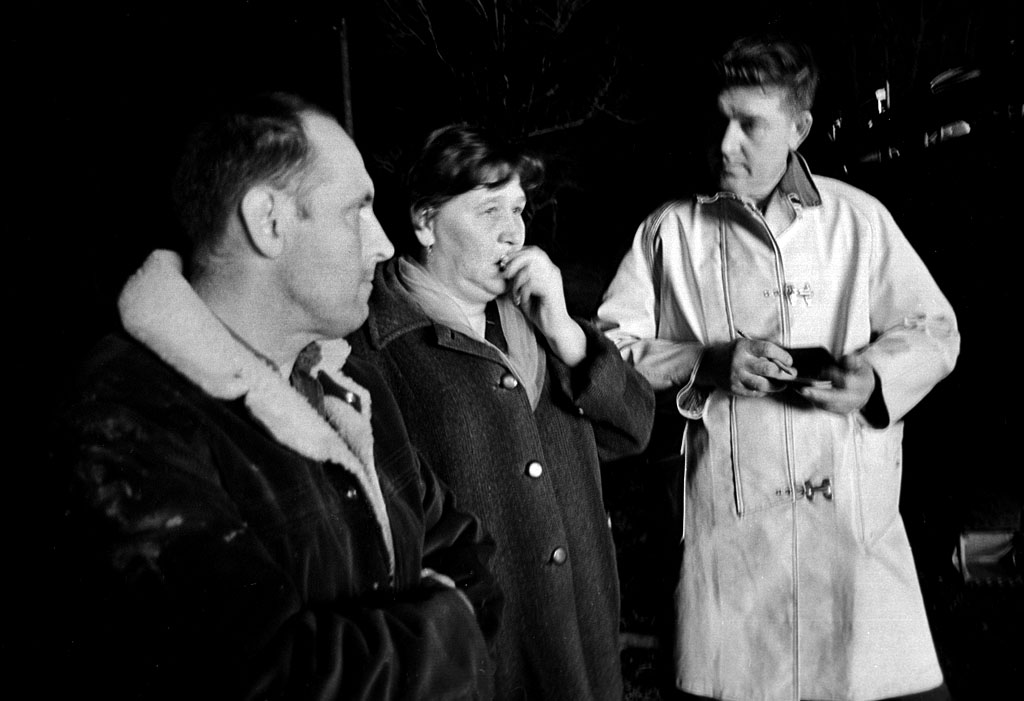
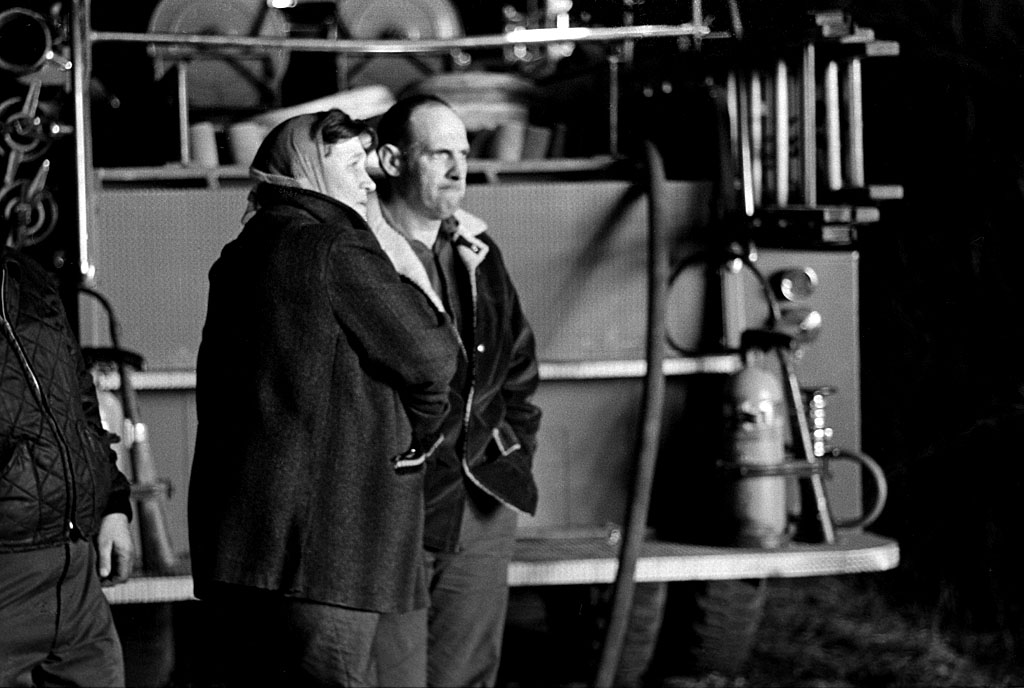
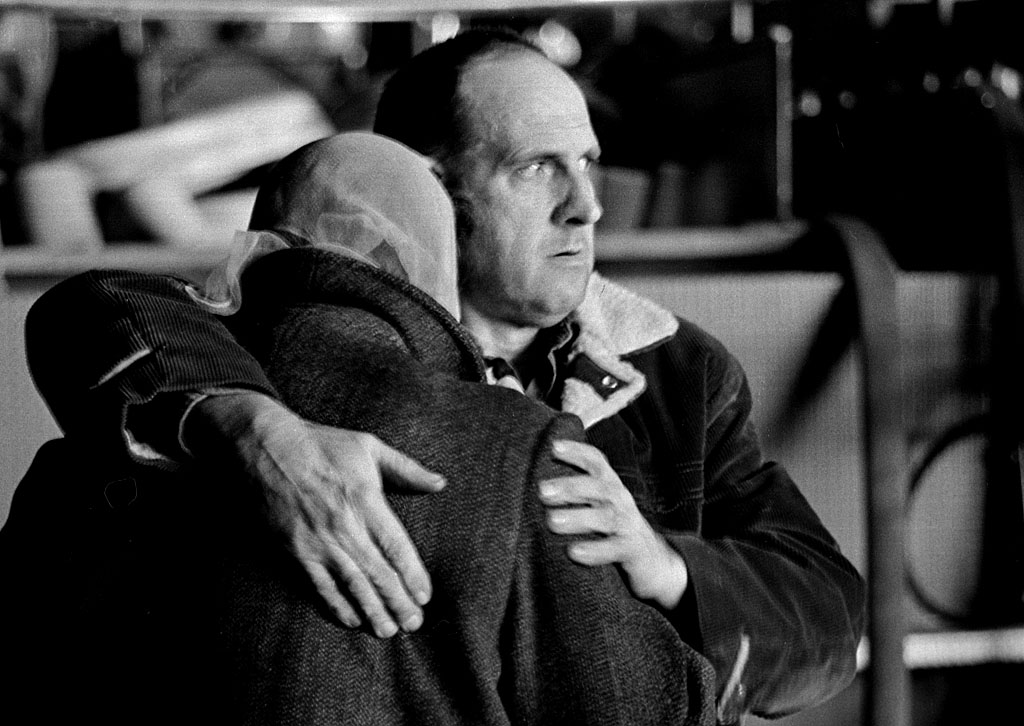
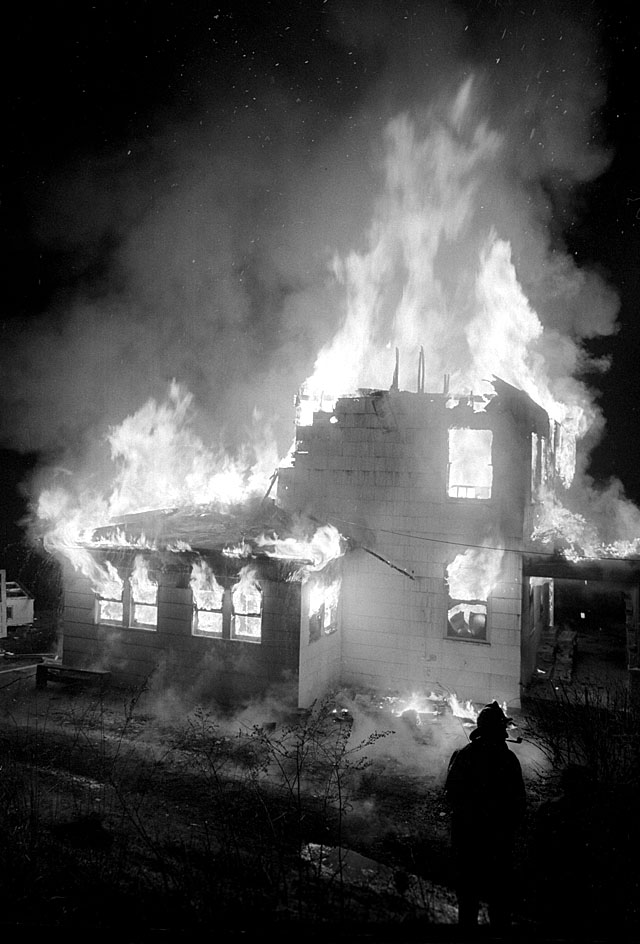
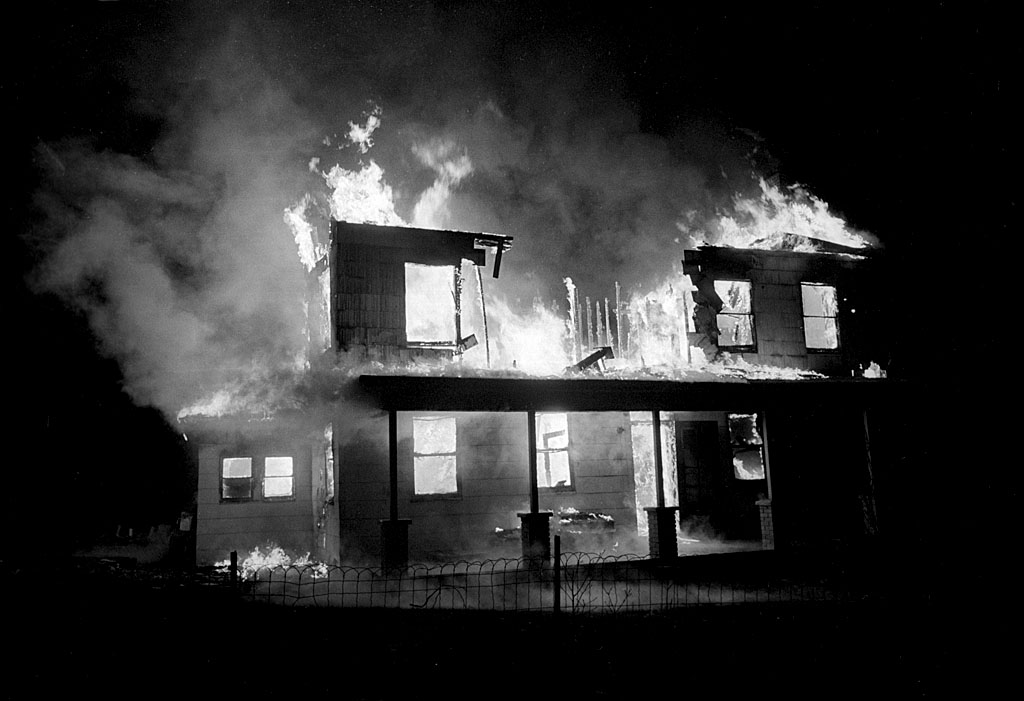 I hate fires. Maybe it’s because I’m a pack rat, but I hate to see everything that someone owns go up in smoke and flames. Even if the owners have insurance, the most precious things can’t be replaced.
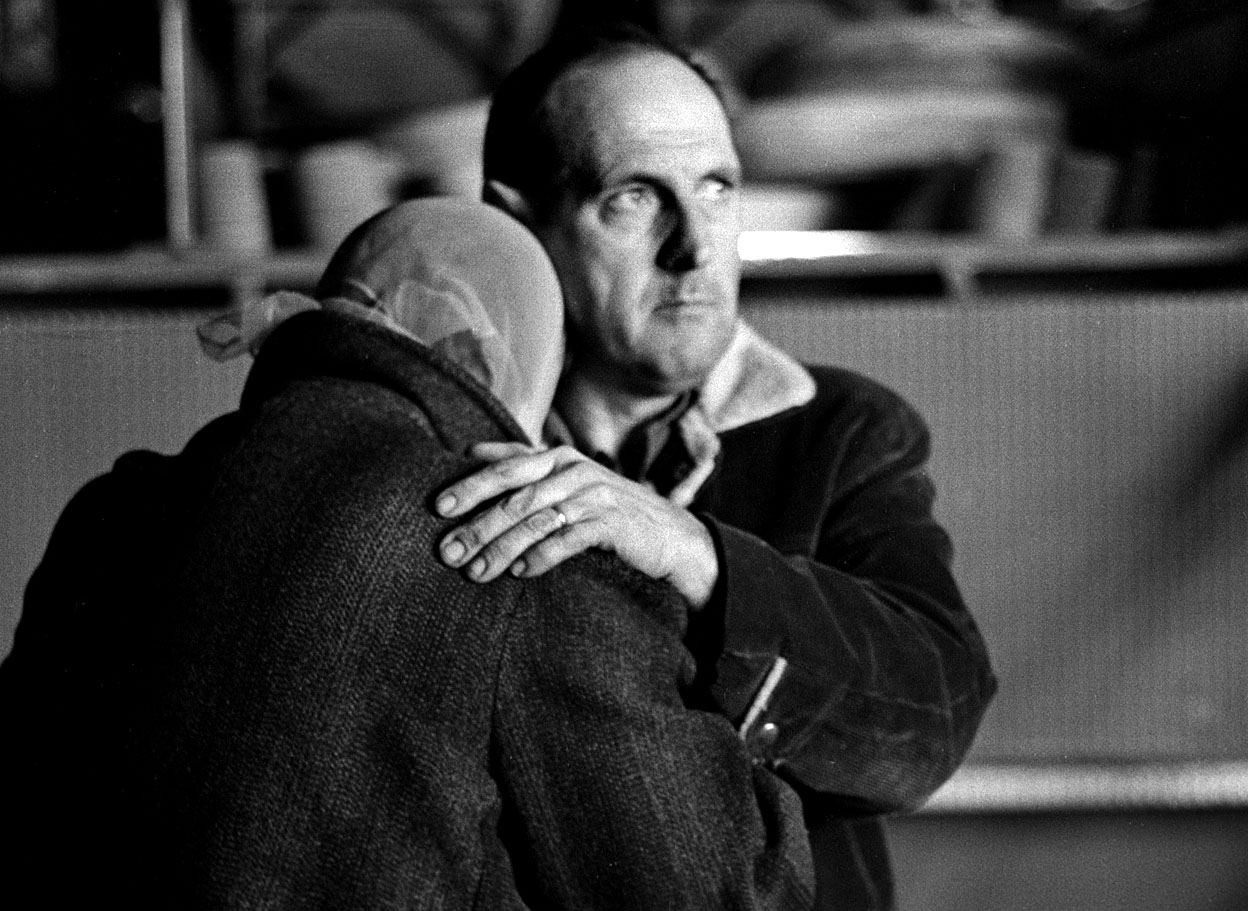 The January 6, 1969, front page of The Athens (OH) Messenger contained the fire shot at the top, along with a short news story with the 5Ws and H basics. On what we called The Picture Page, I ran three other photos.
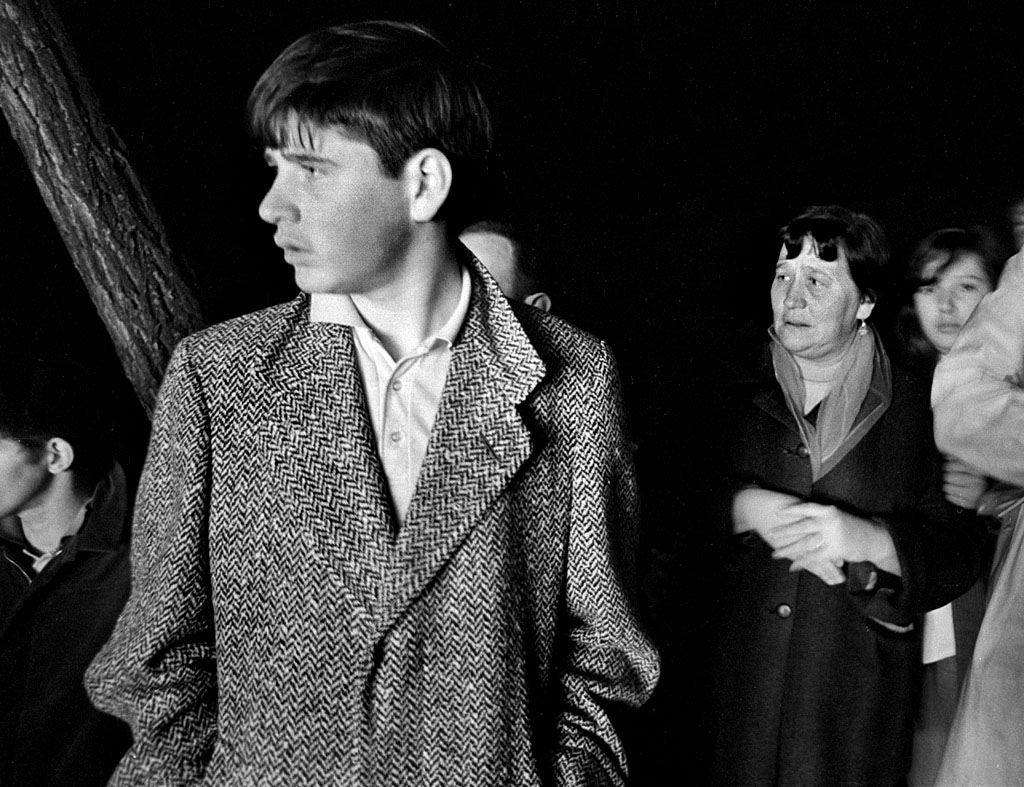 Sometimes it’s harder to write a short caption that it is a long one. I hate to think of how many times the floor around my desk was covered up with wadded-up carnations of false starts.
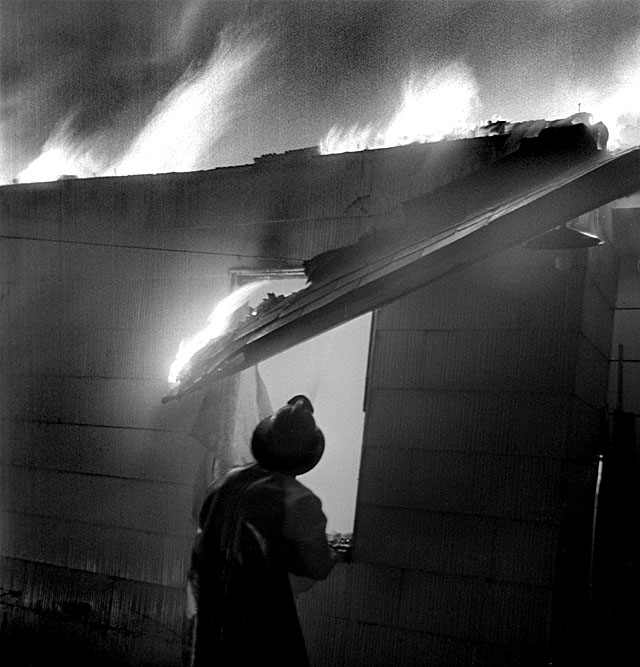
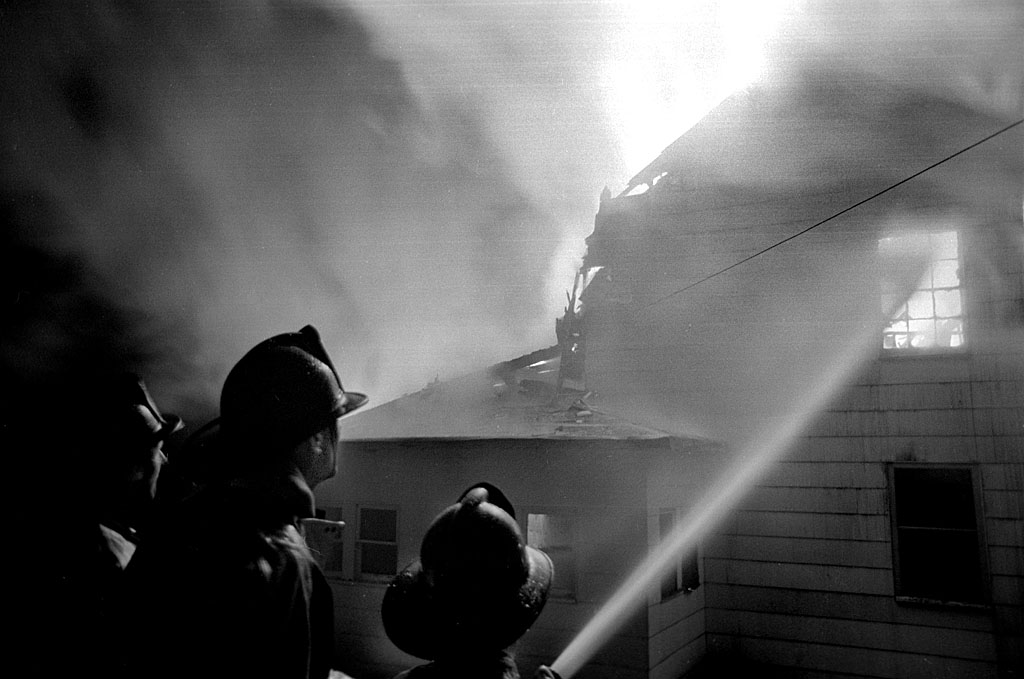 Hang around a fire station long enough and you’ll hear a firefighter use the term “good fire.” He or she doesn’t mean that they enjoy seeing someone’s home or business burn. What they mean is that “a good fire” is one that tests them and their abilities.
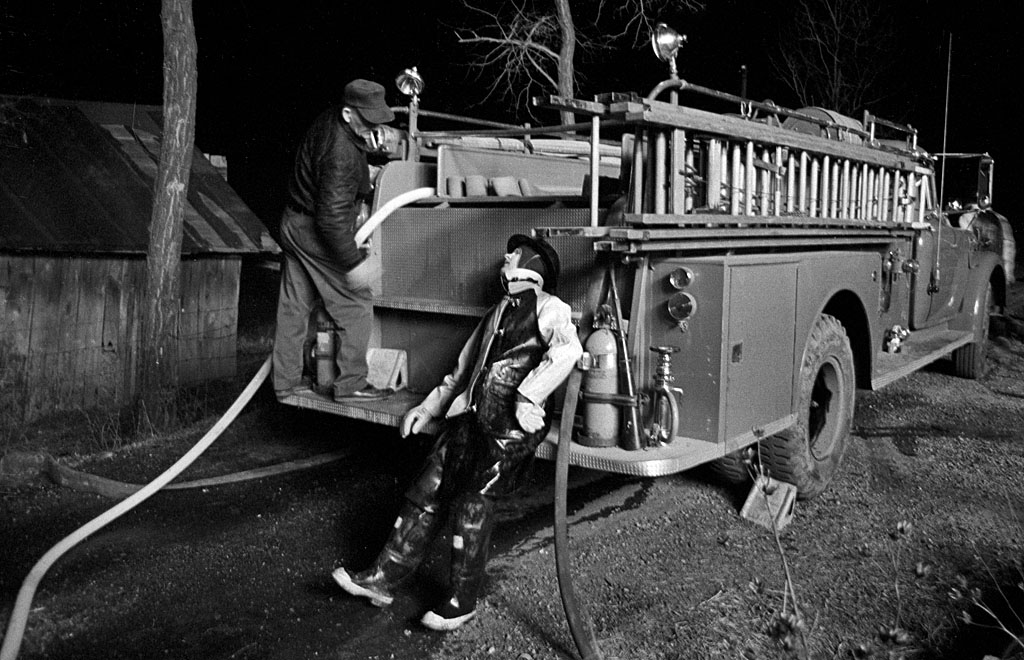 Small rural fire departments made up mostly or all of volunteers are sometimes called “chimney savers” because that’s often all that’s left at the end. That’s not the fault of these guys who put their lives on the line. By the time the volunteers get to the station, crank up the truck and arrive on the scene, a lot of time has passed. The three and four-minute response times we’re used to in cities might be 15 to 30 minutes in the country. On top of that, it’s unlikely that there will be a fire hydrant nearby. Water has to be relayed from where there is one or a pond or stream has be be drafted for a water supply.