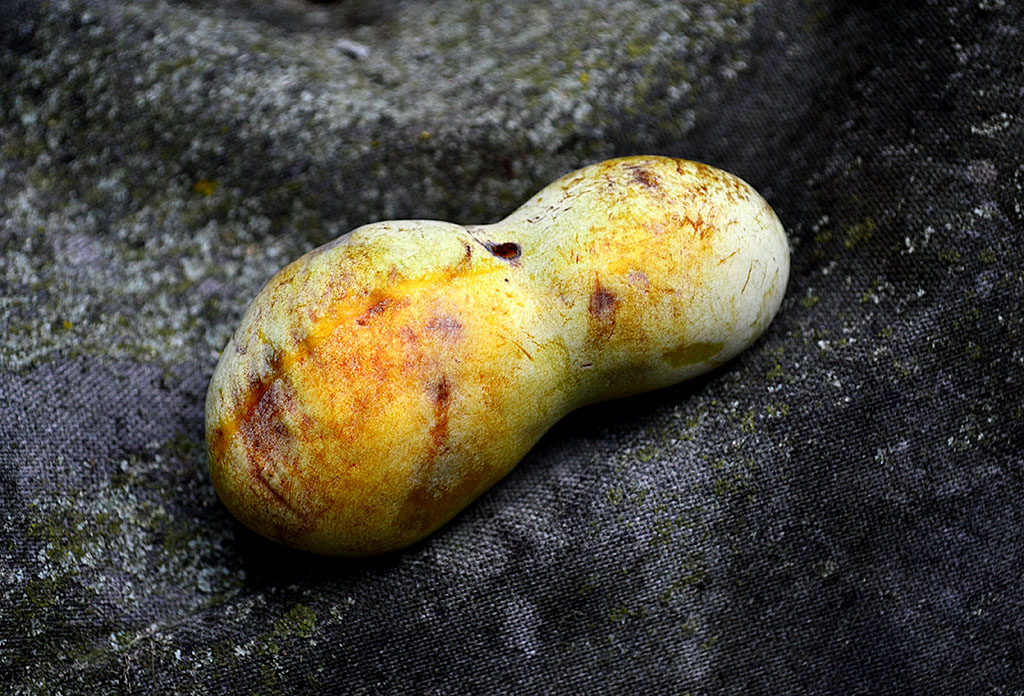
 Mother came in from hanging up the laundry in the back yard bearing something the looked like a soft peanut on steroids. She said it was a pawpaw, known formally as an Asimina Triloba. It’s a distant relative of the Custard Apple, and it’s considered the largest edible fruit native to America. (Click on the photos to make them larger.)
Where’d they come from?
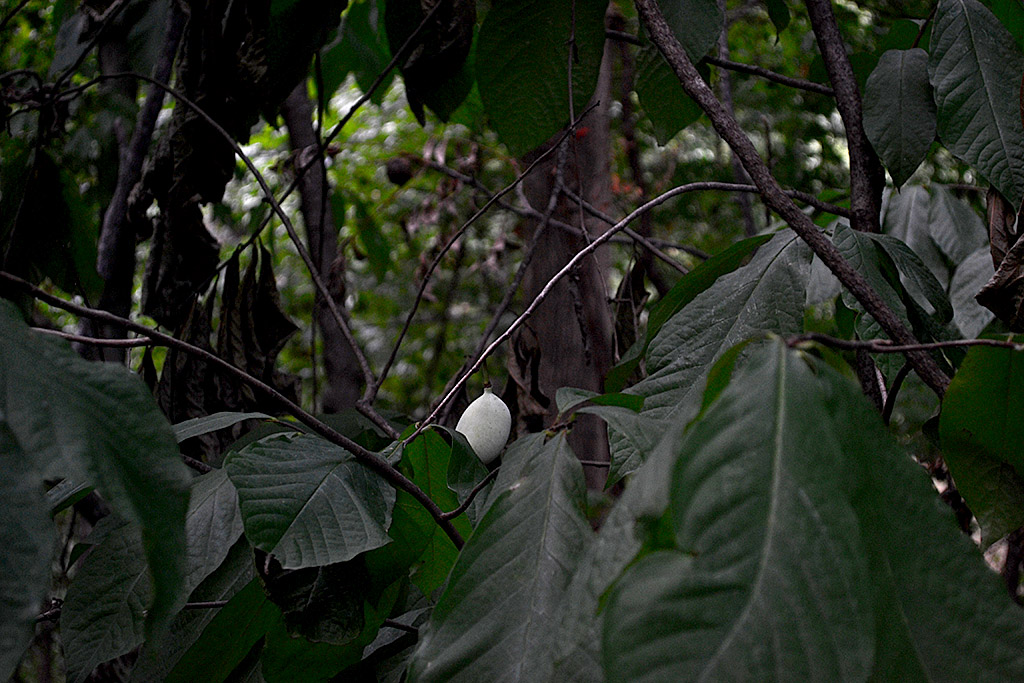 There’s an excellent website that says they are “native to the temperate woodlands of the eastern U.S. The American Indian is credited with spreading the pawpaw across the eastern U.S. to eastern Kansas and Texas, and from the Great Lakes almost to the Gulf. Fossils prove the pawpaw is indigenous to the U.S.”
The ones in our back yard have a less exciting origin than being spread by American Indians. Mother said forty-plus years ago Dad brought home a big batch of them from a jobsite. After we had eaten all (more) than we wanted, he pitched the remainder over the fence into the cow pasture behind us.
How do pawpaws grow?
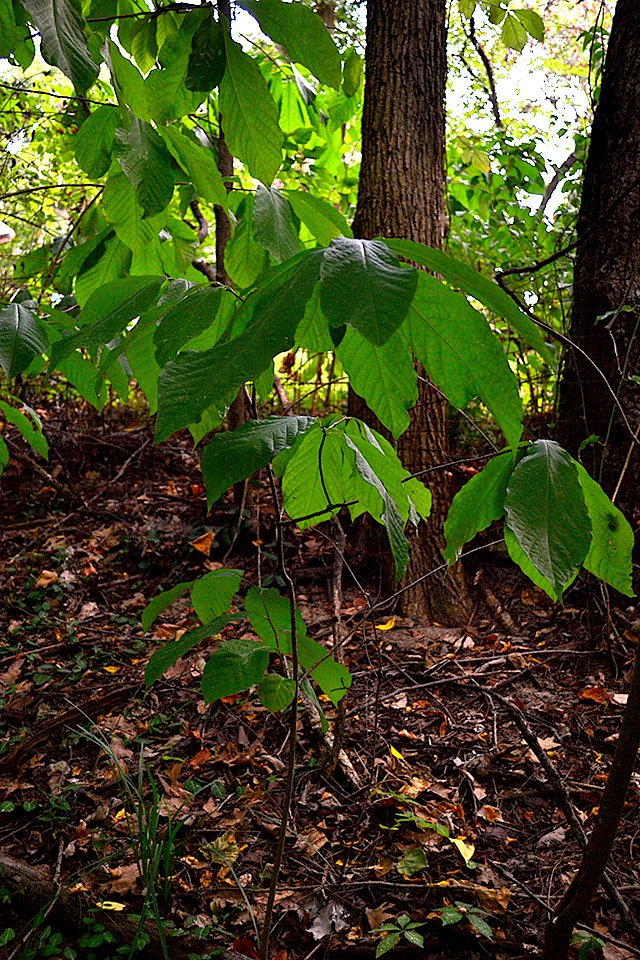 Dad didn’t know it, but he pitched them in just about a perfect place for them to grow. The website says they prefer a humid continental climate. The young plant requires filtered sun for its first year or two. Once established, they prefer full sun. That probably explains why our trees never got too big: they were too shaded by the walnut trees. Because they are on a fairly steep hillside, they stay well-drained. Years and years of being used as a cow pasture provided them with plenty of “organic fertilizer high in potassium.”
I had never considered cold to be essential to plant growth, but pawpaws “require a minimum of 400 hours of winter chill and at least 160 frost-free days.” To break dormancy, the site says, the seeds require exposure to cold temperatures for 90 to 120 days.
Fruit looks a little like a mango
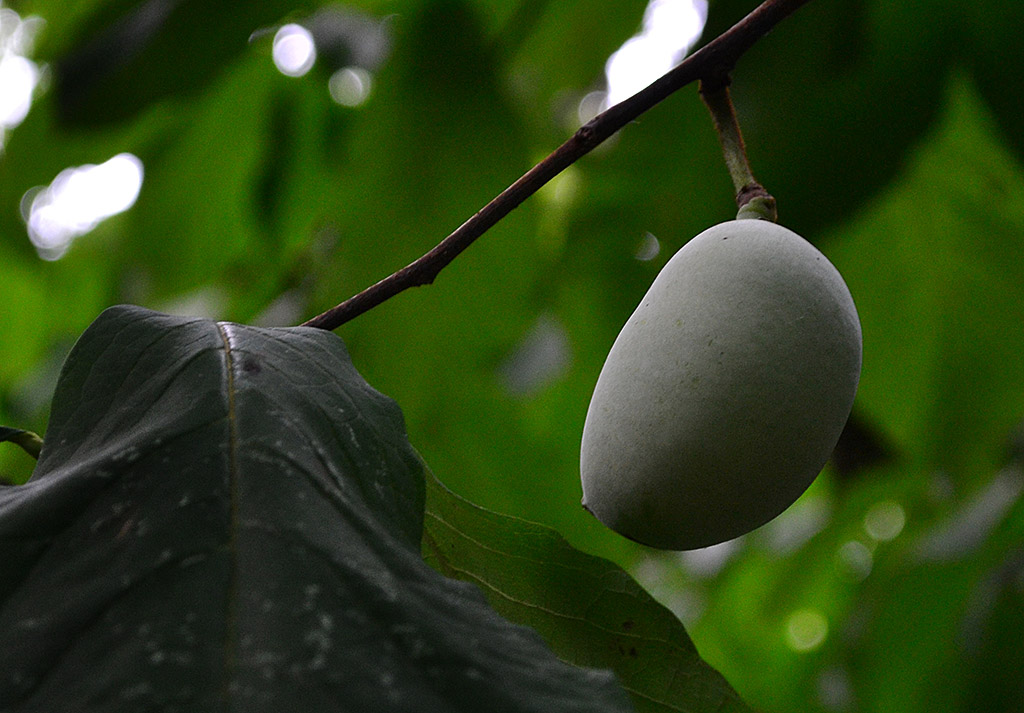 Gardener Lila has several good photos of the mangoes in our back yard in Florida here and here. Pawpaws don’t grow as large as our mangoes, though; they top out at 5 to 16 ounces and three to six inches in length. The pawpaws also have that elongated peanut shape when they’re ripe.
Chiggers have been waiting
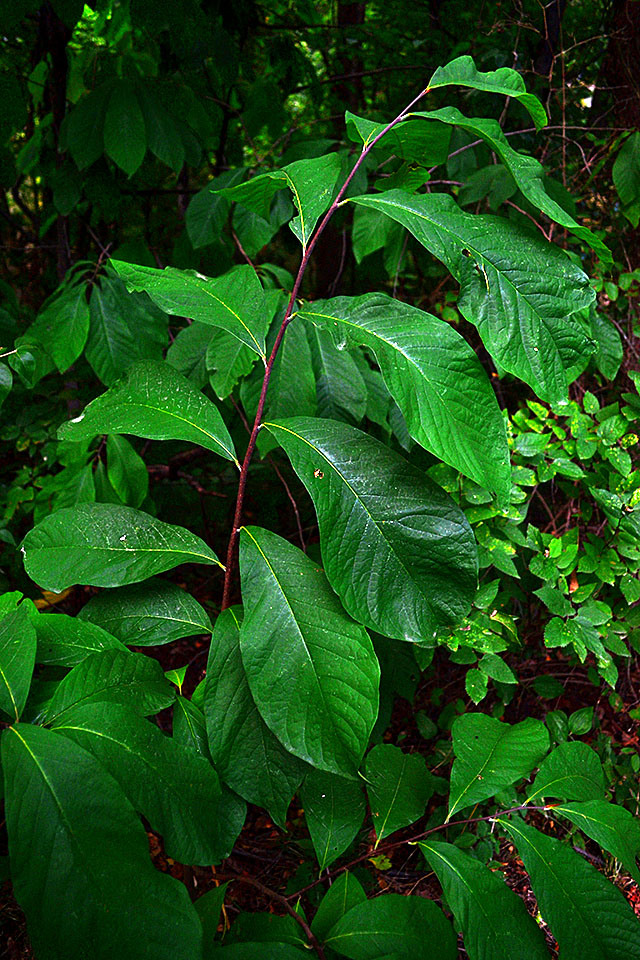 There’s still a little bit of the old wire fencing separating our yard from the former cow pasture. My buddies and I used to climb it frequently to roam and camp in Mr. Hale’s fields. I couldn’t get a good angle for my photos, so I tentatively climbed up on the fence just like I had when I was 10 years old. Mr. Hale bought a good brand of fence, because it was still sturdy enough to hold my weight. It’s comforting to know that I can still climb a fence. (He had a couple of bulls that offered encouragement for doing it quickly when I was a kid.)
The local chigger contingent must have remembered how tender that 10 year-old-boy was and put out the word that he was back after half a century. I was down in their neighborhood for no more than 15 minutes, but I picked up at least half a dozen hitchhikers behind my knees and thighs that kept me itching for a week.
My readers must like me to suffer. Some of you were kind enough to punch the DONATE button at the top left of the page after I told the sad story of my bee encounter at Franklin School. The bee that left his stinger in my upper lip hurt a lot more, but those chigger bites drove me crazy night and day, no matter what concoctions I slathered on them. Hint, hint.