St. Louis Arch

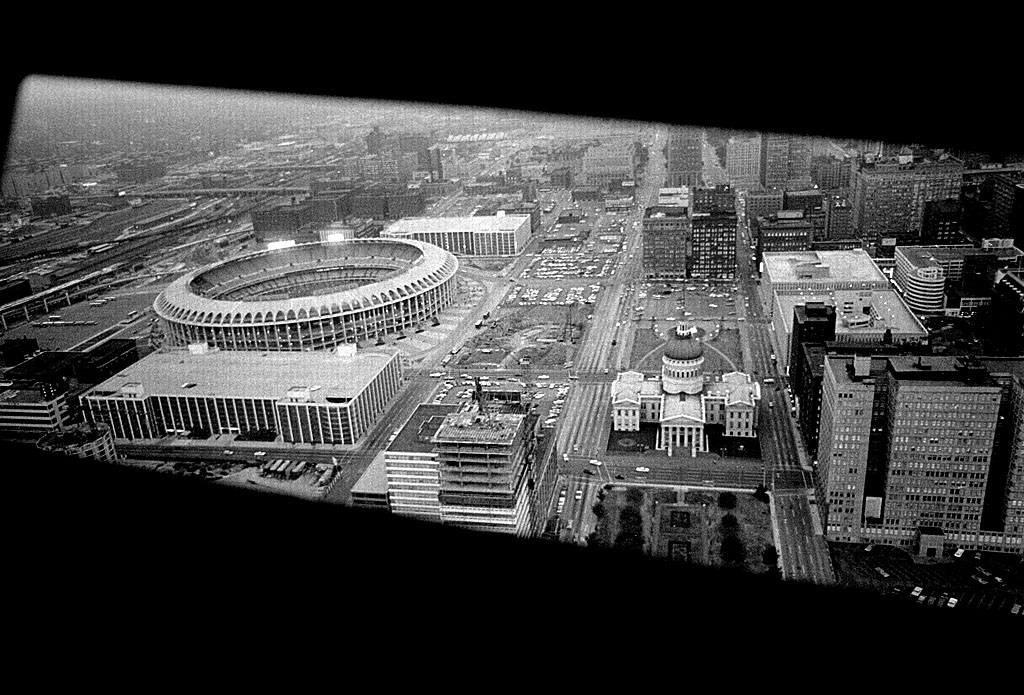
Here is a photo out one of the windows in the St. Louis Arch probably in 1967, just before I left for college.

Tradition: lick the Arch

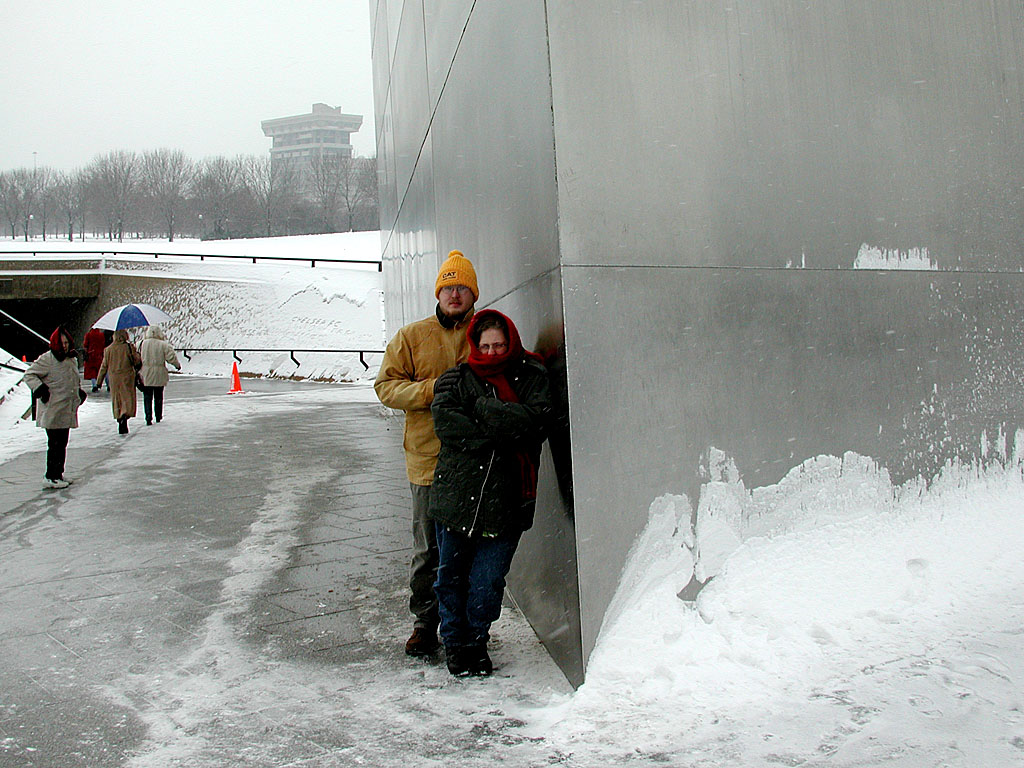
When Matt and Sarah were freshly married, we all headed up to Bro Mark’s place in St. Louis for Christmas. When the Arch first popped into view, we started an elaborate story about how there is a tradition to lick the Arch the first time you visit it.

“So many people had done it that the shiny coating has worn off at the lip level,” we explained to her. “Some people make a pretty good living out of selling antiseptic wipes to people who don’t feel comfortable licking where other people have been.”

I was impressed. She wasn’t buying it. She had wised up to the Steinhoff family pretty quickly.

St. Louis Arch and riverfront

Mark and I took a ride from his house near the Botanical Gardens to the Chain of Rocks Bridge. I was surprised at how it was possible to get around on a bike in St. Louis. Here’s an account of our ride to Chain of Rocks.

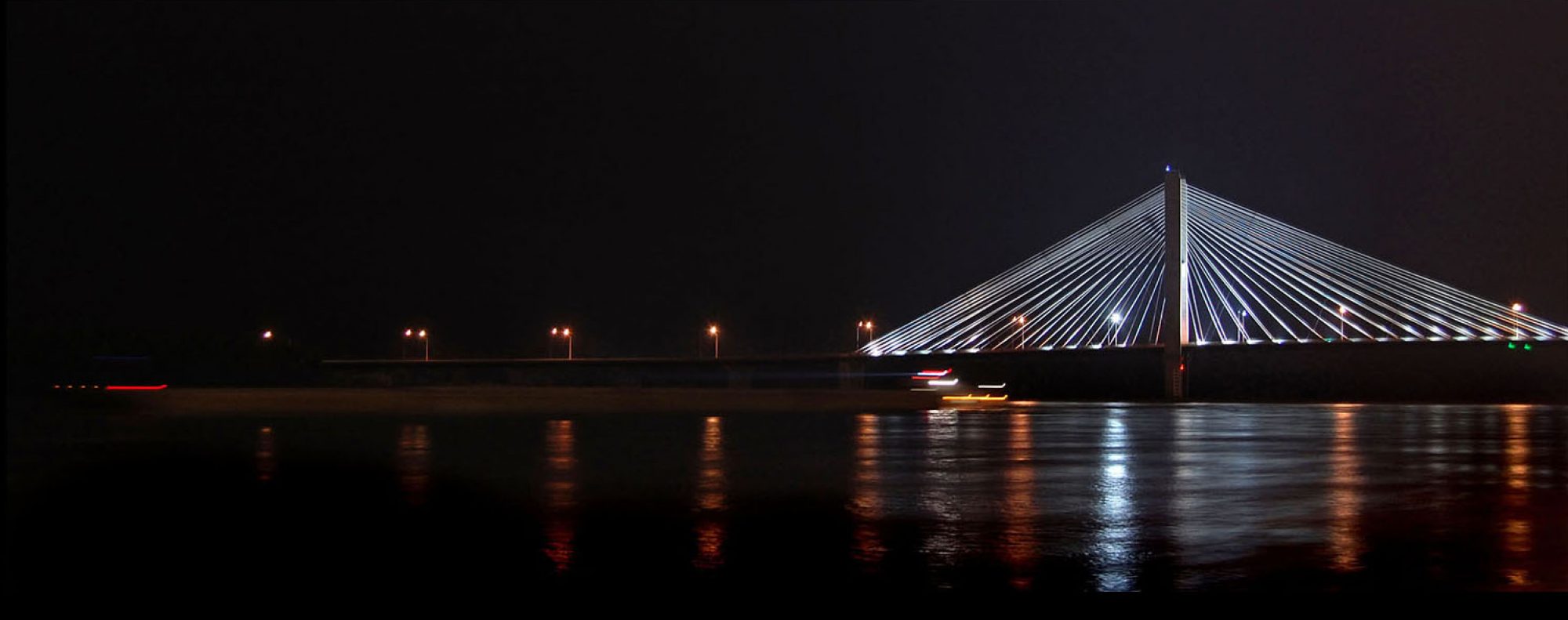
Here’s a shot of the riverfront and Arch looking south, possibly from Ead’s Bridge. If I’m wrong, I’m sure Mark will enjoy pointing out the error. That’ll be my birthday present to him.

Impressive landmark

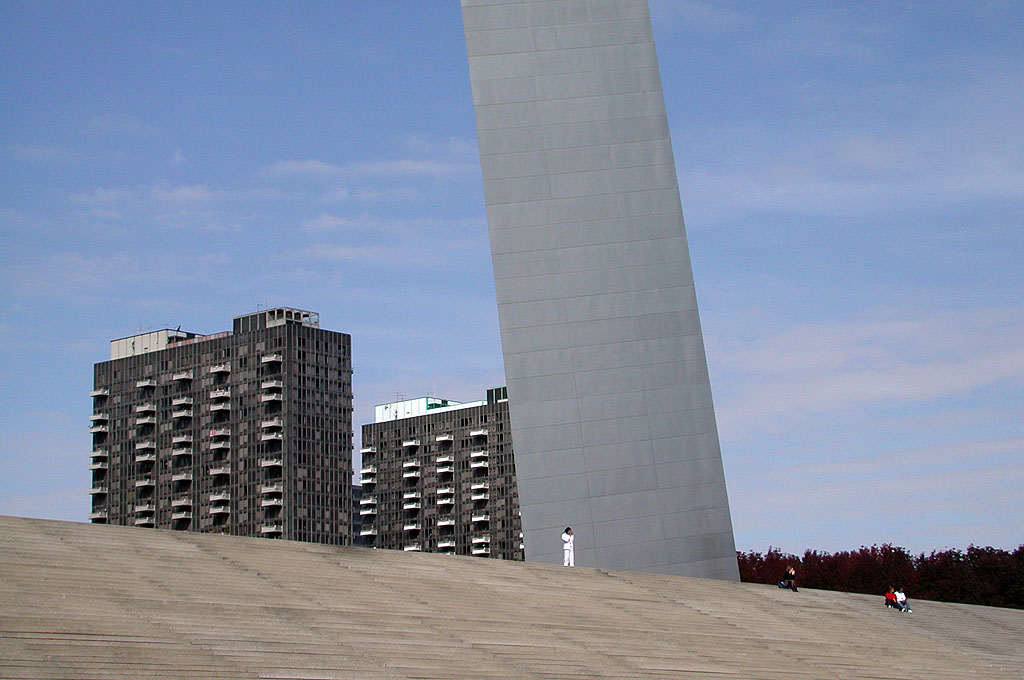
I can remember seeing the photos and reading the stories in The St. Louis Globe-Democrat about the building of the Arch. It’s a beautiful landmark that you can’t really appreciate until you get up close to get a feeling for its size.


Trophy Cases and Ghosts

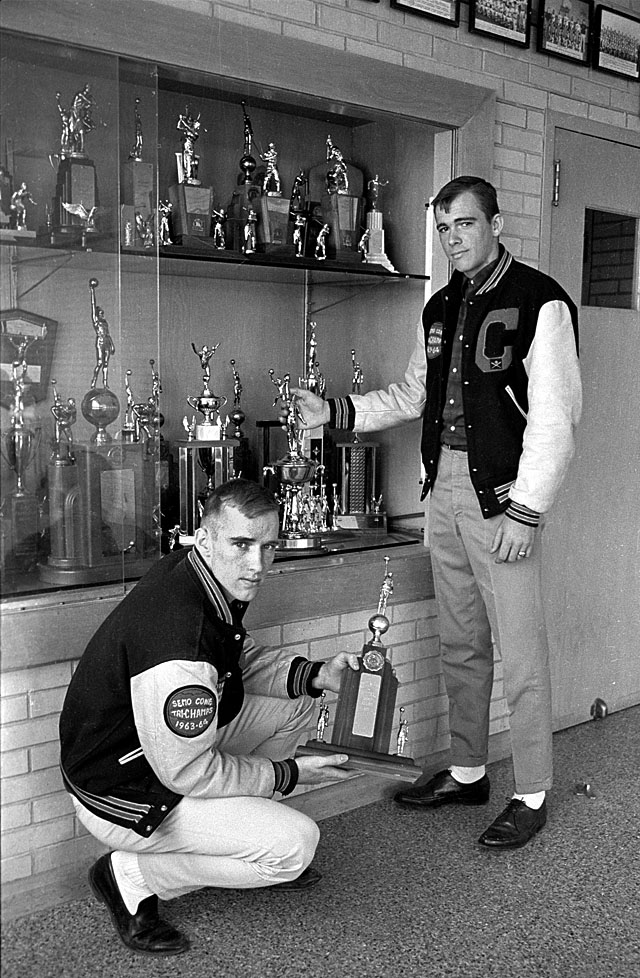
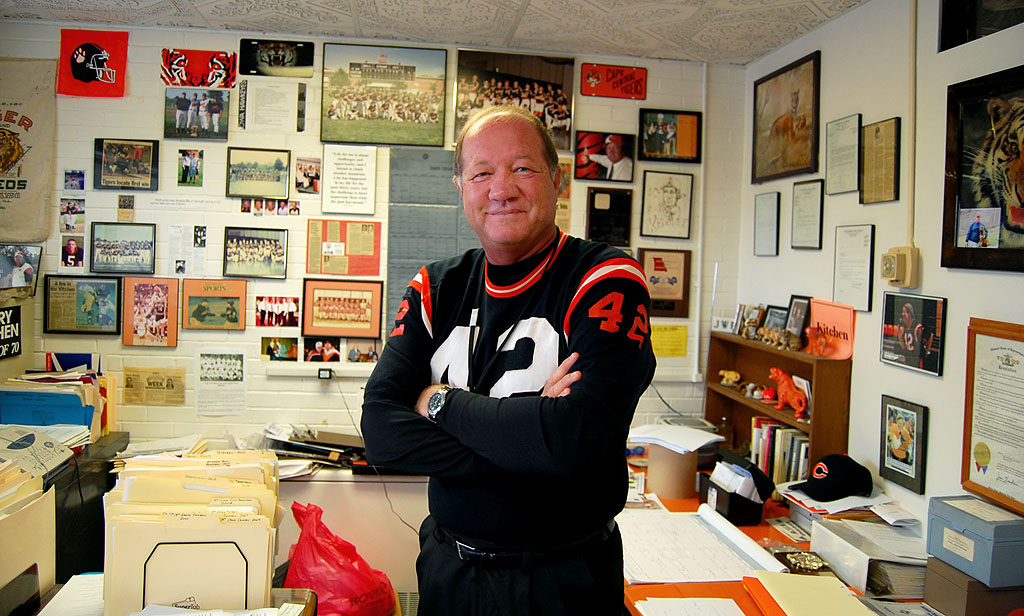
When I ran across this shot of Lonnie Blackwood, right, and someone that Wife Lila thinks is John Young, I thought back to an interview I did with Terry Kitchen in 2009.

Rescued photos from dumpster

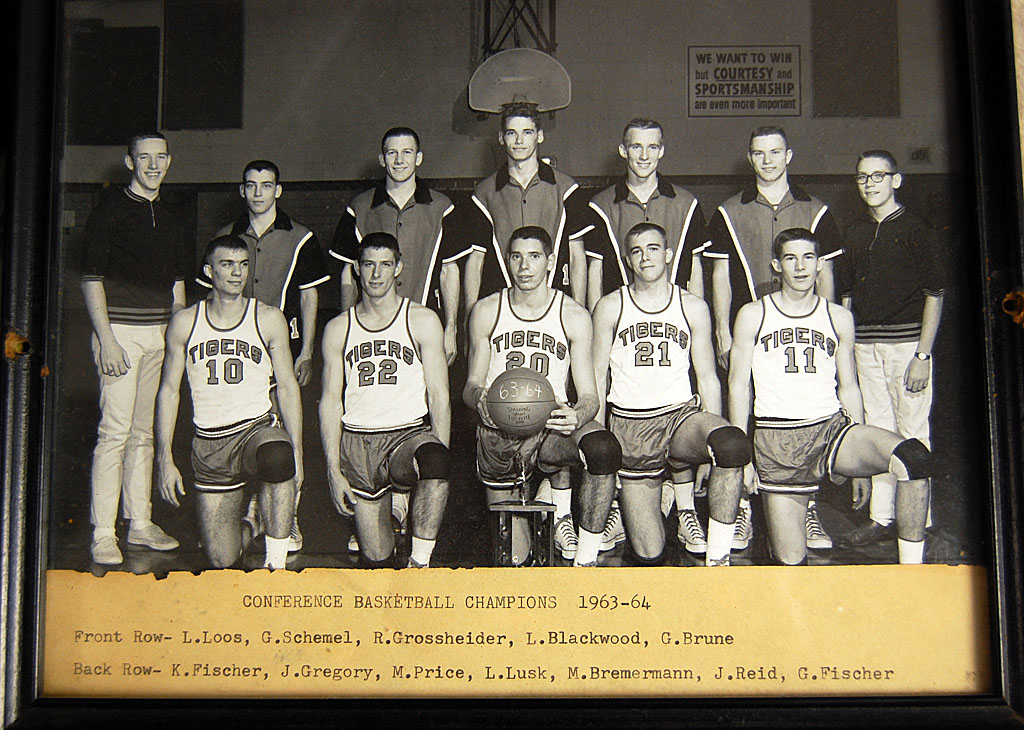
When the new Central High School was built, someone consigned some of the framed photos shown at the top of this picture to the dumpster. Fortunately, Coach Kitchen rescued them.

Gary Schemel, No. 22, was the first Central High School student to be killed in Vietnam.

Terry Kitchen’s Ghostly encounter

When it came time to move the trophies from the old school to the new one, the Coach had an encounter with what he describes as maybe the spirit of one of those old trophies that “didn’t want to leave this place.

Follow this link to watch a video of Coach Kitchen describing the event as only he (and maybe Jerry Clowers) could.

I wonder if one of the trophies these guys were holding were the ones that wanted to stay behind as a record of the team’s Glory Days.

1931 Central High School Band

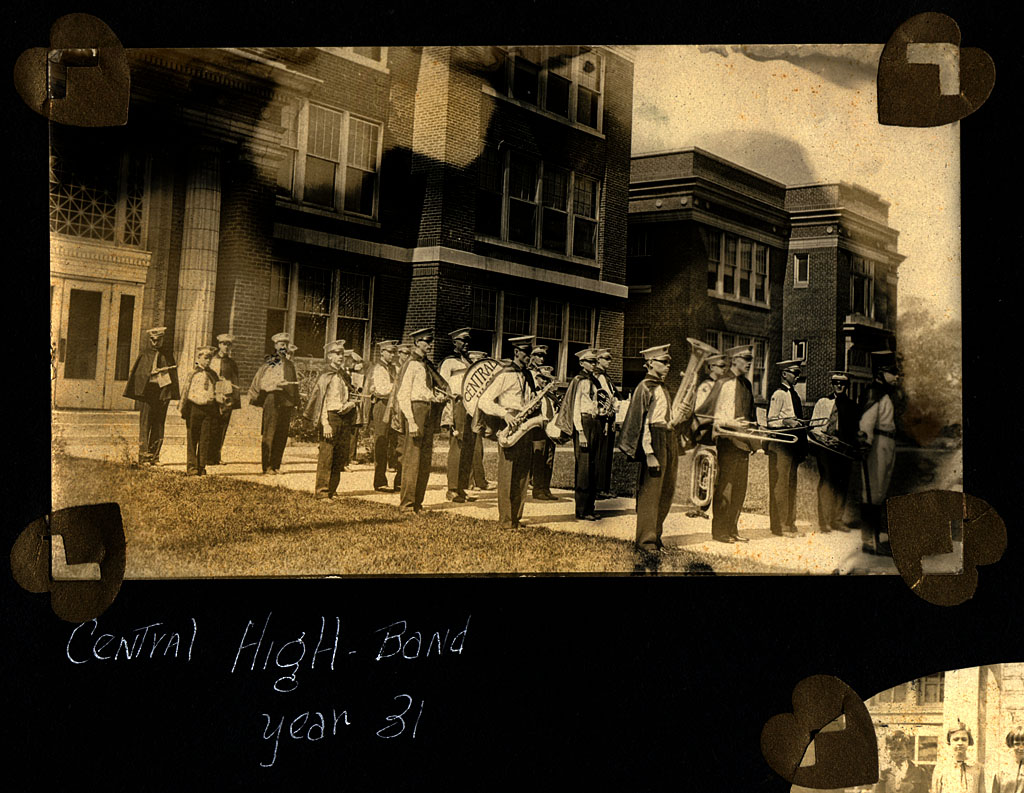
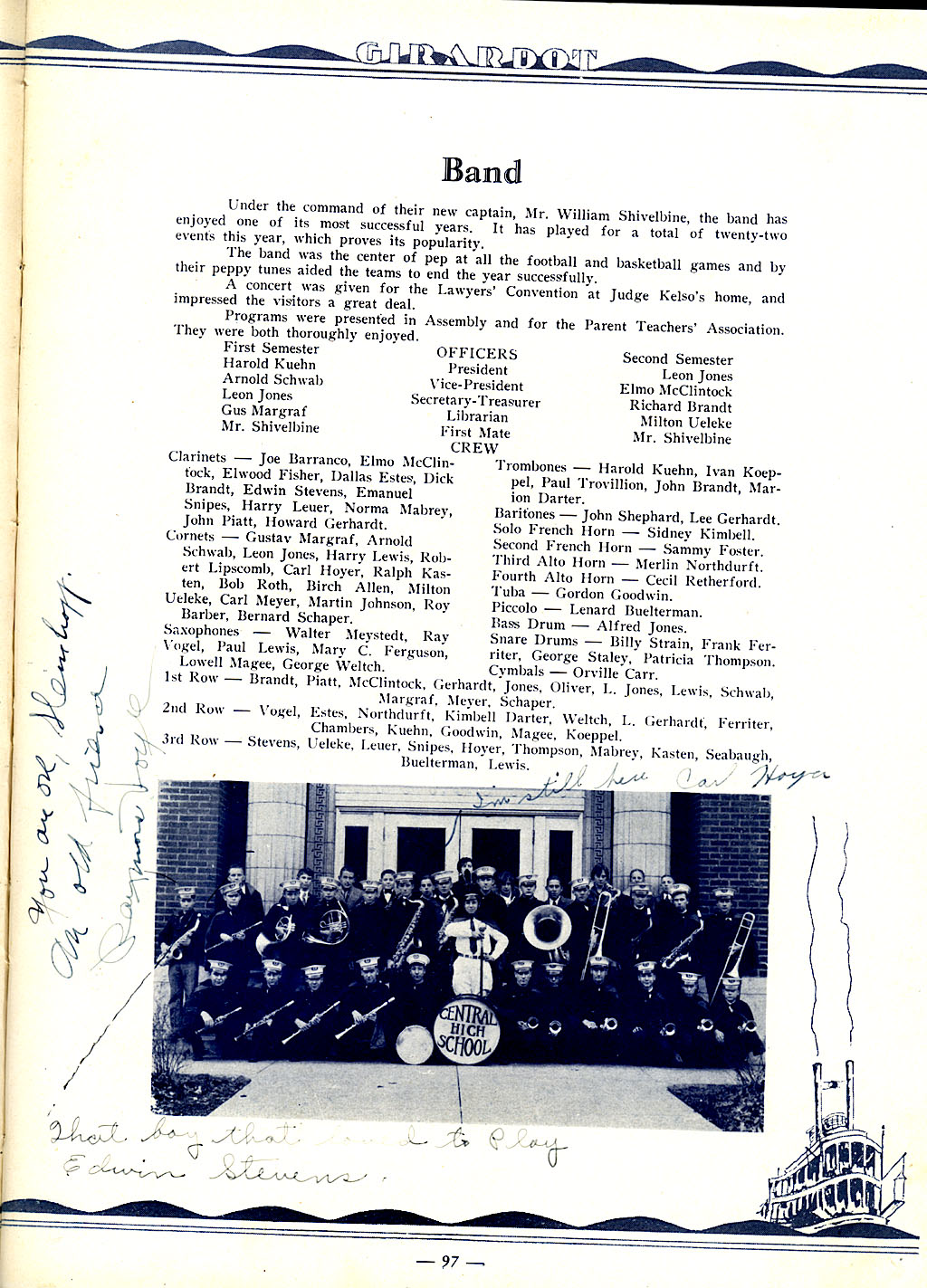
Dad, Central High School Class of 1934, was in the Kodak Club. He had a scrapbook with a photo of the 1931 Central High School Band in it. [Click on any image to make it larger. I saved these in higher resolution than usual so you can blow them up larger to see the names and detail.]

Band in The Girardot

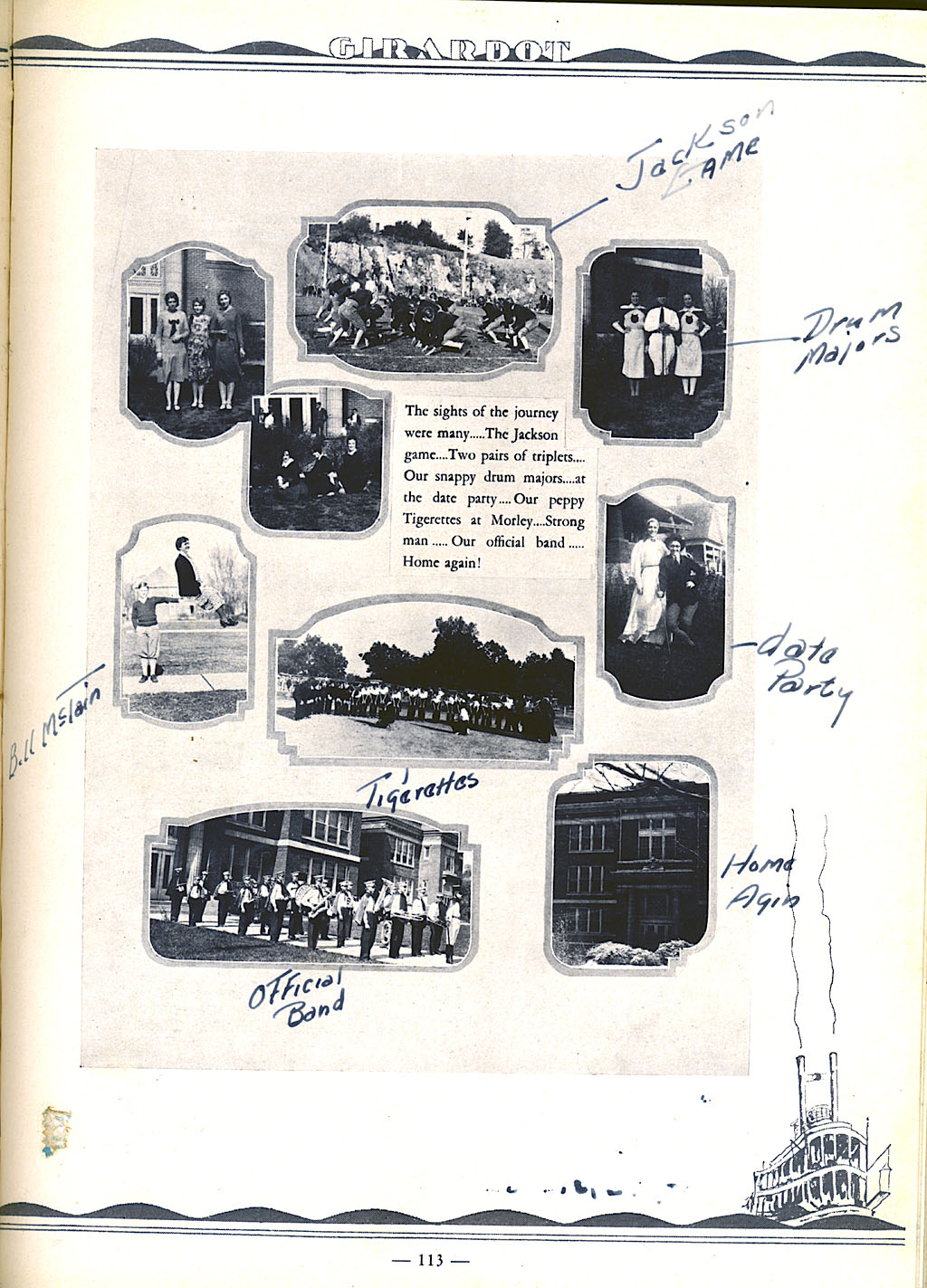
The same picture shows up on the bottom of Page 113 in the 1931 Girardot. I don’t know if he took it or if he just had access to it. Since several other photos in the scrapbook are also in The Girardot, I’m going to guess that he took the photos.

His 1931 book doesn’t list him in the Kodak Club, but he has written on the page that he was a member of the Kodak Club 1931-1932. “In 1932 I was elected president, took great interest in the club.”

I don’t have a copy of HIS senior yearbook – 1934 – but I found one that had belonged to Carlston Bohnsack in a Cape antique shop. Dad, known as Junior Steinhoff back then, was listed as president of the Kodak Club in that one, too.

Familiar names in band

The 1931 yearbook had a nautical theme. It said, “Under the command of their new captain, Mr. William Shivelbine, the band had enjoyed one of its most successful years. it has played for a total of twenty-two events this year, which proves its popularity.”

Milton Ueleke, who went on to teach our generation science at CHS, played the cornet and served as band librarian.

Central High School Today

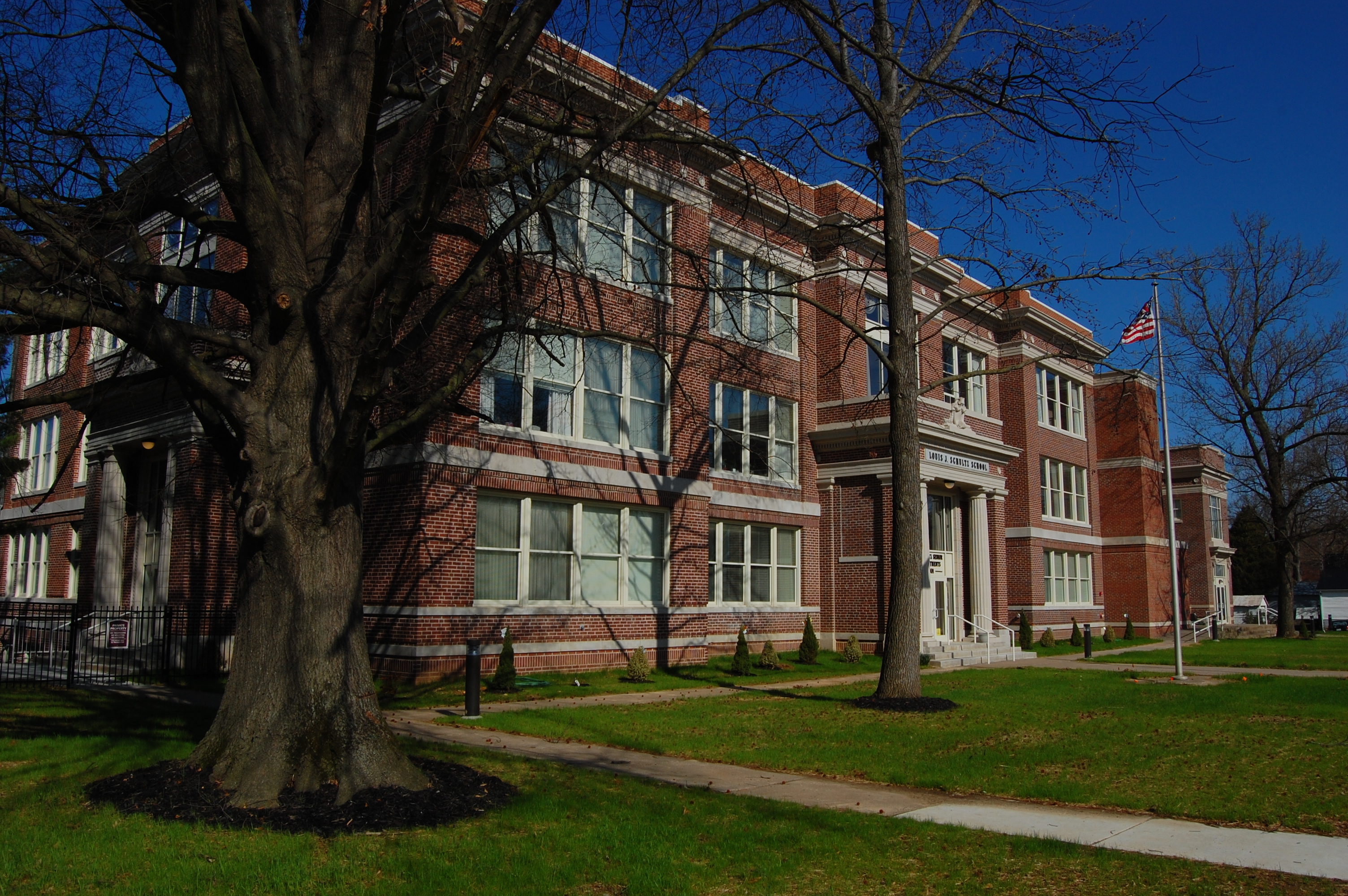
Central High School, which was later named Schultz School, has been renovated and turned into Schultz Senior Apartments.

I featured the exterior of the building Dec. 7, 2010, and the interior on Dec. 8. The lobby and public areas of the building are decorated with murals of photos from the yearbooks and displays of objects that might have been used by the school’s clubs.

Water Plant Goldfish Pond

I scanned a really cool photo of my mother on top of Cape Rock. Then, I looked closely at the photo next to it and recognized it as the fountain in the small park just north of the water plant on Cape Rock Drive. I’m going to guess the photos were taken in the early 1940s. [Click on  the photos to make them larger.]

Aerial of Cape Rock and the water plant today

Here’s an aerial I shot last November of the area. The water plant is in the center, The small park with the fountain is directly across the street. The towboat is pushing barges off Cape Rock. The Country Club golf course is at the top left.

“Outstanding example of good taste”

A May 21, 1931, Page One Missourian story gushed, “A project of the Better Service Club…might be described as one outstanding example of good taste in landscaping and beautification in this city… Situated on the brow of a wooded ravine just north of the site to be occupied by the new $250,000 water plant, the rock garden and its central fountain forms an attractive background to the woodland.

This garden was built for the employees by Judge I.R. Kelso of the Utilities company… The cost of lighting the place and planting it to flower and shrubbery will be borne by the employees, who will also maintain the project.”

Has electric fountain

“A feature of this garden spot is an electric fountain, the only one of its kind as far as is known in Southern Missouri. Four huge stone pillars form an entrance to this small park, two of the pillars being located at each end of the park and containing an ornamental lamp, and two others forming a support for a proposed illuminated sign.

The large pool, including the fountain, forms the central structure of the garden. The entire garden is bounded by an attractive design of stone arranged in a tasteful manner under the supervision of Tony Haas. Around the edge of the large pool a walk has been constructed, leading from the entrance, and on the inside of the walk is a concrete, rock and brick trough for water planting. The fountain will be a bowl-shaped affair, with a circular spray which can be adjusted to a diameter from seven to 70 feet. A center spray will be forced about 20 feet high.”

[Note: I read in another account that the pool was shaped to resemble a light bulb, keeping with the utility theme.]

Night illumination

“Around the base of the fountain beneath the water surface a sealed case contained lights of seven different colors will be arranged to give a vari-colored illumination to the sprays from the fountain, forming a beautiful spectacle at night. Four floodlights concealed in the entrance pillars will also play on the fountain.”

Sun dial and crystal ball planned

“North of the pool will be a sun dial and a crystal ball will also be included in the arrangement. A pleasing feature of the beautification plans is the retaining of much of the native growth of the site. A large tree and smaller trees have been left growing at advantageous points in the garden.

“It is the plan of the employees to landscape an adjacent plot of ground to the park and provide a recreation center which will include tennis courts and other similar facilities.”

Almost lost?

I could swear that I read somewhere that the park was almost lost not too long ago but a land swap was worked out. I’ve looked through all my bookmarks and couldn’t find the story again. The good news is that is still looks much like it did in the 40s and will, hopefully, be there for many more generations.

Missourian photographer Fred Lynch and I compared notes one day about how many times we had relied on that fountain for weather wild art.