Turtles, Frogs, Dogs and Desperation

A question that comes up from time to time is where do you find inspiration and story ideas?

The short answer “desperation.”

There was this big monster in the pressroom that had to be fed every day. I thought I had put The Monster behind me, but I’m filing more stories doing this blog than when I working for newspapers. When you’re doing feature-type stories, you can’t rely on plane crashes, fires and floods to bail you out. You have to dig up topics out of the thin air. Here’s an example of  how ideas pinball all over the place, and rarely in a straight line.

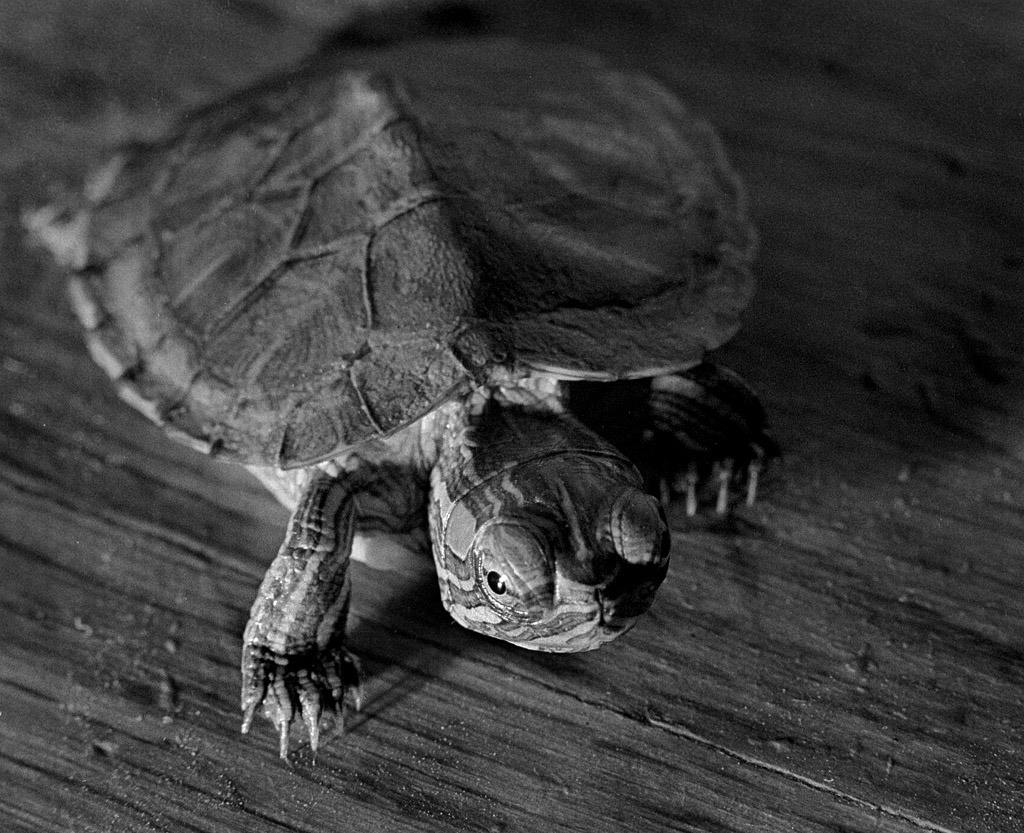
I was looking at some random negatives from Cape when this turtle caught my eye. This was a Steinhoff pet from back in the days when we were made of tougher stock. We didn’t know then that the tiny turtles, available in plastic bags at the SEMO Fair or in every pet store, were death on the half shell. Don’t believe me? Check out this FDA warning about Salmonella-bearing tiny turtles. (Click on any photo to make it larger. Don’t forget to wash your hands if you touch the turtle.)

But, like they say in the infomercials, there’s more. A turtle made me think of a frog.

Pomeroy Frog Jumping Contest
Athens (OH) Messenger photo partner Bob Rogers and I would make contact sheets of our film, cut out the frames we thought would make a photo essay, push them around on a layout sheet until they looked right, size them to fit and make the final prints. The “winners” would be taped to the layout sheet to guide the composing room in making up the page. The “losers” would either get tossed in a box or, if we thought they might fit into a future layout, they’d get tacked on the wall.

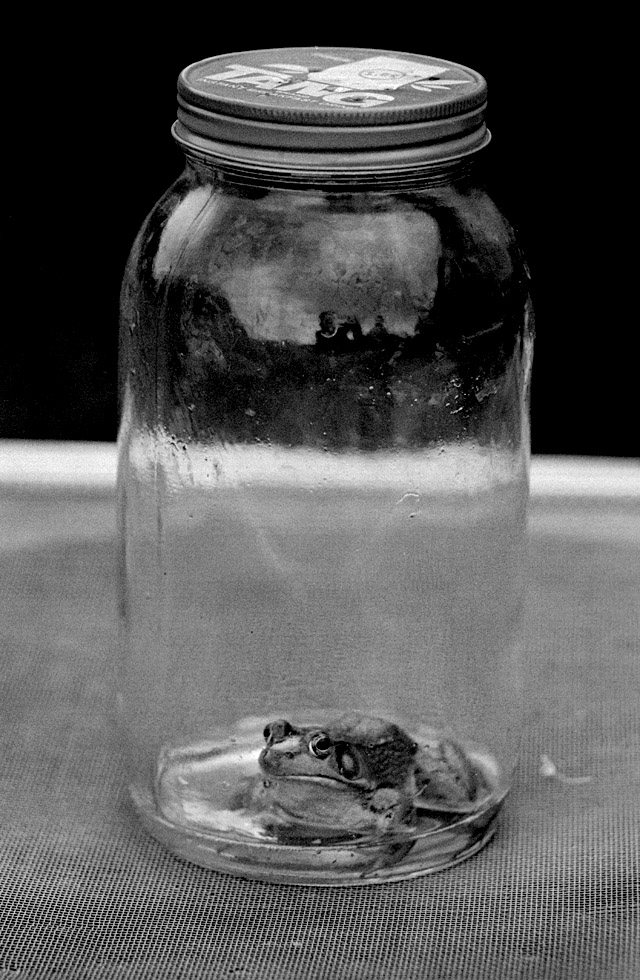
After I covered the Pomeroy Frog Jumping contest toward the end of June, 1968, I had one photo that made it on the Wall of Desperation. It languished there until October 1. The well was dry. Some days you just can’t find anything worth shooting. I reached up on the wall, ran the photo 8-1/8 inches wide and 12-3/8 inches deep with this cringe-inducing caption:

“Frost is just a frog’s hop away, so don’t let winter get the jump on you. Don’t let being bottled up until spring jar you, though; about the time it seems a long time coming, warm weather will spring out.”

Bob, my nominal boss, didn’t give me any grief. He’d been there himself.

October 2, the day it ran, seemed to be a good day to stay out of the office. The publisher gave us a lot of latitude, but I didn’t want to discover his outer limits.

Another dry day
There’s a reason why I bring up the frog, as much as I’d like to forget it.

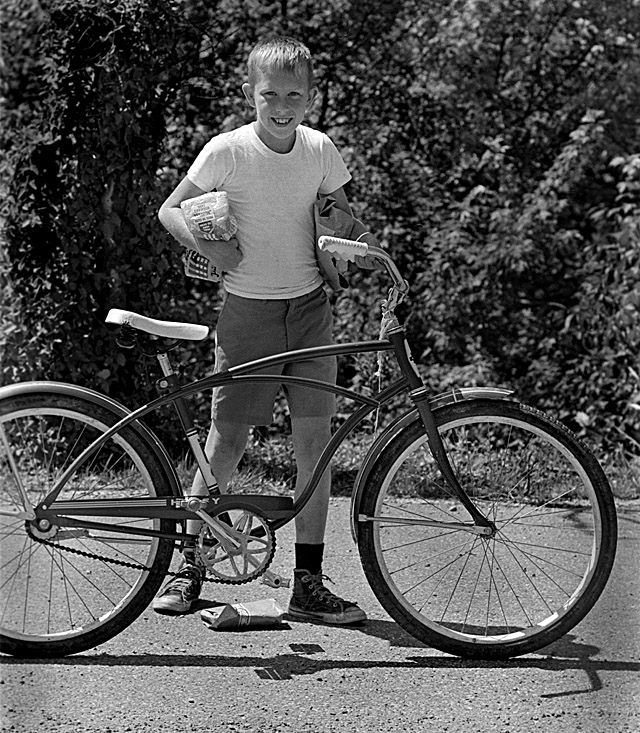
I was having another one of those dry days. Nothing was clicking. I shot a sequence of a boy trying to make it home on his bike with a loaf of bread under his arm, but the situation was so weak I didn’t even bother to get out of the car to get the kid’s name.

Mrs. Nellie Vess
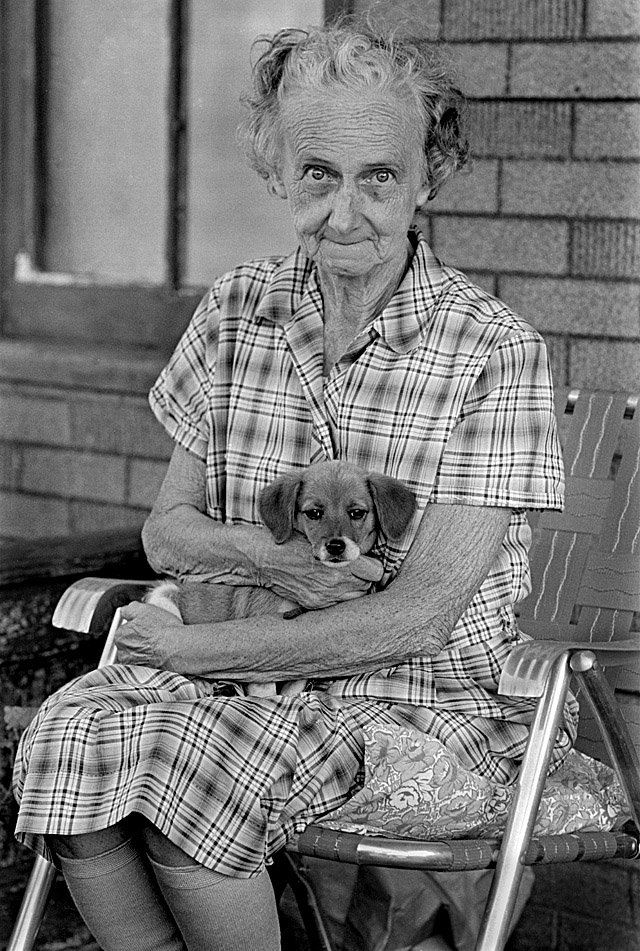
The shadows were getting longer and longer and the day was getting shorter and shorter. This time I didn’t even have the frog on the wall to plug the hole. I made a turn down a dusty gravel road near Trimble. That’s east of Nelsonville and south of Glouster. If you don’t know where those towns are, don’t look for Trimble.

I spotted Mrs. Nellie Vess, a couple of kids and a puppy on the porch of a modest frame house with asphalt shingle siding. The home had seen better days, but it was still neat and clean.

After introducing myself and chatting for a few minutes, Mrs. Vess invited me in for a cold glass of water. I normally don’t accept things when I’m on an assignment and I really wasn’t thirsty, but turning down the water would have hurt her feelings. I followed her through her well-kept house to the kitchen.

Taped up on the refrigerator was The Frog. “I just love that picture,” she said.

“Lonely no more”
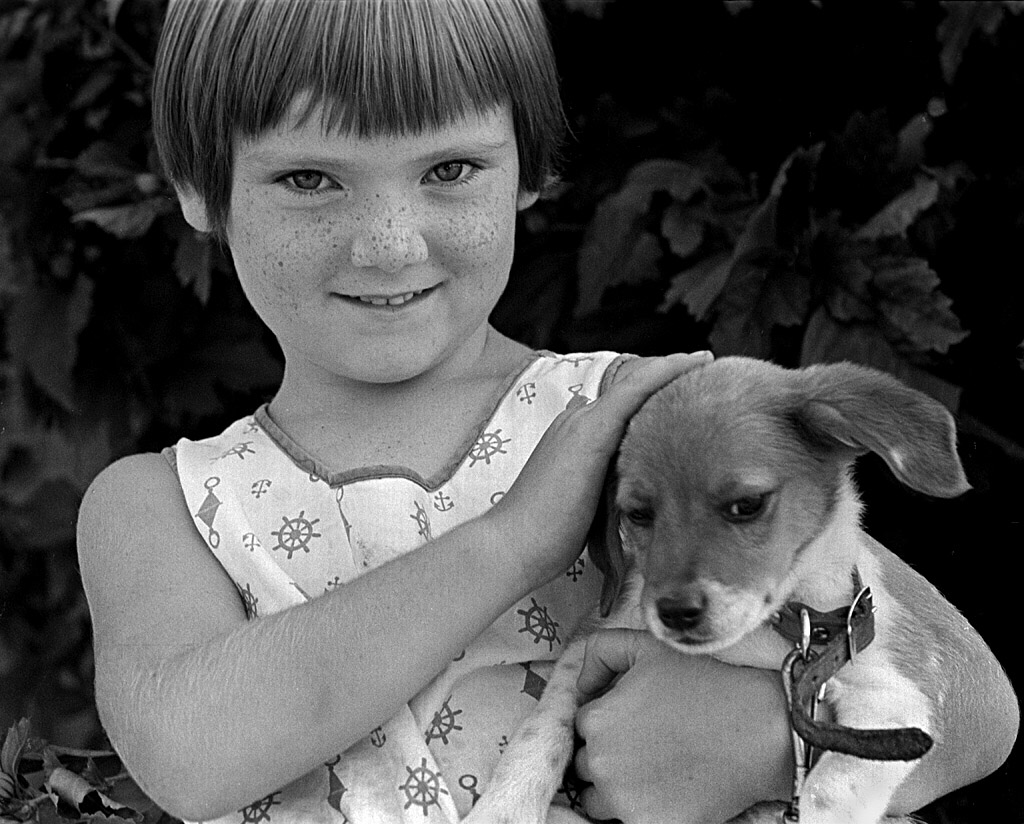
“Lonely No More” was the headline I put on the page. My caption was sparse: Mrs. Nellie Vess was lonely. Not many people passed by her home in Trimble and those who did seldom stopped in to chat. That was before last week when Patty Sue – part beagle and part question mark – moved in.  “Now I’ve got lots of company,” she says. One of her frequent visitors is Rhonda Kay Judson, 5.

Stories should have a happy ending
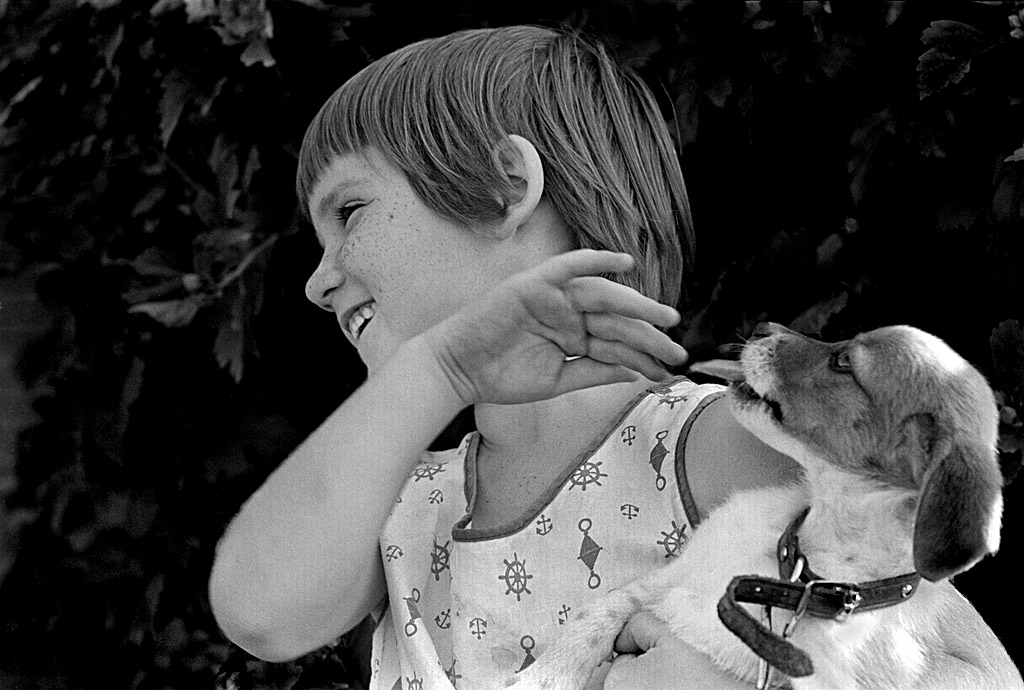
Don’t you just love heart-warming stories with happy endings? It’s too bad that too many don’t turn out that way.

A few months after the story ran, my travels took me down that gravel road near Trimble. Mrs. Vess was sitting by herself on the porch. There was no Patty Sue. There were no neighbor kids. Mrs. Vess told me that she had to go into the hospital for a brief stay and she had to give Patty Sue away. She was lonely again.

I’d like to tell you that I stopped by to see Mrs. Vess to keep her company from time to time, but I’d be fibbing. I never saw her again. I was just starting to learn that getting emotionally involved with everyone I photographed would soon empty my empathy pot and lead to burnout or worse. I could empathize with my subjects long enough to capture their souls, but then I had to cut them loose.

I turned down her offer of a cold glass of water on the last visit. And, I didn’t look in the rearview mirror when I drove away down that dusty gravel road.


A Home Dies

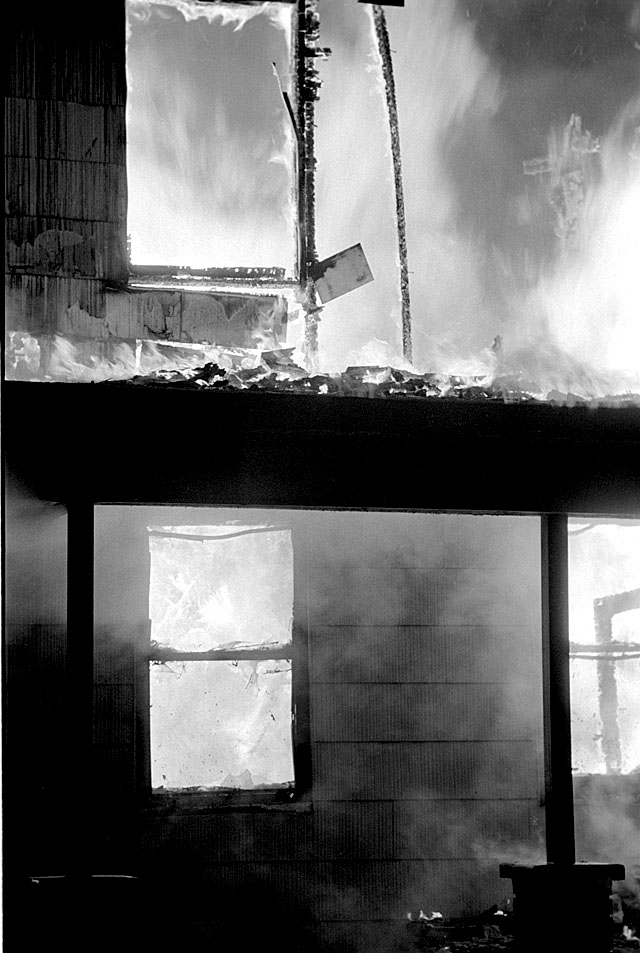
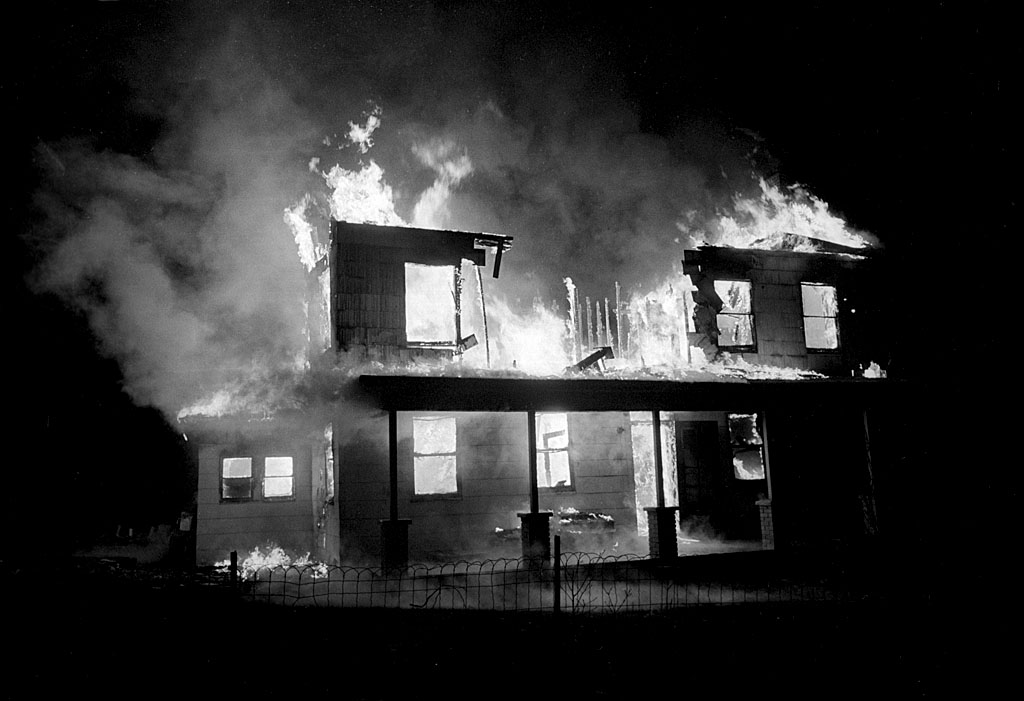
I hate fires. Maybe it’s because I’m a pack rat, but I hate to see everything that someone owns go up in smoke and flames. Even if the owners have insurance, the most precious things can’t be replaced.

I’m going to be sneaking away from Southeast Missouri more frequently. The Lutheran Heritage Center and Museum in Altenburg has invited me to speak on the topic of regional photography at a conference this fall, so I’m digging through stuff that I’ve taken outside Missouri. When I publish here, I’ll try to find something to say about it that will still be interesting.

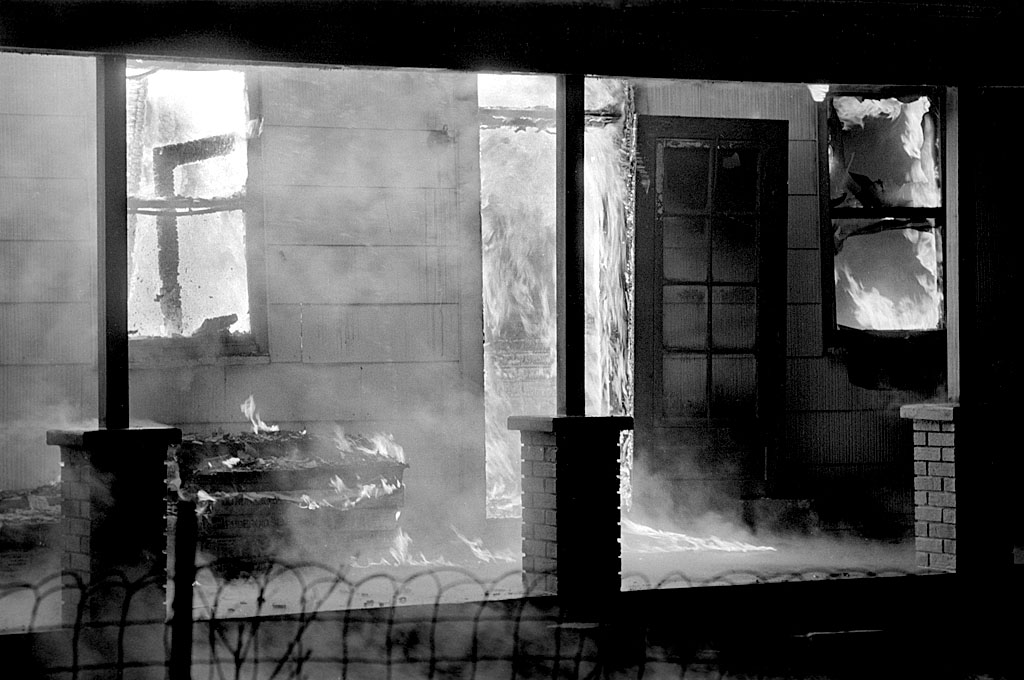
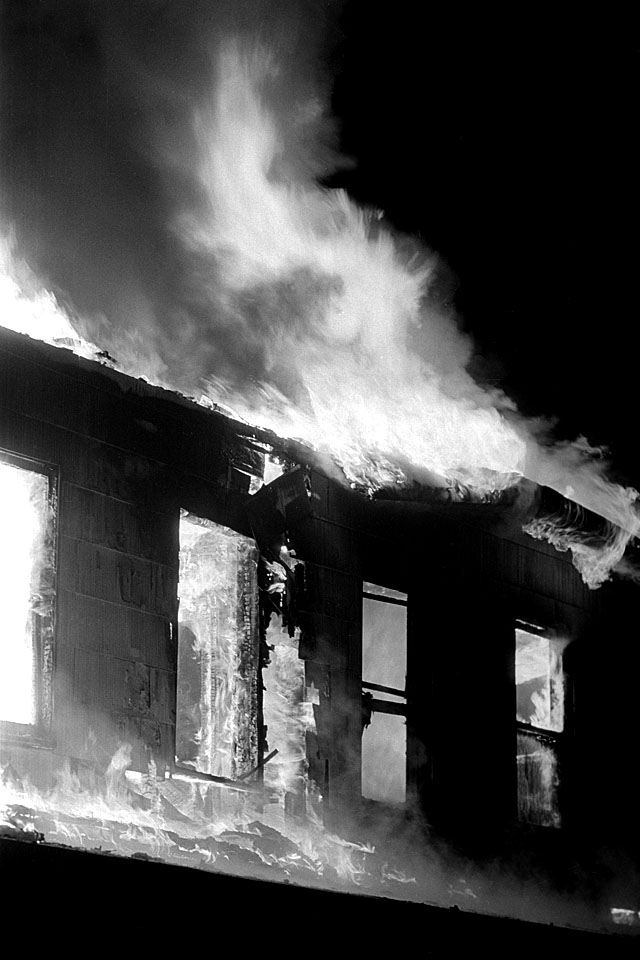
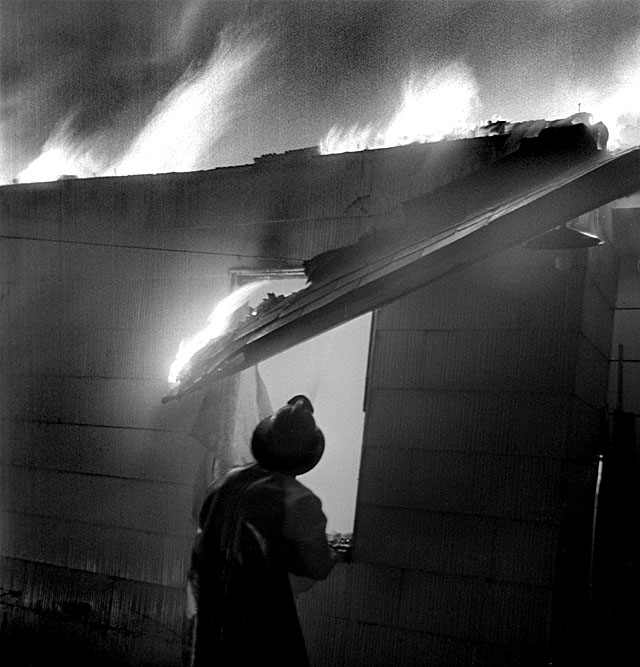
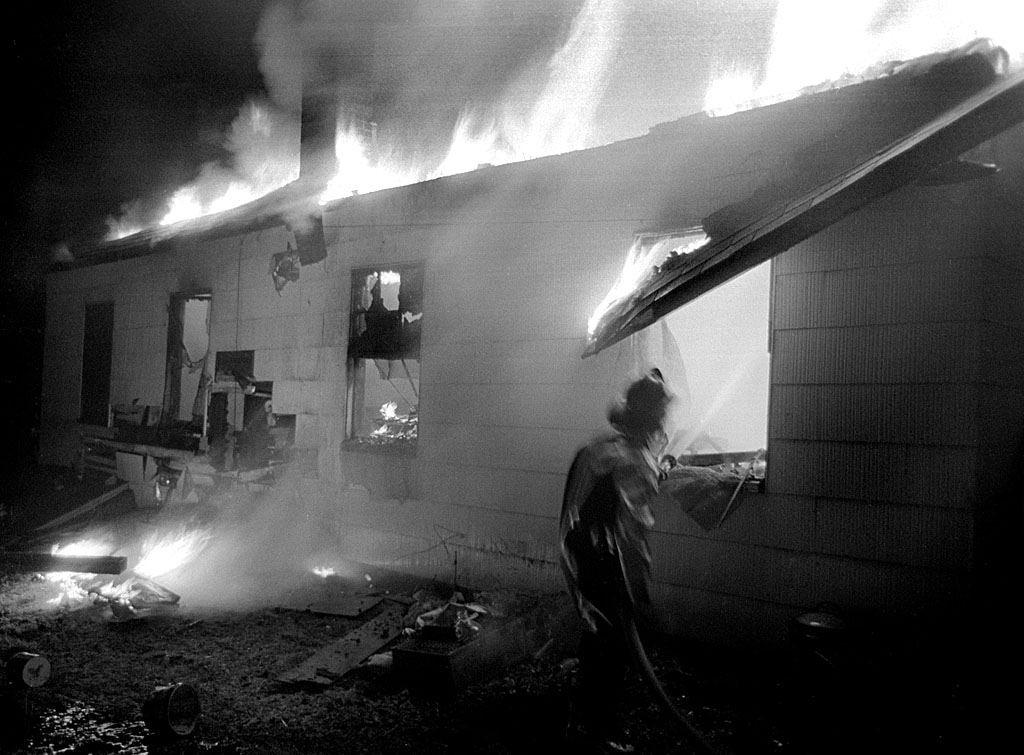
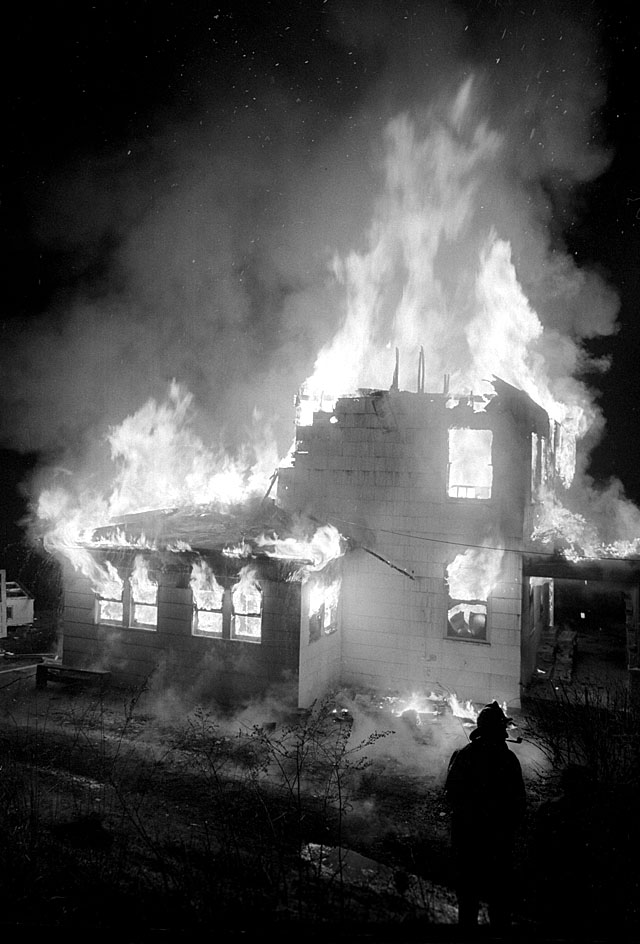
The Reid Fire

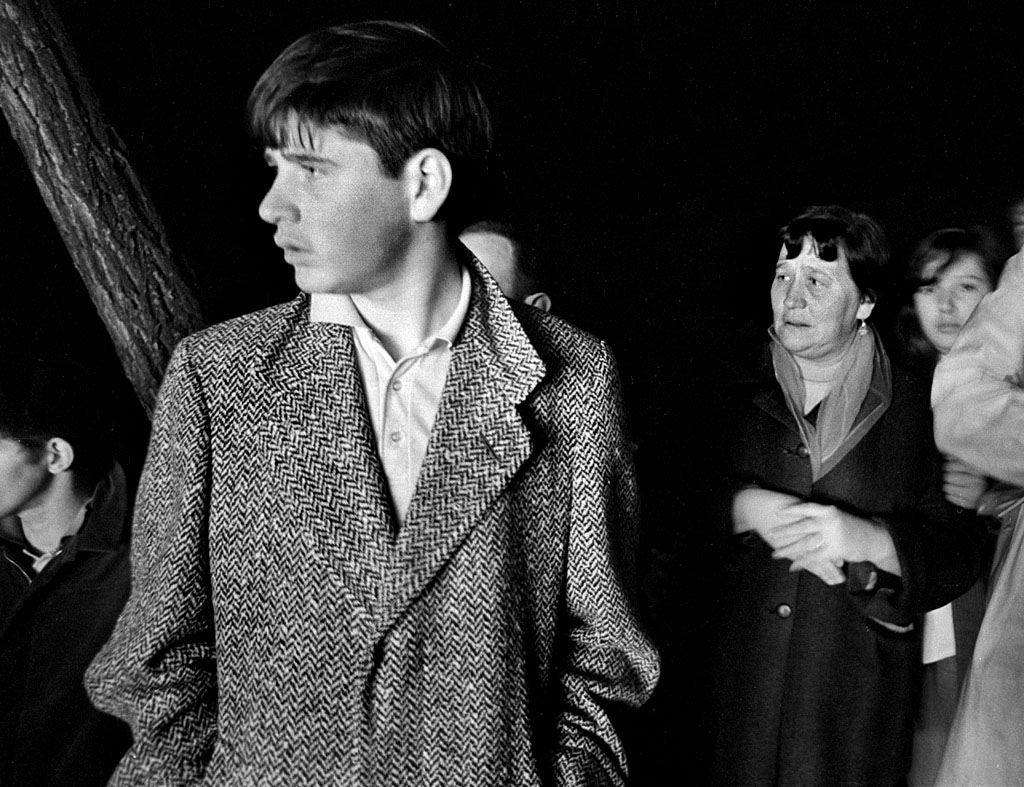
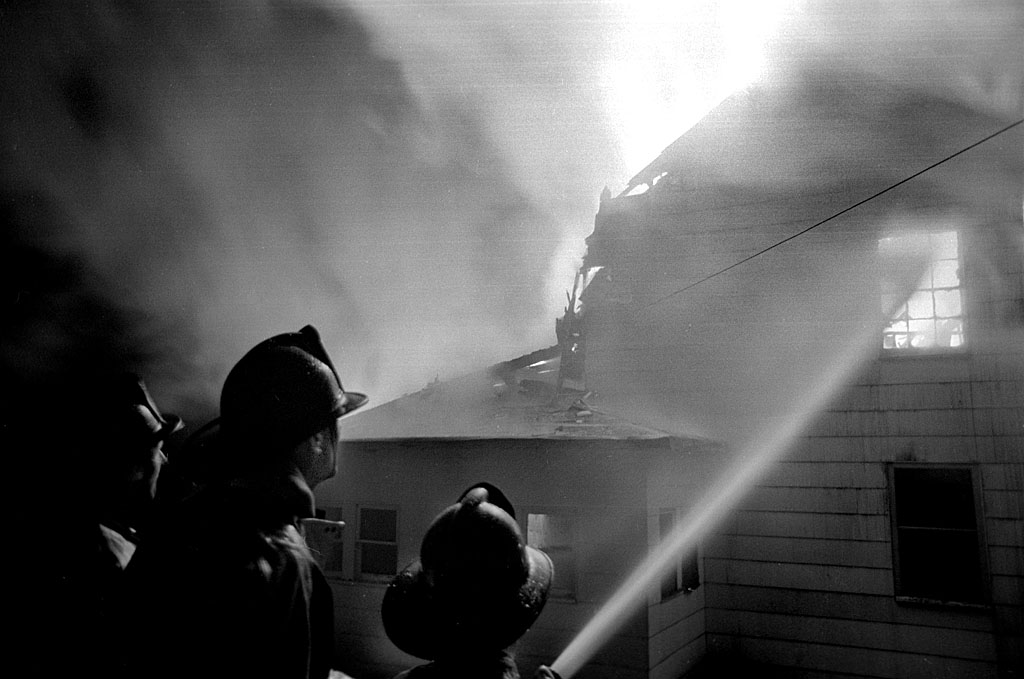
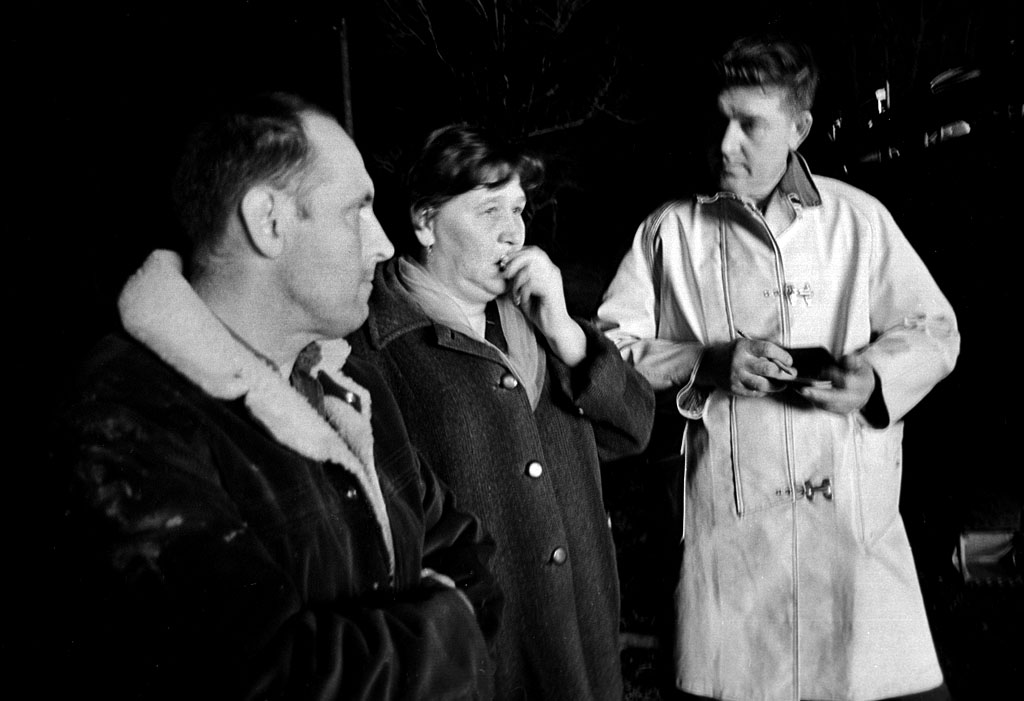
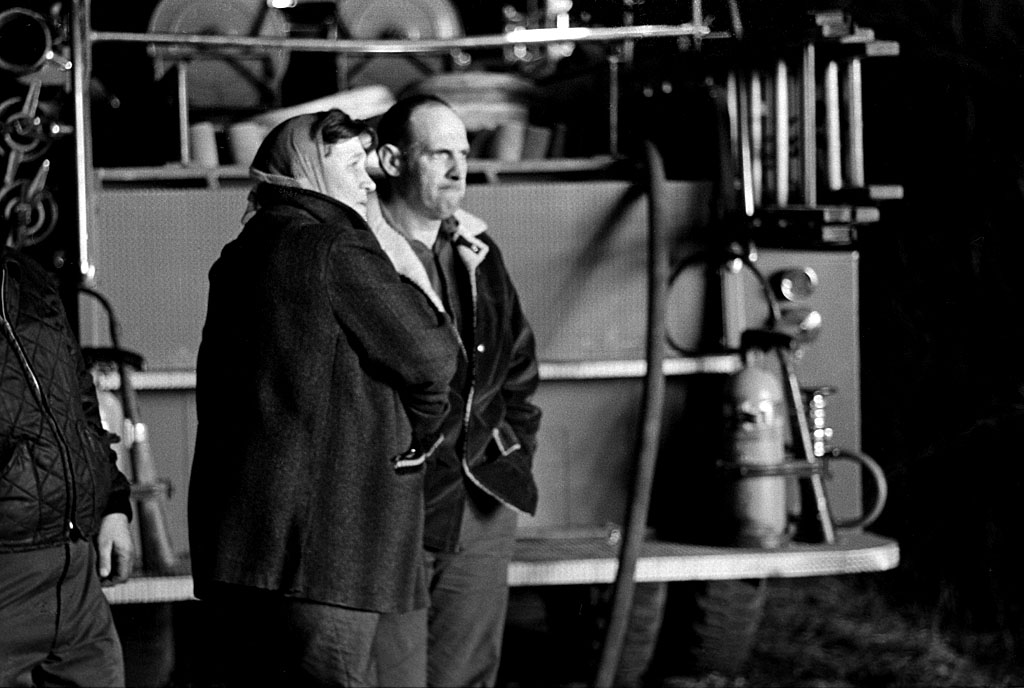
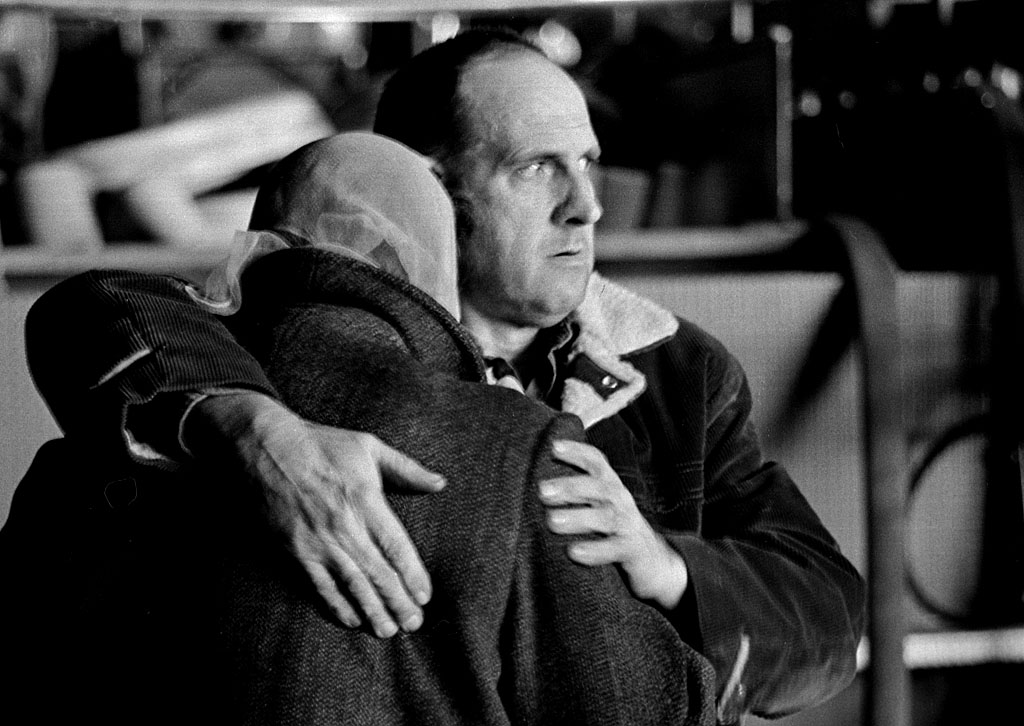
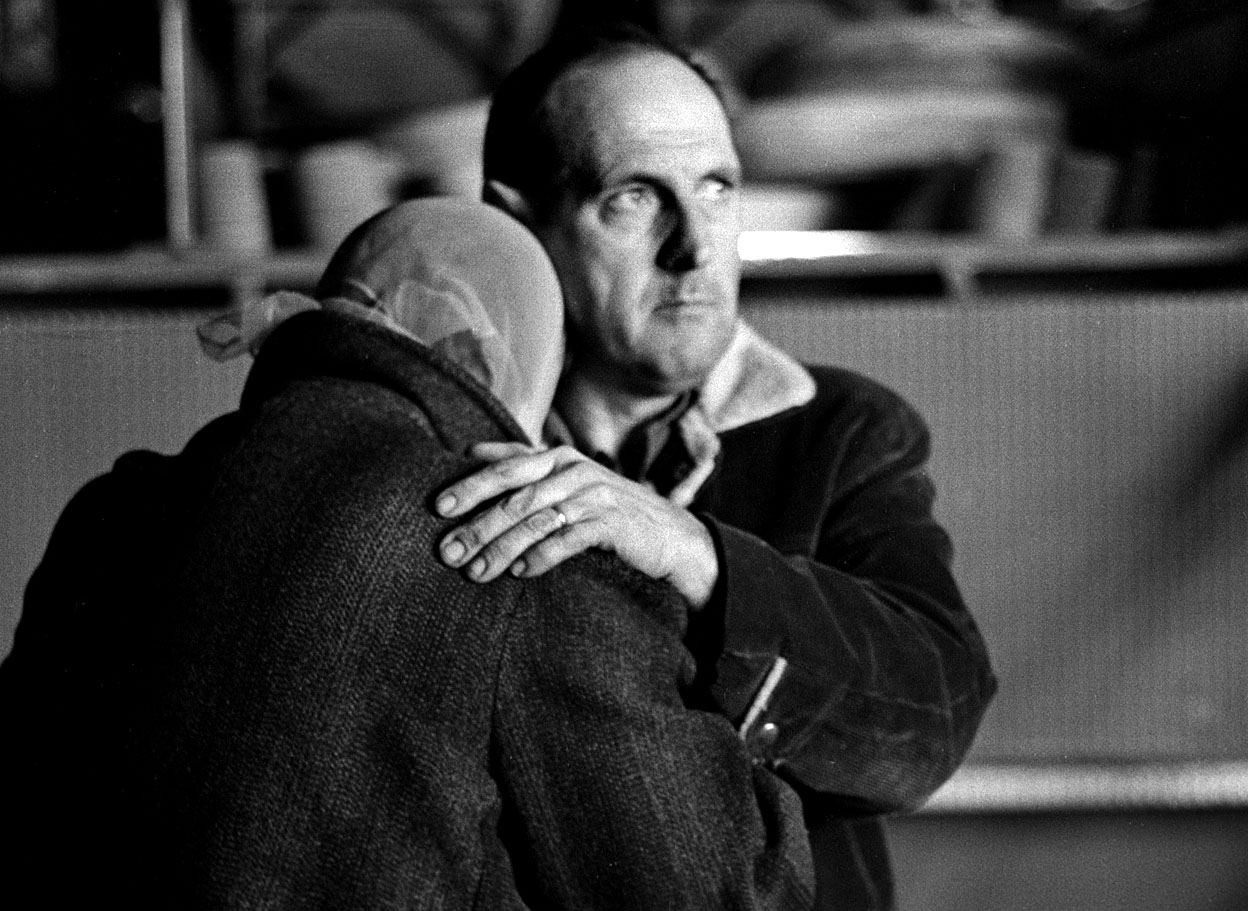
The January 6, 1969, front page of The Athens (OH) Messenger contained the fire shot at the top, along with a short news story with the 5Ws and H basics. On what we called The Picture Page, I ran three other photos.

A Home Dies

Sometimes it’s harder to write a short caption that it is a long one. I hate to think of how many times the floor around my desk was covered up with wadded-up carnations of false starts.

This wasn’t one of those nights. When I got back to the office, I slid a piece of copy paper into our battered old manual typewriter and banged out, “The Reids watched their home die last night. A man at the fire said nobody was hurt. He was only partly right. -30-“

I don’t know if that was good journalism, but it was how I felt sitting there smelling of smoke and still shivering from the cold, grateful that I had a house to go home to.

How do you cover a fire?

Hang around a fire station long enough and you’ll hear a firefighter use the term “good fire.” He or she doesn’t mean that they enjoy seeing someone’s home or business burn. What they mean is that “a good fire” is one that tests them and their abilities.

Photographers use the same language. That doesn’t mean that you don’t ache for the people you are photographing; it just means that you have to channel that empathy towards creating an image that will bring that tragedy home to the reader. You exist in a strange gray area where you aren’t a spectator, but you also aren’t a participant. You are the eyes of the community.

I tried to be as unobtrusive as possible. In this case, I shot available light so I wasn’t popping a flash in their faces and I used a medium telephoto lens so I could stay back 15 or 20 feet.

“I was busy trying not to die”

I tried to salve my conscience by telling myself that my photographs might cause the community to rally to the family’s aid. After the fact, I’ve talked with victims of tragedies to see if my presence caused them any distress.

I photographed a highway patrolman being worked on by medics after he had been shot at a traffic stop, then I requested the assignment to cover his recuperation. On our first meeting, I took along a photo of him on the ground. “Did it bother you when I took this photo?” I asked him.

“Actually, I was so busy trying not to die that I didn’t even notice you were there,” he said with a twist of a smile.

A salute to the chimney savers

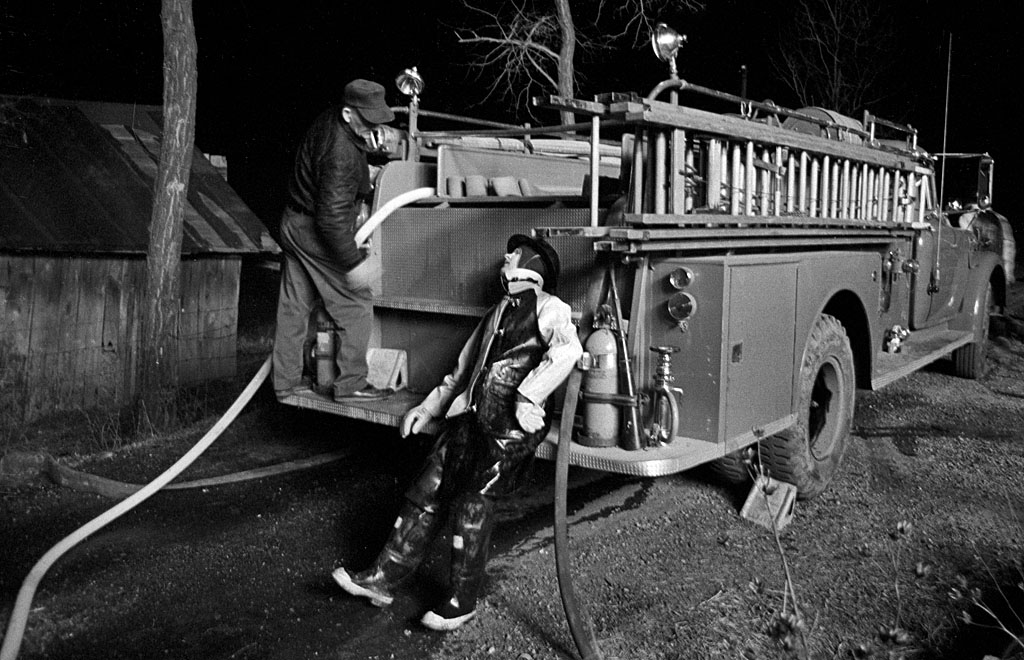
Small rural fire departments made up mostly or all of volunteers are sometimes called “chimney savers” because that’s often all that’s left at the end. That’s not the fault of these guys who put their lives on the line. By the time the volunteers get to the station, crank up the truck and arrive on the scene, a lot of time has passed. The three and four-minute response times we’re used to in cities might be 15 to 30 minutes in the country. On top of that, it’s unlikely that there will be a fire hydrant nearby. Water has to be relayed from where there is one or a pond or stream has be be drafted for a water supply.

If I got there about the same time as the truck, I’d set my camera aside to help the firefighters pull hose and get set up. Part of that was so they’d be more likely to help me get my story and photos; part of it was because that’s what you do in a small town. I also served as an extra set of eyes for them. Because I wasn’t actively involved in squirting wet stuff on red stuff, I could warn them of power lines, signs of a flashover or a wall or roof that looked like it might collapse.

Photo gallery of a fire

Here’s a selection of photos from that cold January night. It’s been 43 years since I last looked at these pictures. I see things in them today that I didn’t see when I edited the film originally. After I had made my selection of the two family photos that ran in the paper, I tuned out the other frames. I didn’t realize until 2012 the range of emotions I had captured.

I’m glad I’m not chasing sirens anymore. It’s been a long time since I’ve used the phrase “good fire,” too. Click on any photo to make it larger, then click on the left or right side of the image to move through the gallery.


Missouri Highway Patrol

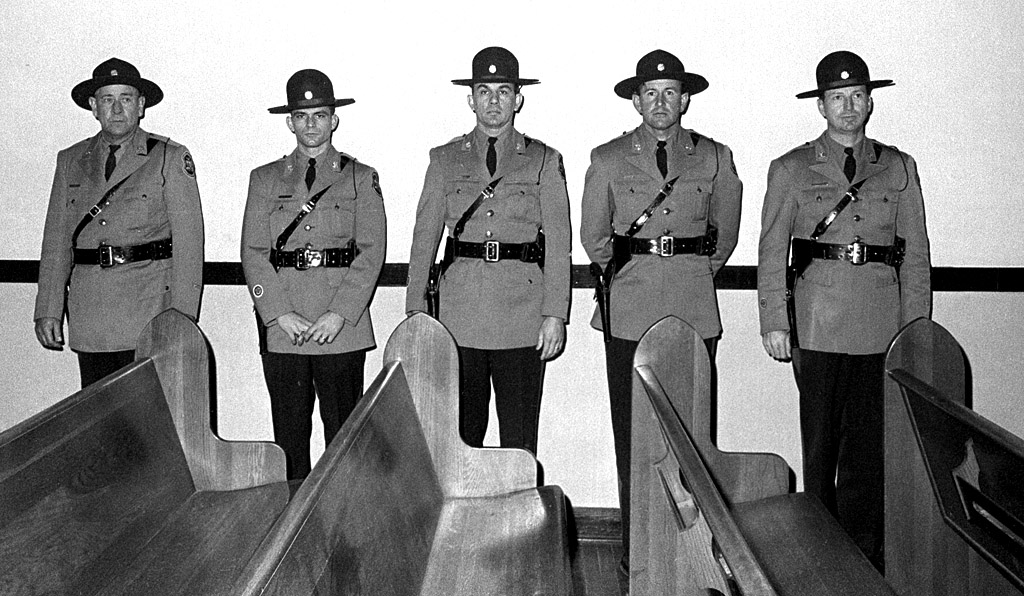
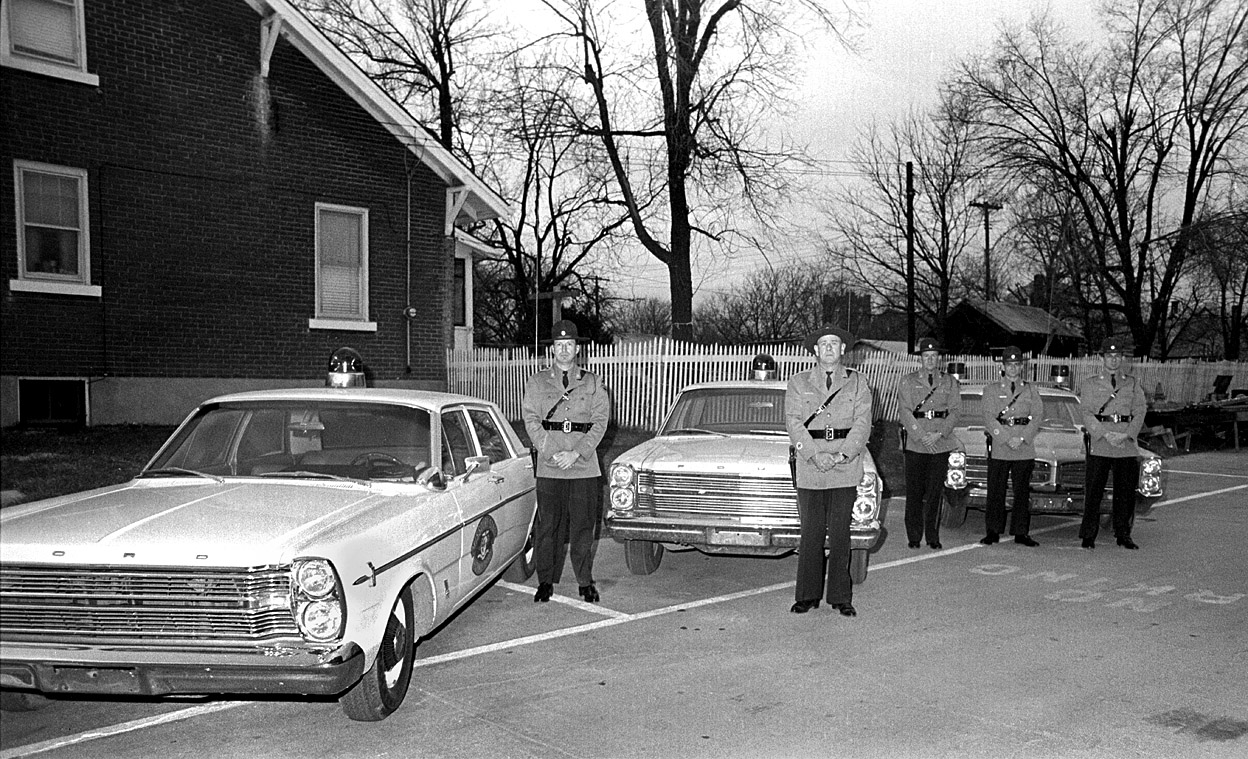
I’d rather see these Missouri Highway Patrol troopers here than in my rearview mirror with their red lights spinning. The negative sleeve is dated January 5, 1967, but I didn’t see it in the paper around that date. I thought it might have been taken for the 1967 Achievement Edition and, in fact, there was a story about the Troop E in the February 21 paper. These aren’t the photos that ran with the story, though.

At some time or another, I ran into just about every trooper that worked the counties around Cape, but these guys don’t look familiar. The trooper I knew best was Norman Copeland. He should have been a recruiting poster for what a Highway Patrolman should look like.

How NOT to shoot a photo

This is not how to shoot a photo of a bunch of people. I violated the newspaper rule of thumb that a person’s head should be at least the size of a nickle in the print. The subjects are way too small.

My fashion faux pas

I should have remembered that lesson when I moved to Ohio.

The society editor at The Athens Messenger went to a lot of trouble to round up some college girls to model some clothes for a fashion shoot. I don’t like to set up pictures and my idea of fashion is blue jeans and Red Wing boots, so I probably should have handed the assignment off to Bob Rogers, the other photographer. Still, I loaded the gals into my car and we headed off to a state park where we had a great afternoon shooting all kinds of artsy stuff.

The next morning, I dropped off the prints and waited for the praise for a job well done. Marge Straight, the soc editor, looked at them and, in her usual quiet, diplomatic way, said, “Ken these are very nice, but the idea of a fashion shoot is to show the clothes.” Luckily the models were amenable to another day frolicking in the woods.

I used to tell my staff that I’d never ask them to shoot an assignment that I hadn’t shot or wouldn’t be willing to shoot. I lied. I dodged every opportunity to go to New York for the annual fashion shoots.

2012 Was Going to be Big Deal

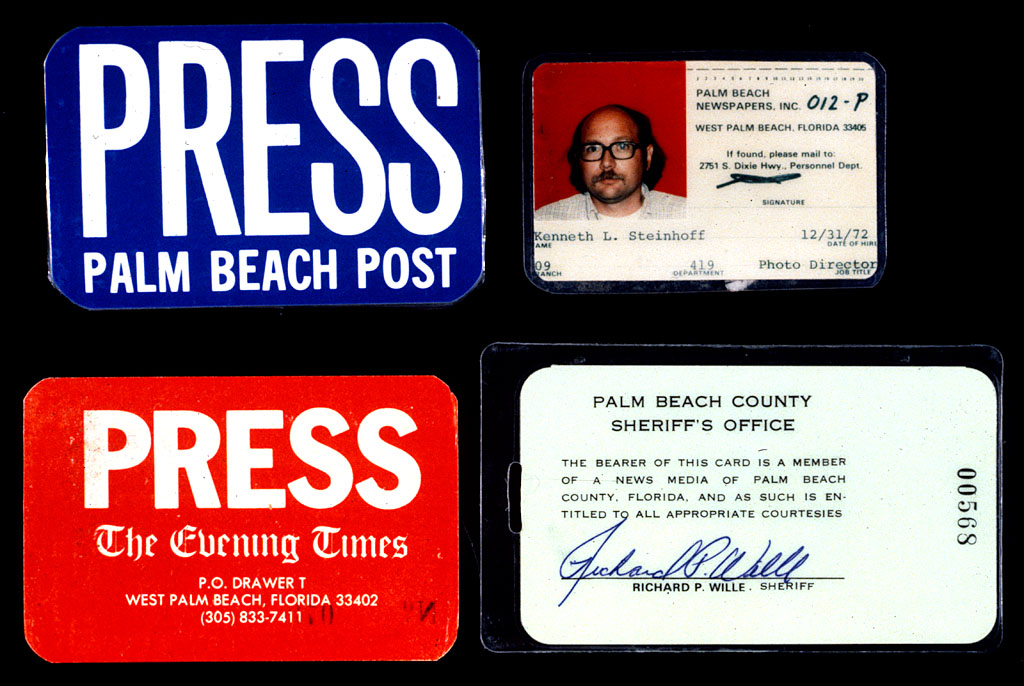
After working for papers in Missouri, Ohio and North Carolina, I got a job offer from the one newspaper I had been admiring for years – The Palm Beach Post. When I moved out of the Midwest into Gastonia, N.C., I became part of the National Press Photographers Association’ Region Six, which encompasses the southeastern part of the country. Because I slept with a police scanner and worked 18-hour days, I did pretty well in photo contests that were normally swept by the Florida papers, which ran photos well and had some of the best color reproduction in the country. They took notice of this nobody at a nothing newspaper who had suddenly popped up on their radar screen.

I had the chance to meet some of the West Palm Beach staffers at a couple of conferences, and we hit it off. The next thing I knew I was offered a job without even submitting a portfolio. I figured I’d be in a better negotiating position if I actually met the boss in person, so Wife Lila and I made arrangements to drive down to West Palm Beach for the interview. They put us up in a beachfront hotel – nothing fancy, but it WAS on the beach.

I finally agreed to take the job at the same money I was making in North Carolina – $180 a week. (I found out a couple of years later when I became director of photography that was the highest salary on the staff at the time.) Nobody bothered to mention that Florida ain’t as cheap as North Carolina. Our rent in Gastonia was 90 bucks a month. In West Palm Beach, it was double that.

They didn’t exactly pay moving expenses, either: they put you on the payroll two weeks before you actually started working to help defray your costs. As it turned out, my official hire date was 12/31/72, which turned out in my favor. By being hired in 1972, I was elegible for two-week vacation in ’73. If I had been hired one day later, I wouldn’t have had a paid vacation until 1974.

(You can click on any photo to make it larger if you want to see my waistline expand and my hair recede.)

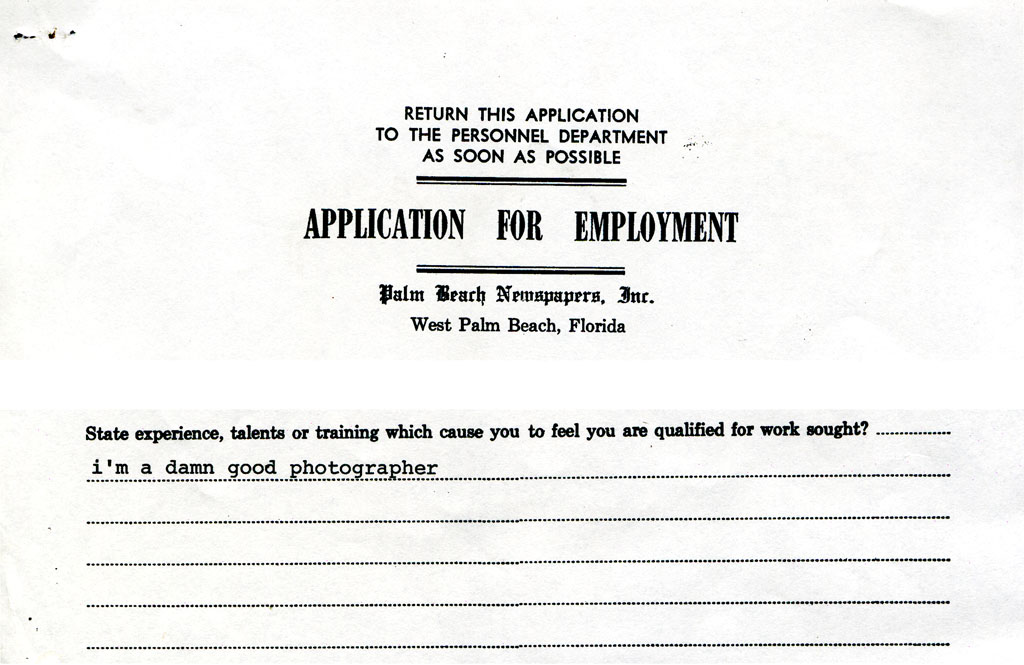
“You have to fill out an application”

The boss caught me when I was coming back from an assignment. “I need you to fill out an employment application,” he said.

“You’re kidding me, right? I’ve been working here for two weeks.” Yep, I had to fill it out.

Still not sure he wasn’t pulling my leg, I sat down and worked my way through the four-page application where I filled in such answers as

  • Type of position – Photographer
  • Married or single – Married
  • Father’s occupation (why they needed to know that, I can’t fathom) – general contractor
  • Are you available to work nights, weekends or any other hours requested – yes
  • Do you use a typewriter – Yes  If so, how fast – Adequate
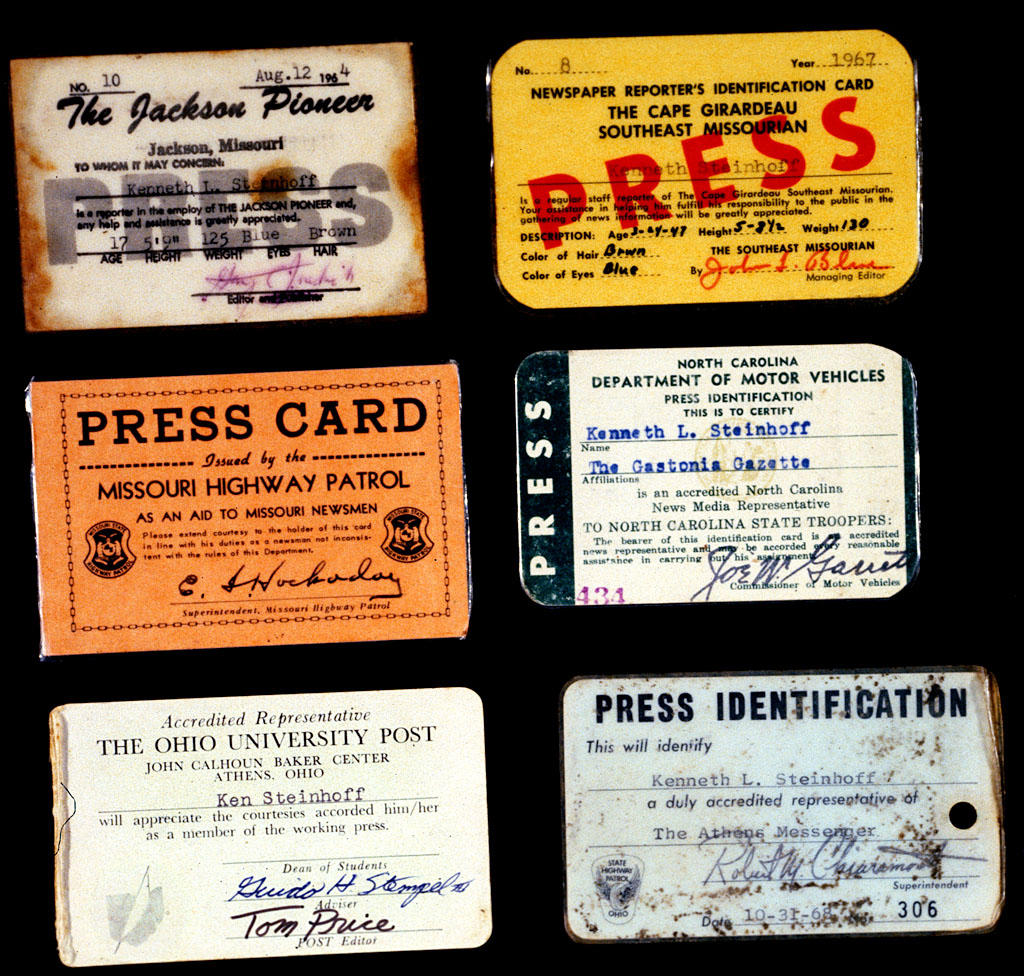
  • Three persons not related to you to whom reference can be made to your character, habits and ability – the editor and publisher at The Gastonia Gazette and John Blue of The Southeast Missourian.
  • (I left blank the miscellaneous references that might include my minister.)
  • Selective Service Classification – 4F (Thank you, Draft Lottery)

Then, finally, to paraphrase Arlo Guthrie in Alice’s Restaurant, “I turned over the piece of paper, and there, there on the other side, in the middle of the other side, away from everything else on the other side, in parentheses, capital letters, quotated, read the following words: “State experience, talents or training which cause you to feel you are qualified for work sought:”

I typed, “i’m a damn good photographer” and handed the application back to my boss, who, I assumed, would stuff it somewhere in a desk drawer to be forgotten.

There really IS a permanent record

One day I was helping a friend in HR with a computer problem when I asked her if I could see my employee file. “You can’t add anything, change anything or remove anything,” she warned.

“That’s OK. I just want to see if something is in there.” Yes, it was. My original job application was there, carefully cradled between two sheets of manila folder. She turned her back while I made a copy of it.

So, why was 2012 going to be a big deal?

After turning in my employment application, I had to listen to an orientation speech by a nice woman in Personnel (later buzzworded to Human Relations). She explained that I’d be vested in the pension plan after 10 years and she started to explain how this was going to be important to me in 2012, the year I could retire. I held up my hand and said, “Lady, I’ve never lasted at any newspaper longer than three years. I’m NEVER going to see 2012.”

As the years went by, I kept making more and more references to 2012. “I’ll sign a contract with you in 2013,” I’d tell a vendor. When The Voice Report, a trade magazine, asked me on a bio form, for a “Prediction on the Future of Telecom & Telecom Managers,” I responded, “Please, please, please have a future that lasts until at least 2012 or the first Saturday when I can guess more than three lousy numbers right on the Florida Lottery.”

When rumors of buyouts started floating at the paper, my boss told me that I shouldn’t worry: I was “essential” personnel and wouldn’t be offered a buyout. “I WANT the offer,” I told him. “I’m looking to retire as soon as I hit 62; I’ve been here 35 years; I’m making too much money because of my longevity, and I’ve been grooming my replacement for the past two years. Please, get me the deal.” He worked some magic, and I ended up with a year’s pay (and a huge tax hit), a pension, a health package and early retirement.

So, instead of being a Big Deal, New Year’s Day 2012, is going to be just another wonderful day of retirement.