“Titanic Collision” Spawns Tornadoes

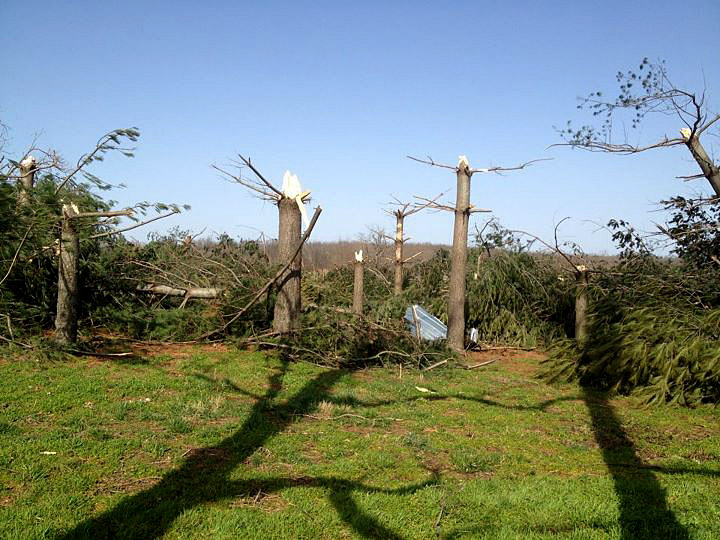
What The Missourian described as “the titanic collision of warm, moisture-laden air from the south with a rapidly advancing cold wave from the northeast brought not only severe weather over Southeast Missouri, but the prospect of up to three inches of snow.

The Dec. 21, 1967, story said the rare winter storm spawned tornadoes that struck McBride, Frohna and Potosi. Temperatures dropped from 30 to 35 degrees in a short period of time.

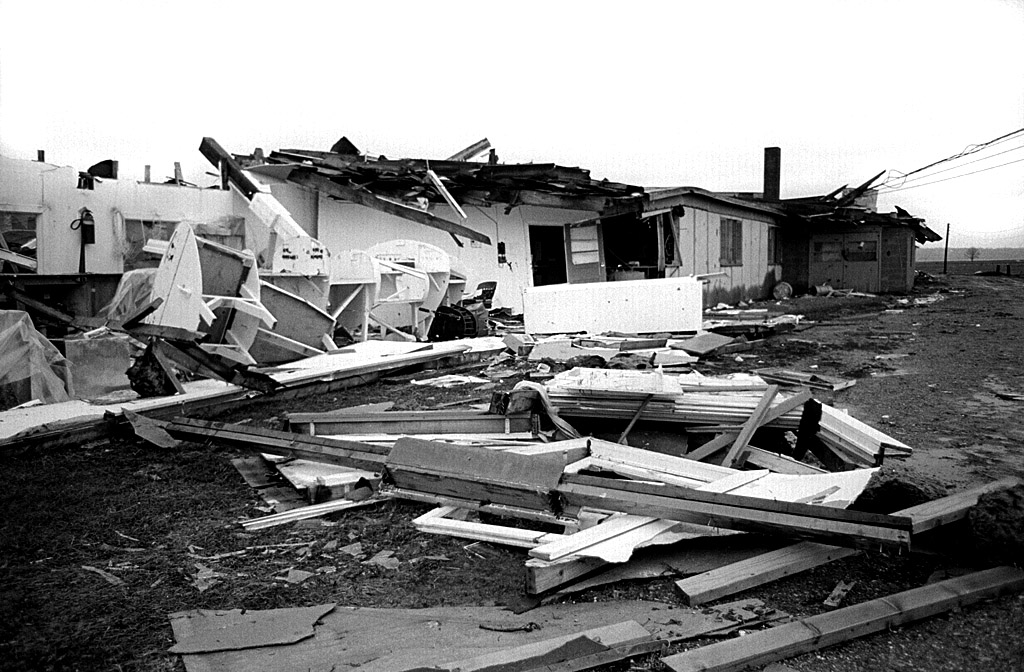
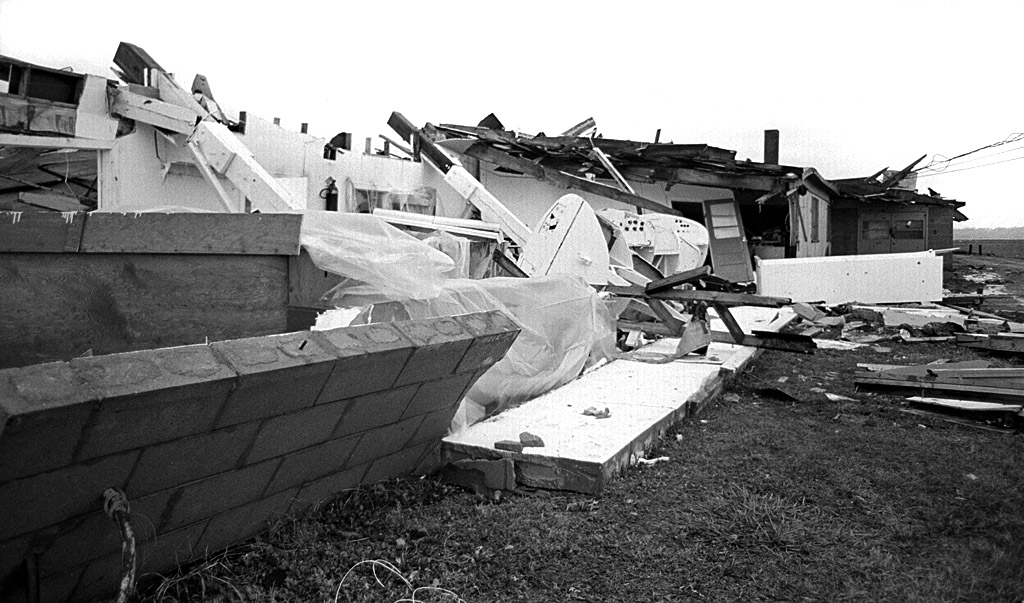
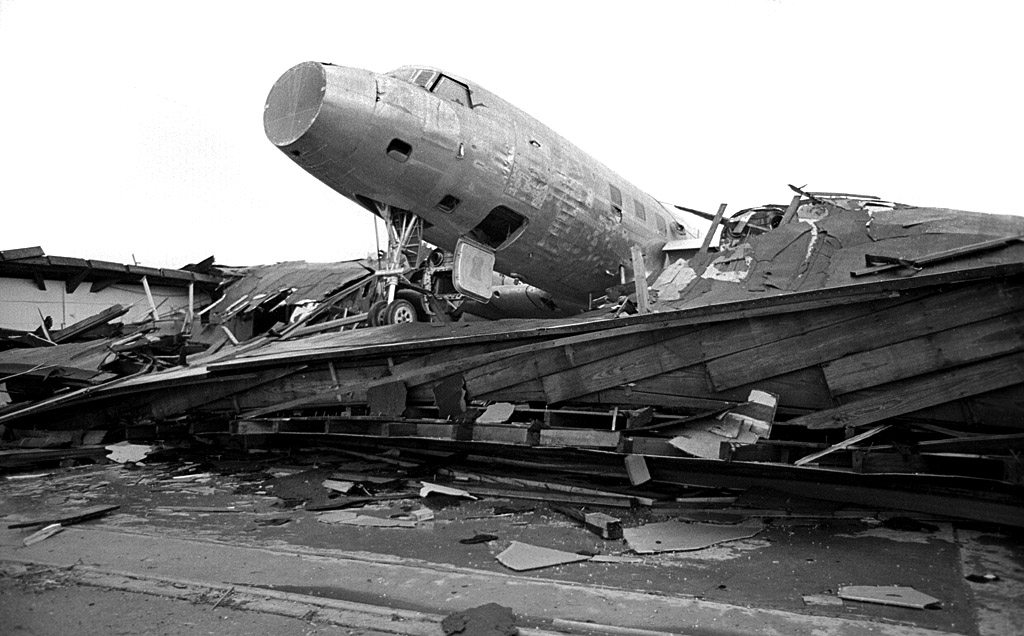
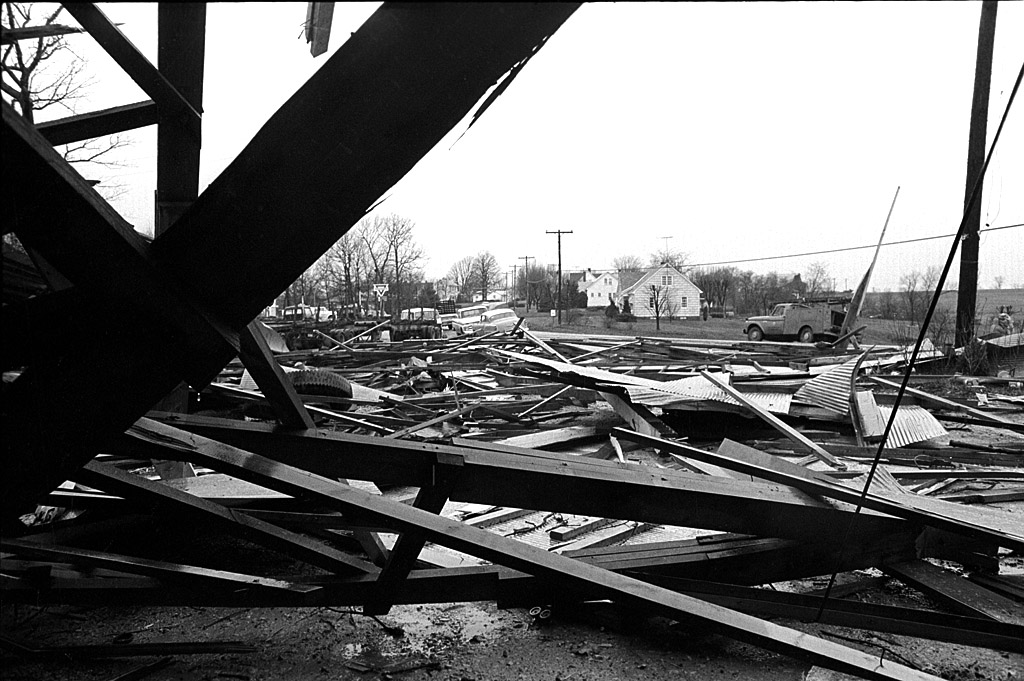
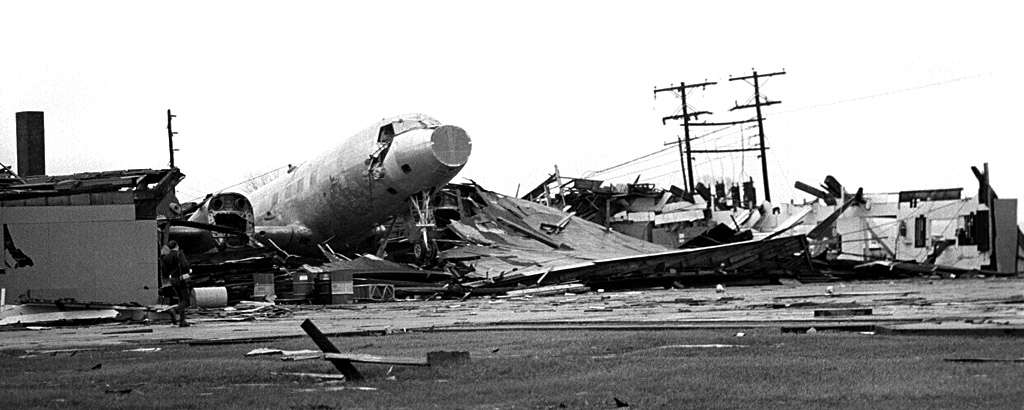
The McBride storm struck the Beldex Company hangars at the Perryville Airport.

The State Highway Patrol reported 18 injuries to workers who had been in one of the hangars that had been built when the airport was used a World War II flight training center. The airport is located about two miles northeast of McBride, near the Mississippi River.

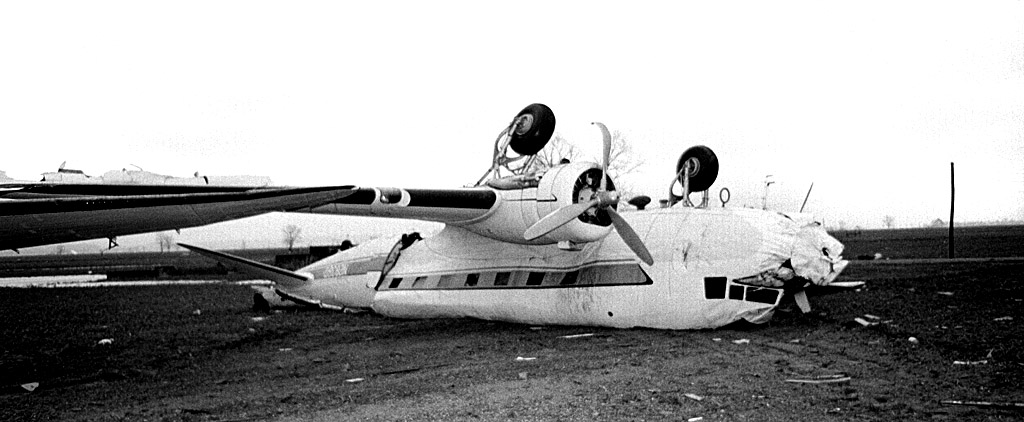
Plane flipped on its back by the wind
A more complete story the next day dropped the number of injured from 18 to 13, the most serious a fractured hip.

Brad Estes wrote that a funnel cloud hidden by fog and sheets of rain demolished two hangars where workers had no warnings.

“It all happened in about 20 seconds”
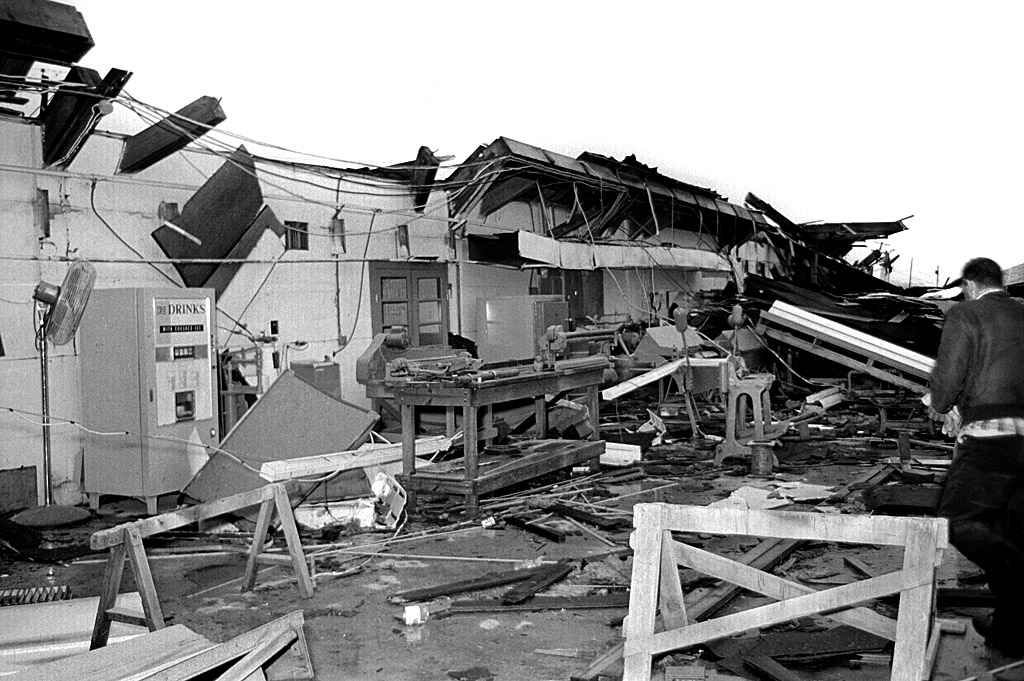
David Bierk of Perryville, who was not injured, said that it was raining very hard, getting dark, and then the lights went out. “A man working with me called my attention to a roar, but I didn’t hear anything. That was just before the walls and windows started collapsing. Everybody tried to crawl under benches and tables. It all happened in about 20 seconds. We then took roll call to see if anyone was covered up.”

The Beldex plant, which repaired aircraft commercially, employed about 110 men and had leased space from the City of Perryville for about 15 years.

The storm moved from the south to the northeast. It took down power lines, cutting power to an electric clock in a nearby grocery store at exactly 11:43 a.m. Only one building of a five-building complex at the airport was not damaged. It contained 10 planes, ranging in size from large jets to small single-engine planes.

Seven aircraft received considerable damage.
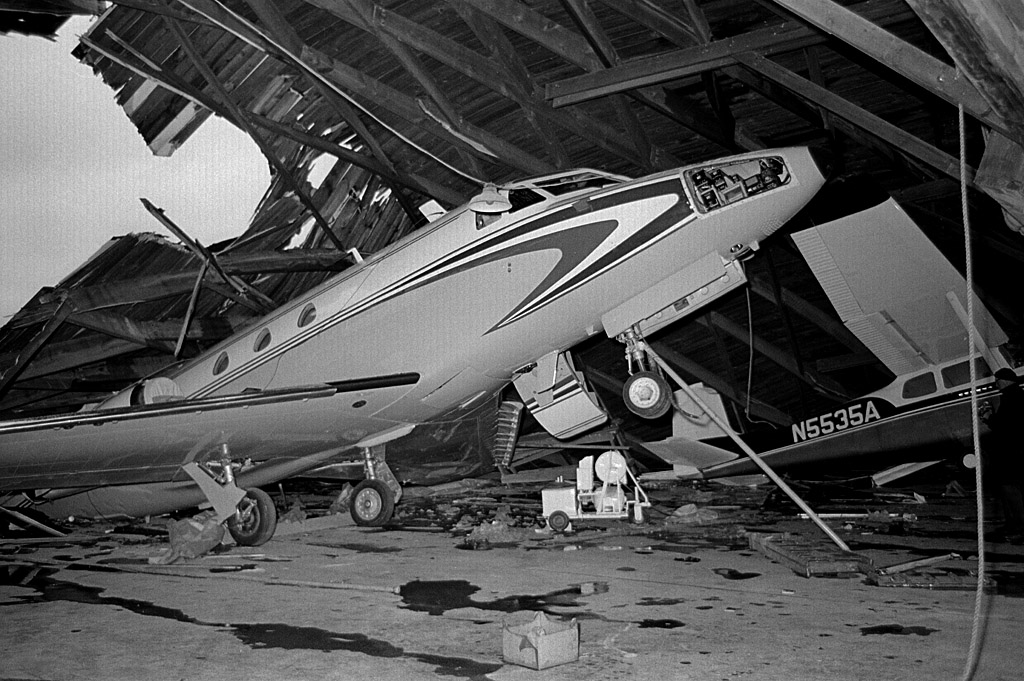
Three DC-3s were sitting outside and the winds flipped one over. Four other airplanes were in the demolished hangar. The roof fell on a Convair, two jet Sabreliners and a smaller single-engine aircraft.

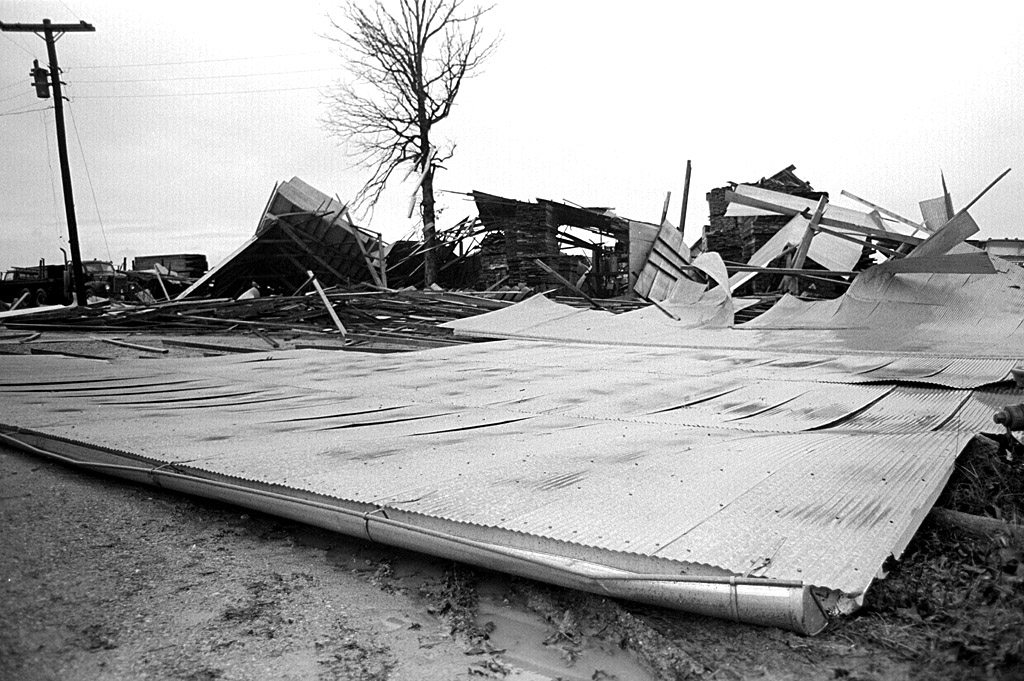
East Perry Lumber Company hit
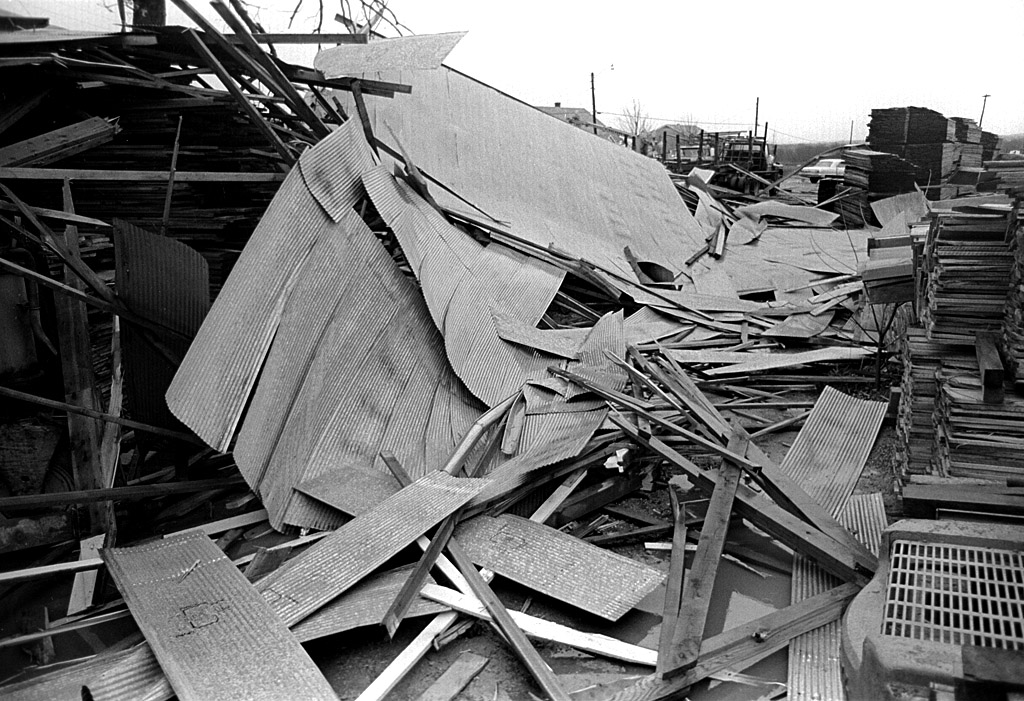
What was thought to be a different storm hit Frohna about 11 a.m.

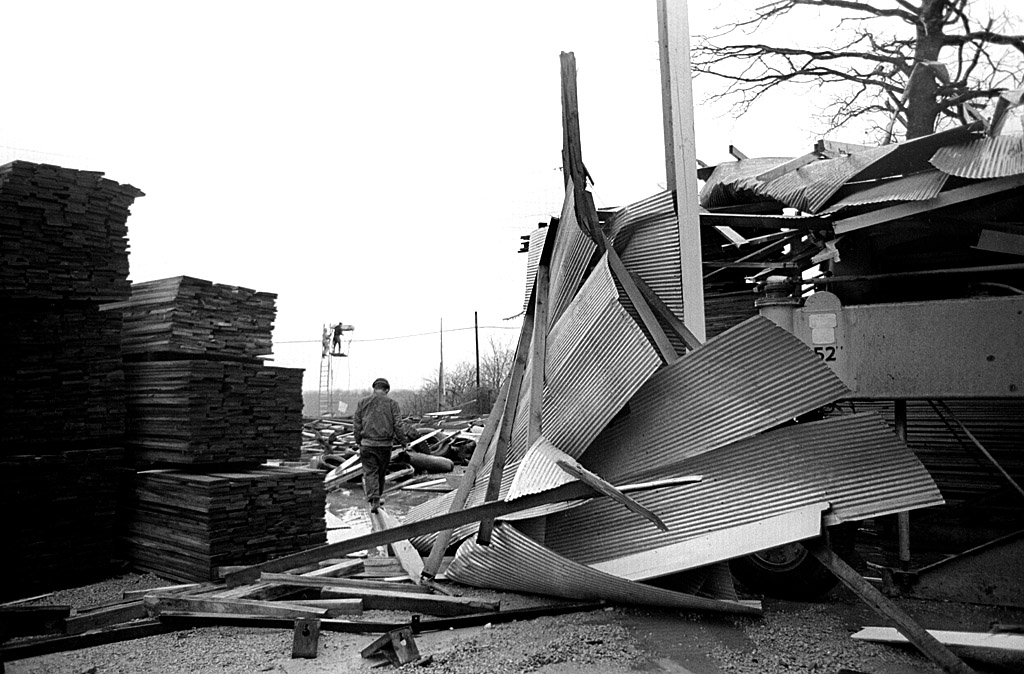
Its force was concentrated in the area of the East Perry County Lumber Co., where it destroyed a warehouse filled with lumber and equipment. Lumber and debris were scattered all over the 40-acre yard.

Three houses across the road suffered only minor damage. The worst was a house owned by Omar Steffens. One wall of an attached garage was torn loose, but the roof stayed intact and a car inside appeared undamaged.

Potosi tornado killed three

A tornado that dropped out of a pre-dawn thunderstorm killed three and injured 52 in Potosi. The town of 2,800 is about 50 miles west of Perryville.

Other tornado stories

Gallery of McBride, Frohna tornado photos

Click on any photo to make it larger, then click on the left or right side of the image to move through the gallery.
Puxico’s Leap Year Day Tornado

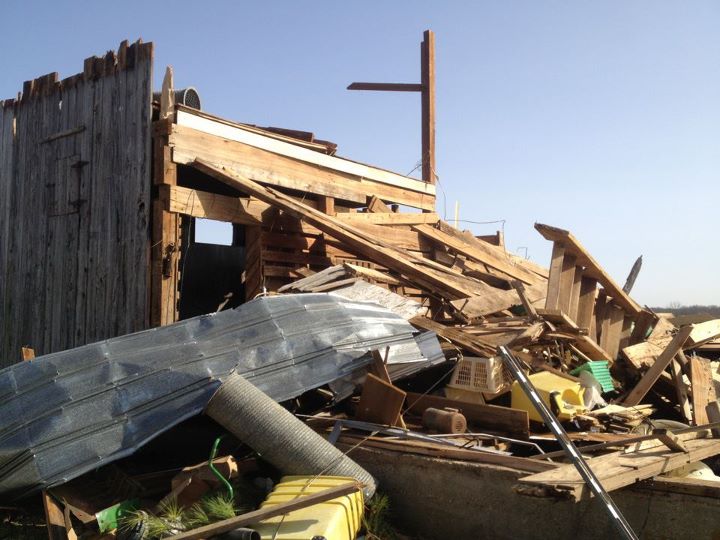
I checked the weather before I turned in around 2 a.m. Wednesday and saw a fast-moving narrow band of ugly weather headed toward Cape. When I got up, news reports indicated that Cape had dodged the bullet, but some other local communities, including Puxico, hadn’t. That was significant because Wife Lila’s brother, John Perry, had come down to do some odd job repairs for us. His Wife Dee’s parents and brother live on farms near Puxico.

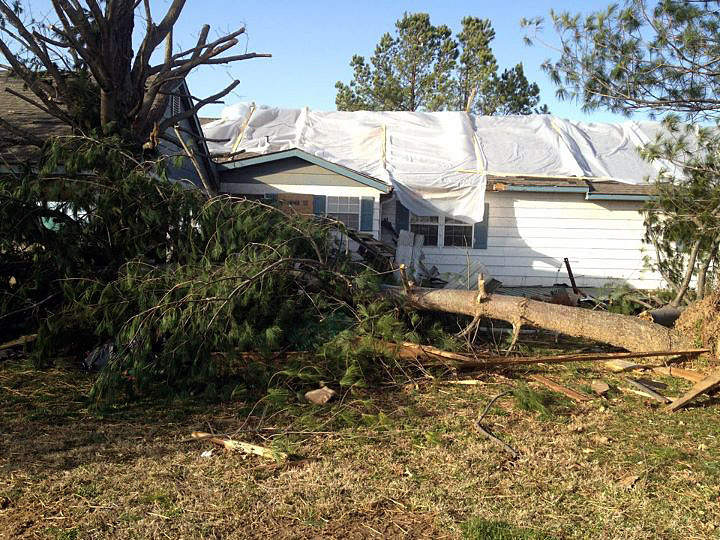
Tree came through roof

She called him to say that her brother Don’s house was destroyed and he was feared dead.

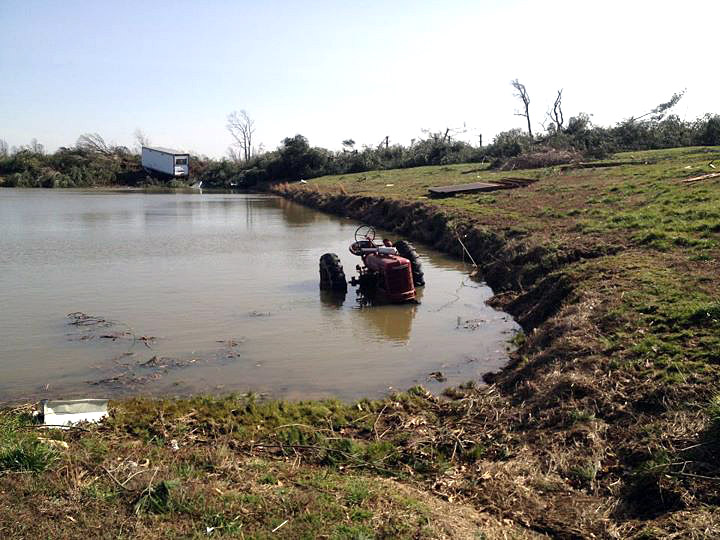
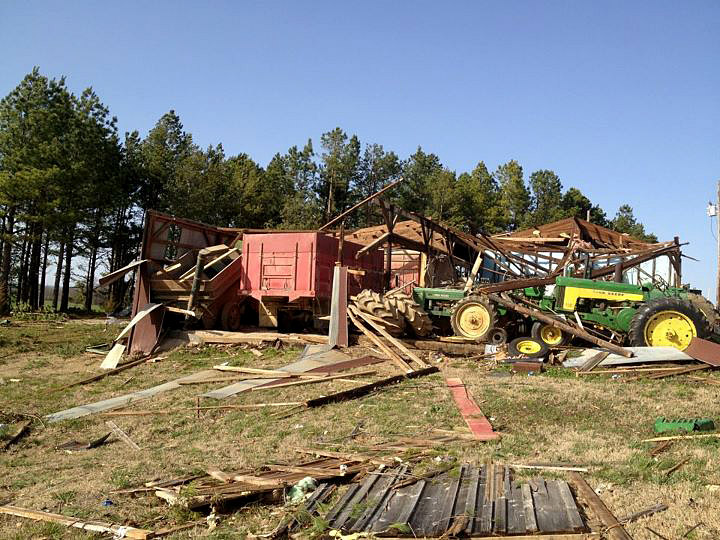
He was later dug out of debris in his basement. He was pretty badly battered, but didn’t go to the hospital. Her parents, D.L. and Fern Douglas, who live nearby, had a tree come through their roof, several outbuildings destroyed and a tractor blown into a pond. A neighbor in a mobile home was killed.

Dee’s Facebook updates

Here are some of Dee’s Facebook posts to friends and family Wednesday evening. John and Dee’s son Wyatt was kind enough to share these photos.

WOW, what a day!

9:21 p.m. – WOW, what a day!……The storms in Puxico flattened my brother’s house. My parents’ farm and home look like a war zone. Everyone is fine, shook up, but fine. My heart just breaks for everyone…..I spent the afternoon doing what I could do for my parents with Wyatt. I just cried when I saw my brother’s house. I am so thankful that everyone is alive.

We thought my brother was dead

9:46 p.m.My brother was thought to be dead. That was told to my Mother, so we were touch and go for awhile, I thought it was going to put her under, but she is one strong woman. My brother is pretty banged up, but I got to kiss him and hug him and that is all that matters!

10:41 p.m. – [Referring to wire service photo of her dad looking at his barn] He is so pitiful, all he has ever worked for was on that farm, but I still have him and Mom and the rest of my family, so for that I am thankful!

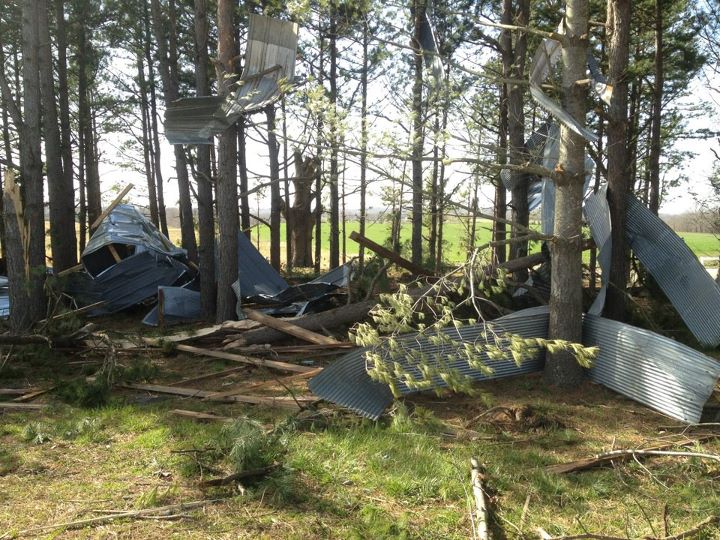
Pine trees snapped off

11:08 p.m.As Mother puts it – and I saw it – it’s like a war zone, but I can tell you, that it was really awesome to be able to hug and kiss and talk to each and every one of my family. It almost took my knees out from under me…….it was so hard to have to stay at work today.

John’s on his way home

John’s Missouri family needs him more than his Florida family does right now, so we’re putting him on a plane Friday morning to help his in-laws dig out. Wife Lila says the folks at Southwest Airlines were great in letting him change his return flight with no additional charge.

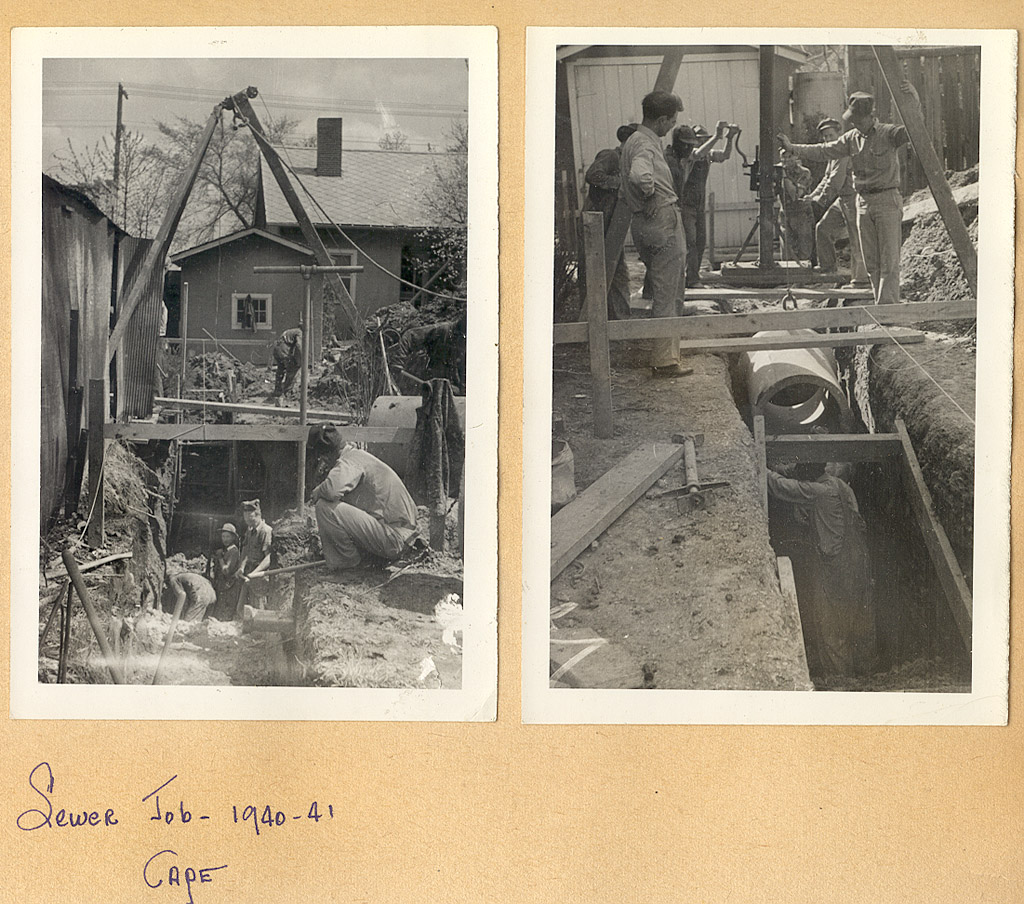
Cape Sewer Project 1940-41

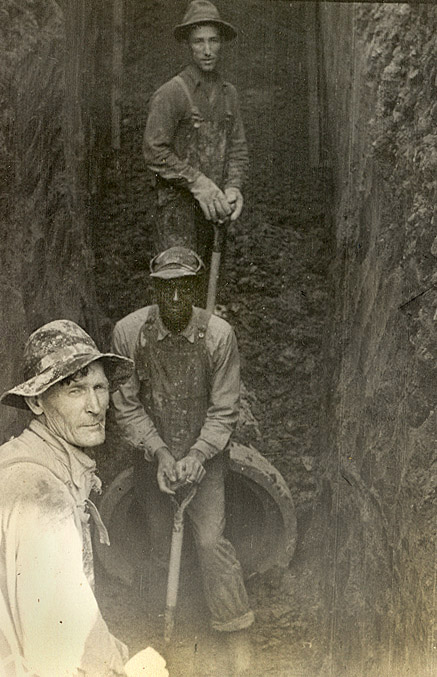
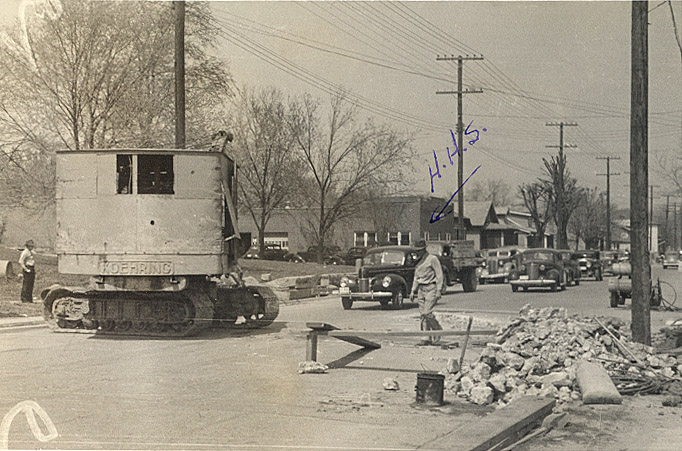
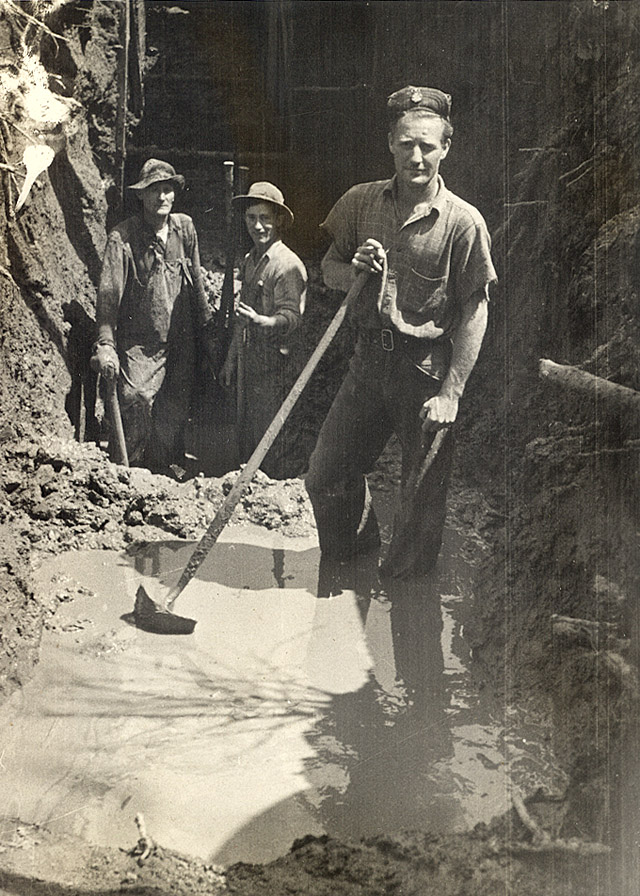
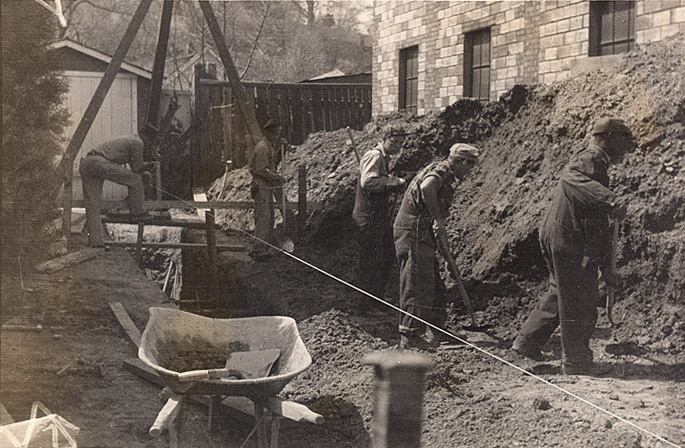
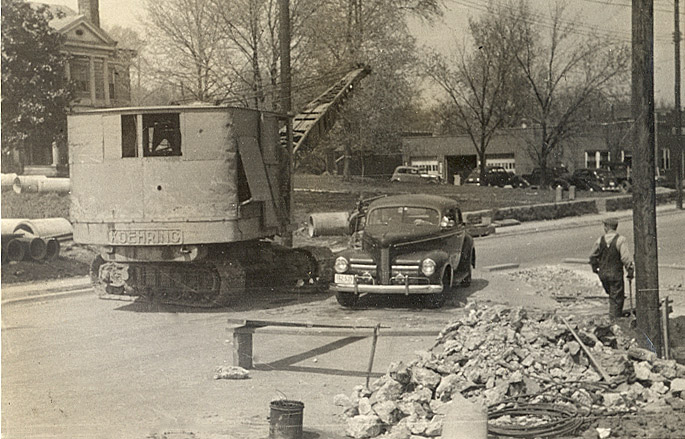
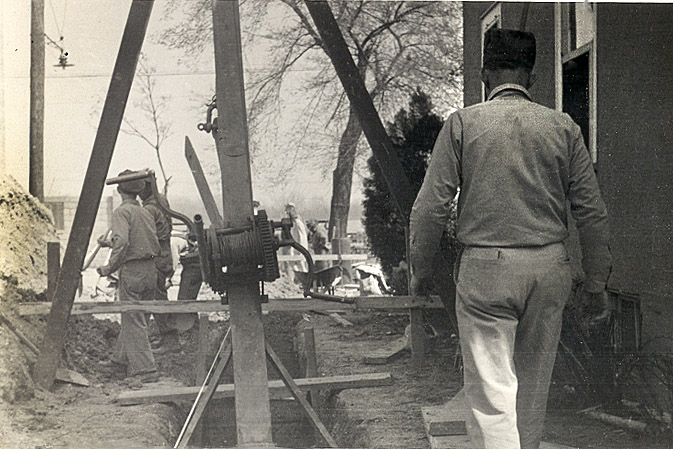
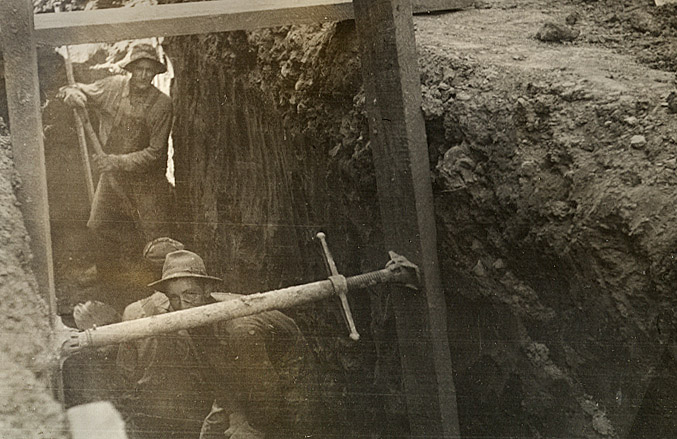
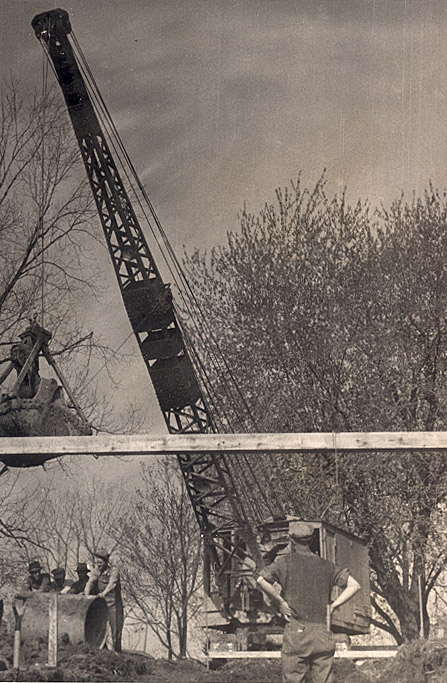
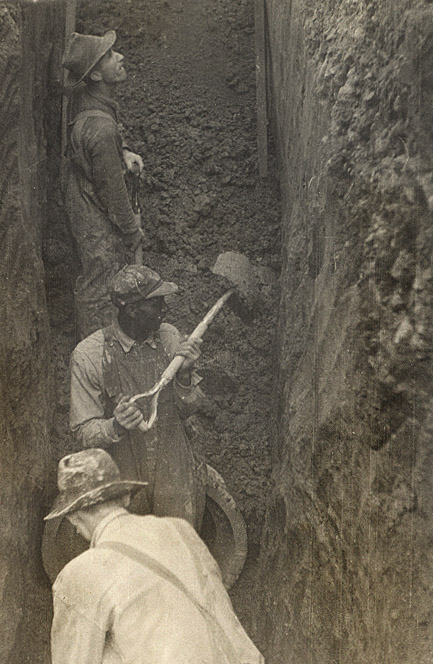
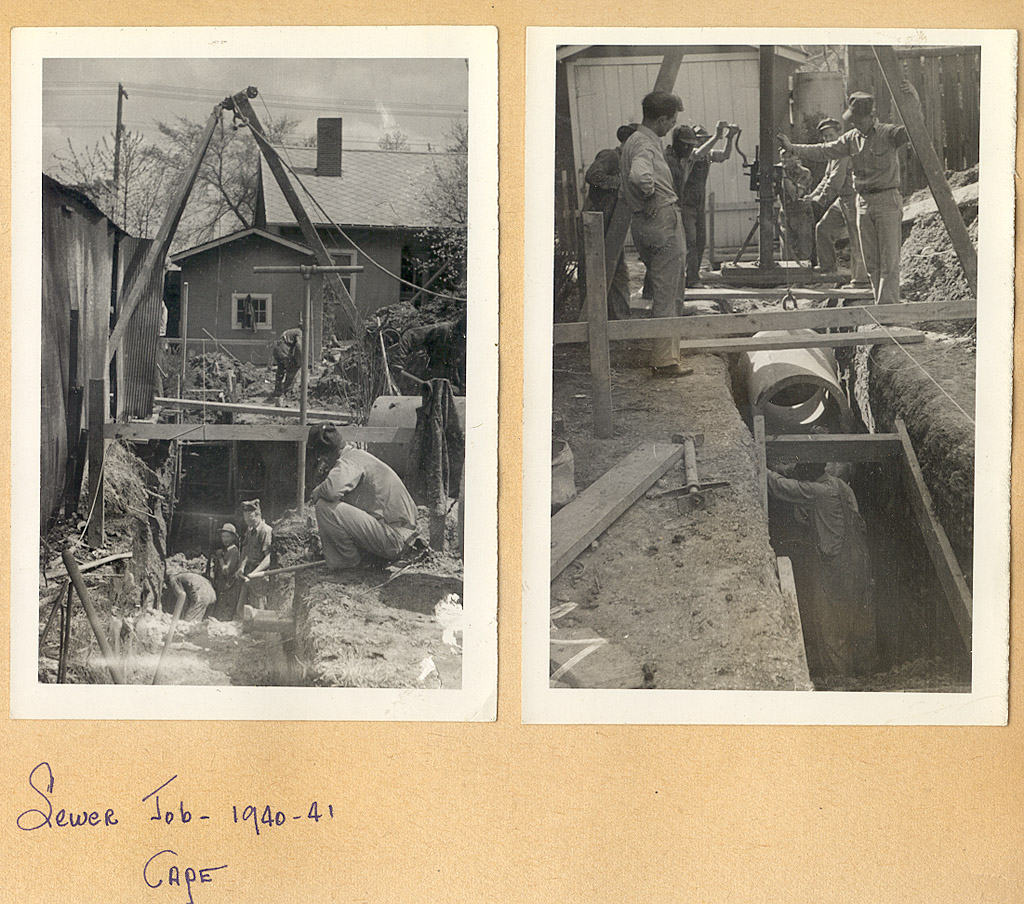
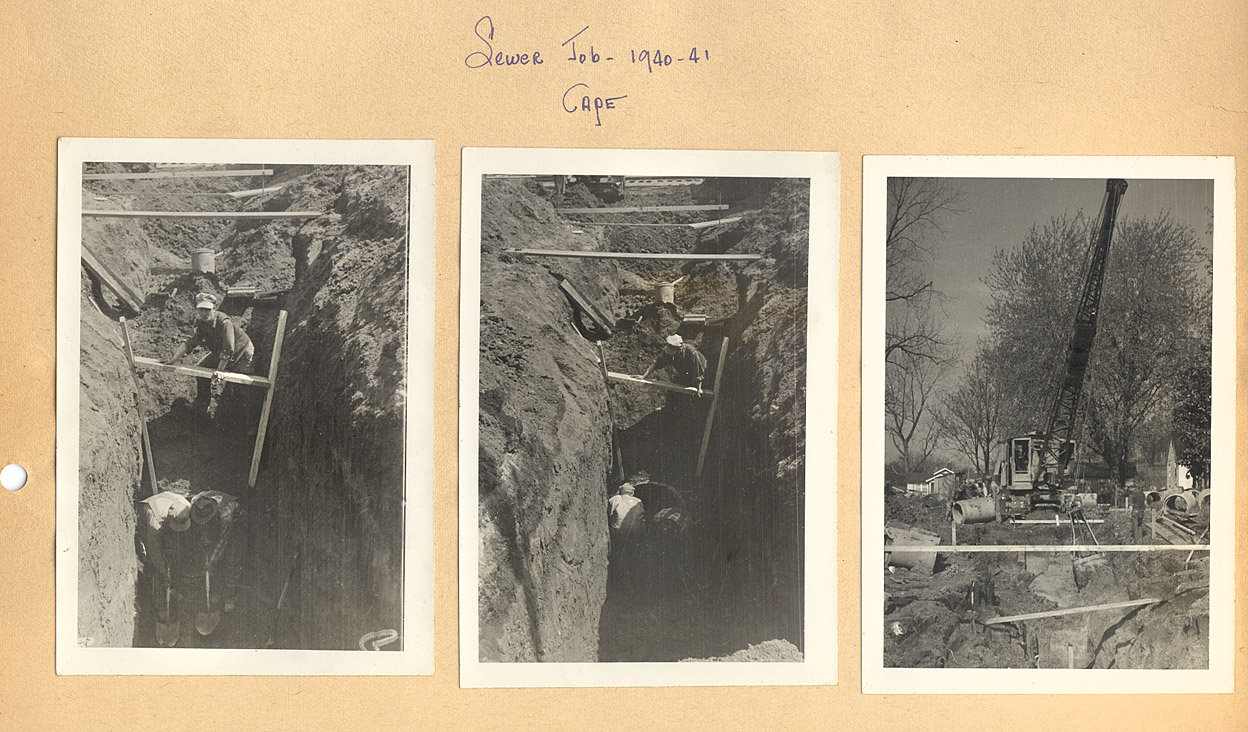
Dad worked for Markham and Brown Construction before he started his own company. These photos are from one of his scrapbooks. They were captioned “Sewer Job – 1940 – 41 Cape.” His sewers aren’t as old as the ones I posted yesterday.

1936 Project required 25 to 100 men

I couldn’t find any news stories about the 1940 project, but E.L. Markham was awarded a $125,837.69 contract to construct a sanitary sewer in the West End in 1936. The February 1, 1936, Missourian story said the project would employ an average of 25 to 100 men for a period of three months. The money was going to  come from PWA, one of the alphabet soup of “make-work” agencies created to get men working and pull the country out of the depression. (We’d call that a stimulus project today).

80% of work to be done by machines

Eighty per cent of the excavation work was to be done by machinery. Laying the sewer pipes would be done by guys like this. About 11 miles of ditches needed to be dug.

Dad said a guy came up to him on a job and complained, “Mister, that dragline you’re operating put 20 men with shovels out of work.”

Without missing a beat, Dad responded, “Yep, or 2,000 men with teaspoons.”

The H.H.S. in the above photo would have been my Uncle Hubert Steinhoff. He ended up working for an asphalt company in Illinois.

Skilled labor made 60 to 75 cents per hour

Three classes of labor were to be employed: skilled, semi-skilled or intermediate, and common laborer. Ninety per cent of the workers were to be taken from the relief rolls in the city before looking for other workers.

Skilled labor, such as operators of machines, concrete finishers and brick layers, were to be paid 60 to 75 cents per hour; intermediate labor, 40 cents, and common labor, 30 cents. Because the goal was to employ as many men as possible, no laborer could be worked more than eight hours a day or 130 hours a month. The PWA preferred that the work day be divided up into two five-hour shifts.

I remember Peewee

Some of these guys have the fresh-off-the-farm look of some of the fellows I worked with one summer. One young guy named Peewee was built like a fireplug and was strong as an ox. He would make lunch money by betting passersby that he could rip his shirt off just by expanding his chest. As soon as the mark had handed over the ernest money, Peewee would take a big gulp of air and the shirt would go ripping off like The Hulk on the TV show.

One day three or four of us were wresting a concrete bucket onto a truck. Peewee walked up, told us to step aside, and threw it on the truck by himself.

Dad was really sorry the day Peewee told him he was going to have to leave the job because he’d been drafted. All that was left was for him to pass his physical. The next day Peewee was back on the job. The army rejected him because he had gotten “all stoved up” when a wagon fell over on him when he was a kid. Maybe that’s why I was a 128-pound weakling: I didn’t have a wagon fall on me during my formative years.

Photo gallery of sewer project

Click on any photo to make it larger, then click on the left or right side of the image to move through the gallery.


Sewers and Tunnels in Cape

“Is it part of the Underground Railroad?” is the question that comes up every time someone encounters a below-ground structure in the older parts of Cape. Not being a historian, but being a guy who has wielded a shovel in Cape Girardeau and tried to cut through rocks and roots, I’m going to say, “Nope.”

The labor and logistics of moving rock and dirt would be greater than frugal Cape Girardeans would consider expending to move escaped slaves up north. Still, there ARE interesting things under beneath our feet in the city.

Richard Cochran explorations

Here is an email I received from Richard Cochran, Jr., Class of ’84.:

I am very appreciative of the work you put in on your site about Cape Girardeau. I still am fascinated by the history in the city. Many of the articles are before my time (Central Graduate of 84); but, I can relate and have seen many of the items you photograph and discuss.

Longview (Thilenius House)

The Thilenius House Wine Cellar and other wine cellar stories are of particular interest. I have some first hand knowledge of the colonial house mentioned in the Thilenius House article as I was working for my father when that home was designed. I helped draft the house plans. I particularly remember surveying the site and examining the wine cellar when we started that project.

The newer home which was built by an Indian doctor in the mid 80’s was located behind the cellar. I remember his purchase of the property required that the cellar not be damaged. I also remember that the house had one room designed around a particular piece of furniture that he had which was an odd dimension not fitting in most normal rooms. I think he sold the house since then; but, not positive.

I’m not sure if the cellar still exists; but, it seems that the last time I drove by there, I couldn’t see it anymore.

Sanitary and storm sewers

Anyway, to get on with it, I am a Civil Engineer and have worked on some sewer projects in the city. One of these near City Hall got me climbing into manholes to verify things. At one time, the sanitary sewer and storm sewer were combined in this area and flowed through the same pipes/tunnels. It think over time, some of this infrastructure has been replaced and I know in the mid 2000’s, the sanitary was separated from the storm so that it could be treated at the wastewater plant instead of discharged into the river.

Stone and brick tunnels

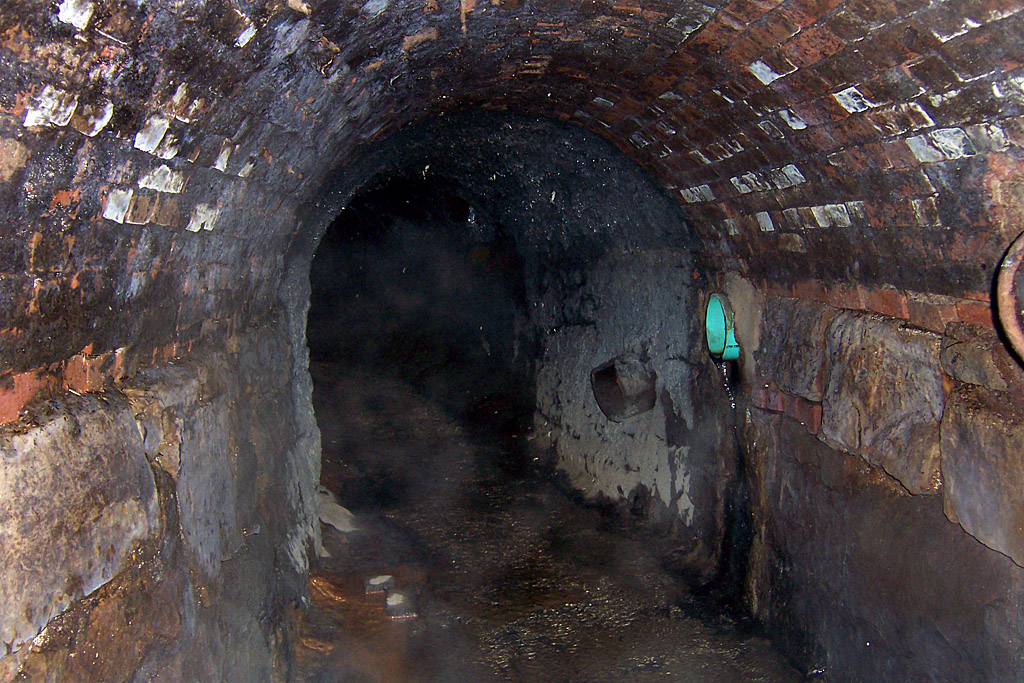
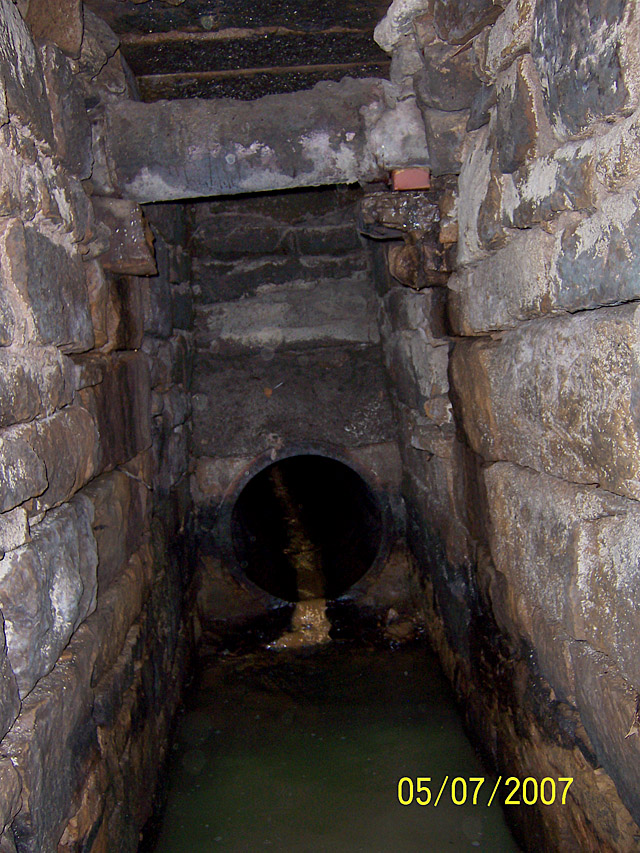
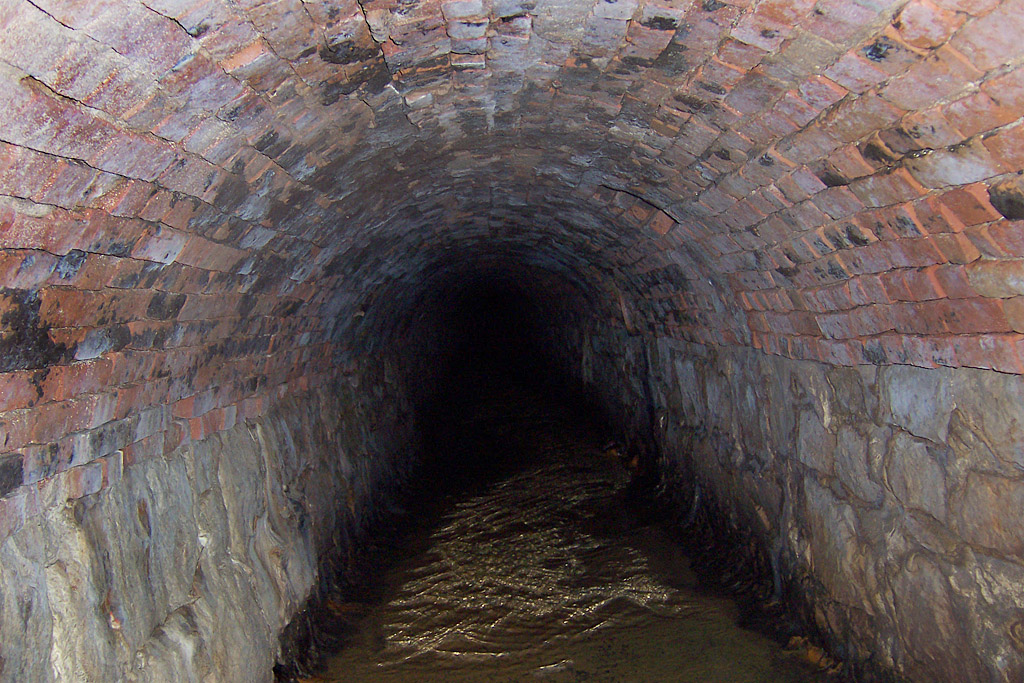
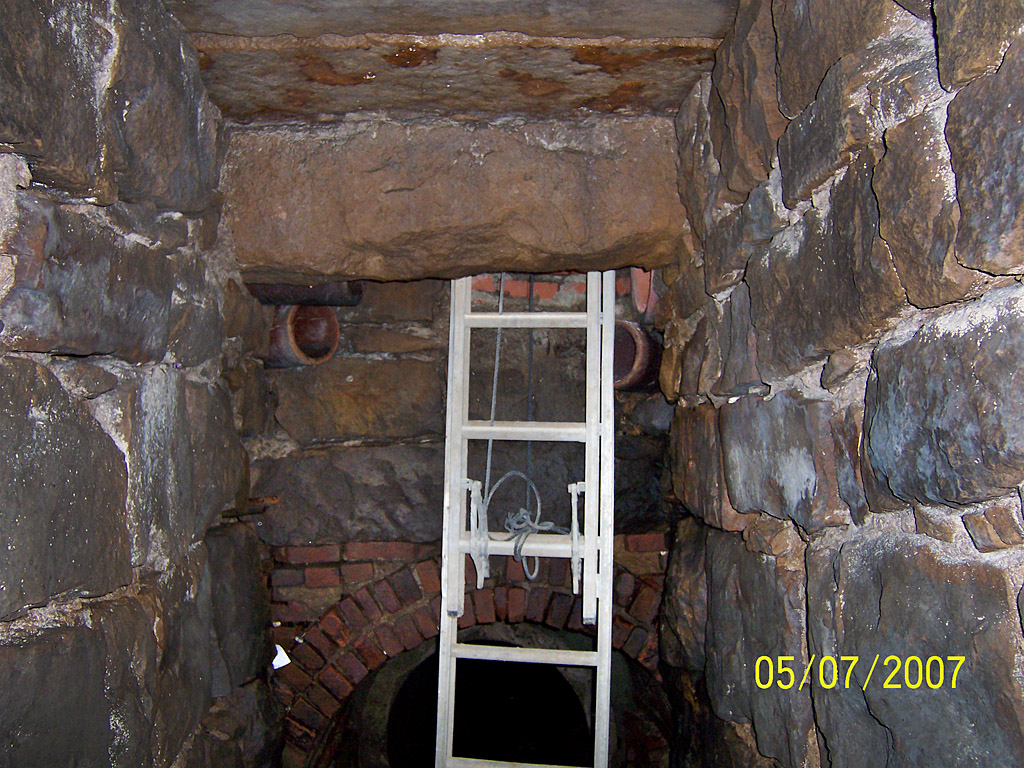
During my inspections, I found older parts of the sewer system which were tunnels. These were constructed of stone and brick in some areas. This piqued my interest as well, wondering when they were constructed and if they possibly served other purposes. I’ve heard the stories all my life of tunnels from homes to the river used by the underground railroad and wondered if possibly, some of these storm tunnels were actually what was used?

I’ve attached some photos that I took of these tunnels. They aren’t the best quality; but, you can see the tunnel and where some changes have been made connecting pipes and such.

Cape Sewers in 1940-1941

I have one of Dad’s scrapbooks that shows the Cape sewers being constructed in 1940-41. I’ll run more photos soon. The sewers Richard photographed are much older than Dad’s project. Dad’s trenching was done mostly by hand (under conditions that would cause an OSHA heart attack these days), but all of the pipes were precast concrete instead of stone and brick.