
OU Party Time

Athens OH party 08-31-2014I’ve been working late at the Athens County Historical Society and Museum office. Athens, Ohio, is the home of Ohio University, once known as a top-ranked party school. (If it’s been down-graded, I’d hate to see what the top 10 looks like.)

There are several bars to the left of me; there’s a bar across the street from me, and there’s a bar and a rental house with a kazillion people in it on the right side.

The female voices that echo off the surrounding buildings are hitting frequencies that I thought only dogs could hear (and just short of that which would break glass). I haven’t heard the equivalent of the male voices since a camping trip on Fisheating Creek during alligator mating season. It’s not even the music that is earsplitting. It’s the cacophony of voices. (Click on the photos to make them larger.)

Words don’t do it justice

I shot the Saturday night video when I was getting ready to pull out of the parking lot about one in the morning. It’ll give you an idea what Court Street sounded like. I sent the video to CHS Buddy Jim Stone, who had been in town dropping Son Oliver off for class earlier.

His reaction: “Gee. Oliver said they were having movie night in their new apartment with perhaps a few games of chess.”

Party in progress
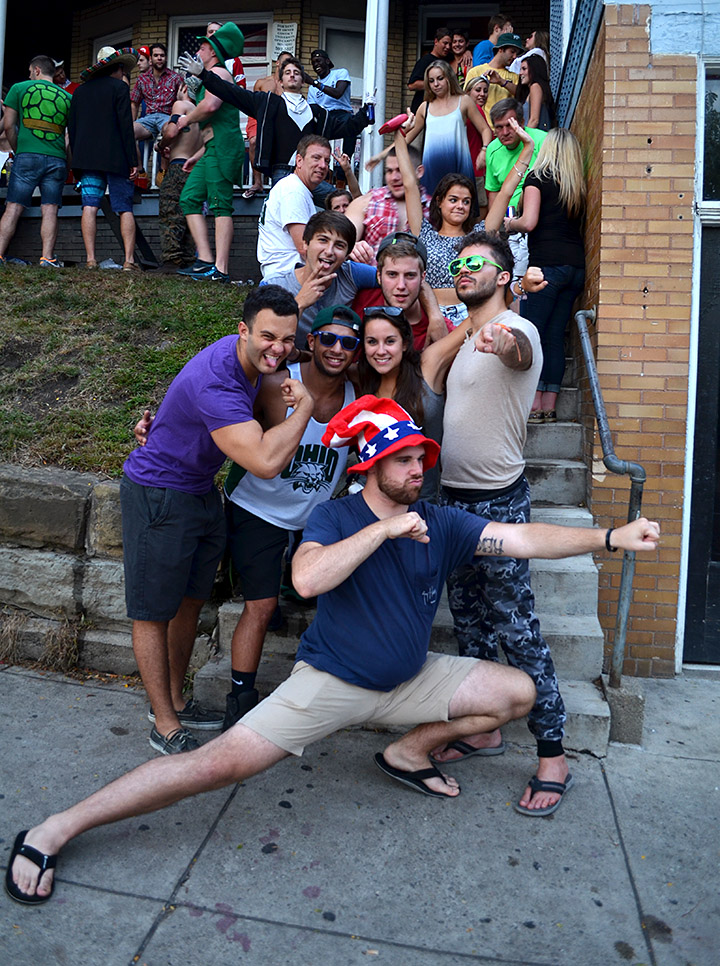
Athens OH party 08-31-2014When I drove down Court Street, Athens’ main North-South drag late Sunday afternoon, I spotted the party in the first photo two doors down from the office. I couldn’t resist.

When I walked up, there was a guy with a cellphone camera taking a picture of a couple of his friends. “Would you like to get in the photo?” is always a good icebreaker. The next thing I knew, half the party crowded into the photo.

Got an internship?

Athens OH party 08-31-2014A kid came up to me and said, “I saw you flipping cameras back and forth. Are you a pro?” I handed him a business card and told him what I do now.

He wanted to know if I took on interns. I said that I was a Florida guy writing about MO in the middle ’60s and Ohio in the late ’60s, so I didn’t know how well he’d fit in.

“Are you a nark?”

Athens OH party 08-31-2014The next guy asked, “Are you a nark?”

The last time that question was raised, I told him, was in about 1974. I was at a big group of partying young folks about to be chased out by the sheriff when I saw a guy pointing at me and asking his buddy, “Think he’s a nark?”

“You gotta be kidding,” his buddy observed. “He’s too straight-looking to be a nark.”

“I love Athens”

Athens OH party 08-31-2014Another kid said he was from Detroit and “loved Athens.”

“If you are somewhere and mention that you went to school in Athens, it’s like you have a bond.”

Curator Jessica and I had talked about that. Athens’ uptown shopping area, bars and restaurants are adjacent to campus and everything is within walking distance, so a lot of students don’t have cars. It’s also a relatively isolated area not close to any major population centers. A lot of students come from places like Cleveland and Akron that are too far away for a casual weekend commute, so they hang out in town and grow close to it.

That’s a lot different from Cape, where the SEMO campus is nowhere near the shopping areas and St. Louis is an easy two-hour drive. The university and town treat each other with benign neglect.

What’s with the pointing thing?

Athens OH party 08-31-2014So, what’s with the pointing gesture thing that shows up in so many pictures. It’s something I’ve not run into before.

Monday morning, I showed up at a local diner for breakfast. There was a blonde at the table across from me who must have been one of those who attended a Sunday night party because I could see her eyeballs throbbing all the way across the room. I think if a server had dropped a tray of plates behind her, her head would have exploded.

Interestingly enough, the streets were quiet and almost deserted Monday night. I guess even OU students can stand only such much partying.



Where are the Gleaners?

Tomatoes in Meigs County OH 08-31-2014When I spotted a field with a bunch of small, round, orange objects in it along the Ohio River Scenic Byway near Letart Falls, I turned to Curator Jessica and asked what she thought they were. “They’re not big enough for pumpkins,” I observed.

The question was answered about a quarter-mile down the road when we came upon field after field of tomatoes whose vines were turning brown. Wife Lila is proud (rightfully so) of the tomato plants in her backyard garden, but here were miles of them rotting on the vine.

“Pinhookers” clean fields in Florida

I’ve seen “pinhookers” around Immokalee pay farmers a small amount of money in order to harvest the leftovers in a field, so I wondered why nobody appeared to be doing that around there.

What were those people called in the Bible who did that? I asked Miz Jessica, who had been to church before our jaunt and should be up on that kind of thing.

“Gleaners. It comes from the Book of Ruth and the story of Ruth and Boaz,” she said without hesitation.

I wish I had been going straight back to Florida. I’d have brought Wife Lila enough tomatoes to keep her canning for weeks.

The Flood of 1913

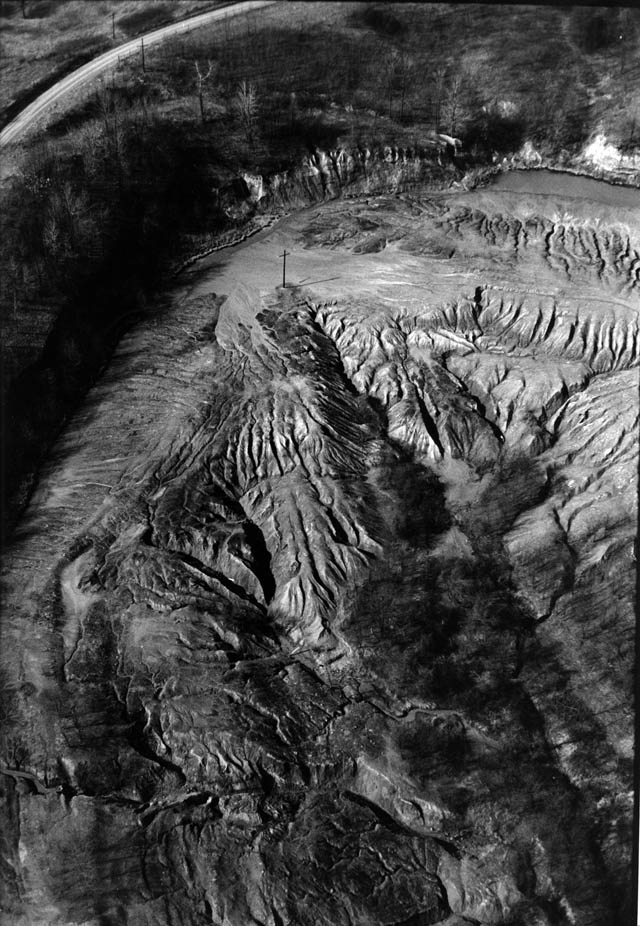
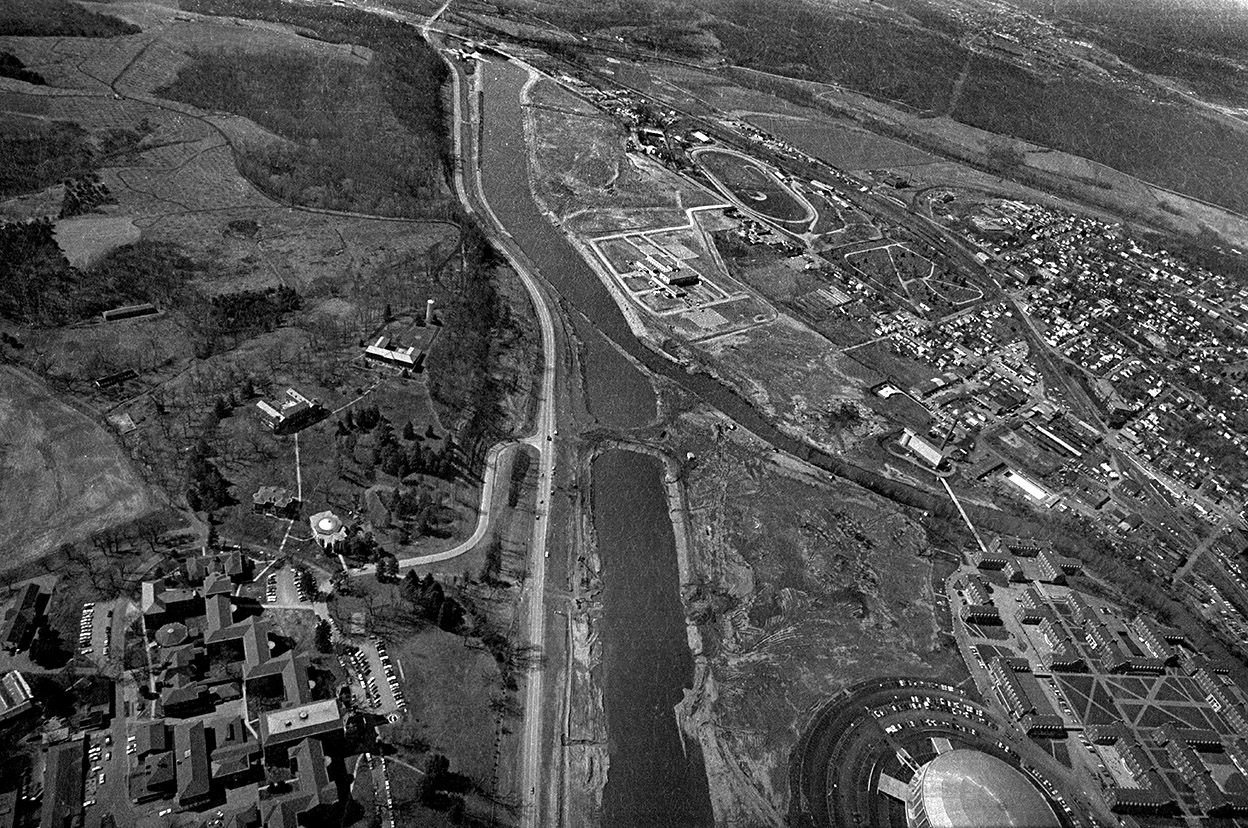
Aerial photos of Hocking River relocation 04-09-1970When I moved to Athens, Ohio, in 1967, I sneered at the puny Hocking River: “You call that a river? Where I come from, on the banks of the Mighty Mississippi River, we’d call that a creek at best.”

A year later, the Hocking would flood a significant part of the campus, prompting a major re-routing of the river. In this 1970 aerial, the old channel meandered through the heart of the low part of the campus. A dike or plug kept the old river from flowing down the new, straighter, wider channel during construction. (You can click on the photos to make them larger.)

Muskingum River bridge

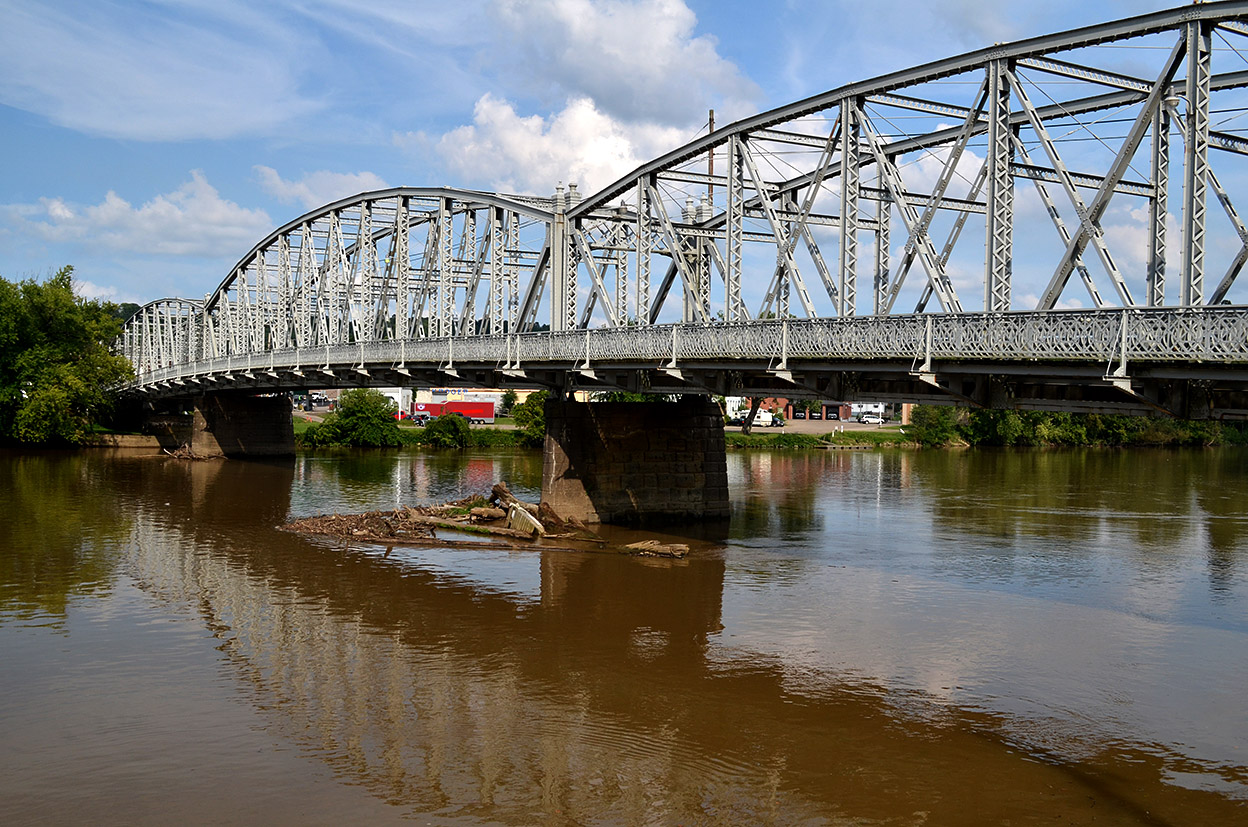
Malta OH riverfront 08-24-2014Malta was just down the road from Miners’ Memorial Park and Big Muskie’s bucket, so I paused to give Curator Jessica a chance to photograph this bridge over the Muskingum River because there was talk that it might be replaced. I left the motor running and stayed near the van.

Twin City Saloon

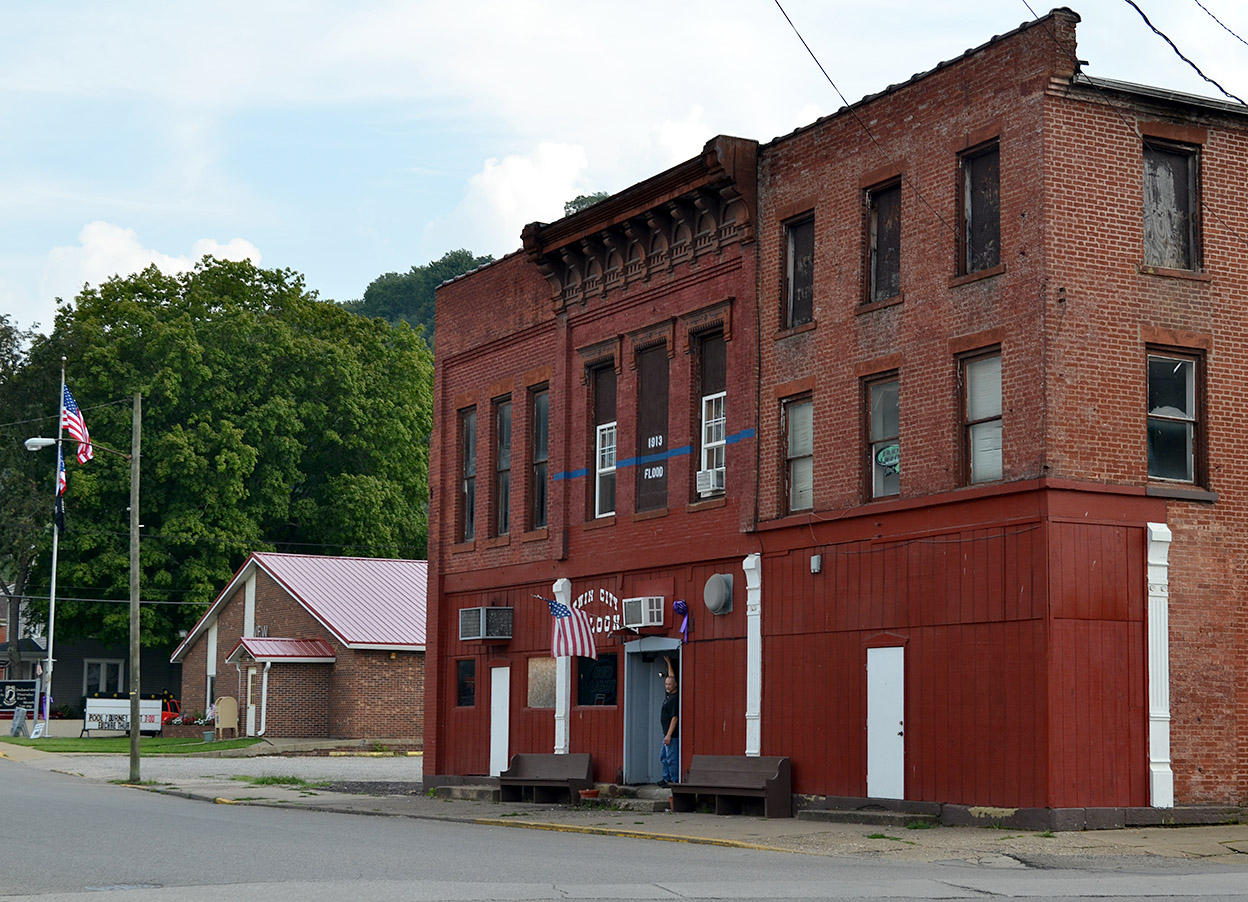
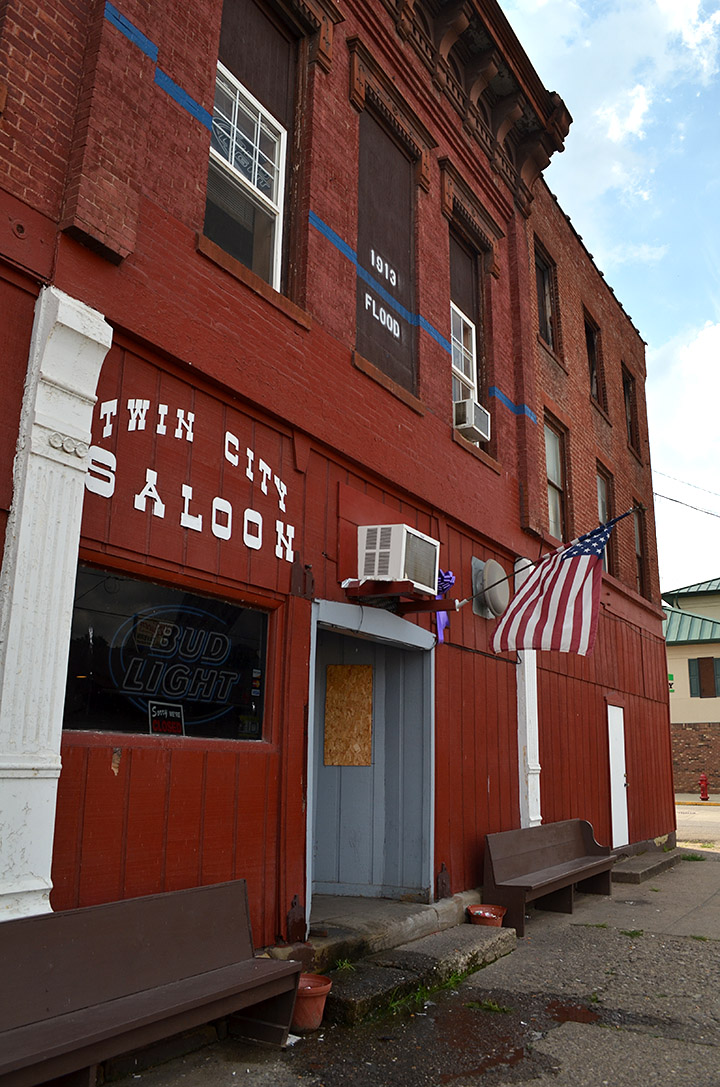
Malta OH riverfront 08-24-2014I was trying to make out what that blue line was on the red building when a guy came out, saw me and started pointing up at it. He walked over and struck up a conversation. He’s the owner of the Twin City Saloon, and that line represents how high the water got during the Flood of 1913.

We chatted a bit, then I mentioned that Curator Jessica worked at the Athens museum and that we were lollygagging around the state visiting interesting places. When she walked back to where we were, he said, “I have something you need to see.”

Jessica gets kidnapped

Malta OH riverfront 08-24-2014I didn’t want to leave the van unlocked and running, so I volunteered to move the van closer and lock it up. When I completed my task, I headed over to where I thought the couple had gone. No bar owner, no Jessica.

“That’s great,” I thought. “I’m going to have to go back to Athens to tell Hubby TJ that Wife Jessica has been sold down the Muskingum River for whatever curators are good for, and that it’s my fault for not keeping track of her.”

I decided to check the bar. It had a Closed sign up, but the door was unlocked. There was Jessica and the owner looking over some cool artifacts that had been in the building for more than 100 years.

The Great Flood of 1913

I can rattle off significant Mississippi River Floods: 1927, 1941, 1973, 1993, 2011, but I had never heard of the Great Flood of 1913. The History Channel said “It is estimated that the Great Flood of 1913 killed more than 1,000 Americans, making it the country’s second-deadliest deluge (behind only the 1889 Johnstown Flood, in which more than 2,200 lost their lives). The destruction cut across 14 states—reaching from Vermont to Michigan to Louisiana—making it the country’s most widespread natural disaster.

“The apocalyptic storm that caused the Great Flood of 1913 impacted more Americans than the San Francisco Earthquake and Fire of 1906, the Hurricane of 1938 and many other better-known natural disasters. So why has history largely forgotten it? Geoff Williams, author of a book on the Great Flood, said it’s because the impacted communities viewed the disaster as a local, rather than a national, calamity. ‘If you lived in Dayton, it was the Great Dayton Flood. If you lived in Indianapolis, it was the Great Indianapolis Flood. People thought of it in very local terms although it was a huge regional flood.‘”

Look at Marietta’s flood levels

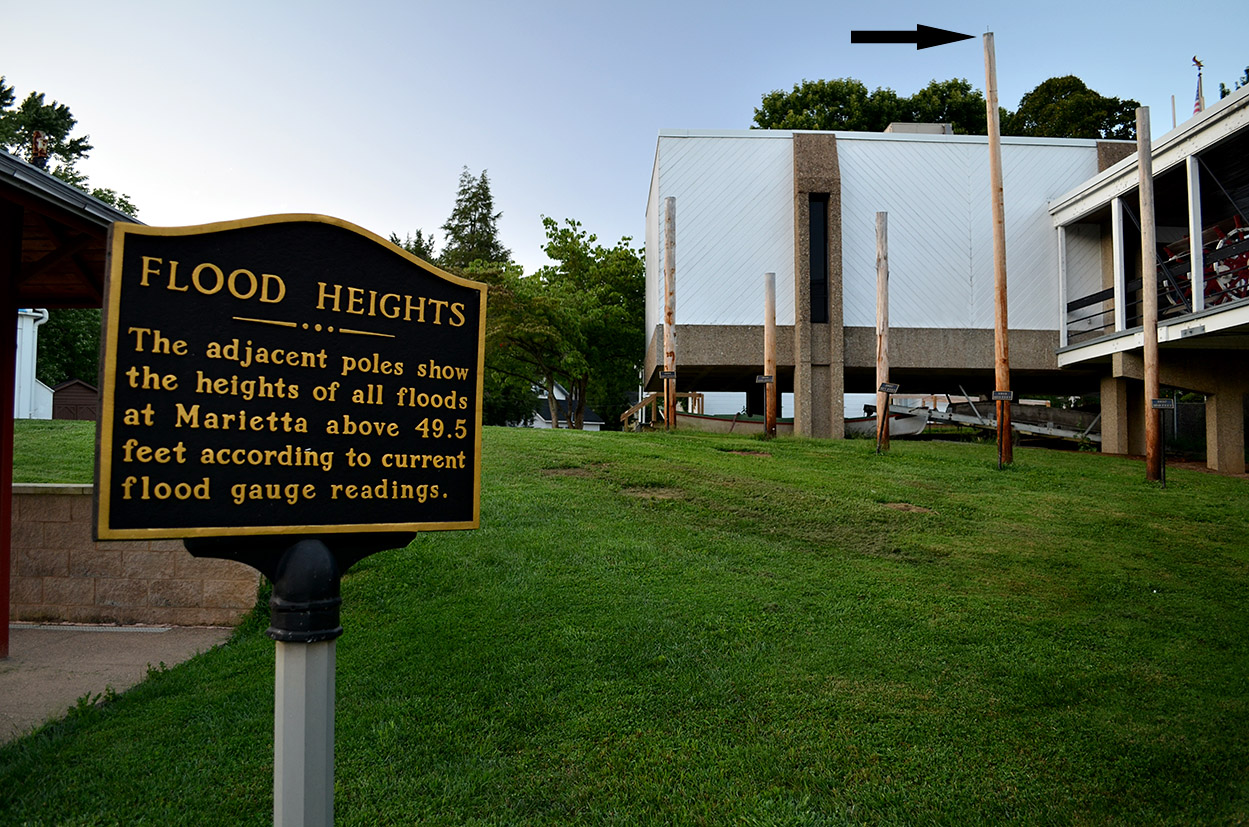
Marietta Ohio River 08-24-2014When we got down to Marietta, Ohio, there are some wooden poles that indicate the height of various Ohio River floods over the years. The tall pole at the right shows the March 1913 crest of 58.7 feet. The city’s website said that flood “The flood swept 120 homes away, knocked 200 homes off their foundations and water was eight feet deep in the old Post Office.”

That’s pretty impressive.


Miners’ Memorial Park

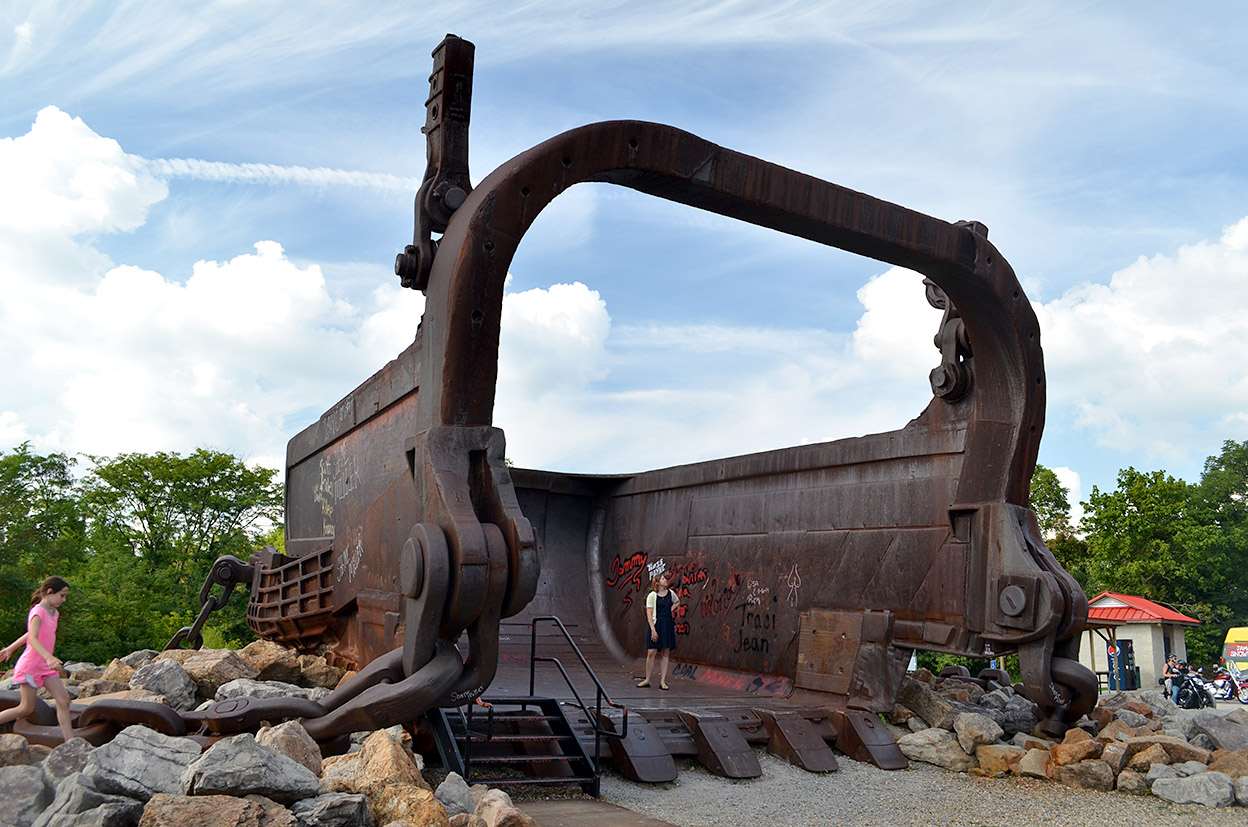
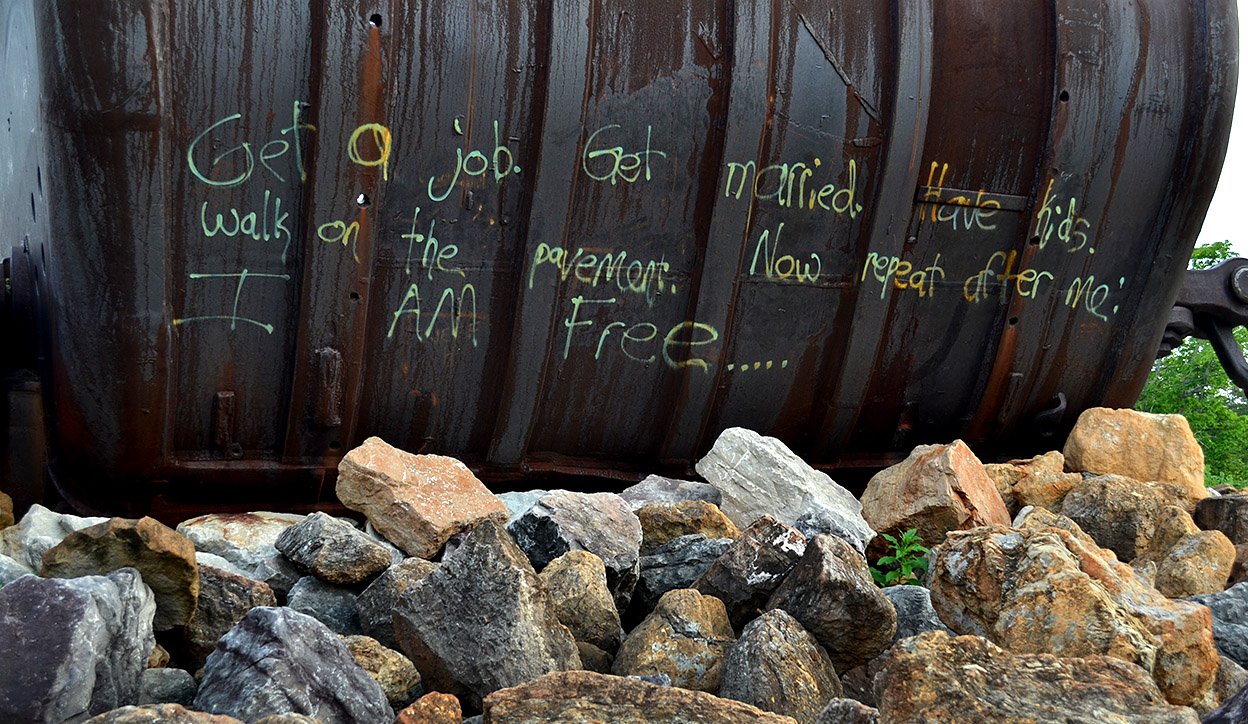
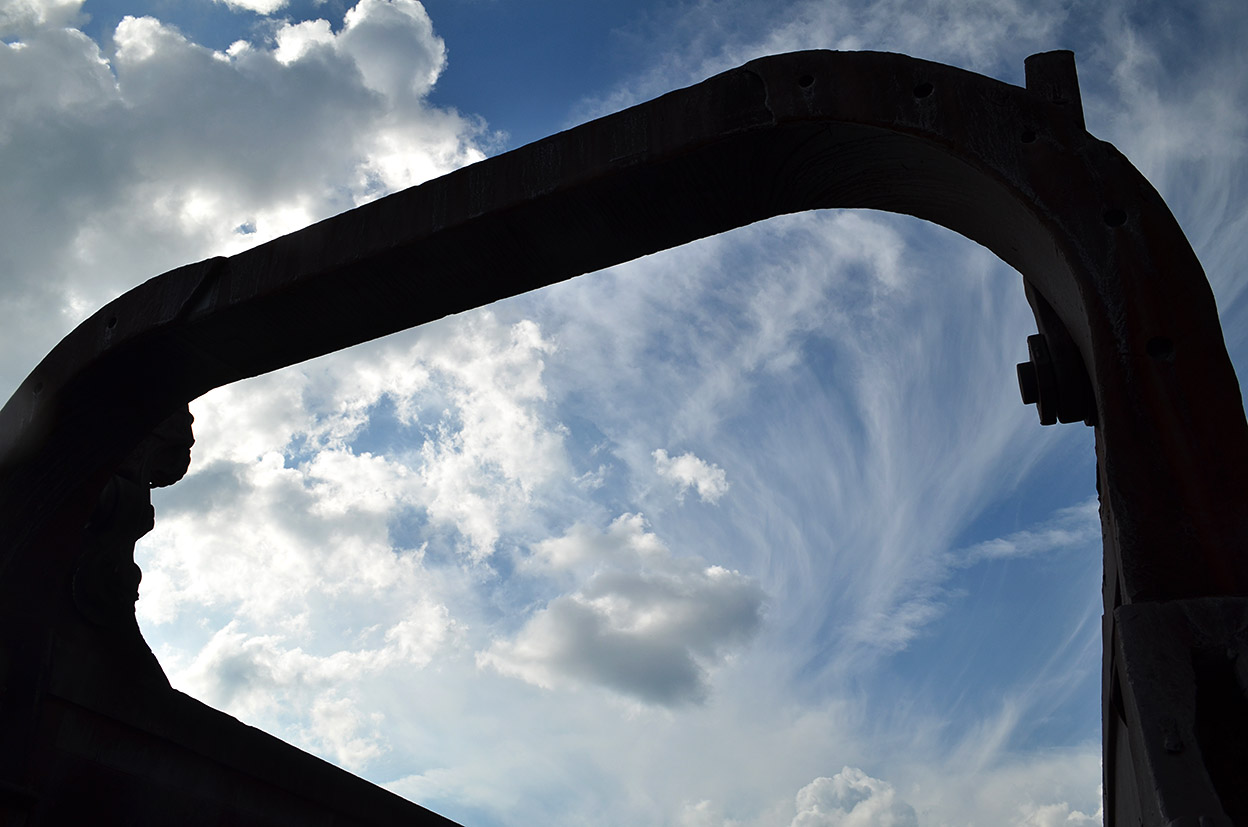
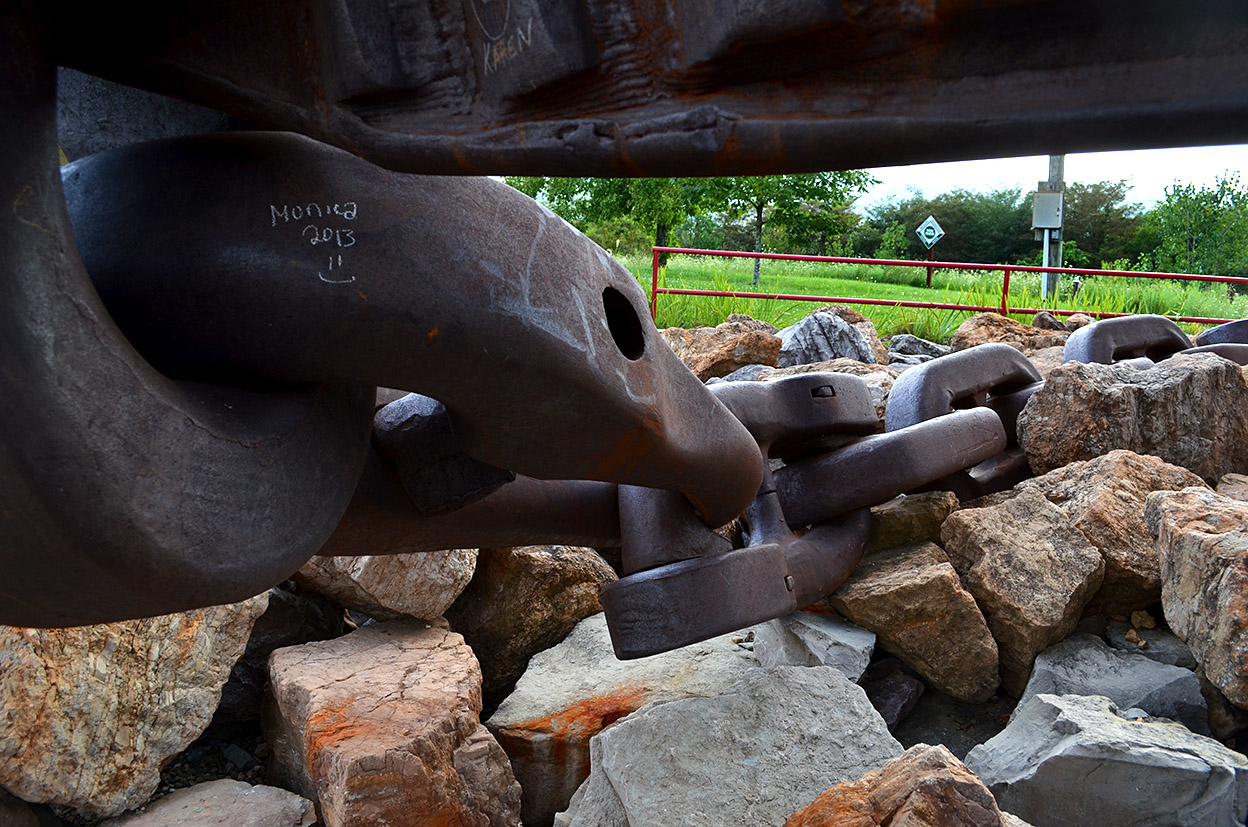
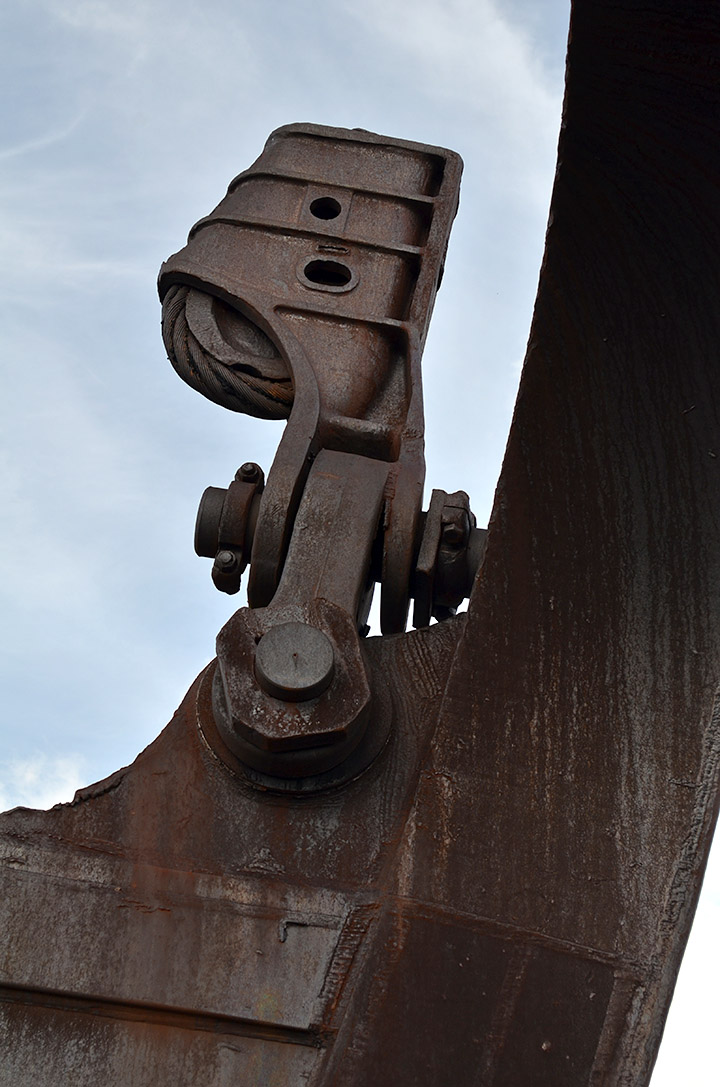
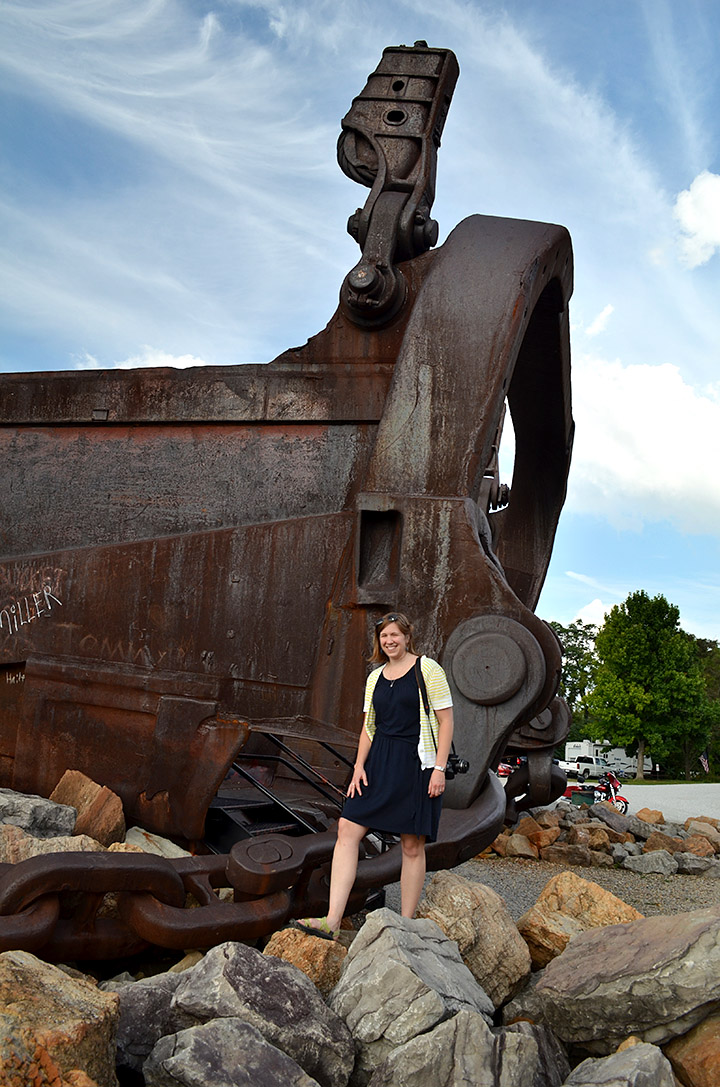
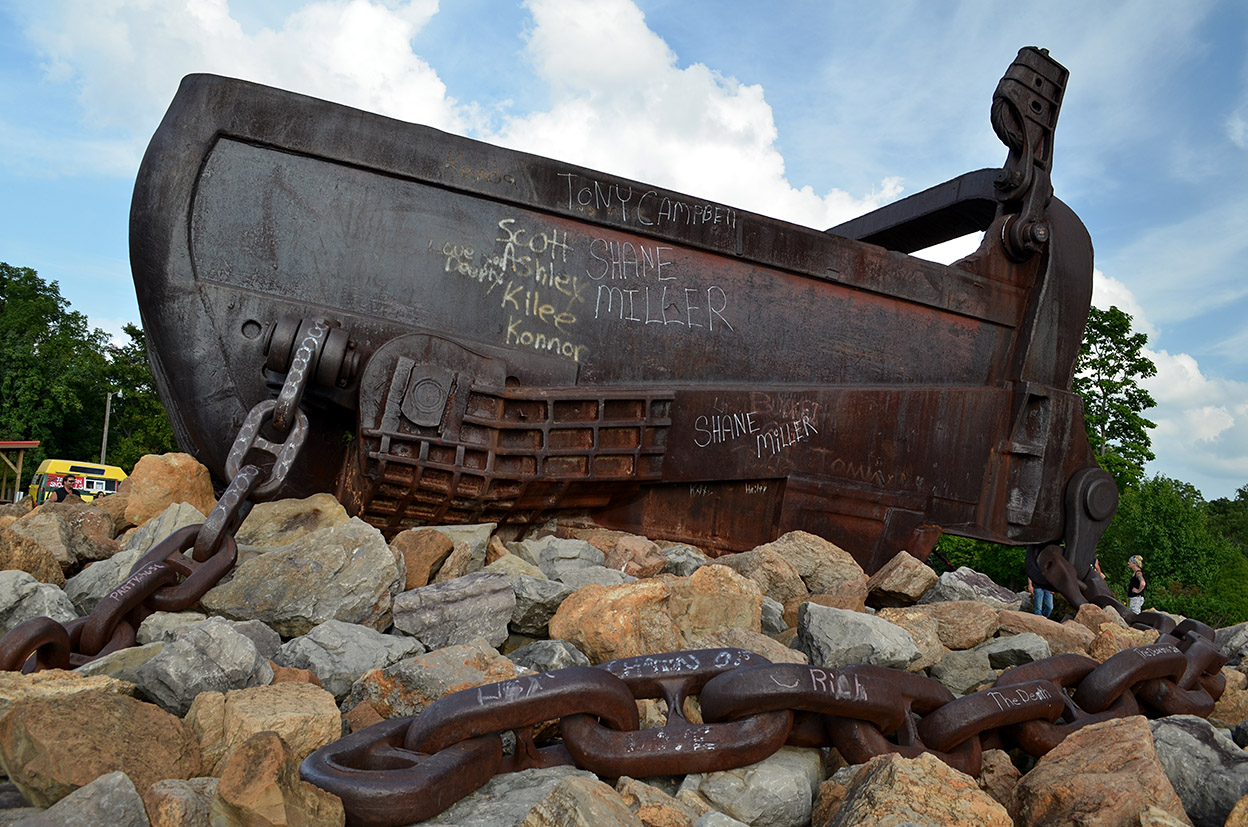
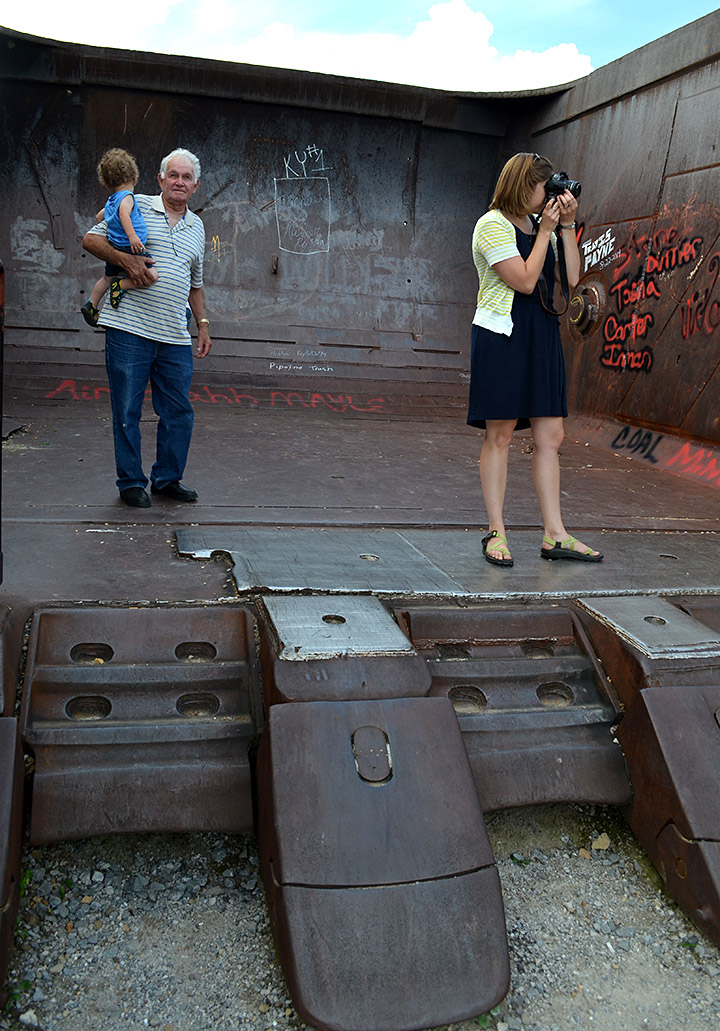
Big Muskie' dragline bucket 08-24-2014Giving Curator Jessica access to my RoadsideAmerica ap just as we were embarking on a road trip to northern Ohio was dangerous. In addition to our normal stops for stuff like interesting buildings, historical markers, cemeteries and just stuff, she announced that we just HAD to make a side trip to McConnelsville, Ohio, to see Big Muskie’s bucket at the Miners’ Memorial Park.

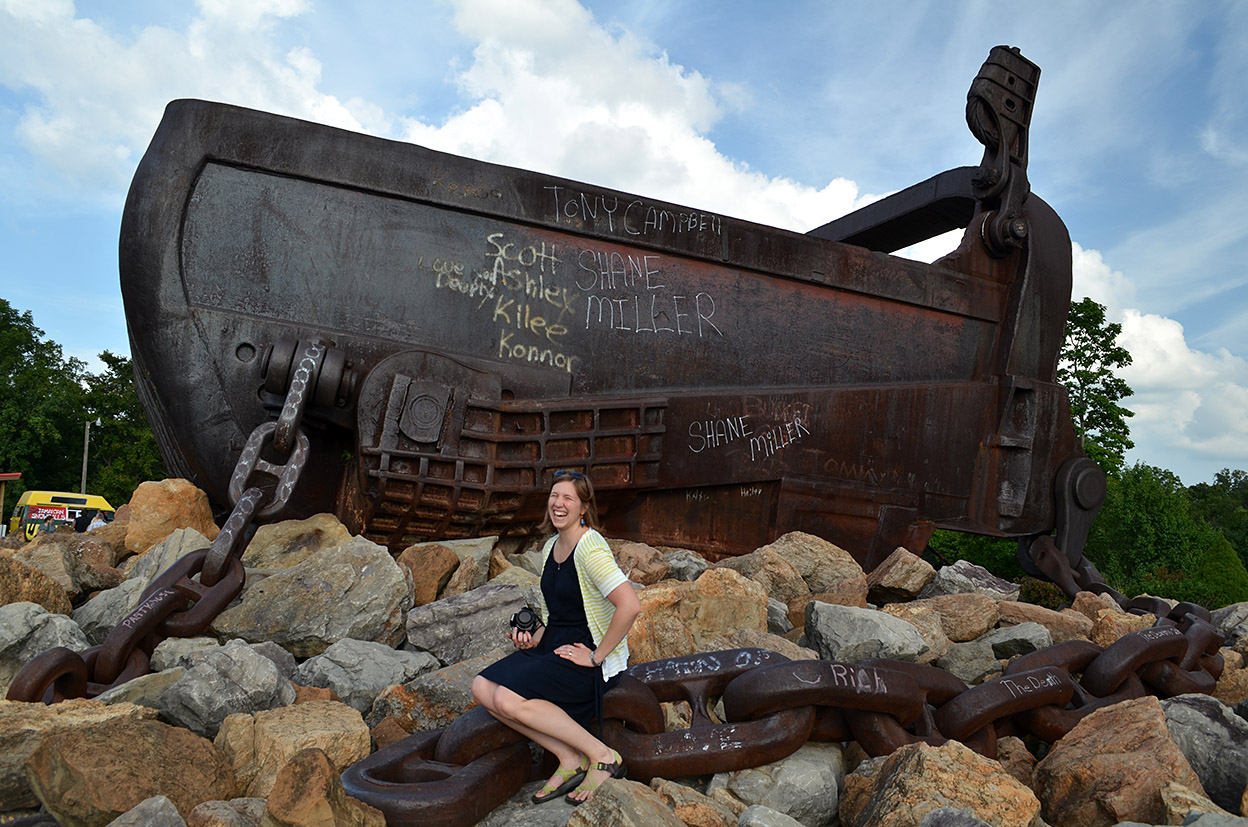
I agreed to the diversion only if she would agree to be photographed with it to give the huge bucket some scale.

In service for 22 years

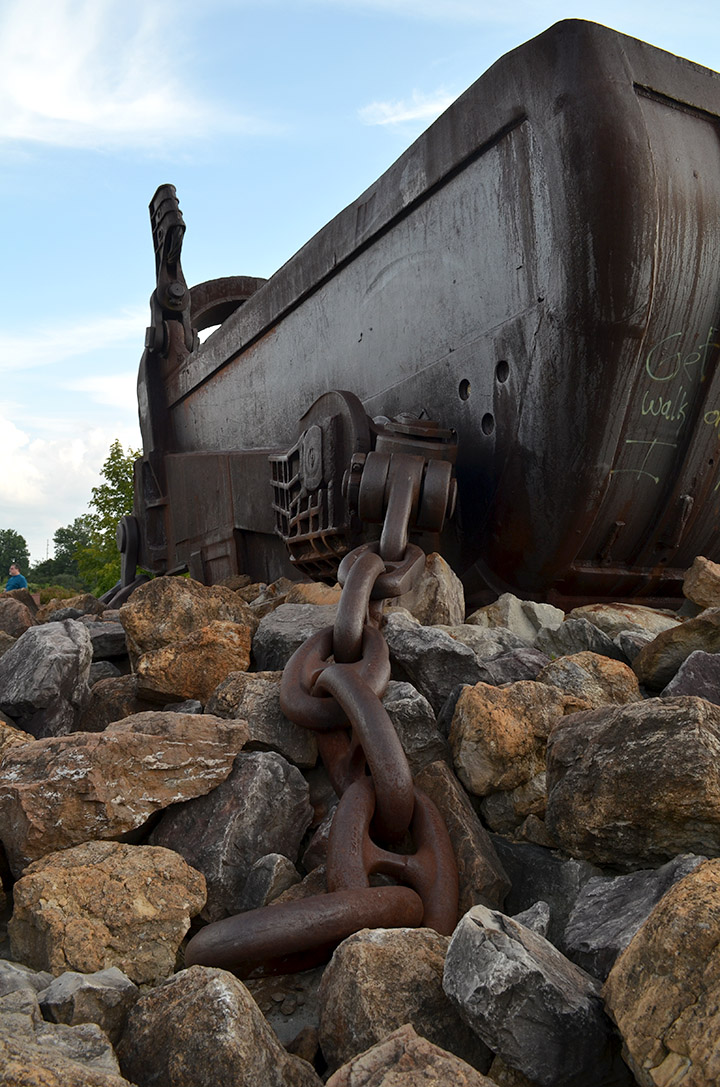
Big Muskie' dragline bucket 08-24-2014The plaque at the memorial made is sound like the big, bad EPA was responsible for shutting down open mining and causing workers to lose their jobs. It sort of glossed over the fact that the 1977  Clean Air Act reduced demand for soft coal and that the power costs made it unprofitable to operate. The 22-story-tall Big Muskie, with its 310-foot boom and 220-cubic yard bucket sucked down as much power as 27,500 homes and cost tens of thousands of dollars an hour for electricity alone.

The public’s growing opposition to strip mining added to the decision to scrap the world’s largest single-bucket digging machine ever made. It was parked in 1991 and scrapped in 1999 when no company wanted it because of the cost of dismantling, transporting and operating it.

John Prine’s Paradise

Earth Day 1969I had to introduce Jessica to John Prine’s song, Paradise, which contains these words:

Then the coal company came with the world’s largest shovel
And they tortured the timber and stripped all the land.
Well, they dug for their coal till the land was forsaken,
Then they wrote it all down as the progress of man

And, Daddy, won’t you take me back to Muhlenberg County
Down by the green river where paradise lay?”
“Well, I’m sorry my son, but you’re too late in asking.
Mister Peabody’s coal train has hauled it away”

Links to Big Muskie Stats

Bucket photo gallery

Click on any photo to make it larger, then use your arrow keys to move through the gallery. Oh, by the way, the only thing that kept me from having to endure a visit to the Feline Historical Museum was that it was closed on the days we were in the area.